



Ficus lyrata (Ficus lyre)
- Regular price
-
€40,95 - Regular price
-
- Sale price
-
€40,95
Couldn't load pickup availability
Frequently Asked Questions
What is the ideal light exposure for a Ficus lyrata? Prefer bright indirect light near a sheer curtain or a bay window, avoiding prolonged direct sun.
Why is my Ficus lyrata losing its leaves after moving? It is a temporary stress related to the change of location that naturally resolves within two to three weeks once the plant stabilizes.
SHIPPING & PACKAGING
Shipping within 24/48 hours via DPD
- Delivery in 2 to 5 business days
- Eco-friendly packaging: recyclable boxes and biodegradable materials
- Special protection to ensure the plant arrives in perfect condition
- Parcel tracking sent by email as soon as shipped
- Free delivery on orders over €50
48H QUALITY GUARANTEE
We guarantee that your plants will arrive in perfect condition. If your plant arrives damaged or in poor condition:
- Contact us within 48 hours at hello@verdeia.eu with photos
- Free replacement or full refund
- No return necessary – we trust you
The guarantee covers: damage related to transport, severely weakened plant upon arrival, preparation errors.
CARE TIPS UPON ARRIVAL
To help your plant settle in for the long term:
- Unpack immediately and inspect your plant
- Let it acclimatize 24-48h in a bright spot without direct sunlight
- Check soil moisture before watering (dry surface = light watering)
- Wait 2-3 weeks before repotting
- Avoid heat sources and drafts
- Gently wipe leaves to remove dust
Need help? Contact our team at hello@verdeia.eu or via chat.
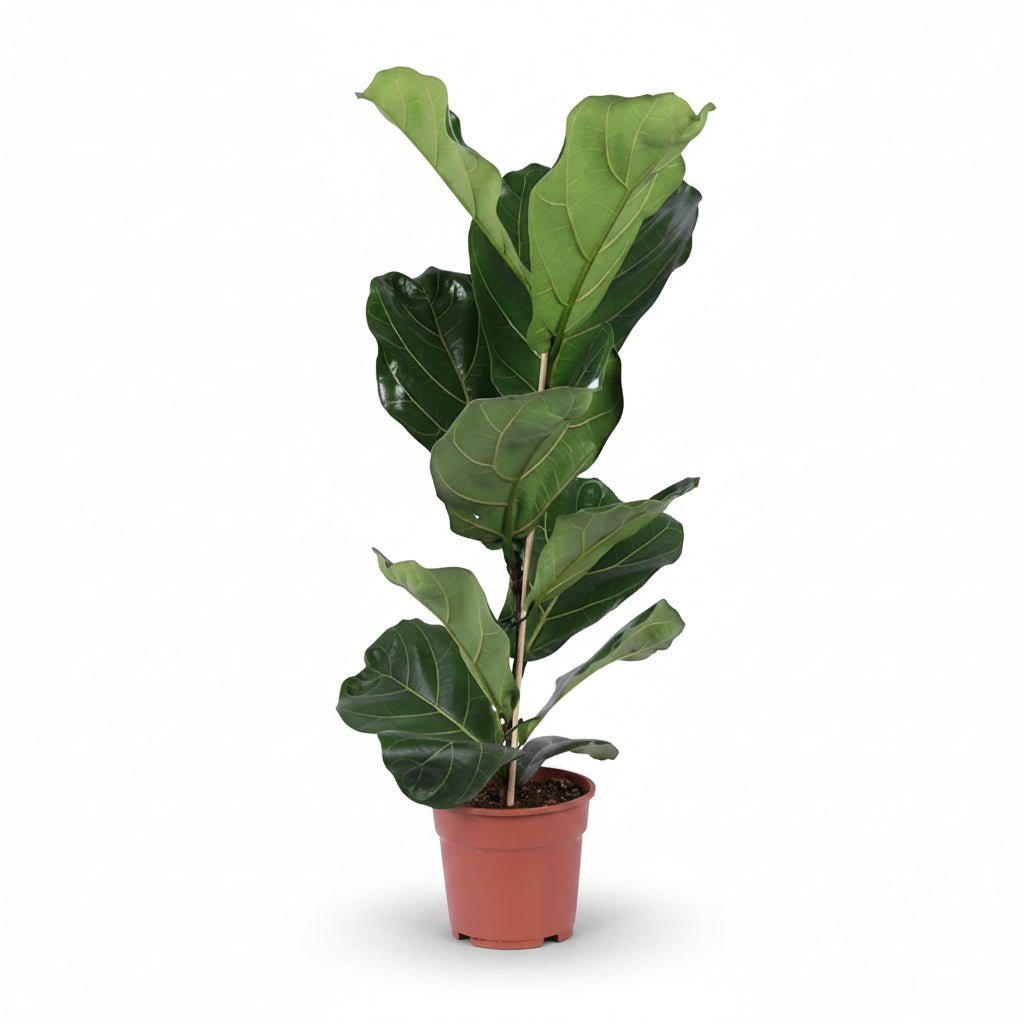
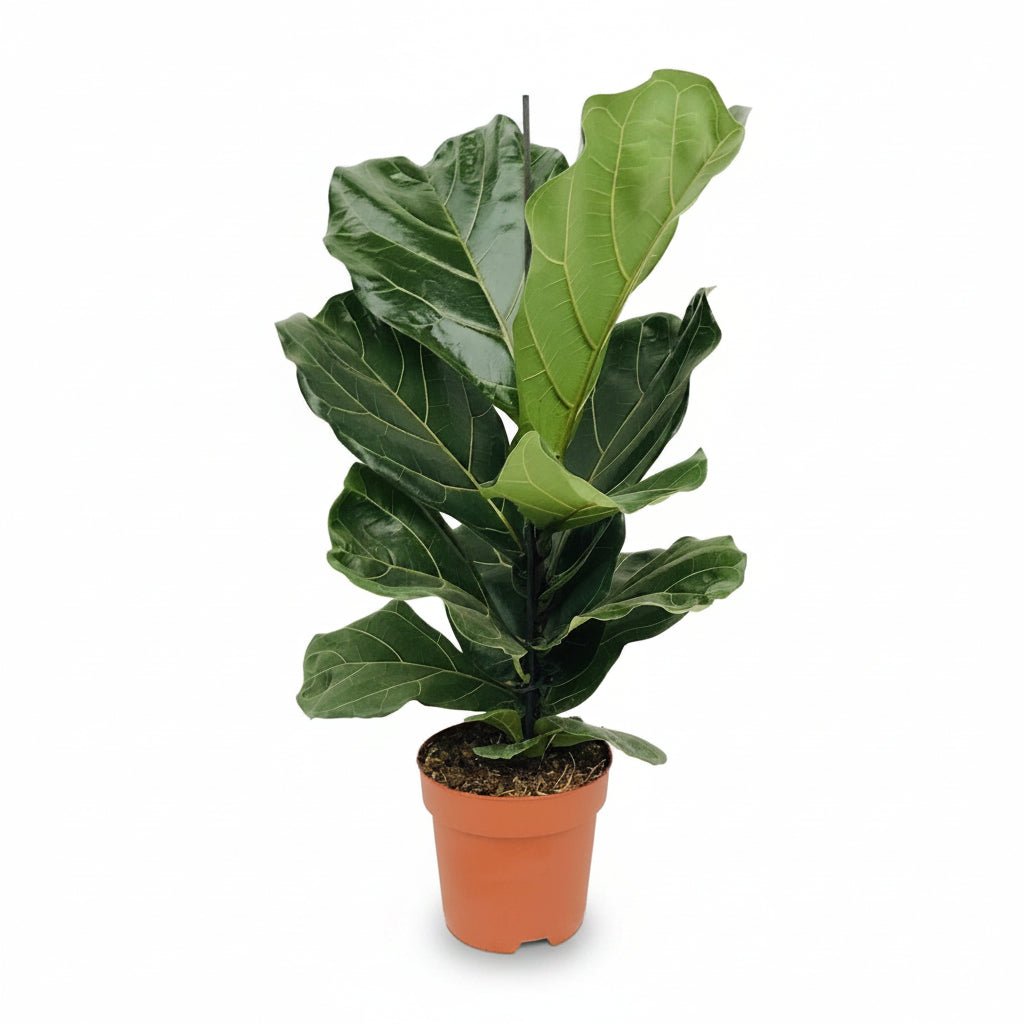
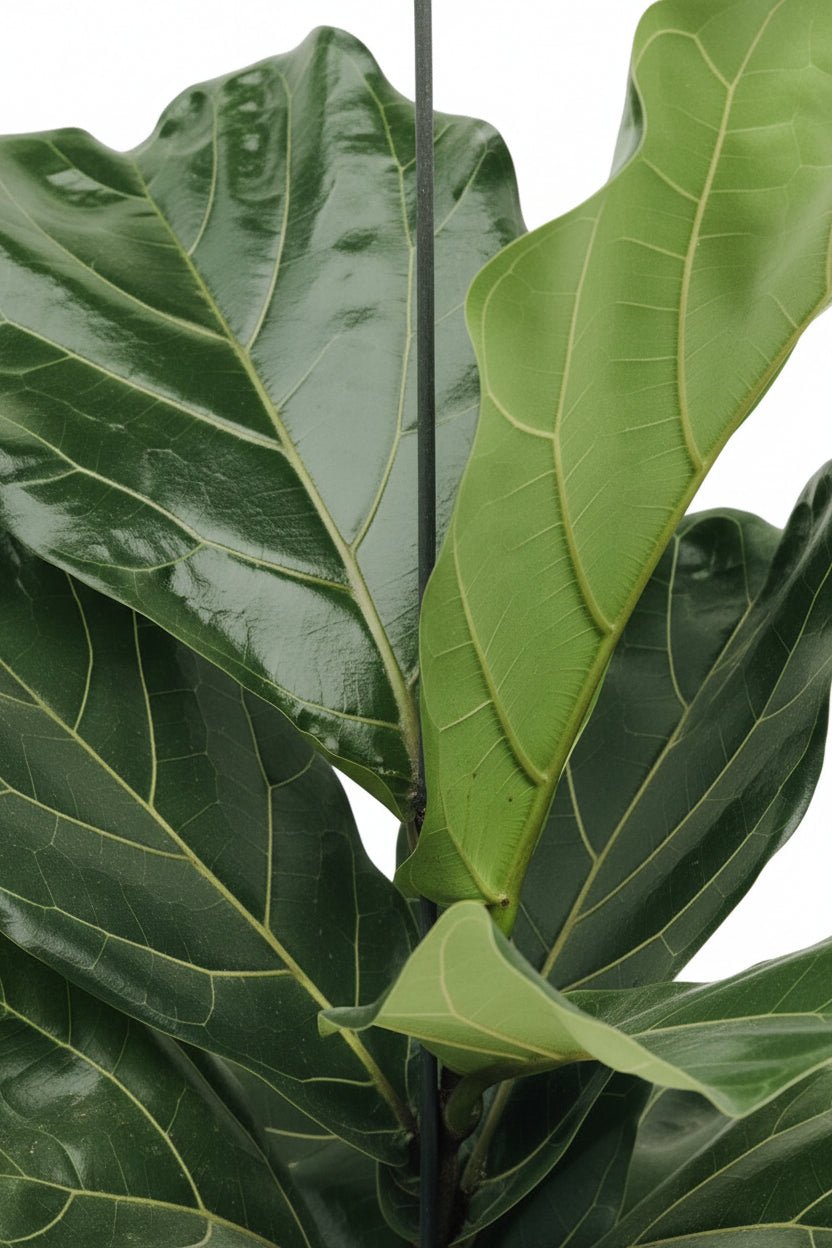
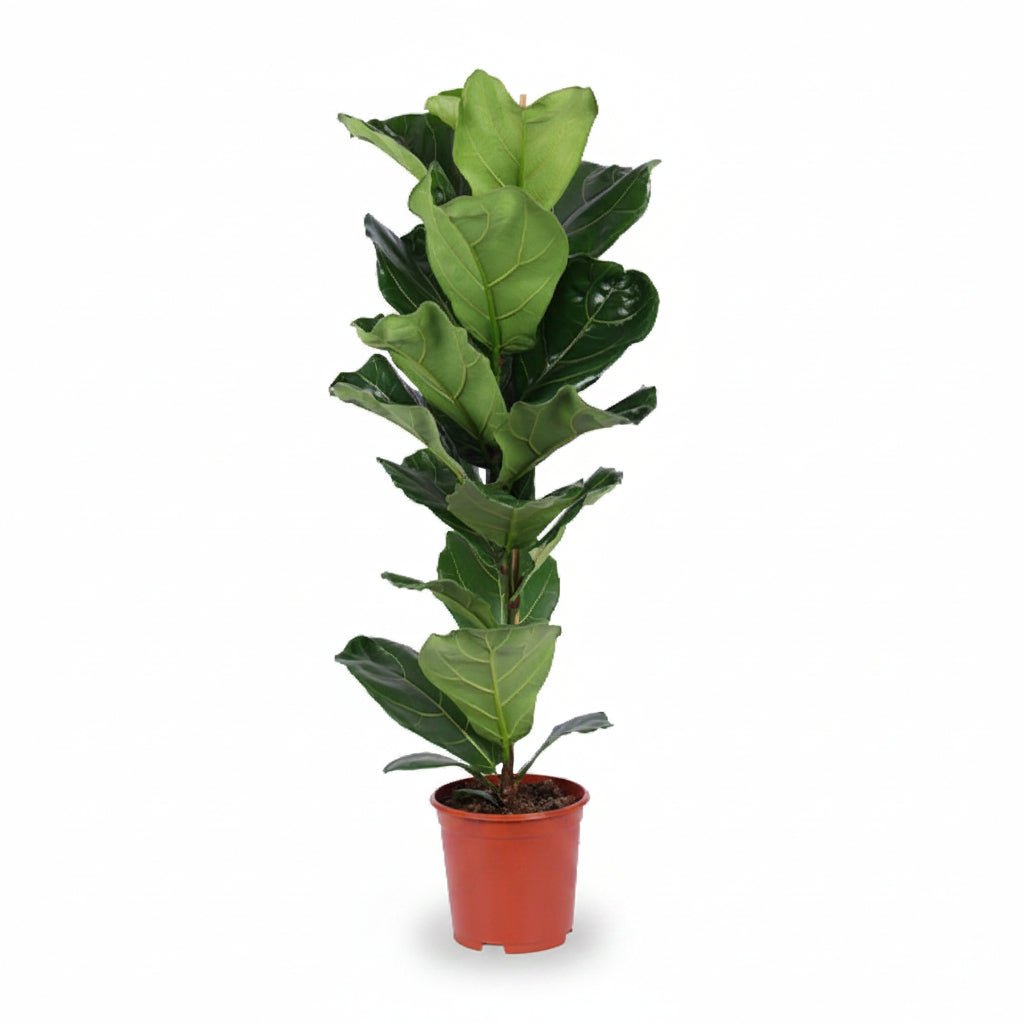
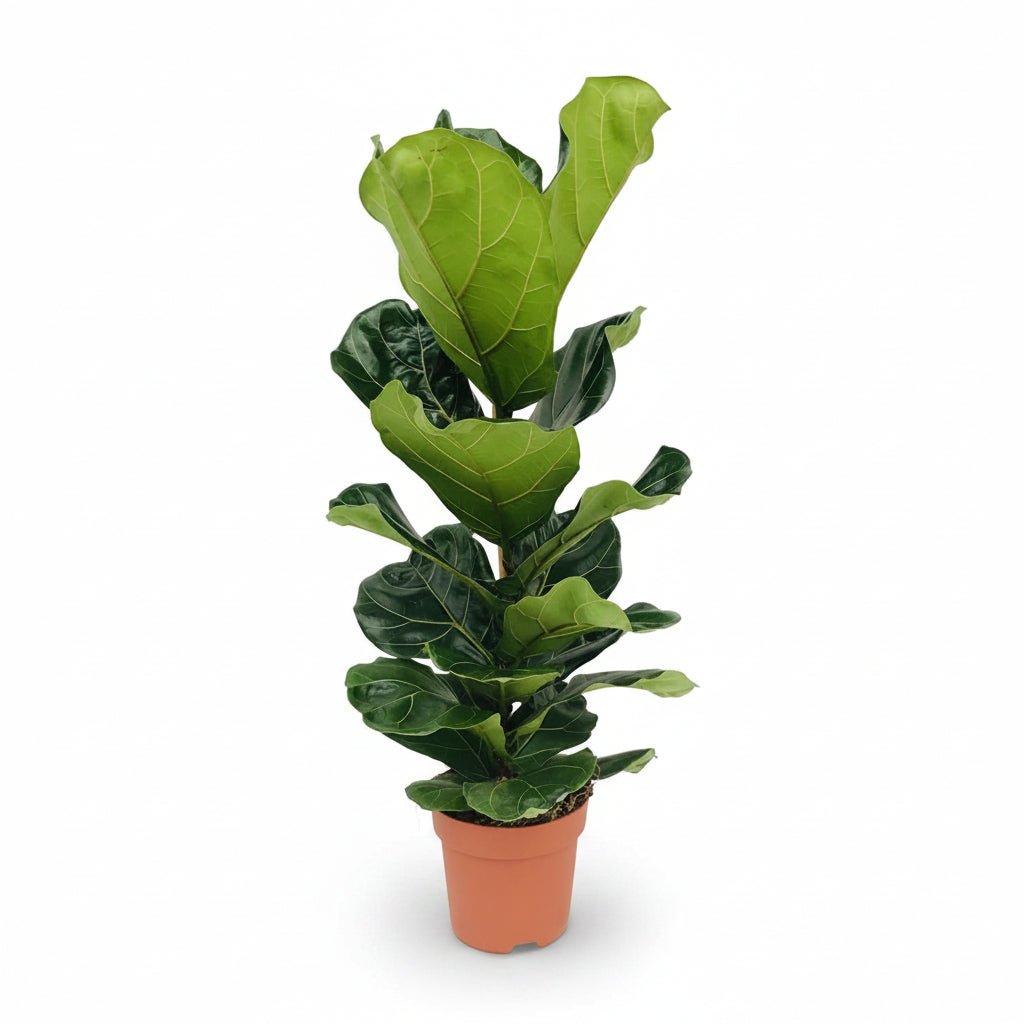
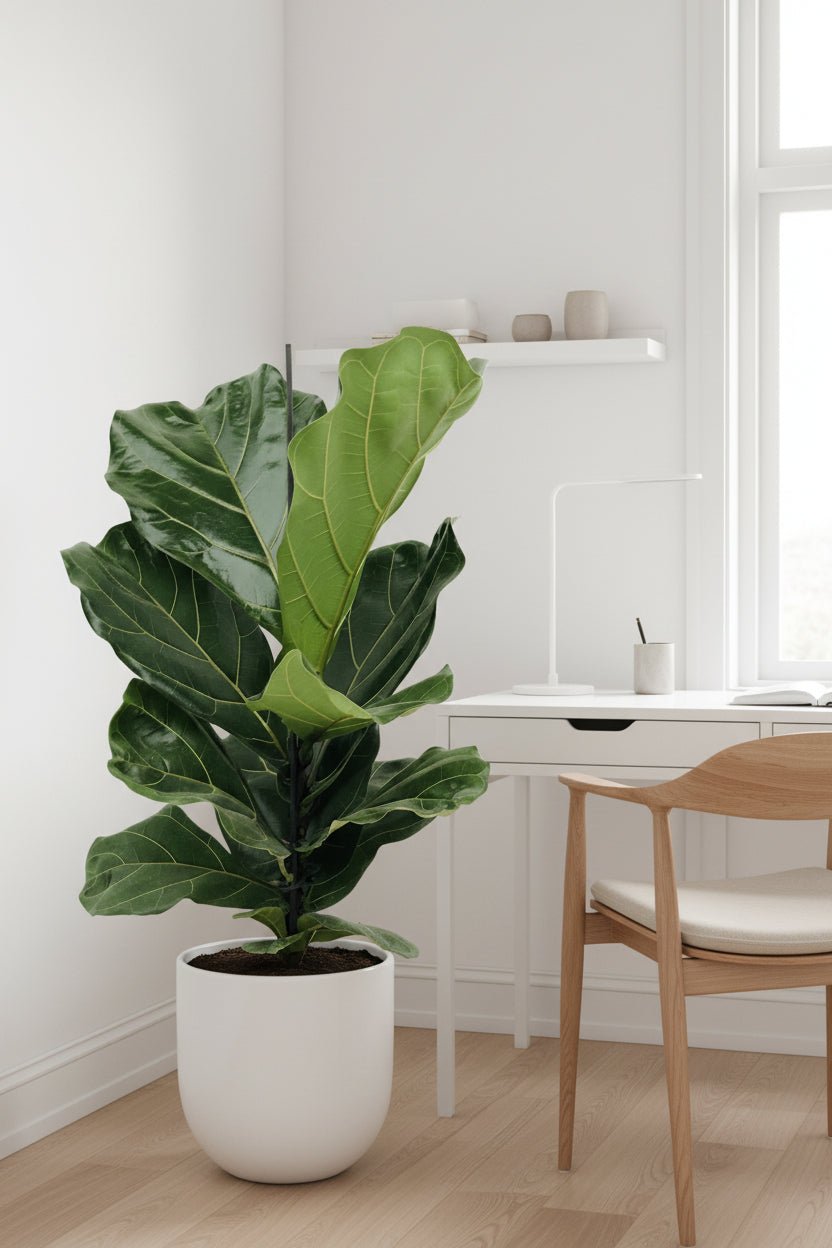
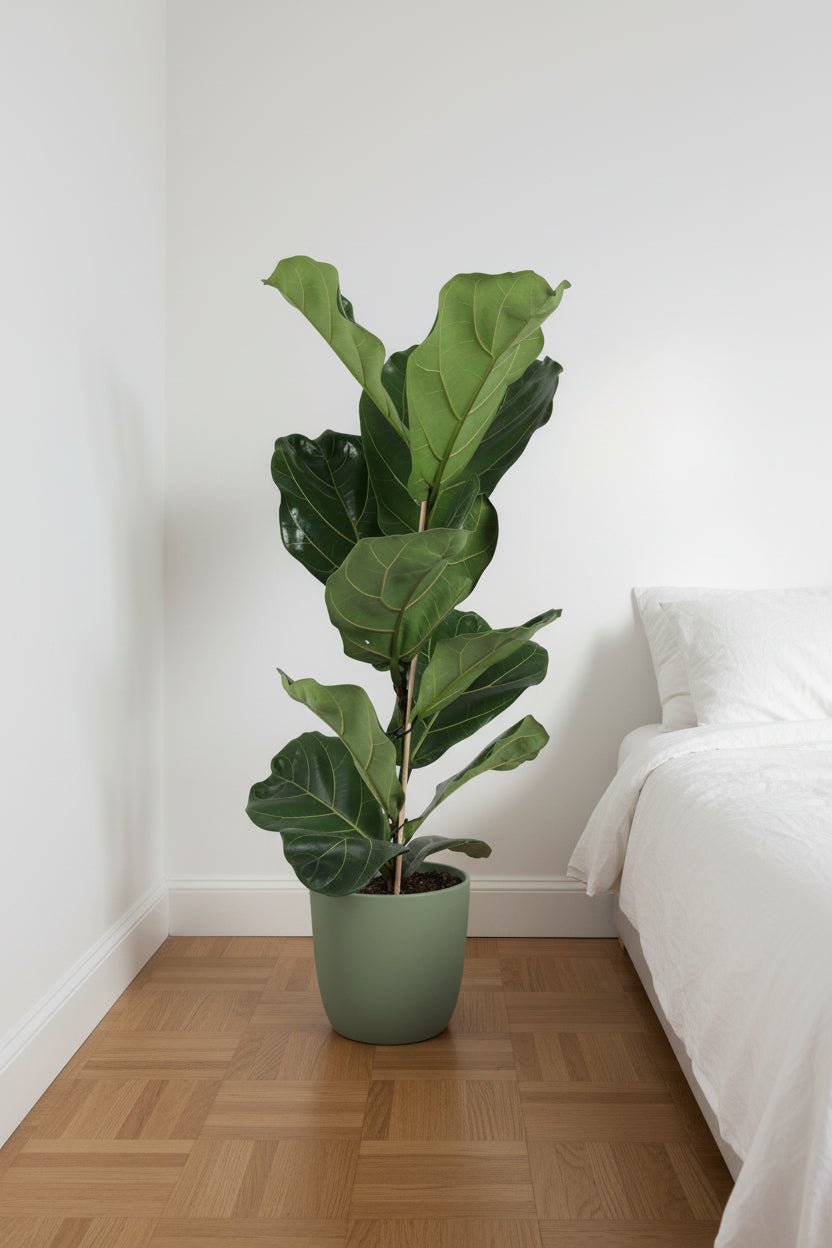

🌿 Large deep glossy lyre-shaped leaves • 🏙️ Elegant upright silhouette • ☀️ Bright indirect light • 💧 Moderate watering • 🪴 Available in four sizes
Ficus lyrata, also called Ficus lyre or Lyre fig, is the favorite large indoor plant of architects and decorators: its broad lyre-shaped leaves in a deep glossy green create a strong and sophisticated plant presence. Native to the tropical forests of West Africa, it naturally ranks among the most iconic indoor Ficus in contemporary decor.
Its popularity is no accident: placed in a room corner, next to a sofa, or in a bright entryway, it instantly transforms a space into a chic tropical-inspired interior. Available in four sizes, from a young compact specimen to a larger model, it adapts to all spaces.
Light & Location
Ficus lyrata likes bright indirect light. Insufficient light slows its growth and thins its foliage. It especially appreciates stability: avoid moving it too often.
- Light: bright indirect light — sheer curtain window or near a bay window, without prolonged direct sun.
- Location: living room, office, bright entryway — away from radiators and drafts.
- Temperature: 18 to 28 °C — minimum 15 °C in winter, protected from sudden changes.
- Soil type: well-draining mix of potting soil + coconut fiber or perlite — a green plant substrate with added pumice works perfectly.
If your Ficus suddenly loses several leaves after moving or changing rooms, do not repot or change watering: this is temporary stress that resolves in two to three weeks once the plant stabilizes.
Watering & Care
Ficus lyrata prefers moderate and regular watering, never excessive. Overwatering remains the main cause of decline for Ficus lyre — better a slightly thirsty plant than one drowning.
- Watering: moderate — let the substrate dry 2 to 3 cm between waterings, about every 10 to 15 days depending on the season.
- Drainage: essential — always empty the saucer to avoid water stagnation around the roots.
- Humidity: prefers a slightly humid atmosphere — mist the foliage occasionally, especially in winter when heating dries the air.
- Care: regularly clean the large leaves with a soft damp cloth to preserve their shine and promote photosynthesis.
- Repotting: every 2 years in spring into a slightly larger pot, trimming roots slightly to encourage growth.
Turn the pot a quarter turn each month for balanced growth — the natural tendency of branches to lean toward the light source eventually distorts the upright silhouette if rotation is not regular.
Decor Ideas & Plant Pairings
The natural presence of Ficus lyrata makes it a main accent plant that visually structures the space. Depending on the chosen size, it can be a XXL centerpiece or an elegant companion on a console — the choice of pot makes all the difference in the final effect.
- For a tropical jungle, pair the L size with a Strelitzia Nicolai with large palms and a Monstera Deliciosa with cut foliage — three plants, three contrasting silhouettes, instant urban jungle vibe.
- For a zen and minimalist duo, place it next to a Zamioculcas with glossy green foliage — the upright verticality of the ZZ balances the Ficus silhouette, two robust plants with opposite characters that complement without competing.
- To highlight stature in a tone-on-tone decorative pot, place the Ficus in a Capi Nature Skin anthracite pot with a matte finish — the understated container amplifies the presence of the trunk and shiny leaves without distracting attention.
- For a warm natural touch, choose a Celestial jute decorative pot or a woven natural fiber basket — the organic material highlights its stature without weighing it down and matches bohemian or wabi-sabi decor.
Give it space: keep the Ficus at least 30 cm from walls so its large leaves can breathe freely and the silhouette is visible from all angles.
Verdeia Tips
- Do not move it: Ficus lyrata is very sensitive to location changes — it often loses leaves when moved, then stabilizes. Choose its permanent spot at installation and let it acclimate for 2 to 3 weeks before assessing its health.
- Dull leaves = lack of light: if foliage loses its shine or new leaves appear small and pale, move it closer to a natural light source — this is the most reliable exposure signal, more telling than a thermometer or hygrometer.
- Pruning possible in spring: if the silhouette becomes too unbalanced or the plant reaches the desired height, light pruning in early spring helps maintain a harmonious shape — cut just above a node, the plant will regrow two new shoots at each cut.
Technical Specifications
- Botanical name: Ficus lyrata
- Common name: Ficus lyre, Lyre fig
- Origin: West Africa
- Available sizes: Size S — H60 cm | Pot Ø17 cm • Size M — H75 cm | Pot Ø17 cm • Size L — H90 cm | Pot Ø21 cm • Size XL — H100 cm | Pot Ø21 cm
- Adult height: up to 2 to 3 m indoors
- Light: bright indirect light
- Watering: moderate, letting surface dry between waterings
- Soil type: well-draining, rich, mix of potting soil + coconut fiber or perlite
- Growth: medium, upright single-stemmed habit
- Foliage: evergreen, large glossy dark green lyre-shaped leaves
- Care: moderate
- Toxicity: toxic if ingested — white latex irritates skin
- Decor style: Urban jungle / Contemporary design / Natural elegance
Each plant is unique: photos show an example of its appearance. Leaf density and shades naturally vary depending on received light.

Your plant, delivered with care
Every plant is hand-packed in a box specially designed for plants — secured, protected, ready to travel. It arrives in perfect condition, roots intact and foliage preserved, ready to take its place in your home.
Our Verdeia commitments
FAQ – Everything to know before adopting your Verdeia plant
How are my plants prepared before shipping?
All our plants are selected from our European partner nurseries. Before shipping, they are watered, cleaned, and protected with breathable, secure packaging. Each package is designed to ensure your plant arrives in perfect health, without any transport-related stress.
Will the plant look exactly like the photo?
The photos accurately represent the variety and the stated size. Since each plant is unique, slight differences in shape, foliage, or color may occur — and that’s part of their charm.
What are the delivery times and conditions?
Shipping is done within 48 business hours, with tracked delivery within 2 to 5 business days. Delivery costs €5.60 — free for orders over €50. You will receive a tracking link as soon as the package is shipped.
What to do upon receiving my plant?
Open your package as soon as you receive it and carefully remove the plant from its packaging. Let it acclimate for 24 hours in its new environment before watering. If it has been slightly stressed during transport, it will recover its shape after one or two days in the light.
What to do if my plant arrives damaged?
Contact us within 48 hours with a photo of the issue. Our team will assess the situation and offer you the best solution: replacement, partial refund, or recovery advice.
Can I return a plant?
Since plants are living beings, standard returns are not possible. However, we guarantee good health upon delivery: if the plant arrives damaged, it will be replaced free of charge. For any other cases (order error, decorative pot, accessory), returns are possible within 14 days.