



Dionaea muscipula (Venus flytrap) — H12 cm | Pot Ø12 cm
- Regular price
-
€32,95 - Regular price
-
- Sale price
-
€32,95
Couldn't load pickup availability
Frequently Asked Questions
Why do the traps of my Dionaea muscipula fade and lose their strength? A lack of direct sunlight is the main cause — move it closer to a very sunny window; well-colored and firm traps indicate sufficient exposure.
Can you feed a Dionaea muscipula manually? Usually unnecessary — placed on a sunny balcony, it catches its own prey; if you want to feed it indoors, use very small live insects, never human food.
SHIPPING & PACKAGING
Shipping within 24/48 hours via DPD
- Delivery in 2 to 5 business days
- Eco-friendly packaging: recyclable boxes and biodegradable materials
- Special protection to ensure the plant arrives in perfect condition
- Parcel tracking sent by email as soon as shipped
- Free delivery on orders over €50
48H QUALITY GUARANTEE
We guarantee that your plants will arrive in perfect condition. If your plant arrives damaged or in poor condition:
- Contact us within 48 hours at hello@verdeia.eu with photos
- Free replacement or full refund
- No return necessary – we trust you
The guarantee covers: damage related to transport, severely weakened plant upon arrival, preparation errors.
CARE TIPS UPON ARRIVAL
To help your plant settle in for the long term:
- Unpack immediately and inspect your plant
- Let it acclimatize 24-48h in a bright spot without direct sunlight
- Check soil moisture before watering (dry surface = light watering)
- Wait 2-3 weeks before repotting
- Avoid heat sources and drafts
- Gently wipe leaves to remove dust
Need help? Contact our team at hello@verdeia.eu or via chat.
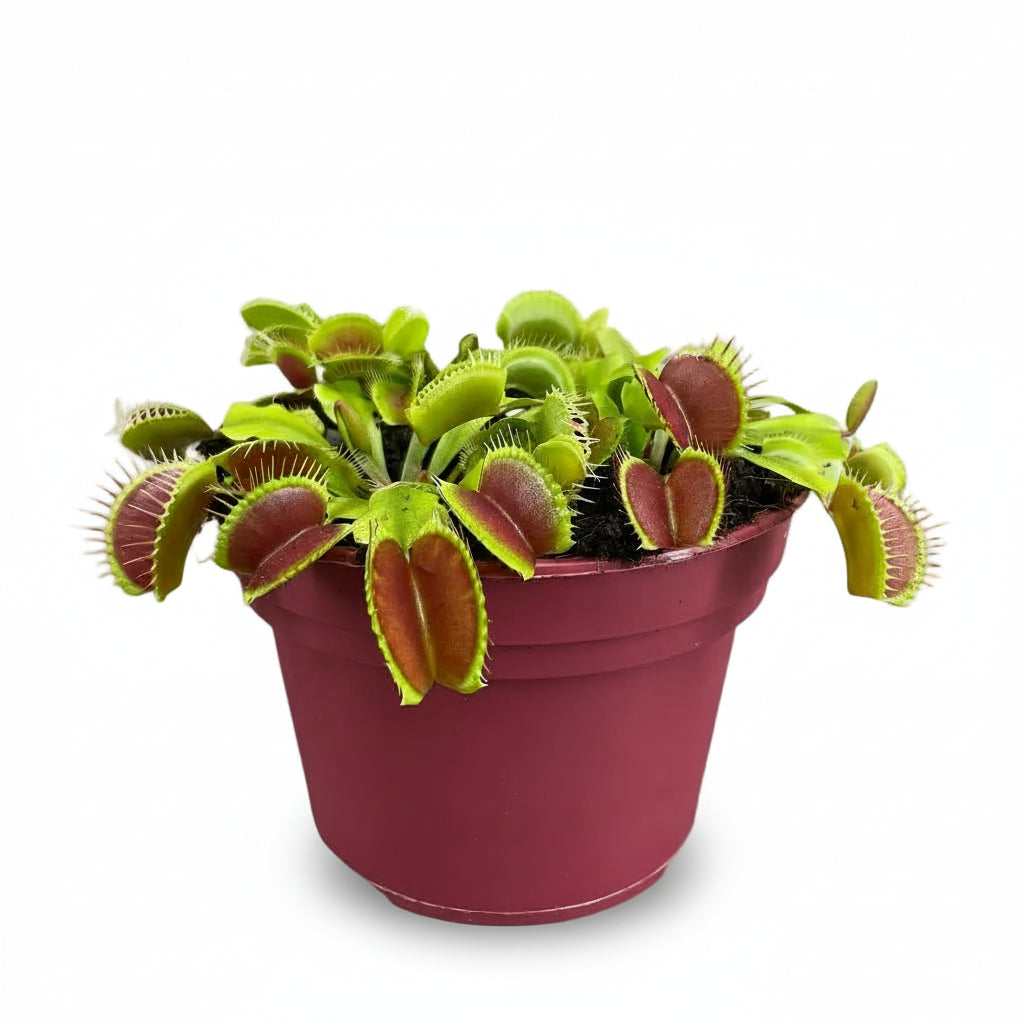

🐾 Non-toxic • 🪴 Serrated traps that close on insects • ☀️ Full sun / Direct light • 💧 Always moist substrate • 📏 H12 cm | Pot Ø12 cm
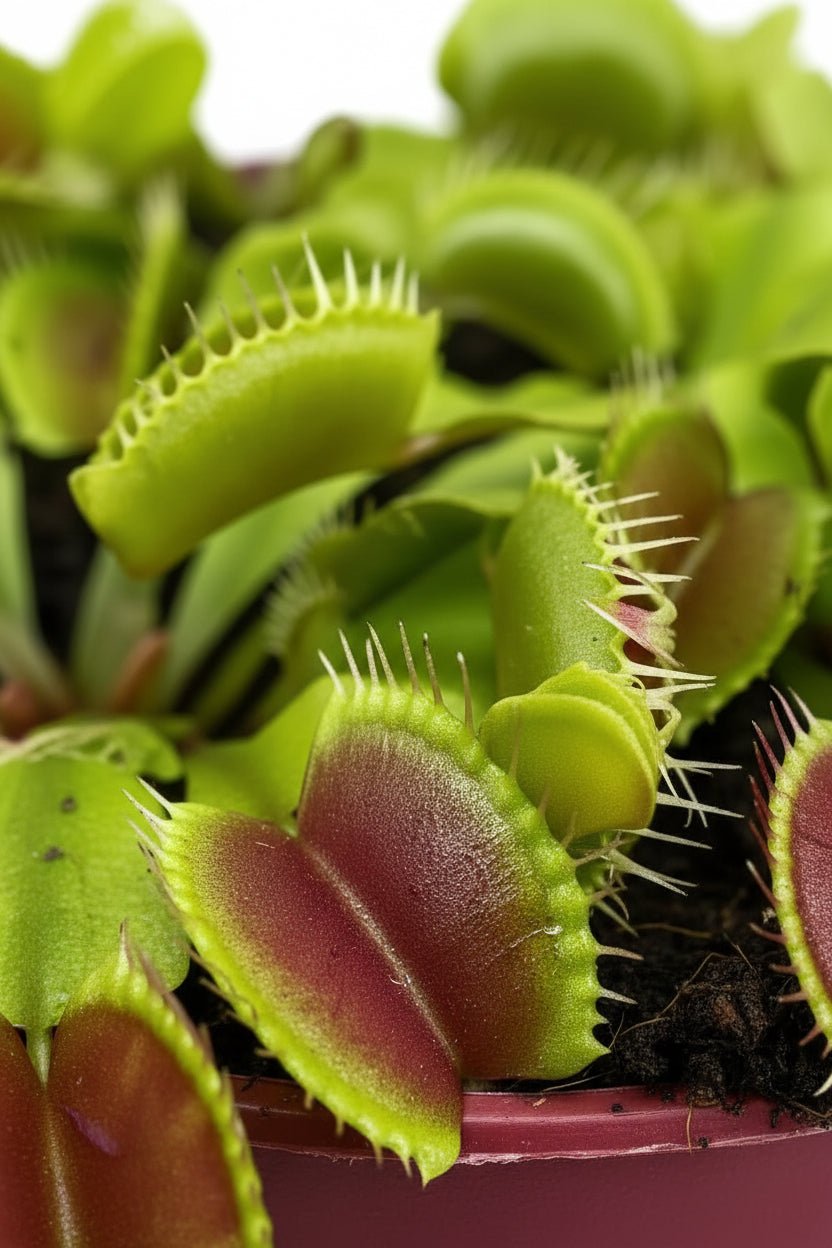
Dionaea muscipula, also known as the Venus flytrap, is the most famous carnivorous plant in the world — its serrated traps snap shut in a fraction of a second as soon as an insect touches their internal sensors. Native to North and South Carolina in the United States, it is one of the very few carnivorous plants with an active mechanism visible to the naked eye. Discover our other carnivorous plants to create a complete carnivorous garden.
Its popularity should not overshadow its specific needs — it requires plenty of direct sunlight and non-calcareous water. Our complete guide to carnivorous plants details all these rules to help you grow it successfully.
Exposure & Location
Dionaea muscipula is the carnivorous plant that demands the most light — without daily direct sunlight, its traps fade and lose their vitality. Well-colored and lively traps are a sign of sufficient exposure.
- Exposure: full sun or direct light — minimum 3 to 4 hours per day.
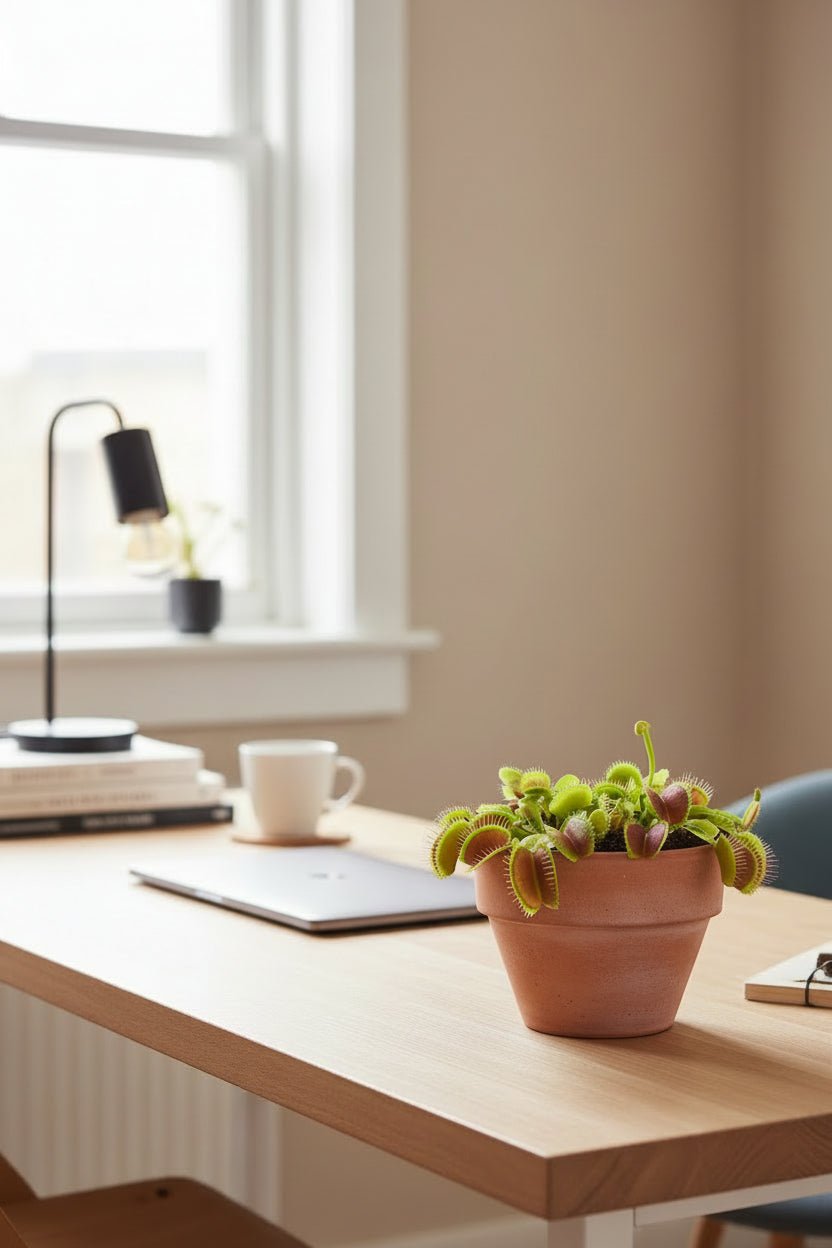
- Ideal for: south- or west-facing windowsill, very sunny balcony, bright greenhouse.
- Temperature: 15 to 30 °C during growth — tolerates about 5 °C during winter dormancy.
- Substrate: blond peat and sand or perlite, no fertilizer.
Watering & Care
- Water required: exclusively rainwater, demineralized or reverse osmosis water — tap water hardness is fatal. Keep 0.5 to 1 cm of non-calcareous water in the saucer during summer; the substrate must never dry out. Also check out our Sarracenia psittacina which shares the same watering logic.
- Fertilizer: none — the plant gets its nutrients from insects caught in its traps.
- Care: remove browned traps at the base to encourage new growth.
- Winter dormancy: keep it cool (5 to 10 °C) and bright in winter — this dormancy is essential for its longevity.
Decor Ideas & Plant Combinations
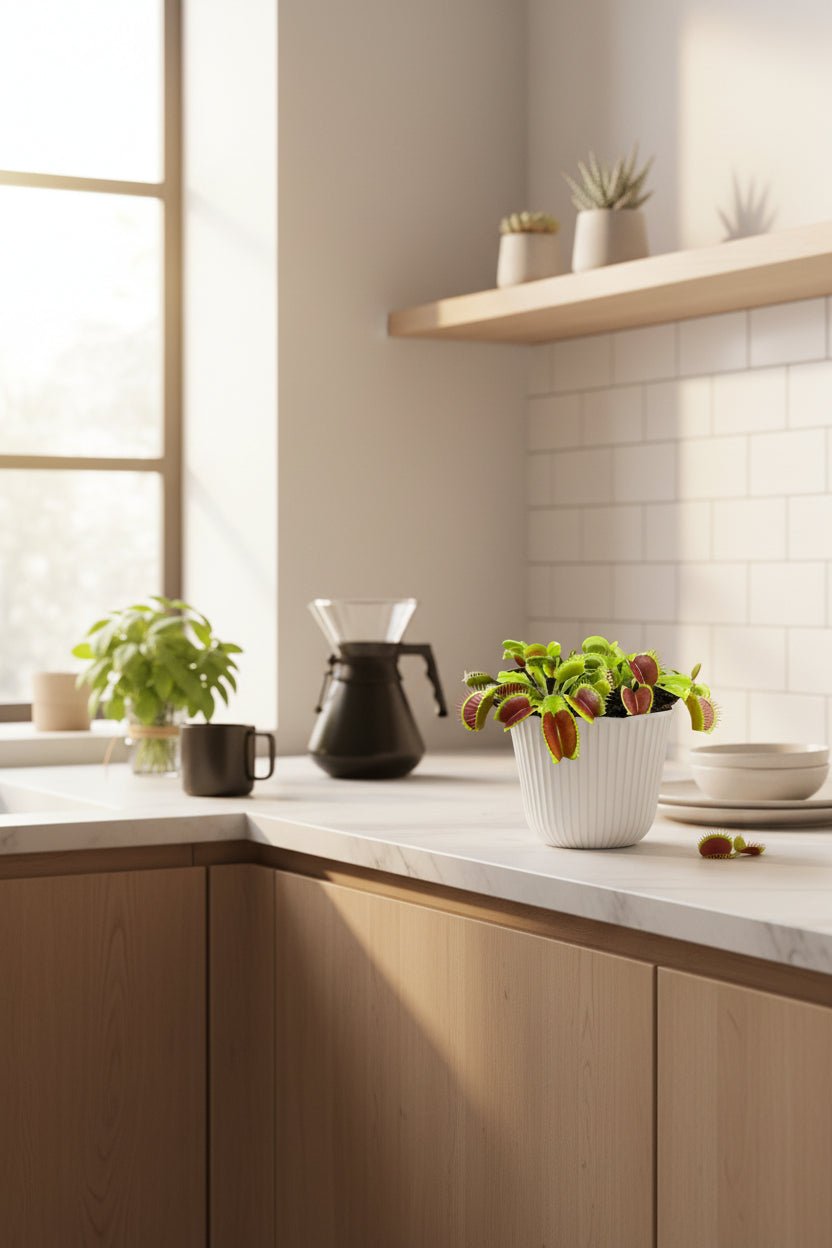
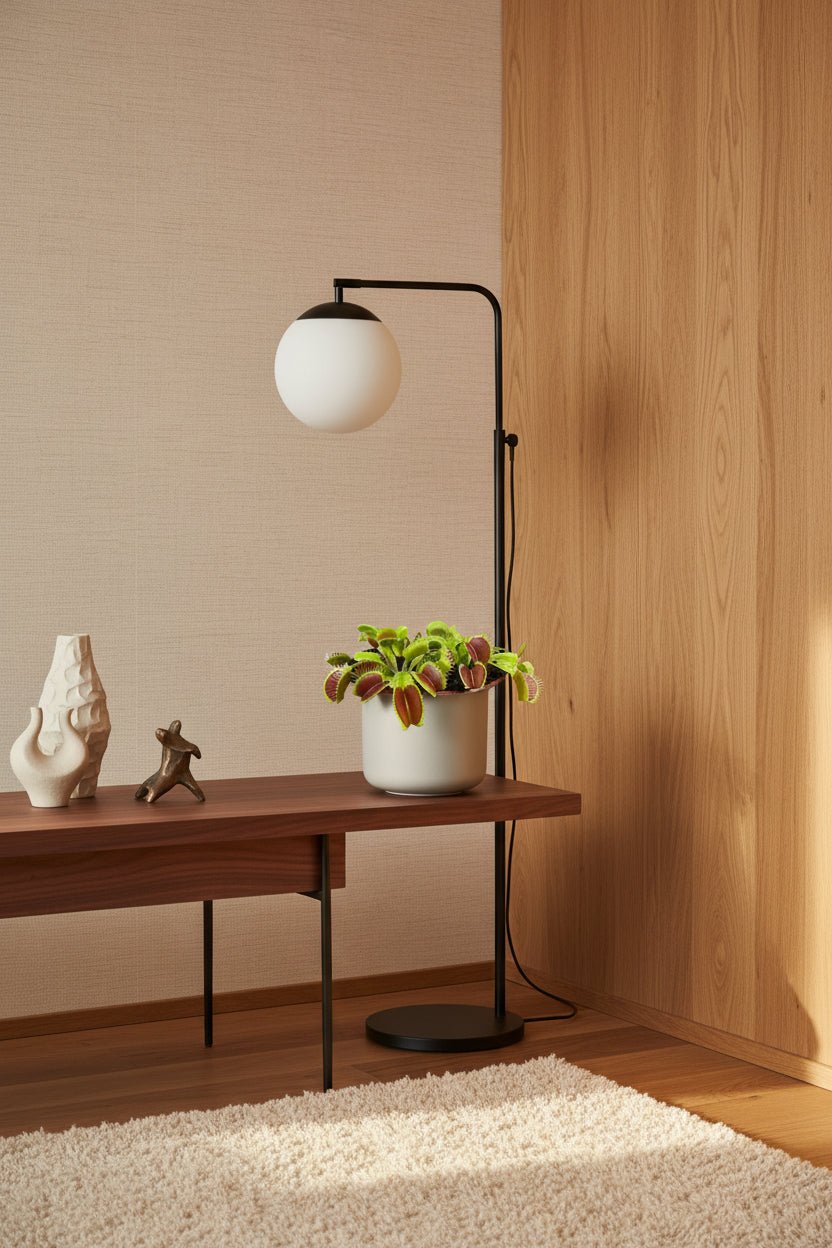
Its green and red serrated traps make it the most spectacular element in a carnivorous plant arrangement — it immediately draws attention and sparks curiosity in all visitors. Our guide to creating a plant corner will give you ideas on how to showcase it.
- On a carnivorous tray: pair it with a Drosera aliciae with shiny droplets and a Sarracenia venosa with upright pitchers — three different capture mechanisms (jaws / droplets / pitchers), same watering logic, spectacular and educational carnivorous tray.
- In a complete collection: add a Nepenthes with hanging pitchers and a Sarracenia psittacina parrot — five carnivores, five ways to catch insects, a fascinating collection for lovers of unusual botany.
- Decorative pot: a lightweight plastic or light ceramic pot with a deep saucer is essential to maintain constant humidity.
Verdeia Tips
- Do not trigger traps unnecessarily: each closure consumes a significant amount of energy — a plant whose traps are triggered without catching insects gradually weakens and produces fewer and fewer new traps.
- Direct sunlight is mandatory: this is the most important condition — without at least 3 to 4 hours of direct sunlight per day, traps fade, lose their vigor, and the plant slowly declines.
- Respect winter dormancy: place it in a cool (5 to 10 °C) and bright spot between November and February — this dormancy is essential for it to restart vigorously in spring with new colorful traps.
Technical Specifications
- Botanical name: Dionaea muscipula
- Common name: Venus flytrap
- Origin: North and South Carolina (United States)
- Pot diameter: Ø12 cm
- Approximate height: H12 cm
- Adult size: up to 15 cm
- Exposure: full sun / direct light
- Watering: regular — substrate constantly moist, non-calcareous water mandatory
- Care: moderate
- Non-toxic to pets and children
- Decor style: Botanical curiosity / Natural
Each plant is unique: photos show an example of its appearance. The size and color of the traps naturally vary depending on light and season.

Your plant, delivered with care
Every plant is hand-packed in a box specially designed for plants — secured, protected, ready to travel. It arrives in perfect condition, roots intact and foliage preserved, ready to take its place in your home.
Our Verdeia commitments
FAQ – Everything to know before adopting your Verdeia plant
How are my plants prepared before shipping?
All our plants are selected from our European partner nurseries. Before shipping, they are watered, cleaned, and protected with breathable, secure packaging. Each package is designed to ensure your plant arrives in perfect health, without any transport-related stress.
Will the plant look exactly like the photo?
The photos accurately represent the variety and the stated size. Since each plant is unique, slight differences in shape, foliage, or color may occur — and that’s part of their charm.
What are the delivery times and conditions?
Shipping is done within 48 business hours, with tracked delivery within 2 to 5 business days. Delivery costs €5.60 — free for orders over €50. You will receive a tracking link as soon as the package is shipped.
What to do upon receiving my plant?
Open your package as soon as you receive it and carefully remove the plant from its packaging. Let it acclimate for 24 hours in its new environment before watering. If it has been slightly stressed during transport, it will recover its shape after one or two days in the light.
What to do if my plant arrives damaged?
Contact us within 48 hours with a photo of the issue. Our team will assess the situation and offer you the best solution: replacement, partial refund, or recovery advice.
Can I return a plant?
Since plants are living beings, standard returns are not possible. However, we guarantee good health upon delivery: if the plant arrives damaged, it will be replaced free of charge. For any other cases (order error, decorative pot, accessory), returns are possible within 14 days.