



Cupressus Goldcrest Wilma topiary double ball (Golden Cypress) — H60 cm | Pot Ø14 cm
- Regular price
-
€30,95 - Regular price
-
- Sale price
-
€30,95
Couldn't load pickup availability
Frequently Asked Questions
Can Cupressus Goldcrest Wilma remain outdoors in winter? Yes, it is hardy down to -10 °C and tolerates outdoor cold better than the dry air of a heated interior.
Why are the branches of my cypress turning brown? A conifer never regenerates a dried-out branch; browning almost always follows a period when the root ball remained dry.
SHIPPING & PACKAGING
Shipping within 24/48 hours via DPD
- Delivery in 2 to 5 business days
- Eco-friendly packaging: recyclable boxes and biodegradable materials
- Special protection to ensure the plant arrives in perfect condition
- Parcel tracking sent by email as soon as shipped
- Free delivery on orders over €50
48H QUALITY GUARANTEE
We guarantee that your plants will arrive in perfect condition. If your plant arrives damaged or in poor condition:
- Contact us within 48 hours at hello@verdeia.eu with photos
- Free replacement or full refund
- No return necessary – we trust you
The guarantee covers: damage related to transport, severely weakened plant upon arrival, preparation errors.
CARE TIPS UPON ARRIVAL
To help your plant settle in for the long term:
- Unpack immediately and inspect your plant
- Let it acclimatize 24-48h in a bright spot without direct sunlight
- Check soil moisture before watering (dry surface = light watering)
- Wait 2-3 weeks before repotting
- Avoid heat sources and drafts
- Gently wipe leaves to remove dust
Need help? Contact our team at hello@verdeia.eu or via chat.
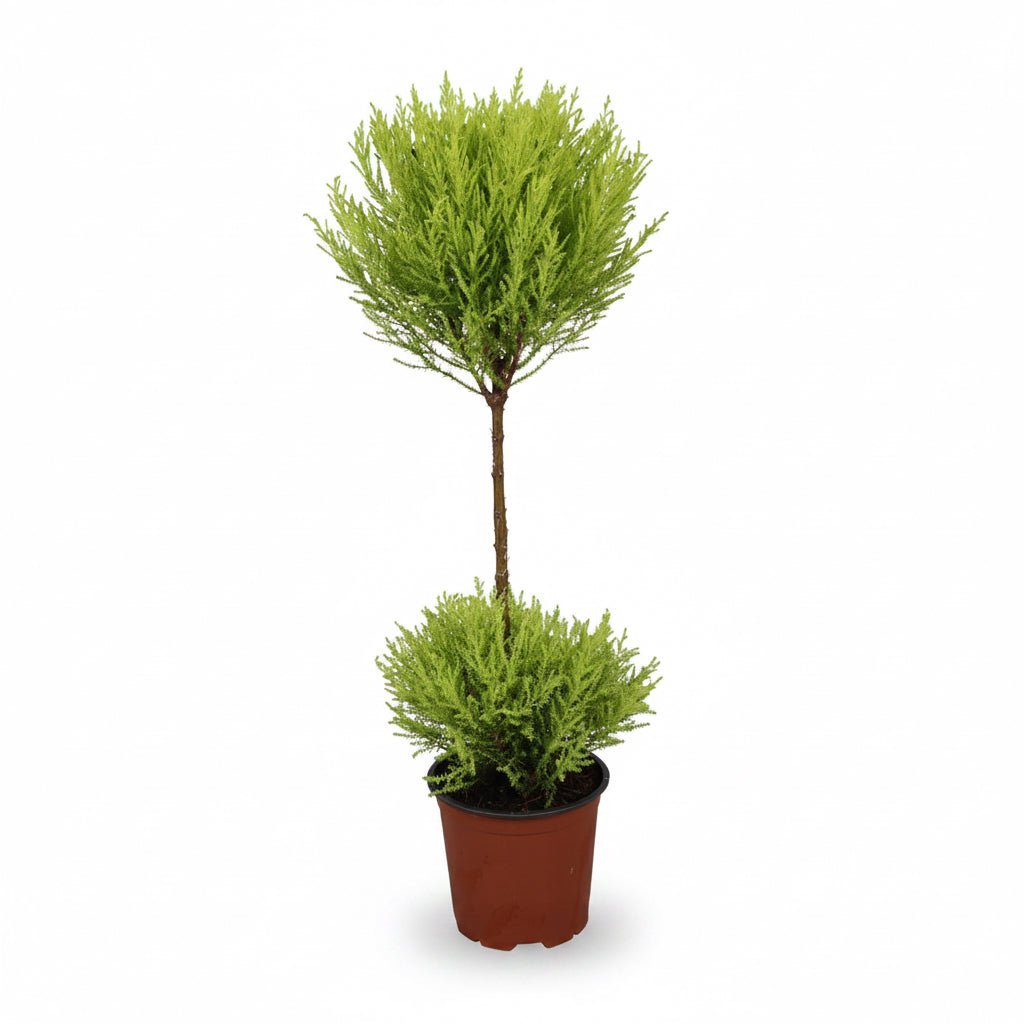
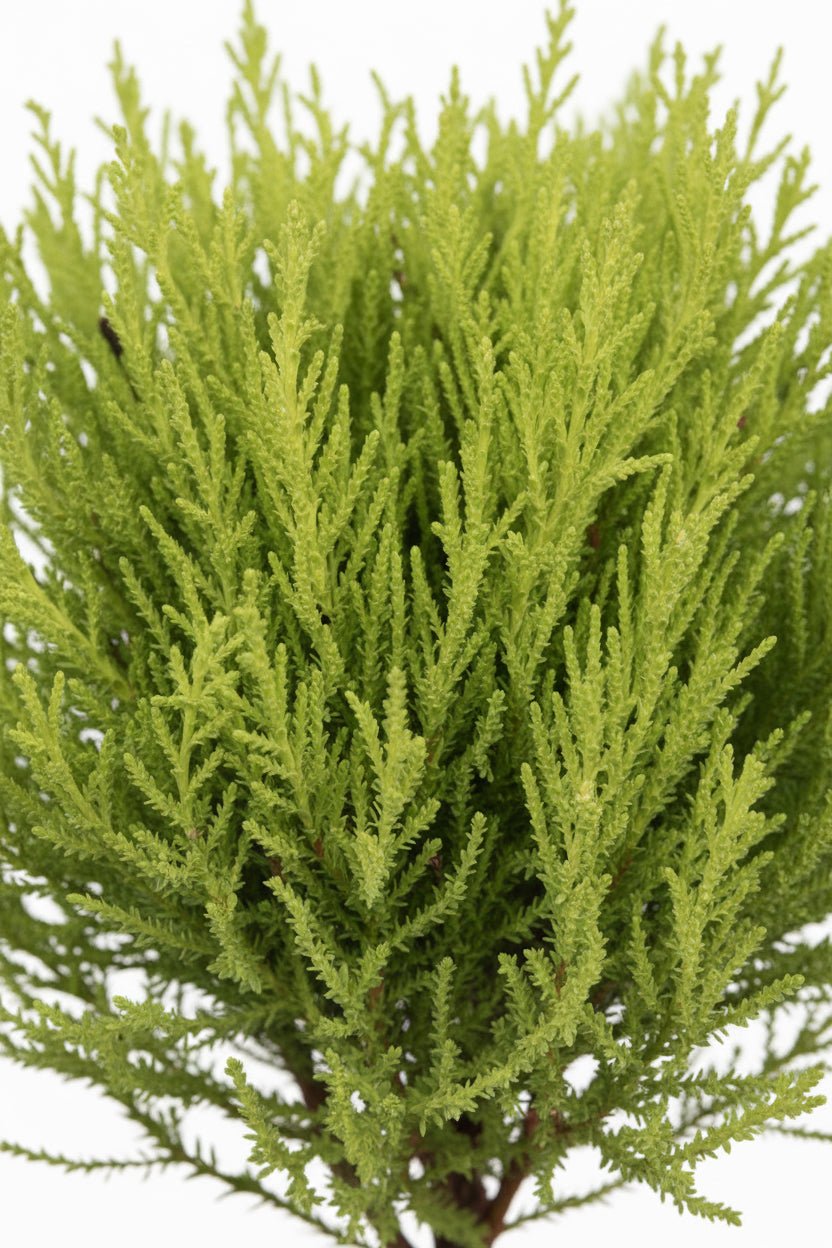
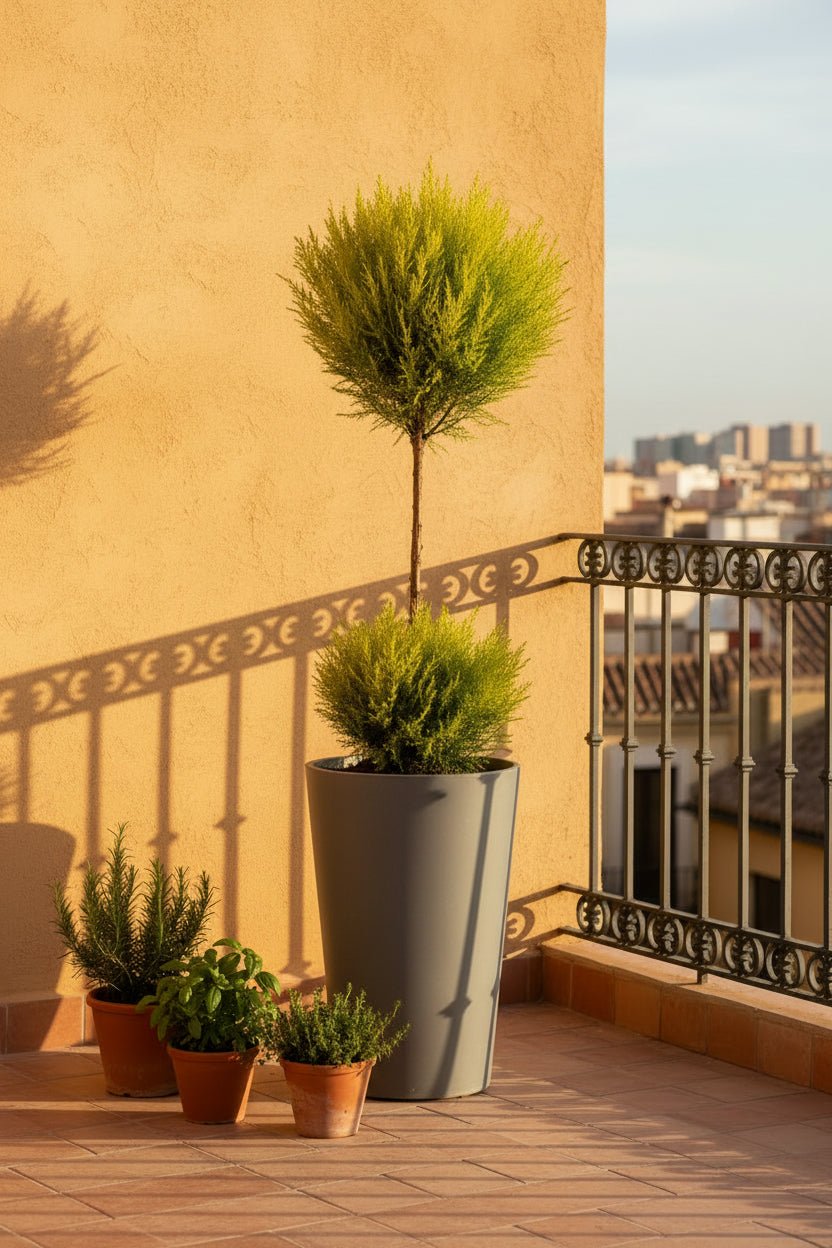
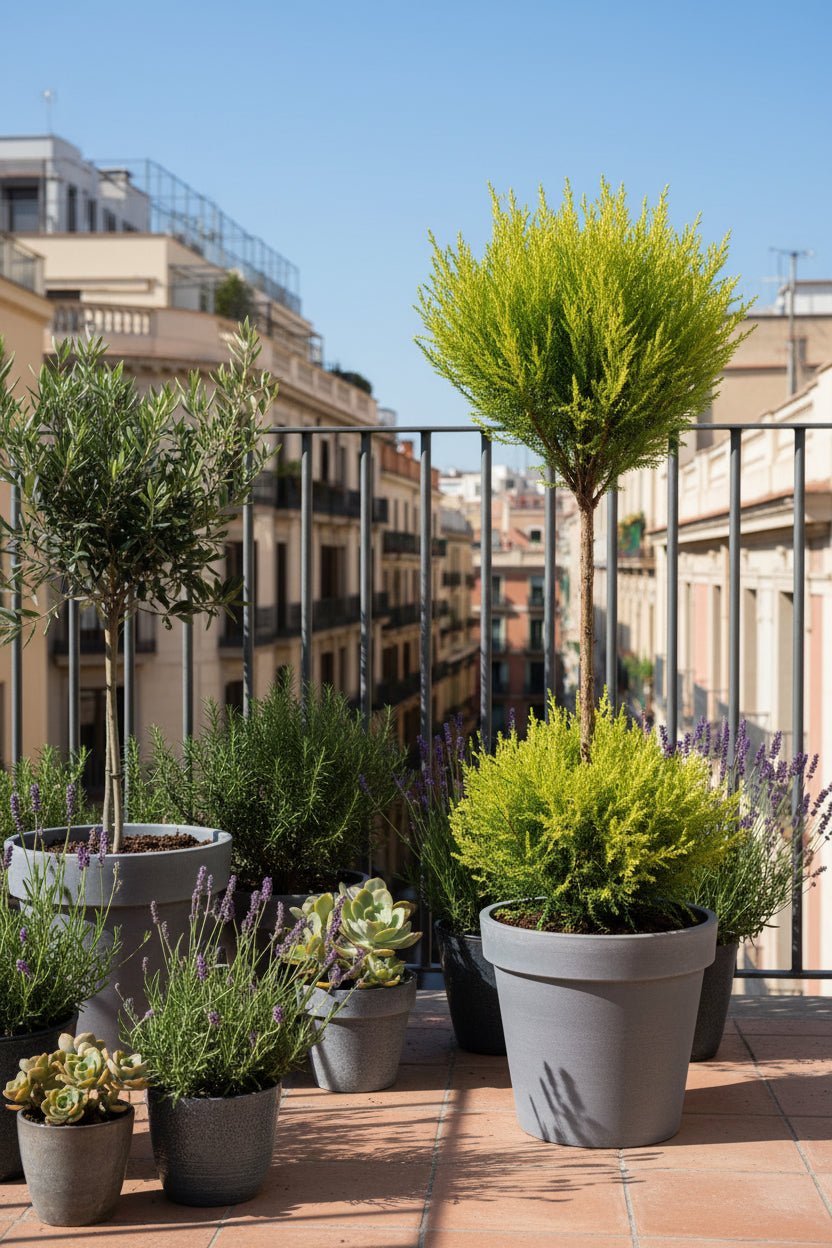

🌳 Double-ball topiary • ✨ Lemon-gold foliage • 🌿 Lemon scent when crushed • ☀️ Sun to partial shade • ❄️ Hardy down to -10 °C • 🏡 Indoors and outdoors
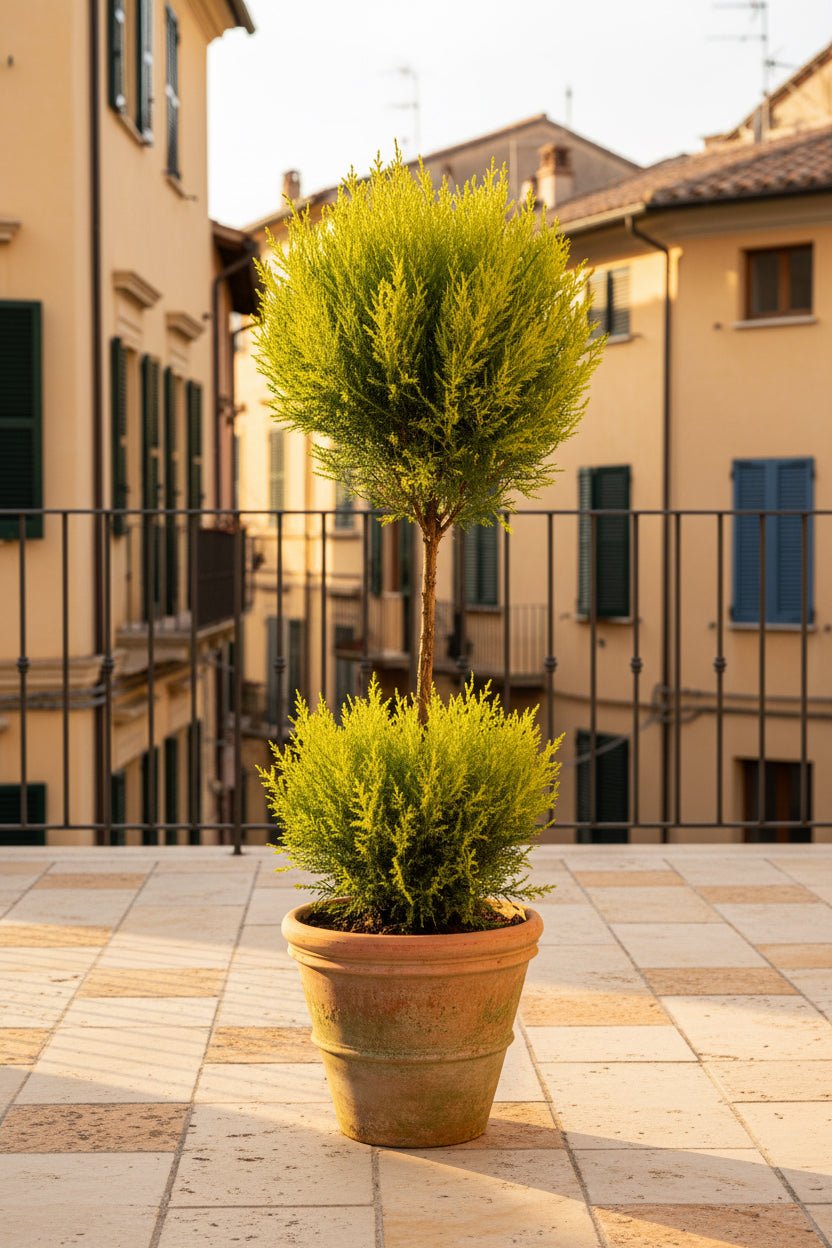
This Cupressus macrocarpa 'Goldcrest Wilma' is pruned into a double-ball topiary: a dense first sphere at the rim of the pot, a completely clear bare trunk, then a second sphere at the top. A horticultural cultivar of the Monterey cypress, whose parent species originates from the Monterey coast of California, it stands apart from the classic conical form with its entirely hand-shaped silhouette.
Its distinctive feature is its foliage: the fine, feathery branches release a clear lemon scent as soon as they are crushed, and take on a chartreuse-green to golden hue that becomes brighter in sunny conditions. The pruned form requires two to three years of nursery work before reaching this balance.
Which Goldcrest Wilma form should you choose?
The same cultivar is available in several pruned forms in our catalogue:
- Double-ball topiary on a stem (this plant) — two spheres separated by a clear trunk (H60 cm | Pot Ø14 cm). The most highly worked form, ideal for an entrance or terrace.
- Conical Cupressus 'Goldcrest Wilma' — naturally dense conical growth from base to tip (2 sizes: H55 cm | Pot Ø14 cm and H90 cm | Pot Ø21 cm). The classic form, taller in the larger size.
Light & placement
The brighter the position, the more golden the foliage becomes. In the shade, it turns greener and loses much of its decorative appeal. This plant does well outdoors for much of the year and tolerates moderate frost.
- Light: full sun to partial shade — direct sun is preferred, unlike for most indoor potted plants.
- Placement: terrace, balcony, entrance, conservatory — indoors, only in front of a very bright window and in a cool room.
- Temperature: hardy down to -10 °C — however, it dislikes the dry heat of a heated interior in winter.
- Soil type: well-draining and slightly acidic — Mediterranean plant compost or universal potting soil mixed with sand.
Kept permanently in a heated room, Goldcrest browns from the inside within a few months: it is much more a terrace or cool conservatory plant than a living room plant.
Watering & care
A potted conifer does not tolerate complete drying out: unlike leafy plants, a brown branch will never turn green again. A substrate lightened with perlite and clay pebbles maintains moisture without suffocating the roots.
- Watering: regular — keep the substrate moist but not waterlogged, twice a week in summer and once every ten days in winter. Never allow the root ball to dry out completely.
- Drainage: essential — use a pot with drainage holes, place clay pebbles at the bottom, and empty the saucer after each watering.
- Pruning: two to three times a year from April to September, using secateurs and following the sphere. Always prune within the green foliage, never into bare wood.
- Fertiliser: conifer fertiliser once a month from April to August only.
- Repotting: every 2 years in spring — the roots quickly fill a pot of this diameter.
A branch that turns brown will never regrow: it is better to prune lightly and often than to wait, as a cut into bare wood leaves a permanent gap in the sphere.
Decorating ideas & plant combinations
The topiary is an architectural plant: its precise geometry structures an entrance, doorstep or terrace corner. It works particularly well as a pair, on either side of a door or passageway.
- For a symmetrical entrance effect, place two on either side of a door in matching anthracite Elho Brussels decorative pots — the matt grey highlights the geometry without distracting from the foliage.
- For a contrast of shapes, pair it with the conical version of the same cypress — the same golden foliage, the same scent, and two silhouettes that complement each other.
- For a Mediterranean atmosphere, surround it with silver-leaved plants and terracotta pots — the chartreuse green stands out clearly against ochre tones.
- For winter decoration, the pruned form is perfect for a string of lights wrapped around the trunk and two spheres, without piercing or damaging the foliage.
Crushing a branch between your fingers releases a very clear lemon scent: placed near a passageway, the topiary diffuses this fragrance whenever it is brushed against.
Verdeia tips
- Prune lightly but often: two or three light trims between April and September maintain the shape without ever cutting into the wood. A late, severe pruning instead creates gaps that the cypress will not fill.
- Never let the root ball dry out: conifer foliage does not regenerate. A single period of drying out leaves permanent brown branches, which are especially visible on a pruned form.
- Move it outdoors as soon as possible: this is a terrace plant that dislikes both dry air and the heat of a heated interior. An outdoor position all year round, or at least from April to November, suits it considerably better.
Technical specifications
- Botanical name: Cupressus macrocarpa 'Goldcrest Wilma'
- Common name: Golden cypress, lemon cypress
- Family: Cupressaceae
- Origin: horticultural cultivar, parent species originating from the Monterey coast of California
- Form: double-ball topiary on a clear stem
- Size on delivery: H60 cm | Pot Ø14 cm
- Light: full sun to partial shade
- Watering: regular, with the substrate kept moist but not waterlogged
- Hardiness: down to -10 °C
- Soil type: well-draining, slightly acidic
- Growth: slow, with the shape maintained through regular pruning
- Foliage: evergreen, fine chartreuse-green to golden branches, lemon scent when crushed
- Care: easy, prune 2 to 3 times a year
- Toxicity: 🐾 non-toxic to pets and children
- Decorative style: Mediterranean / Classic / Terrace
Each plant is unique: the diameter of the two spheres, the height of the trunk and the intensity of the golden colour naturally vary depending on the specimen and its growing conditions.

Your plant, delivered with care
Every plant is hand-packed in a box specially designed for plants — secured, protected, ready to travel. It arrives in perfect condition, roots intact and foliage preserved, ready to take its place in your home.
Our Verdeia commitments
FAQ – Everything to know before adopting your Verdeia plant
How are my plants prepared before shipping?
All our plants are selected from our European partner nurseries. Before shipping, they are watered, cleaned, and protected with breathable, secure packaging. Each package is designed to ensure your plant arrives in perfect health, without any transport-related stress.
Will the plant look exactly like the photo?
The photos accurately represent the variety and the stated size. Since each plant is unique, slight differences in shape, foliage, or color may occur — and that’s part of their charm.
What are the delivery times and conditions?
Shipping is done within 48 business hours, with tracked delivery within 2 to 5 business days. Delivery costs €5.60 — free for orders over €50. You will receive a tracking link as soon as the package is shipped.
What to do upon receiving my plant?
Open your package as soon as you receive it and carefully remove the plant from its packaging. Let it acclimate for 24 hours in its new environment before watering. If it has been slightly stressed during transport, it will recover its shape after one or two days in the light.
What to do if my plant arrives damaged?
Contact us within 48 hours with a photo of the issue. Our team will assess the situation and offer you the best solution: replacement, partial refund, or recovery advice.
Can I return a plant?
Since plants are living beings, standard returns are not possible. However, we guarantee good health upon delivery: if the plant arrives damaged, it will be replaced free of charge. For any other cases (order error, decorative pot, accessory), returns are possible within 14 days.