



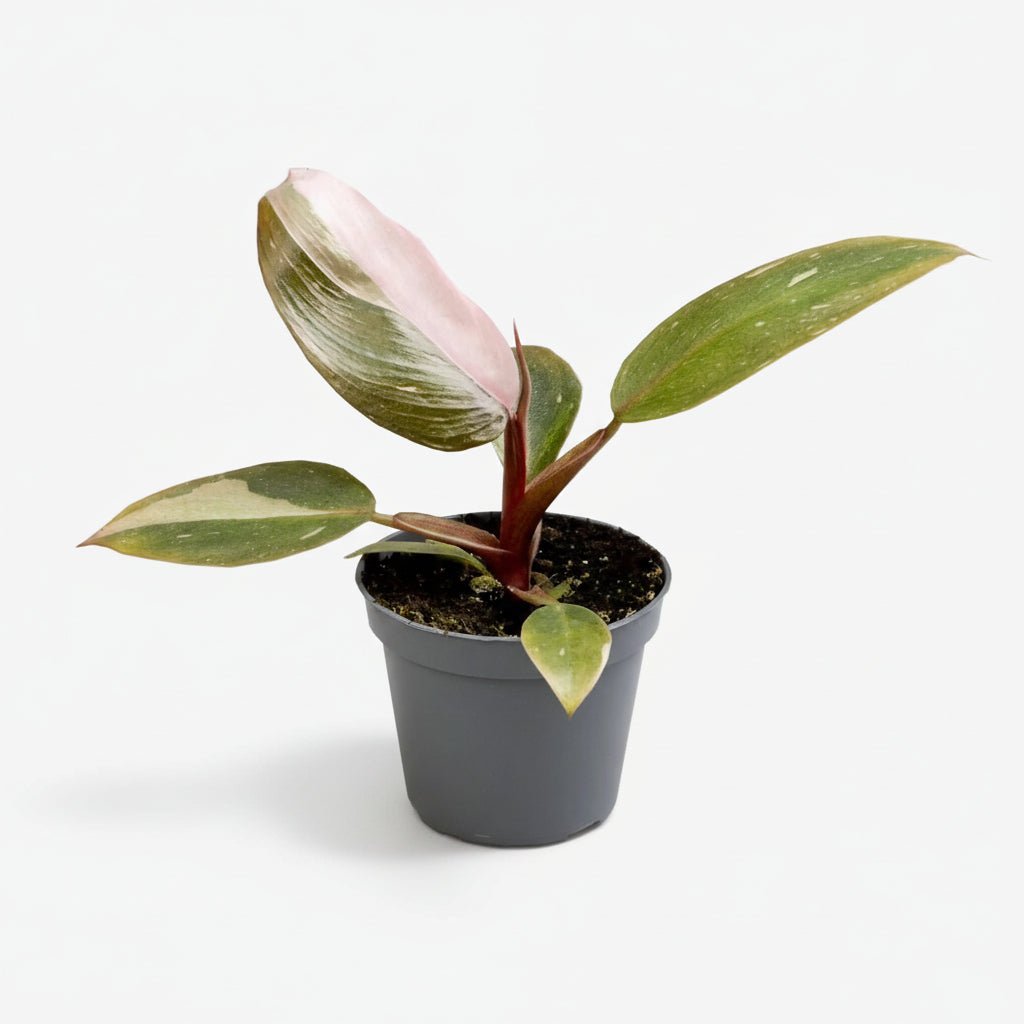
Philodendron Pink Princess H12 cm | Pot Ø6 cm
- Regular price
-
€10,95 - Regular price
-
- Sale price
-
€10,95
Couldn't load pickup availability
Frequently Asked Questions
Why are the leaves of my Pink Princess turning green again? It's a lack of light. Without enough bright indirect light, new leaves lose their variegation and turn completely green again. Move the plant closer to a window — the next leaves will regain their pink.
Is the Philodendron Pink Princess toxic to pets? Yes, like all Philodendrons, it contains irritating calcium oxalates. It is toxic to dogs, cats, and humans if ingested. Keep it out of reach of pets and young children.
SHIPPING & PACKAGING
Shipping within 24/48 hours via DPD
- Delivery in 2 to 5 business days
- Eco-friendly packaging: recyclable boxes and biodegradable materials
- Special protection to ensure the plant arrives in perfect condition
- Parcel tracking sent by email as soon as shipped
- Free delivery on orders over €50
48H QUALITY GUARANTEE
We guarantee that your plants will arrive in perfect condition. If your plant arrives damaged or in poor condition:
- Contact us within 48 hours at hello@verdeia.eu with photos
- Free replacement or full refund
- No return necessary – we trust you
The guarantee covers: damage related to transport, severely weakened plant upon arrival, preparation errors.
CARE TIPS UPON ARRIVAL
To help your plant settle in for the long term:
- Unpack immediately and inspect your plant
- Let it acclimatize 24-48h in a bright spot without direct sunlight
- Check soil moisture before watering (dry surface = light watering)
- Wait 2-3 weeks before repotting
- Avoid heat sources and drafts
- Gently wipe leaves to remove dust
Need help? Contact our team at hello@verdeia.eu or via chat.


🌿 Unique pink variegation • ☀️ Bright indirect light • 💧 Moderate watering • 🌱 Collection plant • ⚠️ Toxic to pets
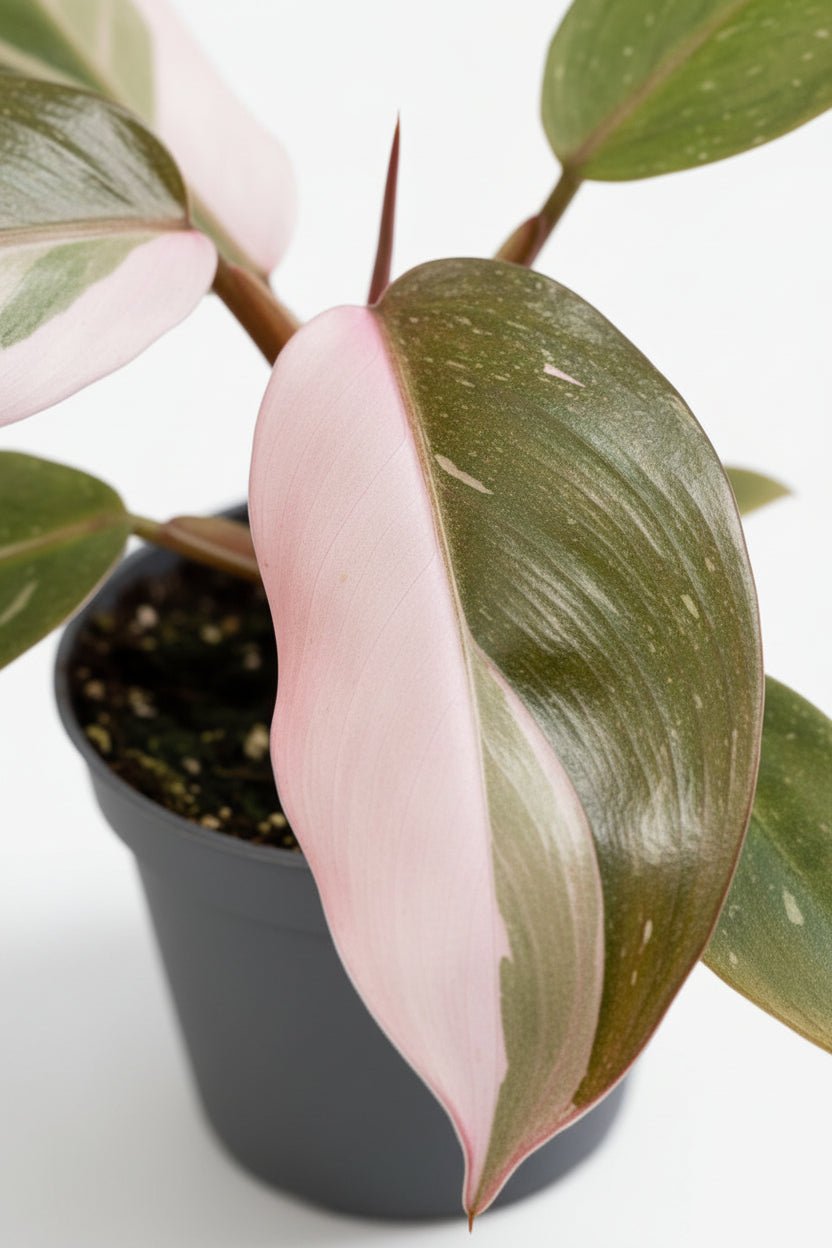
The Philodendron Pink Princess is one of the most sought-after indoor plants worldwide. Its large dark green, almost black leaves, marbled with bright pink to cream, are the result of a rare natural mutation — each leaf is unique, each new shoot a surprise. A plant that fascinates both collectors and fans of contemporary plant decor.
This H12 cm | Pot Ø6 cm size is the perfect entry point to welcome a Pink Princess at home — a young plant to grow, whose foliage develops and variegates more as it matures. Discover it in our collection plant selection.
Which Philodendron variety to choose?
The Philodendron genus is huge — graphic, colorful, climbing or upright foliage. Here’s how the Pink Princess stands out in our collection:
- Philodendron Pink Princess (this plant) — unique pink and dark green variegation, compact upright habit. The rarest and most sought-after.
- Philodendron Imperial Red — large burgundy leaves, wide spreading habit. The most spectacular in volume.
- Philodendron Micans — velvety bronze-green leaves, trailing stems. The most sensual and textured.
- Philodendron Scandens Brasil — heart-shaped bicolor green and yellow leaves, climbing vine. The easiest and most vibrant.
The Pink Princess is the only pink-leafed variety in our catalog — its unique character calls for a bit more care than other Philodendrons. And this is just a glimpse: our full collection includes about twenty varieties with very different profiles.
Exposure & placement
The pink variegation of the Philodendron Pink Princess is directly linked to light — it’s the light that regulates the amount of chlorophyll in the cells and thus the intensity of the pink. Too little light, and the new leaves turn green again.
- Ideal exposure: bright indirect light — near an east- or west-facing window, without direct sunlight.
- Avoid: direct sunlight that burns the pink areas, which are very sensitive as they lack protective chlorophyll.
- Tolerance: tolerates partial shade, but at the expense of variegation — leaves turn fully green again.
- Temperature: 18–27 °C, without drafts or sudden changes.
- Substrate: light, airy, and draining — universal potting soil mixed with perlite (30%).
If new leaves come out completely green, move the plant to more light. If they come out completely pink or white (reversion), prune the affected stem just above a well-variegated leaf.
Watering & care
- Watering: moderate — let the top 2–3 centimeters of substrate dry out between waterings.
- Frequency: about every 7–10 days in summer, every 2–3 weeks in winter.
- Water: room temperature, preferably non-calcareous — Pink Princess is sensitive to lime.
- Humidity: prefers a humid atmosphere (60–70%) — mist regularly or place the pot on a bed of moist clay pebbles.
- Fertilizer: every 4 weeks in spring and summer with a liquid green plant fertilizer diluted to half strength.
- Repotting: in spring, when roots appear under the pot — into a slightly larger container with fresh substrate.
The Pink Princess grows slowly — this is normal. Don’t overwater to speed up growth: you risk root rot. Patience is rewarded with increasingly larger and more variegated leaves.
Decor ideas & plant pairings
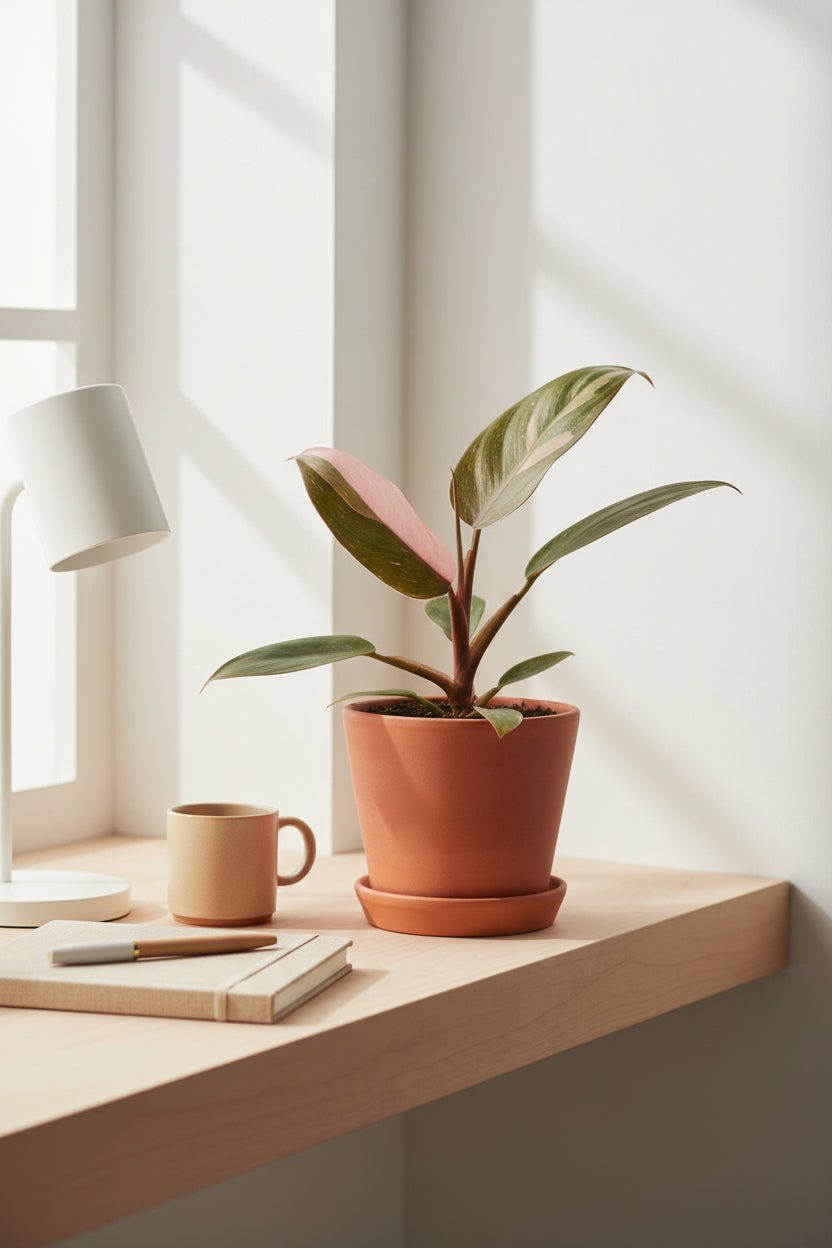
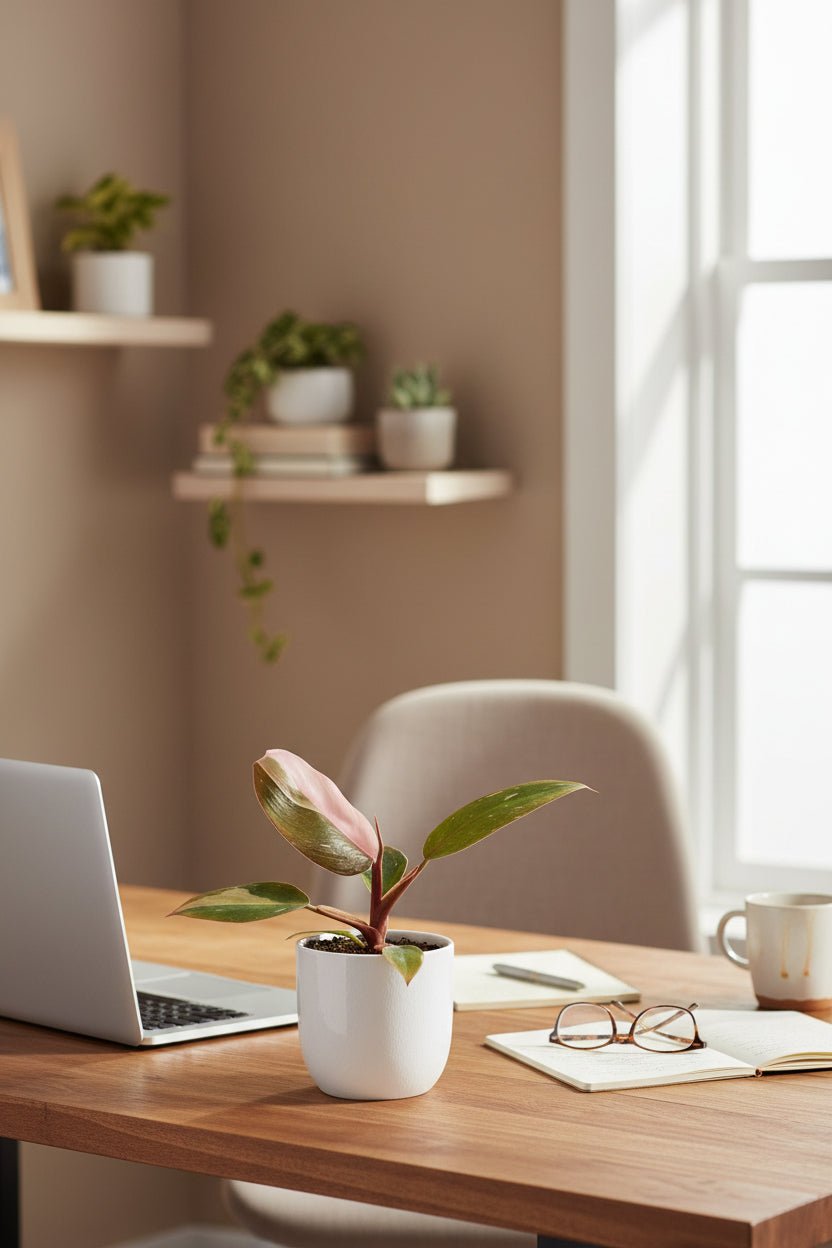
The Philodendron Pink Princess is a statement plant — its two-tone foliage immediately catches the eye and doesn’t need to be surrounded to stand out. It sits, and it reigns.
- Alone on a shelf or desk: in a small matte black ceramic decorative pot, the contrast between the dark pot and the pink foliage is striking.
- In arrangements: pair it with dark foliage — Zamioculcas, Philodendron Imperial Red — to highlight its pink tones. Avoid overly colorful plants that would compete with it.
- Gift size: its rarity and aesthetic make it an ideal plant gift for plant lovers. Find our ideas in our selection of ready-to-gift plants.
This compact D6 size is perfect for a shelf, windowsill, or desk. As it grows, it will naturally become the centerpiece of your urban jungle.
Verdeia Tips
- Light controls the pink — without bright indirect light, new leaves lose their variegation and turn green again. This is reversible: move the plant and the next leaves will regain their pink.
- Cut off fully pink leaves — a leaf without chlorophyll cannot photosynthesize. If a leaf grows out fully pink or white (total reversion), prune the stem above a well-variegated leaf to encourage balanced new growth.
- Don’t neglect humidity — the Pink Princess comes from humid tropical understories. In a heated, dry apartment, mist the foliage 2 to 3 times a week or invest in a humidifier nearby.
- Be patient with growth — this is a slow plant. A new leaf every 3 to 6 weeks is normal. Each leaf is unique — the wait is part of the experience.
- Clean the leaves gently — use a slightly damp cloth on the green areas, avoiding rubbing the more delicate pink areas. This improves photosynthesis and preserves the foliage’s shine.
- ⚠️ Toxic to animals and humans — like all Philodendrons, it contains irritating calcium oxalates. Keep out of reach of cats, dogs, and young children. See our plants and pets guide for suitable alternatives.
Technical characteristics
- Botanical name: Philodendron erubescens 'Pink Princess'
- Common name: Philodendron Pink Princess
- Family: Araceae
- Origin: Colombia, tropical forests of South America
- Pot diameter: 6 cm
- Approximate height: 12 cm
- Adult size: up to 60–90 cm indoors
- Light exposure: bright indirect light — avoid direct sun and deep shade
- Watering: moderate — let the top few centimeters dry out between waterings
- Care: moderate — watch the light and humidity
- Toxicity: toxic to dogs, cats, and humans if ingested (calcium oxalates)
- Decorative style: Collection / Urban jungle / Contemporary
- Special feature: unique pink and dark green variegation, each leaf different, highly sought-after collector's plant
Each plant is unique: the pink variegation naturally varies from one leaf to another and changes depending on the light. The photos show a representative example.

Your plant, delivered with care
Every plant is hand-packed in a box specially designed for plants — secured, protected, ready to travel. It arrives in perfect condition, roots intact and foliage preserved, ready to take its place in your home.
Our Verdeia commitments
FAQ – Everything to know before adopting your Verdeia plant
How are my plants prepared before shipping?
All our plants are selected from our European partner nurseries. Before shipping, they are watered, cleaned, and protected with breathable, secure packaging. Each package is designed to ensure your plant arrives in perfect health, without any transport-related stress.
Will the plant look exactly like the photo?
The photos accurately represent the variety and the stated size. Since each plant is unique, slight differences in shape, foliage, or color may occur — and that’s part of their charm.
What are the delivery times and conditions?
Shipping is done within 48 business hours, with tracked delivery within 2 to 5 business days. Delivery costs €5.60 — free for orders over €50. You will receive a tracking link as soon as the package is shipped.
What to do upon receiving my plant?
Open your package as soon as you receive it and carefully remove the plant from its packaging. Let it acclimate for 24 hours in its new environment before watering. If it has been slightly stressed during transport, it will recover its shape after one or two days in the light.
What to do if my plant arrives damaged?
Contact us within 48 hours with a photo of the issue. Our team will assess the situation and offer you the best solution: replacement, partial refund, or recovery advice.
Can I return a plant?
Since plants are living beings, standard returns are not possible. However, we guarantee good health upon delivery: if the plant arrives damaged, it will be replaced free of charge. For any other cases (order error, decorative pot, accessory), returns are possible within 14 days.