



Aspidistra elatior (Japanese mother-in-law's tongue)
- Regular price
-
€41,95 - Regular price
-
- Sale price
-
€41,95
Couldn't load pickup availability
Frequently Asked Questions
How often should you water an Aspidistra? Every 2 to 3 weeks in spring and summer and once a month in winter is enough — it’s a plant that tolerates missed waterings well.
Why do Aspidistra leaves become soft? Soft leaves almost always indicate stagnant water buildup at the bottom of the pot — check the drainage and space out watering.
SHIPPING & PACKAGING
Shipping within 24/48 hours via DPD
- Delivery in 2 to 5 business days
- Eco-friendly packaging: recyclable boxes and biodegradable materials
- Special protection to ensure the plant arrives in perfect condition
- Parcel tracking sent by email as soon as shipped
- Free delivery on orders over €50
48H QUALITY GUARANTEE
We guarantee that your plants will arrive in perfect condition. If your plant arrives damaged or in poor condition:
- Contact us within 48 hours at hello@verdeia.eu with photos
- Free replacement or full refund
- No return necessary – we trust you
The guarantee covers: damage related to transport, severely weakened plant upon arrival, preparation errors.
CARE TIPS UPON ARRIVAL
To help your plant settle in for the long term:
- Unpack immediately and inspect your plant
- Let it acclimatize 24-48h in a bright spot without direct sunlight
- Check soil moisture before watering (dry surface = light watering)
- Wait 2-3 weeks before repotting
- Avoid heat sources and drafts
- Gently wipe leaves to remove dust
Need help? Contact our team at hello@verdeia.eu or via chat.
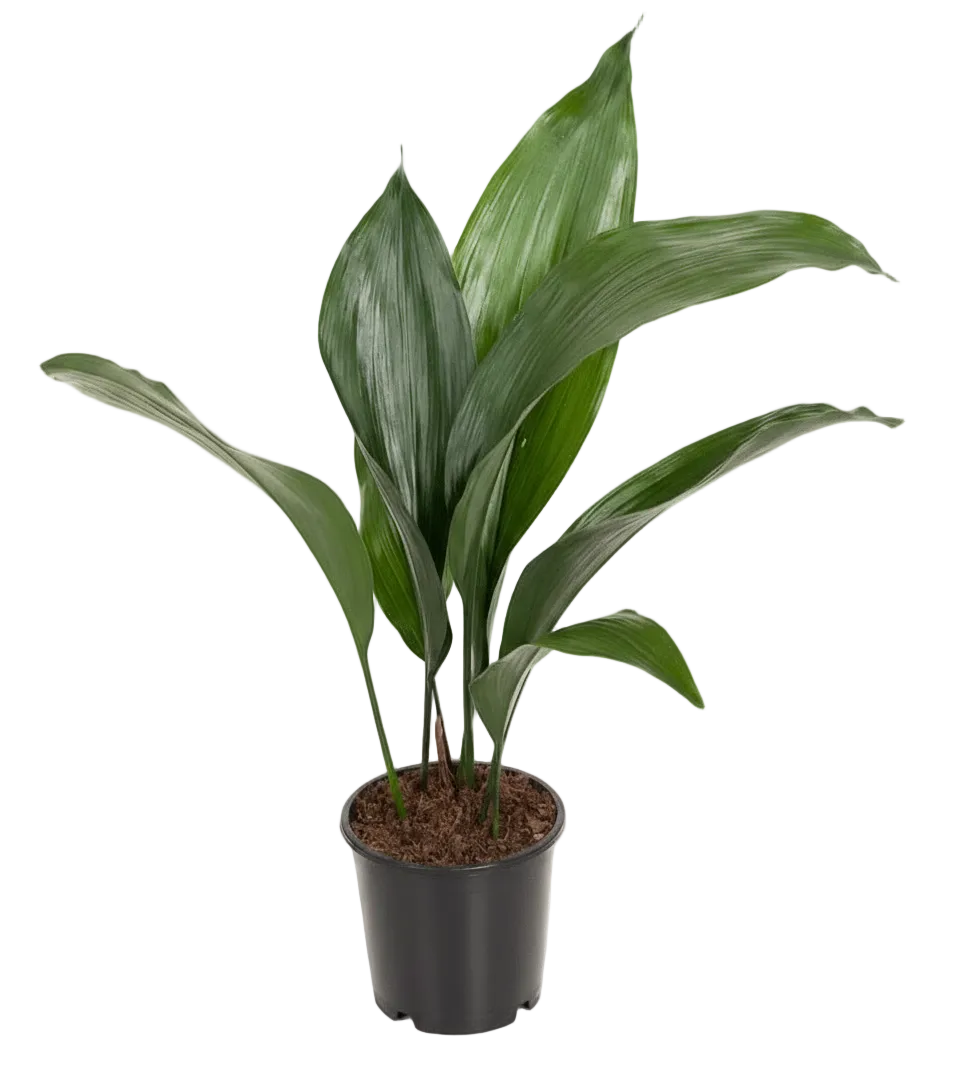
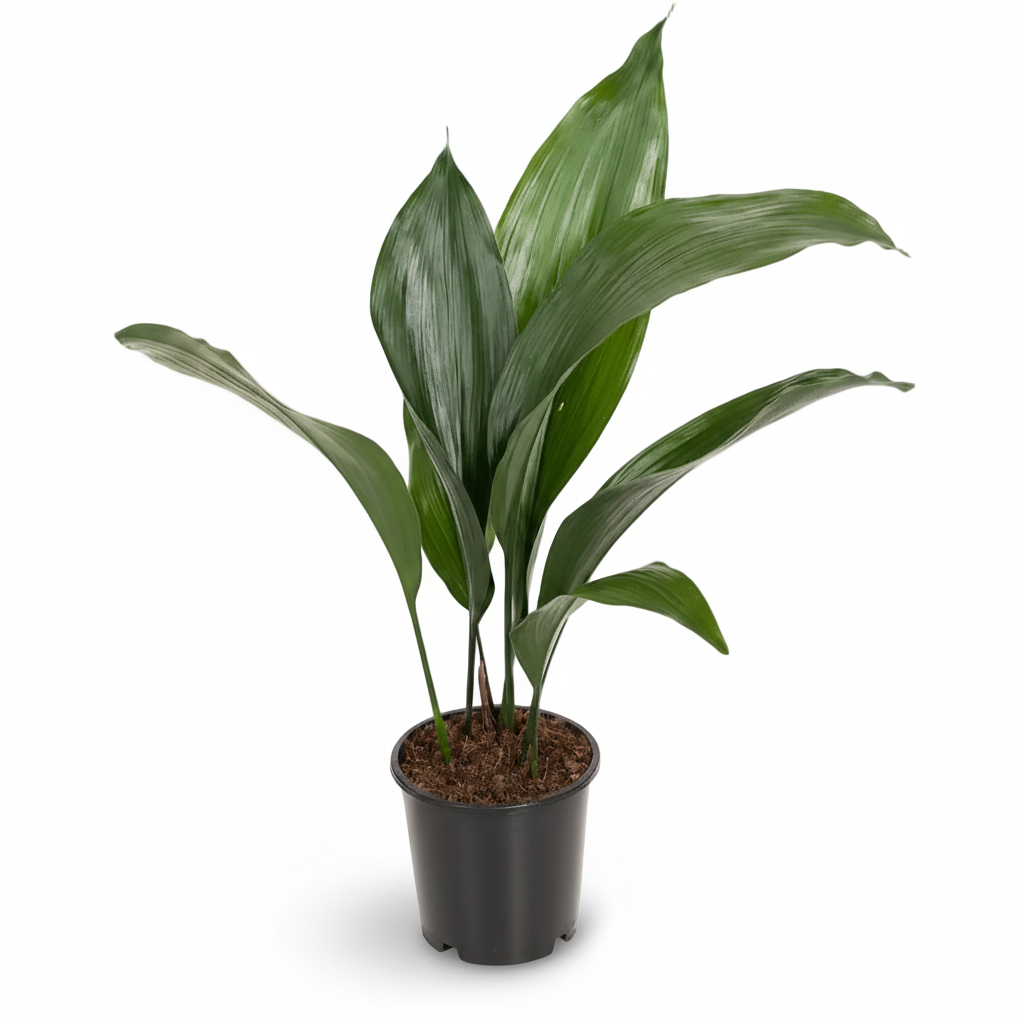
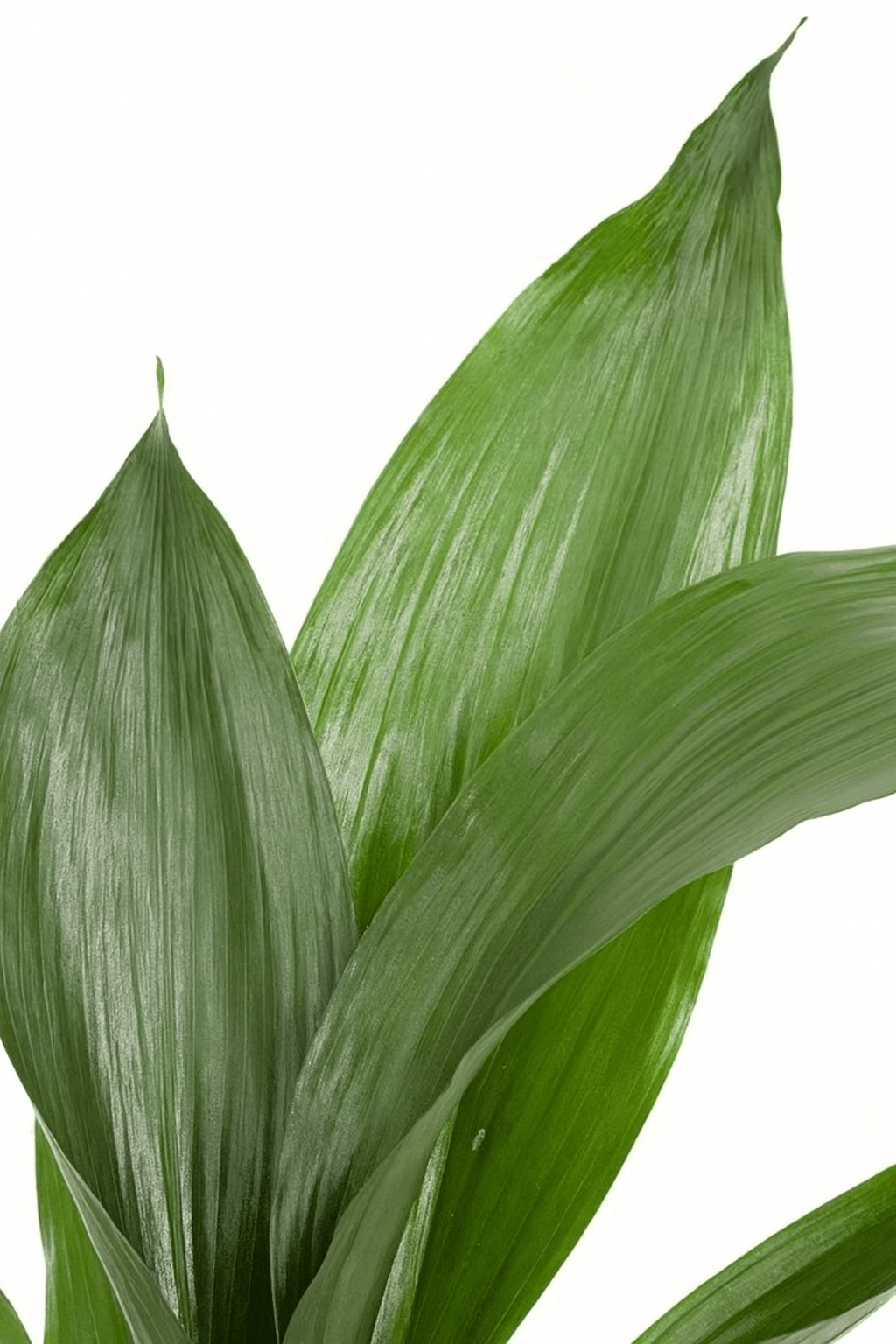
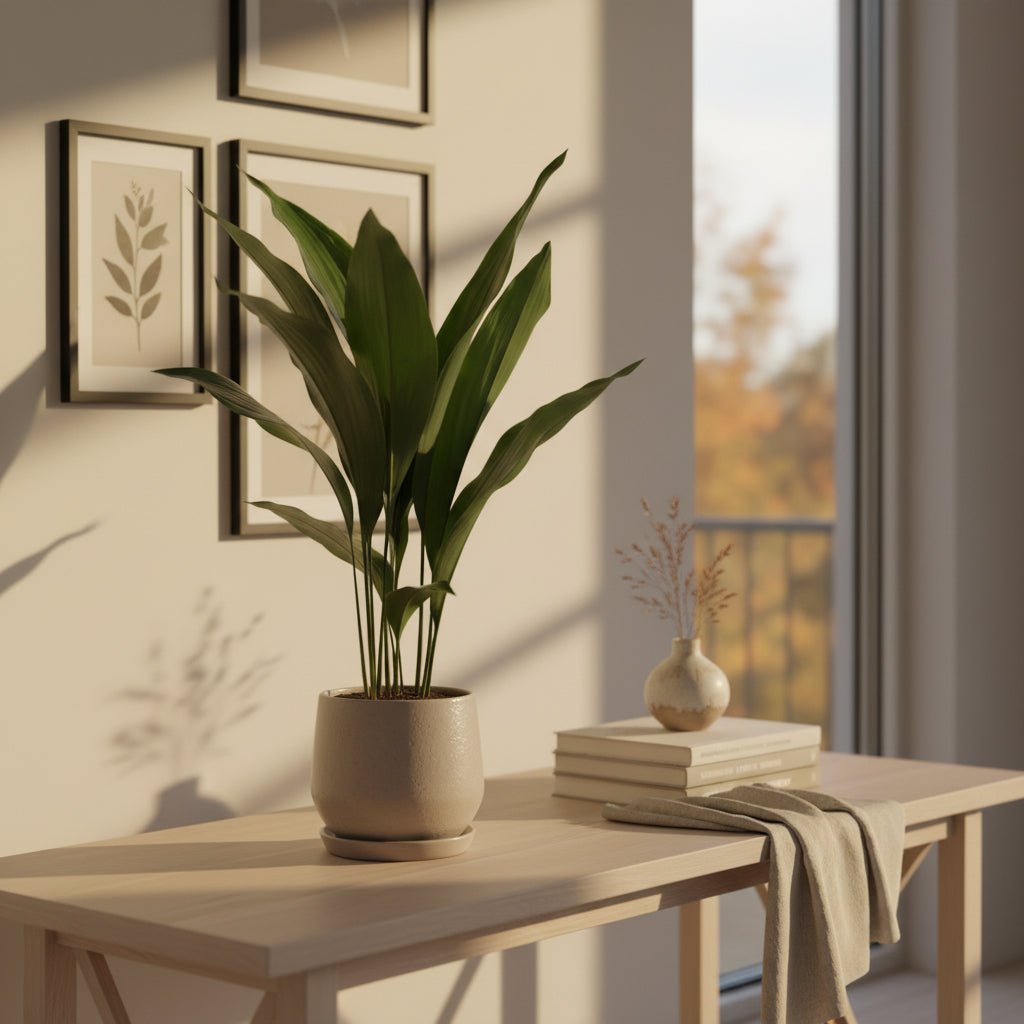
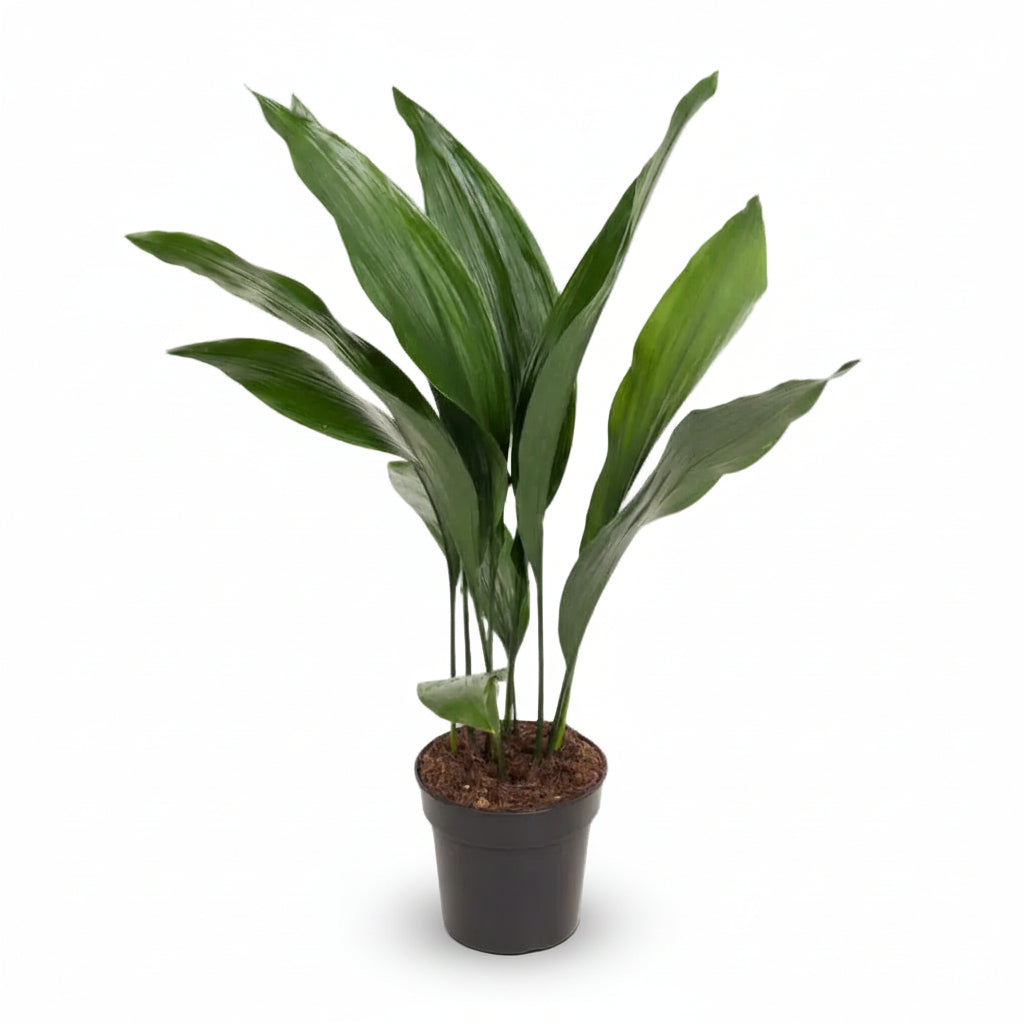

🌿 Glossy dark green foliage • 🌑 Resistant to deep shade • 💧 Very moderate watering • 🐾 Non-toxic • 🏙️ 2 sizes available
Aspidistra elatior, nicknamed Japanese Cast Iron Plant, is a robust and elegant plant native to Japan and Taiwan. Its broad, glossy dark green leaves grow in dense clumps from the ground — a graphic and structured presence that brightens the shadiest corners without fail. It is one of the few plants truly suited for dark entrances and hallways.
Discreet, indestructible, and non-toxic to pets, it is perfect for homes with cats and dogs — also featured in our selection of pet-friendly indoor plants.
Exposure & Location
Aspidistra elatior is one of the most shade-tolerant indoor plants. It thrives in conditions where most other plants would fail — windowless hallways, dark corners of living rooms, dimly lit bathrooms. To understand how to optimize light in each room, our guide on choosing the right plant by room details light requirements by exposure.
- Exposure: shade to filtered light — avoid direct sunlight which burns and discolors leaves.
- Location: hallway, entrance, bathroom, living room corner — ideal on the floor or on a low piece of furniture.
- Temperature: 7–24 °C — tolerates unusually low temperatures for a tropical plant.
- Humidity: tolerates dry air without issue.
Rotate the pot a quarter turn every month to keep the foliage even, especially in low-light areas where the plant always grows toward the light source.
Watering & Care
Aspidistra prefers lack of water over excess. Let half the soil dry out before watering again — in winter, monthly watering is often enough. This plant adapts to your indoor rhythm without fuss, and among the most common mistakes with this species, overwatering is the top one.
- Frequency: every 2 to 3 weeks in spring-summer, monthly in winter.
- Drainage: essential — standing water at the bottom of the pot softens leaves and rots roots.
- Care: wipe large leaves with a damp cloth to maintain their natural shine.
Soft leaves at the base almost always indicate stagnant water buildup — check drainage before changing your watering routine.
Decor Ideas & Plant Pairings
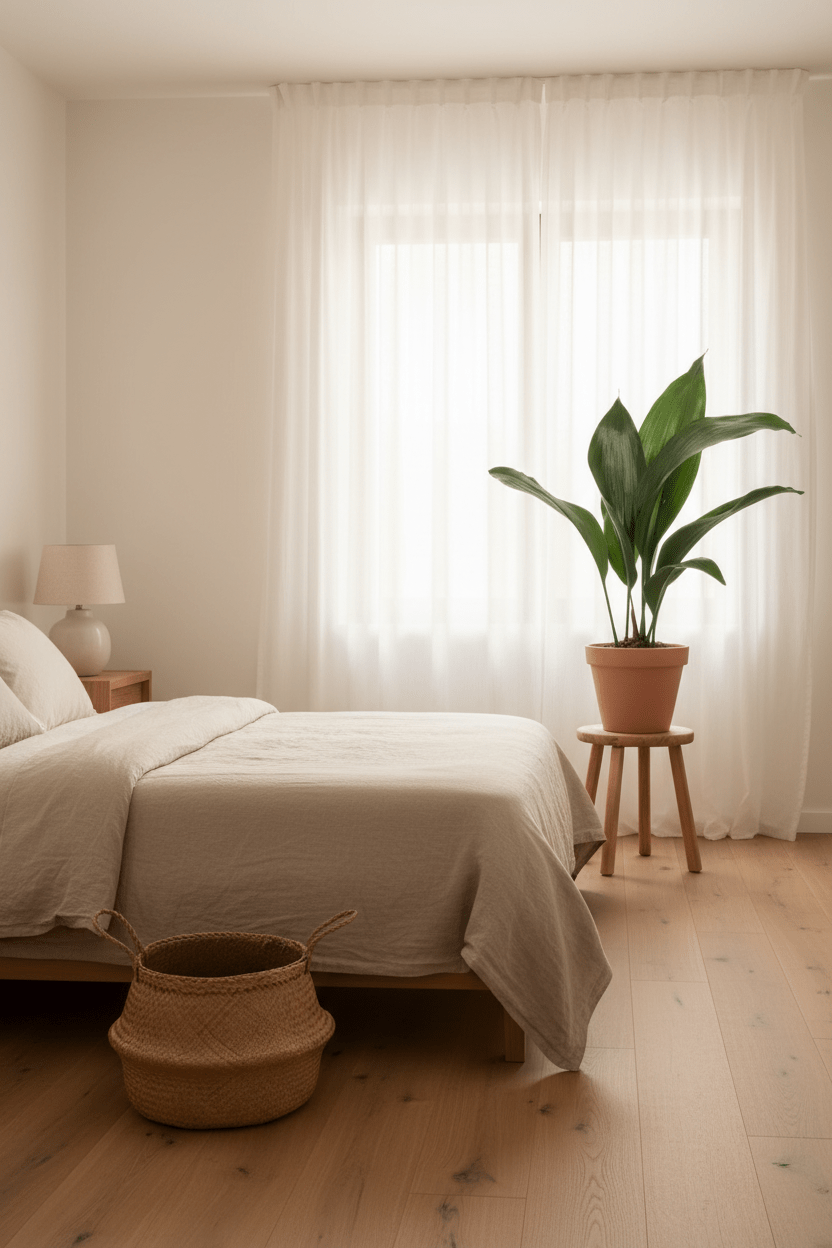
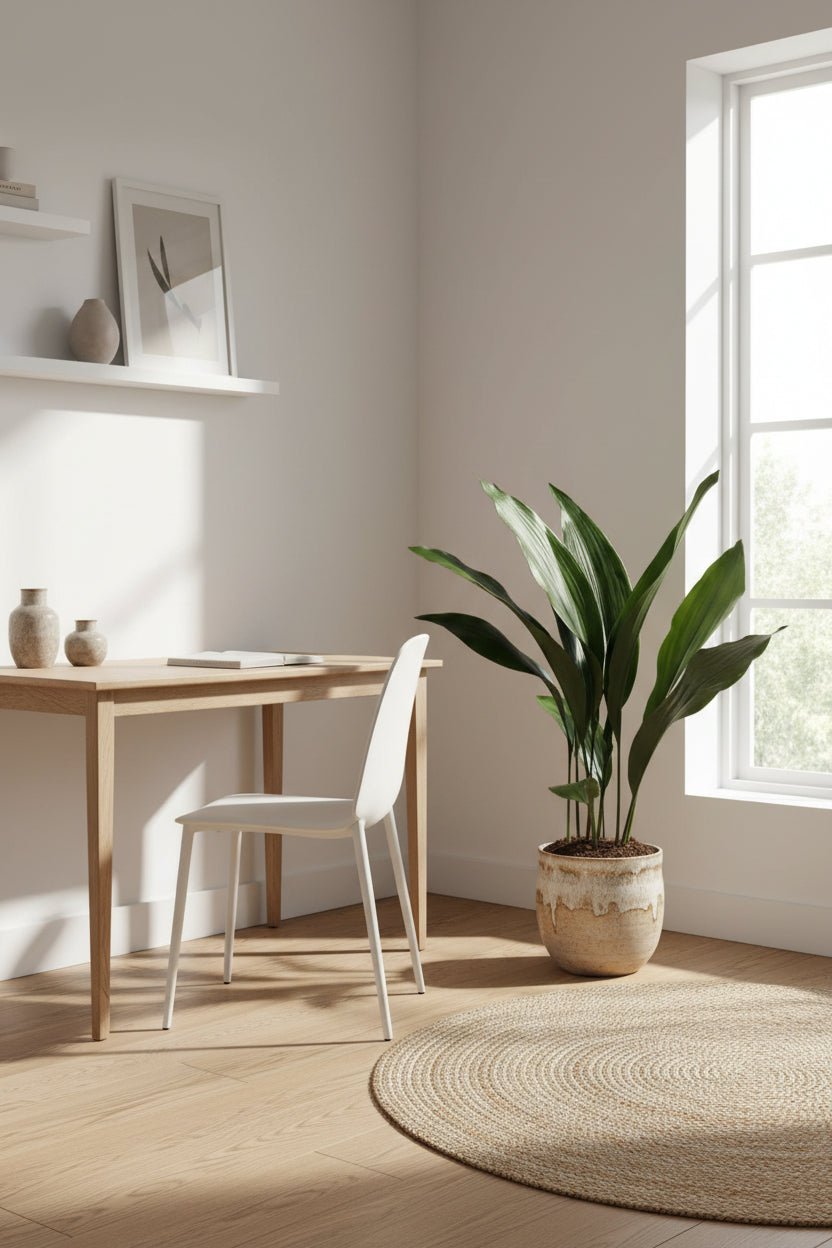
The dense, glossy foliage of Aspidistra brings a subtle and refined plant presence to spaces where few plants survive. Its deep green naturally complements natural materials — dark wood, polished concrete, rattan.
- On the floor in a dark living room corner, place it in the Capi Nature Skin Anthracite pot — the textured anthracite gray enhances the graphic and understated look of the dark green foliage, creating a zen and minimalist ensemble.
- In a dimly lit entrance, pair it with a Zamioculcas ZZ — two shade-loving plants with glossy, upright leaves that complement each other at different heights to dress a hallway without natural light.
- For a graphic composition, place it near a Sansevieria Laurentii — the vertical, striped form of the Sansevieria contrasts with the wide, dense clump of the Aspidistra, creating a very effective structured duo in a dark corner.
- On a low dark wood piece of furniture, set it in the Brussels Round Anthracite pot — the matte anthracite pot’s simplicity highlights the natural gloss of the leaves without competing with their deep green.
Its dense silhouette and deep green add a touch of serenity to minimalist interiors — it’s a plant that beautifies spaces without trying to dominate.
Verdeia Tips
- Let the soil dry deeply between waterings: insert your finger halfway down the pot — if the soil is still moist, wait several more days before watering.
- Don’t repot too soon: Aspidistra likes to be a bit cramped and grows very slowly — repotting every 3 to 4 years is enough, only when roots overflow the pot, as explained in our guide on repotting indoor plants.
- Wipe leaves regularly: a monthly wipe with a damp cloth is enough to maintain their natural shine and remove dust that clogs stomata in poorly ventilated rooms.
Technical Specifications
- Botanical name: Aspidistra elatior
- Common name: Japanese Cast Iron Plant
- Origin: Japan, Taiwan
- Available size 1: H50 cm | Pot Ø13 cm
- Available size 2: H70 cm | Pot Ø17 cm
- Exposure: shade to filtered light
- Watering: moderate — let soil dry halfway between waterings
- Growth: slow
- Temperature: 7–24 °C
- Soil acidity: slightly acidic (pH 6.0–6.5)
- Care: very easy
- Pet toxicity: non-toxic
- Decor style: Japanese Zen / Minimalism / Graphic
Each plant is unique: photos show an example of its appearance. The density of the clump and leaf width naturally vary with age and light exposure.

Your plant, delivered with care
Every plant is hand-packed in a box specially designed for plants — secured, protected, ready to travel. It arrives in perfect condition, roots intact and foliage preserved, ready to take its place in your home.
Our Verdeia commitments
FAQ – Everything to know before adopting your Verdeia plant
How are my plants prepared before shipping?
All our plants are selected from our European partner nurseries. Before shipping, they are watered, cleaned, and protected with breathable, secure packaging. Each package is designed to ensure your plant arrives in perfect health, without any transport-related stress.
Will the plant look exactly like the photo?
The photos accurately represent the variety and the stated size. Since each plant is unique, slight differences in shape, foliage, or color may occur — and that’s part of their charm.
What are the delivery times and conditions?
Shipping is done within 48 business hours, with tracked delivery within 2 to 5 business days. Delivery costs €5.60 — free for orders over €50. You will receive a tracking link as soon as the package is shipped.
What to do upon receiving my plant?
Open your package as soon as you receive it and carefully remove the plant from its packaging. Let it acclimate for 24 hours in its new environment before watering. If it has been slightly stressed during transport, it will recover its shape after one or two days in the light.
What to do if my plant arrives damaged?
Contact us within 48 hours with a photo of the issue. Our team will assess the situation and offer you the best solution: replacement, partial refund, or recovery advice.
Can I return a plant?
Since plants are living beings, standard returns are not possible. However, we guarantee good health upon delivery: if the plant arrives damaged, it will be replaced free of charge. For any other cases (order error, decorative pot, accessory), returns are possible within 14 days.