



Actinidia arguta 'Issai' (Self-fertile Kiwi) H45 cm | Pot Ø13 cm
- Regular price
-
€15,95 - Regular price
-
- Sale price
-
€15,95
Couldn't load pickup availability
Frequently Asked Questions
What is the difference between kiwaï and classic kiwi? The kiwaï produces miniature fruits with smooth skin that can be eaten whole, whereas the classic kiwi produces large, hairy fruits that need peeling.
When to harvest Issai mini-kiwis? In September, when they yield to slight finger pressure and finish ripening at room temperature a few days after picking.
SHIPPING & PACKAGING
Shipping within 24/48 hours via DPD
- Delivery in 2 to 5 business days
- Eco-friendly packaging: recyclable boxes and biodegradable materials
- Special protection to ensure the plant arrives in perfect condition
- Parcel tracking sent by email as soon as shipped
- Free delivery on orders over €50
48H QUALITY GUARANTEE
We guarantee that your plants will arrive in perfect condition. If your plant arrives damaged or in poor condition:
- Contact us within 48 hours at hello@verdeia.eu with photos
- Free replacement or full refund
- No return necessary – we trust you
The guarantee covers: damage related to transport, severely weakened plant upon arrival, preparation errors.
CARE TIPS UPON ARRIVAL
To help your plant settle in for the long term:
- Unpack immediately and inspect your plant
- Let it acclimatize 24-48h in a bright spot without direct sunlight
- Check soil moisture before watering (dry surface = light watering)
- Wait 2-3 weeks before repotting
- Avoid heat sources and drafts
- Gently wipe leaves to remove dust
Need help? Contact our team at hello@verdeia.eu or via chat.
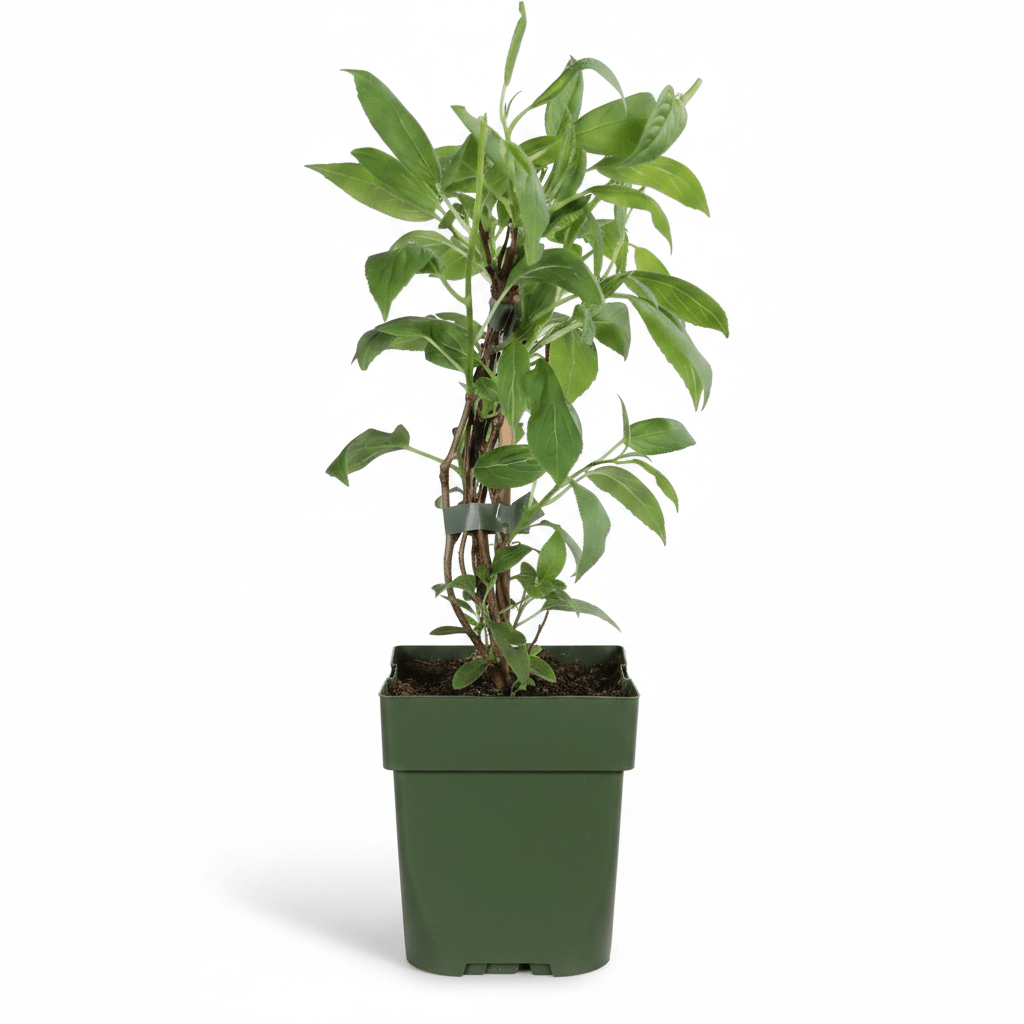
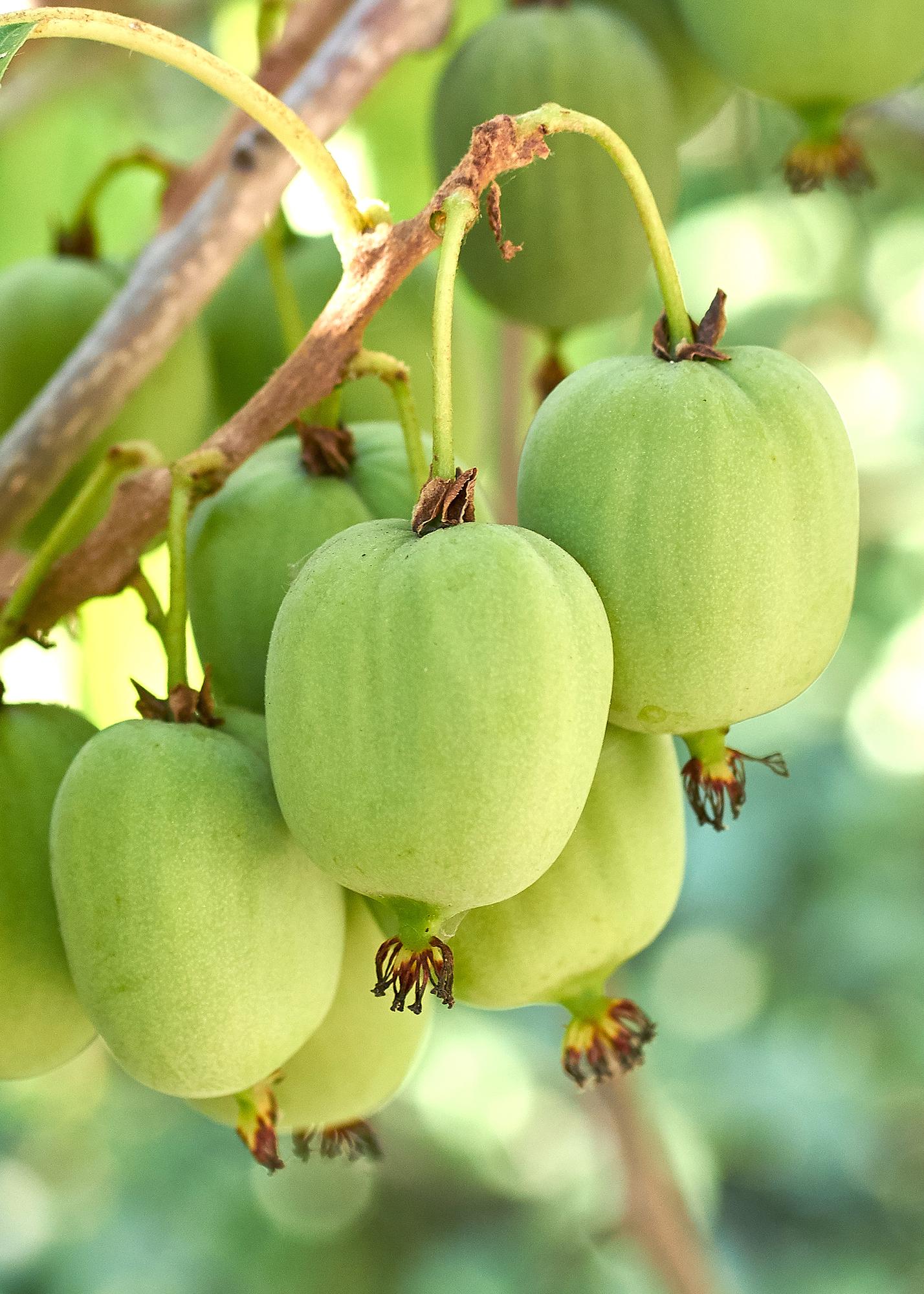
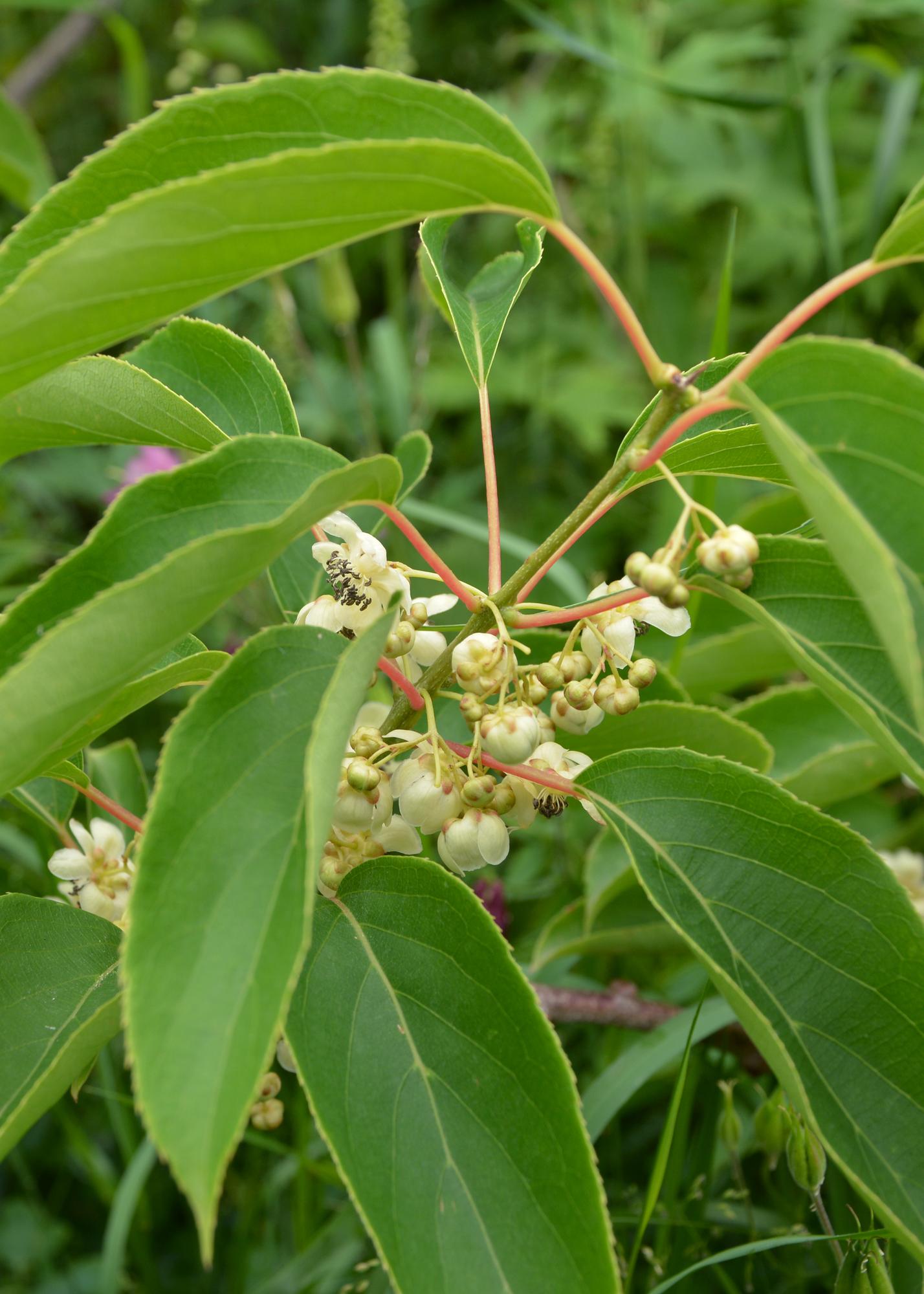

🥝 Smooth sweet mini-kiwis to bite into • 🌸 Self-fertile and early variety • ☀️ Full sun to partial shade • ❄️ Very hardy down to -25 °C • 🌱 Organic cultivation • 🐾 Non-toxic, edible fruits • 📏 H45 cm | Pot Ø13 cm
Actinidia arguta 'Issai', also called Self-fertile Kiwaï or Mini-kiwi, produces clusters of small smooth-skinned kiwis the size of a large cherry at the end of summer, sweet and rich in vitamin C, eaten whole without peeling. Native to East Asia and grown using Tasty Green, an organic production method without synthetic chemicals, this kiwaï is one of the most original balcony plants in the catalog.
Its uniqueness compared to the classic kiwi: a self-fertile variety that does not need a male plant to fruit, exceptional hardiness down to -25 °C, and miniature hairless fruits eaten like berries. It is the ideal fruiting vine for a balcony or terrace, trainable on a trellis along a wall or railing.
Exposure & Location
The 'Issai' kiwaï thrives in full sun or bright partial shade. The sunnier the exposure, the more generous the fruiting and the sweeter the fruits. It is a vigorous vine that requires a support for training from planting: trellis, pergola, taut wire, or railing.
- Exposure: full sun to partial shade — at least 5 to 6 hours of direct sun per day for good fruiting.
- Location: against a south- or west-facing wall, along a railing, on a pergola or trellis — provide a sturdy support as the vine becomes heavy once established.
- Hardiness: exceptional, down to -25 °C — withstands the harshest winters, even in an unprotected pot.
- Soil type: rich, fresh, and well-draining — potting soil for fruit plants mixed with compost, neutral to slightly acidic pH.
Install the training support before planting — later, the stems are fragile and may break if guided too abruptly onto a trellis.
Watering & Care
The kiwaï prefers a consistently fresh substrate during growth and fruiting. A drying root ball during fruit set causes fruit drop. To adjust, test substrate moisture with your finger before each watering.
- Watering: 2 to 3 times per week in peak season, more often during heatwaves — drastically reduce in winter, almost dry.
- Drainage: essential — pot with drainage holes, clay pebbles at the bottom, saucer emptied systematically after watering.
- Fertilizer: liquid fertilizer for fruit plants, rich in potassium, every 2 to 3 weeks from March to September — avoid excess nitrogen which favors leaves over fruits.
- Pruning: shorten fruiting shoots in winter (dry pruning) and pinch new shoots in summer to control vine vigor.
- Repotting: every 2 years into a slightly larger pot, or directly into the ground in a large deep planter for maximum vigor.
Harvest mini-kiwis when they yield to slight finger pressure, usually in September — they continue to ripen a few days at room temperature after picking.
Decor Ideas & Plant Combinations
With its dense green foliage and clusters of mini-kiwis, the 'Issai' kiwaï transforms a wall or railing into an edible cascade. To create an easy-to-maintain urban balcony, it naturally pairs with other small fruits and melliferous plants.
- For a complete vertical gourmet balcony, combine the kiwaï with an Organic Raspberry 'Malling Promise' and an Organic Strawberry 'Delizzimo' — three layers of small fruits (vine above, raspberry bush, strawberry on the ground) turning a few square meters into a mini urban orchard.
- To attract pollinators, plant at the base of the kiwaï a set of 4 aromatic plants and a true lavender — thyme, rosemary, and lavender attract bees that boost kiwaï fruiting.
- To showcase the young plant in a decorative pot, place it in a Gabriel ceramic decorative pot ochre 14cm — the warm brown ochre complements the ripe fruit color and creates a Mediterranean atmosphere.
- For a summer flowering cascade, complete the scene with an Agapanthus 'Ever White' with immaculate umbels — the pure white flowers echo the subtle white kiwaï flowers in spring and structure the balcony corner.
Store mini-kiwis in the refrigerator for a few days after harvest or freeze them whole — they then become irresistible natural frozen treats to nibble on.
Verdeia Tips
- Install a sturdy training support at planting: the kiwaï can reach 4 to 6 meters and become heavy during fruiting season. A trellis fixed to the wall or a thick wooden pergola is essential to support the vine long-term.
- Prune in winter and summer: shorten fruiting shoots to 3 to 5 buds beyond the last fruits in winter pruning, then pinch vigorous shoots in July to focus energy on fruit ripening.
- Be patient 2 to 3 years before the first real harvest: although early, Issai needs to root well before producing abundantly. The first years yield a few fruits; full production comes around the third year.
Technical Specifications
- Botanical name: Actinidia arguta 'Issai'
- Common name: Self-fertile Kiwaï, Mini-kiwi
- Family: Actinidiaceae
- Origin: East Asia, organic Tasty Green cultivation
- Dimensions at delivery: H45 cm | Pot Ø13 cm
- Adult height: 4 to 6 meters trainable
- Exposure: full sun to partial shade
- Watering: regular, fresh substrate without waterlogging
- Hardiness: down to -25 °C
- Flowering: May to June, small discreet white flowers
- Fruiting: August to September, smooth sweet mini-kiwis
- Self-fertile: yes, does not require a male plant
- Soil type: rich, fresh, and well-draining, neutral to slightly acidic pH
- Growth: vigorous, climbing vine
- Foliage: deciduous, medium green, oval
- Care: moderate, pruning twice a year
- Toxicity: non-toxic, edible fruits rich in vitamin C
- Decorative style: Gourmet balcony / Urban orchard / Edible green wall
Each plant is unique: photos show an example of its appearance. Stem vigor, foliage density, and fruit quantity naturally vary from one specimen to another.

Your plant, delivered with care
Every plant is hand-packed in a box specially designed for plants — secured, protected, ready to travel. It arrives in perfect condition, roots intact and foliage preserved, ready to take its place in your home.
Our Verdeia commitments
FAQ – Everything to know before adopting your Verdeia plant
How are my plants prepared before shipping?
All our plants are selected from our European partner nurseries. Before shipping, they are watered, cleaned, and protected with breathable, secure packaging. Each package is designed to ensure your plant arrives in perfect health, without any transport-related stress.
Will the plant look exactly like the photo?
The photos accurately represent the variety and the stated size. Since each plant is unique, slight differences in shape, foliage, or color may occur — and that’s part of their charm.
What are the delivery times and conditions?
Shipping is done within 48 business hours, with tracked delivery within 2 to 5 business days. Delivery costs €5.60 — free for orders over €50. You will receive a tracking link as soon as the package is shipped.
What to do upon receiving my plant?
Open your package as soon as you receive it and carefully remove the plant from its packaging. Let it acclimate for 24 hours in its new environment before watering. If it has been slightly stressed during transport, it will recover its shape after one or two days in the light.
What to do if my plant arrives damaged?
Contact us within 48 hours with a photo of the issue. Our team will assess the situation and offer you the best solution: replacement, partial refund, or recovery advice.
Can I return a plant?
Since plants are living beings, standard returns are not possible. However, we guarantee good health upon delivery: if the plant arrives damaged, it will be replaced free of charge. For any other cases (order error, decorative pot, accessory), returns are possible within 14 days.