



Ficus Elastica Tineke (Variegated Rubber Plant)
- Regular price
-
€87,95 - Regular price
-
- Sale price
-
€87,95
Couldn't load pickup availability
Frequently Asked Questions
Why is a Ficus Elastica losing its leaves? It is almost always related to being moved, overwatering, or a draft — choose its permanent spot upon arrival and avoid moving it once placed.
What is the difference between the Ficus Elastica Tineke and the Belize? The Tineke has a softer tricolor variegation with subtle cream and powder pink tones, while the Belize shows more pronounced and vibrant pink tones — two complementary versions of the same variegation.
SHIPPING & PACKAGING
Shipping within 24/48 hours via DPD
- Delivery in 2 to 5 business days
- Eco-friendly packaging: recyclable boxes and biodegradable materials
- Special protection to ensure the plant arrives in perfect condition
- Parcel tracking sent by email as soon as shipped
- Free delivery on orders over €50
48H QUALITY GUARANTEE
We guarantee that your plants will arrive in perfect condition. If your plant arrives damaged or in poor condition:
- Contact us within 48 hours at hello@verdeia.eu with photos
- Free replacement or full refund
- No return necessary – we trust you
The guarantee covers: damage related to transport, severely weakened plant upon arrival, preparation errors.
CARE TIPS UPON ARRIVAL
To help your plant settle in for the long term:
- Unpack immediately and inspect your plant
- Let it acclimatize 24-48h in a bright spot without direct sunlight
- Check soil moisture before watering (dry surface = light watering)
- Wait 2-3 weeks before repotting
- Avoid heat sources and drafts
- Gently wipe leaves to remove dust
Need help? Contact our team at hello@verdeia.eu or via chat.


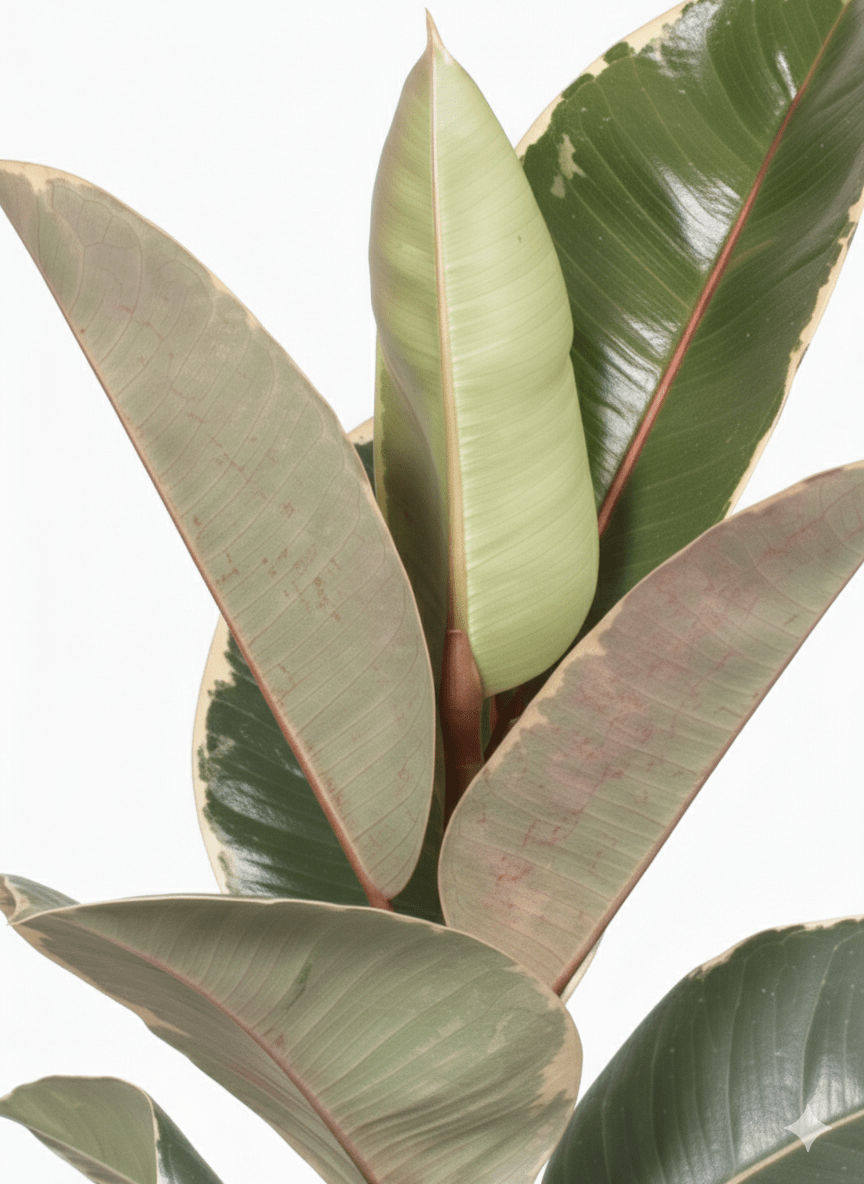



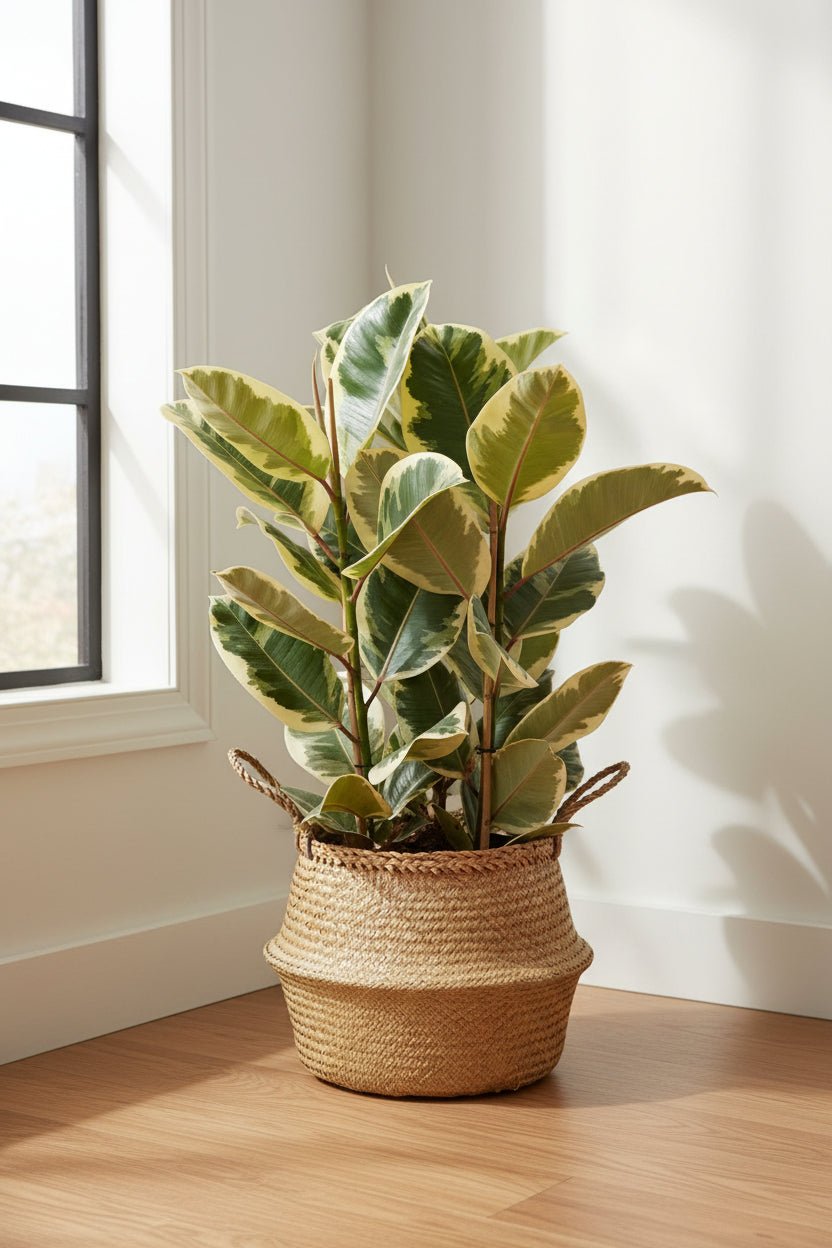

🌿 Variegated cream, green, and pink foliage • 🌤️ Bright indirect light • 💧 Moderate watering • ✨ Easy care • 🏙️ 2 sizes available
The Ficus Elastica Tineke, also called Variegated Rubber Plant, is an architectural indoor plant with large, glossy, leathery leaves featuring tricolor marbling — cream, soft green, and powder pink — that evolve with each new growth. Its slender form and bright foliage make it a standout botanical centerpiece.
Native to the tropical forests of Southeast Asia and India, it belongs to the Ficus Elastica collection, among which the Tineke stands out for its softest and brightest tricolor variegation. Its structured silhouette naturally makes it one of the flagship plants of our selection of large indoor plants.
Which variety of Ficus Elastica to choose?
The genus Ficus Elastica comes in several varieties with very distinct colors and characters. Here is how the Tineke stands out:
- Ficus Elastica Tineke (this plant) — tricolor variegation of cream, soft green, and powder pink, with soft and bright tones. The most refined.
- Ficus Elastica Belize — pink, cream, and green variegation, with more pronounced and vibrant pink tones. The most colorful.
- Ficus Elastica Robusta — uniform dark green foliage, classic and robust, large size. The most understated and structuring.
- Ficus Elastica Abidjan — dark green foliage with a burgundy central vein. The most graphic in dark tone.
The Tineke is the only Ficus Elastica to combine the three cream, green, and pink tones in a soft variegation — more subtle than the Belize, brighter than the Robusta or the Abidjan.
Exposure & placement
The Ficus Elastica Tineke needs good brightness to maintain the intensity of its variegation — in insufficient light, new leaves gradually grow greener and lose the cream and pink. To optimize its placement, check our guide on the balance of light and humidity indoors.
- Ideal exposure: bright indirect light — within 2 m of a large window facing.
- Tolerates: a few hours of gentle morning sun, light partial shade.
- Avoid: direct afternoon sun that burns and fades the variegation.
- Temperature: 15–25 °C, tolerates moderate fluctuations.
- Substrate: light and draining — universal potting soil with perlite.
Each plant is unique: the intensity of the cream and pink variegation naturally varies depending on the light received and the age of the leaves.
Watering & care
The Ficus Elastica prefers to be slightly underwatered rather than overwatered — yellowing and leaf drop are almost always due to overwatering. Check with the finger test method: water only when the top 3 to 5 centimeters of soil are dry.
- Watering: moderate — let the top 3–5 cm dry out between waterings.
- Frequency: about once a week in spring and summer; every 2 weeks in winter.
- Water: room temperature water.
- Drainage: essential — pot must have drainage holes, empty saucer after watering.
- Fertilizer: liquid fertilizer for green plants, once a month in spring and summer.
Each plant is unique: watering frequency naturally varies depending on pot size, ambient temperature, and season.
Decor ideas & plant pairings
The cream and soft pink tones of the Ficus Elastica Tineke provide a gentle plant light that few large plants can offer. To create a setting around it, find our ideas for integrating large plants into your interior.
- As a centerpiece in a living room: the H100 cm size stands out alone in a corner — slip it into a natural Selin basket whose blonde fiber naturally complements the cream and pink tones of the foliage.
- In a bright tropical composition: pair it with a Strelitzia and a Monstera for an architectural trio — the Tineke brings light, the Strelitzia verticality, and the Monstera graphic cutouts.
- Color contrast: pair it with the Ficus Elastica Abidjan to play on two extremes — the light and pink variegation of the Tineke against the very dark green with burgundy veins of the Abidjan.
- Decorative pot and color scheme: the cream and pink tones stand out particularly well against a Brussels white decorative pot — a bright harmony that enhances the softness of the tricolor variegation.
Verdeia tips
- Choose its permanent location upon arrival: the Ficus Elastica is sensitive to moving — each change of place can cause temporary leaf drop, especially in the first weeks after delivery.
- Wipe the large leaves regularly: the leathery, shiny leaves collect dust that dulls the cream and pink variegation — a damp cloth every 3 to 4 weeks is enough to keep them bright.
- Turn the pot a quarter turn every month: the Ficus naturally grows toward the light — regular rotation ensures a balanced shape on all sides and prevents an asymmetrical form.
Technical characteristics
- Botanical name: Ficus elastica 'Tineke'
- Common name: Variegated rubber plant
- Family: Moraceae
- Origin: Southeast Asia, India
- Available sizes: H60 cm | Pot Ø17 cm / H100 cm | Pot Ø27 cm
- Adult size: up to 150–200 cm indoors
- Light: bright indirect light to light shade
- Watering: moderate — allow the top 3–5 cm of soil to dry out between waterings
- Care: easy
- Growth: moderate
- Toxicity: toxic if ingested (irritant latex)
- Decorative style: Architectural / Elegant / Urban jungle
- Feature: unique tricolor variegation of cream, green, and pink, large shiny leathery leaves, slender architectural shape
Each plant is unique: the photos show a representative example. The intensity of the cream and pink variegation naturally varies depending on the light and the age of the leaves.

Your plant, delivered with care
Every plant is hand-packed in a box specially designed for plants — secured, protected, ready to travel. It arrives in perfect condition, roots intact and foliage preserved, ready to take its place in your home.
Our Verdeia commitments
FAQ – Everything to know before adopting your Verdeia plant
How are my plants prepared before shipping?
All our plants are selected from our European partner nurseries. Before shipping, they are watered, cleaned, and protected with breathable, secure packaging. Each package is designed to ensure your plant arrives in perfect health, without any transport-related stress.
Will the plant look exactly like the photo?
The photos accurately represent the variety and the stated size. Since each plant is unique, slight differences in shape, foliage, or color may occur — and that’s part of their charm.
What are the delivery times and conditions?
Shipping is done within 48 business hours, with tracked delivery within 2 to 5 business days. Delivery costs €5.60 — free for orders over €50. You will receive a tracking link as soon as the package is shipped.
What to do upon receiving my plant?
Open your package as soon as you receive it and carefully remove the plant from its packaging. Let it acclimate for 24 hours in its new environment before watering. If it has been slightly stressed during transport, it will recover its shape after one or two days in the light.
What to do if my plant arrives damaged?
Contact us within 48 hours with a photo of the issue. Our team will assess the situation and offer you the best solution: replacement, partial refund, or recovery advice.
Can I return a plant?
Since plants are living beings, standard returns are not possible. However, we guarantee good health upon delivery: if the plant arrives damaged, it will be replaced free of charge. For any other cases (order error, decorative pot, accessory), returns are possible within 14 days.