



Asparagus Densiflorus Meyers (Feather Asparagus)
- Regular price
-
€39,95 - Regular price
-
- Sale price
-
€39,95
Couldn't load pickup availability
Frequently Asked Questions
Can Asparagus Meyers bloom indoors? Yes, under good light and watering conditions, it can produce small fragrant white flowers followed by decorative red berries. It’s a pleasant seasonal bonus. However, be careful: the berries are toxic if ingested — remove them if you have young children or pets.
Is Asparagus Densiflorus Meyers toxic to animals? Yes, the entire plant contains irritating saponins, and the red berries are especially toxic if eaten by cats and dogs. Keep it out of reach of your pets. If your cat or dog ingests berries, consult a veterinarian promptly.
SHIPPING & PACKAGING
Shipping within 24/48 hours via DPD
- Delivery in 2 to 5 business days
- Eco-friendly packaging: recyclable boxes and biodegradable materials
- Special protection to ensure the plant arrives in perfect condition
- Parcel tracking sent by email as soon as shipped
- Free delivery on orders over €50
48H QUALITY GUARANTEE
We guarantee that your plants will arrive in perfect condition. If your plant arrives damaged or in poor condition:
- Contact us within 48 hours at hello@verdeia.eu with photos
- Free replacement or full refund
- No return necessary – we trust you
The guarantee covers: damage related to transport, severely weakened plant upon arrival, preparation errors.
CARE TIPS UPON ARRIVAL
To help your plant settle in for the long term:
- Unpack immediately and inspect your plant
- Let it acclimatize 24-48h in a bright spot without direct sunlight
- Check soil moisture before watering (dry surface = light watering)
- Wait 2-3 weeks before repotting
- Avoid heat sources and drafts
- Gently wipe leaves to remove dust
Need help? Contact our team at hello@verdeia.eu or via chat.


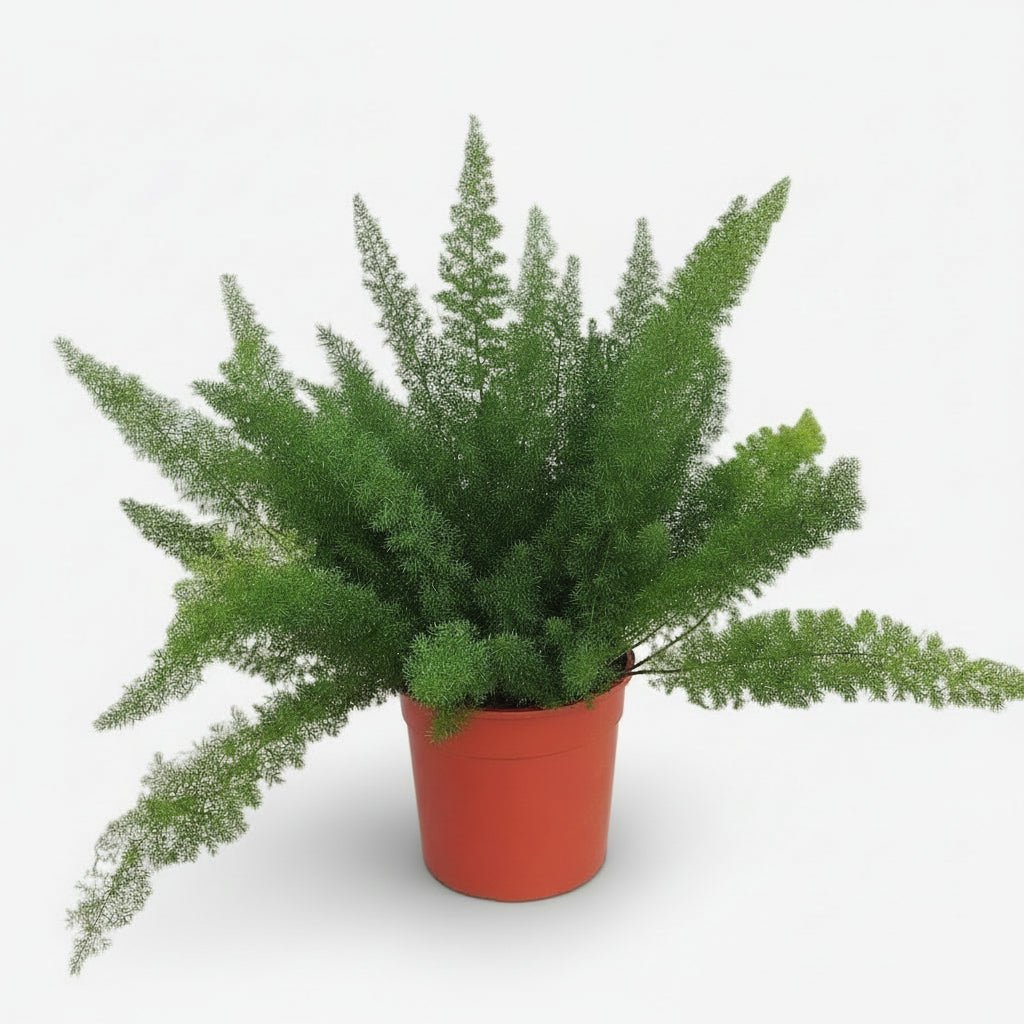


🌿 Upright bottlebrush-like stems • 🎨 Fluffy foxtail effect • ☀️ Bright, indirect light • 💧 Moderate watering • 📏 2 sizes available • ⚠️ Toxic to animals
Asparagus Densiflorus 'Meyers', also known as Foxtail Fern or Foxtail Asparagus Fern, is a perennial plant native to South Africa. Its upright cylindrical stems, densely covered with fine light-green needles, create a unique compact, bushy, feathery effect within the Asparagus family - both graphic and airy.
It can produce small fragrant white flowers followed by decorative red berries - but beware: these berries are toxic. Please note: the entire plant is toxic if ingested by animals.
Which Asparagus variety should you choose?
The three Asparagus plants in our catalogue have radically different growth habits - the choice depends on the desired effect:
- Asparagus Densiflorus 'Meyers' (this plant) - compact upright bottlebrush-like stems, 2 sizes available. The most structured and bushy.
- Asparagus Sprengeri - graceful trailing growth, flexible cascading stems, D17 x H35 cm. The only one suitable for hanging baskets.
- Asparagus setaceus - ultra-fine, airy foliage and a delicate climbing habit. The most airy and delicate.
'Meyers' is the easiest to incorporate into a shelf display - its upright, compact growth does not spill over like Sprengeri and does not require support like Setaceus.
Exposure & placement
Asparagus 'Meyers' is a plant from the sunny coastal regions of South Africa - bright and cool. Indoors, it thrives in bright spaces and moderate temperatures.
- Ideal exposure: bright, indirect light - near an east- or west-facing window.
- Tolerates: light partial shade and cool temperatures (15–25 °C).
- Avoid: scorching direct sun, which yellows the needles, and overly deep shade, which causes them to fall.
- Substrate: light and well-drained - universal potting soil with perlite.
Asparagus prefers cool rooms — a temperature between 15 and 20 °C suits it perfectly and slows needle drop. Its ideal location depends on the balance between light and humidity.
Watering & Care
- Watering: moderate — keep the substrate slightly moist without ever waterlogging it.
- Frequency: 1 to 2 times per week in spring and summer, reduced in winter.
- Drainage: a pot with drainage holes is essential; empty the saucer after watering.
- Humidity: occasionally mist the foliage in very dry conditions.
- Fertilizer: diluted liquid fertilizer for green plants, once a month in spring and summer.
- Pruning: remove yellowed or dry stems at the base to maintain a neat appearance.
Never let the substrate dry out completely — the needles quickly turn yellow and fall in response to water stress. This is its main point of attention. The frequency of watering should be adjusted according to the season: more frequent in summer, much less frequent in winter.
Decor Ideas & Plant Pairings
The upright habit and feathery foliage of Asparagus 'Meyers' bring lightness and verticality to an arrangement — an effective counterpoint to broad, horizontal foliage.
- On a shelf: its upright stems create a graphic vertical accent among more compact plants — it structures the space without cluttering it.
- In an arrangement: pair it with a Calathea or a broad-leaved Philodendron for a highly effective contrast of textures — feathery foliage against graphic foliage.
- Ideal Pot: white matte ceramic or terracotta — warm, natural tones complement its airy character.
Its small, fragrant white flowers and decorative red berries make it a plant that changes aesthetically with the seasons — however, be careful: the berries are toxic if ingested.
Verdeia Tips
- Falling needles signal a problem — massive needle drop = lack of water, humidity, or light. Identify the cause before correcting it. Dry substrate and an overly dark location are the two most common causes.
- Vigorous growth to manage — it can quickly become very dense. Repot every 2 to 3 years in spring into a slightly larger pot to maintain its vigor.
- The red berries are toxic — decorative but dangerous if ingested by children or animals. If the plant produces berries, make sure to remove them or place the plant out of reach.
- Prefers cool temperatures — like Muehlenbeckia, it prefers moderate temperatures. A cool room between 15 and 20 °C is perfect for it. A few simple steps are enough to help it adapt to the cold season, like all plants in winter.
- ⚠️ Toxic to animals and humans — saponins throughout the plant, toxic berries. Keep it out of reach of cats, dogs, and young children. In a household with pets, it is better to choose from the plants and pets that are compatible.
Technical specifications
- Botanical name: Asparagus densiflorus 'Meyers'
- Common names: Foxtail fern, Foxtail asparagus fern
- Family: Asparagaceae
- Origin: South Africa
- Available sizes: H50 cm | Pot Ø17 cm — H60 cm | Pot Ø27 cm
- Mature size: up to 60–80 cm indoors
- Exposure: bright indirect light — tolerates partial shade
- Watering: moderate — keep the substrate slightly moist
- Temperature: 15–25 °C
- Care: easy
- Toxicity to animals: toxic (saponins, toxic red berries)
- Decorative style: Airy / Fresh / Graphic
- Distinctive feature: unique upright, bottlebrush-like stems; may flower and produce decorative red berries (toxic); prefers cool temperatures
Each plant is unique: the photos show a representative example. Foliage density and stem height naturally vary depending on growing conditions.

Your plant, delivered with care
Every plant is hand-packed in a box specially designed for plants — secured, protected, ready to travel. It arrives in perfect condition, roots intact and foliage preserved, ready to take its place in your home.
Our Verdeia commitments
FAQ – Everything to know before adopting your Verdeia plant
How are my plants prepared before shipping?
All our plants are selected from our European partner nurseries. Before shipping, they are watered, cleaned, and protected with breathable, secure packaging. Each package is designed to ensure your plant arrives in perfect health, without any transport-related stress.
Will the plant look exactly like the photo?
The photos accurately represent the variety and the stated size. Since each plant is unique, slight differences in shape, foliage, or color may occur — and that’s part of their charm.
What are the delivery times and conditions?
Shipping is done within 48 business hours, with tracked delivery within 2 to 5 business days. Delivery costs €5.60 — free for orders over €50. You will receive a tracking link as soon as the package is shipped.
What to do upon receiving my plant?
Open your package as soon as you receive it and carefully remove the plant from its packaging. Let it acclimate for 24 hours in its new environment before watering. If it has been slightly stressed during transport, it will recover its shape after one or two days in the light.
What to do if my plant arrives damaged?
Contact us within 48 hours with a photo of the issue. Our team will assess the situation and offer you the best solution: replacement, partial refund, or recovery advice.
Can I return a plant?
Since plants are living beings, standard returns are not possible. However, we guarantee good health upon delivery: if the plant arrives damaged, it will be replaced free of charge. For any other cases (order error, decorative pot, accessory), returns are possible within 14 days.