



Hydrangea macrophylla (white hydrangea) H40 cm | Pot Ø23 cm
- Regular price
-
€31,95 - Regular price
-
- Sale price
-
€31,95
Couldn't load pickup availability
Frequently Asked Questions
When to prune a white hydrangea ball without removing the flowers? Prune only in spring by removing the old dry flower heads above the first strong bud — the hydrangea blooms on last year's wood and too severe pruning removes already formed buds.
How much water should be given to a hydrangea in a pot in summer? The hydrangea is very thirsty — in a pot during hot weather, daily watering may be necessary because its large leaves transpire a lot and its balls wilt quickly as soon as the substrate dries out.
SHIPPING & PACKAGING
Shipping within 24/48 hours via DPD
- Delivery in 2 to 5 business days
- Eco-friendly packaging: recyclable boxes and biodegradable materials
- Special protection to ensure the plant arrives in perfect condition
- Parcel tracking sent by email as soon as shipped
- Free delivery on orders over €50
48H QUALITY GUARANTEE
We guarantee that your plants will arrive in perfect condition. If your plant arrives damaged or in poor condition:
- Contact us within 48 hours at hello@verdeia.eu with photos
- Free replacement or full refund
- No return necessary – we trust you
The guarantee covers: damage related to transport, severely weakened plant upon arrival, preparation errors.
CARE TIPS UPON ARRIVAL
To help your plant settle in for the long term:
- Unpack immediately and inspect your plant
- Let it acclimatize 24-48h in a bright spot without direct sunlight
- Check soil moisture before watering (dry surface = light watering)
- Wait 2-3 weeks before repotting
- Avoid heat sources and drafts
- Gently wipe leaves to remove dust
Need help? Contact our team at hello@verdeia.eu or via chat.
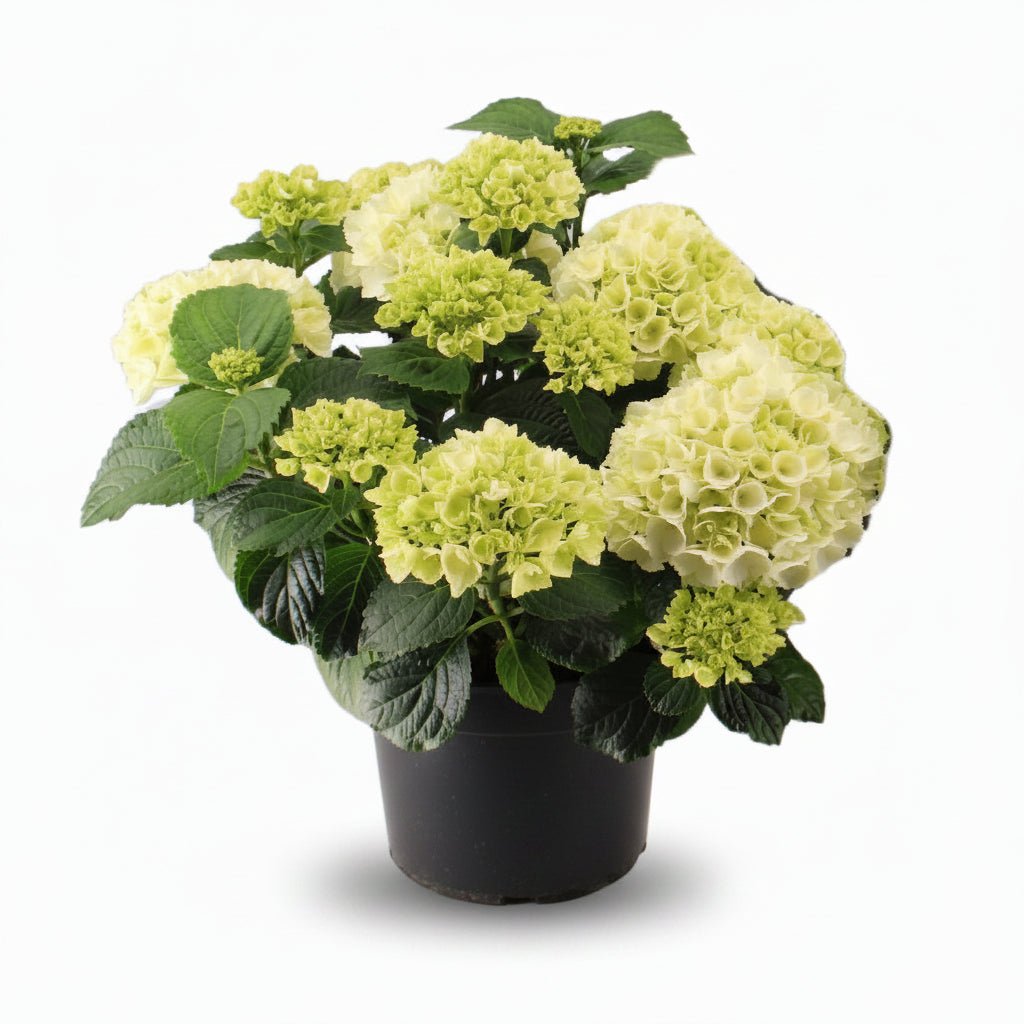
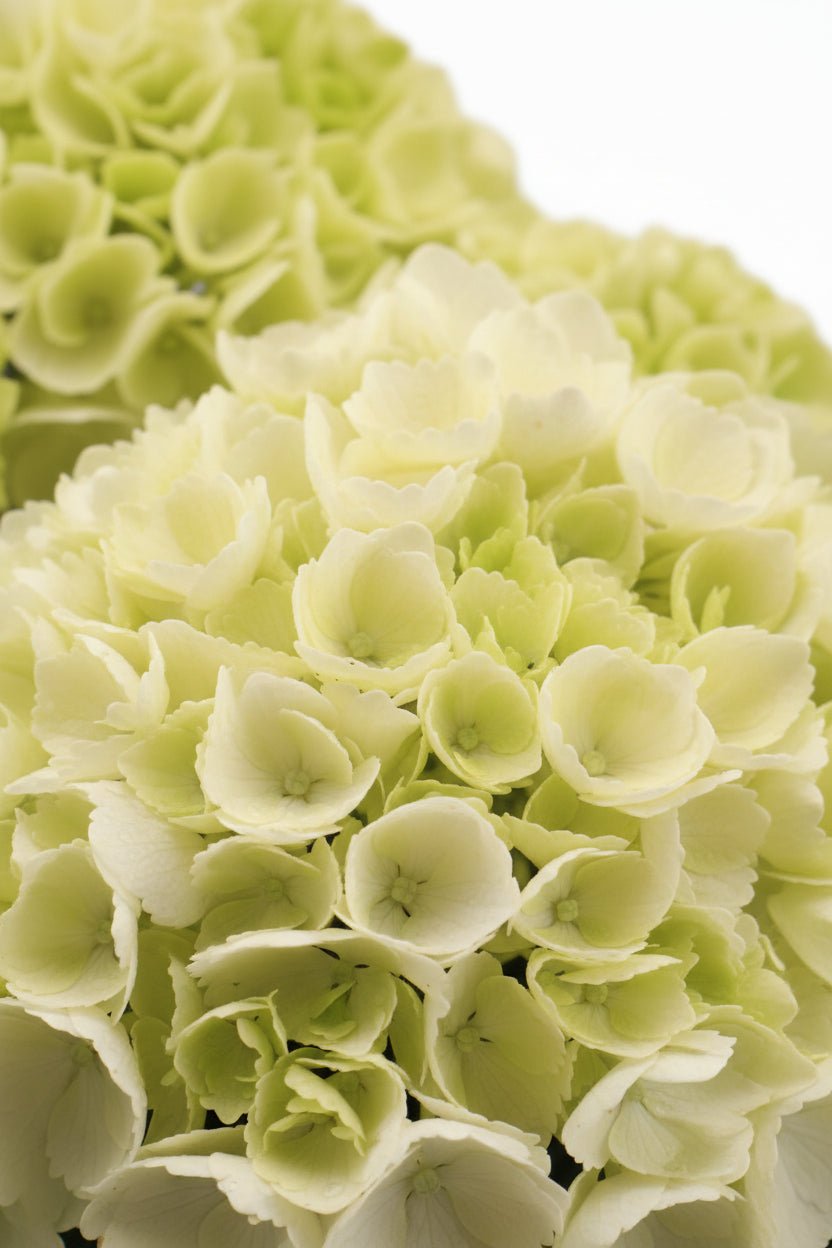
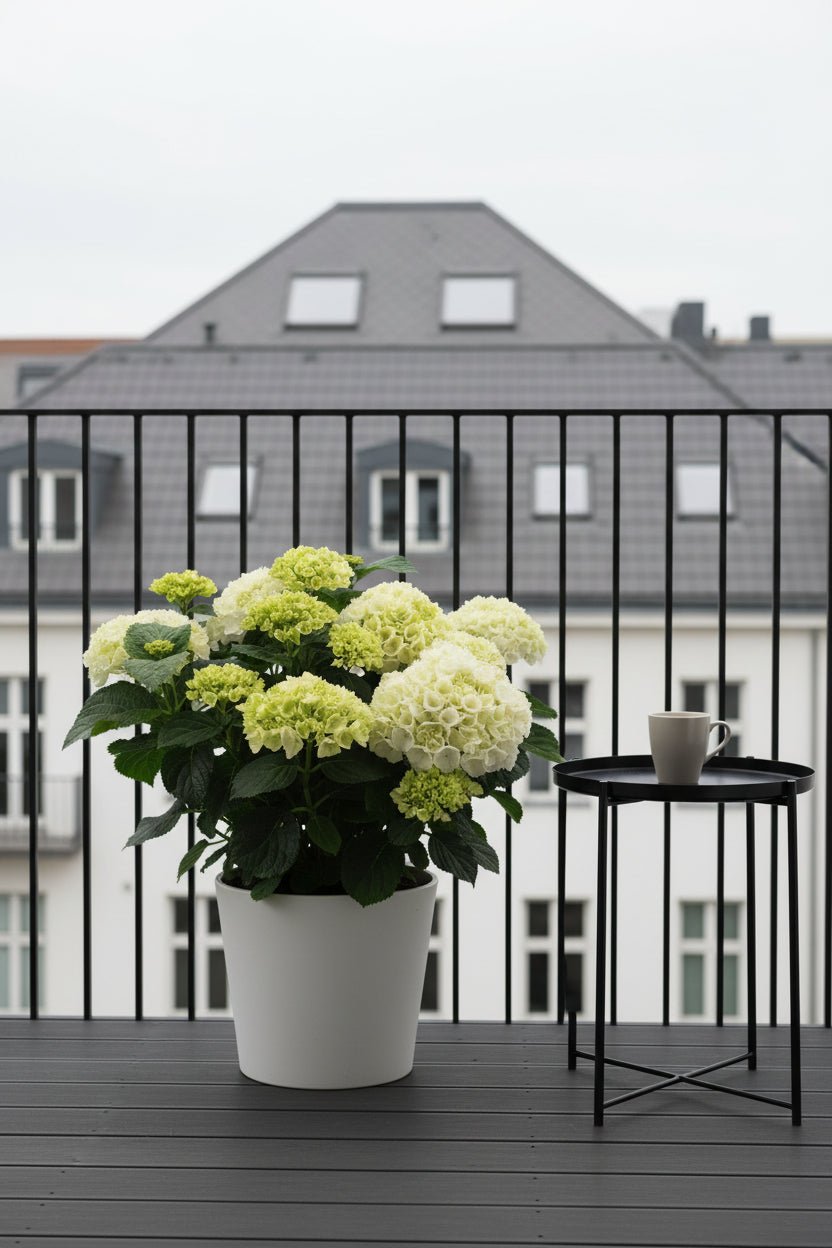
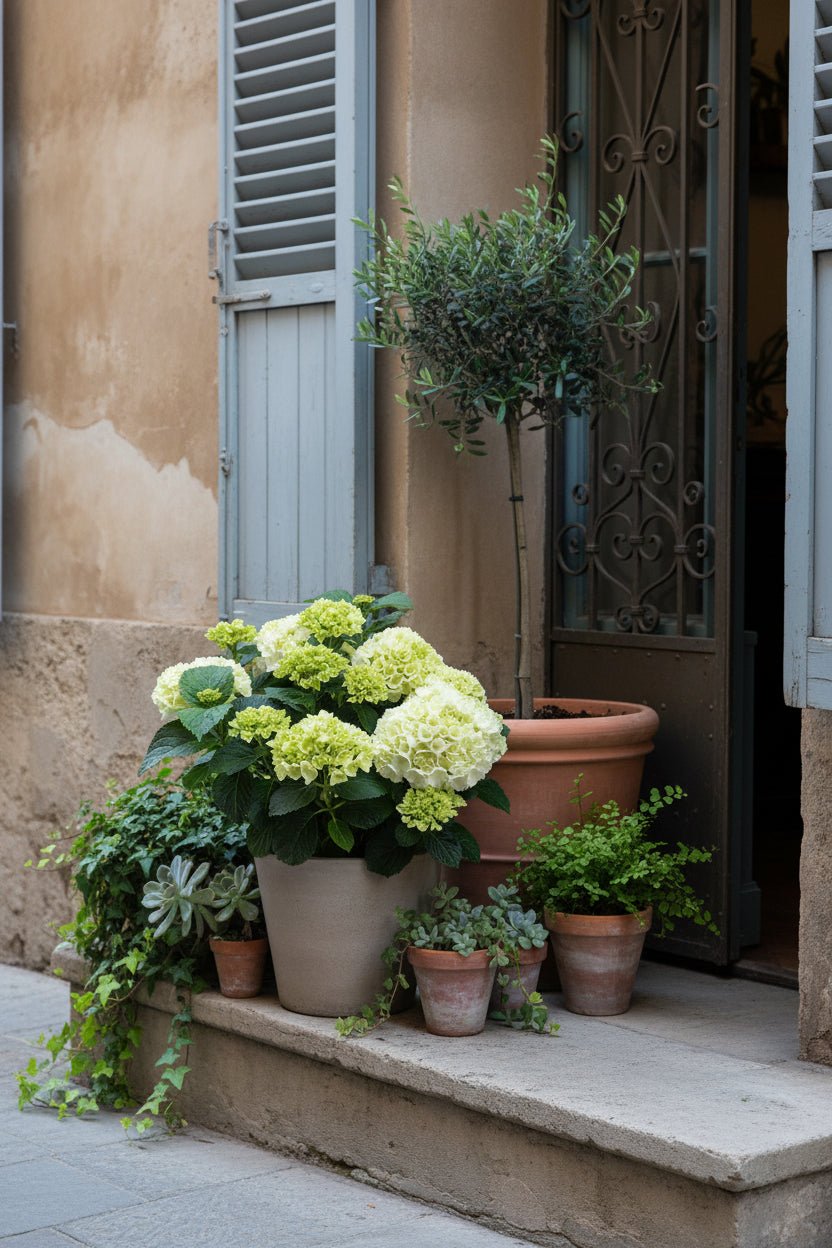
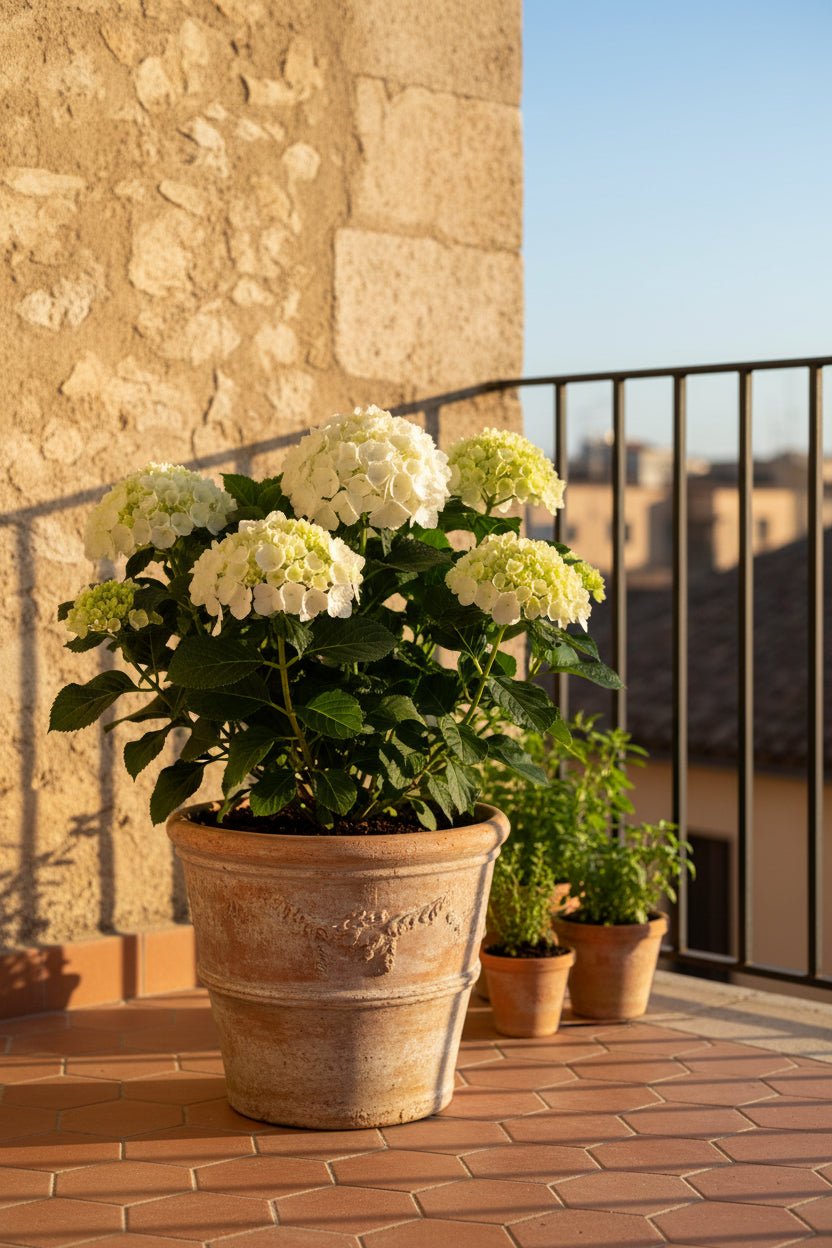

🤍 Large cream-white balls tinged with lemon green • 🌿 Flowering from June to September • 🌤️ Partial shade or soft light • ❄️ Very hardy • 📏 H40 cm | Pot Ø23 cm
The Hydrangea macrophylla (Hydrangea) white is a flowering shrub native to Japan, where it grows wild on the rocky coasts of Honshu island. Its large cream-white ball-shaped inflorescences tinged with lemon green when opening are among the most generous in the catalog — and unlike blue and pink hydrangeas, the white does not change color depending on the substrate pH: it stays white regardless of your water or soil composition. A reliable, elegant, and color-consistent flowering shrub.
Very hardy and easy to care for, it is perfect both in a pot on terrace or balcony and in a partially shaded garden.
Which hydrangea to choose?
Verdeia offers several hydrangeas with distinct shapes and colors. Here’s how to place this white hydrangea among the varieties in the catalog:
- Hydrangea macrophylla white (this plant) — large cream-white balls, color stable regardless of pH. The easiest and most versatile variety.
- Hydrangea arborescens 'Strong Annabelle' — very large white balls with sturdy stems, flowering on this year's shoots. The choice for even more voluminous balls and stems that don’t bend.
- Hydrangea Early Rosa — large, very dense pink balls, early flowering. The choice for an intense and voluminous pink in the same growth habit.
- Hydrangea Early Blue — large intense blue balls, early flowering. The choice for a bright blue in a dense ball.
- Hydrangea Teller 'Benxi' — very natural flat white umbels (lacecap). The choice for a whiter, airier, and wilder look than the classic ball.
- Hydrangea petiolaris — climbing hydrangea with flat white umbels, clings by itself to walls. The only climbing hydrangea in the catalog.
Exposure & location
The white hydrangea appreciates soft light in partial shade — sheltered from the burning afternoon sun that quickly wilts the flower heads and burns the large leaves. An east or northeast location is ideal to prolong flowering. In winter, the dried flower heads remain very decorative under frost.
- Exposure: Partial shade or soft light — sheltered from direct afternoon sun.
- Location: east or northeast-facing balcony, shaded terrace, garden under partial cover.
- Soil: rich, humus-rich, fresh — the white is not sensitive to pH, unlike the blue and pink ones.
- In pot: large deep container with rich substrate — regular watering essential in summer.
Unlike blue and pink hydrangeas, the white one does not need a special acidic substrate — it stays white regardless of the pH of your water or soil, which greatly simplifies its care in pot.
Watering & care
The hydrangea is a heavy water consumer — in pot, insufficient watering is the main cause of wilting flower heads, especially in summer. Pruning is light: remove only old flower heads in spring. A slow-release granular fertilizer in spring is enough for dense flowering, and repotting every 2 years in fresh substrate maintains the plant's vigor.
- Watering: abundant and regular — the soil should never dry out completely, especially in pot in summer.
- Pruning: in spring only — remove old dry flower heads above the first strong bud.
- Fertilizer: slow-release granules for flowering plants in spring and after flowering — no acidifying fertilizer needed for the white.
- Repotting: every 2 years in spring in a rich and well-drained substrate.
- Winter care: Very hardy in the ground; in a pot, protect the container from frost or bring it indoors to a frost-free space.
Keep the dried flower heads all winter — they protect the flower buds from frost and create a very elegant winter decoration; remove them only in March above the first strong bud.
Decor ideas & plant pairings
The cream white of the balls and the lemon green of the buds at opening create a very soft and versatile palette — the white hydrangea matches all garden colors and all terrace atmospheres.
- For a very romantic white and pink combination, the Hydrangea arborescens 'Pink Annabelle' pink perfectly complements the white hydrangea — the two balls in complementary shades and slightly different sizes create a very natural and elegant composition in a partial shade corner of the terrace.
- For a persistent flowering background in winter, the Camellia 'Nuccio's Gem' white blooms from February to April when the hydrangea has finished flowering — the two white shrubs share the same preference for slightly acidic soil and alternate to provide a flowering terrace from winter to autumn.
- For a very graphic white and violet combination, the Hydrangea Crystal Palace violet-blue creates a very clear color contrast with the white balls — the two ball-shaped hydrangeas in opposite shades create a very sophisticated two-color composition.
- To enhance the white in a very contrasting dark pot, the decorative pot Elho Brussels anthracite highlights the purity of the cream-white balls — the dark-light contrast is the most effective color match to enhance white foliage and flowering.
White hydrangea is particularly spectacular photographed at dusk — its balls capture and reflect the fading light long after other colors have faded, making it the ideal plant for terraces where you enjoy summer evenings.
Verdeia tips
- Water abundantly and regularly, especially in a pot: hydrangea is the plant that suffers most quickly from lack of water in summer — its large leaves transpire a lot and its balls visibly wilt as soon as the substrate dries out; in a pot, daily watering may be necessary during heat waves.
- Prune only in spring and only the old heads: hydrangea blooms on last year’s wood — pruning too severely or too late removes already formed flower buds and deprives the plant of any flowering for the next season; remove only dry heads above the first vigorous bud in March.
- Enjoy the simplicity of white in a pot: unlike blue and pink hydrangeas that require acidic substrate and demineralized water, white stays white regardless of pH — you can water it with tap water and use any universal substrate without risking its color changing.
Technical characteristics
- Botanical name: Hydrangea macrophylla
- Common name: Hydrangea
- Origin: Japan
- Dimensions at delivery: H40 cm | Pot Ø23 cm
- Adult size: up to 1.5 m tall and 2 m wide
- Exposure: Partial shade or soft light
- Watering: abundant and regular
- Flowering: June to September
- Flower color: cream white, tinged with lemon green when opening
- Foliage: shiny dark green, deciduous
- Hardiness: Very hardy (down to -15 °C)
- Care: easy
- Toxicity for animals: toxic (all parts)
- Decorative style: Classic / Romantic / Rustic
Each plant is unique: the photos show an example of its appearance. The floral density and the size of the balls naturally vary depending on exposure and growing conditions.

Your plant, delivered with care
Every plant is hand-packed in a box specially designed for plants — secured, protected, ready to travel. It arrives in perfect condition, roots intact and foliage preserved, ready to take its place in your home.
Our Verdeia commitments
FAQ – Everything to know before adopting your Verdeia plant
How are my plants prepared before shipping?
All our plants are selected from our European partner nurseries. Before shipping, they are watered, cleaned, and protected with breathable, secure packaging. Each package is designed to ensure your plant arrives in perfect health, without any transport-related stress.
Will the plant look exactly like the photo?
The photos accurately represent the variety and the stated size. Since each plant is unique, slight differences in shape, foliage, or color may occur — and that’s part of their charm.
What are the delivery times and conditions?
Shipping is done within 48 business hours, with tracked delivery within 2 to 5 business days. Delivery costs €5.60 — free for orders over €50. You will receive a tracking link as soon as the package is shipped.
What to do upon receiving my plant?
Open your package as soon as you receive it and carefully remove the plant from its packaging. Let it acclimate for 24 hours in its new environment before watering. If it has been slightly stressed during transport, it will recover its shape after one or two days in the light.
What to do if my plant arrives damaged?
Contact us within 48 hours with a photo of the issue. Our team will assess the situation and offer you the best solution: replacement, partial refund, or recovery advice.
Can I return a plant?
Since plants are living beings, standard returns are not possible. However, we guarantee good health upon delivery: if the plant arrives damaged, it will be replaced free of charge. For any other cases (order error, decorative pot, accessory), returns are possible within 14 days.