



Ficus cyathistipula (African Ficus)
- Regular price
-
€64,95 - Regular price
-
- Sale price
-
€64,95
Couldn't load pickup availability
Frequently Asked Questions
How often should a large Ficus be repotted? Every 2 to 3 years in spring into a slightly larger pot with well-draining soil — wait until roots come out of the bottom of the pot before repotting.
Why does a Ficus lose its leaves after purchase? It’s a normal reaction to a change in environment — choose its permanent spot when you set it up and avoid moving it; the plant will stabilize within a few weeks.
SHIPPING & PACKAGING
Shipping within 24/48 hours via DPD
- Delivery in 2 to 5 business days
- Eco-friendly packaging: recyclable boxes and biodegradable materials
- Special protection to ensure the plant arrives in perfect condition
- Parcel tracking sent by email as soon as shipped
- Free delivery on orders over €50
48H QUALITY GUARANTEE
We guarantee that your plants will arrive in perfect condition. If your plant arrives damaged or in poor condition:
- Contact us within 48 hours at hello@verdeia.eu with photos
- Free replacement or full refund
- No return necessary – we trust you
The guarantee covers: damage related to transport, severely weakened plant upon arrival, preparation errors.
CARE TIPS UPON ARRIVAL
To help your plant settle in for the long term:
- Unpack immediately and inspect your plant
- Let it acclimatize 24-48h in a bright spot without direct sunlight
- Check soil moisture before watering (dry surface = light watering)
- Wait 2-3 weeks before repotting
- Avoid heat sources and drafts
- Gently wipe leaves to remove dust
Need help? Contact our team at hello@verdeia.eu or via chat.
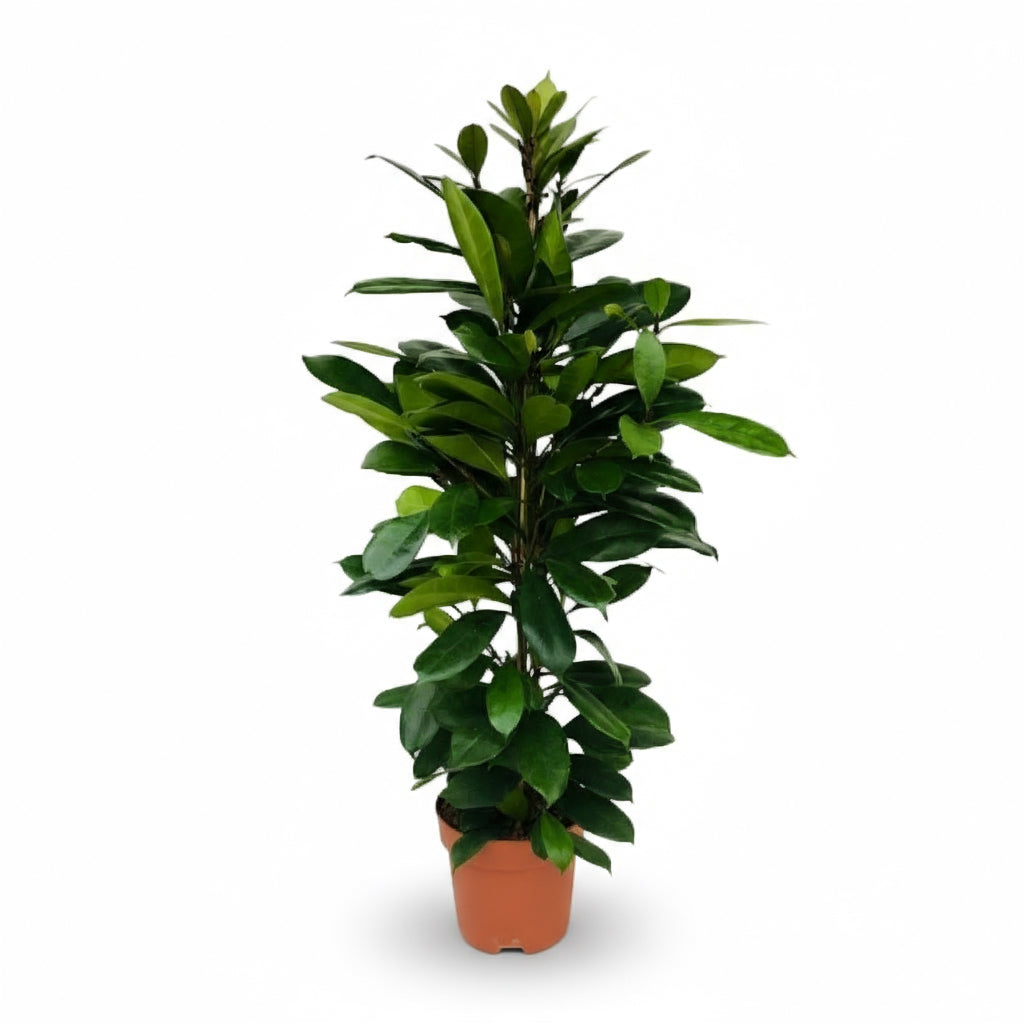
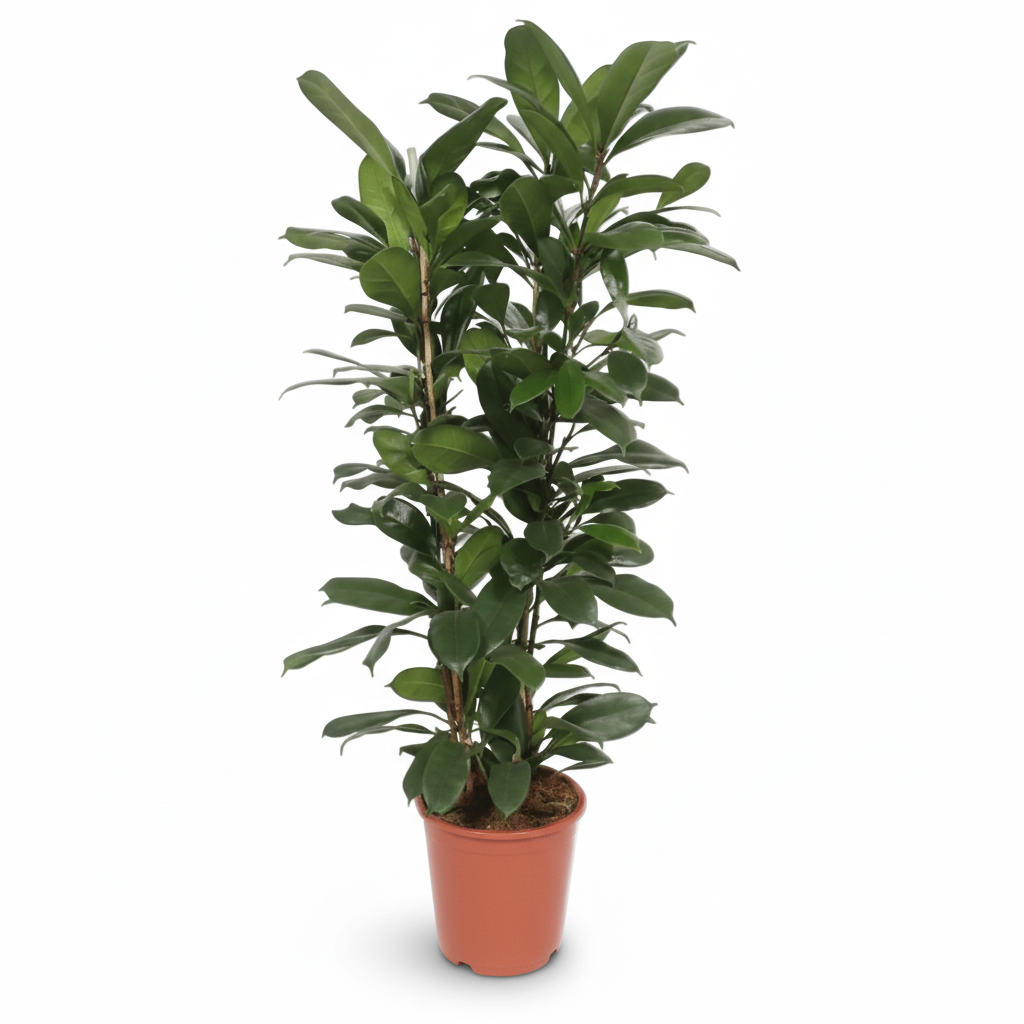
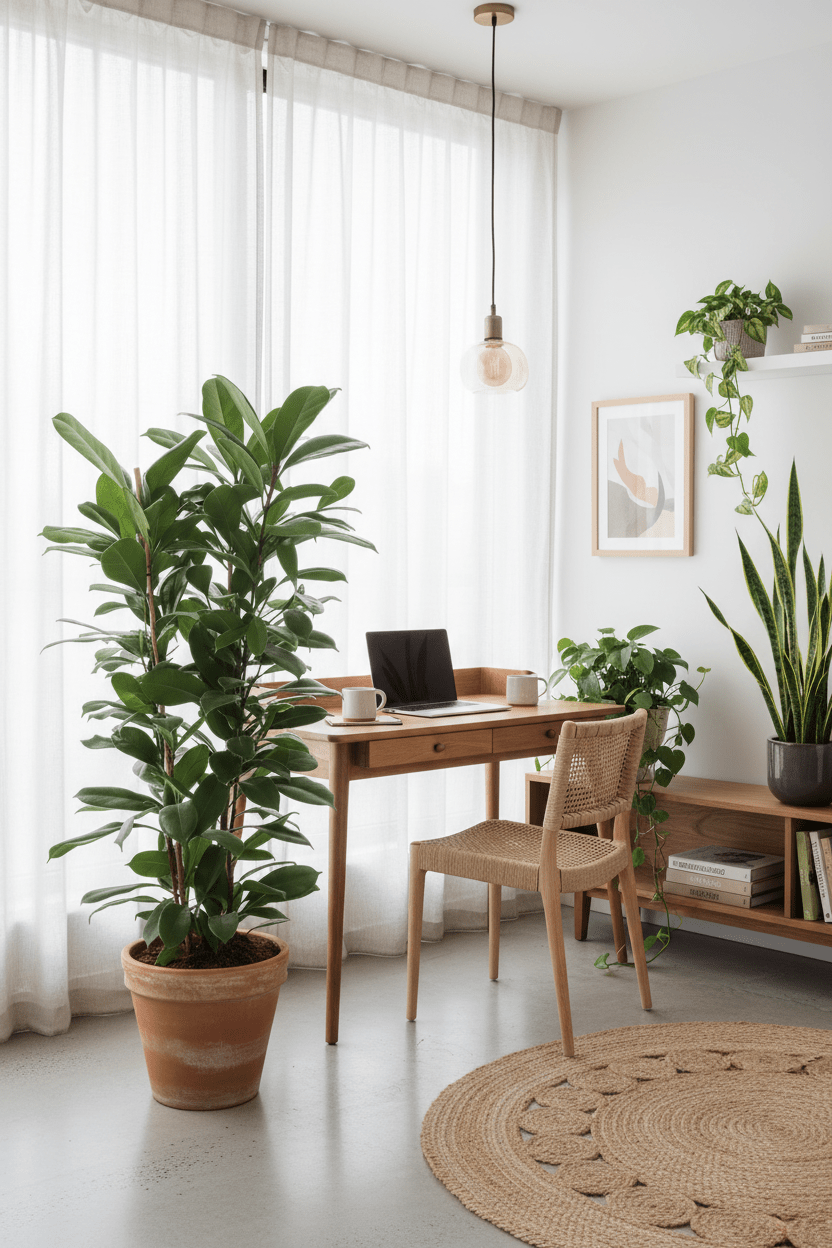


🌍 Origin Central Africa • 🌿 Shiny dark green foliage • 🏙️ Architectural form • 💧 Easy care • 🏙️ 2 sizes available
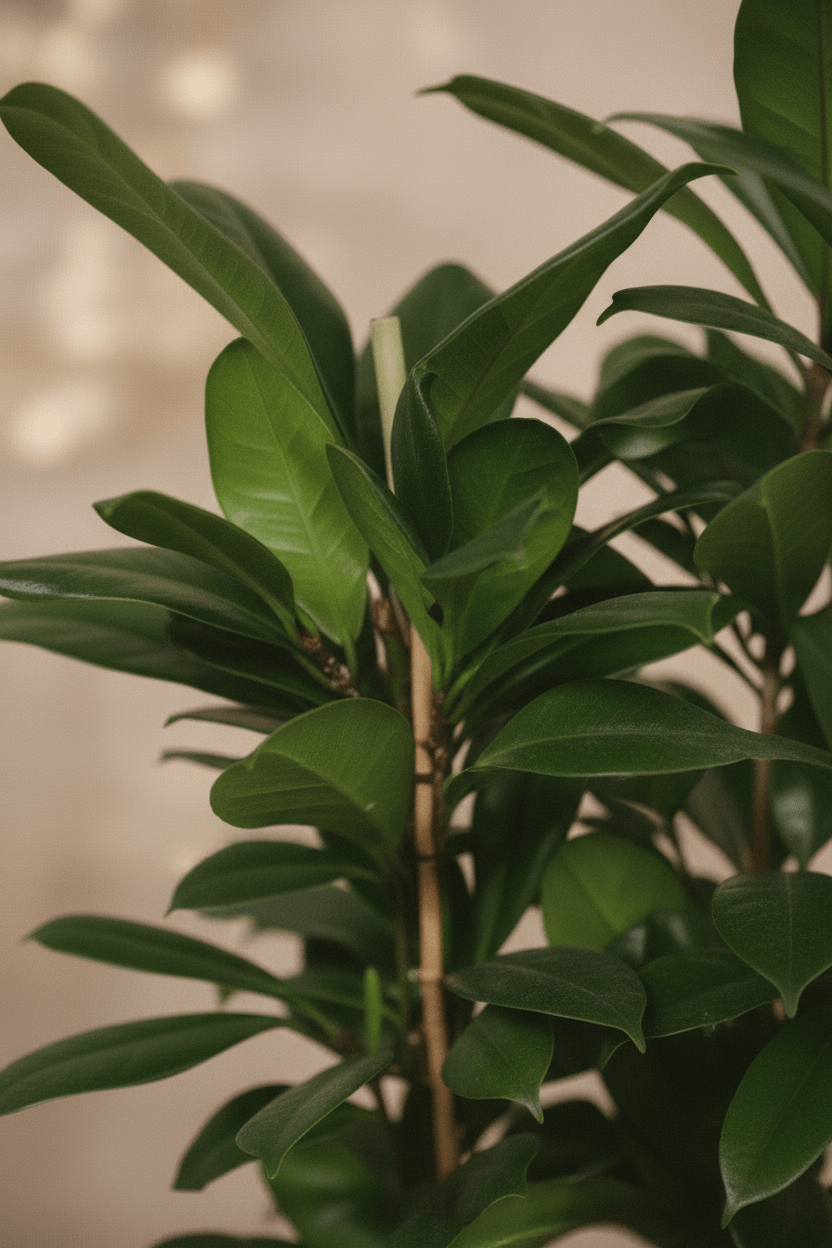
The Ficus cyathistipula, or African Ficus, is an indoor plant with a tree-like appearance that immediately stands out for its architectural presence and rich foliage. Its large, thick, shiny dark green leaves with slightly coppery reflections evoke the lushness of the humid forests of Central and West Africa where it originates.
Easy to care for and visually striking, it structures spaces in the indoor jungle and naturally stands out among the large XXL plants for contemporary interiors.
Which Ficus to choose?
Verdeia offers several Ficus with distinct shapes. Here’s how to place the Ficus cyathistipula among the references in the Ficus collection:
- Ficus cyathistipula (this plant) — large, thick, shiny dark green leaves, dense bushy form. The most architectural African Ficus for large spaces.
- Ficus benghalensis 'Joy' — large, soft light green leaves, upright form. The choice for an airy effect and a cleaner silhouette.
- Ficus benjamina 'Danielle' — small, shiny leaves, flexible branched form. The classic weeping Ficus for bright interiors.
- Ficus binnendijkii 'Alii' — long, narrow leaves, slender form. The choice for a more graphic and contemporary look.
Light & placement
The Ficus cyathistipula adapts well to the conditions of a standard urban apartment — its tolerance for bright partial shade makes it a reliable choice even in rooms without south-facing windows. Its only real requirement: stability. It does not tolerate sudden changes of location well, which cause leaf drop.
- Light: bright indirect or bright partial shade — protected from direct rays that burn the leaves.
- Locations: living room, entrance hall, bright office — anywhere it can play a structuring plant role.
- Stability: choose its permanent spot at installation and avoid moving it.
Rotate the pot a quarter turn every two weeks so the foliage develops evenly — without moving the plant from its usual spot.
Watering & care
Easy to care for, the Ficus cyathistipula tolerates missed waterings well thanks to its thick foliage that retains moisture. The main challenge is to avoid overwatering — if the leaves yellow, check our guide on the causes of leaf yellowing.
- Frequency: about once a week — water when the surface of the substrate feels dry to the touch.
- Humidity: lightly mist the foliage in summer to recreate the tropical atmosphere it originates from.
- Fertilizer: every 4 to 6 weeks from spring to autumn — our guide on indoor plant nutrition details the options.
- Cleaning: wipe the large leaves with a soft damp cloth once a month to maintain their shine and promote photosynthesis.
Decor ideas & plant pairings
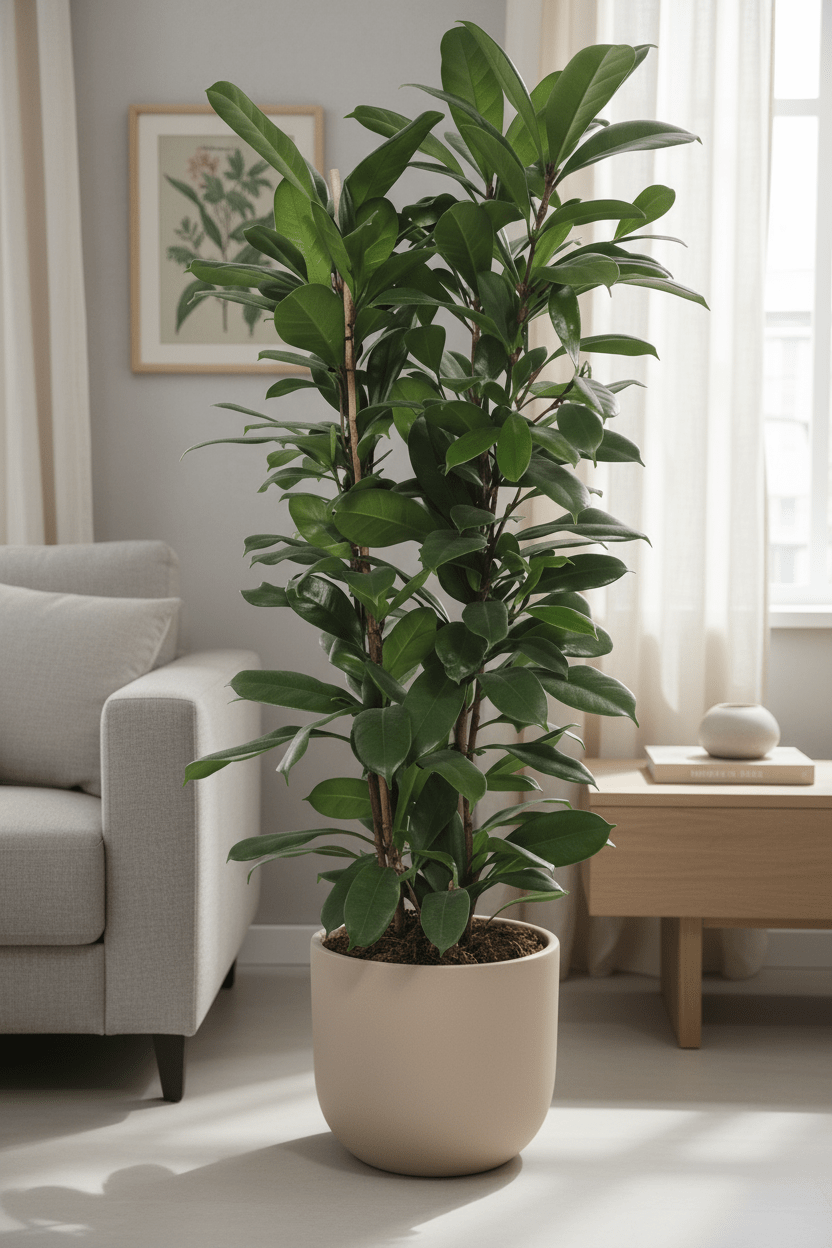
The dense silhouette and shiny foliage of the Ficus cyathistipula make it a structuring plant — it serves as a green backdrop or focal point in a tropical composition.
- For an XXL jungle in the living room, pair the Ficus cyathistipula with a Monstera deliciosa and a Kentia — the thick, shiny leaves of the African Ficus in the foreground, the graphic cut of the Monstera in the middle, and the upright fronds of the Kentia above create three levels of coherent tropical texture.
- For a foliage contrast in a bright space, place it alongside a Zamioculcas — the shine and volume of the African Ficus contrast with the compact, upright form of the ZZ for a graphic and robust composition.
- To highlight its architectural silhouette, choose a large decorative pot in terracotta or anthracite ceramic — the warm or neutral ceramic tones visually anchor the plant and enhance its shiny dark green foliage.
- In a Ficus composition, pair it with the Ficus benghalensis 'Joy' — the texture difference between the velvety leaves of the benghalensis and the shiny leaves of the cyathistipula creates a subtle and very effective contrast in a large space.
Verdeia tips
- Choose its permanent location at installation: the Ficus cyathistipula reacts to location changes with leaf drop — once acclimated, leave it in place and it will develop dense, stable foliage.
- Repot every 2 to 3 years in spring in a well-draining substrate: a universal mix enriched with perlite or clay pellets prevents water stagnation, which is the main cause of decline for this species. Our guide on repotting guides you step by step.
- Keep it away from radiators and air conditioners: dry heat and drafts weaken its foliage and encourage scale insects — a stable location between 18 and 26 °C ensures steady growth year-round.
Technical specifications
- Botanical name: Ficus cyathistipula
- Common names: African Ficus, Copper-leaf Ficus
- Family: Moraceae
- Origin: Central and West Africa
- Dimensions at delivery: 🏙️ 2 sizes available — H105 cm | Pot Ø21 cm or H120 cm | Pot Ø27 cm
- Foliage: Shiny dark green, thick, slightly coppery
- Light: bright indirect to bright partial shade
- Watering: Moderate, about once a week
- Care: Easy
- Toxicity: Slightly toxic to pets and children
- Decor style: Tropical / Architectural / Contemporary
Each plant is unique: the density, size, and shine of the foliage naturally vary depending on light and season.

Your plant, delivered with care
Every plant is hand-packed in a box specially designed for plants — secured, protected, ready to travel. It arrives in perfect condition, roots intact and foliage preserved, ready to take its place in your home.
Our Verdeia commitments
FAQ – Everything to know before adopting your Verdeia plant
How are my plants prepared before shipping?
All our plants are selected from our European partner nurseries. Before shipping, they are watered, cleaned, and protected with breathable, secure packaging. Each package is designed to ensure your plant arrives in perfect health, without any transport-related stress.
Will the plant look exactly like the photo?
The photos accurately represent the variety and the stated size. Since each plant is unique, slight differences in shape, foliage, or color may occur — and that’s part of their charm.
What are the delivery times and conditions?
Shipping is done within 48 business hours, with tracked delivery within 2 to 5 business days. Delivery costs €5.60 — free for orders over €50. You will receive a tracking link as soon as the package is shipped.
What to do upon receiving my plant?
Open your package as soon as you receive it and carefully remove the plant from its packaging. Let it acclimate for 24 hours in its new environment before watering. If it has been slightly stressed during transport, it will recover its shape after one or two days in the light.
What to do if my plant arrives damaged?
Contact us within 48 hours with a photo of the issue. Our team will assess the situation and offer you the best solution: replacement, partial refund, or recovery advice.
Can I return a plant?
Since plants are living beings, standard returns are not possible. However, we guarantee good health upon delivery: if the plant arrives damaged, it will be replaced free of charge. For any other cases (order error, decorative pot, accessory), returns are possible within 14 days.