



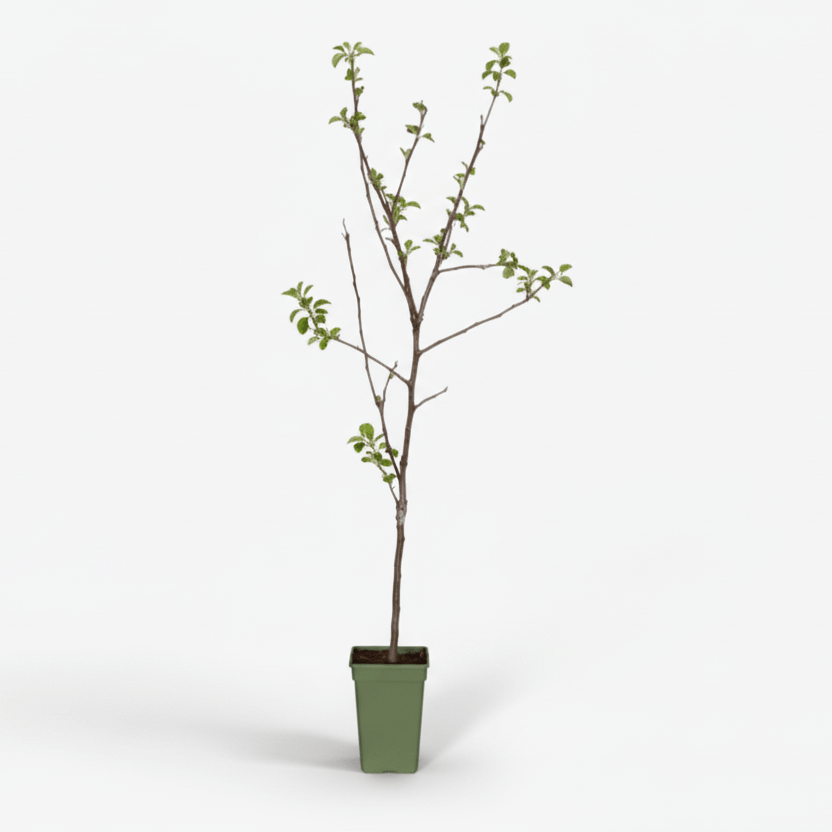
Malus domestica 'Jonagold' (Apple tree) — H60 cm | Pot Ø19 cm
- Regular price
-
€41,95 - Regular price
-
- Sale price
-
€41,95
Couldn't load pickup availability
Frequently Asked Questions
When is the best time to harvest Jonagold apples? Jonagold apples ripen from September to October depending on the climate — they are ready when they come off easily with a slight twist and the seeds are brown; they can then be stored for several months in a cool place.
Can a Jonagold apple tree be grown outdoors all year round? Yes, Jonagold is hardy down to −15 °C and does not need to be brought indoors in winter — the cold winter period is actually essential for good fruiting the following spring; just protect the pot from frost with a winter cover if temperatures drop below −10 °C.
SHIPPING & PACKAGING
Shipping within 24/48 hours via DPD
- Delivery in 2 to 5 business days
- Eco-friendly packaging: recyclable boxes and biodegradable materials
- Special protection to ensure the plant arrives in perfect condition
- Parcel tracking sent by email as soon as shipped
- Free delivery on orders over €50
48H QUALITY GUARANTEE
We guarantee that your plants will arrive in perfect condition. If your plant arrives damaged or in poor condition:
- Contact us within 48 hours at hello@verdeia.eu with photos
- Free replacement or full refund
- No return necessary – we trust you
The guarantee covers: damage related to transport, severely weakened plant upon arrival, preparation errors.
CARE TIPS UPON ARRIVAL
To help your plant settle in for the long term:
- Unpack immediately and inspect your plant
- Let it acclimatize 24-48h in a bright spot without direct sunlight
- Check soil moisture before watering (dry surface = light watering)
- Wait 2-3 weeks before repotting
- Avoid heat sources and drafts
- Gently wipe leaves to remove dust
Need help? Contact our team at hello@verdeia.eu or via chat.
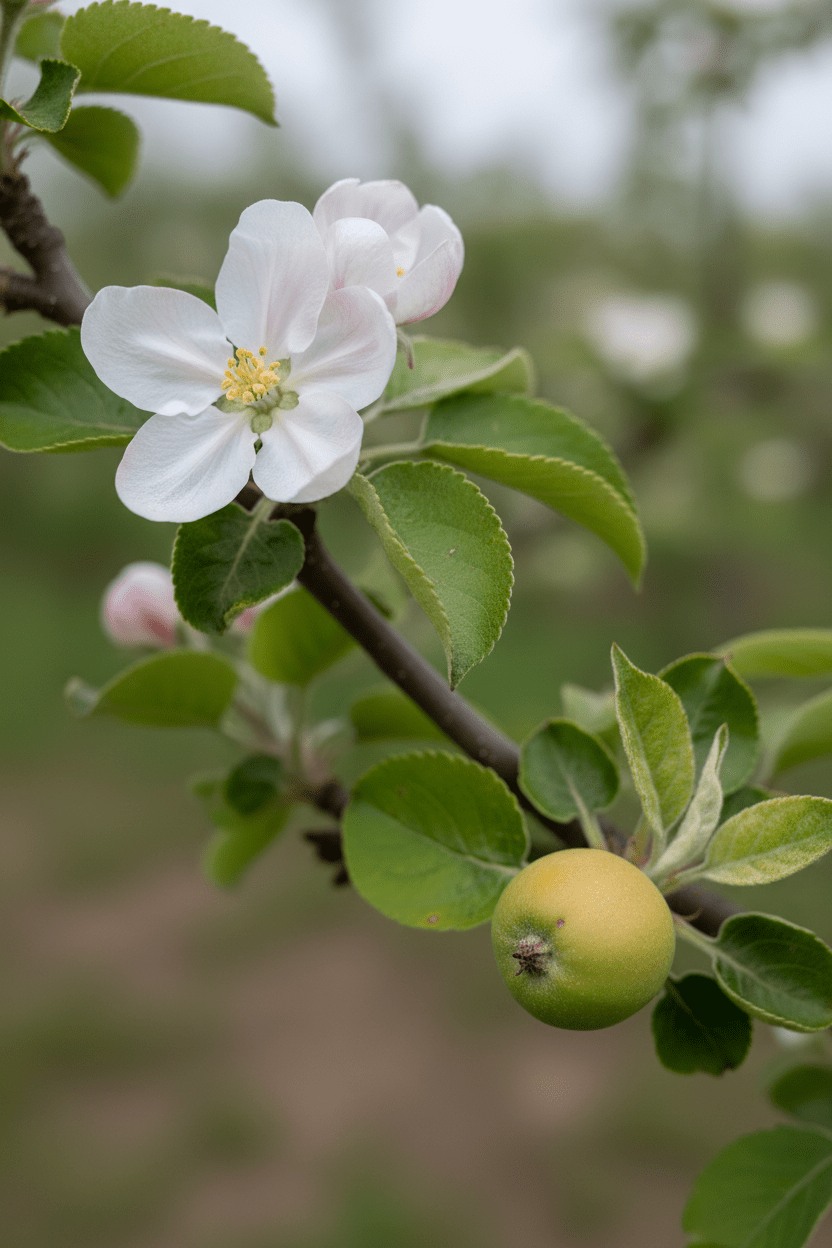

🍎 Sweet-tart red-orange apples • 🌸 Spring flowering • ☀️ Full sun • 💧 Regular watering • 🐾 Non-toxic
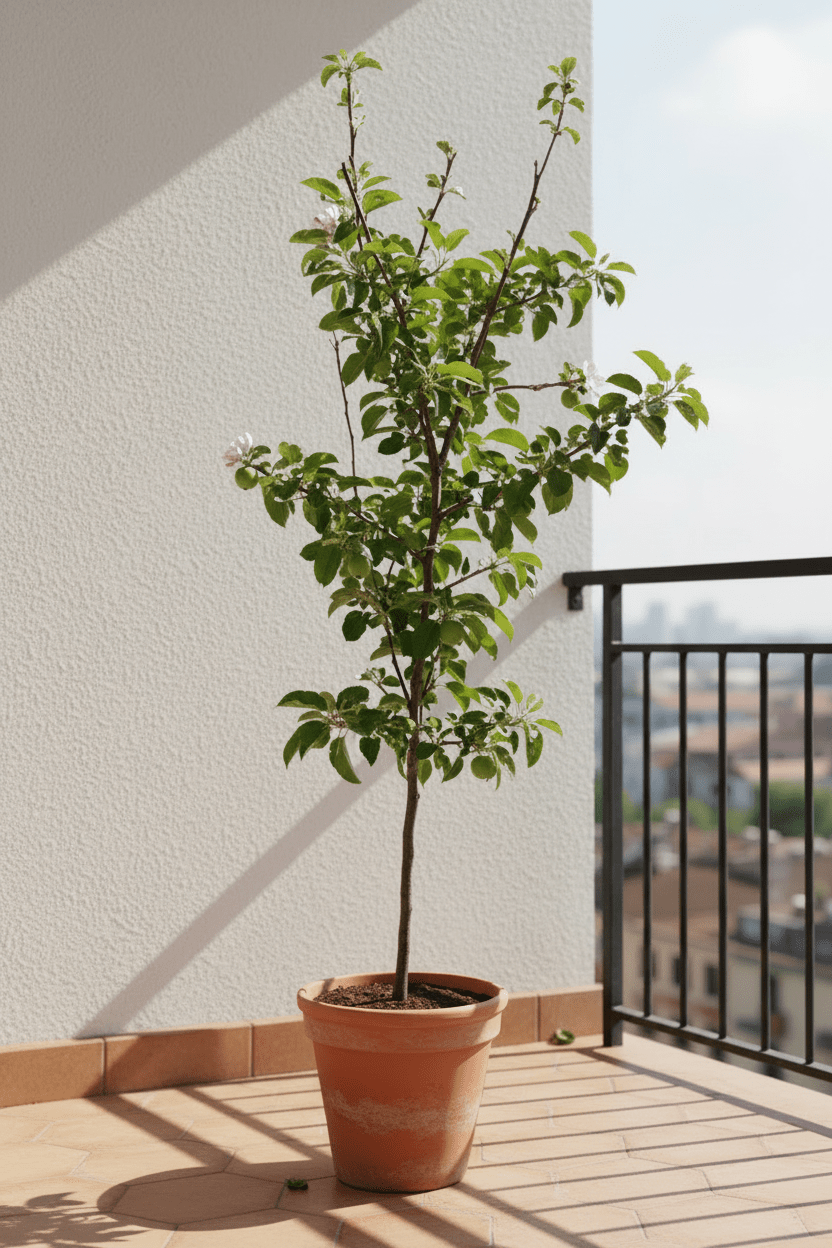
Originating from a cross between Golden Delicious and Jonathan made in the United States in the 1940s, Malus domestica 'Jonagold' is now one of the most widely grown apple varieties in Europe for its perfect balance of sweetness and acidity. Its red-orange apples streaked with yellow are as decorative as they are tasty. This compact potted format is ideal for balconies and terraces from our balcony plants collection and our fruit trees.
Which apple variety to choose?
Two apple varieties are available in our catalog:
- Malus domestica 'Jonagold' (this plant) — red-orange apples streaked with yellow, balanced sweet-tart flavor, crisp and juicy flesh, harvest September-October (H60 cm | Pot Ø19 cm). The most versatile version for eating fresh or cooking.
- Malus domestica 'Elstar' — bright red apples on a yellow background, more tart and aromatic flavor, harvest August-September (H60 cm | Pot Ø19 cm). The earliest and most tart version.
Exposure & location
- Exposure: full sun — at least 6 hours per day for good fruiting. The more sun it gets, the sweeter and more colorful the apples will be.
- Ideal: sunny balcony, terrace, urban garden, or very bright south- or west-facing windowsill.
- Temperature: hardy down to −15 °C — can stay outdoors year-round in temperate climates. Requires a winter cold period to fruit well.
- Substrate: rich, deep, and well-drained — special fruit tree potting soil.
Watering & care
- Watering: regular — keep the substrate moist but never waterlogged, especially during fruiting when irregular watering causes premature fruit drop.
- Frequency: 2 to 3 times per week in spring-summer, reduced in winter.
- Drainage: essential — pot with drainage holes and well-draining substrate.
- Fertilizer: once a month in spring-summer, liquid fertilizer for fruit trees.
- Pruning: light pruning at the end of winter to maintain a compact shape and encourage fruiting — remove crossing branches or those growing inward.
- Thinning: in June if production is abundant, remove excess fruits to get larger, tastier apples.
Decor ideas & plant pairings
- Urban balcony vegetable garden: pair it with a Rosemary stem and a Lavender 'Hidcote Blue' — aromatic plants attract pollinators that promote apple fruiting while creating a very decorative edible balcony.
- Fruit tree duo: pair it with a Fig tree 'Bornholm' — two hardy potted fruit trees, two harvests at different times (figs in August, apples in October), for a productive balcony all summer and autumn.
- Ideal pot: large terracotta pot (minimum Ø30 cm) or wooden planter to allow good root development — see our guide on choosing the right pot for your plant.
Verdeia tips
- Place it near another apple or wild apple tree for pollination: Jonagold produces better with a compatible pollinator nearby — a second apple tree of a different variety on the neighboring balcony or in the garden is enough to double production.
- Repot every 2 to 3 years in spring into a larger pot: the tree needs root space to produce fruit — a well-managed repotting in fresh enriched substrate restarts growth and improves fruiting.
- Be patient for the first significant harvest: a young potted apple tree usually produces its first apples 2 to 3 years after planting — focus the first years on formative pruning to get a nice structure that will support abundant harvests long-term.
Technical specifications
- Botanical name: Malus domestica 'Jonagold'
- Common name: Jonagold apple tree
- Origin: Europe and Central Asia (variety created in the United States)
- Dimensions at delivery: H60 cm | Pot Ø19 cm
- Adult size: up to 150–200 cm in pot (dwarf form)
- Exposure: full sun — minimum 6 hours per day
- Watering: regular — substrate moist but not waterlogged
- Substrate acidity: pH 6.0–7.0
- Care: moderate — annual pruning recommended
- Toxicity: non-toxic — edible fruits
- Decorative style: urban vegetable garden / rustic / productive
Each plant is unique: photos show an example of its appearance. Fruit production naturally varies depending on growing conditions, pollination, and season.

Your plant, delivered with care
Every plant is hand-packed in a box specially designed for plants — secured, protected, ready to travel. It arrives in perfect condition, roots intact and foliage preserved, ready to take its place in your home.
Our Verdeia commitments
FAQ – Everything to know before adopting your Verdeia plant
How are my plants prepared before shipping?
All our plants are selected from our European partner nurseries. Before shipping, they are watered, cleaned, and protected with breathable, secure packaging. Each package is designed to ensure your plant arrives in perfect health, without any transport-related stress.
Will the plant look exactly like the photo?
The photos accurately represent the variety and the stated size. Since each plant is unique, slight differences in shape, foliage, or color may occur — and that’s part of their charm.
What are the delivery times and conditions?
Shipping is done within 48 business hours, with tracked delivery within 2 to 5 business days. Delivery costs €5.60 — free for orders over €50. You will receive a tracking link as soon as the package is shipped.
What to do upon receiving my plant?
Open your package as soon as you receive it and carefully remove the plant from its packaging. Let it acclimate for 24 hours in its new environment before watering. If it has been slightly stressed during transport, it will recover its shape after one or two days in the light.
What to do if my plant arrives damaged?
Contact us within 48 hours with a photo of the issue. Our team will assess the situation and offer you the best solution: replacement, partial refund, or recovery advice.
Can I return a plant?
Since plants are living beings, standard returns are not possible. However, we guarantee good health upon delivery: if the plant arrives damaged, it will be replaced free of charge. For any other cases (order error, decorative pot, accessory), returns are possible within 14 days.