



Hydrangea serrata 'Pink Petticoat'® (Japanese lacecap hydrangea) — H25 cm | Pot Ø19 cm
- Regular price
-
€36,95 - Regular price
-
- Sale price
-
€36,95
Couldn't load pickup availability
Frequently Asked Questions
Why do the flowers of Hydrangea serrata change color? The flower color depends on the soil pH — pink in neutral to slightly acidic soil, turning lavender blue in acidic soil (pH below 5.5): the same plant can therefore produce pink or blue flowers depending on growing conditions.
Can you prune a Hydrangea serrata heavily in winter? No, unlike Hydrangea arborescens, Hydrangea serrata blooms partly on last year’s wood — only remove old flower heads and dead stems at the end of winter, without cutting back the main framework.
SHIPPING & PACKAGING
Shipping within 24/48 hours via DPD
- Delivery in 2 to 5 business days
- Eco-friendly packaging: recyclable boxes and biodegradable materials
- Special protection to ensure the plant arrives in perfect condition
- Parcel tracking sent by email as soon as shipped
- Free delivery on orders over €50
48H QUALITY GUARANTEE
We guarantee that your plants will arrive in perfect condition. If your plant arrives damaged or in poor condition:
- Contact us within 48 hours at hello@verdeia.eu with photos
- Free replacement or full refund
- No return necessary – we trust you
The guarantee covers: damage related to transport, severely weakened plant upon arrival, preparation errors.
CARE TIPS UPON ARRIVAL
To help your plant settle in for the long term:
- Unpack immediately and inspect your plant
- Let it acclimatize 24-48h in a bright spot without direct sunlight
- Check soil moisture before watering (dry surface = light watering)
- Wait 2-3 weeks before repotting
- Avoid heat sources and drafts
- Gently wipe leaves to remove dust
Need help? Contact our team at hello@verdeia.eu or via chat.
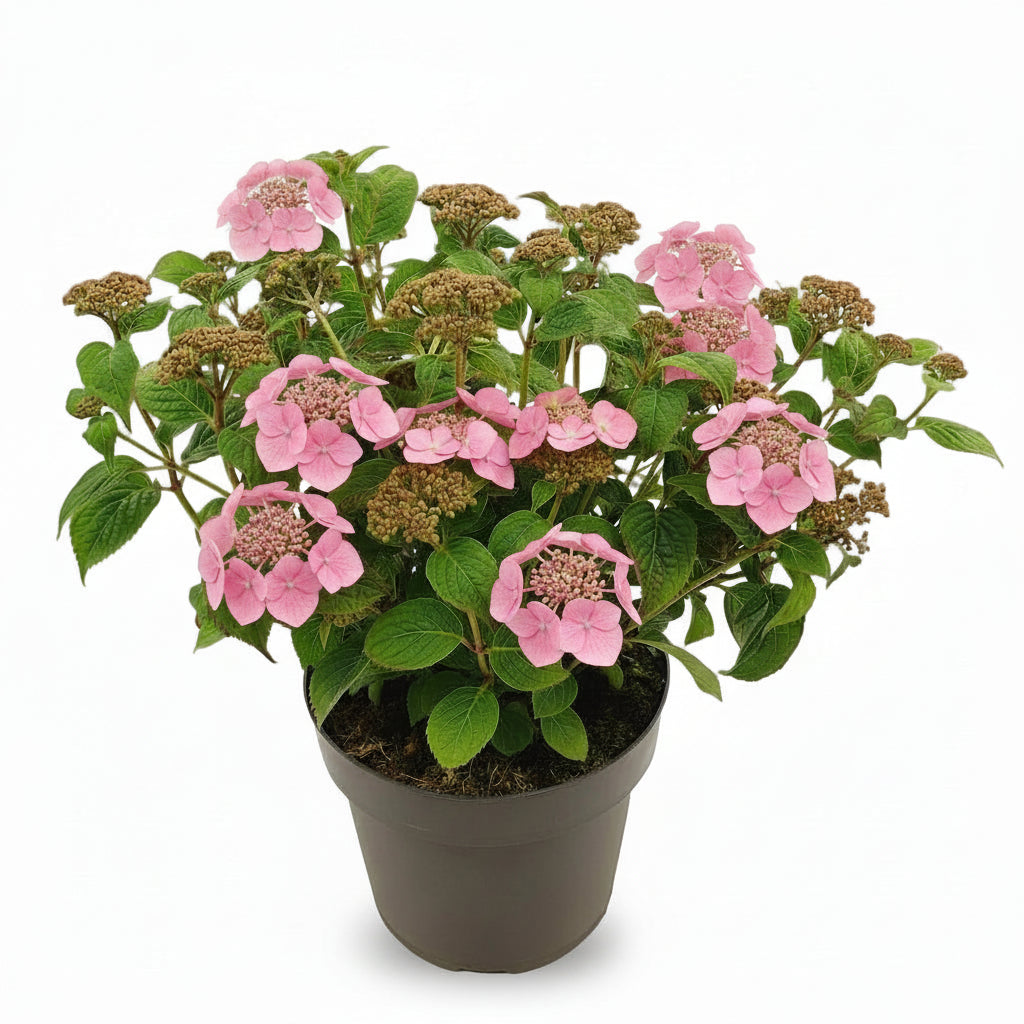
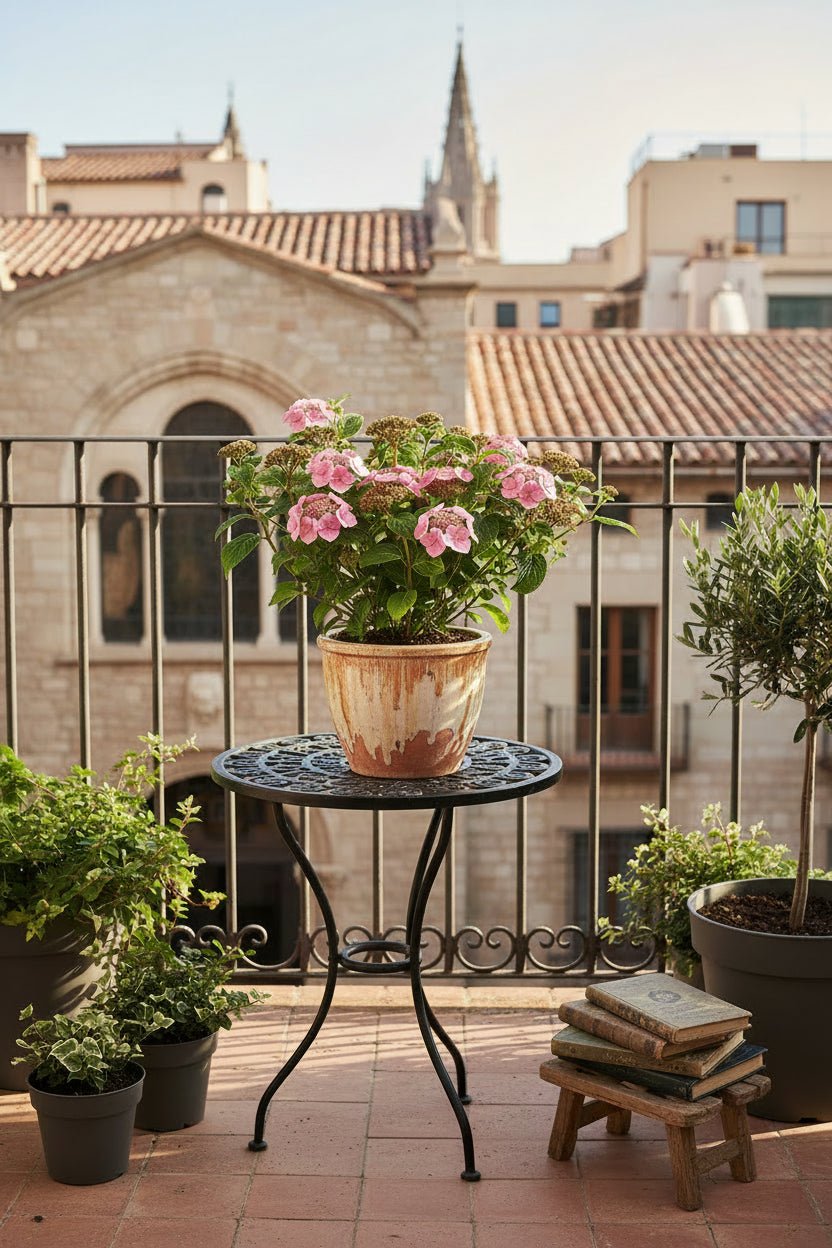
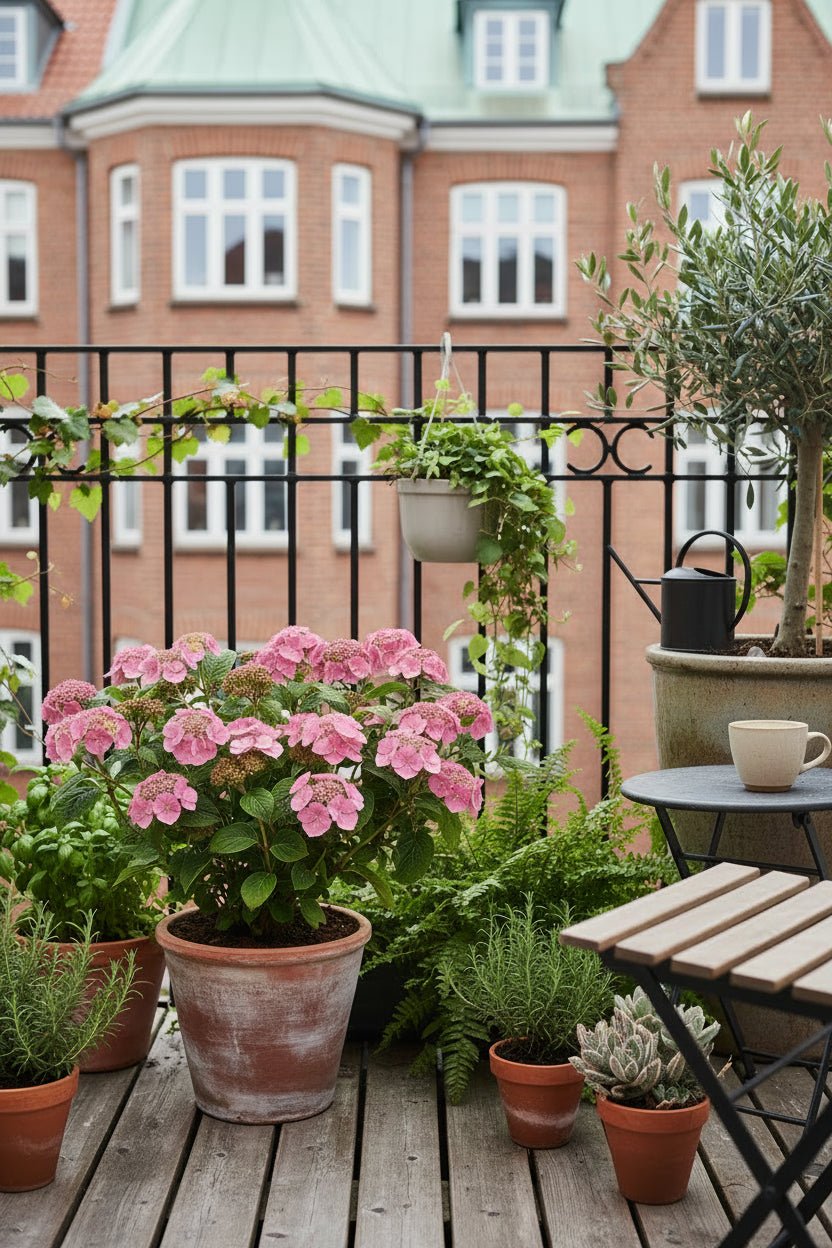
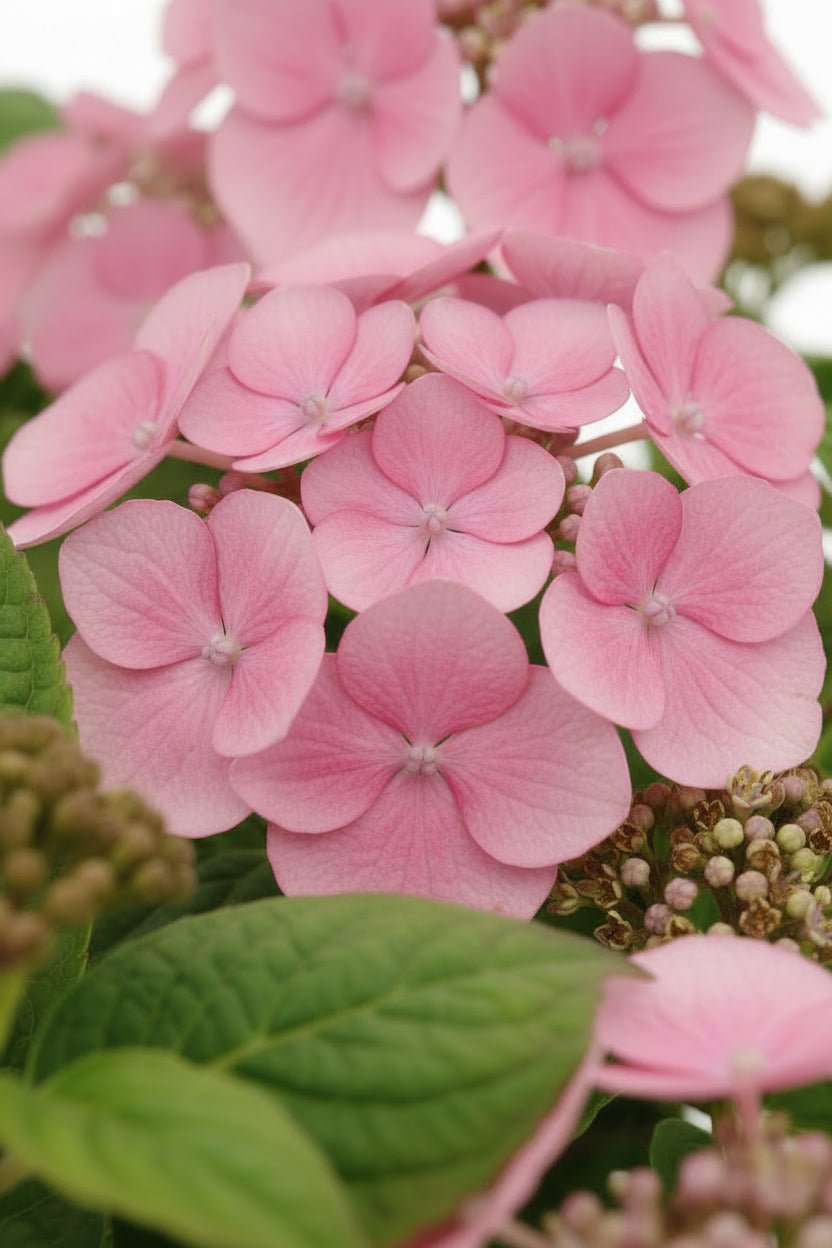
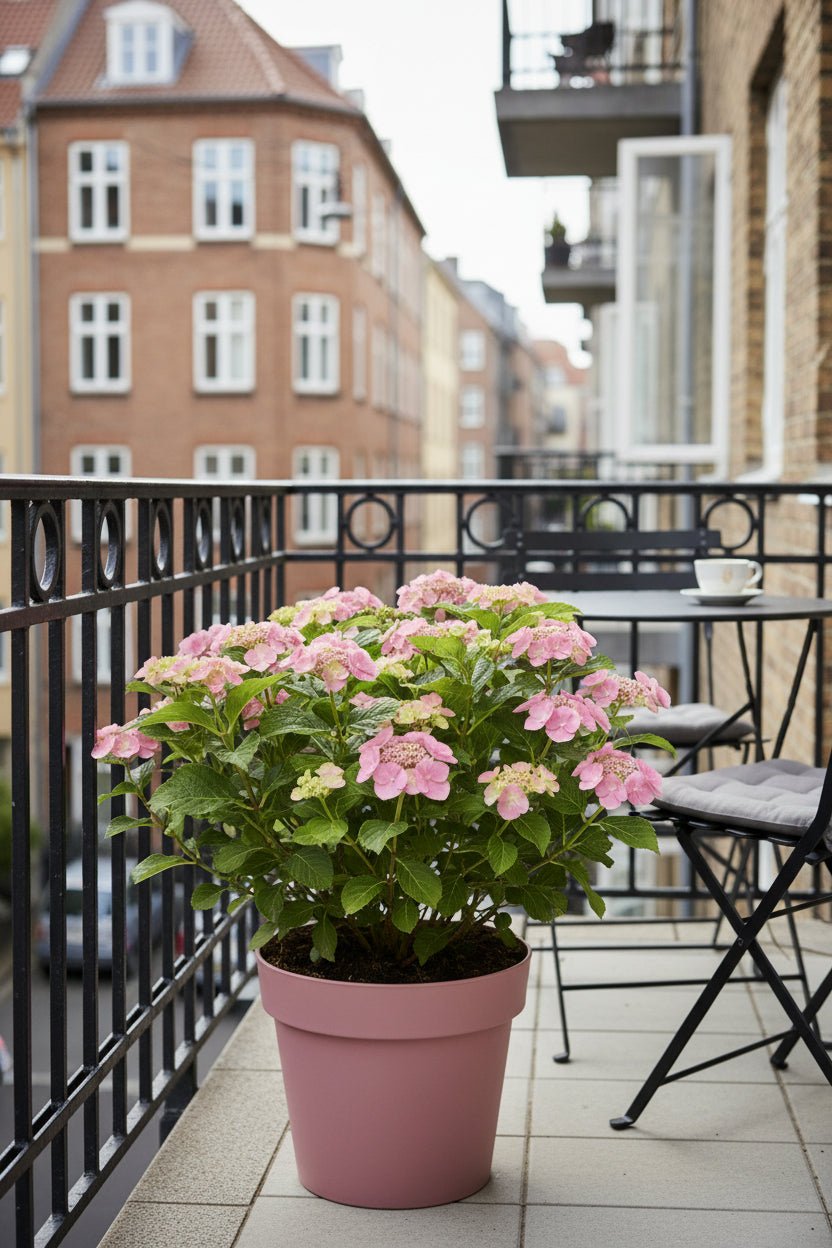

🌸 Pink lace inflorescences from June to August • 🍂 Fiery red foliage in autumn • ☀️ Partial shade to light shade • ❄️ Hardy down to –20 °C • 🐾 Non-toxic • 📏 H25 cm | Pot Ø19 cm
Hydrangea serrata 'Pink Petticoat'®, or Japanese lacecap hydrangea, is a compact deciduous shrub native to the mountains of Japan, distinguished from mophead hydrangeas by its flat lacecap inflorescences — fertile flowers in the center, sterile flowers in a crown — with a unique lightness and refinement. Its pale pink blooms from June to August and foliage that turns deep red in autumn give it decorative interest across two seasons. Among outdoor flowering plants, it is one of the most elegant for shaded exposures.
Compact (70 to 80 cm mature), very hardy and suitable for pots or open ground, it is an ideal choice to bring delicate blooms and spectacular autumn foliage to a partially shaded balcony or terrace.
Mophead or lacecap hydrangea?
Verdeia offers two types of hydrangeas with very different flower shapes. Here’s how to tell them apart:
- Hydrangea serrata 'Pink Petticoat'® (this plant) — flat pink lacecap inflorescences, light and airy, red foliage in autumn. Compact habit 70–80 cm, native to Japan. The choice for delicate and refined blooms in shaded spaces.
- Hydrangea arborescens 'Pink Annabelle' — huge bright pink spherical bouquets, very generous flowering, more vigorous habit (100–120 cm). The choice for maximum visual impact with large, voluminous flower heads.
Exposure & location
Hydrangea serrata is the hydrangea best suited to shade — it naturally grows in the understory of Japanese mountains and thrives where other hydrangeas struggle. It tolerates morning sun but must be protected from afternoon heat. Like all hydrangeas, it is sensitive to lime.
- Exposure: partial shade or light shade — morning sun tolerated, afternoon shade essential.
- Soil: fresh, humus-rich, well-drained, and slightly acidic — poorly tolerant of lime.
- In pots: slightly acidic substrate, container at least 25 cm — water preferably with rainwater.
- Protection: sheltered from drying winds that damage the delicate lacecap flowers.
Flower color varies with soil pH — pink in neutral to slightly acidic soil, turning lavender blue in more acidic soil (pH below 5.5): it’s the same plant changing color depending on conditions.
Watering & care
Hydrangea serrata is sensitive to drought and lime. In pots, the finger test helps keep the substrate slightly moist at all times. If leaves yellow or flowering gradually fades, check the possible causes — often too much lime or too dry substrate.
- Watering: regular to keep soil fresh — preferably rainwater, never stagnant water.
- Pruning: light at the end of winter — remove old flower heads and dead stems without heavy cutting back.
- Fertilizer: special hydrangea or ericaceous plant fertilizer in spring.
- Mulching: pine bark at the base to retain moisture and maintain slight substrate acidity.
Unlike Hydrangea arborescens which cut back hard each winter, Hydrangea serrata blooms partly on last year’s wood — never prune severely or you will reduce flowering.
Decor ideas & plant pairings
The airy lightness of the 'Pink Petticoat'® lacecap inflorescences and the fiery autumn foliage make it an exceptional plant for partial shade compositions — in a Japanese zen garden or in a shaded outdoor jungle arrangement.
- For a very Japanese red and pink zen composition, pair it with Acer palmatum 'Garnet' in a nearby pot — the pink lacecap hydrangea flowers in the foreground and the finely cut garnet red foliage of the maple create a complementary duo of textures and pinks, both peaking in autumn.
- For a shaded bed with long flowering, pair it with the white Hydrangea 'Strong Annabelle'® in the background — the contrast between the flat delicate inflorescences of the 'Pink Petticoat'® and the huge spherical bouquets of the 'Strong Annabelle'® creates a rich textural composition.
- To structure the front of a shaded bed, plant it in front of the Fargesia 'Moontears'® Boobux as a low hedge — the dense bright green bamboo contrasts beautifully with the airy lightness of the lacecap flowers.
- To enhance the pink inflorescences in a pot, a slate gray or dark green ceramic container creates the most elegant contrast with the pale pink delicacy and fineness of the lacecap flowers.
In autumn, Hydrangea serrata is one of the most spectacular shrubs in the catalog — its foliage turns deep red while the flower heads dry on the plant, taking on very decorative parchment tones.
Verdeia tips
- Water only at the base, never by spraying: the delicate lacecap inflorescences are very sensitive to water on the flowers — spraying encourages powdery mildew and quickly damages the flowers, shortening the flowering period.
- Never prune severely in winter: unlike arborescens hydrangeas, serrata blooms partly on last year’s wood — only remove old flower heads and dead stems at the end of winter, without cutting back the framework.
- Gradually acidify the potting substrate: renewing pine bark mulch each spring, combined with rainwater watering, maintains substrate acidity and prevents the yellowing of foliage characteristic of too high pH.
Technical specifications
- Botanical name: Hydrangea serrata 'Pink Petticoat'®
- Common name: Japanese lacecap hydrangea
- Region (Country): Asia (mountains of Japan)
- Dimensions at delivery: H25 cm | Pot Ø19 cm
- Adult size: 70 to 80 cm
- Exposure: partial shade or light shade
- Soil: fresh, humus-rich, slightly acidic
- Watering: regular, substrate slightly moist at all times
- Flowering: June to August
- Flower color: pale pink — varies with soil pH
- Type of inflorescence: lacecap — fertile flowers in center, sterile in crown
- Foliage: dark green, turning deep red in autumn, deciduous
- Hardiness: down to –20 °C
- Toxicity to animals: non-toxic
- Decorative style: Japanese zen / Romantic patio / Shaded terrace
Each plant is unique: photos show an example of its appearance. The shade of pink naturally varies depending on soil pH, light, and season.

Your plant, delivered with care
Every plant is hand-packed in a box specially designed for plants — secured, protected, ready to travel. It arrives in perfect condition, roots intact and foliage preserved, ready to take its place in your home.
Our Verdeia commitments
FAQ – Everything to know before adopting your Verdeia plant
How are my plants prepared before shipping?
All our plants are selected from our European partner nurseries. Before shipping, they are watered, cleaned, and protected with breathable, secure packaging. Each package is designed to ensure your plant arrives in perfect health, without any transport-related stress.
Will the plant look exactly like the photo?
The photos accurately represent the variety and the stated size. Since each plant is unique, slight differences in shape, foliage, or color may occur — and that’s part of their charm.
What are the delivery times and conditions?
Shipping is done within 48 business hours, with tracked delivery within 2 to 5 business days. Delivery costs €5.60 — free for orders over €50. You will receive a tracking link as soon as the package is shipped.
What to do upon receiving my plant?
Open your package as soon as you receive it and carefully remove the plant from its packaging. Let it acclimate for 24 hours in its new environment before watering. If it has been slightly stressed during transport, it will recover its shape after one or two days in the light.
What to do if my plant arrives damaged?
Contact us within 48 hours with a photo of the issue. Our team will assess the situation and offer you the best solution: replacement, partial refund, or recovery advice.
Can I return a plant?
Since plants are living beings, standard returns are not possible. However, we guarantee good health upon delivery: if the plant arrives damaged, it will be replaced free of charge. For any other cases (order error, decorative pot, accessory), returns are possible within 14 days.