



Alocasia cucullata (Buddha's Hand)
- Regular price
-
€44,95 - Regular price
-
- Sale price
-
€44,95
Couldn't load pickup availability
Frequently Asked Questions
Where does the name Buddha's Hand for Alocasia cucullata come from? From the tips of its leaves, which curve forward like an open hand, giving it its traditional place near Buddhist temples.
What should I do if my Alocasia loses its leaves in winter? Reduce watering significantly without letting the substrate dry out completely: the rhizome remains alive and will regrow in spring.
SHIPPING & PACKAGING
Shipping within 24/48 hours via DPD
- Delivery in 2 to 5 business days
- Eco-friendly packaging: recyclable boxes and biodegradable materials
- Special protection to ensure the plant arrives in perfect condition
- Parcel tracking sent by email as soon as shipped
- Free delivery on orders over €50
48H QUALITY GUARANTEE
We guarantee that your plants will arrive in perfect condition. If your plant arrives damaged or in poor condition:
- Contact us within 48 hours at hello@verdeia.eu with photos
- Free replacement or full refund
- No return necessary – we trust you
The guarantee covers: damage related to transport, severely weakened plant upon arrival, preparation errors.
CARE TIPS UPON ARRIVAL
To help your plant settle in for the long term:
- Unpack immediately and inspect your plant
- Let it acclimatize 24-48h in a bright spot without direct sunlight
- Check soil moisture before watering (dry surface = light watering)
- Wait 2-3 weeks before repotting
- Avoid heat sources and drafts
- Gently wipe leaves to remove dust
Need help? Contact our team at hello@verdeia.eu or via chat.
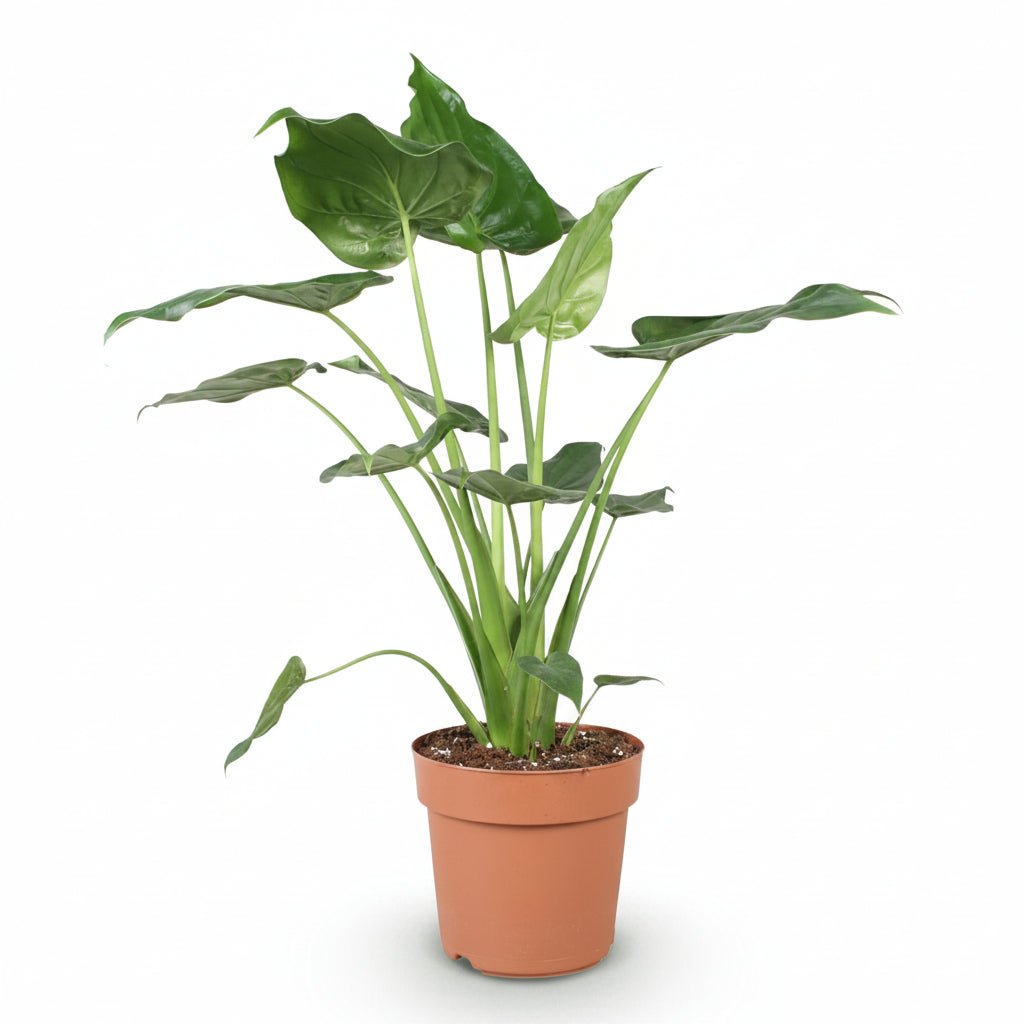
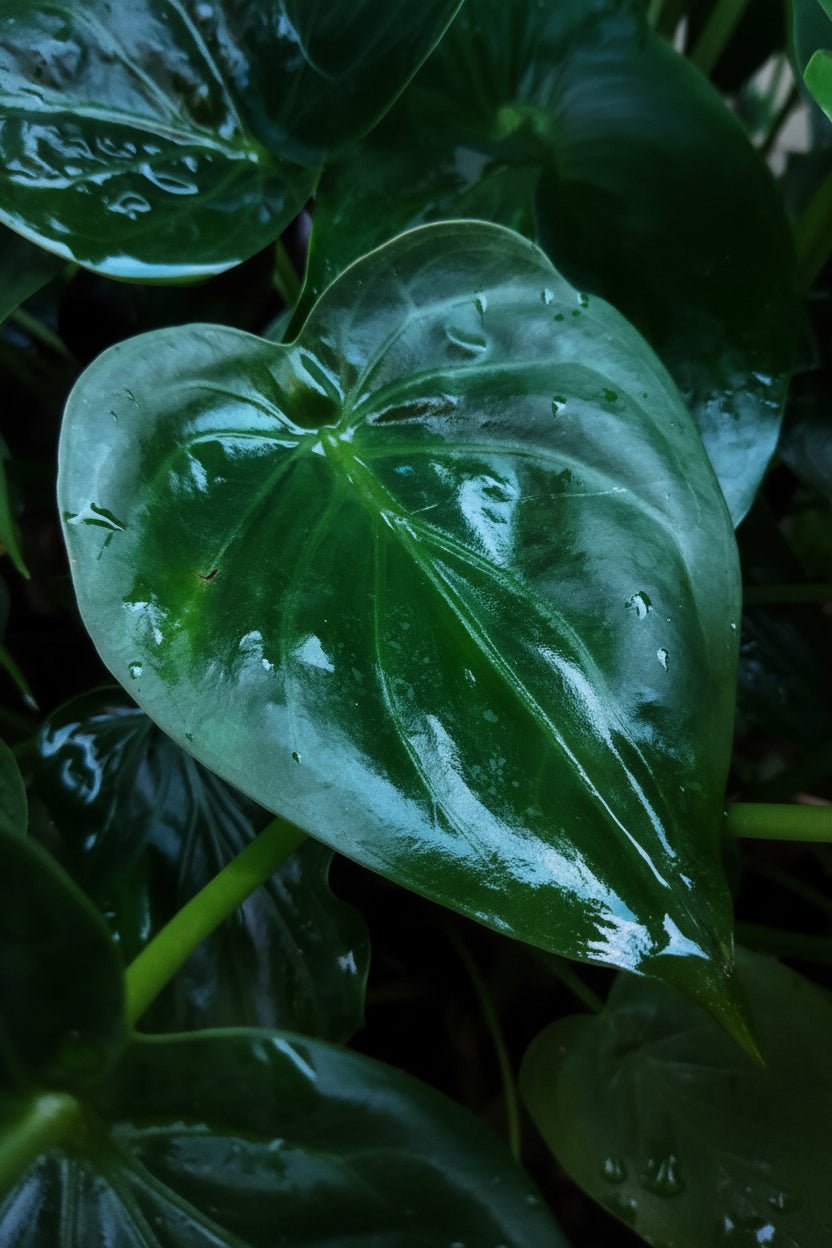
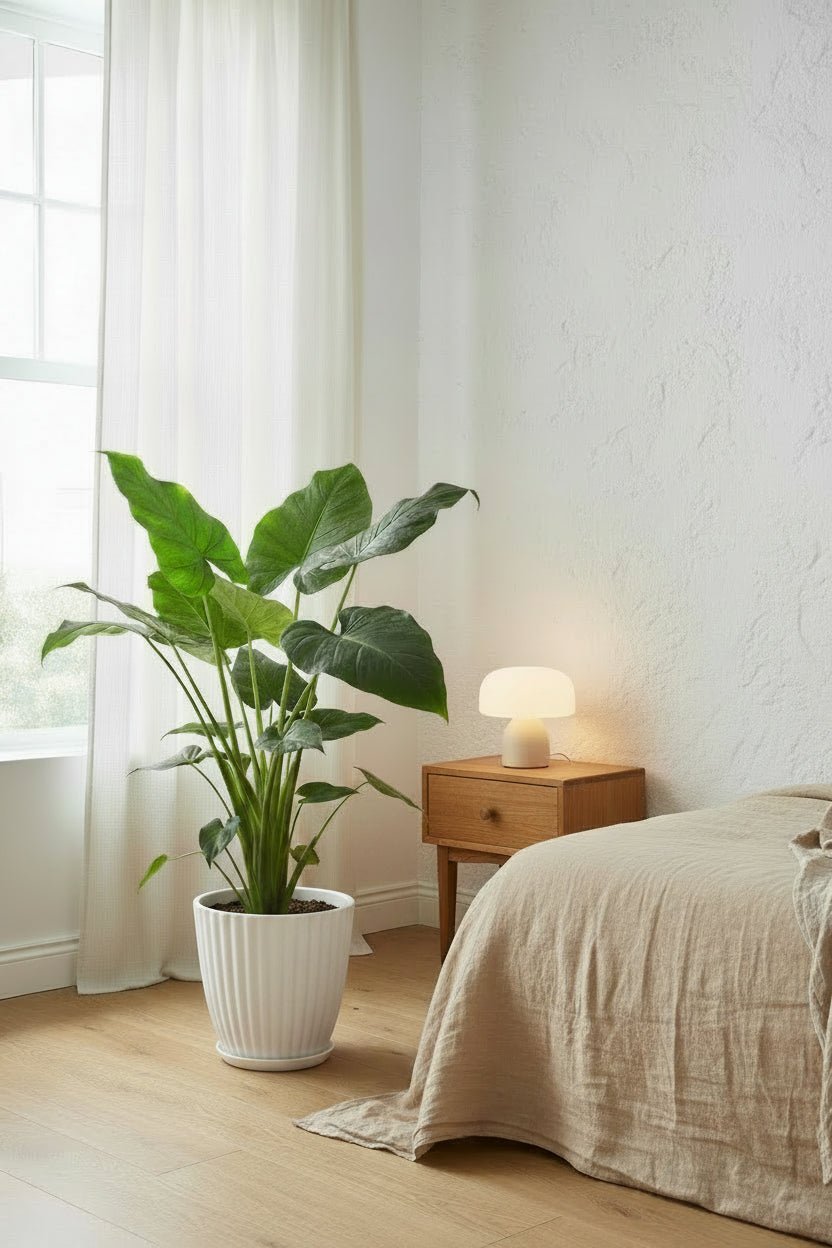
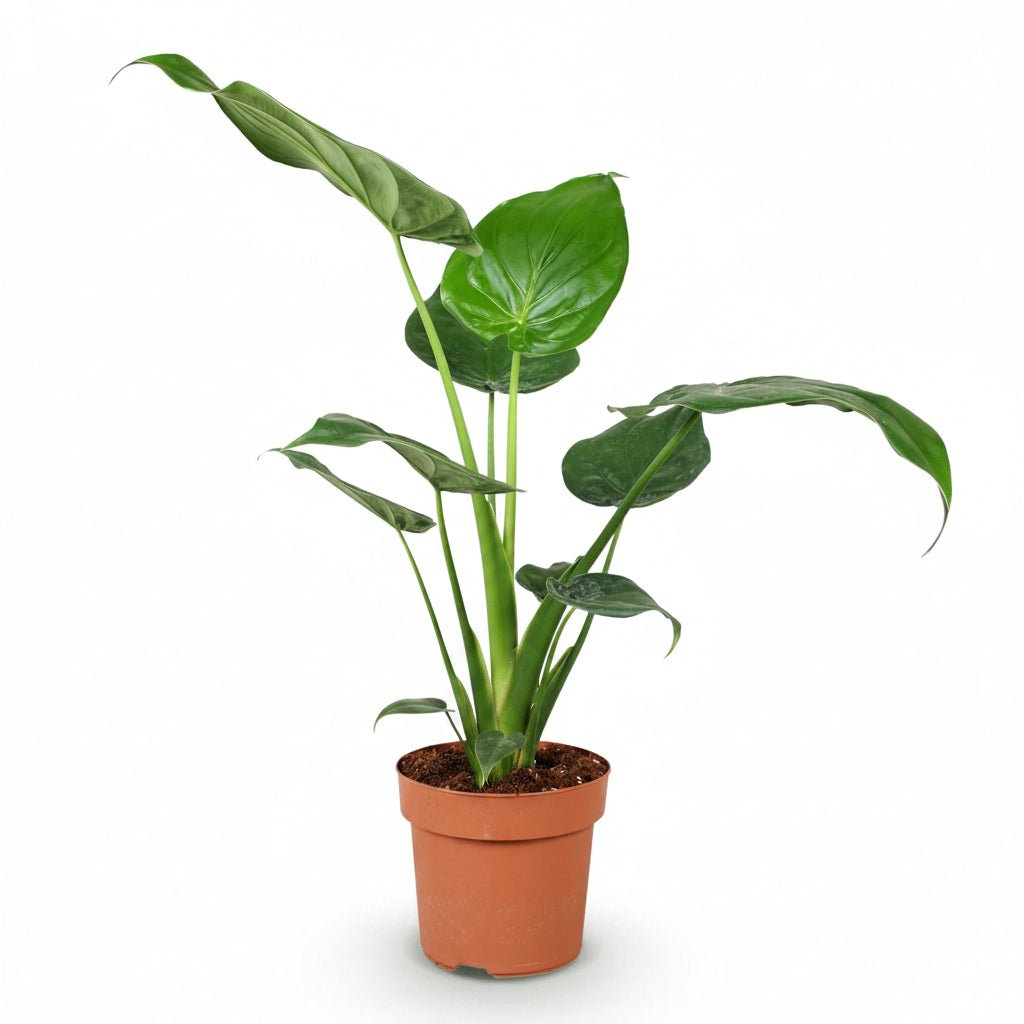

🌿 Glossy heart-shaped leaves • 🖤 Almost black-green stems • 🌤️ Indirect light • 💧 Moderate watering • 🏙️ Compact, upright growth • 🪴 2 sizes
Alocasia cucullata, called Buddha's Hand or Chinese elephant ear, bears broad, heart-shaped leaves in a deep, glossy green, held upright on stems so dark they appear almost black. A species native to the tropical regions of Southeast Asia (Sri Lanka, India, southern China), it joins the easiest-care Alocasias in the catalogue.
Its distinctive feature compared with other Alocasias is its growth habit: while Macrorrhiza or Regal Shield unfurl very large, spreading leaves, cucullata keeps smaller leaves grouped in a dense, upright clump. The tips curve slightly forward, a gesture that earned it the name Buddha's hand and its traditional presence near temples.
Which Alocasia should you choose?
The Alocasia genus comes in very different leaf shapes and sizes — here is how to position cucullata:
- Alocasia cucullata (this plant) — heart-shaped leaves grouped in a dense clump, very dark stems (2 sizes: H65 cm | Pot Ø17 cm and H70 cm | Pot Ø21 cm). The most compact version among the larger sizes.
- Alocasia 'Bambino Arrow' — small dark green arrow-shaped leaves with prominent veins (H40 cm | Pot Ø14 cm). The most graphic version in a small format.
- Alocasia gageana 'California' — very large textured leaves with prominent veins (H80 cm | Pot Ø21 cm). The most imposing version.
- Alocasia 'Regal Shield' — dark green shield-shaped leaves with deep purple undersides (H90 cm | Pot Ø21 cm). The most spectacular version.
Light & location
Cucullata is the most light-tolerant of the Alocasias, which explains its reputation as an easy-care variety. It tolerates medium light where its large-leaved cousins require bright light.
- Light: bright, indirect light — east- or west-facing window, or a south-facing window with a sheer curtain. Never direct sun, which burns the leaf blade.
- Location: living room, office, bedroom, bright bathroom — away from radiators and drafts.
- Temperature: 18 to 27 °C — minimum 15 °C, with no sudden fluctuations.
- Soil type: rich and well-draining — universal potting soil amended with perlite and a little bark.
The leaves clearly orient themselves toward the light and close their clump on the opposite side: turning the pot a quarter turn every two weeks keeps it balanced on all four sides.
Watering & care
Alocasia grows from a fleshy rhizome that rots quickly in waterlogged substrate. A lightened mix of perlite and clay pebbles remains the best precaution, particularly in winter.
- Watering: moderate — let the surface of the substrate dry to a depth of 2 to 3 cm, about once a week in spring and summer, and every 2 to 3 weeks in winter.
- Drainage: essential — use a pot with drainage holes and clay pebbles at the bottom, and empty the saucer after each watering.
- Humidity: it prefers 60% or higher — mist the foliage during the heating season.
- Foliage: the glossy leaves show dust — a regular wipe with a damp cloth restores their shine.
- Fertilizer: liquid fertilizer for green plants, diluted by half, once a month from April to September only.
- Repotting: every 2 years in spring, in a slightly wider pot, keeping the rhizome level with the surface.
Water droplets at the tips of the leaves in the morning are normal for Alocasia: the plant expels excess water through the tips, a sign that it is well hydrated.
Decor ideas & plant pairings
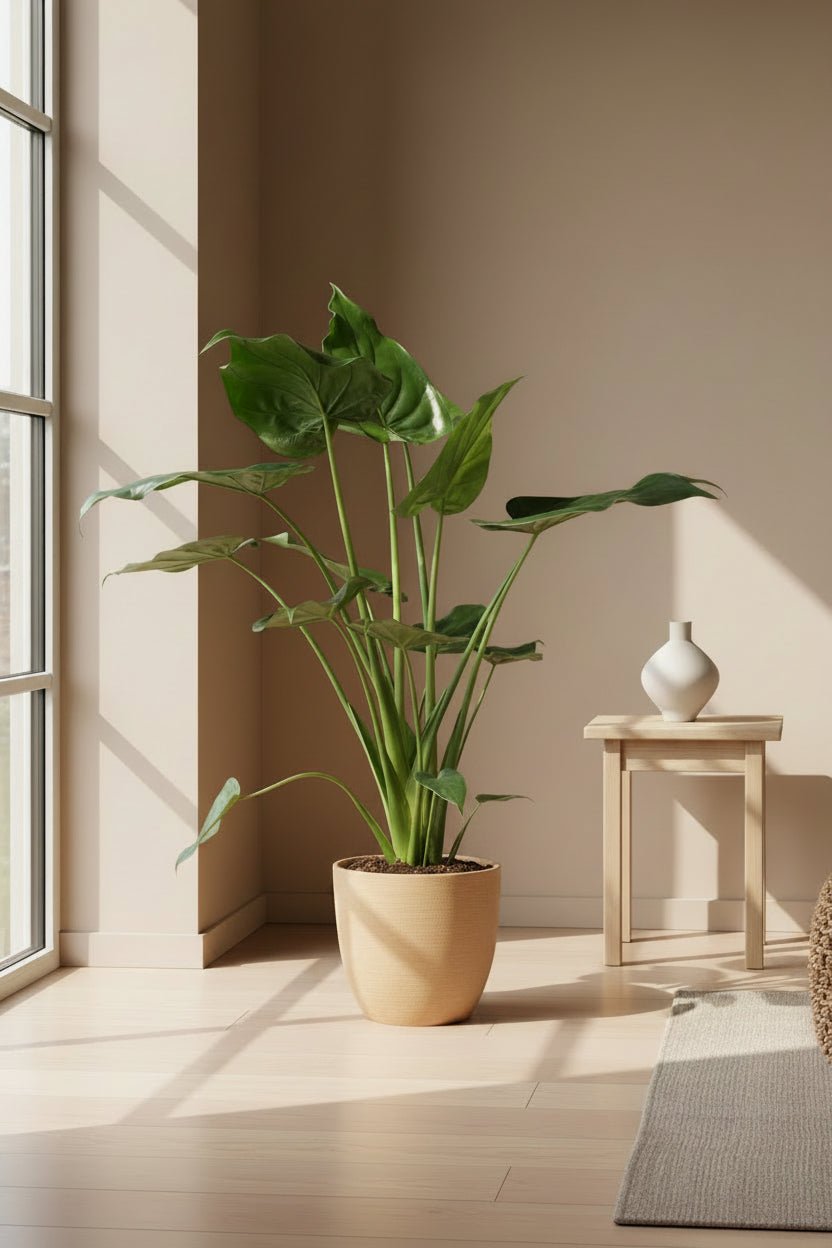
Its dense, upright clump takes up little floor space while creating a strong tropical presence. The contrast between the glossy green leaves and the black stems stands out even more against a light background.
- For a duo of contrasting elephant ears, pair it with an Alocasia gageana 'California' with very large, textured leaves — the same genus, with two foliage scales that complement each other.
- To brighten the composition, place a Dracaena 'Sunray' with yellow-edged leaves beside it — the light border softens the Alocasia's dark mass.
- To highlight the black stems, slide the Ø21 cm size into a ribbed white Elho Vibes Fold decorative pot Ø22 cm — the matte white creates the clearest backdrop for this contrast.
- For a more natural atmosphere, the black Jorck basket Ø26 cm in woven fibers extends the dark tone of the stems down to the floor.
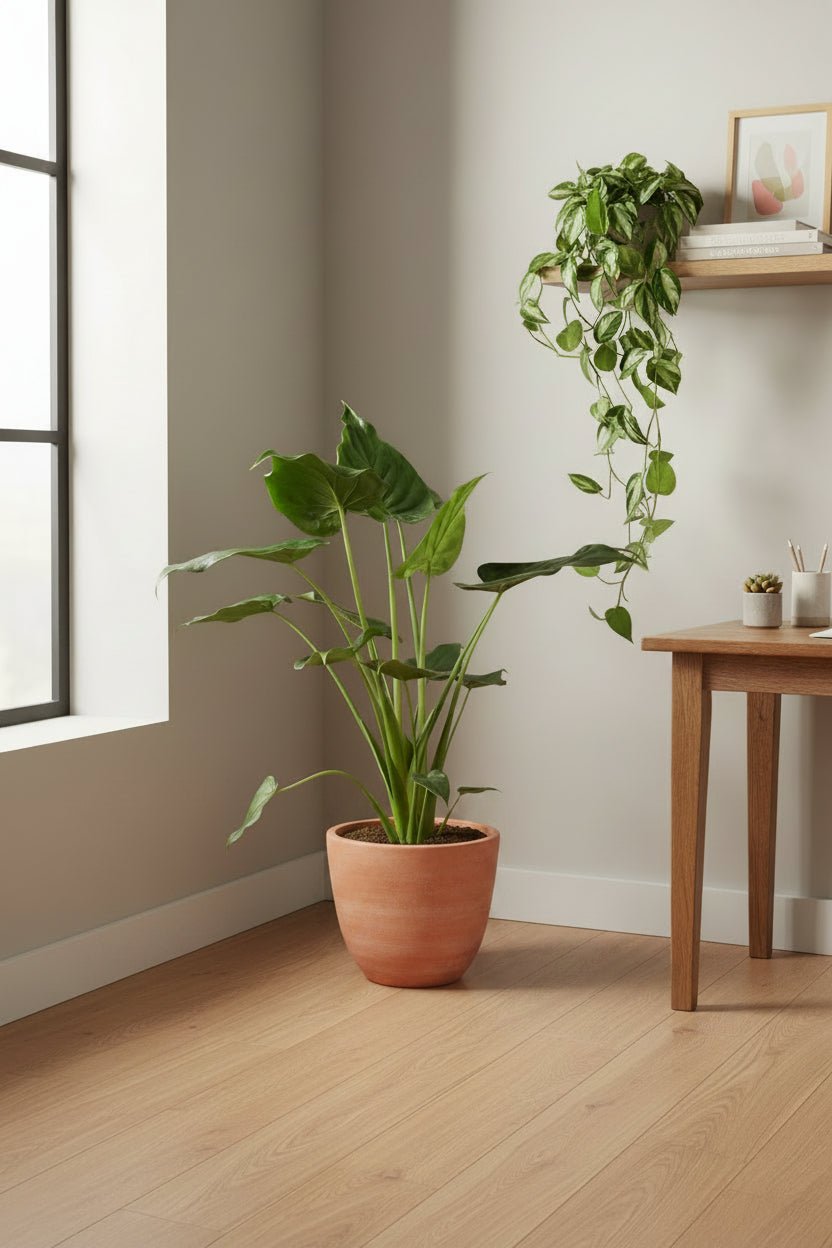
The H65 cm size is suitable for a low piece of furniture or a desk corner; the H70 cm in Pot Ø21 cm stands on the floor by itself with a noticeably fuller clump.
Verdeia tips
- Space out watering considerably in winter: the Alocasia enters dormancy and its water consumption drops sharply from November onward. Continuing at the summer watering rate is the main cause of rhizome rot, irreversible damage that only becomes visible once the foliage is affected.
- Don't panic if it loses its leaves in winter: some Alocasia enter dormancy and partially shed their leaves. The rhizome remains alive and resumes growth in spring as soon as the light returns — simply reduce watering without ever allowing the substrate to dry out completely.
- Divide the offsets when repotting: young shoots appear at the base of the clump. Taking them in spring with a piece of rhizome and a few roots allows you to grow a second plant while keeping the mother plant well aerated.
Technical specifications
- Botanical name: Alocasia cucullata
- Common name: Buddha's Hand, Chinese elephant ear
- Family: Araceae
- Origin: Southeast Asia (Sri Lanka, India, southern China)
- Delivery dimensions: 2 sizes available, H65 cm | Pot Ø17 cm and H70 cm | Pot Ø21 cm
- Mature height: up to 1 meter indoors
- Light: bright indirect light, never direct sun
- Watering: moderate, allow the surface of the substrate to dry between waterings
- Humidity: 60% and above, misting appreciated in winter
- Soil type: rich, well-draining, and airy
- Growth: moderate, dense clump growing from a rhizome
- Foliage: evergreen, glossy, deep-green heart-shaped leaves on very dark green stems
- Care: easy
- Toxicity: toxic if ingested, irritating sap (calcium oxalates)
- Decorative style: Tropical / Urban jungle / Zen
Each plant is unique: the number of stems, leaf size, and clump density naturally vary from one specimen to another.

Your plant, delivered with care
Every plant is hand-packed in a box specially designed for plants — secured, protected, ready to travel. It arrives in perfect condition, roots intact and foliage preserved, ready to take its place in your home.
Our Verdeia commitments
FAQ – Everything to know before adopting your Verdeia plant
How are my plants prepared before shipping?
All our plants are selected from our European partner nurseries. Before shipping, they are watered, cleaned, and protected with breathable, secure packaging. Each package is designed to ensure your plant arrives in perfect health, without any transport-related stress.
Will the plant look exactly like the photo?
The photos accurately represent the variety and the stated size. Since each plant is unique, slight differences in shape, foliage, or color may occur — and that’s part of their charm.
What are the delivery times and conditions?
Shipping is done within 48 business hours, with tracked delivery within 2 to 5 business days. Delivery costs €5.60 — free for orders over €50. You will receive a tracking link as soon as the package is shipped.
What to do upon receiving my plant?
Open your package as soon as you receive it and carefully remove the plant from its packaging. Let it acclimate for 24 hours in its new environment before watering. If it has been slightly stressed during transport, it will recover its shape after one or two days in the light.
What to do if my plant arrives damaged?
Contact us within 48 hours with a photo of the issue. Our team will assess the situation and offer you the best solution: replacement, partial refund, or recovery advice.
Can I return a plant?
Since plants are living beings, standard returns are not possible. However, we guarantee good health upon delivery: if the plant arrives damaged, it will be replaced free of charge. For any other cases (order error, decorative pot, accessory), returns are possible within 14 days.