



Campsis Summer Jazz 'Fire Trumpet' (Compact red trumpet vine) H70 cm | Pot Ø19 cm
- Regular price
-
€36,95 - Regular price
-
- Sale price
-
€36,95
Couldn't load pickup availability
Frequently Asked Questions
Why is my trumpet vine not flowering? Lack of sunlight or too much nitrogen fertilizer are the two most common causes — trumpet vine requires at least 6 hours of direct sun per day and a potassium-rich fertilizer rather than nitrogen.
Can the Campsis Summer Jazz Fire grow in a pot on a balcony? Yes, in a large container at least 40 cm in diameter with good drainage, placed in full sun, with regular watering in summer and potassium fertilizer from June to August.
SHIPPING & PACKAGING
Shipping within 24/48 hours via DPD
- Delivery in 2 to 5 business days
- Eco-friendly packaging: recyclable boxes and biodegradable materials
- Special protection to ensure the plant arrives in perfect condition
- Parcel tracking sent by email as soon as shipped
- Free delivery on orders over €50
48H QUALITY GUARANTEE
We guarantee that your plants will arrive in perfect condition. If your plant arrives damaged or in poor condition:
- Contact us within 48 hours at hello@verdeia.eu with photos
- Free replacement or full refund
- No return necessary – we trust you
The guarantee covers: damage related to transport, severely weakened plant upon arrival, preparation errors.
CARE TIPS UPON ARRIVAL
To help your plant settle in for the long term:
- Unpack immediately and inspect your plant
- Let it acclimatize 24-48h in a bright spot without direct sunlight
- Check soil moisture before watering (dry surface = light watering)
- Wait 2-3 weeks before repotting
- Avoid heat sources and drafts
- Gently wipe leaves to remove dust
Need help? Contact our team at hello@verdeia.eu or via chat.
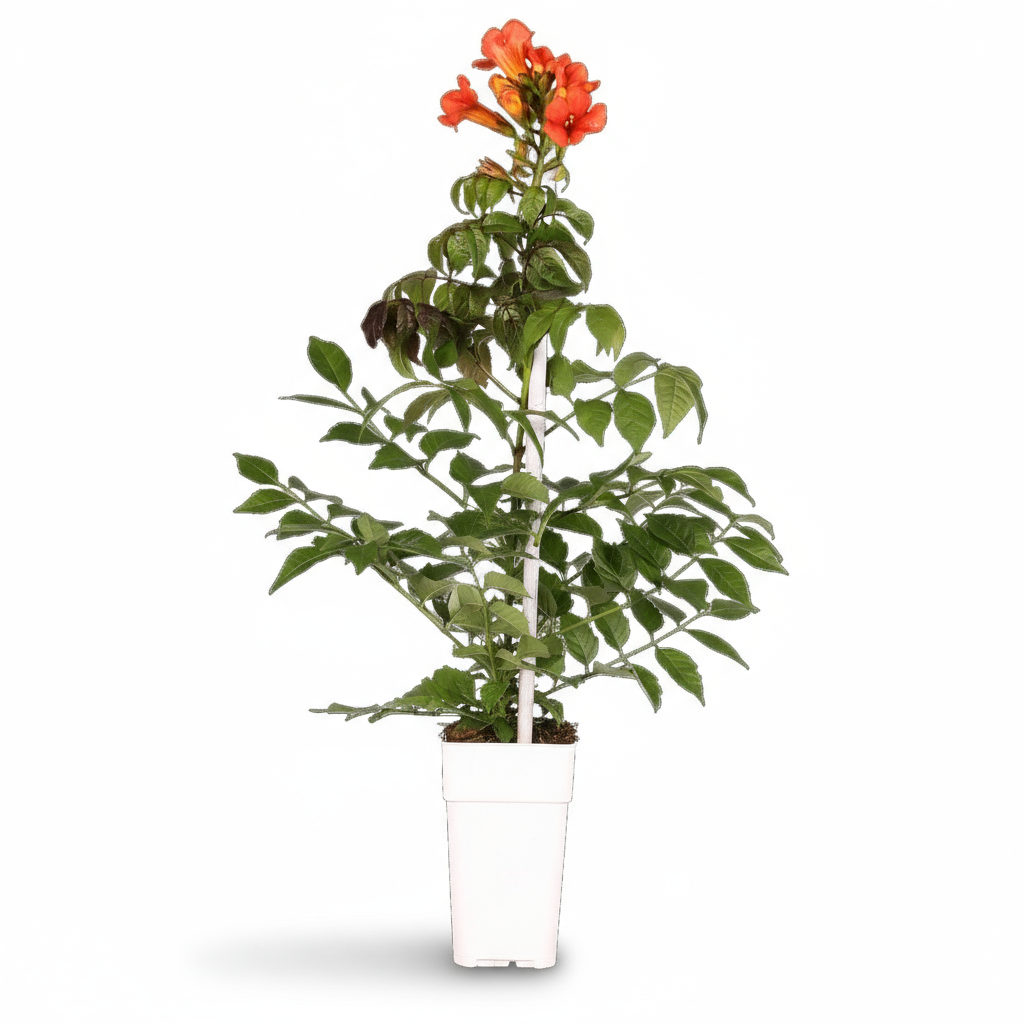
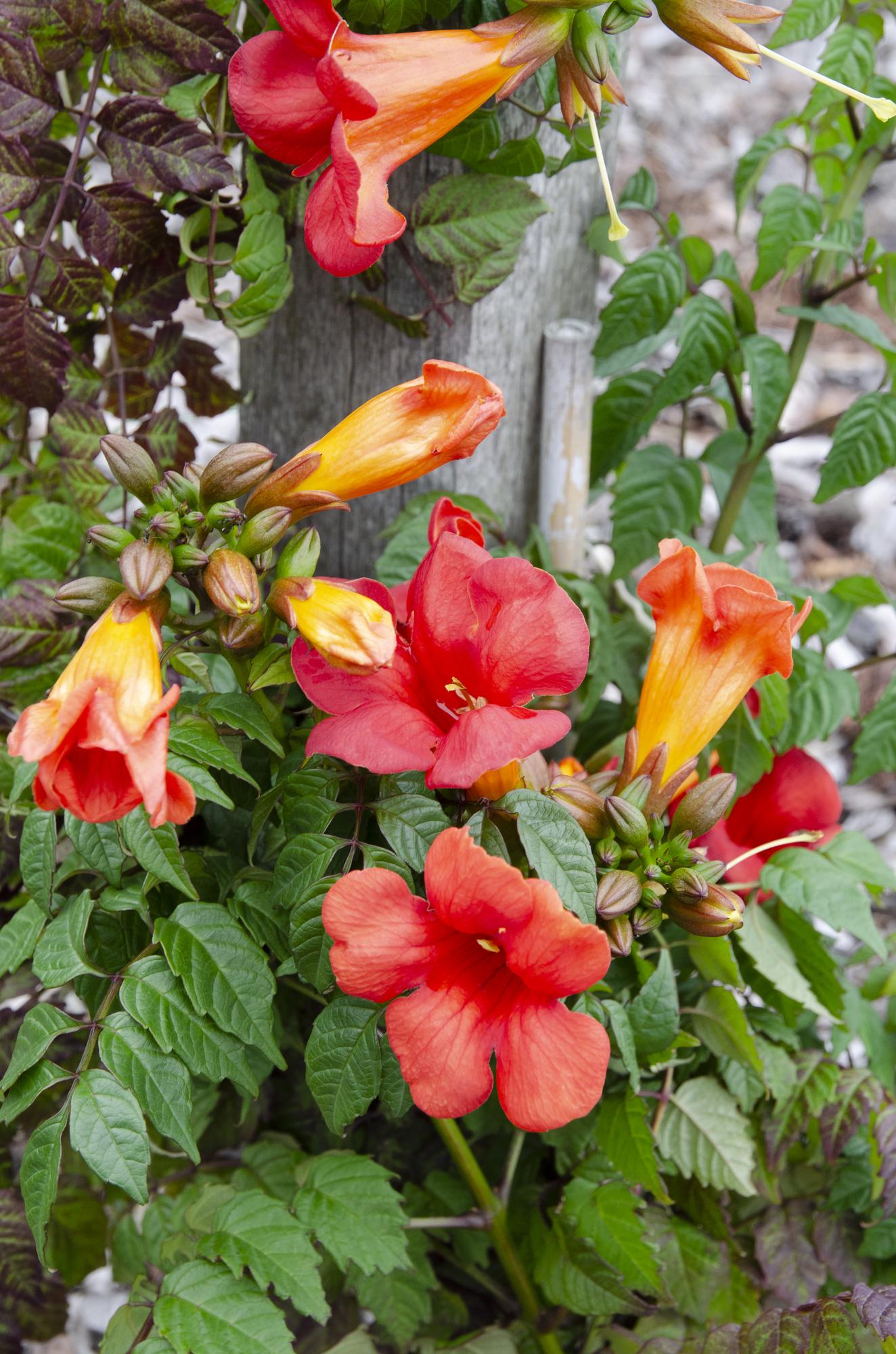
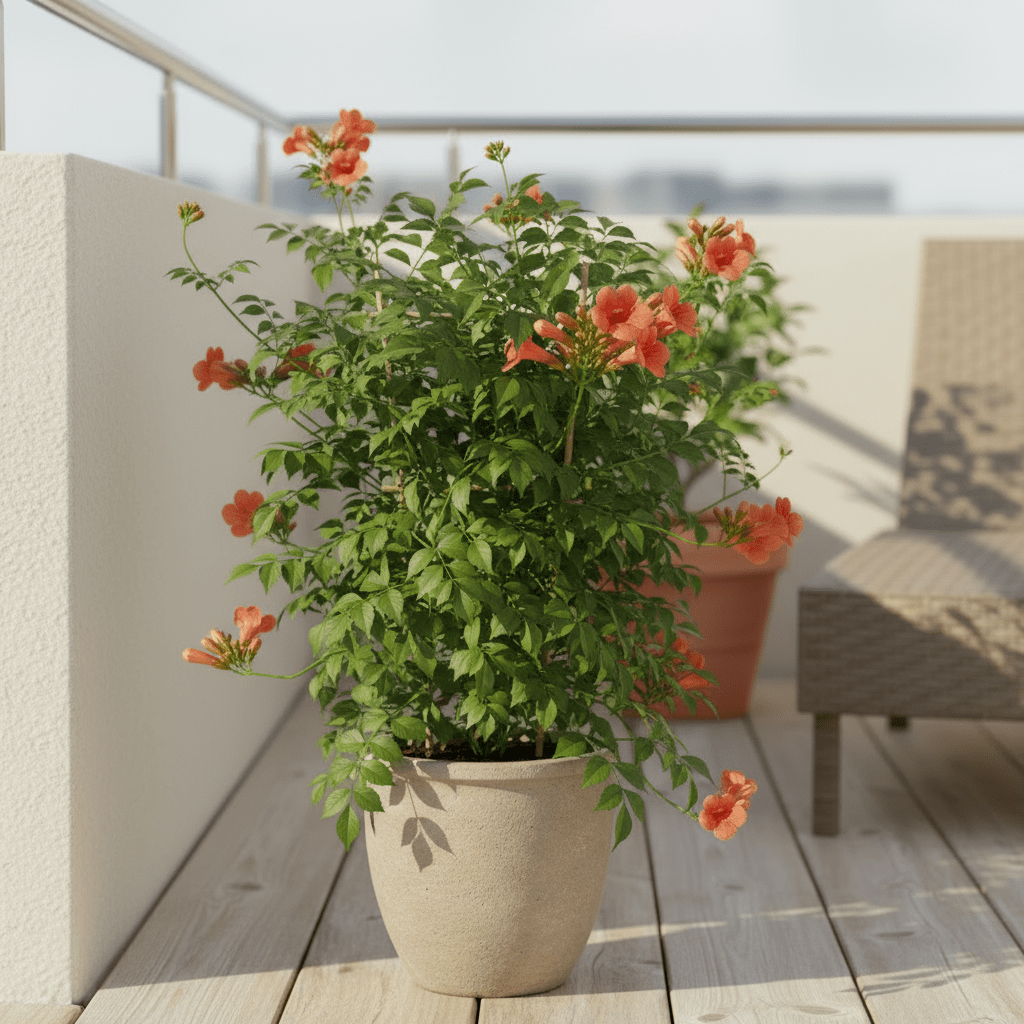
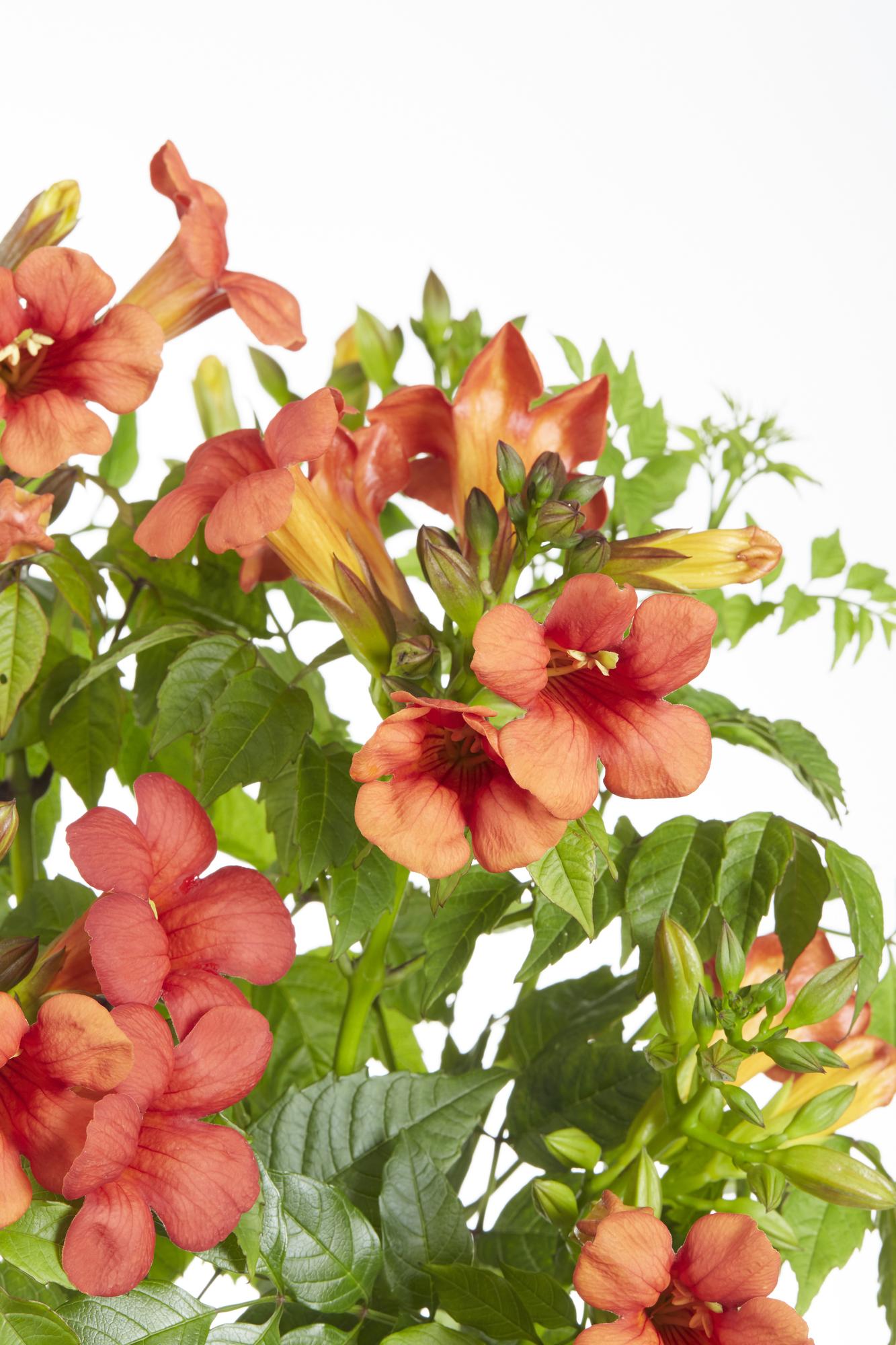
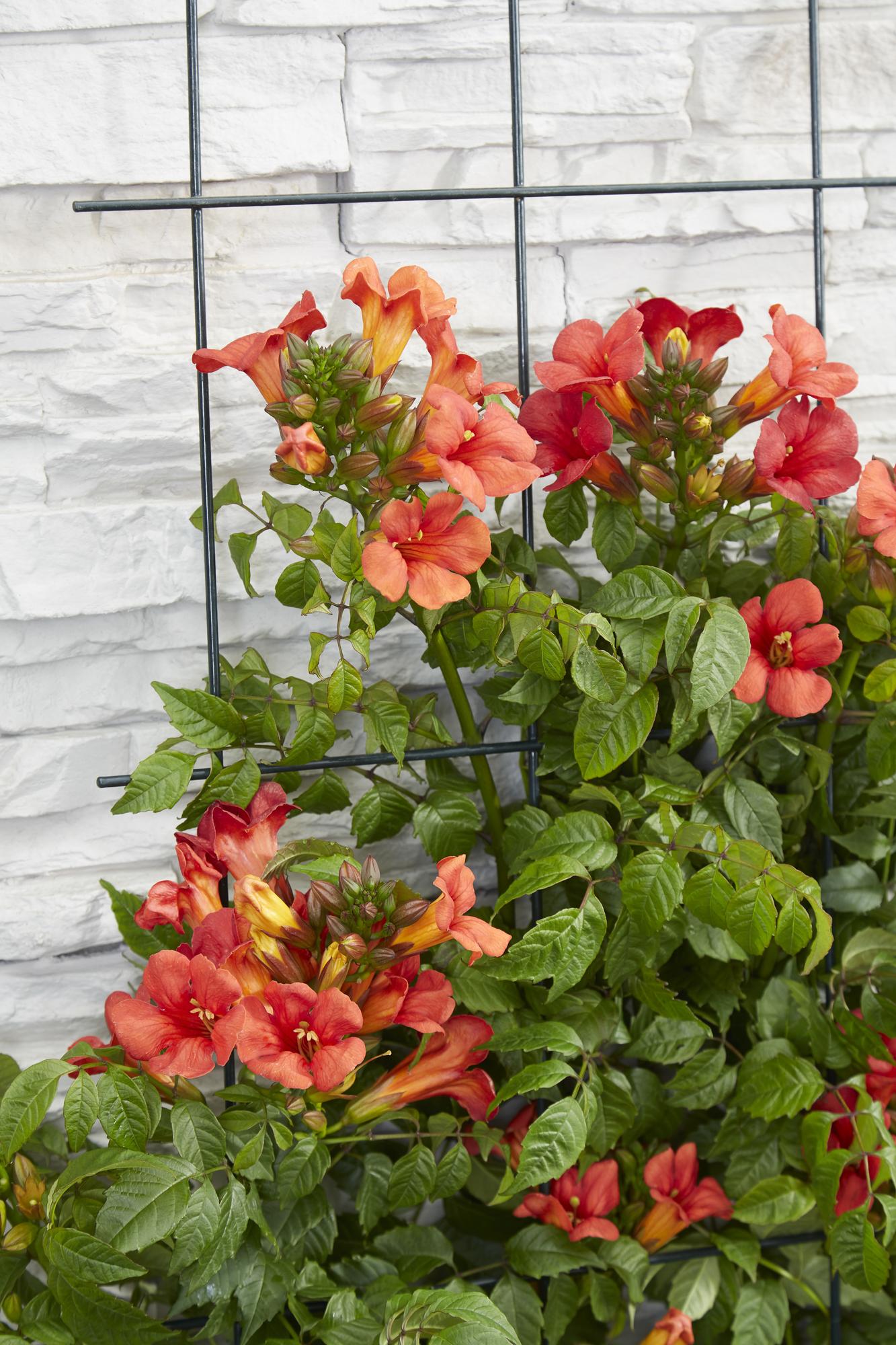
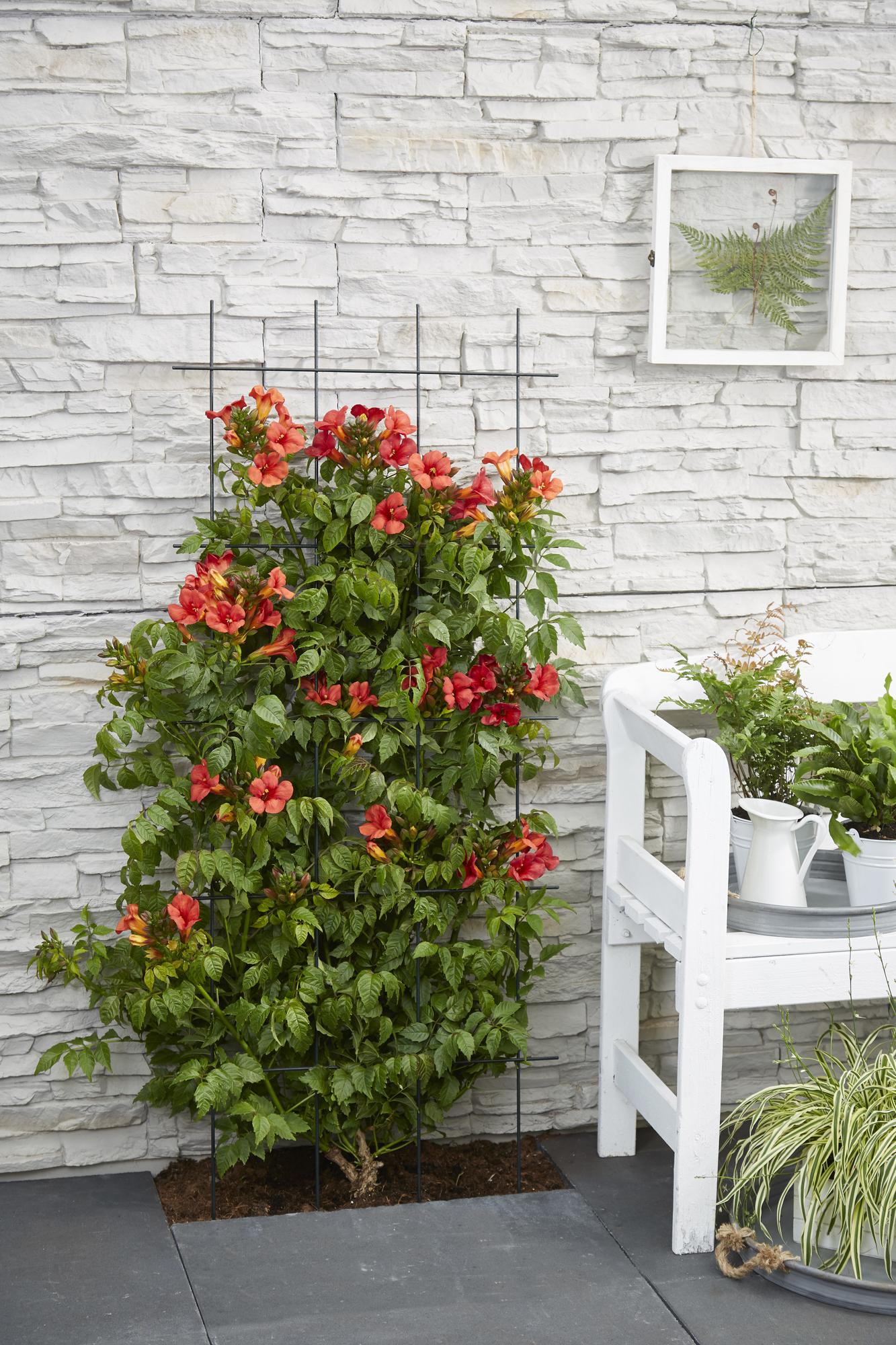

🔴 Scarlet red trumpet flowers from July to September • 🌿 Compact habit — up to 3 m • ☀️ Full sun essential • ❄️ Hardy • 📏 H70 cm | Pot Ø19 cm
The Campsis Summer Jazz 'Fire Trumpet' is a climbing bignonia native to Japan, a compact hybrid selected in the Summer Jazz series for its large scarlet trumpet-shaped flowers with orange throats grouped in 30 cm clusters. More compact and more floriferous than traditional species, it climbs by clinging on its own thanks to small adventitious roots — no training needed. From July to September, it transforms sunny terraces, balconies, and pergolas into cascades of tropical red.
Vigorous, very hardy, and easy to maintain, it is one of the most generous outdoor climbers to bring color and warmth to a vertical space in full sun.
Which bignonia to choose?
The Verdeia bignonia collection offers several campsis with distinct colors. Here’s how to place the 'Fire Trumpet' among the catalog varieties:
- Campsis Summer Jazz 'Fire Trumpet' (this plant) — scarlet red flowers with orange throats, compact habit up to 3 m. The most intense and colorful variety.
- Campsis Summer Jazz golden — bright golden yellow flowers, compact habit. The choice for a warm and bright atmosphere on pergolas or sunny walls.
- Campsis 'Indian Summer' — large fiery orange flowers, more vigorous. The choice to quickly cover a large area.
- Campsis 'Pantera Rosa' — original salmon pink flowers, intermediate habit. The choice for a softer and more original palette on terraces.
Exposure & location
The Campsis 'Fire Trumpet' is a full sun climber without compromise — the less sun it gets, the less it blooms. A warm and sheltered spot, ideally against a south- or west-facing wall, is essential for abundant flowering from July. Young plants need support to start, with adventitious roots taking over once the stems reach their support.
- Exposure: full sun essential — minimum 6 hours of direct sunlight per day.
- Support: wall, fence, trellis, or pergola — adventitious roots cling by themselves to rough surfaces.
- Soil: well-drained, even poor or slightly calcareous — dislikes heavy and wet soils.
- In pot: large container Ø40 cm minimum with regular watering and summer fertilizer.
Manually guide the first stems against the support when planting — adventitious roots attach themselves on direct contact with the surface, but initial guidance speeds coverage and prevents the plant from growing into a free bush.
Watering & maintenance
Campsis is undemanding once established — it tolerates moderate drought in open ground. The first years are the most important: regular watering encourages deep rooting which makes the plant very self-sufficient. Be careful not to over-fertilize: excess nitrogen favors foliage over flowers. A potassium-rich fertilizer at the start of flowering intensifies the red hues.
- Watering: regular for the first two years; then only during prolonged drought in open ground.
- Pruning: cut back all stems to 2-3 buds from the main framework in March — Campsis blooms on the year's shoots.
- Fertilizer: rich in potassium from June to August only — avoid nitrogen which promotes leaves at the expense of flowers.
- Winter care: mulch generously around the base in the first years to protect the collar from frost.
The Campsis blooms exclusively on the year's shoots — severe pruning in March is not a risk but a necessity to achieve dense and even flowering from July to September.
Decor ideas & plant pairings
The intense scarlet red of the 'Fire Trumpet' makes it a standout climber that immediately structures a pergola or wall. For a green and colorful terrace, it pairs with climbers with staggered flowering to cover the season from start to finish.
- For a very elegant red and white duo on a sunny wall, the Trachelospermum 'Star of Venice' white evergreen dresses the lower part of the support all year — its permanent shiny green foliage and fragrant white flowers in summer create a sober and very clear contrast with the intense red of the Campsis.
- To extend the season with spring flowering, the Lonicera 'Belgica' red and cream scented blooms from May to July before the Campsis takes over — the two climbers thus cover the support from May to September with two distinct and complementary atmospheres.
- For a persistent structural backdrop behind the red, the Parthenocissus 'Engelmannii' dresses the wall in dense green in summer and turns scarlet red in autumn — the two climbers alternate complementary colors from spring until the first frosts.
- To enhance the red in a planter on a sunny terrace, the Elho Greenville round white planter creates the clearest color contrast for this intense shade — the neutral white of the pot amplifies the scarlet red brightness of the flowers.
Campsis naturally attracts bees and bumblebees in midsummer — plant it near a sunny seating area to enjoy this pollinator ballet throughout the summer bloom.
Verdeia tips
- Prune short every March for dense flowering: campsis only blooms on new shoots — cutting all stems back to 2-3 buds on the main framework before bud break triggers vigorous regrowth and much more abundant flowering than on an unpruned plant.
- Avoid any nitrogen fertilizer after planting: nitrogen promotes lush vegetative growth at the expense of flowering — a potassium-rich fertilizer from June to August is the only feeding needed to intensify the red hues and extend blooming.
- Mulch generously around the base for the first three years: although hardy once established, campsis is sensitive to frost during the first winters — a thick mulch of 10 to 15 cm protects the collar and ensures vigorous regrowth even after a harsh winter.
Technical characteristics
- Botanical name: Campsis x tagliabuana 'Summer Jazz Fire Trumpet'
- Common name: Compact red trumpet vine
- Origin: Japan
- Dimensions at delivery: H70 cm | Pot Ø19 cm
- Adult size: up to 3 m with support
- Exposure: full sun required
- Watering: regular during the first years, then moderate
- Blooming: July to September
- Flower color: scarlet red with an orange throat
- Foliage: dark satin green, deciduous
- Hardiness: hardy (down to -15 °C)
- Care: easy
- Toxicity to animals: slightly toxic (sap and leaves are irritating)
- Decorative style: Tropical / Mediterranean / Flowering urban jungle
Each plant is unique: the photos show an example of its appearance. The intensity of the red and the flower density naturally vary depending on sunlight and growing conditions.

Your plant, delivered with care
Every plant is hand-packed in a box specially designed for plants — secured, protected, ready to travel. It arrives in perfect condition, roots intact and foliage preserved, ready to take its place in your home.
Our Verdeia commitments
FAQ – Everything to know before adopting your Verdeia plant
How are my plants prepared before shipping?
All our plants are selected from our European partner nurseries. Before shipping, they are watered, cleaned, and protected with breathable, secure packaging. Each package is designed to ensure your plant arrives in perfect health, without any transport-related stress.
Will the plant look exactly like the photo?
The photos accurately represent the variety and the stated size. Since each plant is unique, slight differences in shape, foliage, or color may occur — and that’s part of their charm.
What are the delivery times and conditions?
Shipping is done within 48 business hours, with tracked delivery within 2 to 5 business days. Delivery costs €5.60 — free for orders over €50. You will receive a tracking link as soon as the package is shipped.
What to do upon receiving my plant?
Open your package as soon as you receive it and carefully remove the plant from its packaging. Let it acclimate for 24 hours in its new environment before watering. If it has been slightly stressed during transport, it will recover its shape after one or two days in the light.
What to do if my plant arrives damaged?
Contact us within 48 hours with a photo of the issue. Our team will assess the situation and offer you the best solution: replacement, partial refund, or recovery advice.
Can I return a plant?
Since plants are living beings, standard returns are not possible. However, we guarantee good health upon delivery: if the plant arrives damaged, it will be replaced free of charge. For any other cases (order error, decorative pot, accessory), returns are possible within 14 days.