



Nandina domestica 'Gulf Stream' (orange sacred bamboo) — H45 cm | Pot Ø17 cm
- Regular price
-
€35,95 - Regular price
-
- Sale price
-
€35,95
Couldn't load pickup availability
SHIPPING & PACKAGING
Shipping within 24/48 hours via DPD
- Delivery in 2 to 5 business days
- Eco-friendly packaging: recyclable boxes and biodegradable materials
- Special protection to ensure the plant arrives in perfect condition
- Parcel tracking sent by email as soon as shipped
- Free delivery on orders over €50
48H QUALITY GUARANTEE
We guarantee that your plants will arrive in perfect condition. If your plant arrives damaged or in poor condition:
- Contact us within 48 hours at hello@verdeia.eu with photos
- Free replacement or full refund
- No return necessary – we trust you
The guarantee covers: damage related to transport, severely weakened plant upon arrival, preparation errors.
CARE TIPS UPON ARRIVAL
To help your plant settle in for the long term:
- Unpack immediately and inspect your plant
- Let it acclimatize 24-48h in a bright spot without direct sunlight
- Check soil moisture before watering (dry surface = light watering)
- Wait 2-3 weeks before repotting
- Avoid heat sources and drafts
- Gently wipe leaves to remove dust
Need help? Contact our team at hello@verdeia.eu or via chat.
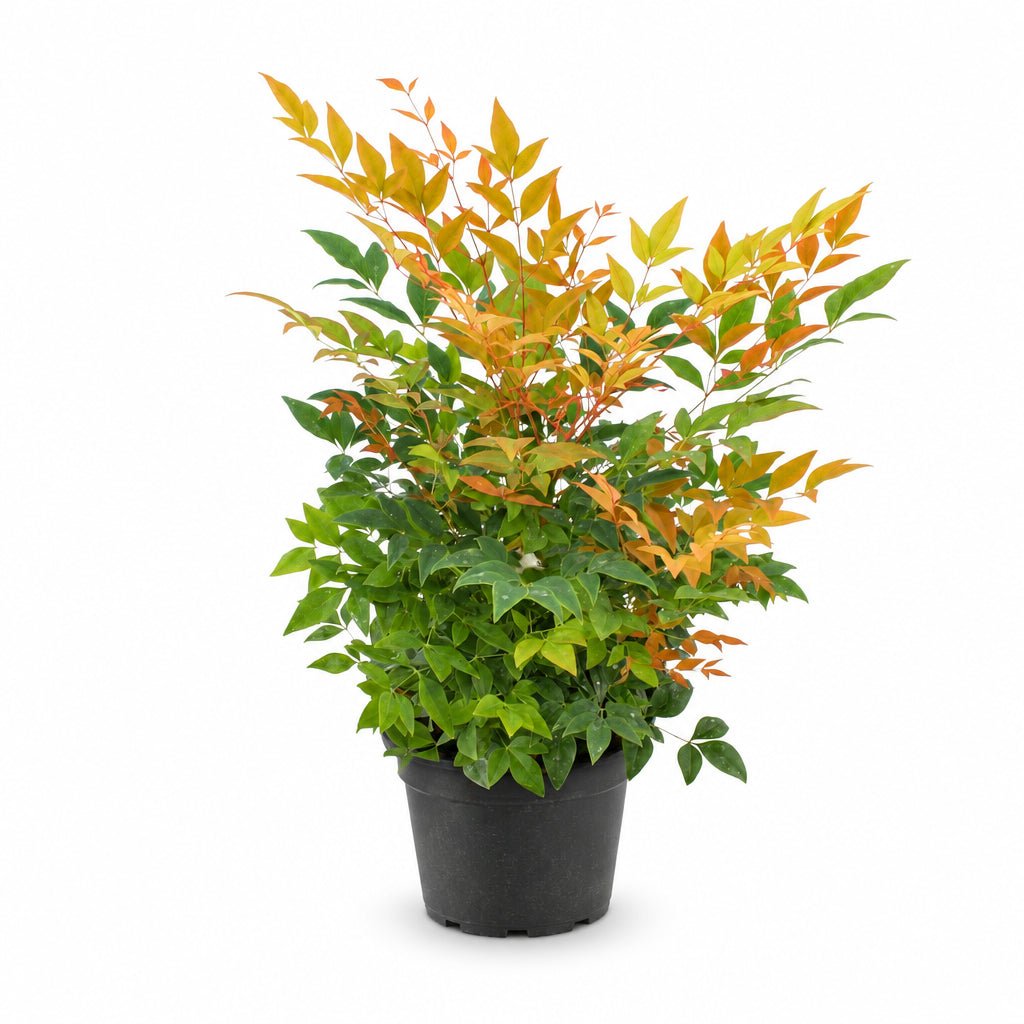
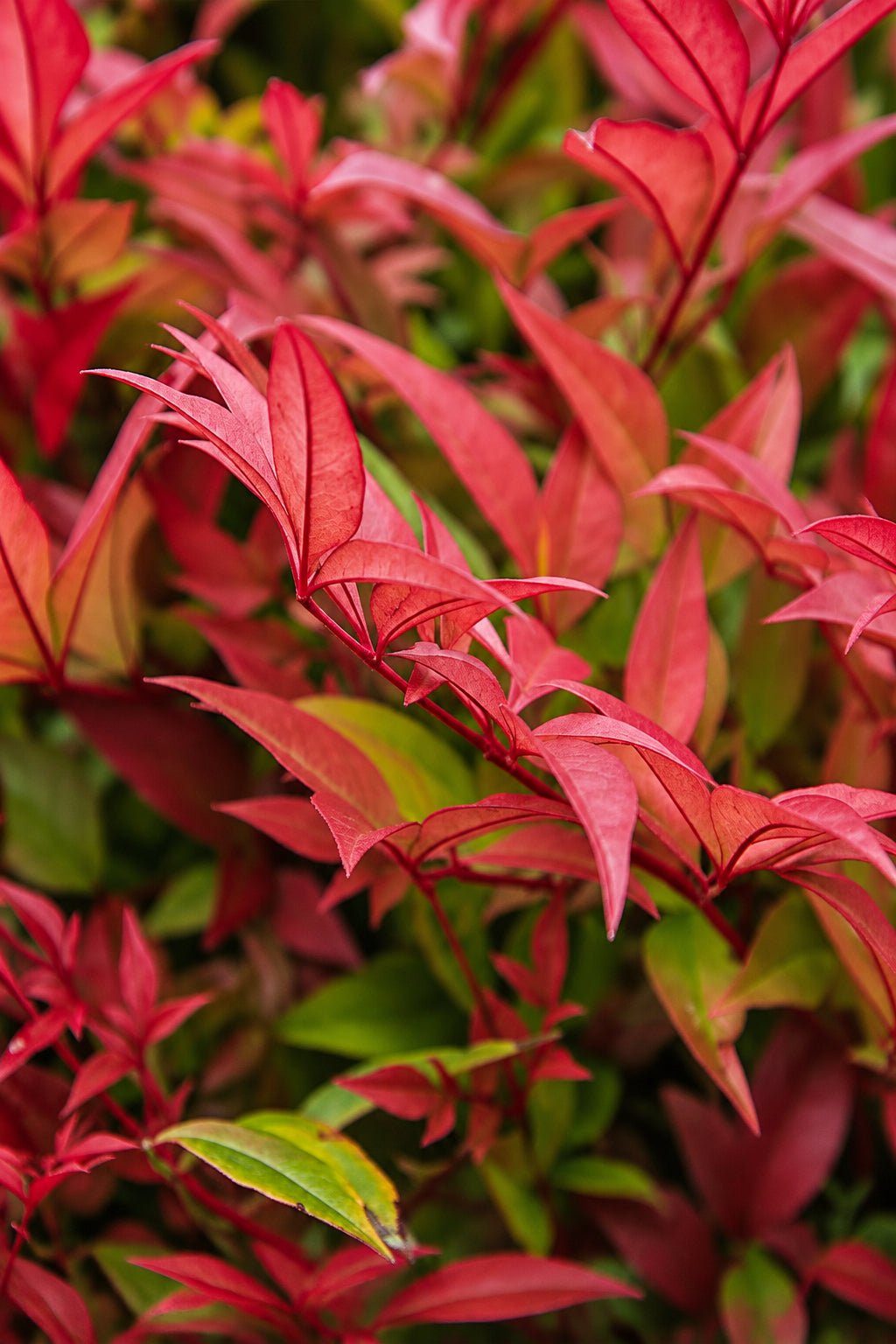
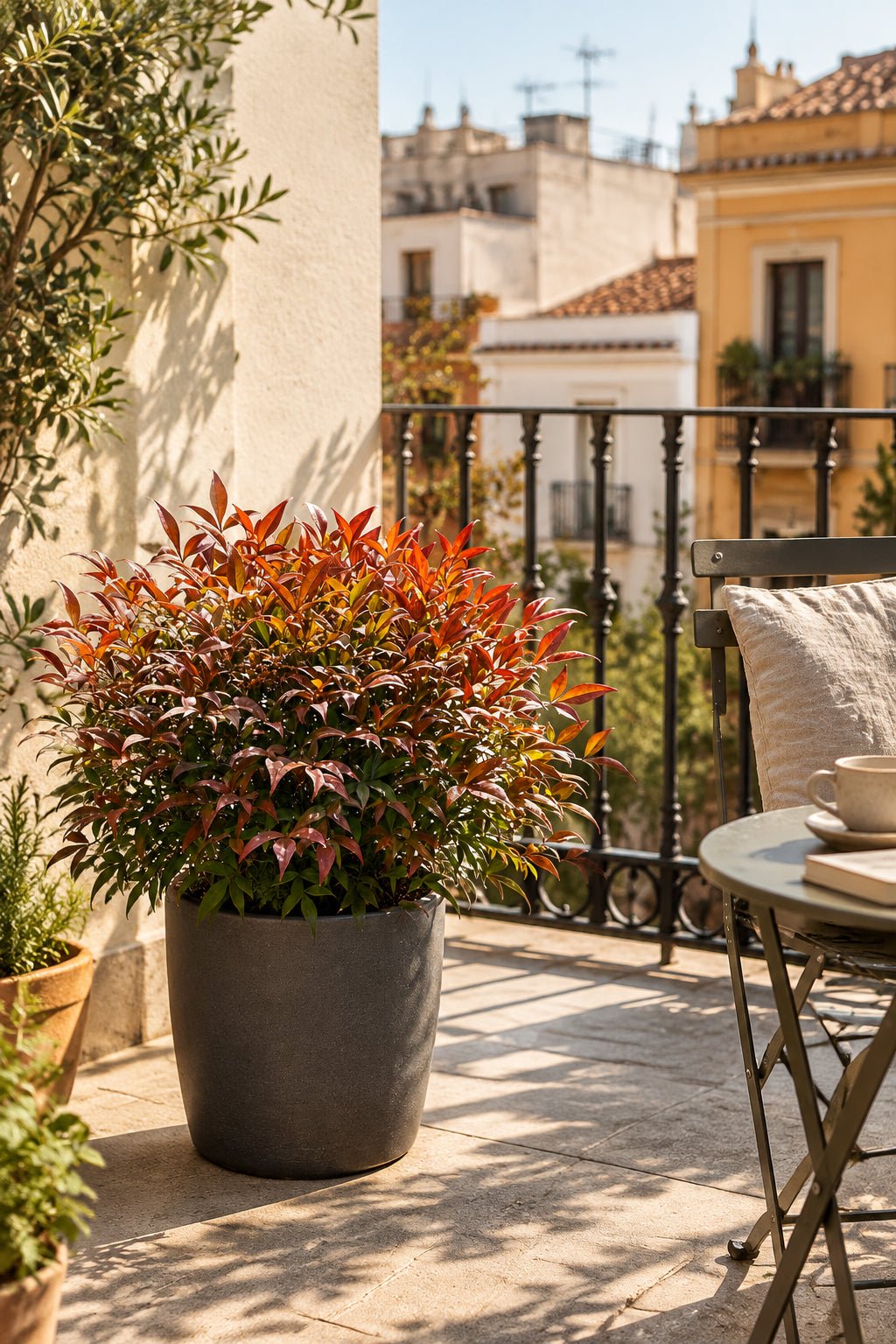
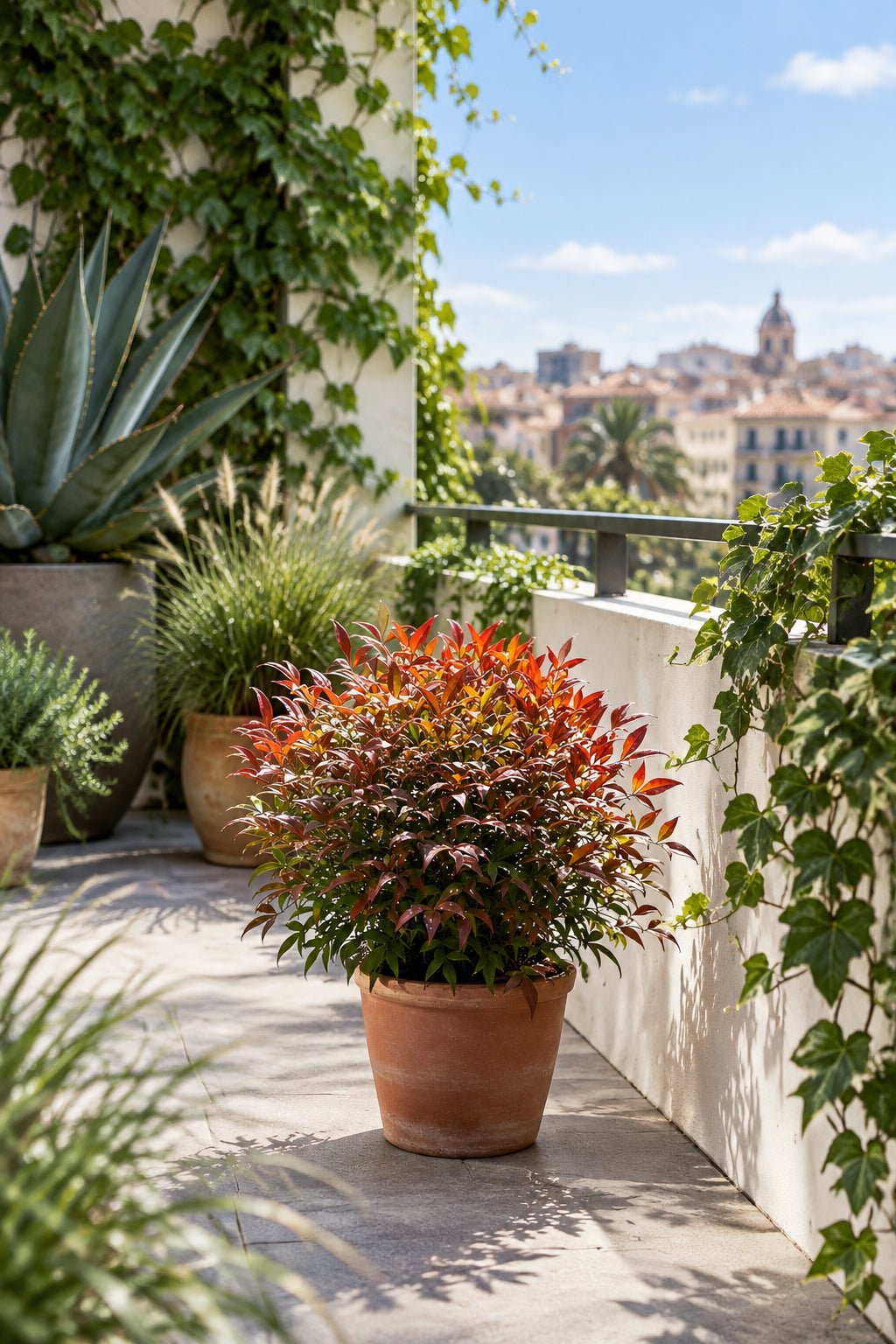


🍂 Coppery young shoots • 🌿 Blue-green tinged with red in summer • 🔥 Orange-red in winter • ☀️ Sun or partial shade • ❄️ Hardy down to -15 °C • 🪴 Dense, evergreen ball
Nandina domestica 'Gulf Stream' is a slow-growing sacred bamboo that forms a dense ball of fine foliage changing colour with the seasons. Native to an East Asian species (China, Japan), it is among our full-sun plants that retain their colour in winter, and it also tolerates partial shade.
In spring, its young leaves emerge coppery. In summer, they turn blue-green, often tinged with red and golden highlights, then from autumn to the end of winter, the whole clump takes on orange-red and bronze tones, like a sunset. It keeps its leaves down to the ground and reaches around 80 cm to 1 m at maturity.
Which colourful-leaved shrub should you choose?
Ten evergreen shrubs from the catalogue, chosen for their foliage rather than their flowers:
- Nandina 'Gulf Stream' (this plant) — coppery young shoots, blue-green in summer and orange-red in winter. A dense, slow-growing ball.
- Nandina 'Twilight' — bright pink young shoots, then green marbled with white, turning coppery in autumn. The only variegated nandina.
- Nandina Obsessed™ 'Seika' — bright red shoots renewed throughout summer, bronze-red in winter. The reddest nandina in every season.
- Nandina 'Lemon Lime' — lemon-yellow young shoots, then bright acid green. The brightest of the nandinas, without berries.
- Nandina Blush Pink™ — pink young shoots, reddish green in summer and fuchsia red in winter. The most compact, reaching around 50 cm.
- Photinia 'Little Red Robin' on a stem — bright red young shoots on a 90 cm stem. The most colourful in spring, for a sunny position.
- 'Emerald 'n' Gold' spindle tree on a stem — small green and gold leaves, shaped into a ball on a 90 cm stem. The most structured, in sun or partial shade.
- Leucothoe 'Burning Love' — smooth, narrow leaves, burgundy-red in spring and purple in winter. The deepest purple, for partial shade in ericaceous soil.
- 'Little Flames' Leucothoe - green leaves with flame-red tips in winter. The best choice for a small shade hedge.
- Japanese Aralia 'Spider Web' - large palmate leaves speckled with white, for partial shade. The most exotic.
Unlike leucothoes, nandinas grow in ordinary soil, even calcareous soil, and tolerate sun: they are the easiest to place.
Exposure & location
Light is what creates its colors: in the sun, its winter orange-red is more intense than in partial shade. Only reflected sun against a light-colored wall in midsummer can scorch its leaves.
- Exposure: sun or partial shade, with at least four hours of direct light for winter colors.
- Location: sunny terrace, southeast- or west-facing balcony, entrance, large container.
- Hardiness in a pot: down to -15 °C - it stays outdoors in winter.
- Soil type: any well-drained potting soil, acidic, neutral, or calcareous.
Its ball-shaped form stands on its own: a single plant in a square container is enough to structure a corner of the terrace.
Watering & care
Once established, it has moderate water needs, but it is sensitive to water that stagnates at the bottom of the pot: a well-draining substrate with clay pebbles at the bottom prevents root rot, while browning leaf tips in summer indicate that the pot has remained too dry.
- Watering: moderate - when the first few centimeters of the substrate are dry, less frequently in winter.
- Water: the water from the tap is suitable.
- Fertilizer: fertilizer for shrubs, in spring.
- Pruning: rarely necessary - in late spring, shorten the stems that extend beyond the ball.
- Repotting: every two to three years, in spring, in a wider pot, using potting soil for shrubs.
Its growth is slow: it stays at a size suitable for a balcony pot for a long time before needing a larger container.
Decor ideas & plant pairings
Its coppery and orange-red tones warm up a terrace in winter: choosing its neighbors according to the exposure makes it easy to pair it with plants that have the same needs.
- For winter blooms at its base, plant a 'Diamonfire' Christmas Rose alongside it - its creamy white flowers on red stems stand out against the orange foliage from December to March.
- For a dark green backdrop, place a Viburnum tinus behind it — evergreen, it flowers white from November to March and brings out the nandina's orange-red color.
- To brighten the edge of the pot, plant a Carex 'Ice Dance' — its cream-colored edge contrasts with the foliage's warm tones.
- To enhance the pot, choose the Capi Nature Groove taupe pot — its warm shade extends the foliage's copper tones.
A pair of rounded nandinas on either side of an entrance door marks the threshold year-round, with a change of color each season.
Verdeia tips
- Don't worry about the winter red: this is a normal reaction to cold and light, not a disease. The foliage turns green again in spring as new copper-colored shoots emerge.
- Protect the pot below -15 °C: in a pot, the roots freeze before the leaves. During periods of severe cold, move it closer to a wall or wrap the pot in winter protection fleece. If the tips have frozen, our guide on saving a cold-damaged plant explains what to cut.
- Keep it out of reach of animals: all parts of the nandina are toxic to dogs, cats, and birds if consumed.
Technical specifications
- Botanical name: Nandina domestica 'Gulf Stream'
- Common name: Sacred bamboo, nandina
- Family: Berberidaceae
- Origin: horticultural selection, species native to East Asia (China, Japan)
- Size on delivery: H45 cm | Pot Ø17 cm
- Growth habit: dense, rounded, leafy to the ground, slow-growing
- Mature size: 80 cm to 1 m tall and wide
- Flowering: rare in our climates; this variety is grown for its foliage
- Exposure: sun or partial shade
- Watering: moderate
- Soil type: any well-drained soil, acidic to alkaline
- Hardiness: down to -15 °C
- Foliage: evergreen, copper then blue-green, orange-red, and bronze in winter
- Care: easy
- Toxicity: toxic if ingested by animals and children; all parts of the plant are toxic
- Decorative style: Graphic / Japanese-inspired / Patio
Each plant is unique: the proportion of copper, green, and red leaves naturally varies depending on the season, the light it receives, and the delivery date.

Your plant, delivered with care
Every plant is hand-packed in a box specially designed for plants — secured, protected, ready to travel. It arrives in perfect condition, roots intact and foliage preserved, ready to take its place in your home.
Our Verdeia commitments
FAQ – Everything to know before adopting your Verdeia plant
How are my plants prepared before shipping?
All our plants are selected from our European partner nurseries. Before shipping, they are watered, cleaned, and protected with breathable, secure packaging. Each package is designed to ensure your plant arrives in perfect health, without any transport-related stress.
Will the plant look exactly like the photo?
The photos accurately represent the variety and the stated size. Since each plant is unique, slight differences in shape, foliage, or color may occur — and that’s part of their charm.
What are the delivery times and conditions?
Shipping is done within 48 business hours, with tracked delivery within 2 to 5 business days. Delivery costs €5.60 — free for orders over €50. You will receive a tracking link as soon as the package is shipped.
What to do upon receiving my plant?
Open your package as soon as you receive it and carefully remove the plant from its packaging. Let it acclimate for 24 hours in its new environment before watering. If it has been slightly stressed during transport, it will recover its shape after one or two days in the light.
What to do if my plant arrives damaged?
Contact us within 48 hours with a photo of the issue. Our team will assess the situation and offer you the best solution: replacement, partial refund, or recovery advice.
Can I return a plant?
Since plants are living beings, standard returns are not possible. However, we guarantee good health upon delivery: if the plant arrives damaged, it will be replaced free of charge. For any other cases (order error, decorative pot, accessory), returns are possible within 14 days.