



Passiflora caerulea (Blue passion flower) H65 cm | Pot Ø15 cm
- Regular price
-
€30,95 - Regular price
-
- Sale price
-
€30,95
Couldn't load pickup availability
Frequently Asked Questions
When should you prune a blue passionflower to encourage good blooming? Cut back all stems to 2-3 buds from the main framework in March — the passionflower blooms on new growth, and severe pruning is essential to achieve dense flowering.
Can Passiflora caerulea be grown in a pot on a balcony? Yes, in a large, well-drained container exposed to sun or bright partial shade, provided you protect or bring the pot indoors as soon as temperatures drop below -10 °C.
SHIPPING & PACKAGING
Shipping within 24/48 hours via DPD
- Delivery in 2 to 5 business days
- Eco-friendly packaging: recyclable boxes and biodegradable materials
- Special protection to ensure the plant arrives in perfect condition
- Parcel tracking sent by email as soon as shipped
- Free delivery on orders over €50
48H QUALITY GUARANTEE
We guarantee that your plants will arrive in perfect condition. If your plant arrives damaged or in poor condition:
- Contact us within 48 hours at hello@verdeia.eu with photos
- Free replacement or full refund
- No return necessary – we trust you
The guarantee covers: damage related to transport, severely weakened plant upon arrival, preparation errors.
CARE TIPS UPON ARRIVAL
To help your plant settle in for the long term:
- Unpack immediately and inspect your plant
- Let it acclimatize 24-48h in a bright spot without direct sunlight
- Check soil moisture before watering (dry surface = light watering)
- Wait 2-3 weeks before repotting
- Avoid heat sources and drafts
- Gently wipe leaves to remove dust
Need help? Contact our team at hello@verdeia.eu or via chat.
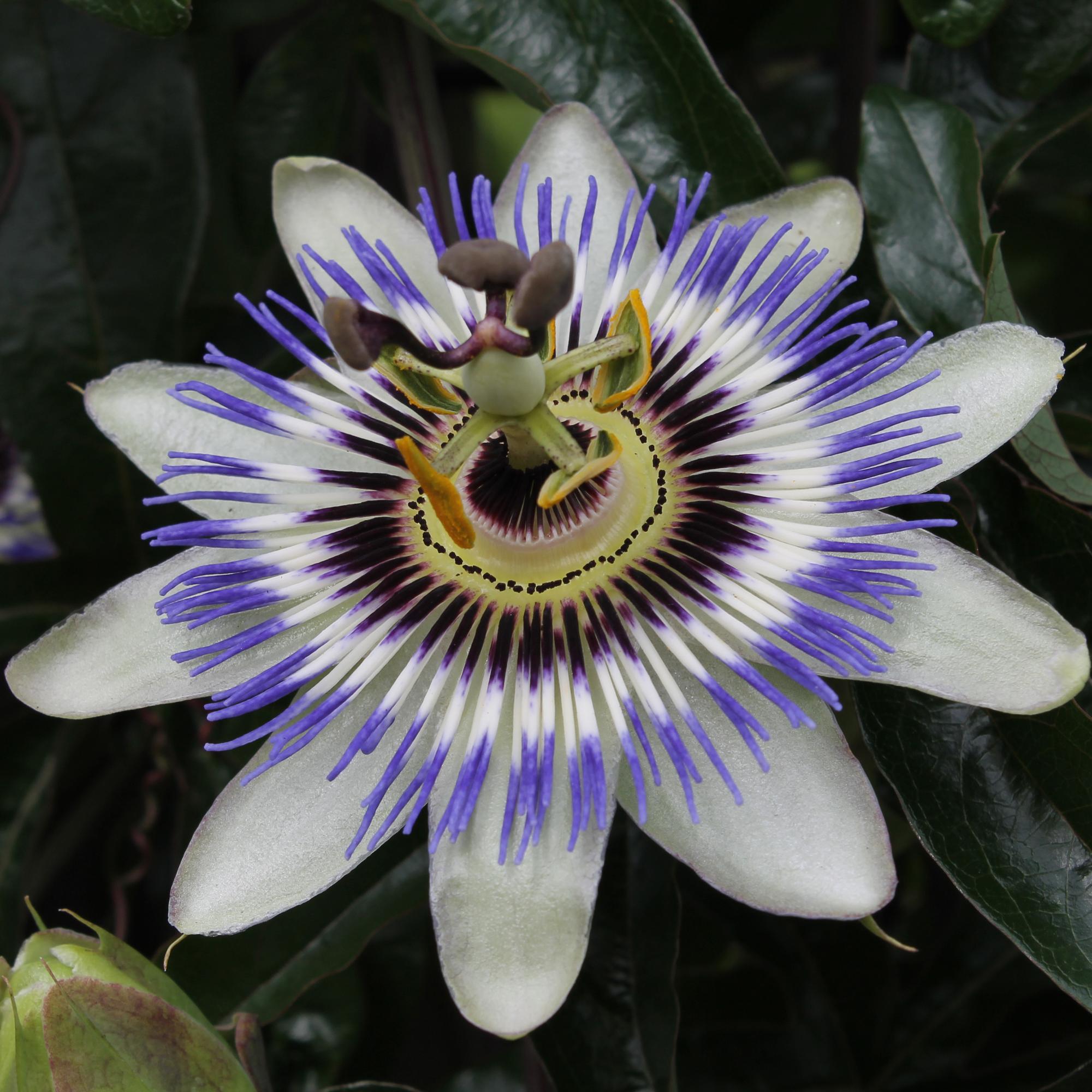
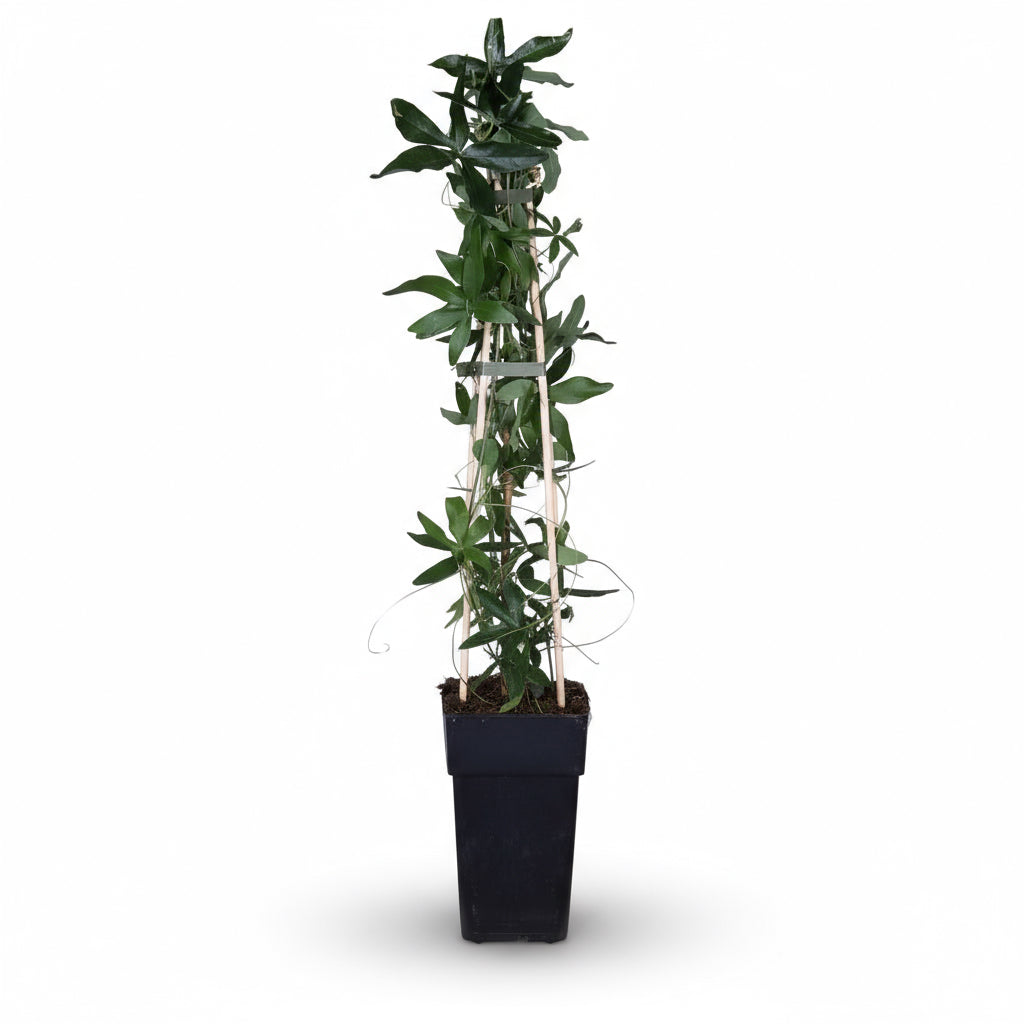
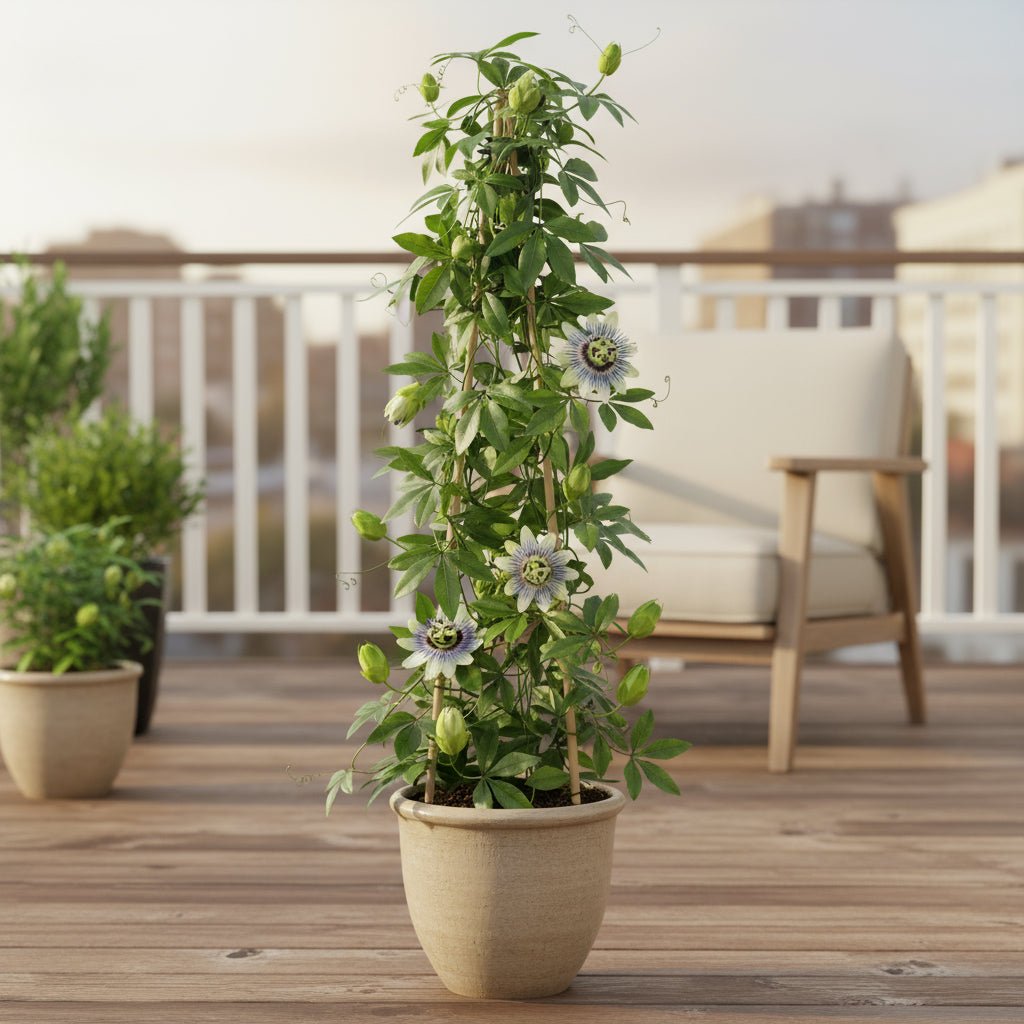
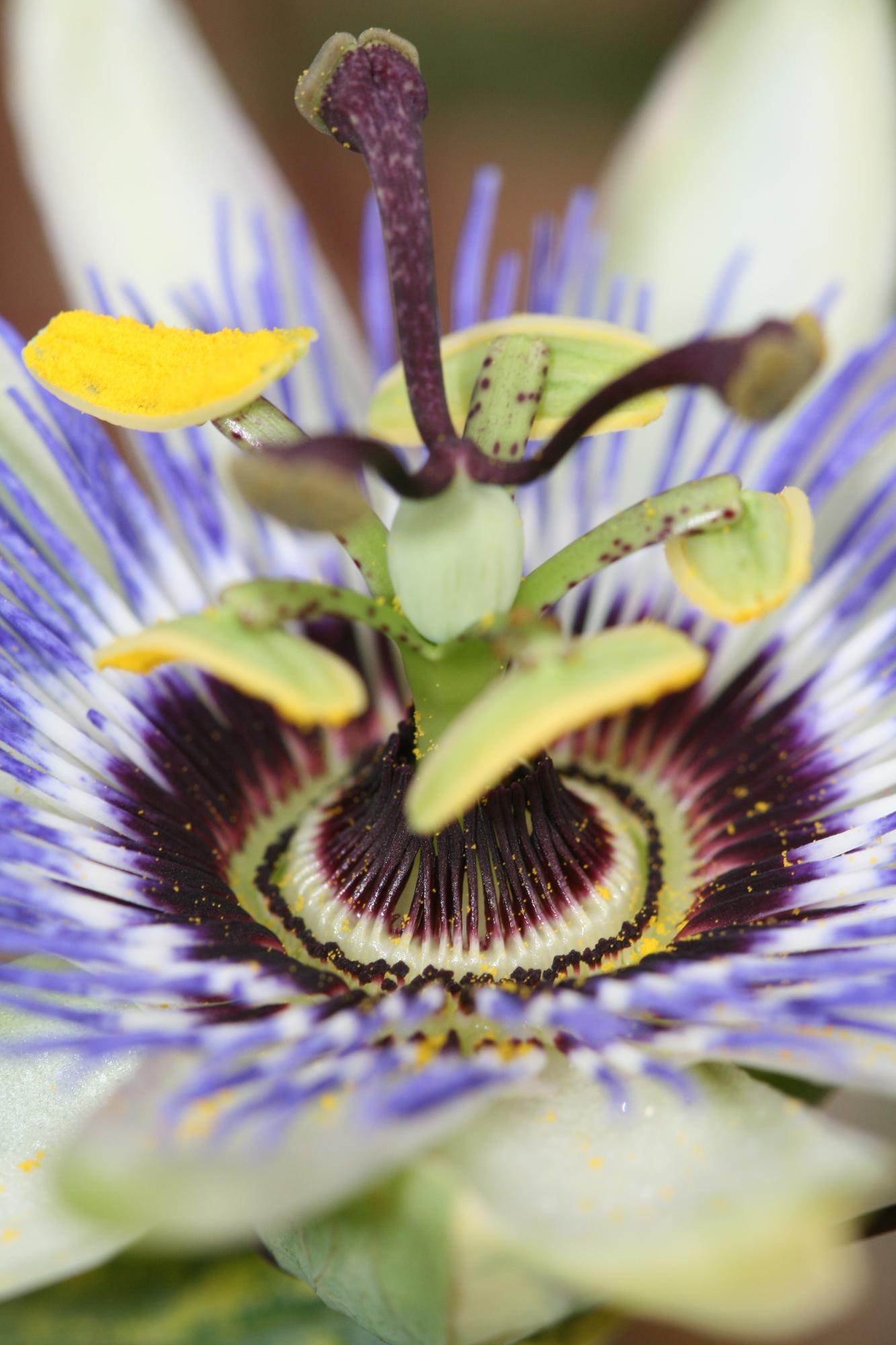

💙 Large blue and white flowers from June to September • 🌿 Slightly scented • ☀️ Sun / Partial shade • ❄️ Hardy down to -10 °C • 🐾 Non-toxic • 📏 H65 cm | Pot Ø15 cm
The Passiflora caerulea is the hardiest and most cultivated passionflower under temperate European climates, native to South America. Its large star-shaped flowers of 8 to 10 cm — ivory white petals, crown of violet-blue filaments, complex central structure — are among the most graphic and exotic in the outdoor climbers catalog. From June to September, it transforms terraces, balconies, and pergolas into an accessible tropical decor, even at our latitudes.
Vigorous, easy to grow, and suitable for pots as well as open ground, it is one of the most accessible exotic climbers to create a tropical atmosphere without excessive winter constraints.
Which passionflower to choose?
The Verdeia passionflower collection offers three varieties with distinct characters. Here is how to place the caerulea among the catalog varieties:
- Passiflora caerulea (this plant) — large blue and white flowers, very hardy down to -10 °C. The variety best suited to temperate climates and easiest to overwinter.
- Passiflora 'Purple Haze' — large flowers in intense violet and white, flowering from June to frost. The most colorful variety, hardy only down to -5 °C.
- Passiflora caerulea 'Constance Elliott' — large flowers entirely white and slightly scented, same hardiness as caerulea. The choice for a fresh and elegant atmosphere on a pergola or white wall.
Exposure & location
The Passiflora caerulea is more tolerant than other passionflowers — it accepts bright partial shade in addition to full sun. A location sheltered from cold winds remains important to extend flowering and ease wintering. Its tendrils cling by themselves to any thin support: wire mesh, trellis, or wire.
- Exposure : full sun or bright partial shade — sheltered from cold winds.
- Support : trellis, wire mesh, wire or arch — the tendrils cling by themselves.
- Soil : fertile, light, well-drained — tolerates limestone.
- In pots: large deep container with good drainage, brought indoors or protected below -10 °C.
Against a south-facing wall that retains heat at night, Passiflora caerulea can overwinter without protection down to -15 °C — the heat accumulated by the wall adds several extra degrees of protection to the crown.
Watering & maintenance
Passiflora caerulea is undemanding once well established. It blooms on the current year's shoots — pruning in March to 2-3 buds on the main framework triggers vigorous regrowth and dense flowering. To propagate the plant, cuttings of herbaceous stems taken in summer root easily. A potassium-rich fertilizer from June to August intensifies flowering.
- Watering: regular in summer, spaced out in winter — never leave the soil waterlogged during cold periods.
- Pruning: cut back to 2-3 buds from the main branches in March to stimulate flowering.
- Fertilizer: rich in potassium from June to August — avoid nitrogen which promotes foliage at the expense of flowers.
- Winter care: mulch the base generously in November; in pots, protect or bring indoors from -10 °C.
Even if the stems freeze completely in winter, the roots well protected by thick mulch always regrow in spring — do not cut frozen stems before March to let the crown insulate naturally.
Decor ideas & plant pairings
The bluish-purple and white of Passiflora caerulea naturally pairs with warm reds, oranges, and purples to create an exotic and colorful plant wall throughout the summer.
- For a very tropical blue and red duo, the Campsis Summer Jazz 'Fire Trumpet' scarlet red is the perfect companion on the same pergola — the red trumpets of the campsis and the graphic blue flowers of the passionflower bloom simultaneously from July to September, creating a spectacular warm/cool contrast.
- For a very elegant blue and purple match, the Clematis 'Jackmanii' deep purple pairs on the same trellis — both climbers bloom together from July to September with very dense complementary purple shades.
- For a persistent white and fragrant background all year round, the Trachelospermum 'Star of Venice' white permanently covers the base of the support — its glossy green foliage and summer white flowers create a subtle backdrop that amplifies the graphic architecture of the passionflower’s blue flowers.
- To enhance the blue in a pot on a terrace, the Gabriel Bordeaux ceramic pot brings a warm and deep color resonance — the contrast between the warm burgundy of the pot and the cool blue of the flowers creates a very lively and exotic harmony.
The Passiflora caerulea produces small decorative orange fruits in autumn that naturally attract birds — place it in a spot visible from indoors to enjoy this colorful display after flowering.
Verdeia tips
- Prune to 2-3 buds from the main framework each March: the passionflower blooms on the current year’s shoots — severe pruning in March triggers vigorous regrowth and much denser flowering than a plant left unpruned, which ends up tangled and flowering only at the top.
- Mulch generously around the base before the first frosts: even if the stems freeze, a thick mulch of 10 to 15 cm protects the roots and allows the plant to regrow vigorously the following spring — this is the simplest and most effective measure to preserve the plant in our climate.
- Place it against a south-facing wall to improve its hardiness: the heat accumulated by the wall during the day is released at night and can add several degrees of protection at the base — this technique allows growing the passionflower without winter protection even in regions with moderately harsh winters.
Technical characteristics
- Botanical name: Passiflora caerulea
- Common name: Blue passion flower
- Origin: South America
- Dimensions at delivery: H65 cm | Pot Ø15 cm
- Adult size: 4 to 6 m with support
- Exposure: full sun or bright partial shade
- Watering: regular in summer, spaced out in winter
- Blooming period: June to September
- Flower color: ivory white petals, violet-blue crown
- Fragrance: light
- Foliage: glossy green, deciduous
- Hardiness: down to -10 °C
- Care: easy
- Toxicity to animals: non-toxic
- Decorative style: Tropical / Mediterranean / Flowering urban jungle
Each plant is unique: the photos show an example of its appearance. The intensity of the blue and the floral density naturally vary depending on exposure and growing conditions.

Your plant, delivered with care
Every plant is hand-packed in a box specially designed for plants — secured, protected, ready to travel. It arrives in perfect condition, roots intact and foliage preserved, ready to take its place in your home.
Our Verdeia commitments
FAQ – Everything to know before adopting your Verdeia plant
How are my plants prepared before shipping?
All our plants are selected from our European partner nurseries. Before shipping, they are watered, cleaned, and protected with breathable, secure packaging. Each package is designed to ensure your plant arrives in perfect health, without any transport-related stress.
Will the plant look exactly like the photo?
The photos accurately represent the variety and the stated size. Since each plant is unique, slight differences in shape, foliage, or color may occur — and that’s part of their charm.
What are the delivery times and conditions?
Shipping is done within 48 business hours, with tracked delivery within 2 to 5 business days. Delivery costs €5.60 — free for orders over €50. You will receive a tracking link as soon as the package is shipped.
What to do upon receiving my plant?
Open your package as soon as you receive it and carefully remove the plant from its packaging. Let it acclimate for 24 hours in its new environment before watering. If it has been slightly stressed during transport, it will recover its shape after one or two days in the light.
What to do if my plant arrives damaged?
Contact us within 48 hours with a photo of the issue. Our team will assess the situation and offer you the best solution: replacement, partial refund, or recovery advice.
Can I return a plant?
Since plants are living beings, standard returns are not possible. However, we guarantee good health upon delivery: if the plant arrives damaged, it will be replaced free of charge. For any other cases (order error, decorative pot, accessory), returns are possible within 14 days.