



Platycerium bifurcatum (Staghorn Fern)
- Regular price
-
€27,95 - Regular price
-
- Sale price
-
€27,95
Couldn't load pickup availability
Frequently Asked Questions
Can a Platycerium bifurcatum grow in a bathroom? Yes, it’s actually an ideal spot — the natural humidity after showers mimics its tropical habitat conditions and significantly reduces the need for manual misting.
How often should you water a Platycerium bifurcatum? Every 8 to 10 days, letting the support almost completely dry out between waterings — in winter, space out watering even more as the plant uses less water during low light periods.
SHIPPING & PACKAGING
Shipping within 24/48 hours via DPD
- Delivery in 2 to 5 business days
- Eco-friendly packaging: recyclable boxes and biodegradable materials
- Special protection to ensure the plant arrives in perfect condition
- Parcel tracking sent by email as soon as shipped
- Free delivery on orders over €50
48H QUALITY GUARANTEE
We guarantee that your plants will arrive in perfect condition. If your plant arrives damaged or in poor condition:
- Contact us within 48 hours at hello@verdeia.eu with photos
- Free replacement or full refund
- No return necessary – we trust you
The guarantee covers: damage related to transport, severely weakened plant upon arrival, preparation errors.
CARE TIPS UPON ARRIVAL
To help your plant settle in for the long term:
- Unpack immediately and inspect your plant
- Let it acclimatize 24-48h in a bright spot without direct sunlight
- Check soil moisture before watering (dry surface = light watering)
- Wait 2-3 weeks before repotting
- Avoid heat sources and drafts
- Gently wipe leaves to remove dust
Need help? Contact our team at hello@verdeia.eu or via chat.

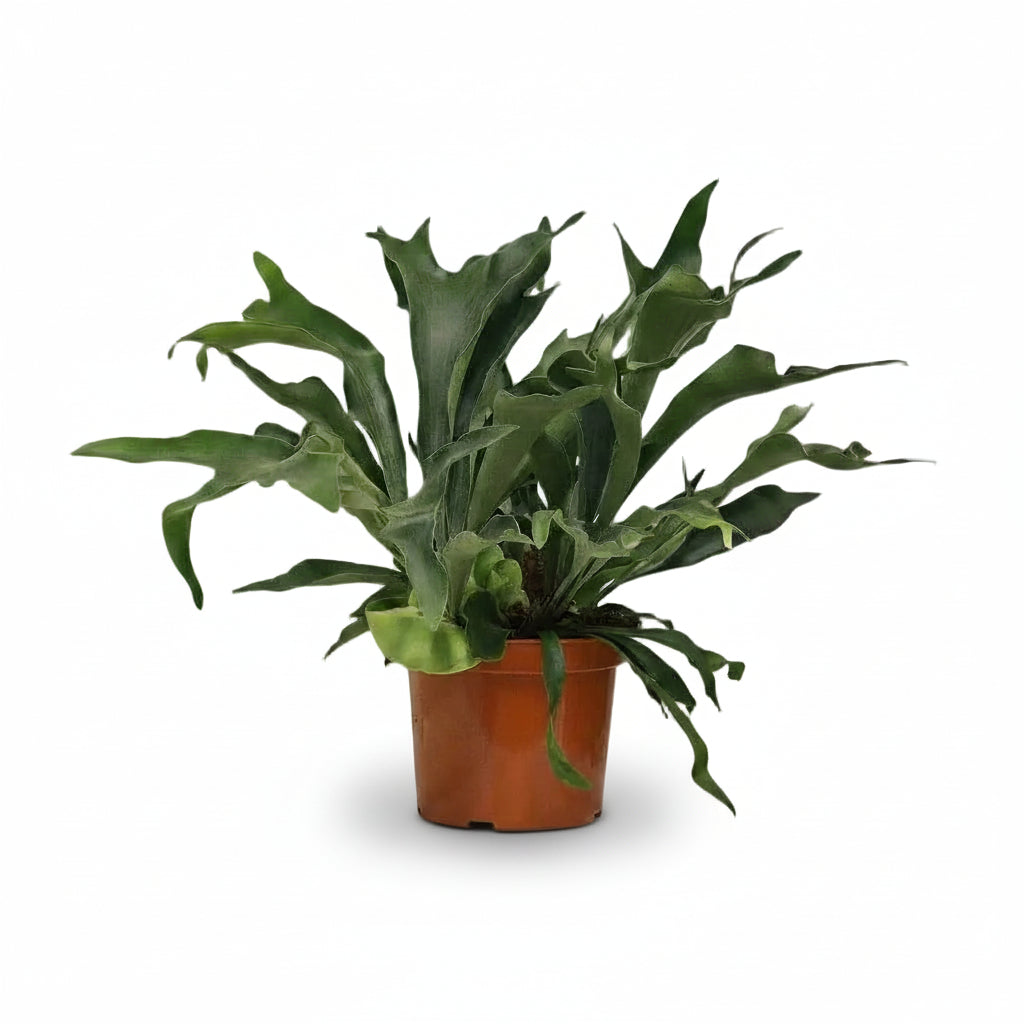


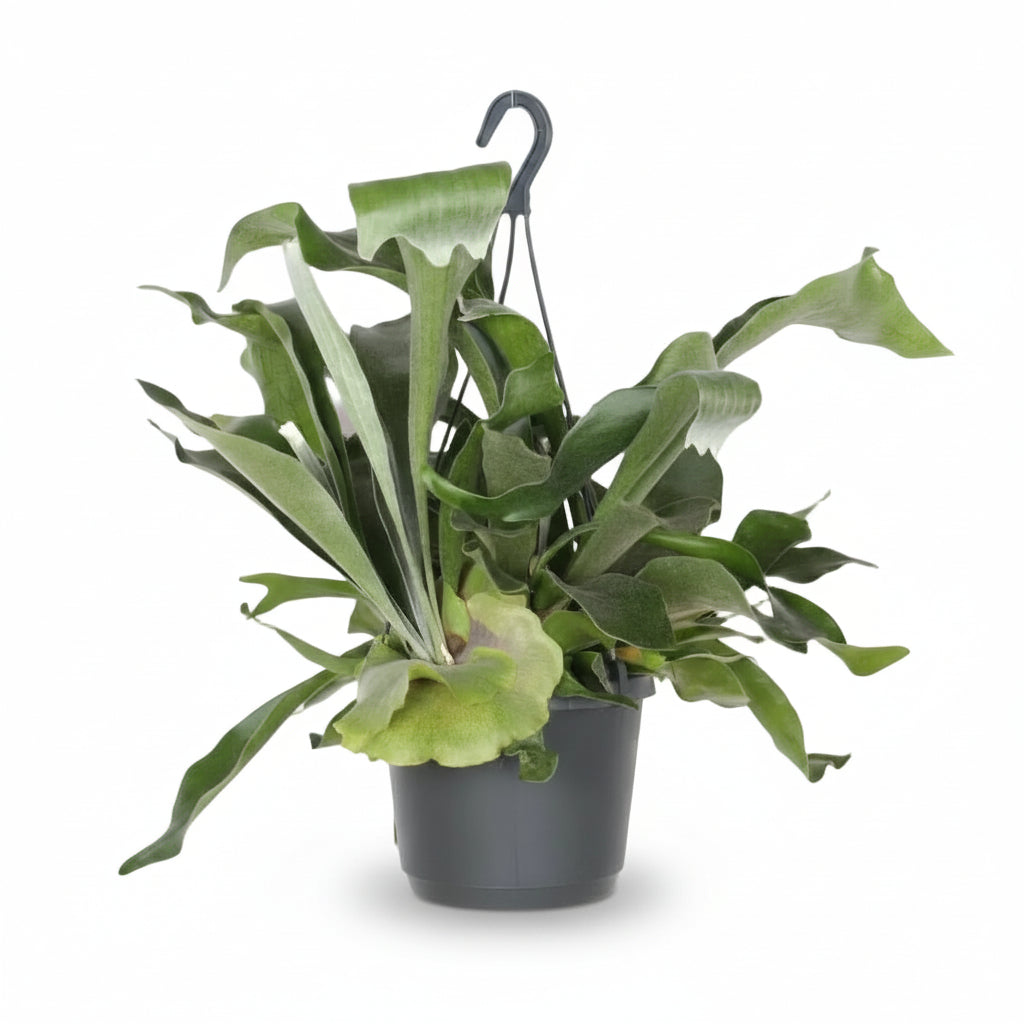
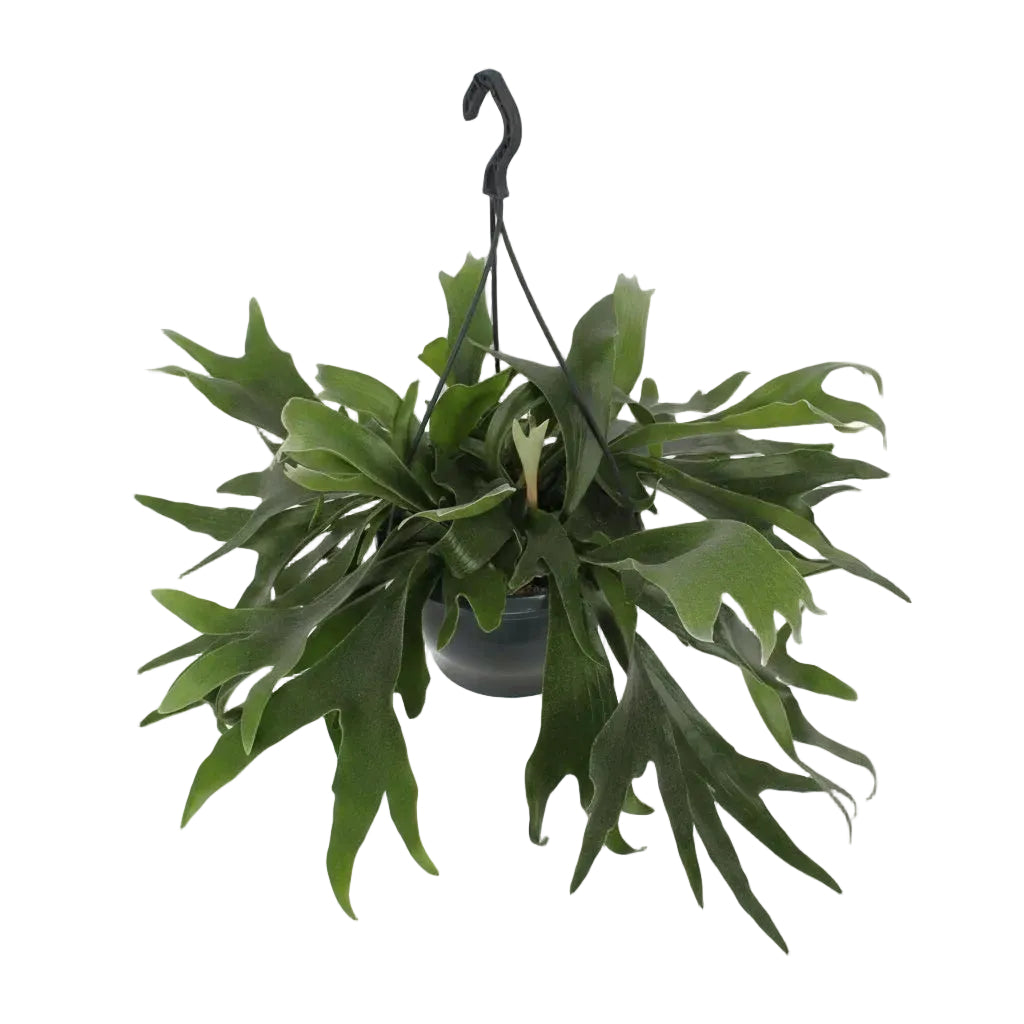

🦌 Sculptural fronds shaped like antlers • 🌿 Tropical epiphytic fern • 💧 Water every 8-10 days • 🌑 Indirect light • 🐾 Non-toxic • 🏙️ 4 sizes available
The Platycerium bifurcatum, also known as the staghorn fern, is a tropical epiphytic fern native to Australia and Southeast Asia that captivates with its spectacular foliage — two distinct types of fronds: fertile fronds, upright and forked like deer antlers, and shield fronds, flat and rounded that protect the roots. A plant that is as much sculpture as it is greenery.
Hanging, mounted on a wooden board, or grown in a pot, it stands out in the original and rare plants and indoor ferns sections of the Verdeia catalog as one of the most graphic and architectural species available.
Light & placement
Platycerium bifurcatum is an epiphytic fern — in its natural habitat, it grows attached to tree trunks and receives light filtered through the canopy. Indoors, it prefers the same conditions of soft light and ambient humidity, as detailed in our guide on light and humidity for indoor plants.
- Light: indirect to partial shade — protected from direct sun that burns the silvery fuzz on the fronds.
- Locations: living room, bright entryway, bathroom — any room with soft light and slightly humid atmosphere is ideal, as shown in our bathroom plant selection.
- Support: hanging, mounted on a wooden board or cork panel, or grown in a pot depending on the desired effect.
- Temperature: 18 to 25 °C, away from cold drafts.
Mounted on a wooden board covered with moss, the Platycerium bifurcatum fully reveals its sculptural silhouette — its shield fronds naturally spread over the support and its fertile fronds reach toward the light for a very graphic green wall effect.
Watering & care
As an epiphytic fern, Platycerium bifurcatum absorbs water differently from plants in traditional substrate — it can be watered directly on the shield fronds or briefly soaked in water. To fine-tune watering, see our guide on watering indoor plants.
- Frequency: every 8 to 10 days — water when the support or substrate is almost dry.
- Water: non-calcareous at room temperature — lime damages the protective silvery fuzz on the fronds.
- Misting: 2 to 3 times per week to maintain necessary ambient humidity.
- Shield fronds: never cut the flat browned fronds — they feed the plant and protect new shoots, even when dried out.
- Cleaning: dust the fronds with a soft brush without rubbing — their surface is covered with delicate protective fuzz.
In winter, slightly reduce watering and place the plant in the brightest possible light — Platycerium naturally slows growth during low light periods.
Decor ideas & plant pairings
The sculptural and unique silhouette of Platycerium bifurcatum makes it a decorative subject in its own right — it works well alone as a centerpiece or in a composition of trailing and hanging plants.
- For a very graphic botanical green wall, mount the Platycerium on a wooden board and hang next to it a Davallia bullata and an Aglaomorpha coronans — three epiphytic ferns with very distinct silhouettes create a botanical and organic green wall without any irrigation system.
- Hanging in a bathroom, pair it with a Phlebodium Blue Star — the sculptural silvery green of the Platycerium contrasts with the velvety blue-green of the Phlebodium for a very original fern composition in the bathroom selection.
- For an airy texture combination, combine it with an Asparagus setaceus and a Rhipsalis — the sculptural mass of the Platycerium in the center, the feathery lightness of the Asparagus, and the trailing stems of the Rhipsalis create three very complementary levels of airiness.
- In a pot for a natural and raw style, choose a decorative pot in terracotta or untreated matte ceramic — raw and organic materials naturally complement the wild and sculptural character of the fronds.
Verdeia tips
- Never cut the shield fronds, even if browned and dried out: these flat fronds that wrap the base of the plant feed and protect new shoots — removing them deprives the plant of an essential energy source and exposes its roots.
- Dust the fronds with a soft brush without rubbing: the silvery fuzz covering the fertile fronds is a functional organ that regulates water and light absorption — rubbing damages it irreparably and dulls the species’ characteristic silvery appearance.
- Rotate the plant regularly for symmetrical growth: Platycerium naturally orients its fronds toward the light — regular rotation ensures balanced development and a harmonious silhouette from all sides.
Technical specifications
- Botanical name: Platycerium bifurcatum
- Common name: Staghorn fern
- Family: Polypodiaceae
- Origin: Australia and Southeast Asia
- Dimensions at delivery: 🏙️ 4 sizes available — H35 cm | Pot Ø12 cm, H30 cm | Hanging pot Ø17 cm, H50 cm | Hanging pot Ø21 cm, H80 cm | Pot Ø26 cm
- Foliage: Silvery green, sculptural forked fronds
- Light: Indirect to partial shade
- Watering: Every 8 to 10 days, mist 2 to 3 times per week
- Temperature: 18 – 25 °C
- Care: Easy
- Toxicity: Non-toxic to pets and children
- Decor style: Sculptural / Botanical / Contemporary
Each plant is unique: the shape and size of the fronds naturally evolve according to light and humidity.

Your plant, delivered with care
Every plant is hand-packed in a box specially designed for plants — secured, protected, ready to travel. It arrives in perfect condition, roots intact and foliage preserved, ready to take its place in your home.
Our Verdeia commitments
FAQ – Everything to know before adopting your Verdeia plant
How are my plants prepared before shipping?
All our plants are selected from our European partner nurseries. Before shipping, they are watered, cleaned, and protected with breathable, secure packaging. Each package is designed to ensure your plant arrives in perfect health, without any transport-related stress.
Will the plant look exactly like the photo?
The photos accurately represent the variety and the stated size. Since each plant is unique, slight differences in shape, foliage, or color may occur — and that’s part of their charm.
What are the delivery times and conditions?
Shipping is done within 48 business hours, with tracked delivery within 2 to 5 business days. Delivery costs €5.60 — free for orders over €50. You will receive a tracking link as soon as the package is shipped.
What to do upon receiving my plant?
Open your package as soon as you receive it and carefully remove the plant from its packaging. Let it acclimate for 24 hours in its new environment before watering. If it has been slightly stressed during transport, it will recover its shape after one or two days in the light.
What to do if my plant arrives damaged?
Contact us within 48 hours with a photo of the issue. Our team will assess the situation and offer you the best solution: replacement, partial refund, or recovery advice.
Can I return a plant?
Since plants are living beings, standard returns are not possible. However, we guarantee good health upon delivery: if the plant arrives damaged, it will be replaced free of charge. For any other cases (order error, decorative pot, accessory), returns are possible within 14 days.