



Hydrangea paniculata '(S)witch Ophelia' (Panicle Hydrangea) H25 cm | Pot Ø19 cm
- Regular price
-
€42,95 - Regular price
-
- Sale price
-
€42,95
Couldn't load pickup availability
Frequently Asked Questions
When does the panicle hydrangea 'Ophelia' bloom? The flowering starts in June and continues until October, with a chameleon effect where the panicles change from greenish white to intense pink over the season.
How to prune a Hydrangea paniculata in a pot? At the end of winter, cut back the stems to 2 or 3 pairs of buds: the paniculata blooms on the wood of the year and benefits from severe pruning that stimulates larger panicles.
SHIPPING & PACKAGING
Shipping within 24/48 hours via DPD
- Delivery in 2 to 5 business days
- Eco-friendly packaging: recyclable boxes and biodegradable materials
- Special protection to ensure the plant arrives in perfect condition
- Parcel tracking sent by email as soon as shipped
- Free delivery on orders over €50
48H QUALITY GUARANTEE
We guarantee that your plants will arrive in perfect condition. If your plant arrives damaged or in poor condition:
- Contact us within 48 hours at hello@verdeia.eu with photos
- Free replacement or full refund
- No return necessary – we trust you
The guarantee covers: damage related to transport, severely weakened plant upon arrival, preparation errors.
CARE TIPS UPON ARRIVAL
To help your plant settle in for the long term:
- Unpack immediately and inspect your plant
- Let it acclimatize 24-48h in a bright spot without direct sunlight
- Check soil moisture before watering (dry surface = light watering)
- Wait 2-3 weeks before repotting
- Avoid heat sources and drafts
- Gently wipe leaves to remove dust
Need help? Contact our team at hello@verdeia.eu or via chat.
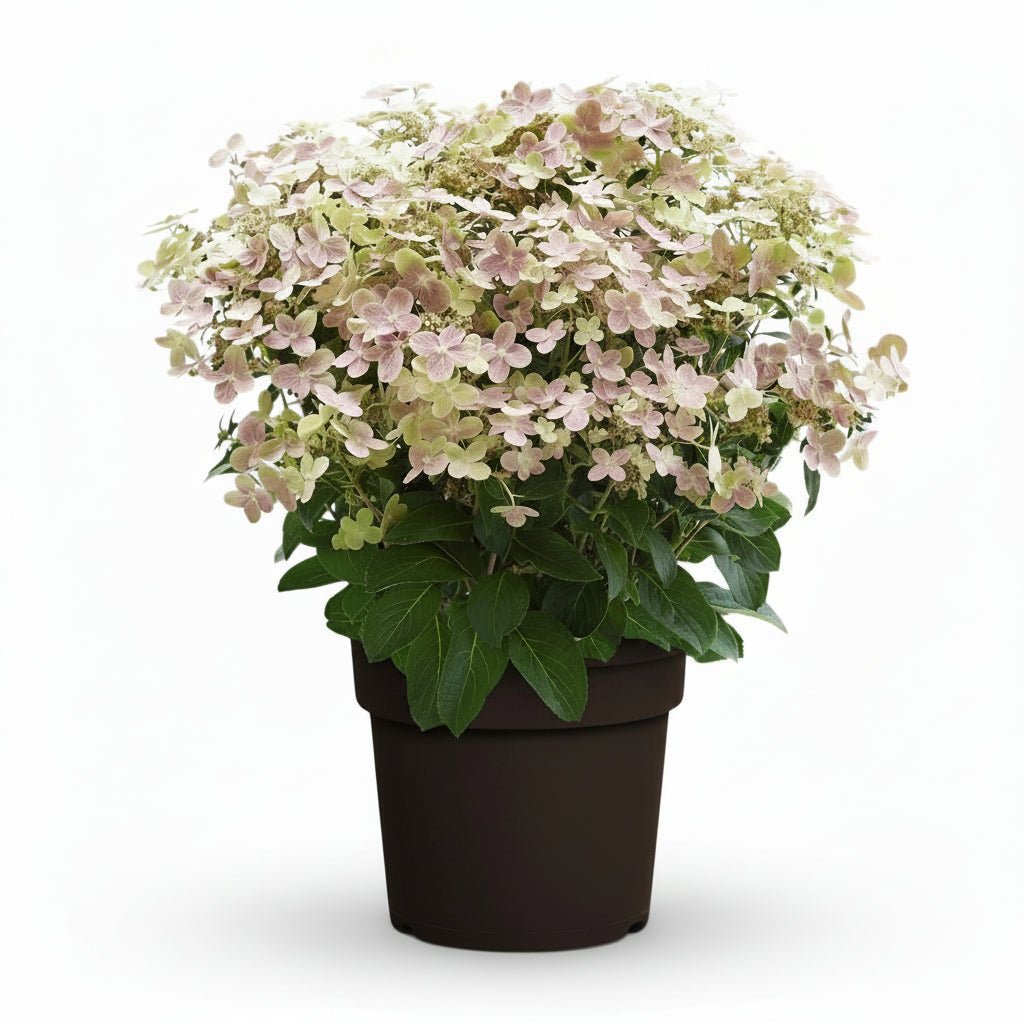
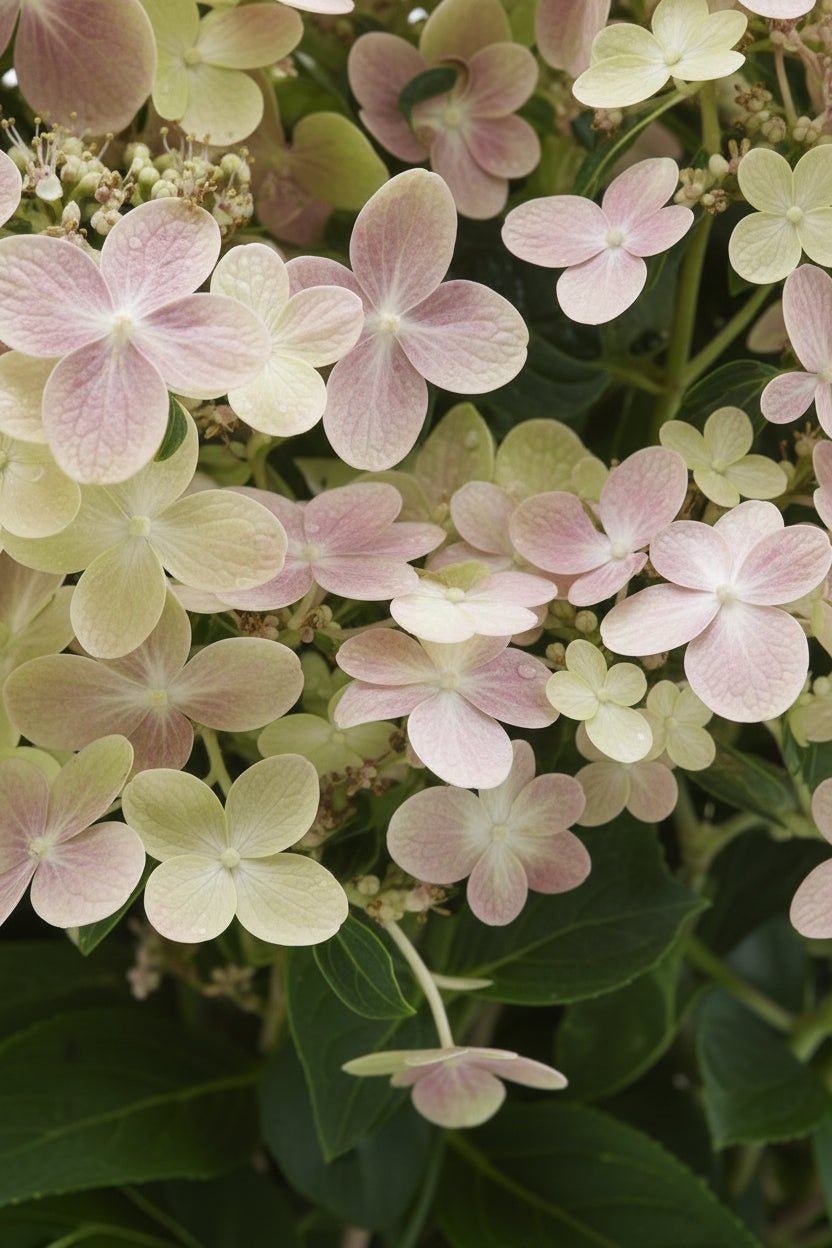
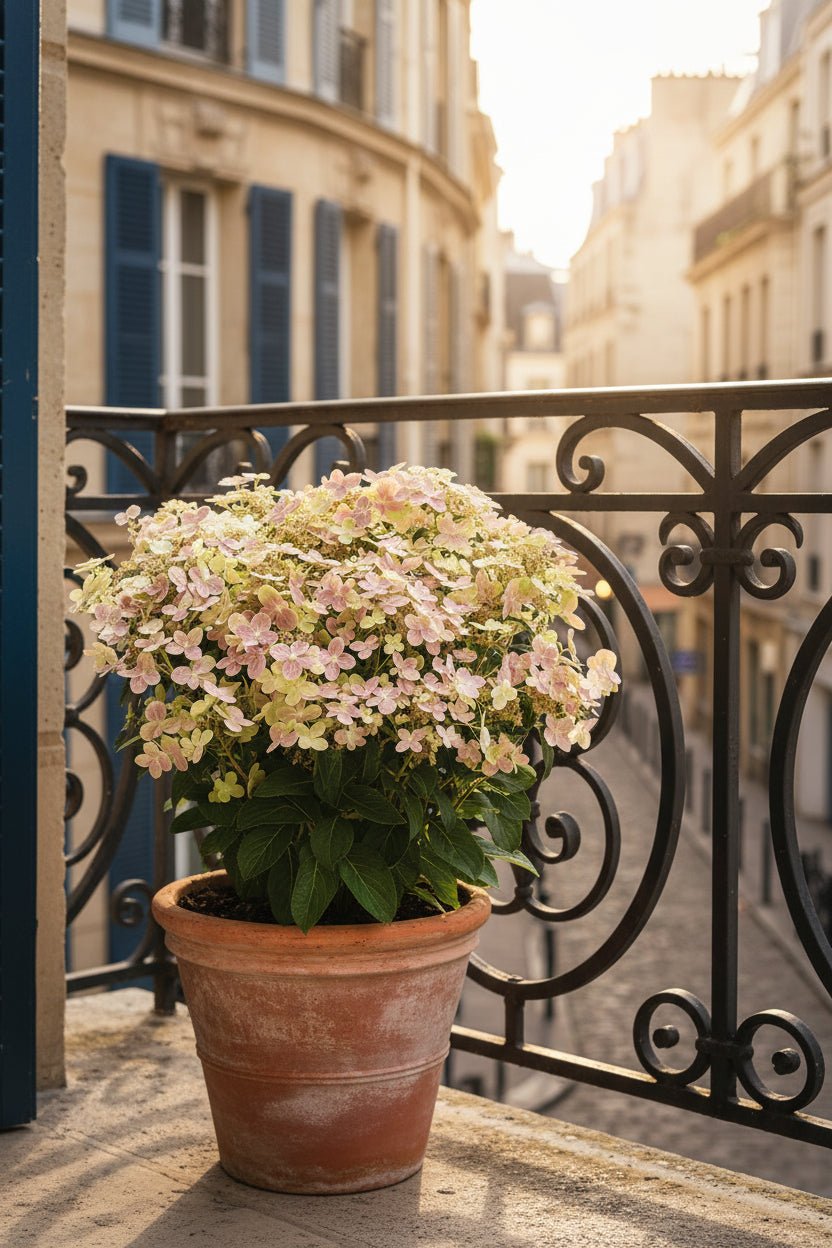

🌸 Chameleon panicles white-green turning pink • 🌿 Early and long blooming • ☀️ Full sun to partial shade • 🌡️ Very hardy • 💧 Regular watering • 📏 H25 cm | Pot Ø19 cm
The Hydrangea paniculata '(S)witch Ophelia', also called Panicle Hydrangea Ophelia, is a dwarf cultivar with spectacular and changing blooms: its conical panicles open white-greenish, take on a powder pink hue over the summer, then intensify to deep pink in autumn. Native to East Asia (China, Siberia, Japan), the species Hydrangea paniculata is among the most floriferous Hydrangeas in the catalog.
Its particularity compared to classic macrophylla Hydrangeas: a very compact habit (50 cm at maturity), earlier blooming from June, and a "chameleon" effect that transforms the plant over the weeks, making a strong symbolic gift in the language of flowers.
Which Hydrangea to choose?
The Hydrangea collection in the Verdeia catalog offers a wide variety of species and cultivars. Here is how to place this paniculata 'Switch Ophelia' among the available varieties:
- Hydrangea paniculata '(S)witch Ophelia' (this plant) — conical panicles chameleon white-green then pink, dwarf habit (25-50 cm), early blooming. The most compact paniculata in the catalog.
- Hydrangea 'Early Blue' — macrophylla with intense blue balls, medium size (45 cm). For a saturated blue and early blooming.
- Hydrangea 'Crystal Palace' — macrophylla with deep violet-blue balls, medium size (45 cm). For a purple and theatrical palette.
- Hydrangea 'Early Rosa' — macrophylla with bright pink balls, medium size (45 cm). For a vivid pink on neutral soil.
- Hydrangea Teller 'Nizza Blue' — macrophylla in blue lacecap (flat crown), medium size (45 cm). For an airy and natural style.
- Hydrangea 'Curly Wurly Blue' — macrophylla with double wavy blue petals, medium size (50 cm). For an original effect.
- Hydrangea macrophylla blanc — large pure white balls, medium size (40 cm). For a pure and bright scene.
- Hydrangea arborescens 'Pink Annabelle' — tree-like, large powder pink balls, rustic style.
- Hydrangea arborescens 'Strong Annabelle' — tree-like, huge white balls, sturdy stems.
- Hydrangea serrata 'Pink Petticoat' — Japanese lace hydrangea, compact pink size. For a delicate Japanese-inspired approach.
- Hydrangea petiolaris — climbing hydrangea, white flat flowers. The only Hydrangea that clings to a wall.
Exposure & location
Unlike macrophylla hydrangeas which absolutely require partial shade, Hydrangea paniculata tolerates full sun and even flowers more with generous exposure — provided the substrate remains fresh deep down.
- Exposure: full sun to partial shade — flowering is denser and the pink coloration more pronounced with a few hours of direct sun per day.
- Location: sunny balcony, terrace, planter, border, or flowerbed — its very compact size is perfect for small spaces.
- Temperature: very hardy, one of the most cold-resistant species in the Hydrangea genus — no winter protection is needed in most regions.
- Soil type: rich in humus, fresh and well-drained, non-calcareous — unlike macrophylla, pH does not influence the flower color in paniculata.
The "chameleon" effect of 'Switch Ophelia' is linked to the weather: the cooler the late-season nights, the more intense the pink coloration at the end of summer — it is the drop in nighttime temperatures that reveals the deepest palette.
Watering & maintenance
The panicle hydrangea requires a little less water than the macrophylla, but it remains a plant that appreciates a constantly fresh soil. The finger test in the substrate is the most reliable method to anticipate watering.
- Summer watering: regular, 2 to 3 times a week in pot during hot weather — the substrate should always remain cool at 3-4 cm depth.
- Winter watering: reduced, avoiding complete drying of the root ball.
- Drainage: essential — empty the saucer after watering, stagnant the water suffocates the roots.
- Fertilization: hydrangea or flowering plant fertilizer in spring and mid-summer to support continuous blooming.
- Pruning: unlike the macrophylla, the paniculata is pruned severely at the end of winter — cut back stems to 2 or 3 pairs of buds to encourage more abundant flowering.
- Dry inflorescences: keep the faded panicles on the plant in winter, they offer decorative interest and protect buds from late frosts.
Unlike the macrophylla, the color of the paniculata panicles does not depend on soil pH — no need to use ericaceous soil or acidity correctors, a good universal potting soil is enough.
Decor ideas & plant pairings
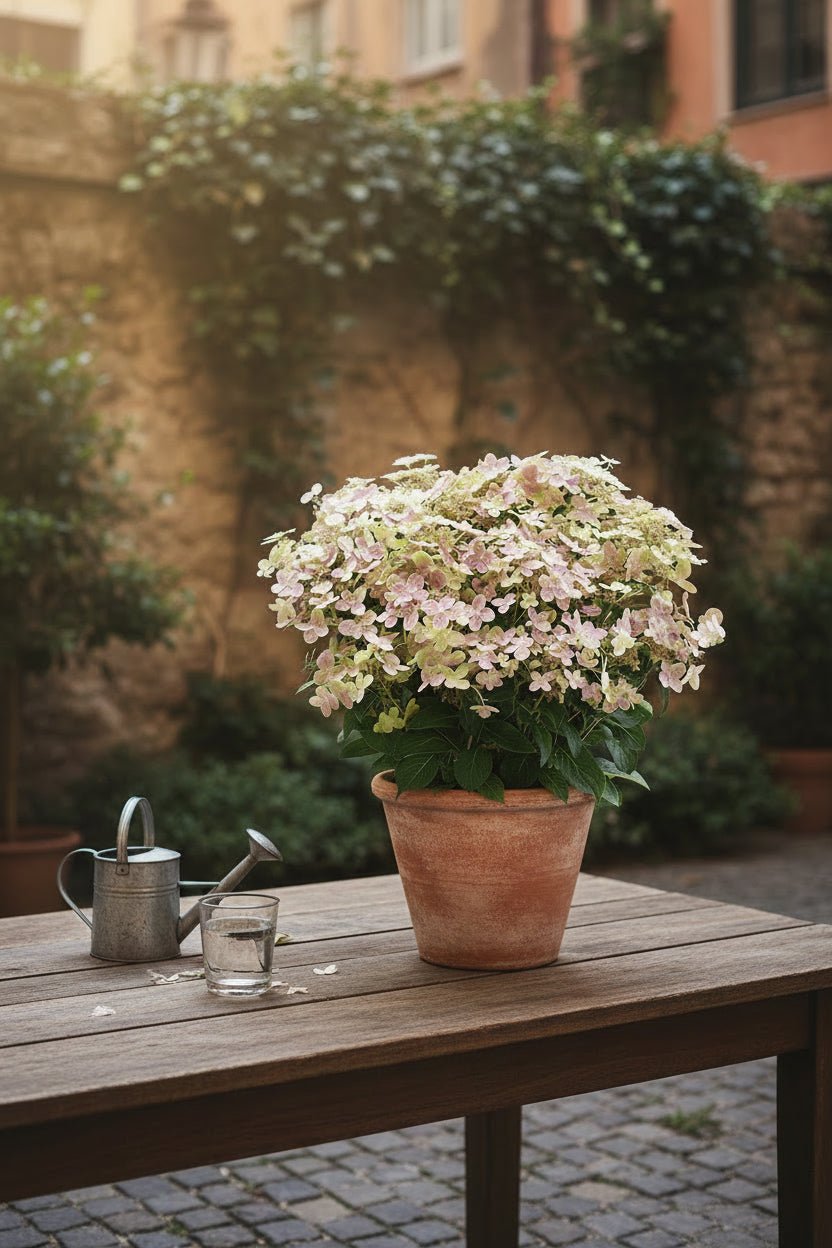
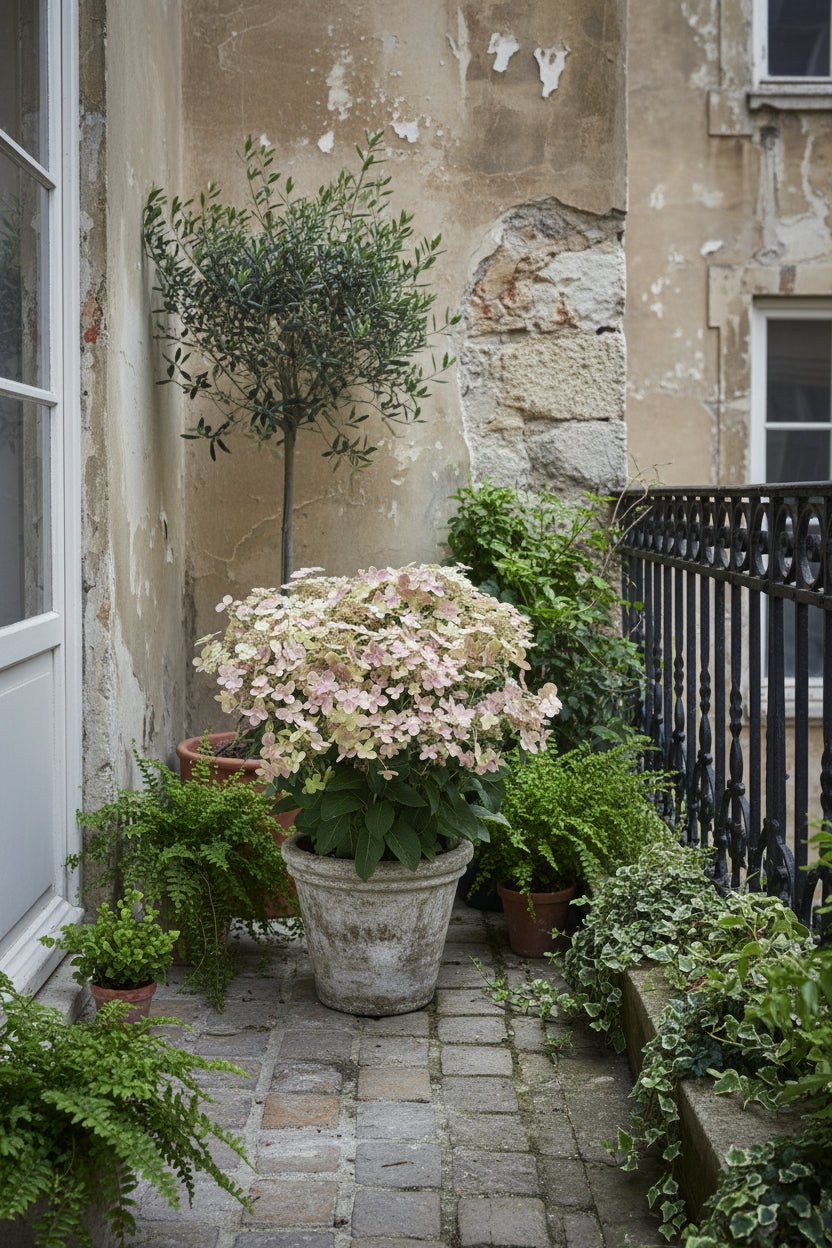
With its conical panicles in changing shades and very compact habit, the 'Switch Ophelia' brings romantic and evolving elegance to any outdoor arrangement, ideal for easily renewing a flowering balcony by cuttings.
- For a romantic countryside scene, pair it with a Lavandula Hidcote Blue and a pale pink dwarf rose — the powder pink of the hydrangea interacts with the lavender blue and the soft pink of the rose in a gentle, summery palette.
- For a pink tonal floral duo, place it next to a Hydrangea 'Early Rosa' — the conical paniculata panicles complement the large macrophylla balls, two distinct shapes for two interpretations of Hortensia pink.
- To highlight the powder pink, place it in an Elho Greenville Round Blanc pot Ø22 cm — the light base brings out the pink-green shades of the panicles without any color competition.
- For a more natural tonal note, choose a Capi Nature Groove taupe pot Ø22 cm — the neutral mineral tone anchors the plant in a sober contemporary balcony while respecting the delicacy of the floral palette.
The dried paniculata panicles are beautiful in winter dried bouquets — cut them with pruning shears at the end of flowering, hang them upside down in a dry place, and use them for decoration for months.
Verdeia tips
- Prune short in late winter: unlike macrophylla which only needs light cleaning, paniculata blooms on new wood — cut stems back to 2 or 3 pairs of buds in February-March for larger panicles and denser flowering.
- Leave the dried flowers in place all winter: the faded panicles naturally protect young buds from late frosts and provide a graphic decorative interest throughout winter — cut them only at late winter pruning.
- Handle with gloves: the leaves and flowers of the hydrangea can cause skin irritation in sensitive people — wear gloves when pruning and repotting, especially for delicate skin.
Technical characteristics
- Botanical name: Hydrangea paniculata '(S)witch Ophelia'
- Common name: Panicle hydrangea Ophelia, dwarf panicle hydrangea
- Origin: East Asia
- Delivery dimensions: H25 cm | Pot Ø19 cm
- Adult height: 50 cm in pot, up to 80 cm in open ground
- Exposure: full sun to partial shade
- Watering: regular in season, reduced in winter
- Soil type: rich, fresh, well-drained, non-calcareous
- Flowering: June to October, conical panicles chameleon white-green then pink
- Hardiness: very hardy
- Foliage: deciduous, bright green, oval and toothed
- Growth: medium, compact rounded habit
- Care: easy
- Toxicity: toxic if ingested, skin allergen.
- Decorative style: Country garden / Romantic balcony / Evolving composition
Each plant is unique: the photos show an example of its appearance. The number of panicles, the intensity of the pink at the end of the season, and the density of the foliage naturally vary from one specimen to another and depending on growing conditions.

Your plant, delivered with care
Every plant is hand-packed in a box specially designed for plants — secured, protected, ready to travel. It arrives in perfect condition, roots intact and foliage preserved, ready to take its place in your home.
Our Verdeia commitments
FAQ – Everything to know before adopting your Verdeia plant
How are my plants prepared before shipping?
All our plants are selected from our European partner nurseries. Before shipping, they are watered, cleaned, and protected with breathable, secure packaging. Each package is designed to ensure your plant arrives in perfect health, without any transport-related stress.
Will the plant look exactly like the photo?
The photos accurately represent the variety and the stated size. Since each plant is unique, slight differences in shape, foliage, or color may occur — and that’s part of their charm.
What are the delivery times and conditions?
Shipping is done within 48 business hours, with tracked delivery within 2 to 5 business days. Delivery costs €5.60 — free for orders over €50. You will receive a tracking link as soon as the package is shipped.
What to do upon receiving my plant?
Open your package as soon as you receive it and carefully remove the plant from its packaging. Let it acclimate for 24 hours in its new environment before watering. If it has been slightly stressed during transport, it will recover its shape after one or two days in the light.
What to do if my plant arrives damaged?
Contact us within 48 hours with a photo of the issue. Our team will assess the situation and offer you the best solution: replacement, partial refund, or recovery advice.
Can I return a plant?
Since plants are living beings, standard returns are not possible. However, we guarantee good health upon delivery: if the plant arrives damaged, it will be replaced free of charge. For any other cases (order error, decorative pot, accessory), returns are possible within 14 days.