



Hibiscus syriacus 'Hamabo' (Pale pink rose of Sharon) H45 cm | Pot Ø17 cm
- Regular price
-
€33,95 - Regular price
-
- Sale price
-
€33,95
Couldn't load pickup availability
Frequently Asked Questions
Should a potted Hibiscus syriacus be pruned? Yes, prune it back hard in late winter (February–March) to encourage more abundant summer flowering on new wood.
How hardy is Hibiscus syriacus outdoors? Very hardy down to -25 °C, it withstands the harshest winters even in an unprotected pot.
SHIPPING & PACKAGING
Shipping within 24/48 hours via DPD
- Delivery in 2 to 5 business days
- Eco-friendly packaging: recyclable boxes and biodegradable materials
- Special protection to ensure the plant arrives in perfect condition
- Parcel tracking sent by email as soon as shipped
- Free delivery on orders over €50
48H QUALITY GUARANTEE
We guarantee that your plants will arrive in perfect condition. If your plant arrives damaged or in poor condition:
- Contact us within 48 hours at hello@verdeia.eu with photos
- Free replacement or full refund
- No return necessary – we trust you
The guarantee covers: damage related to transport, severely weakened plant upon arrival, preparation errors.
CARE TIPS UPON ARRIVAL
To help your plant settle in for the long term:
- Unpack immediately and inspect your plant
- Let it acclimatize 24-48h in a bright spot without direct sunlight
- Check soil moisture before watering (dry surface = light watering)
- Wait 2-3 weeks before repotting
- Avoid heat sources and drafts
- Gently wipe leaves to remove dust
Need help? Contact our team at hello@verdeia.eu or via chat.
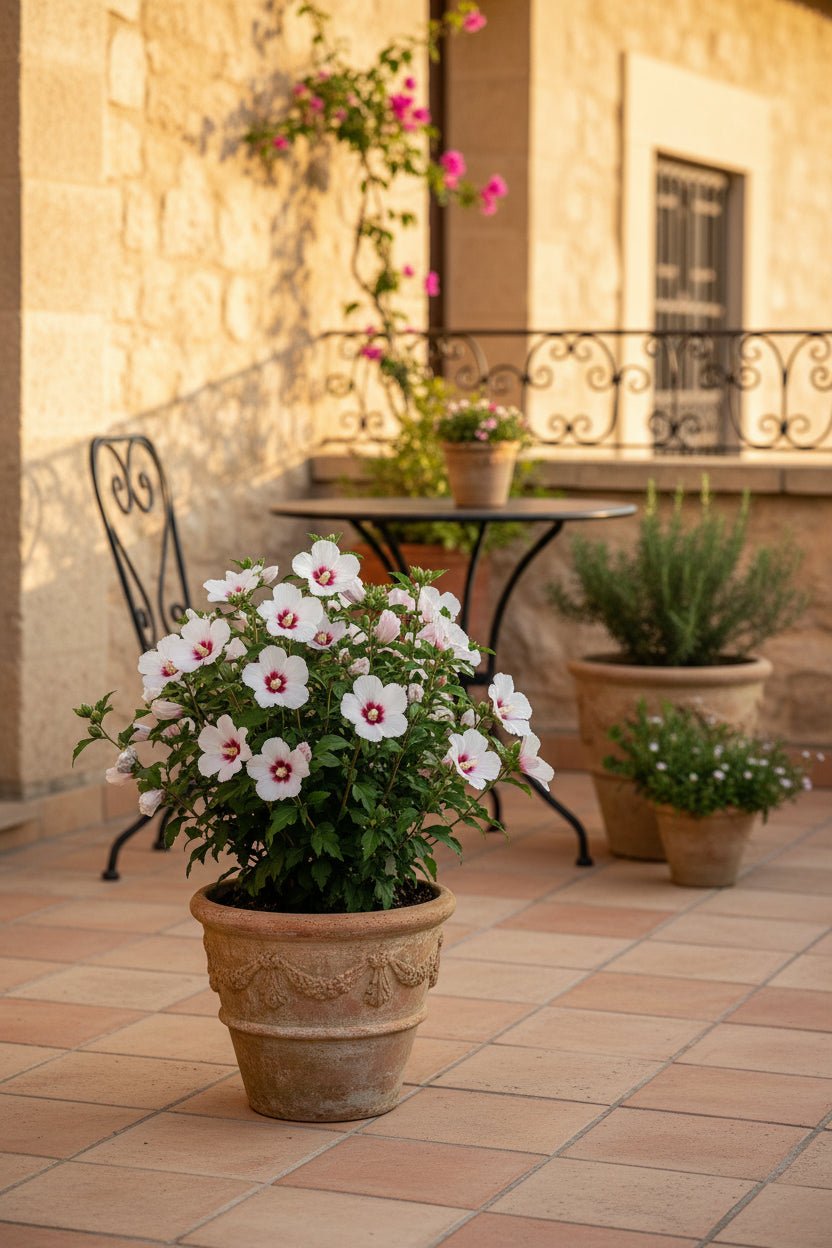
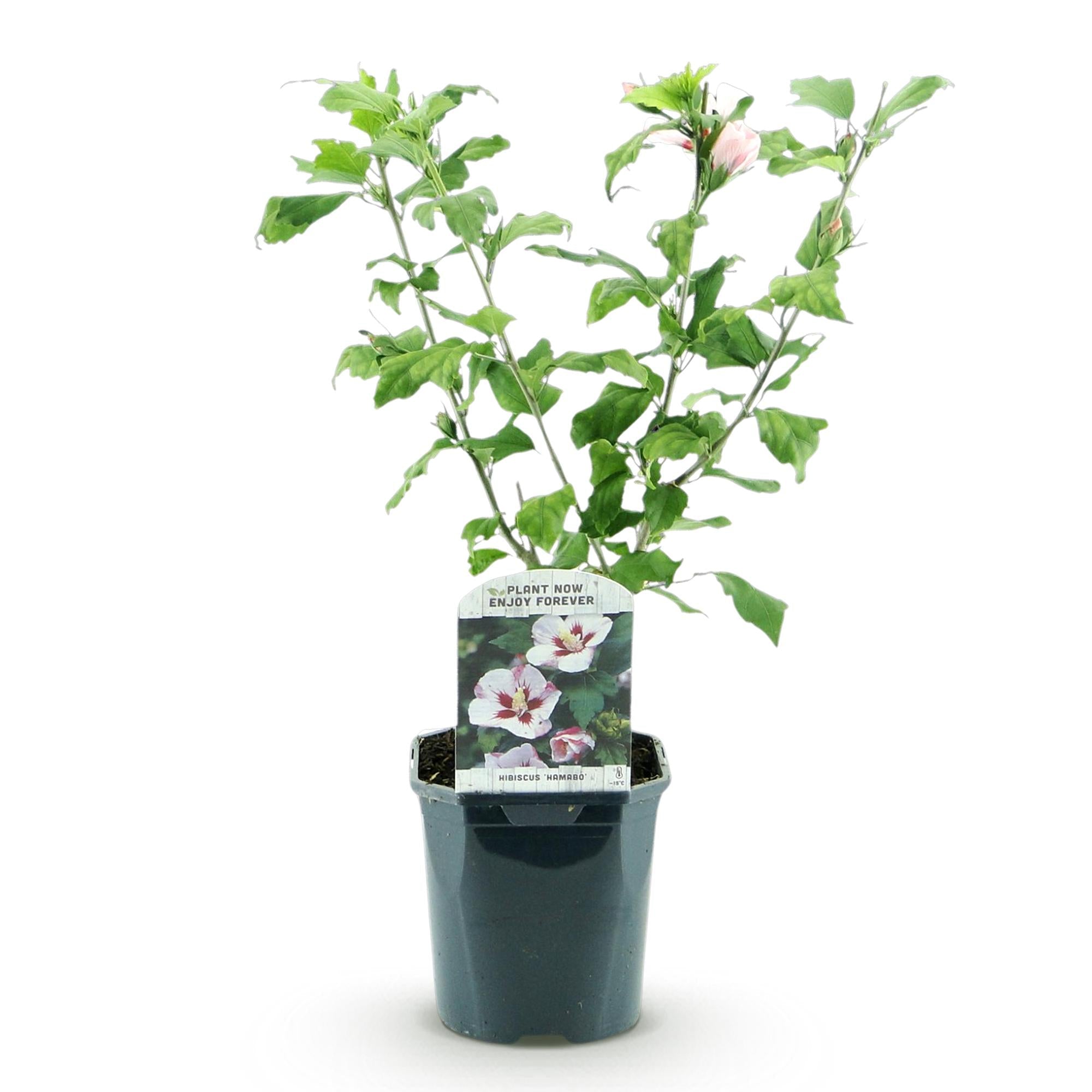

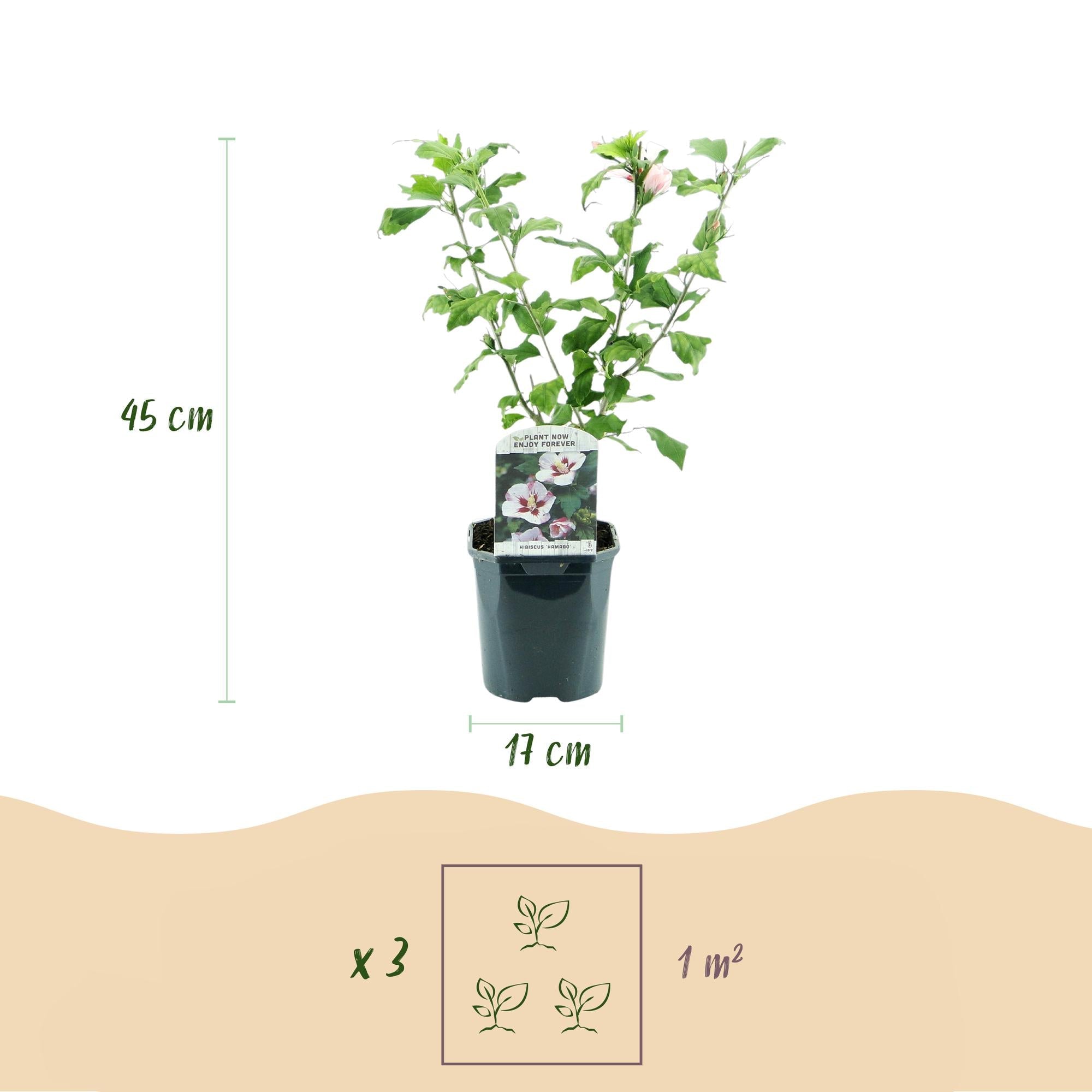

🌸 Large pale pink flowers with a purple center • 🦋 Attracts butterflies and pollinators • ☀️ Full sun to partial shade • ❄️ Very hardy down to -25 °C • 🐾 Non-toxic • 📏 H45 cm | Pot Ø17 cm
Hibiscus syriacus 'Hamabo', also known as Pale Pink Althea, Tree Mallow or Rose of Sharon, produces large, luminous pale pink, flared flowers all summer, enhanced by a spectacular deep purple center. Native to East Asia, this hardy deciduous shrub is one of the most abundantly flowering balcony plants in the catalog.
Its distinctive feature is an exceptionally long summer flowering period from June to September, during which the flowers continuously renew themselves, and remarkable hardiness down to -25 °C, allowing it to withstand the harshest winters in a pot or in the ground. The vibrant purple center at the heart of each pale pink flower is the aesthetic signature of the 'Hamabo' cultivar.
Which hibiscus should you choose?
Eight altheas in the catalog, as bushes or trained on a stem:
- Hibiscus 'Hamabo' (this plant) — very pale pink flowers with a purple center, in a Ø17 cm bush. The softest.
- Hibiscus 'Woodbridge' — large single deep pink flowers with a red center, in a Ø17 cm bush. The most colorful of the bushes.
- Hibiscus Blue Chiffon® on a stem — semi-double lavender-blue flowers. The only blue one.
- Hibiscus Lavender Chiffon® on a stem — light mauve with a deeper-colored center. The most romantic.
- Hibiscus Magenta Chiffon® on a stem — intense magenta pink. The most vibrant.
- Hibiscus Starburst Chiffon® on a stem — white with a striped pink center. The most contrasting.
- Hibiscus White Chiffon® on a stem — pure white. The brightest.
- Hibiscus Tricolour standard — three cultivars grafted onto the same rootstock. The most spectacular.
The standards form a small tree upon delivery; the bushes cost less and can be shaped freely through pruning.
Exposure & location
Hibiscus 'Hamabo' requires full sun to produce abundant flowering. It tolerates light partial shade, but flowering will be sparser there. It withstands wind, summer heat, and moderate sea spray very well.
- Exposure: ideally full sun, bright partial shade acceptable — at least 6 hours of direct sun per day for optimal flowering.
- Location: balcony, terrace, planter, planted in the ground in the garden — tolerates locations exposed to wind and heat.
- Hardiness: very hardy down to -25 °C — withstands the harshest winters, even in an unprotected pot.
- Soil type: all types, well-draining — tolerates poor and chalky soils, prefers a moist, well-drained substrate in a pot.
A location sheltered from strong spring winds protects tender young shoots and emerging flower buds — late frosts can sometimes damage bud break in continental regions.
Watering & care
Hibiscus 'Hamabo' thrives in moist soil during the flowering period but tolerates drought well once established. In a pot, closer attention is needed than in the ground because the substrate dries out more quickly. To adjust watering, check the substrate moisture with your finger before each watering.
- Watering: regular in summer to support flowering, 2 to 3 times a week in a pot during hot weather, every 10 days in the shoulder seasons, almost none in winter.
- Drainage: essential — pot with drainage holes, clay pebbles at the bottom, saucer emptied systematically after watering.
- Fertilizer: liquid fertilizer for flowering plants, rich in potassium, once every 2 to 3 weeks from April to September to support summer flowering.
- Pruning: prune hard at the end of winter (February-March) to encourage flowering that year — flowering occurs on new wood, so generous pruning is beneficial.
- Overwintering: no special care is needed — the plant naturally loses its leaves in autumn and grows back in spring. When grown in a pot, protect the root ball from severe frost (with mulch or fleece).
- Repotting: every 2 to 3 years in spring, in a slightly larger pot, taking the opportunity to refresh the growing medium.
Leaf drop in autumn is perfectly normal — Hibiscus syriacus is a deciduous shrub that regrows fresh foliage the following spring.
Decor ideas & plant combinations
With its large pink flowers with purple centers and shrubby habit, Hibiscus 'Hamabo' quickly becomes a centerpiece on the balcony or in a summer planter. To create an easy-care urban balcony, pair it with other flowering, pollinator-friendly plants.
- For a summer flowering planter, pair it with an Agapanthus 'Poppin Purple' with deep purple flower heads — the Hibiscus's large pink flowers with purple centers echo the Agapanthus's violet in a rich, harmonious summer palette.
- For a Mediterranean full-sun balcony, surround it with Lavandula angustifolia — the lavender's fragrant purple spikes and the Hibiscus's pale pink flowers attract a multitude of pollinators together in a distinctly Provençal composition.
- For a sophisticated silver contrast, add a Leucophyta brownii with finely textured silvery-gray foliage — the metallic gray of the Silver Bush softens and highlights the luminous pink of the Hibiscus flowers.
- To enhance its pink blooms, place the pot inside a taupe Capi Nature Groove decorative pot with subtle vertical grooves — the natural neutral taupe does not compete with the flowers and lets the vibrant pink corollas take center stage.
Hibiscus 'Hamabo' is the ideal companion for sunny balconies all summer long — it blooms non-stop while most perennials run out of steam in the summer heat.
Verdeia tips
- Prune hard at the end of winter: Hibiscus syriacus flowers on new wood. Cut all branches back hard to 3 or 4 buds in February-March - far from weakening the plant, this generous pruning triggers a much more abundant and prolonged summer flowering.
- Support flowering with a fertiliser rich in potassium: from April to September, apply a liquid fertiliser for flowering plants every 2 to 3 weeks. Potassium promotes the formation of flower buds and intensifies the colour of the flowers.
- Wait before spring leaf-out: Hibiscus syriacus starts growing again very late in spring, often in April or even May. Do not assume it is dead if the branches remain bare while other shrubs are already turning green - it is simply its nature to leaf out late.
Technical specifications
- Botanical name: Hibiscus syriacus 'Hamabo'
- Common name: Pale pink rose mallow, Tree mallow, Rose of Sharon
- Family: Malvaceae
- Origin: East Asia
- Dimensions on delivery: H45 cm | Pot Ø17 cm
- Adult height: 2 to 3 metres
- Exposure: full sun to bright partial shade
- Watering: regular in summer, tolerates drought once established
- Hardiness: very hardy down to -25 °C
- Soil type: all types, well-drained, tolerates chalky soil
- Growth: moderate, upright shrubby habit
- Foliage: deciduous, medium green, deeply three-lobed
- Flowering: June to September, large flared pale pink flowers with a deep purple center
- Pollinator-friendly: highly attractive to bees, butterflies, and bumblebees
- Care: easy, annual pruning recommended
- Toxicity: non-toxic, flowers are even edible
- Decorative style: Flower-filled balcony / Cottage garden / Mediterranean
Each plant is unique: the photos show an example of its appearance. The number of flowers, exact height, and intensity of the purple at the center naturally vary from one plant to another and depending on the amount of sunlight received.

Your plant, delivered with care
Every plant is hand-packed in a box specially designed for plants — secured, protected, ready to travel. It arrives in perfect condition, roots intact and foliage preserved, ready to take its place in your home.
Our Verdeia commitments
FAQ – Everything to know before adopting your Verdeia plant
How are my plants prepared before shipping?
All our plants are selected from our European partner nurseries. Before shipping, they are watered, cleaned, and protected with breathable, secure packaging. Each package is designed to ensure your plant arrives in perfect health, without any transport-related stress.
Will the plant look exactly like the photo?
The photos accurately represent the variety and the stated size. Since each plant is unique, slight differences in shape, foliage, or color may occur — and that’s part of their charm.
What are the delivery times and conditions?
Shipping is done within 48 business hours, with tracked delivery within 2 to 5 business days. Delivery costs €5.60 — free for orders over €50. You will receive a tracking link as soon as the package is shipped.
What to do upon receiving my plant?
Open your package as soon as you receive it and carefully remove the plant from its packaging. Let it acclimate for 24 hours in its new environment before watering. If it has been slightly stressed during transport, it will recover its shape after one or two days in the light.
What to do if my plant arrives damaged?
Contact us within 48 hours with a photo of the issue. Our team will assess the situation and offer you the best solution: replacement, partial refund, or recovery advice.
Can I return a plant?
Since plants are living beings, standard returns are not possible. However, we guarantee good health upon delivery: if the plant arrives damaged, it will be replaced free of charge. For any other cases (order error, decorative pot, accessory), returns are possible within 14 days.