

Rhipsalis – Trailing, Spineless Cactus for Indoors
2 products
-

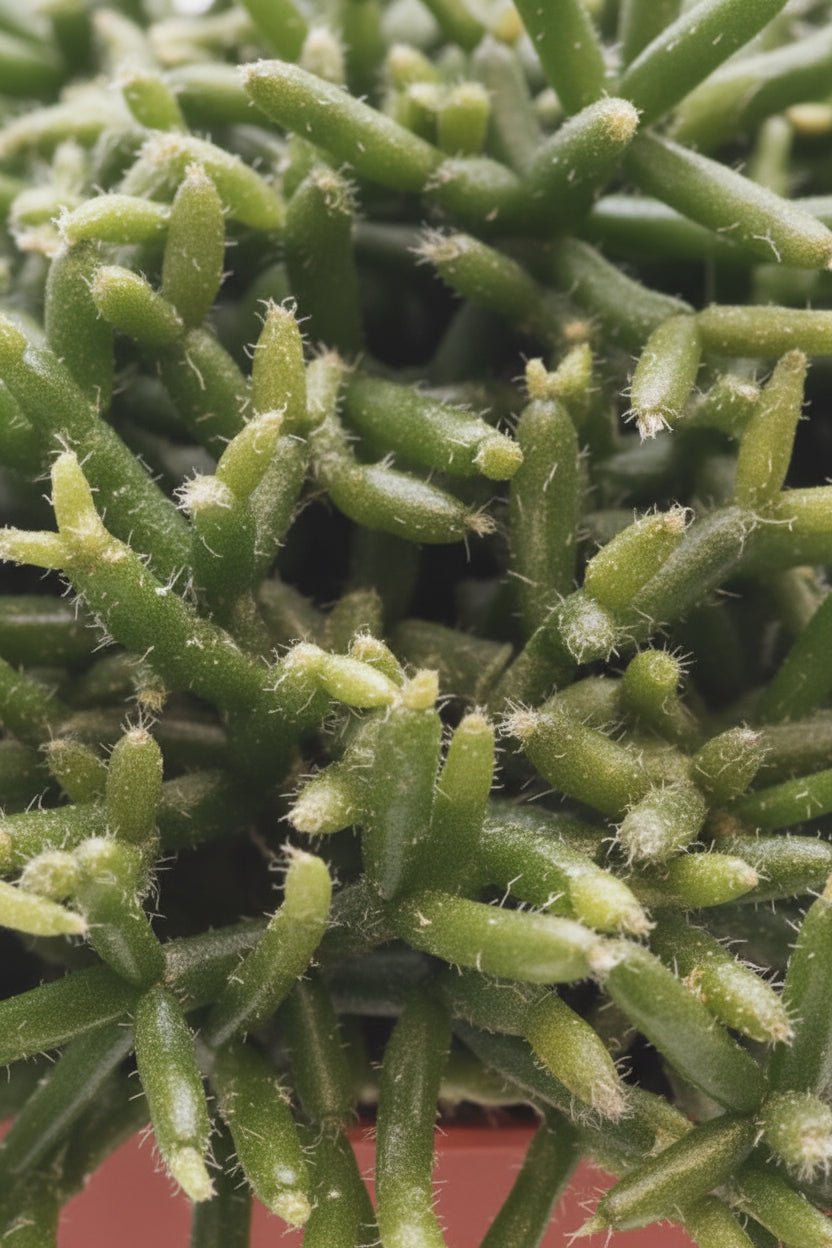 Rhipsalis burchellii (Gui Cactus) — H20 cm | Pot Ø12 cmRhipsalis burchellii (Gui Cactus) — H20 cm | Pot Ø12 cm
- Regular price
-
€26,95 - Regular price
-
- Sale price
-
€26,95
Quick view
-

 Rhipsalis 'Red Coral' (Coral cactus) — H25 cm | Pot Ø17 cmRhipsalis 'Red Coral' (Coral cactus) — H25 cm | Pot Ø17 cm
- Regular price
-
€43,95 - Regular price
-
- Sale price
-
€43,95
Quick view


Rhipsalis – The Spineless Cactus That Loves Indoors
The Rhipsalis, nicknamed "mistletoe cactus" or "coral cactus," is a tropical forest cactus that has nothing in common with its desert cousins. Spineless, trailing, and very graphic, it thrives indoors in filtered light — where most cacti give up. A sculptural, original, and truly easy-to-care-for plant.
A Cactus That Really Loves Shade
Native to the tropical forests of South America where it grows as an epiphyte on trees, Rhipsalis has adapted to much lower light conditions than its desert relatives. It prefers partial shade, away from direct rays that would burn its delicate stems. It’s one of the few succulents that can be placed far from a window. Discover all our low-light plants for other species suited to darker spaces.
Perfect for Hanging
Its long trailing stems make it a perfect plant for hanging baskets or high shelves. The threadlike or flattened foliage depending on the species creates a very natural and graphic effect, somewhere between a tropical plant and a living sculpture. It pairs perfectly with our hanging and trailing plants to bring greenery to elevated spaces.
Care Tips
- 🌥️ Light: indirect light to partial shade — avoid direct sunlight
- 💧 Watering: moderate, let the soil dry out between waterings — more frequent than a desert cactus
- 💦 Humidity: enjoys a slightly humid atmosphere, mist occasionally
- 🌡️ Temperature: between 15 and 25 °C, protected from cold and drafts
- 🪴 Soil: mix of universal potting soil and sand or perlite for good drainage
Frequently Asked Questions
Is Rhipsalis really a cactus?
Yes, Rhipsalis belongs to the Cactaceae family, but it’s a forest epiphytic cactus, very different from desert cacti. It has no spines, tolerates partial shade, and needs more water than its cousins. Explore all our cacti and succulents to discover other unique species.
Why are my Rhipsalis stems softening?
Either too much water (root rot) or too much direct sunlight dehydrating the stems. Adjust watering and location. Our guide never overwater again will help you find the right balance.
Is Rhipsalis toxic to pets?
No, Rhipsalis is considered non-toxic to cats and dogs — a real advantage for homes with pets. Check out all our pet-friendly indoor plants for other safe species.
Also to Explore
Rhipsalis is part of our Cacti & succulents collection. Also discover our hanging and trailing plants, our low-light plants, and our selection of decorative pots and pots to showcase it.