



Drosera Capensis (Cape Sundew) H17 cm | Pot Ø12 cm
- Regular price
-
€28,95 - Regular price
-
- Sale price
-
€28,95
Couldn't load pickup availability
Frequently Asked Questions
Should a Drosera Capensis be fed artificially? No, let it naturally catch the small insects in its environment — manually stimulating the tentacles without an insect wastes the plant's energy.
Why is my Drosera losing its pink colors and droplets? It’s almost always due to a lack of direct light — move it to a south-facing windowsill with at least 4 to 6 hours of sunlight per day to restore vibrant colors.
SHIPPING & PACKAGING
Shipping within 24/48 hours via DPD
- Delivery in 2 to 5 business days
- Eco-friendly packaging: recyclable boxes and biodegradable materials
- Special protection to ensure the plant arrives in perfect condition
- Parcel tracking sent by email as soon as shipped
- Free delivery on orders over €50
48H QUALITY GUARANTEE
We guarantee that your plants will arrive in perfect condition. If your plant arrives damaged or in poor condition:
- Contact us within 48 hours at hello@verdeia.eu with photos
- Free replacement or full refund
- No return necessary – we trust you
The guarantee covers: damage related to transport, severely weakened plant upon arrival, preparation errors.
CARE TIPS UPON ARRIVAL
To help your plant settle in for the long term:
- Unpack immediately and inspect your plant
- Let it acclimatize 24-48h in a bright spot without direct sunlight
- Check soil moisture before watering (dry surface = light watering)
- Wait 2-3 weeks before repotting
- Avoid heat sources and drafts
- Gently wipe leaves to remove dust
Need help? Contact our team at hello@verdeia.eu or via chat.
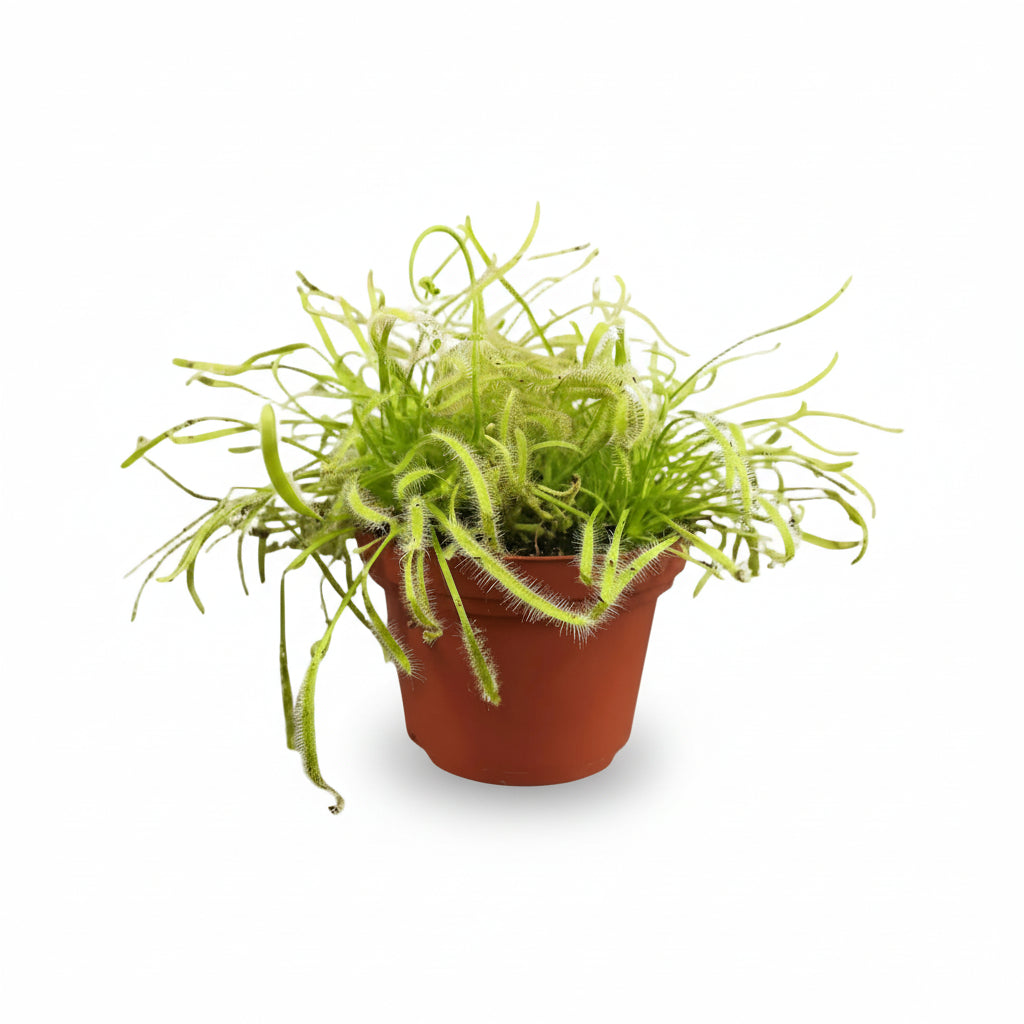
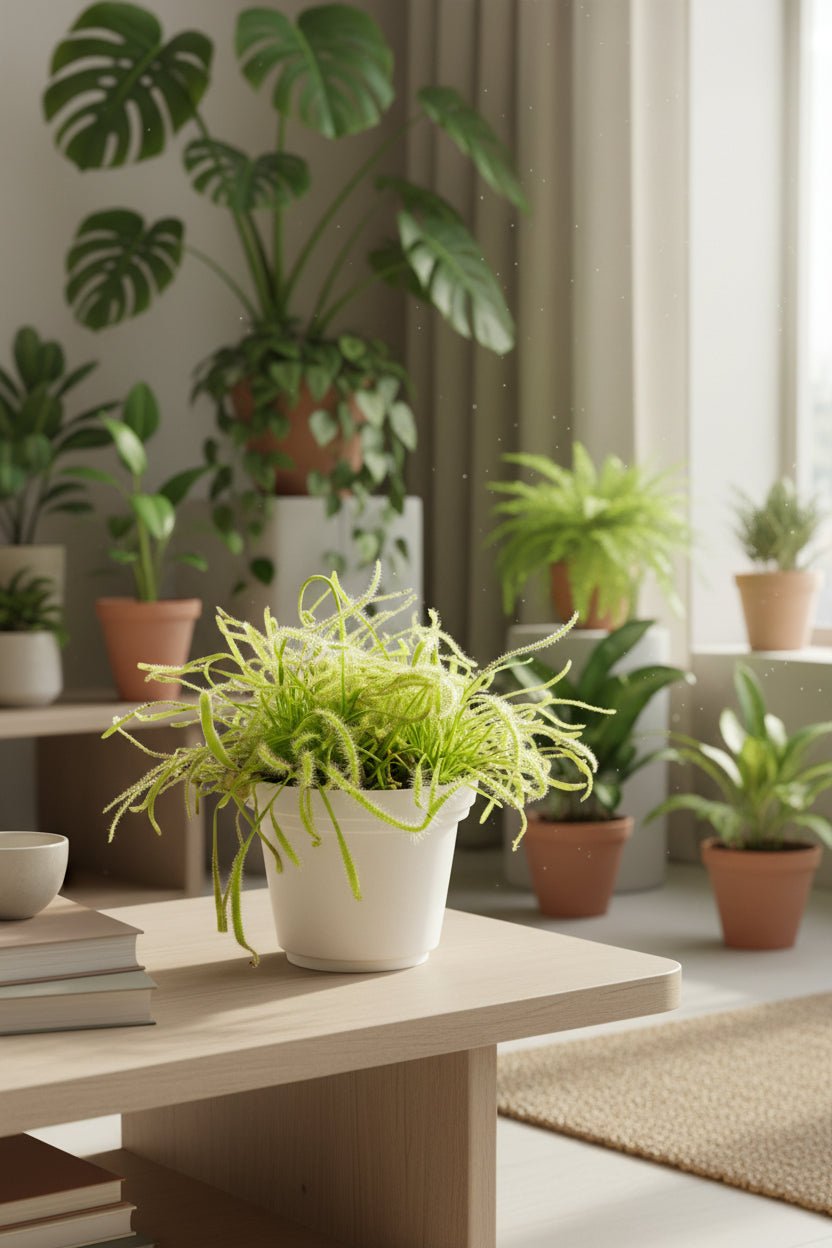

🌸 Pinkish foliage with sparkling droplets • ☀️ Direct sunlight • 💧 Constantly moist substrate • 🦟 Insectivorous carnivorous plant • 🐾 Non-toxic • 📏 H17 cm | Pot Ø12 cm
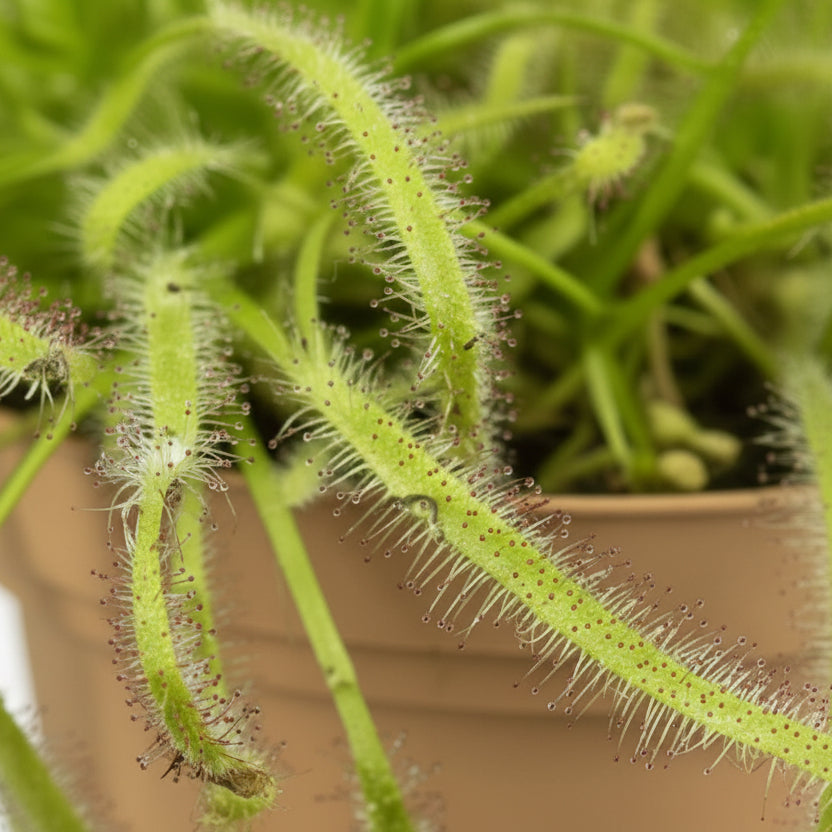
The Drosera Capensis, also called Cape Sundew, is a fascinating carnivorous plant with long narrow leaves covered in reddish tentacles ending in sticky droplets that sparkle like dew pearls. Its capture mechanism — the tentacles slowly close around trapped insects — makes it a living botanical curiosity as well as a decorative plant.
Native to the humid regions of South Africa, it is one of the easiest Droseras to grow indoors — an excellent entry point into the world of carnivorous plants for those starting with these unusual species.
Which carnivorous plant to choose?
Each carnivorous plant has its own capture mechanism and requirements. Here’s how the Drosera Capensis fits into our range:
- Drosera Capensis (this plant) — sticky tentacles, adhesive trapping, H17 cm. The easiest and most spectacular in bright light.
- Drosera Aliciae — compact rosette with red droplets, H12 cm. The most compact of the family.
- Dionaea Muscipula — active jaw traps, the most iconic. The most spectacular to watch.
- Sarracenia Maroon — purple pitchers, passive trapping, H23 cm. The most graphic and colorful.
- Sarracenia Catesbaei — green and red bicolor pitchers, H23 cm. The most elegant pitcher.
- Nepenthes Alata — tropical hanging pitchers, H17 cm. The most exotic and trailing.
To understand the differences between capture mechanisms and choose the carnivorous plant that suits you, check out our complete guide to carnivorous plants.
Exposure & placement
The Drosera Capensis has radically different light needs compared to classic tropical plants: it requires direct and abundant sunlight to produce its droplets and maintain its pinkish colors. Without sufficient light, the tentacles lose their shine and the plant weakens quickly.
- Ideal exposure: direct sun — south or southeast-facing windowsill, minimum 4 to 6 hours per day.
- Tolerates: a few hours of shade, veranda or greenhouse in summer.
- Avoid: insufficient indirect light that fades foliage and reduces droplet production.
- Temperature: 15–30 °C during growth; tolerates 5–10 °C during winter dormancy.
- Substrate: poor and acidic — mix of blonde peat and sand or perlite, without classic potting soil or fertilizer.
Each plant is unique: the intensity of pink hues and the density of droplets naturally vary depending on the light received and the season.
Watering & maintenance
Watering Drosera follows very different rules from classic houseplants — two absolute imperatives: only demineralized water, and substrate never dry. To learn more about the impact of water and humidity on your plants, check out our analysis on light and humidity balance indoors. And if you just received your plant, our guide on how to properly welcome a new plant will help you start off on the right foot.
- Water: exclusively demineralized, rain, or osmosis water — hard tap water is toxic to carnivores.
- Method: bottom watering — keep 1 to 2 cm of water in the decorative pot at all times.
- Substrate: constantly moist, never dry.
- Fertilizer: none — Drosera feeds on insects, fertilizer burns its roots.
- Feeding: let it naturally catch insects — no intervention needed.
Each plant is unique: the frequency of replenishing the decorative pot naturally varies depending on ambient temperature and season.
Decor ideas & plant pairings
The Drosera Capensis is primarily a collector's plant — its decorative value lies in the close-up observation of its sparkling droplets and trapping mechanisms. It presents itself differently from classic tropical plants.
- On a sunny windowsill: group it with a Dionaea Muscipula and a Sarracenia Maroon for a complete carnivorous collection — the three different trapping mechanisms make the set fascinating to watch.
- In an open terrarium: pair it with a Drosera Aliciae in a rosette composition — both species share the same water and light requirements.
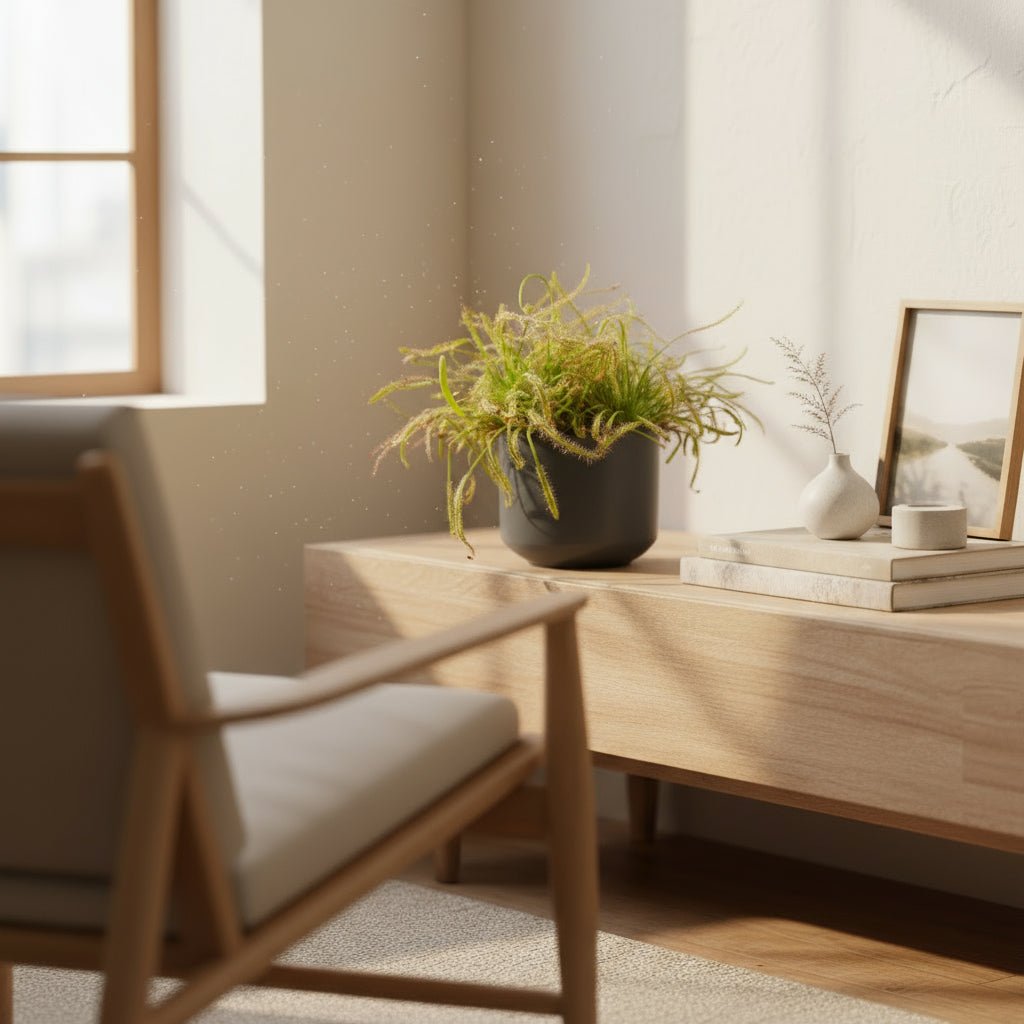
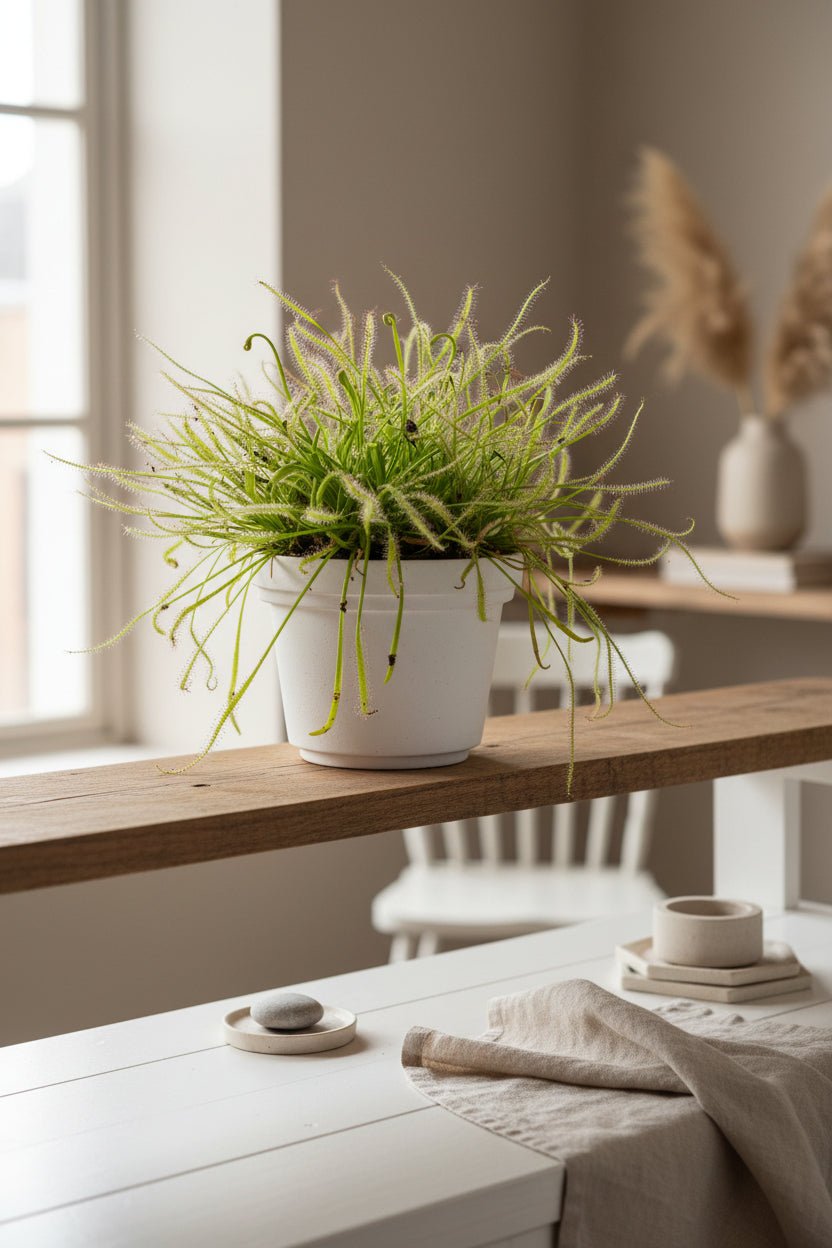
- As a curiosity on a bright desk: its compact H17 cm size fits easily on a windowsill; place it in a Lago cream decorative pot whose neutral shade highlights the pink of the foliage without competing with it.
- In a themed collection: explore our entire range of carnivorous plants to create a space dedicated to insectivorous species — a windowsill, a bright shelf, or a mini greenhouse.
Verdeia tips
- Do not manually stimulate the tentacles: triggering the capture mechanism without an insect costs the plant energy — let it capture naturally and avoid touching the tentacles out of curiosity.
- Prepare water in advance: keep a container of rainwater or demineralized water handy to keep the saucer supplied without interruption — even a brief water supply break stresses the plant.
- Remove dead leaves regularly: leaves that have completed their cycle naturally blacken — remove them at the base to maintain a clean silhouette and prevent mold development in a constantly moist substrate.
Technical characteristics
- Botanical name: Drosera capensis
- Common name: Cape Sundew
- Family: Droseraceae
- Origin: South Africa
- Dimensions: H17 cm | Pot Ø12 cm
- Adult size: up to 20–25 cm
- Exposure: direct sunlight, minimum 4 to 6 hours per day
- Watering: substrate constantly moist, demineralized water only, saucer always supplied
- Care: easy
- Growth: fast
- Toxicity: non-toxic
- Decorative style: Botanical curiosity / Collection / Educational
- Feature: sticky tentacles with sparkling droplets, active insect capture by adhesive trapping
Each plant is unique: the photos show a representative example. The intensity of the pink hues and the density of the droplets naturally vary depending on the light and season.

Your plant, delivered with care
Every plant is hand-packed in a box specially designed for plants — secured, protected, ready to travel. It arrives in perfect condition, roots intact and foliage preserved, ready to take its place in your home.
Our Verdeia commitments
FAQ – Everything to know before adopting your Verdeia plant
How are my plants prepared before shipping?
All our plants are selected from our European partner nurseries. Before shipping, they are watered, cleaned, and protected with breathable, secure packaging. Each package is designed to ensure your plant arrives in perfect health, without any transport-related stress.
Will the plant look exactly like the photo?
The photos accurately represent the variety and the stated size. Since each plant is unique, slight differences in shape, foliage, or color may occur — and that’s part of their charm.
What are the delivery times and conditions?
Shipping is done within 48 business hours, with tracked delivery within 2 to 5 business days. Delivery costs €5.60 — free for orders over €50. You will receive a tracking link as soon as the package is shipped.
What to do upon receiving my plant?
Open your package as soon as you receive it and carefully remove the plant from its packaging. Let it acclimate for 24 hours in its new environment before watering. If it has been slightly stressed during transport, it will recover its shape after one or two days in the light.
What to do if my plant arrives damaged?
Contact us within 48 hours with a photo of the issue. Our team will assess the situation and offer you the best solution: replacement, partial refund, or recovery advice.
Can I return a plant?
Since plants are living beings, standard returns are not possible. However, we guarantee good health upon delivery: if the plant arrives damaged, it will be replaced free of charge. For any other cases (order error, decorative pot, accessory), returns are possible within 14 days.