



Hylocereus undatus (Dragon fruit cactus) — H15 cm | Pot Ø11 cm
- Regular price
-
€25,95 - Regular price
-
- Sale price
-
€25,95
Couldn't load pickup availability
Frequently asked questions
Are the dragon fruits produced by Hylocereus undatus edible? Yes, the fruits produced by Hylocereus undatus are the true dragon fruits (pitaya) — their white flesh dotted with black seeds is sweet and refreshing, although fruiting in indoor pots remains rare.
Can a Hylocereus undatus be placed on the balcony in summer? Yes, it enjoys warmth and direct summer sun — introduce it gradually to avoid leaf burns and bring it inside before the first cool nights below 10 °C.
Shipping & packaging
Shipped within 24/48 hours via DPD
- Delivery in 2 to 5 working days
- Eco-friendly packaging: recyclable boxes and biodegradable materials
- Special protection so your plant arrives in perfect condition
- Tracking link sent by email as soon as your parcel ships
- Shipping costs and the free-shipping threshold depend on your country — see our delivery page
ZEN ARRIVAL GUARANTEE
We guarantee that your plants will arrive in perfect condition. If your plant arrives damaged or in poor condition:
- Contact us promptly at hello@verdeia.eu with photos
- We will find the right solution for your situation
- No return needed — we trust you
The guarantee covers: damage in transit, plants severely weakened on arrival, and order preparation errors.
CARE TIPS ON ARRIVAL
To help your plant settle in for the long term:
- Unpack your plant immediately and inspect it
- Let it acclimatize for 24-48h in a bright spot out of direct sunlight
- Check the soil moisture before watering (dry surface = light watering)
- Wait 2-3 weeks before repotting, if needed
- Keep it away from heat sources and drafts
- Gently wipe the leaves to remove dust
Need help? Contact our team at hello@verdeia.eu or via chat.
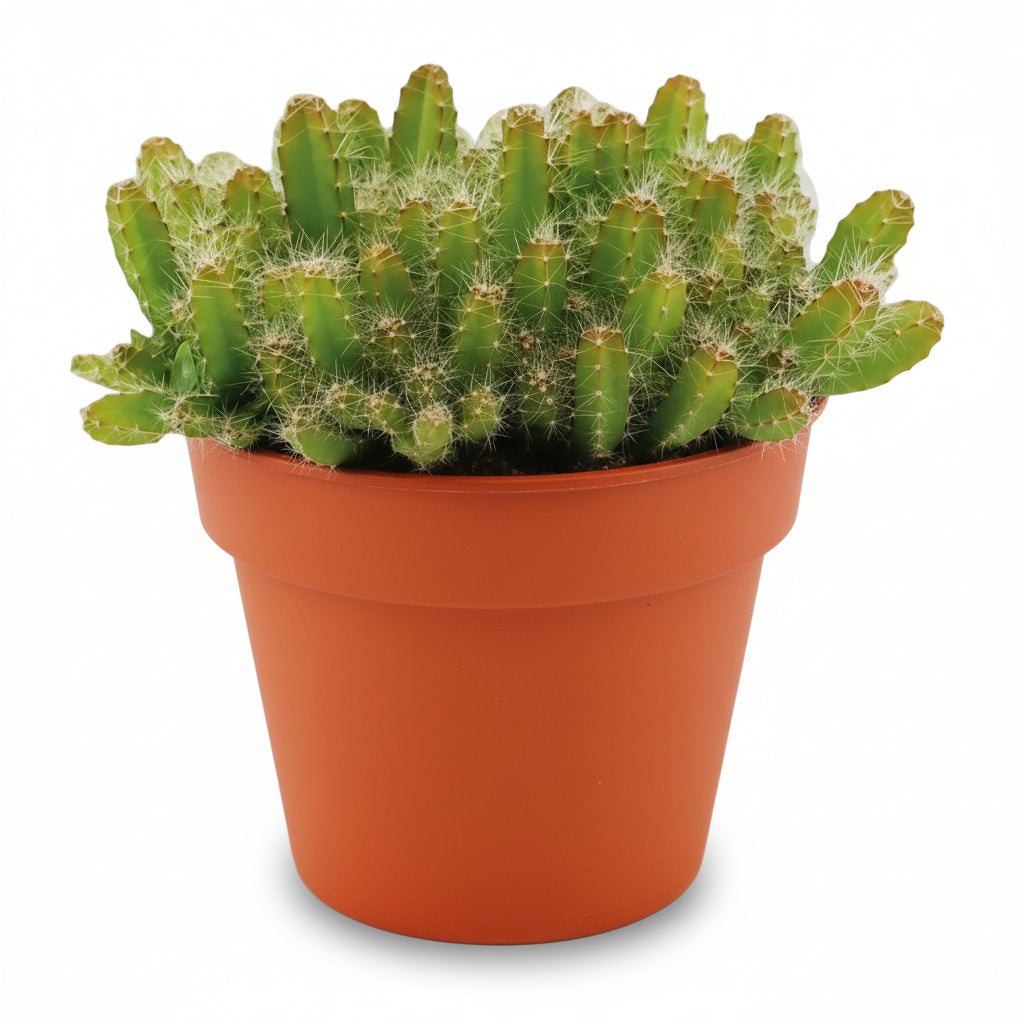
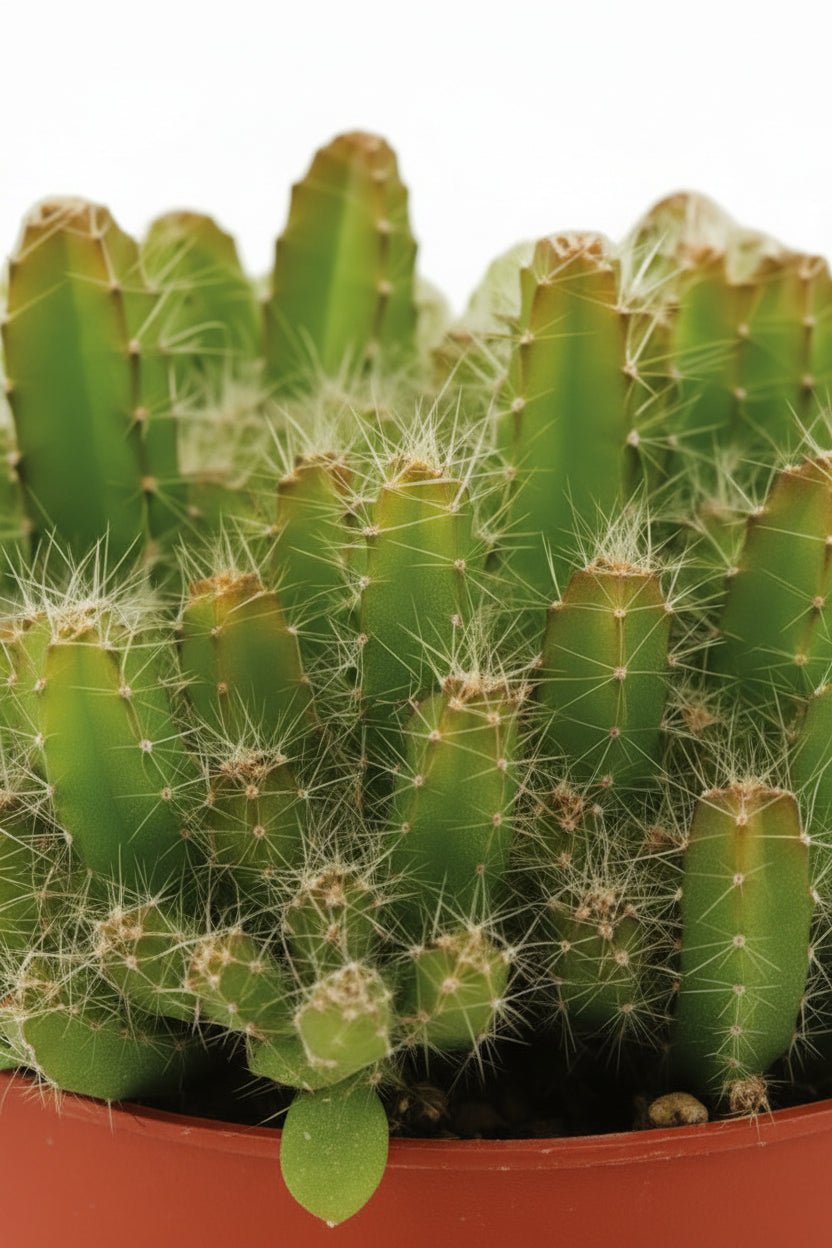


🌵 Architectural triangular stems • ☀️ Bright light to direct sun • 💧 Very little watering • 🌸 Spectacular nocturnal flowering • 🐾 Non-toxic
Native to the tropical forests of Central America and Mexico, Hylocereus undatus is an epiphytic cactus that naturally climbs trees in the canopy. Its fleshy, bright green triangular stems, with wavy and slightly spiny edges, form an immediately recognisable architectural silhouette — that of the famous dragon fruit cactus, or pitaya. Pair it with other cacti and succulents and unusual and rare plants.
On a mature plant grown in good conditions, it can produce enormous nocturnal white flowers measuring 25 to 30 cm — among the most spectacular in the plant kingdom — followed by edible exotic fruit. At this compact stage (H15 cm | Pot Ø11 cm), it is above all a graphic, easy-care plant with remarkable long-term potential.
Which cactus should you choose?
Our catalogue offers several cacti with very different silhouettes — here is how to place Hylocereus undatus among them:
- Hylocereus undatus (this plant) — climbing or trailing triangular stems, giant nocturnal flowers, edible fruit (H15 cm | Pot Ø11 cm). The most spectacular cactus at maturity.
- Opuntia rubescens Consolea — stacked flat pads, an upright architectural habit, prominent spines. The most sculptural and imposing version.
- Epiphyllum anguliger — flat stems cut into zigzag shapes, a very graphic trailing habit, fragrant nocturnal flowers. The most original trailing version.
- Rhipsalis 'Red Coral' — flat, segmented soft green stems with coppery pink tips, a very decorative trailing habit. The most delicate trailing version.
- Mix of 6 assorted cacti — six different varieties for a varied arrangement. The ideal version for starting a collection.
Light & placement
Native to bright tropical regions, Hylocereus undatus needs bright light to maintain compact, vigorous stems. In the shade, the stems become leggy and lose their characteristic thickness — this is one of the most common mistakes with indoor cacti.
- Light: bright direct or intense indirect light — a few hours of direct sun are beneficial.
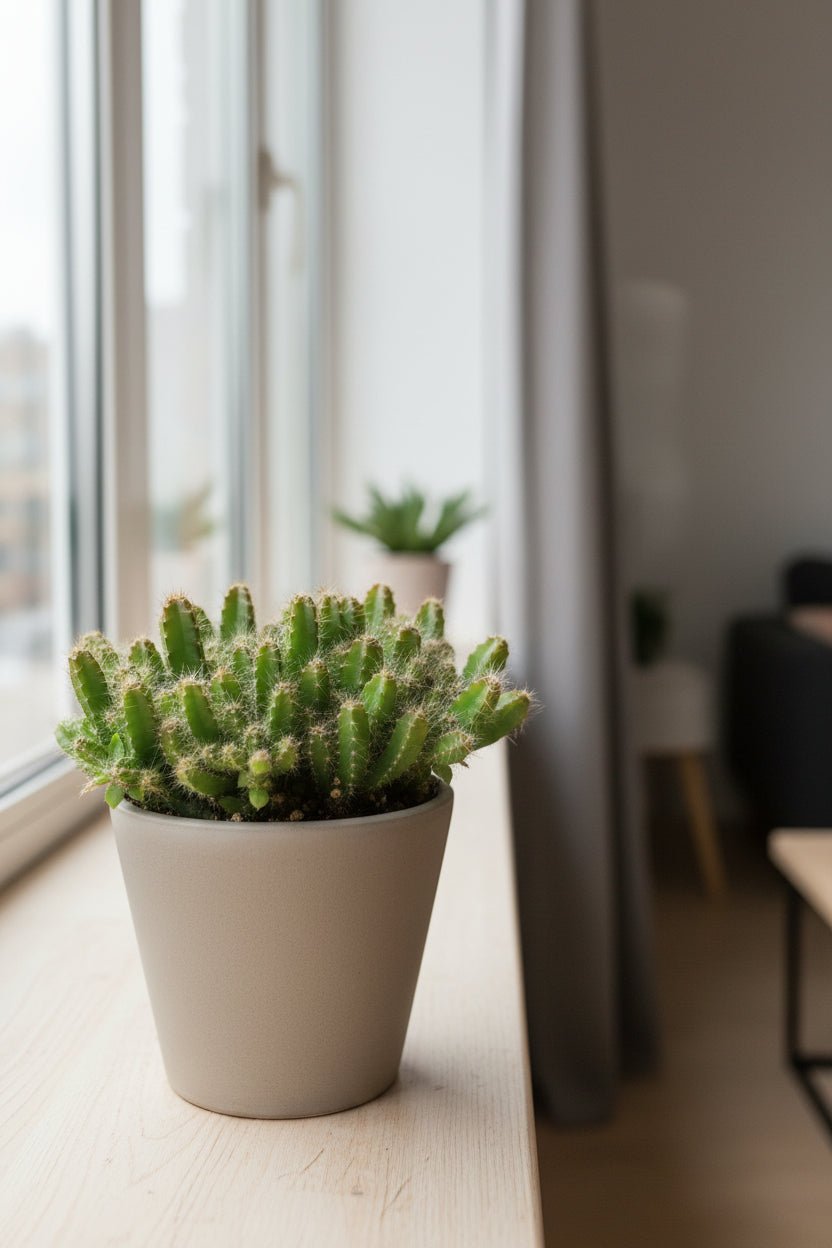
- Ideal: a sunny south-facing windowsill, bright conservatory or balcony during the warm season.
- Temperature: 18 to 30 °C — tolerates heat but is sensitive to frost.
- Substrate: very well-draining — special cactus mix (cactus soil, perlite, sand).
Watering & care
Like all cacti, Hylocereus undatus stores its reserves in its fleshy stems and prefers dry conditions to persistent moisture. The absolute rule: let the substrate dry out completely before watering — stem rot is irreversible and develops quickly in case of excess water.
- Watering: very little — let the substrate dry out completely between waterings.
- Frequency: every 2 to 3 weeks in spring and summer, once a month in winter.
- Drainage: essential — a pot with drainage holes and very well-draining substrate.
- Humidity: tolerates dry air — no misting needed.
- Fertiliser: once a month in spring and summer, using diluted liquid fertiliser specially formulated for cacti.
- Winter rest: reduce watering considerably in autumn and winter to respect its natural dormancy.
Decorating ideas & plant pairings
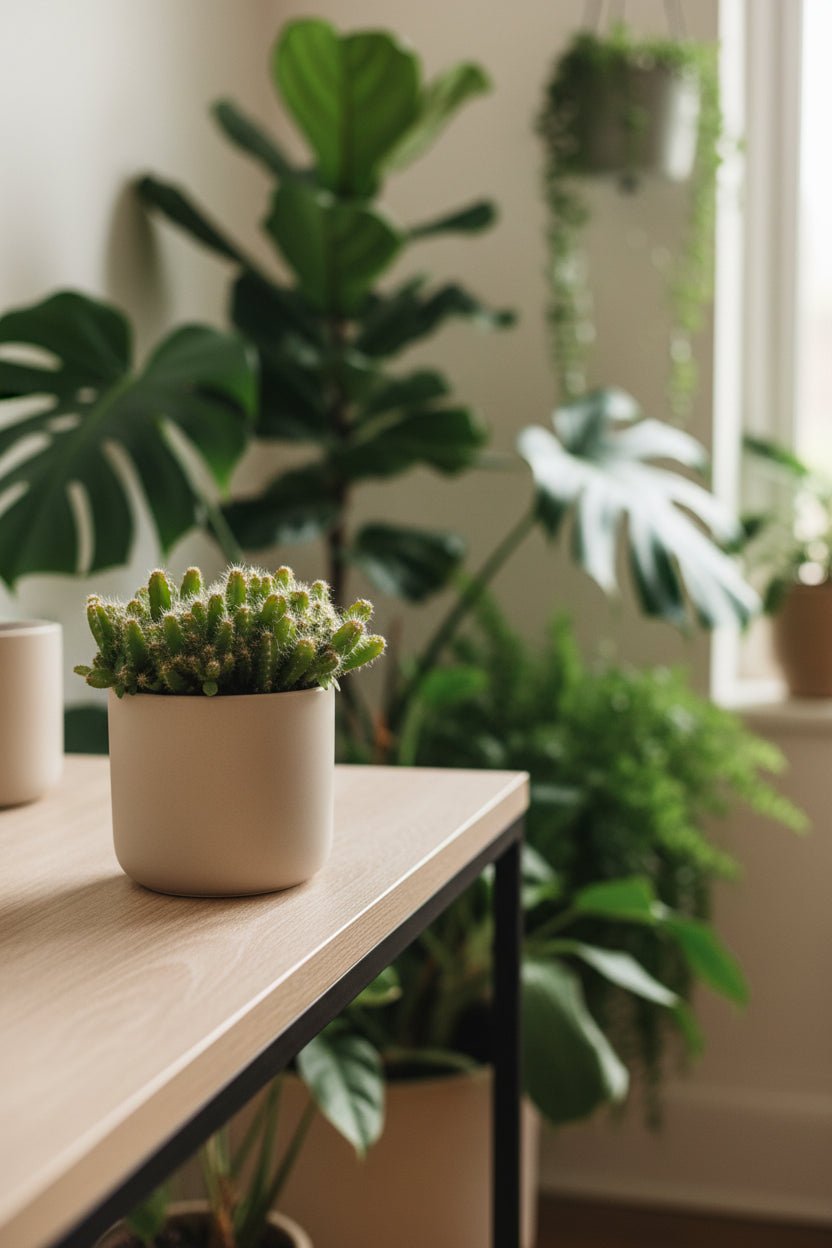
- Cactus arrangement: pair it with an Opuntia Consolea for the contrast between flat pads and triangular stems, and with a trailing Epiphyllum anguliger — three radically different silhouettes in the same graphic green palette.
- Succulent duo: our Aloe Spider & Hylocereus duo is already arranged and ready to display — a simple way to bring this cactus into your home without the effort of creating a composition.
- With a support: guide its stems along a vertical support to create an architectural climbing silhouette — particularly striking on a tall window or wall shelf.
- Ideal pot: natural terracotta or a terracotta pot cover bag to extend the tropical, dry feel of the bright green foliage.
Verdeia tips
- Never water it if the substrate is still damp: stem rot is the only real risk — it is better to miss a watering than to give too much, especially in winter, when monthly watering is more than enough.
- Place it in the brightest spot in your home: thick, compact and richly coloured stems are a sign of sufficient light — thin, pale stems indicate a lack of light.
- Handle it with care: its spines are discreet but present — wear gloves when repotting every 2 to 3 years in spring, using fresh, very well-draining substrate.
Technical specifications
- Botanical name: Hylocereus undatus
- Common name: Dragon fruit cactus, Pitaya
- Origin: tropical forests of Central America and Mexico
- Size on delivery: H15 cm | Pot Ø11 cm
- Mature size: up to 3–6 m long (climbing or trailing)
- Light: bright direct or intense indirect light
- Watering: very little — let dry out completely between waterings
- Substrate acidity: pH 6.0–7.0
- Care: very easy — ideal for beginners
- Toxicity: non-toxic to animals and children
- Decorative style: graphic / modern / exotic
Every plant is unique: the shape and number of stems naturally vary according to age and growing conditions — the silhouette evolves as it grows.

Your plant, delivered with care
Every plant is hand-packed in a box specially designed for plants — secured, protected, ready to travel. It arrives in perfect condition, roots intact and foliage preserved, ready to take its place in your home.
Our Verdeia commitments
FAQ – Everything to know before adopting your Verdeia plant
How are my plants prepared before shipping?
All our plants are selected from our European partner nurseries. Before shipping, they are watered, cleaned, and protected with breathable, secure packaging. Each package is designed to ensure your plant arrives in perfect health, without any transport-related stress.
Will the plant look exactly like the photo?
The photos accurately represent the variety and the stated size. Since each plant is unique, slight differences in shape, foliage, or color may occur — and that’s part of their charm.
What are the delivery times and conditions?
Orders ship within 48 working hours, with tracked delivery in 2 to 5 working days via DPD. Shipping costs and the free-shipping threshold depend on your country — see our delivery page. You receive a tracking link as soon as your parcel leaves.
What should I do when my plant arrives?
Open your package as soon as you receive it and carefully remove the plant from its packaging. Let it acclimate for 24 hours in its new environment before watering. If it has been slightly stressed during transport, it will recover its shape after one or two days in the light.
What should I do if my plant arrives damaged?
Contact us within 48 hours with a photo of the issue. Our team will assess the situation and offer you the best solution: replacement, partial refund, or recovery advice.
Can I return a plant?
Since plants are living beings, standard returns are not possible. However, we guarantee good health upon delivery: if the plant arrives damaged, it will be replaced free of charge. For any other cases (order error, decorative pot, accessory), returns are possible within 14 days.