



Parthenocissus tricuspidata (Boston ivy) - H65 cm | Pot Ø15 cm
- Regular price
-
€29,95 - Regular price
-
- Sale price
-
€29,95
Couldn't load pickup availability
Frequently asked questions
Why does Boston ivy lose its leaves in winter? It is a deciduous plant — it goes into complete dormancy in winter after the autumn display. Leaf loss is normal and expected. The stems remain alive, and the plant will vigorously regrow new leaves in spring. Don’t mistake it for a dead plant.
Does Boston ivy grow quickly? Yes, it is one of the most vigorous climbers — it can grow 1 to 2 meters per year under good conditions. Plan an annual pruning at the end of winter to control growth and prevent it from spreading onto gutters, shutters, or woodwork. This vigor is also its main advantage for quickly covering a large area.
Shipping & packaging
Shipped within 24/48 hours via DPD
- Delivery in 2 to 5 working days
- Eco-friendly packaging: recyclable boxes and biodegradable materials
- Special protection so your plant arrives in perfect condition
- Tracking link sent by email as soon as your parcel ships
- Shipping costs and the free-shipping threshold depend on your country — see our delivery page
ZEN ARRIVAL GUARANTEE
We guarantee that your plants will arrive in perfect condition. If your plant arrives damaged or in poor condition:
- Contact us promptly at hello@verdeia.eu with photos
- We will find the right solution for your situation
- No return needed — we trust you
The guarantee covers: damage in transit, plants severely weakened on arrival, and order preparation errors.
CARE TIPS ON ARRIVAL
To help your plant settle in for the long term:
- Unpack your plant immediately and inspect it
- Let it acclimatize for 24-48h in a bright spot out of direct sunlight
- Check the soil moisture before watering (dry surface = light watering)
- Wait 2-3 weeks before repotting, if needed
- Keep it away from heat sources and drafts
- Gently wipe the leaves to remove dust
Need help? Contact our team at hello@verdeia.eu or via chat.
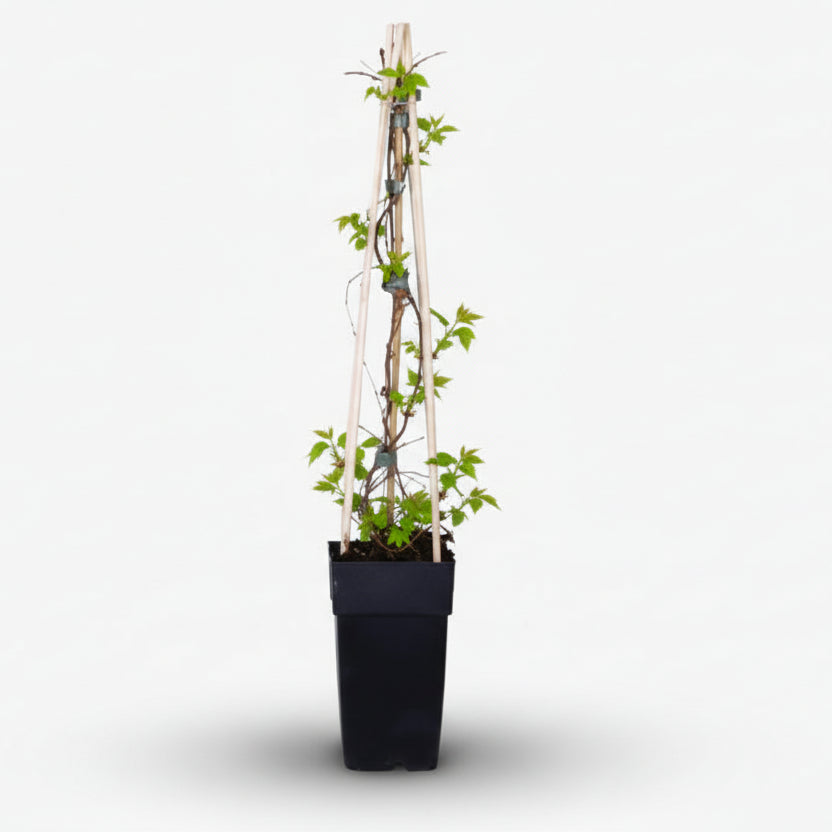
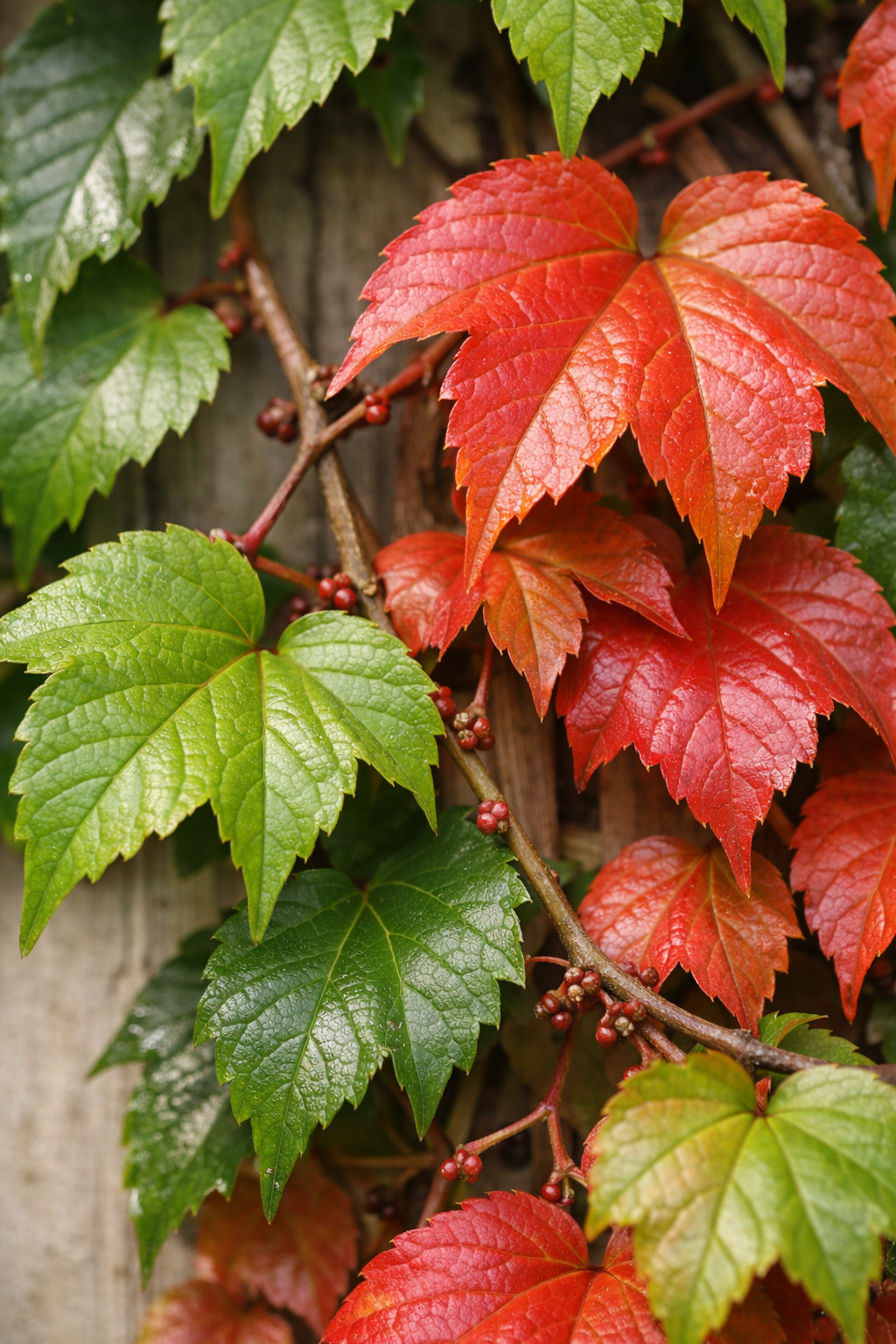

🌿 Spectacular trilobed foliage • 🍂 Red-orange autumn colors • ☀️ Sun to partial shade • 💧 Moderate watering • 📏 H65 cm | Pot Ø15 cm • ❄️ Ultra-hardy -20°C • 🧗 Self-clinging • 🐾 Non-toxic
The Parthenocissus tricuspidata, or Boston ivy, is a vigorous climbing plant native to East Asia. Its bright green trilobed foliage transforms into a spectacle of flamboyant reds and oranges in autumn. It clings to surfaces on its own thanks to its adhesive holdfasts — walls, pergolas, trellises, façades — without a support or fastening.
Very hardy, tolerant of pollution, and remarkably vigorous — it can cover several square meters in just a few seasons. A reliable choice among climbing plants. Non-toxic to animals.
Which Parthenocissus variety should you choose?
The four Parthenocissus varieties in our catalog stand out for their foliage and habit. Here are their profiles:
- Parthenocissus tricuspidata (this plant) — trilobed leaves, flamboyant red-orange autumn colors, adhesive holdfasts, H65 cm | Pot Ø15 cm. The most vigorous and spectacular in autumn.
- Parthenocissus henryana — palmate leaves with 5 leaflets and silver veins, purplish-red autumn colors. The most refined and decorative in every season.
- Parthenocissus quinquefolia 'Engelmannii' — compound leaves with 5 toothed leaflets, intense scarlet red in autumn. The most graphic.
- Parthenocissus Striata — small leaflets, compact trailing habit, ideal for hanging baskets. The only trailing version.
The tricuspidata is the most vigorous variety — if you want to cover a large area quickly, this is the one. For more decorative foliage in every season and more manageable growth, the Henryana is preferable.
Exposure & location
The Parthenocissus tricuspidata adapts to a wide range of exposures — but its autumn colors are directly linked to the amount of sunlight it receives.
- Ideal exposure: sun to partial shade — a south-, east-, or west-facing wall or support.
- Tolerates: partial shade and urban pollution — a valuable asset for city façades.
- Support: it clings on its own thanks to its adhesive pads on walls, concrete, brick, trellises, or pergolas. No stake or fastening is necessary.
- Hardiness: very hardy down to -20 °C — it can remain outdoors all year round.
- Substrate: rich and well-drained — universal potting soil with compost. Minimum pot size: 30–40 cm.
The sunnier the exposure, the more intense the autumn colors will be. In dense shade, the foliage remains green and the autumn transformation is less spectacular.
Watering & care
- Watering: moderate — keep the substrate moist without waterlogging it, especially during growth.
- Frequency: 1 to 2 times a week in spring and summer, much less in winter (the plant is dormant).
- Drainage: a drainage hole in the pot is essential.
- Fertilizer: liquid fertilizer for green plants, once a month in spring and summer.
- Pruning: at the end of winter to control its vigor and maintain the desired shape. The plant is deciduous — it loses its leaves in winter after its autumn display.
Boston ivy can become very dense quickly — plan for annual pruning to prevent it from spreading onto gutters, shutters, or window frames. The first few days matter: a few simple steps help you welcome a new plant.
Decor ideas & plant combinations
The Parthenocissus tricuspidata is a large-scale plant — think in terms of walls and façades rather than pots and shelves.
- As a green wall: trained against a façade wall, concrete section, or fence, it creates a dense green screen in summer and a flamboyant red-orange display in autumn.
- On a pergola or trellis: its adhesive pads cling to all types of support — wood, metal, PVC.
- Pairing: pair it with a Hedera helix ivy for a green wall that stays green all year round — the ivy takes over visually when the Boston ivy loses its leaves in winter.
Its adhesive discs leave marks on painted or coated surfaces when the plant is removed — plan for permanent use or use on bare surfaces such as brick or concrete.
Verdeia tips
- Plan for its vigorous growth — tricuspidata can cover 10 to 15 m in height when planted in the ground and several square meters in a pot. Plan for annual pruning from the first year to keep its growth under control before it becomes too established.
- The adhesive discs leave marks — once attached, they adhere strongly and leave marks on painted surfaces. Use it on permanent supports — brick, bare concrete, wooden trellises.
- Leaf drop in winter is normal — it is a deciduous plant. It loses all its foliage after the autumn display and grows back vigorously in spring. Do not mistake it for a dead plant.
- Highly tolerant of pollution — one of the few climbing plants to thrive in dense urban environments, even on façades exposed to exhaust fumes.
- 🐾 Non-toxic — Parthenocissus is safe for dogs and cats.
Technical specifications
- Botanical name: Parthenocissus tricuspidata 'Veitch Boskoop'
- Common names: Japanese ivy, Boston ivy, Japanese creeper
- Family: Vitaceae
- Origin: East Asia (China, Japan, Korea)
- Pot diameter: 15 cm
- Height on delivery: 65 cm
- Mature size: up to 10–15 m (very vigorous climbing plant)
- Exposure: sun to partial shade — tolerates partial shade
- Watering: moderate — keep the substrate moist during growth
- Hardiness: very hardy down to -20 °C
- Foliage: deciduous — red-orange autumn display
- Clinging: adhesive discs — no support required
- Care: easy (annual pruning recommended)
- Toxicity to animals: non-toxic
- Decorative style: Green wall / Climbing / Seasonal spectacle
- Special feature: trilobed foliage, flamboyant autumn colors, self-clinging, very vigorous, very hardy
Each plant is unique: the photos show a representative example. The intensity of the autumn colors varies depending on exposure and weather conditions.

Your plant, delivered with care
Every plant is hand-packed in a box specially designed for plants — secured, protected, ready to travel. It arrives in perfect condition, roots intact and foliage preserved, ready to take its place in your home.
Our Verdeia commitments
FAQ – Everything to know before adopting your Verdeia plant
How are my plants prepared before shipping?
All our plants are selected from our European partner nurseries. Before shipping, they are watered, cleaned, and protected with breathable, secure packaging. Each package is designed to ensure your plant arrives in perfect health, without any transport-related stress.
Will the plant look exactly like the photo?
The photos accurately represent the variety and the stated size. Since each plant is unique, slight differences in shape, foliage, or color may occur — and that’s part of their charm.
What are the delivery times and conditions?
Orders ship within 48 working hours, with tracked delivery in 2 to 5 working days via DPD. Shipping costs and the free-shipping threshold depend on your country — see our delivery page. You receive a tracking link as soon as your parcel leaves.
What should I do when my plant arrives?
Open your package as soon as you receive it and carefully remove the plant from its packaging. Let it acclimate for 24 hours in its new environment before watering. If it has been slightly stressed during transport, it will recover its shape after one or two days in the light.
What should I do if my plant arrives damaged?
Contact us within 48 hours with a photo of the issue. Our team will assess the situation and offer you the best solution: replacement, partial refund, or recovery advice.
Can I return a plant?
Since plants are living beings, standard returns are not possible. However, we guarantee good health upon delivery: if the plant arrives damaged, it will be replaced free of charge. For any other cases (order error, decorative pot, accessory), returns are possible within 14 days.