



Euphorbia acrurensis (Cowboy Cactus)
- Regular price
-
€38,95 - Regular price
-
- Sale price
-
€38,95
Couldn't load pickup availability
Frequently Asked Questions
What’s the difference between an Euphorbia and a true cactus? Euphorbias are not cacti despite their similar appearance — they belong to the Euphorbiaceae family and are distinguished by their irritating milky sap, which true cacti do not have.
How often should you repot an Euphorbia acrurensis? Every 2 to 3 years in spring, into a slightly larger pot with a special, very well-draining cactus substrate — wear gloves to avoid any contact with the irritating sap.
SHIPPING & PACKAGING
Shipping within 24/48 hours via DPD
- Delivery in 2 to 5 business days
- Eco-friendly packaging: recyclable boxes and biodegradable materials
- Special protection to ensure the plant arrives in perfect condition
- Parcel tracking sent by email as soon as shipped
- Free delivery on orders over €50
48H QUALITY GUARANTEE
We guarantee that your plants will arrive in perfect condition. If your plant arrives damaged or in poor condition:
- Contact us within 48 hours at hello@verdeia.eu with photos
- Free replacement or full refund
- No return necessary – we trust you
The guarantee covers: damage related to transport, severely weakened plant upon arrival, preparation errors.
CARE TIPS UPON ARRIVAL
To help your plant settle in for the long term:
- Unpack immediately and inspect your plant
- Let it acclimatize 24-48h in a bright spot without direct sunlight
- Check soil moisture before watering (dry surface = light watering)
- Wait 2-3 weeks before repotting
- Avoid heat sources and drafts
- Gently wipe leaves to remove dust
Need help? Contact our team at hello@verdeia.eu or via chat.


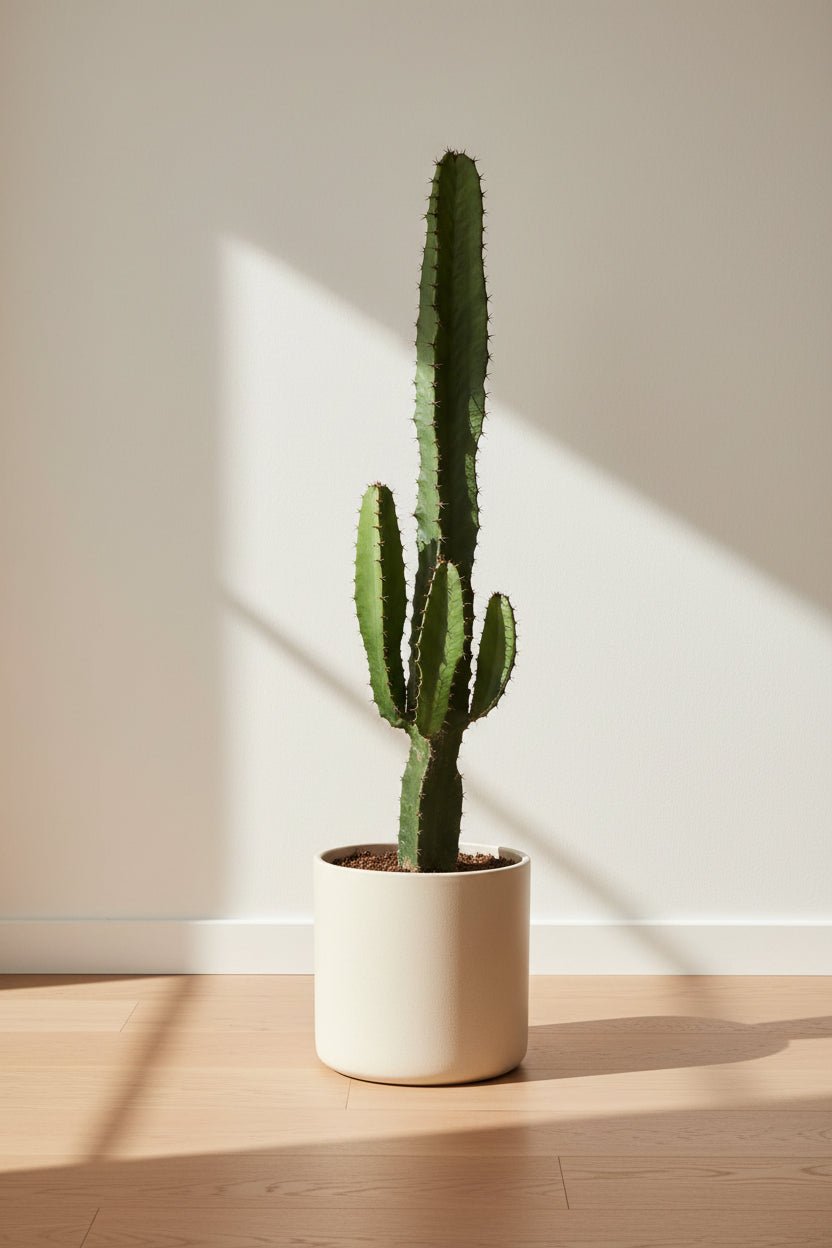

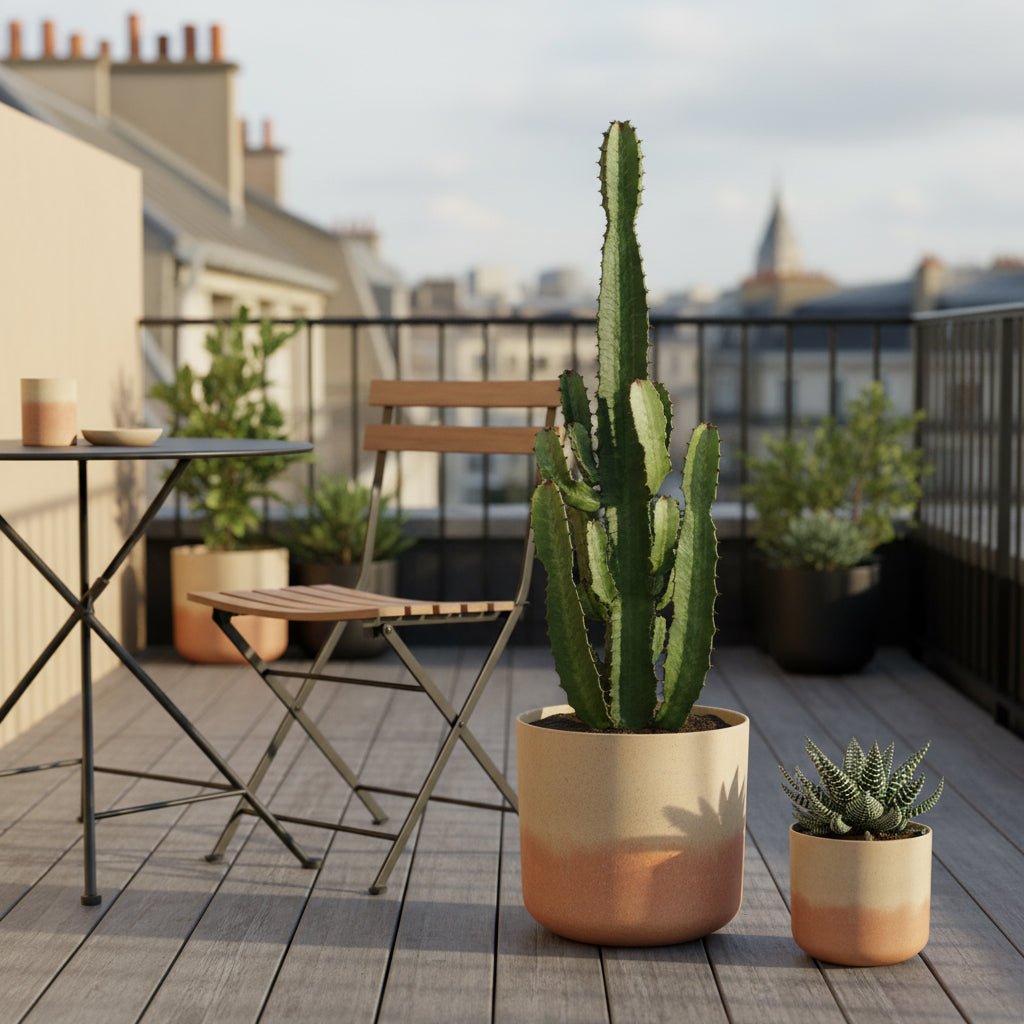
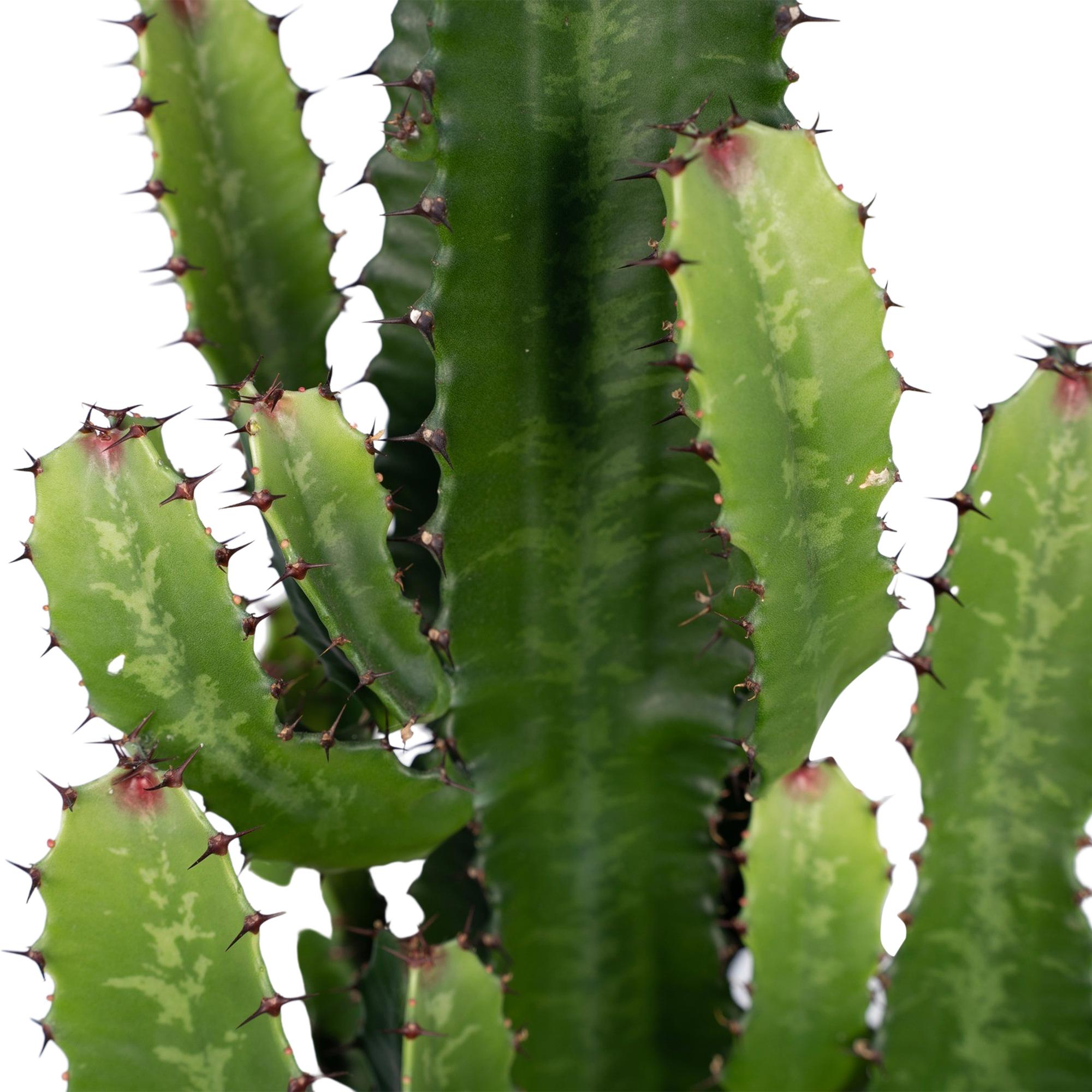
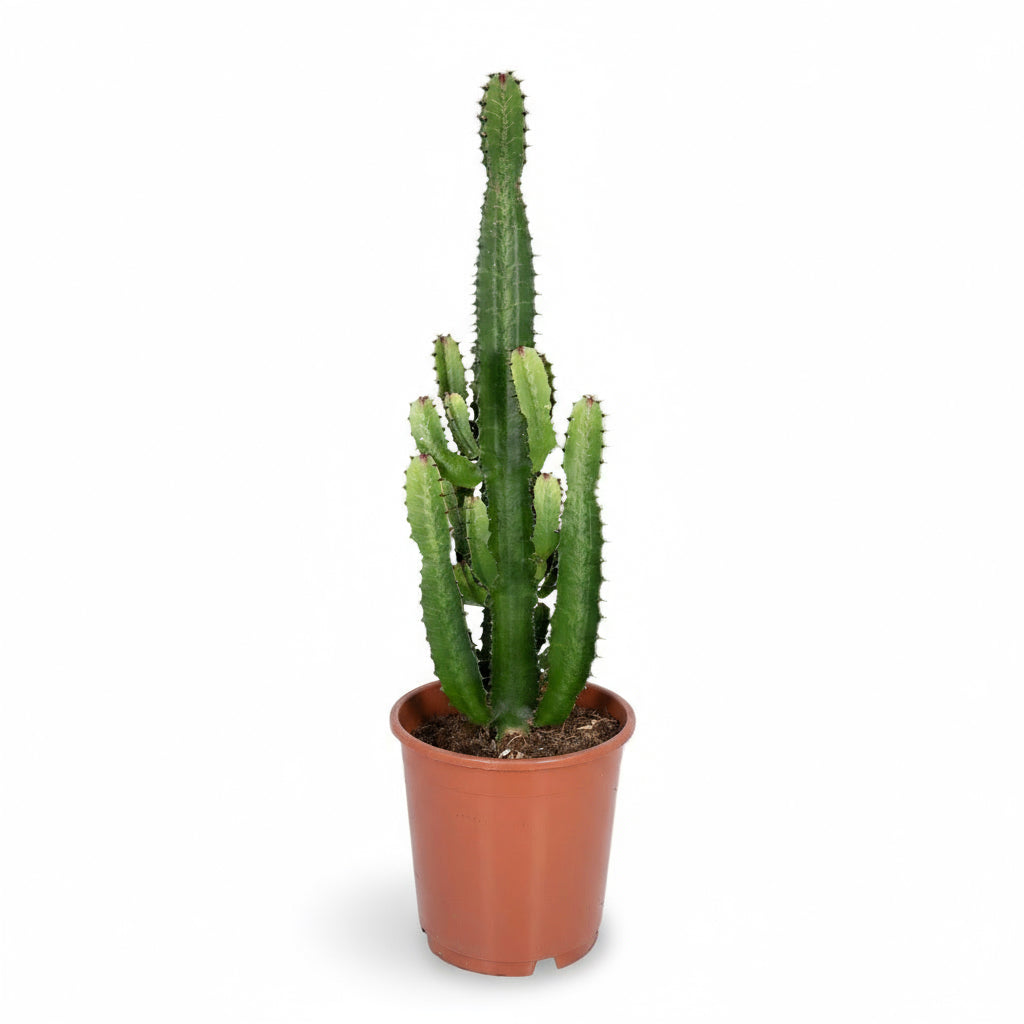


🌵 Sculptural silhouette • 🌿 Ribbed, marbled green stems • ☀️ Bright light • 💧 Very infrequent watering • 🏜️ Tolerates drought • 🪴 3 sizes
Euphorbia acrurensis, also called Cowboy Cactus or Candelabra Euphorbia, grows upright with prominent, deep green, slightly marbled ribs. Native to the arid highlands of Ethiopia, Sudan, and Eritrea, it is among the most architectural Euphorbias in the catalog.
Its distinctive feature lies in its deceptive nature: despite its thorny ribs and cactus-like growth, it is not a cactus but a euphorbia. The difference can be seen when cut, as it releases a white latex where a true cactus produces nothing. This same candelabra is sold under several names — acrurensis, eritrea, abyssinica — which in fact refer to the same plant.
Which sculptural Euphorbia should you choose?
The genus comes in very different silhouettes — here are the Euphorbias in the catalog:
- Euphorbia acrurensis (this plant) — vertical stems with prominent ribs, growing in a columnar form (3 sizes: H50 cm | Pot Ø17 cm to H60 cm | Pot Ø24 cm). The tallest and most architectural version.
- Euphorbia trigona — dark green triangular stems branching into a candelabra shape (H70 cm | Pot Ø17 cm). The bushiest version.
- Euphorbia trigona 'Rubra' — the same triangular stems in red-purple hues (H70 cm | Pot Ø17 cm). The most colorful version.
- Red and green Euphorbia trigona Duo — both colors together (set of 2, H75 cm | Pot Ø17 cm). The most contrasting version.
Exposure & location
It is a full-sun plant, which sets it apart from almost all indoor plants. In insufficient light, new growth becomes elongated, pales, and loses the regularity of the ribs that gives the silhouette its appeal.
- Exposure: bright light to direct sun — south- or west-facing window without a sheer curtain.
- Location: very bright living room, sunny office, conservatory — anywhere with abundant light.
- Temperature: 18 to 28 °C — minimum 12 °C, perfectly tolerates dry, heated rooms.
- Soil type: very well-draining cactus soil, mixed with gravel or perlite.
Turning the pot a quarter turn every ten days is enough to keep the column perfectly straight: the stems lean noticeably towards the light, and an established lean cannot be corrected.
Watering & care
The stems store water like reservoirs: the plant can withstand several weeks of drought without damage, but rots at the base within a few days in a poorly drained substrate.
- Watering: very infrequent — wait until the substrate is completely dry, every 2 to 3 weeks in spring and summer, and once a month or less in winter.
- Drainage: essential — use a pot with drainage holes, add gravel or clay pebbles at the bottom, and empty the saucer immediately.
- Humidity: no special requirements; the dry air of heated interiors suits it perfectly.
- Cleaning: use a soft, dry cloth on the stems — a damp cloth leaves whitish marks in the ridges.
- Fertilizer: half-strength diluted cactus fertilizer, once every 6 weeks from April to September only.
- Repotting: every 2 to 3 years in spring, wearing gloves.
A base that turns brown and softens indicates established rot: at this stage, only the healthy upper section can be taken and left to dry again before being propagated.
Decor ideas & plant pairings
Its strict verticality and regular ridges make it an architectural plant that structures a space through its geometry alone. It naturally complements raw, mineral materials.
- For a graphic desert corner, pair it with a Sansevieria 'Diamond Green' with thick leaves standing upright in a fan shape — two vertical forms, one a solid column, the other made of separate blades.
- For a contrast of volumes, place it opposite an Euphorbia trigona 'Rubra' with branched red-purple stems — the same family, the same graphic style, two opposing palettes.
- For a contemporary mineral look, place the pot inside an anthracite Elho Brussels decorative pot, Ø25 cm — the matte grey extends the plant's arid character.
- To soften the overall look, the black Jorck basket Ø26 cm in woven fibres adds natural texture at the base of the column.
When lit from the side, the plant casts the regular shadow of its ribs onto the wall: it is one of the few indoor plants to produce such a crisp pattern.
Verdeia tips
- Wear gloves whenever handling the plant: cutting or breaking a stem releases white latex that irritates the skin and is dangerous to the eyes. Rinse thoroughly in case of contact and never touch your face before washing your hands.
- Space out waterings even further in winter: the plant goes dormant as soon as the days shorten and stops consuming water. Excess winter moisture is by far the leading cause of loss for this species, well ahead of forgetting to water.
- Allow any cutting to dry completely before replanting: a fresh section planted in soil will rot immediately. Allow one to two weeks for it to callus in the open air before planting a segment in a well-draining substrate.
Technical details
- Botanical name: Euphorbia abyssinica (syn. E. acrurensis, E. eritrea)
- Common name: Cowboy Cactus, Candelabra Euphorbia
- Family: Euphorbiaceae
- Origin: arid highlands of Ethiopia, Sudan, and Eritrea
- Delivery dimensions: 3 sizes available, H50 cm | Pot Ø17 cm, H70 cm | Pot Ø19 cm and H60 cm | Pot Ø24 cm
- Mature height: up to 2.50 metres indoors
- Exposure: bright light to direct sun
- Watering: very infrequent; allow the substrate to dry out completely between waterings
- Humidity: tolerates dry air, no misting
- Soil type: special cactus soil, very well-draining
- Growth: slow, upright columnar habit
- Foliage: succulent stems with prominent, deep green marbled ribs, edged with short spines
- Care: very easy
- Toxicity: toxic if ingested, white latex irritating to the skin and eyes
- Decorative style: Desert chic / Sculptural / Contemporary
Each plant is unique: the number of ribs, the diameter of the column, and the intensity of the marbling naturally vary from one specimen to another.

Your plant, delivered with care
Every plant is hand-packed in a box specially designed for plants — secured, protected, ready to travel. It arrives in perfect condition, roots intact and foliage preserved, ready to take its place in your home.
Our Verdeia commitments
FAQ – Everything to know before adopting your Verdeia plant
How are my plants prepared before shipping?
All our plants are selected from our European partner nurseries. Before shipping, they are watered, cleaned, and protected with breathable, secure packaging. Each package is designed to ensure your plant arrives in perfect health, without any transport-related stress.
Will the plant look exactly like the photo?
The photos accurately represent the variety and the stated size. Since each plant is unique, slight differences in shape, foliage, or color may occur — and that’s part of their charm.
What are the delivery times and conditions?
Shipping is done within 48 business hours, with tracked delivery within 2 to 5 business days. Delivery costs €5.60 — free for orders over €50. You will receive a tracking link as soon as the package is shipped.
What to do upon receiving my plant?
Open your package as soon as you receive it and carefully remove the plant from its packaging. Let it acclimate for 24 hours in its new environment before watering. If it has been slightly stressed during transport, it will recover its shape after one or two days in the light.
What to do if my plant arrives damaged?
Contact us within 48 hours with a photo of the issue. Our team will assess the situation and offer you the best solution: replacement, partial refund, or recovery advice.
Can I return a plant?
Since plants are living beings, standard returns are not possible. However, we guarantee good health upon delivery: if the plant arrives damaged, it will be replaced free of charge. For any other cases (order error, decorative pot, accessory), returns are possible within 14 days.