



Ficus carica 'Little Miss Figgy' standard (Dwarf fig tree) — H90 cm | Pot Ø19 cm
- Regular price
-
€53,95 - Regular price
-
- Sale price
-
€53,95
Couldn't load pickup availability
Frequently asked questions
How can you tell when a fig is ripe? It comes away on its own with slight pressure and its stalk bends; a fig picked too early will never ripen afterward.
My fig tree loses all its leaves in winter—is that normal? Yes, the fig tree is deciduous: its leaves fall in November and new ones appear in April.
Shipping & packaging
Shipped within 24/48 hours via DPD
- Delivery in 2 to 5 working days
- Eco-friendly packaging: recyclable boxes and biodegradable materials
- Special protection so your plant arrives in perfect condition
- Tracking link sent by email as soon as your parcel ships
- Shipping costs and the free-shipping threshold depend on your country — see our delivery page
ZEN ARRIVAL GUARANTEE
We guarantee that your plants will arrive in perfect condition. If your plant arrives damaged or in poor condition:
- Contact us promptly at hello@verdeia.eu with photos
- We will find the right solution for your situation
- No return needed — we trust you
The guarantee covers: damage in transit, plants severely weakened on arrival, and order preparation errors.
CARE TIPS ON ARRIVAL
To help your plant settle in for the long term:
- Unpack your plant immediately and inspect it
- Let it acclimatize for 24-48h in a bright spot out of direct sunlight
- Check the soil moisture before watering (dry surface = light watering)
- Wait 2-3 weeks before repotting, if needed
- Keep it away from heat sources and drafts
- Gently wipe the leaves to remove dust
Need help? Contact our team at hello@verdeia.eu or via chat.
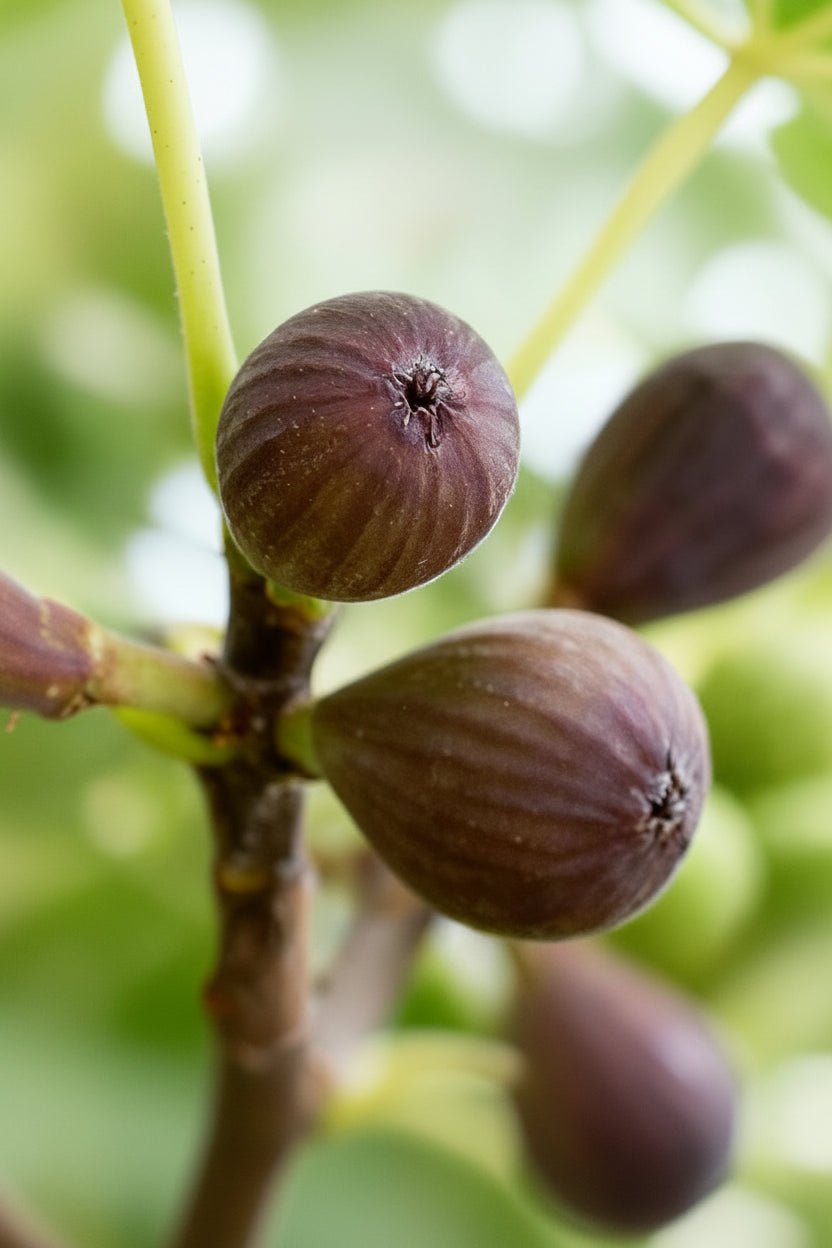
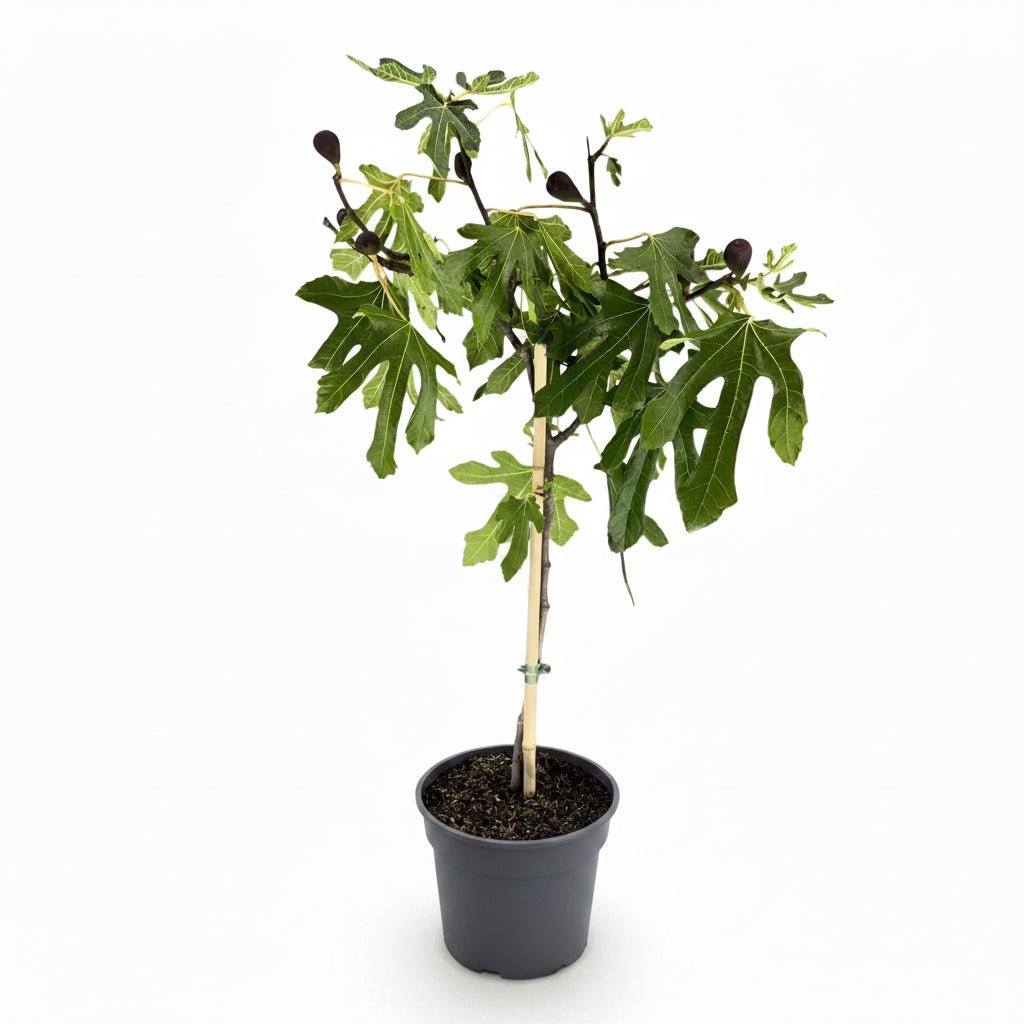
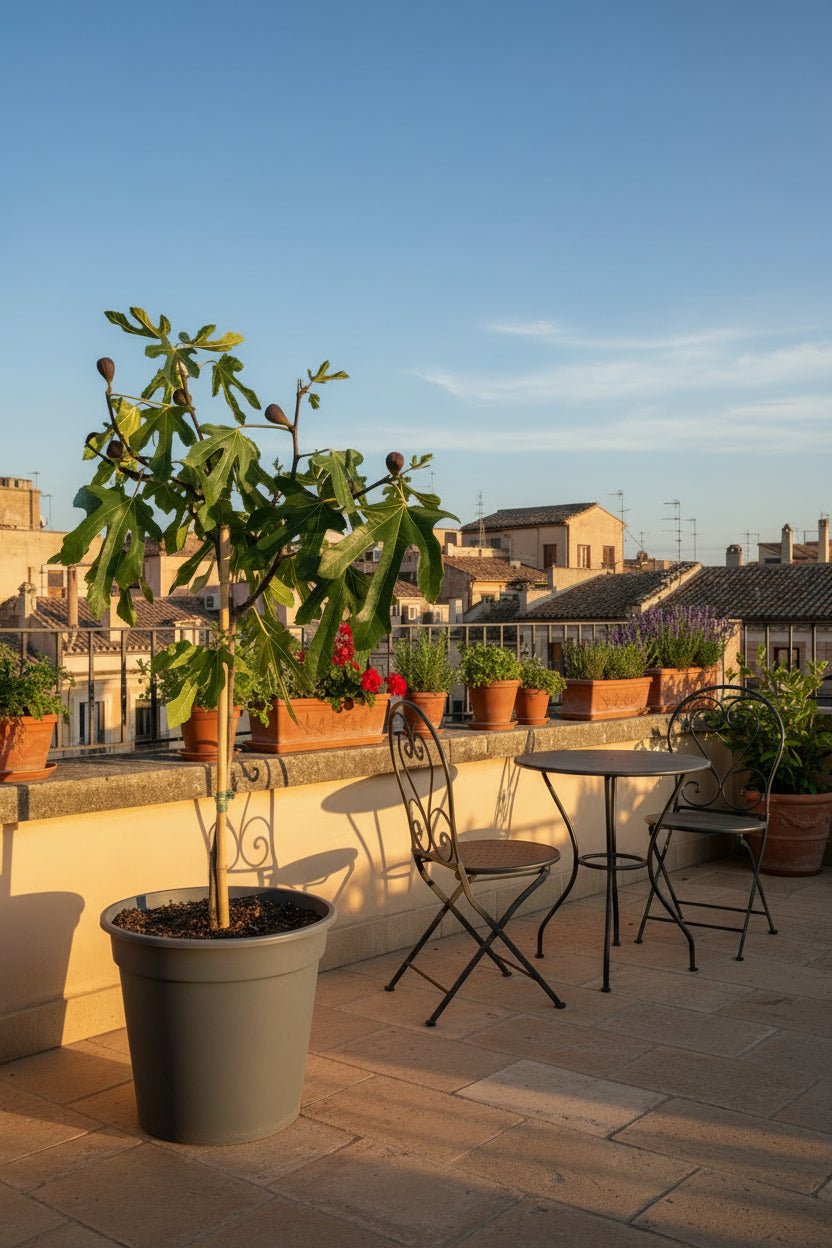
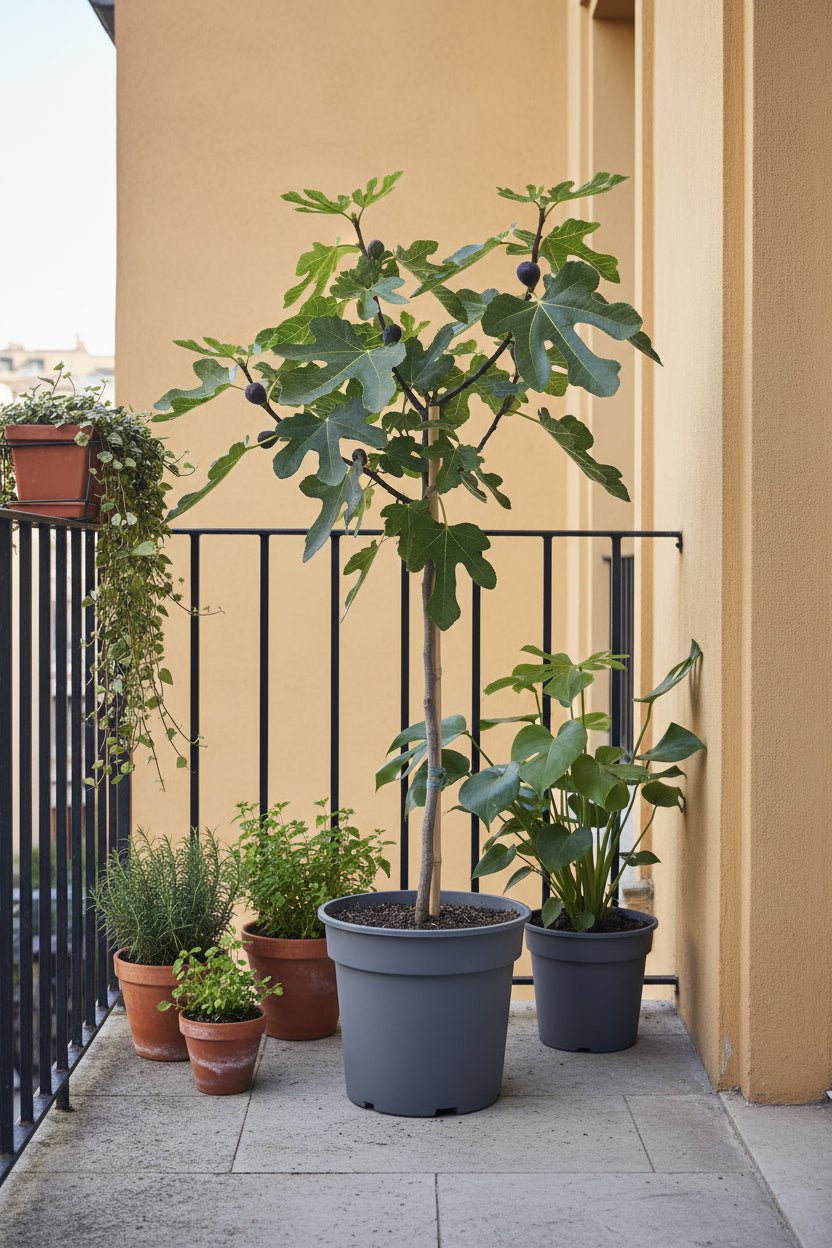
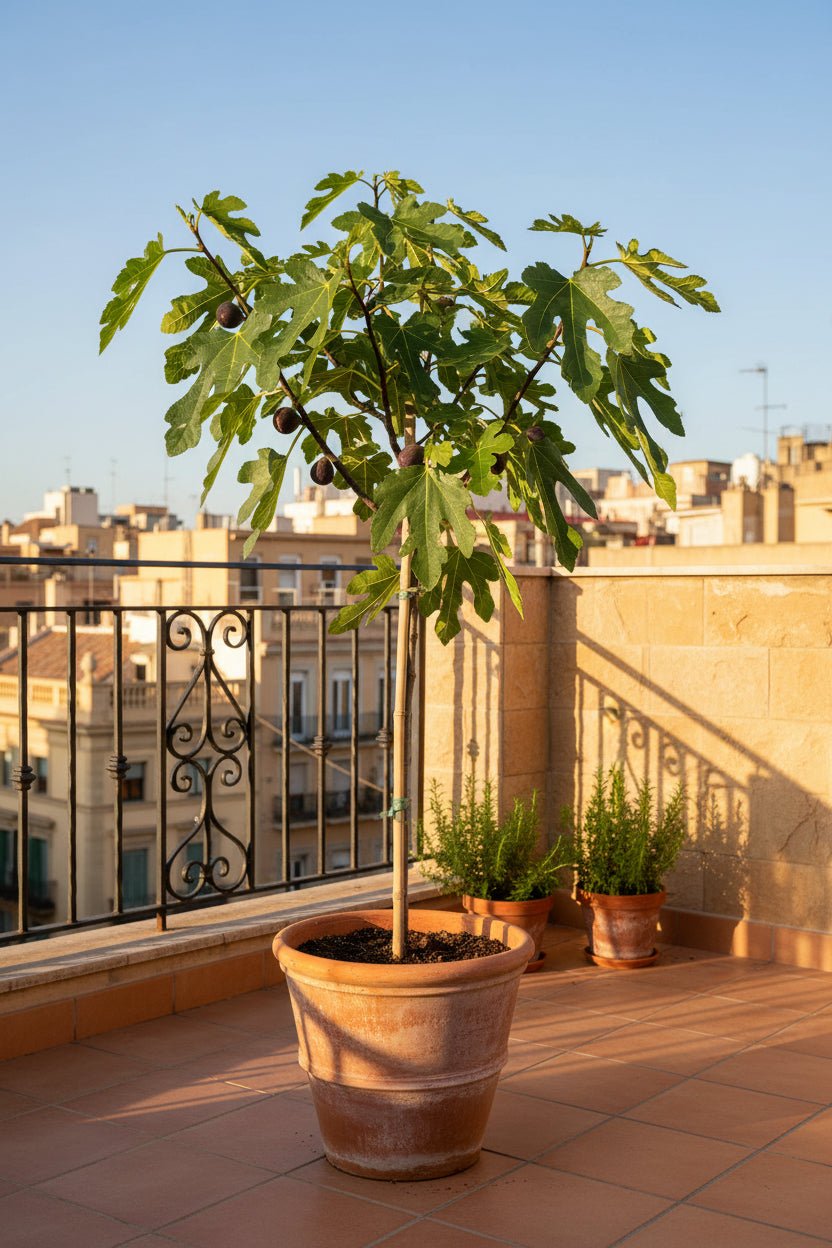

🍇 Edible purple figs • 🌿 Highly decorative lobed foliage • 🌳 Trained on a standard • ☀️ Full sun • ❄️ Hardy down to -12 °C • 🍂 Deciduous foliage
The Ficus carica 'Little Miss Figgy' is a dwarf fig tree cultivar trained on a standard, with a single trunk bearing a crown of large, deep green lobed leaves. Native to the Mediterranean basin and Asia Minor, it is one of the easiest fruit trees to grow in a pot.
Its distinctive feature is its mature size: while a classic fig tree reaches 4 to 6 meters, 'Little Miss Figgy' tops out at around 1.5 meters while still producing normal-sized figs. This makes it suitable for growing on a balcony, where classic varieties quickly become unmanageable.
Which fig tree should you choose?
The catalog brings together several cultivars and two training forms:
- 'Little Miss Figgy' on a standard (this plant) — dwarf cultivar trained as a standard, purple figs (H90 cm | Pot Ø19 cm). The most architectural form.
- 'Brown Turkey' on a standard — the hardiest of the fig trees, brown-purple figs (H90 cm | Pot Ø19 cm). For the coldest regions.
- 'Little Miss Figgy' as a bush — the same cultivar in its natural form, organically grown (H50 cm | Pot Ø23 cm).
- 'Précoce de Dalmatie' — harvest from June–July, dark purple figs (H40 cm | Pot Ø15 cm). The earliest variety.
- 'Panaché' — yellow-and-green striped figs, lobed foliage (H40 cm | Pot Ø15 cm). The most original variety.
Exposure & location
The fig tree needs full sun to ripen its fruit. In the shade, the tree grows, but the figs remain green and hard, never reaching maturity.
- Exposure: full sun — at least 6 hours of direct sunlight per day is essential for fruiting.
- Location: terrace, south-facing balcony, exposed wall, patio — the heat reflected by a wall accelerates ripening.
- Hardiness in a pot: down to -12 °C — the fig tree loses its leaves in winter and regrows in spring.
- Soil type: well-draining and rather calcareous — potting soil amended with coarse sand.
The fig tree is deciduous: its leaves turn yellow and fall in November, leaving the trunk and branches bare until April. This is the normal cycle, not a symptom.
Watering & care
A potted fig tree uses a lot of water during fruiting, much more than in the ground, where its roots can reach deep. A well-draining substrate remains essential, and the foliage always signals a problem before it gets worse.
- Watering: regular from April to September — two to three times a week in summer, greatly reduced once the leaves have fallen.
- Drainage: essential — never leave standing water in the saucer.
- Pruning: in February–March, before bud break, to balance the crown — the fig tree fruits on the previous year's wood.
- Suckers: systematically remove shoots growing from the base and trunk, as they exhaust the tree and ruin its standard form.
- Fertilizer: use fertilizer for fruit trees twice a month from May to August, while the fruits are forming.
A ripe fig comes away with gentle pressure and its stem bends: picked too early, it will never ripen after harvest.
Decor ideas & plant pairings
The large lobed leaves create a highly graphic dappled shade on a terrace, and the tree becomes a visual resting point as well as a fruit producer.
- For a balcony orchard, pair it with a lemon tree — two Mediterranean fruit trees, one deciduous and the other evergreen, that take turns through the seasons.
- To compensate for the bare period, place a standard bay tree alongside it — its evergreen foliage fills the space from November to April, when the fig tree is bare.
- For a Mediterranean arrangement, add an olive tree — fig and olive trees form the most characteristic pairing of southern gardens.
- To enhance the pot, a terracotta or natural fiber container complements the Mediterranean style and allows the roots to breathe.
Placed against a light-colored south-facing wall, the fig tree benefits from reflected heat at night, bringing the harvest forward by two to three weeks.
Verdeia tips
- Never prune after bud break: the fig tree fruits on the previous year's wood. Late spring pruning removes the figs before they even form. February–March is the only suitable period.
- Remove suckers from the base as soon as they appear: the fig tree produces many suckers. Each sucker left in place draws on the tree's reserves and gradually turns the standard form back into a bush.
- Do not water at the beginning of ripening: excess water when the figs swell causes them to split and dilutes their sugar. Reduce watering fifteen days before harvest to concentrate the flavors.
Technical specifications
- Botanical name: Ficus carica 'Little Miss Figgy'
- Common name: Dwarf fig tree
- Family: Moraceae
- Origin: Mediterranean basin and Asia Minor
- Size on delivery: H90 cm | Pot Ø19 cm
- Habit: trained on a standard, with a single trunk and spreading crown
- Mature height: up to 1.5 meters, compared with 4 to 6 m for a classic fig tree
- Exposure: full sun, at least 6 hours per day
- Watering: regular during the growing season, greatly reduced in winter
- Soil type: well-drained and rather calcareous
- Hardiness: down to -12 °C
- Growth: moderate, pruning in February recommended
- Foliage: deciduous, large deep green lobed leaves, falling in November
- Fruiting: edible purple figs, harvested in late summer
- Care: easy
- Toxicity: edible fruit, foliage sap irritating to the skin
- Decorative style: Mediterranean / Urban vegetable garden / Natural
Each plant is unique: the trunk height, crown spread, and number of fruits naturally vary depending on age and exposure.

Your plant, delivered with care
Every plant is hand-packed in a box specially designed for plants — secured, protected, ready to travel. It arrives in perfect condition, roots intact and foliage preserved, ready to take its place in your home.
Our Verdeia commitments
FAQ – Everything to know before adopting your Verdeia plant
How are my plants prepared before shipping?
All our plants are selected from our European partner nurseries. Before shipping, they are watered, cleaned, and protected with breathable, secure packaging. Each package is designed to ensure your plant arrives in perfect health, without any transport-related stress.
Will the plant look exactly like the photo?
The photos accurately represent the variety and the stated size. Since each plant is unique, slight differences in shape, foliage, or color may occur — and that’s part of their charm.
What are the delivery times and conditions?
Orders ship within 48 working hours, with tracked delivery in 2 to 5 working days via DPD. Shipping costs and the free-shipping threshold depend on your country — see our delivery page. You receive a tracking link as soon as your parcel leaves.
What should I do when my plant arrives?
Open your package as soon as you receive it and carefully remove the plant from its packaging. Let it acclimate for 24 hours in its new environment before watering. If it has been slightly stressed during transport, it will recover its shape after one or two days in the light.
What should I do if my plant arrives damaged?
Contact us within 48 hours with a photo of the issue. Our team will assess the situation and offer you the best solution: replacement, partial refund, or recovery advice.
Can I return a plant?
Since plants are living beings, standard returns are not possible. However, we guarantee good health upon delivery: if the plant arrives damaged, it will be replaced free of charge. For any other cases (order error, decorative pot, accessory), returns are possible within 14 days.