



Sarracenia 'Maroon' — H23 cm | Pot Ø12 cm
- Regular price
-
€20,95 - Regular price
-
- Sale price
-
€20,95
Couldn't load pickup availability
Frequently Asked Questions
Should a Sarracenia be fed with insects? No, the Sarracenia naturally captures the insects it needs — any manual feeding or fertilizing is unnecessary and can damage the digestive glands of its pitchers.
Why do the pitchers of my Sarracenia turn brown in winter? The winter browning of the pitchers is a natural phenomenon related to dormancy — the plant enters a resting phase from November to March and produces new vigorous pitchers in the spring.
SHIPPING & PACKAGING
Shipping within 24/48 hours via DPD
- Delivery in 2 to 5 business days
- Eco-friendly packaging: recyclable boxes and biodegradable materials
- Special protection to ensure the plant arrives in perfect condition
- Parcel tracking sent by email as soon as shipped
- Free delivery on orders over €50
48H QUALITY GUARANTEE
We guarantee that your plants will arrive in perfect condition. If your plant arrives damaged or in poor condition:
- Contact us within 48 hours at hello@verdeia.eu with photos
- Free replacement or full refund
- No return necessary – we trust you
The guarantee covers: damage related to transport, severely weakened plant upon arrival, preparation errors.
CARE TIPS UPON ARRIVAL
To help your plant settle in for the long term:
- Unpack immediately and inspect your plant
- Let it acclimatize 24-48h in a bright spot without direct sunlight
- Check soil moisture before watering (dry surface = light watering)
- Wait 2-3 weeks before repotting
- Avoid heat sources and drafts
- Gently wipe leaves to remove dust
Need help? Contact our team at hello@verdeia.eu or via chat.
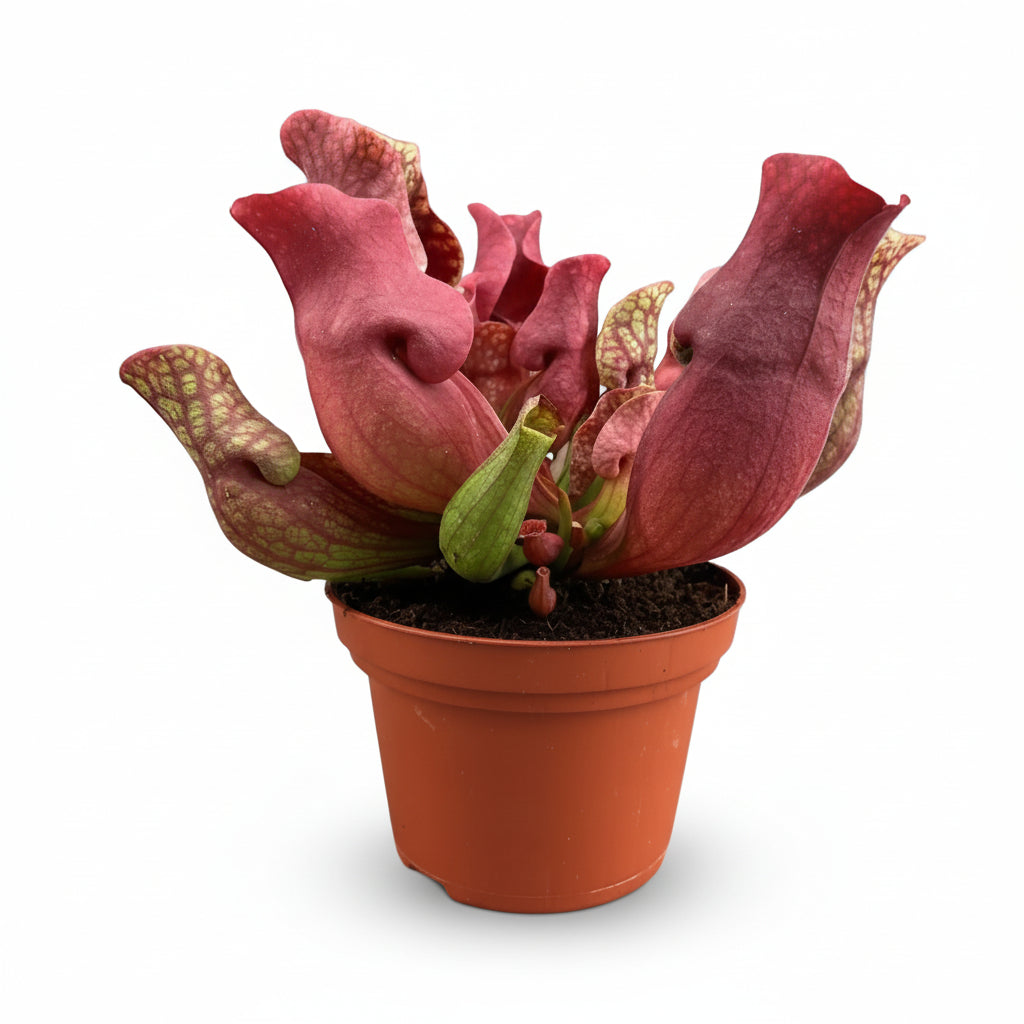
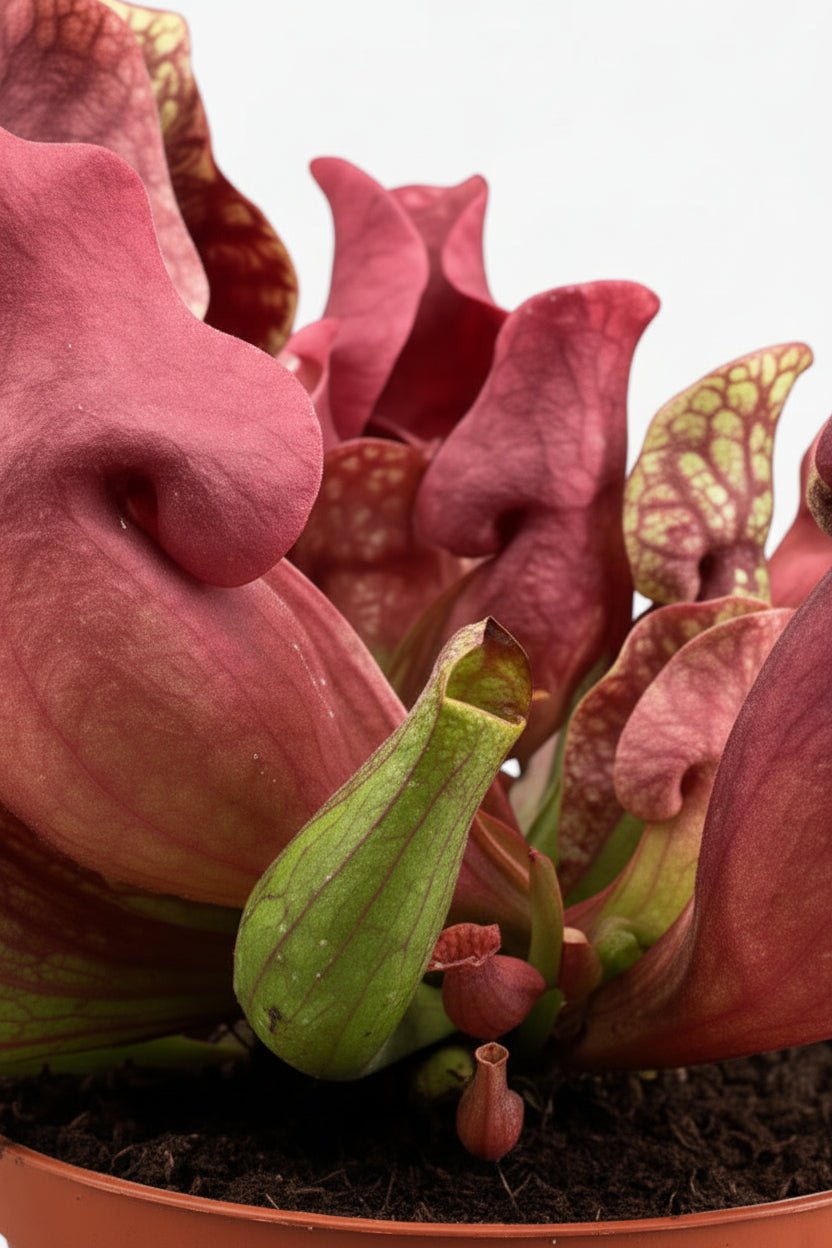
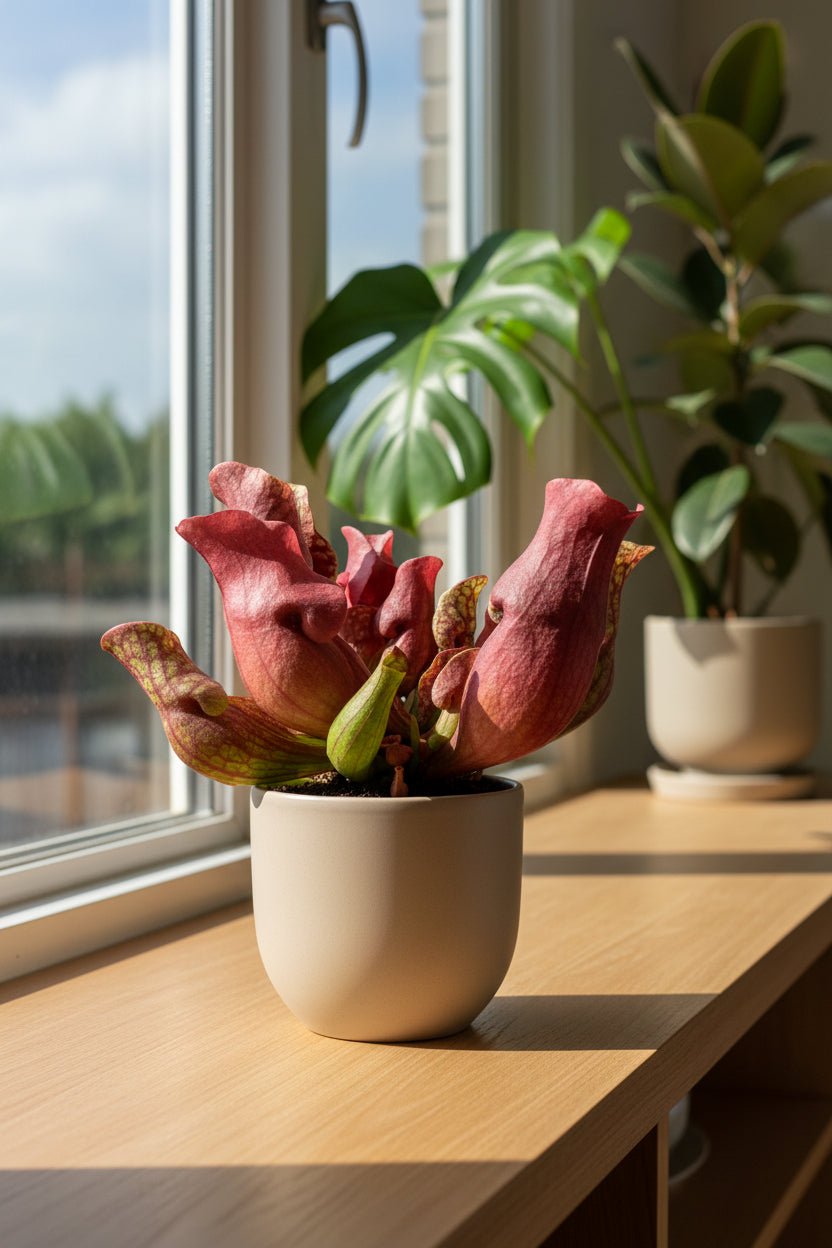

🌿 Spectacular maroon tubular pitchers • ☀️ Direct sunlight • 💧 Always moist substrate • 🦟 Carnivorous plant • 🐾 Non-toxic
Native to the acidic bogs of North America, the Sarracenia 'Maroon' is a carnivorous plant that has developed a formidable trapping mechanism: its tubular pitchers produce an attractive nectar that lures insects inside, where they are gradually digested to provide nutrients that its poor substrate cannot supply. Its upright pitchers with deep brown-maroon hues make it one of the most graphically striking Sarracenias in our carnivorous plant collection.
Which Sarracenia to choose?
Our catalog offers several varieties of Sarracenias with distinct pitcher colors and shapes:
- Sarracenia 'Maroon' (this plant) — deep brown-maroon tubular pitchers, very graphic (H23 cm | Pot Ø12 cm). The darkest and most spectacular version.
- Scarlet Sarracenia — bright vivid red pitchers, very intense color. The brightest and most colorful version.
- Sarracenia 'Judith Hindle' — red and green striped pitchers, very floriferous hybrid. The most bicolor version.
- Sarracenia psittacina — creeping parrot-shaped pitchers, very different posture from other Sarracenias. The most original in silhouette.
- Dionaea muscipula — iconic toothed jaw flytrap. The best-known carnivorous plant, perfect to complete a collection.
Light & location
- Light: direct sunlight 4 to 6 hours per day — essential to develop intense maroon hues and maintain vigorous pitchers.
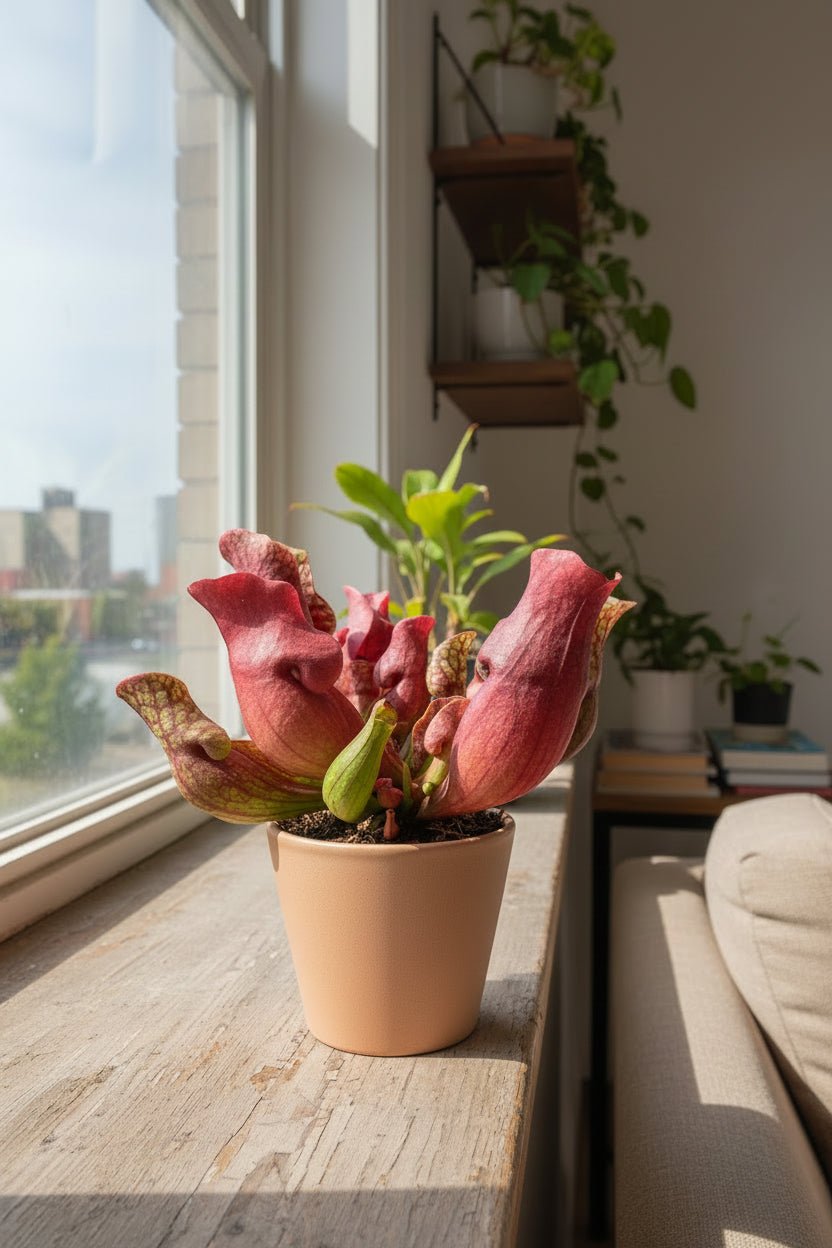
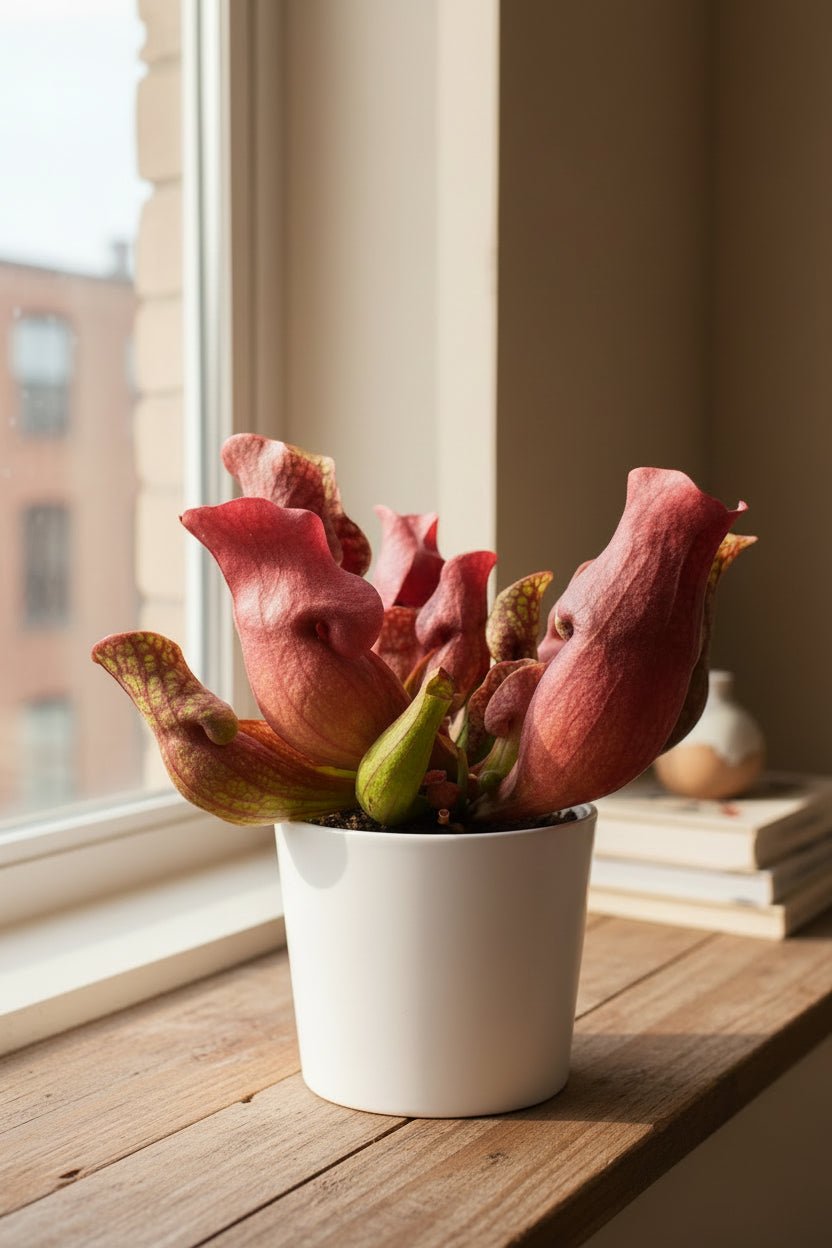
- Ideal: sunny south-facing windowsill, conservatory, balcony, or terrace in warm seasons.
- Temperature: 15 to 30 °C during growth — tolerates winter cold down to -5 °C during dormancy.
- Substrate: poor, acidic, and very moist — mix of blonde peat and perlite or non-calcareous sand. No universal potting soil.
Watering & care
- Water: exclusively rainwater, demineralized or reverse osmosis water — tap water with lime gradually destroys the plant. Everything you need to know about indoor carnivorous plant care.
- Method: place the pot in a saucer with 2 to 3 cm of water permanently — the substrate must remain constantly moist, never dry.
- Humidity: prefers 50–70% ambient humidity.
- Fertilizer: none — the plant feeds on naturally caught insects; any fertilizer damages it.
- Winter rest: reduce watering in winter — pitchers may brown during dormancy, which is normal.
Decor ideas & plant combinations
- Carnivorous collection: pair it with a Dionaea muscipula with toothed jaws and a Drosera capensis with sticky leaves — three radically different trapping mechanisms for a complete carnivorous composition on a sunny windowsill.
- With a Nepenthes: pair it with a Nepenthes alata with tropical hanging pitchers — two types of pitchers, two origins, two atmospheres for a very contrasting pitcher plant collection.
- Ideal pot: non-drilled plastic pot or waterproof decorative pot — the substrate must remain constantly in water; a drilled pot with a saucer is not suitable for this species.
Verdeia tips
- Never use tap water: minerals and lime gradually destroy roots and digestive glands — collect rainwater or use demineralized water available in supermarkets.
- Respect its winter dormancy: from November to March, reduce watering and let old pitchers brown naturally — supporting your plants in winter is essential for a vigorous spring recovery.
- Do not touch the inside of the pitchers: this damages digestive glands and can block the trapping mechanism — just observe.
Technical specifications
- Botanical name: Sarracenia 'Maroon' (hybrid)
- Common name: Purple Sarracenia, Trumpet plant
- Origin: acidic bogs of North America
- Dimensions at delivery: H23 cm | Pot Ø12 cm
- Adult size: up to 40–60 cm tall
- Light: direct sunlight 4 to 6 hours per day
- Watering: abundant — substrate always moist, exclusively non-calcareous water
- Substrate acidity: pH 4.0–5.0
- Care: easy if conditions are met
- Toxicity: non-toxic to pets and children
- Decor style: urban jungle / collection / unusual plants
Each plant is unique: photos show an example of its appearance. Pitcher color and shape naturally vary depending on light and season.

Your plant, delivered with care
Every plant is hand-packed in a box specially designed for plants — secured, protected, ready to travel. It arrives in perfect condition, roots intact and foliage preserved, ready to take its place in your home.
Our Verdeia commitments
FAQ – Everything to know before adopting your Verdeia plant
How are my plants prepared before shipping?
All our plants are selected from our European partner nurseries. Before shipping, they are watered, cleaned, and protected with breathable, secure packaging. Each package is designed to ensure your plant arrives in perfect health, without any transport-related stress.
Will the plant look exactly like the photo?
The photos accurately represent the variety and the stated size. Since each plant is unique, slight differences in shape, foliage, or color may occur — and that’s part of their charm.
What are the delivery times and conditions?
Shipping is done within 48 business hours, with tracked delivery within 2 to 5 business days. Delivery costs €5.60 — free for orders over €50. You will receive a tracking link as soon as the package is shipped.
What to do upon receiving my plant?
Open your package as soon as you receive it and carefully remove the plant from its packaging. Let it acclimate for 24 hours in its new environment before watering. If it has been slightly stressed during transport, it will recover its shape after one or two days in the light.
What to do if my plant arrives damaged?
Contact us within 48 hours with a photo of the issue. Our team will assess the situation and offer you the best solution: replacement, partial refund, or recovery advice.
Can I return a plant?
Since plants are living beings, standard returns are not possible. However, we guarantee good health upon delivery: if the plant arrives damaged, it will be replaced free of charge. For any other cases (order error, decorative pot, accessory), returns are possible within 14 days.