



Ctenanthe 'Amagris' — H35-40 cm | Pot Ø14 cm
- Regular price
-
€32,95 - Regular price
-
- Sale price
-
€32,95
Couldn't load pickup availability
Frequently asked questions
Why are the edges of my Ctenanthe's leaves curling? This is the first sign of air that is too dry, appearing before browning and corrected by increasing humidity.
What is the difference between a Ctenanthe and a Calathea? They are two closely related genera in the same family; Ctenanthe stands out with its more spreading habit and leaves borne on long petioles.
Shipping & packaging
Shipped within 24/48 hours via DPD
- Delivery in 2 to 5 working days
- Eco-friendly packaging: recyclable boxes and biodegradable materials
- Special protection so your plant arrives in perfect condition
- Tracking link sent by email as soon as your parcel ships
- Shipping costs and the free-shipping threshold depend on your country — see our delivery page
ZEN ARRIVAL GUARANTEE
We guarantee that your plants will arrive in perfect condition. If your plant arrives damaged or in poor condition:
- Contact us promptly at hello@verdeia.eu with photos
- We will find the right solution for your situation
- No return needed — we trust you
The guarantee covers: damage in transit, plants severely weakened on arrival, and order preparation errors.
CARE TIPS ON ARRIVAL
To help your plant settle in for the long term:
- Unpack your plant immediately and inspect it
- Let it acclimatize for 24-48h in a bright spot out of direct sunlight
- Check the soil moisture before watering (dry surface = light watering)
- Wait 2-3 weeks before repotting, if needed
- Keep it away from heat sources and drafts
- Gently wipe the leaves to remove dust
Need help? Contact our team at hello@verdeia.eu or via chat.

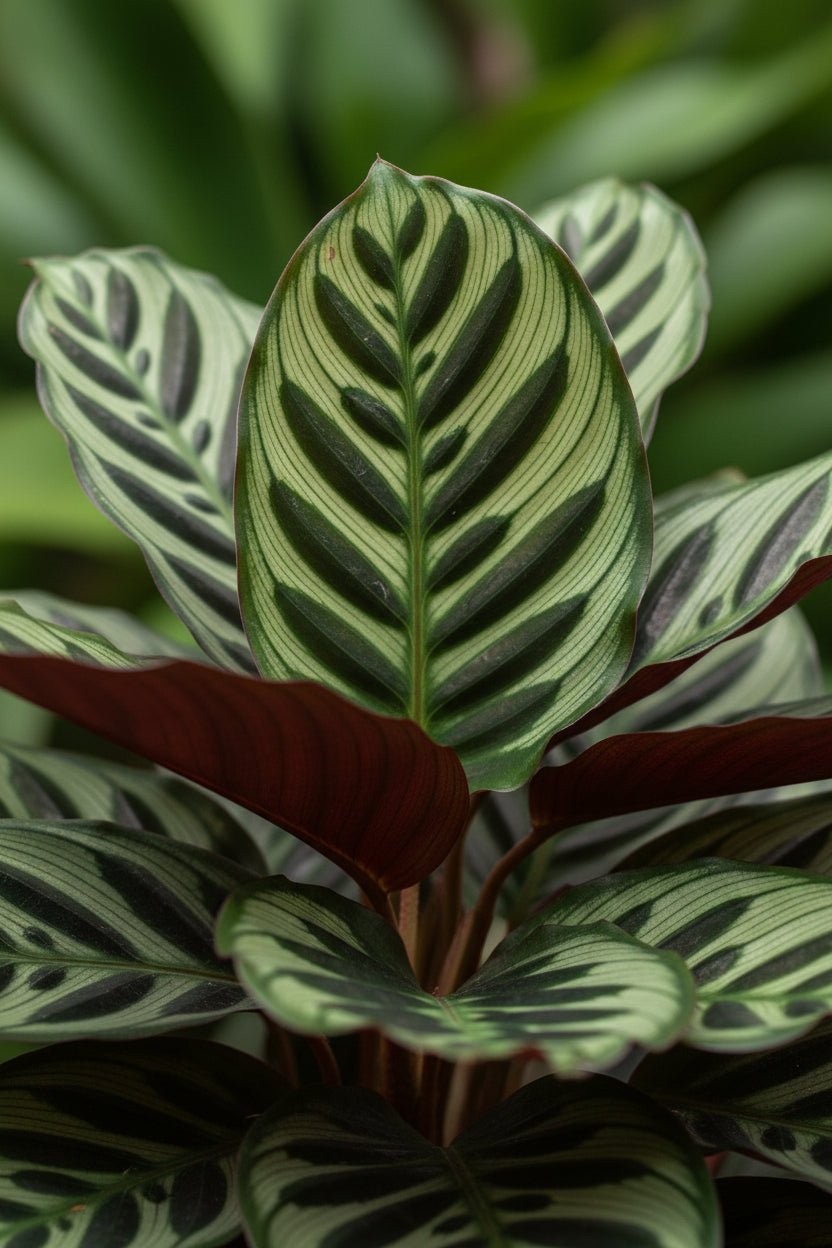
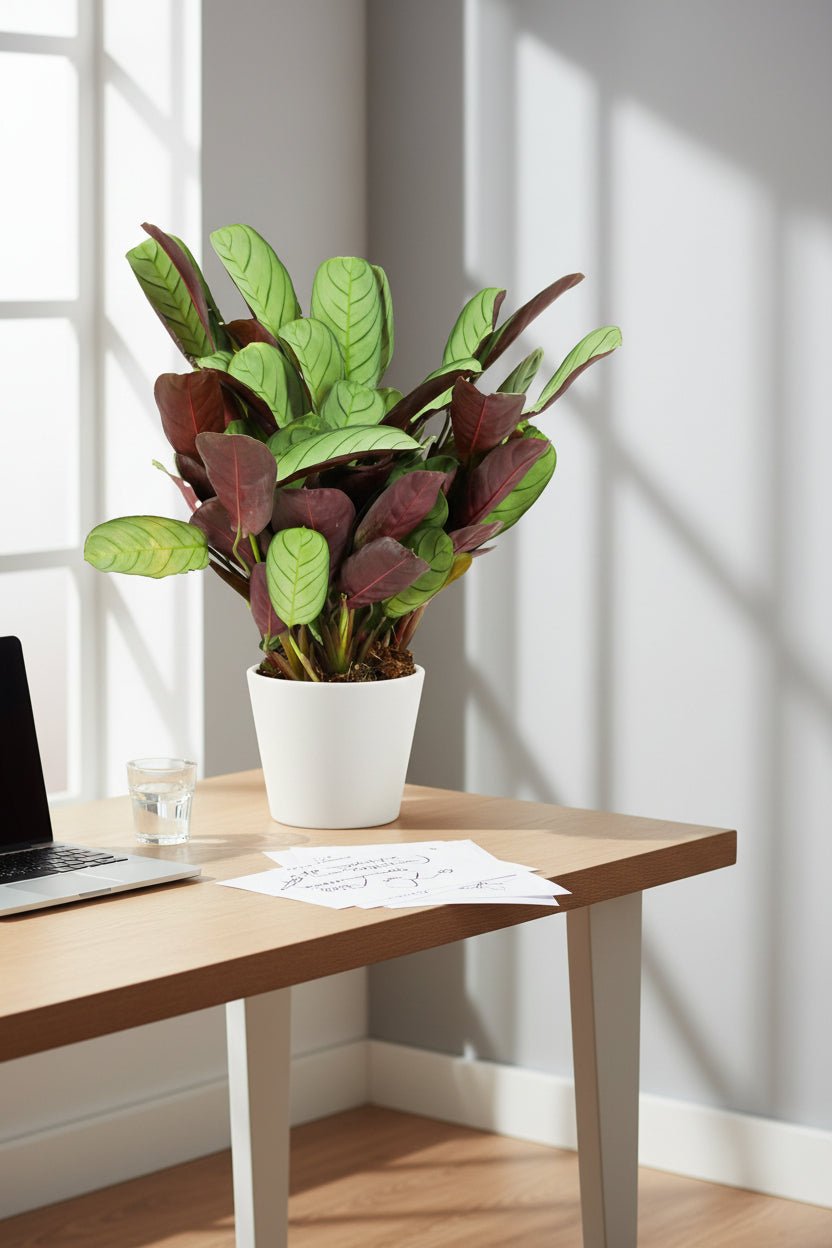
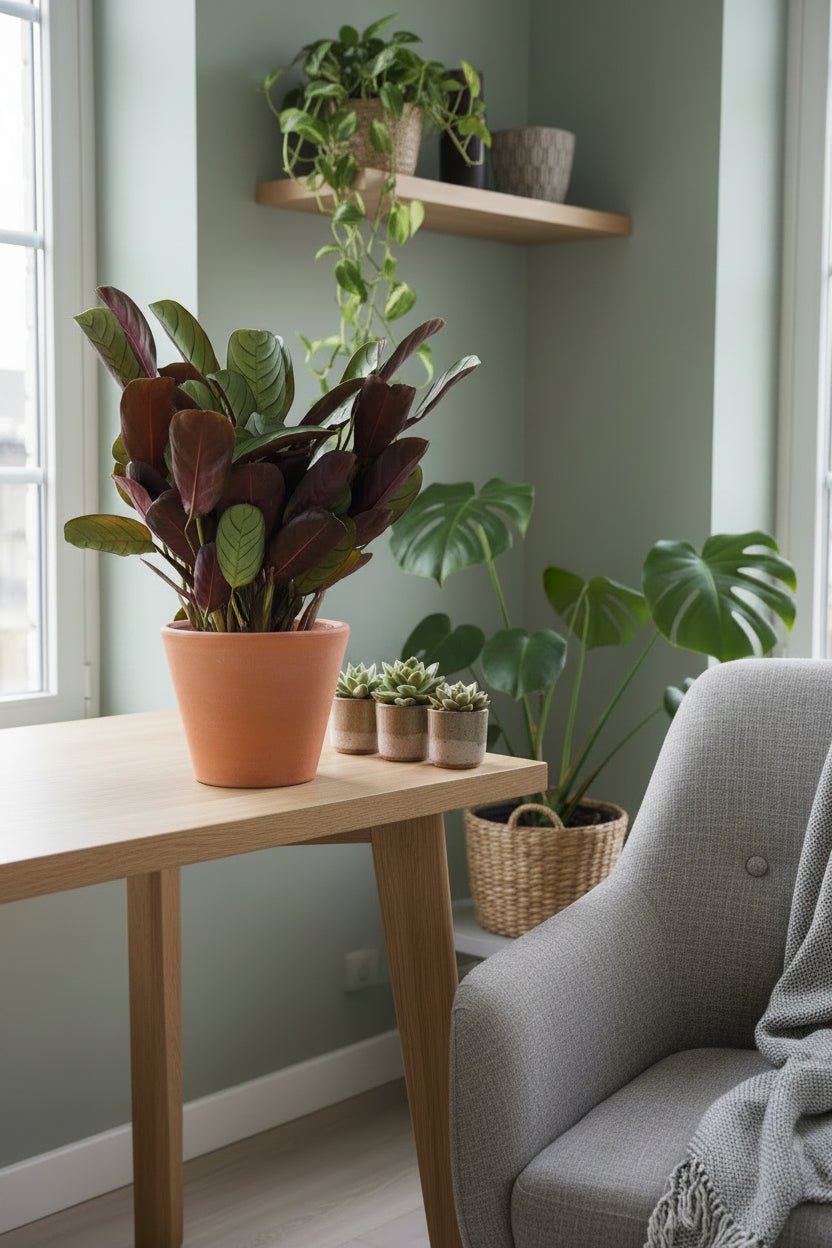


🌿 Gray-green leaves with dark veins • 💜 Purple undersides • 🙏 Prayer plant that folds up at night • 🌑 Partial shade • 💨 High humidity • 🐾 Non-toxic
Ctenanthe 'Amagris' has oval leaves in a silvery gray-green rarely seen indoors, crossed by very prominent dark green veins and backed with purple undersides. A genus native to the humid understories of Brazil and Costa Rica, it joins the Calathea & Maranta collection in the catalog.
Its distinctive feature is the color of the leaf blade: while the other Ctenanthes feature contrasting stripes or chevrons, Amagris is characterized by a uniform matte gray-green color structured by its veins. Like all Marantaceae, its leaves rise in the evening and lower in the morning, earning it the nickname prayer plant.
Which Ctenanthe should you choose?
The Ctenanthe genus comes in very different foliage types and sizes — here are the Ctenanthes in the catalog:
- Ctenanthe 'Amagris' (this plant) — oval silver-gray-green leaves with dark veins. The most understated and mineral-like variety.
- Ctenanthe burle-marxii — dark green chevrons on a light green background, with purple undersides (H35-40 cm | Pot Ø14 cm). The most graphic variety.
- Ctenanthe burle-marxii in a ceramic pot — the same variety delivered in a handcrafted decorative pot (H25 cm | Pot Ø12 cm). The ready-to-gift format.
- Ctenanthe setosa — large silver leaves striped with dark green (H60 cm | Pot Ø17 cm). The most imposing variety.
- Ctenanthe oppenheimiana — long cream-variegated leaves with purple undersides (H70 cm | Pot Ø17 cm). The most slender variety.
Light & location
A woodland plant, Amagris grows in the shade of trees in its natural habitat. Direct sun bleaches the leaf blade's gray-green color and burns the edges within a few hours, while insufficient light erases the contrast of the veins.
- Light: indirect light to partial shade — north-facing window, or east- and west-facing with a sheer curtain.
- Location: bathroom, bedroom, office, living room away from windows — away from radiators and drafts.
- Temperature: 18 to 26 °C — minimum 15 °C, highly sensitive to cold.
- Soil type: light and humus-rich — houseplant potting mix with added coconut fiber and perlite.
The daily movement of the leaves is a good indicator: a plant that stops folding its foliage in the evening generally signals insufficient light or water stress.
Watering & care
The substrate should remain slightly moist without ever waterlogging the roots. Air humidity is what mainly determines the condition of the leaf edges, with a well-built drainage layer making it possible to water frequently without risk.
- Watering: regular — as soon as the surface of the substrate begins to dry, about twice a week in spring and summer, once a week in winter.
- Water: strictly non-calcareous — filtered, rainwater, or water left to stand for 24 hours, at room temperature.
- Humidity: 60% minimum — daily misting, or place the pot on a bed of damp clay pebbles.
- Drainage: essential — pot with drainage holes, saucer emptied after every watering.
- Foliage: a regular dusting with a damp cloth refreshes the contrast between the gray-green and the veins.
- Fertilizer: liquid fertilizer for green plants, diluted by half, once a month from April to September only.
Leaf edges curling inward signal air that is too dry, well before browning appears: this is the first sign to watch for.
Decor ideas & plant pairings
The silvery gray-green is a rare plant color that complements understated interiors, where variegated foliage can seem busy. It stands out all the better surrounded by vivid greens.
- For a shared humid corner, pair it with a Calathea orbifolia with broad striped leaves — the same humidity requirements, two complementary foliage scales.
- For a color contrast, place a Maranta 'Fascinator' with bright red veins next to it — same family, same nightly folding, two opposing palettes.
- To extend the gray, slip the pot into an anthracite Mayk Lead decorative pot Ø20 cm with a brushed metal finish — the mineral quality of the container exactly echoes that of the foliage.
- For a brighter look, the matte white Gabriel decorative pot Ø14 cm with its honeycomb texture exactly matches the diameter of the grow pot and brightens the whole display.
This size can be placed on a low piece of furniture, a console table, or a bathtub ledge; the purple undersides are only noticeable when the leaves lift at the end of the day.
Verdeia tips
- Group it with other tropical plants: several plants gathered together create a humid microclimate through evapotranspiration. This is the most effective way to maintain the 60% humidity it needs, much more so than occasional misting.
- Divide the clump when repotting: the plant spreads through shoots emerging from the base. Separating them in spring with a few roots produces a second plant and keeps the mother plant well aerated.
- Always switch to limescale-free water: Marantaceae accumulate limescale and fluoride at the tips of their leaves, causing irreversible brown edges. Filtered water or water left to stand for 24 hours is enough to prevent this.
Technical specifications
- Botanical name: Ctenanthe 'Amagris'
- Common name: Ctenanthe Amagris, prayer plant
- Family: Marantaceae
- Origin: humid understories of Brazil and Costa Rica
- Delivery dimensions: H35-40 cm | Pot Ø14 cm
- Mature height: up to 60 cm indoors
- Exposure: indirect light to partial shade, never direct sun
- Watering: regular, with the substrate kept slightly moist
- Water: limescale-free, filtered, or left to stand
- Humidity: minimum 60%, daily misting
- Soil type: light, humus-rich, and well-draining
- Growth: moderate, spreading clump-forming habit
- Foliage: evergreen, gray-green oval leaves with dark veins and purple undersides
- Care: demanding in terms of humidity
- Toxicity: 🐾 non-toxic to animals and children
- Decorative style: Tropical / Urban jungle / Minimalist
Each plant is unique: the number of leaves, the intensity of the gray, and the contrast of the veins naturally vary according to the growing light.

Your plant, delivered with care
Every plant is hand-packed in a box specially designed for plants — secured, protected, ready to travel. It arrives in perfect condition, roots intact and foliage preserved, ready to take its place in your home.
Our Verdeia commitments
FAQ – Everything to know before adopting your Verdeia plant
How are my plants prepared before shipping?
All our plants are selected from our European partner nurseries. Before shipping, they are watered, cleaned, and protected with breathable, secure packaging. Each package is designed to ensure your plant arrives in perfect health, without any transport-related stress.
Will the plant look exactly like the photo?
The photos accurately represent the variety and the stated size. Since each plant is unique, slight differences in shape, foliage, or color may occur — and that’s part of their charm.
What are the delivery times and conditions?
Orders ship within 48 working hours, with tracked delivery in 2 to 5 working days via DPD. Shipping costs and the free-shipping threshold depend on your country — see our delivery page. You receive a tracking link as soon as your parcel leaves.
What should I do when my plant arrives?
Open your package as soon as you receive it and carefully remove the plant from its packaging. Let it acclimate for 24 hours in its new environment before watering. If it has been slightly stressed during transport, it will recover its shape after one or two days in the light.
What should I do if my plant arrives damaged?
Contact us within 48 hours with a photo of the issue. Our team will assess the situation and offer you the best solution: replacement, partial refund, or recovery advice.
Can I return a plant?
Since plants are living beings, standard returns are not possible. However, we guarantee good health upon delivery: if the plant arrives damaged, it will be replaced free of charge. For any other cases (order error, decorative pot, accessory), returns are possible within 14 days.