



Polyscias balfouriana (Dinner plate aralia) – H50 cm | Pot Ø17 cm
- Regular price
-
€42,95 - Regular price
-
- Sale price
-
€42,95
Couldn't load pickup availability
Frequently asked questions
How often should you water a Polyscias Balfouriana? Every 7 to 10 days in spring and summer, letting the surface dry out between waterings — Polyscias clearly prefers slight underwatering to excess moisture, which quickly causes yellowing and leaf drop.
Why are the leaves of a Polyscias Balfouriana falling off? It’s almost always due to a change in environment, a draft, or a sudden temperature change — place it in its permanent spot from the start and avoid moving it once the plant is acclimated.
Shipping & packaging
Shipped within 24/48 hours via DPD
- Delivery in 2 to 5 working days
- Eco-friendly packaging: recyclable boxes and biodegradable materials
- Special protection so your plant arrives in perfect condition
- Tracking link sent by email as soon as your parcel ships
- Shipping costs and the free-shipping threshold depend on your country — see our delivery page
ZEN ARRIVAL GUARANTEE
We guarantee that your plants will arrive in perfect condition. If your plant arrives damaged or in poor condition:
- Contact us promptly at hello@verdeia.eu with photos
- We will find the right solution for your situation
- No return needed — we trust you
The guarantee covers: damage in transit, plants severely weakened on arrival, and order preparation errors.
CARE TIPS ON ARRIVAL
To help your plant settle in for the long term:
- Unpack your plant immediately and inspect it
- Let it acclimatize for 24-48h in a bright spot out of direct sunlight
- Check the soil moisture before watering (dry surface = light watering)
- Wait 2-3 weeks before repotting, if needed
- Keep it away from heat sources and drafts
- Gently wipe the leaves to remove dust
Need help? Contact our team at hello@verdeia.eu or via chat.
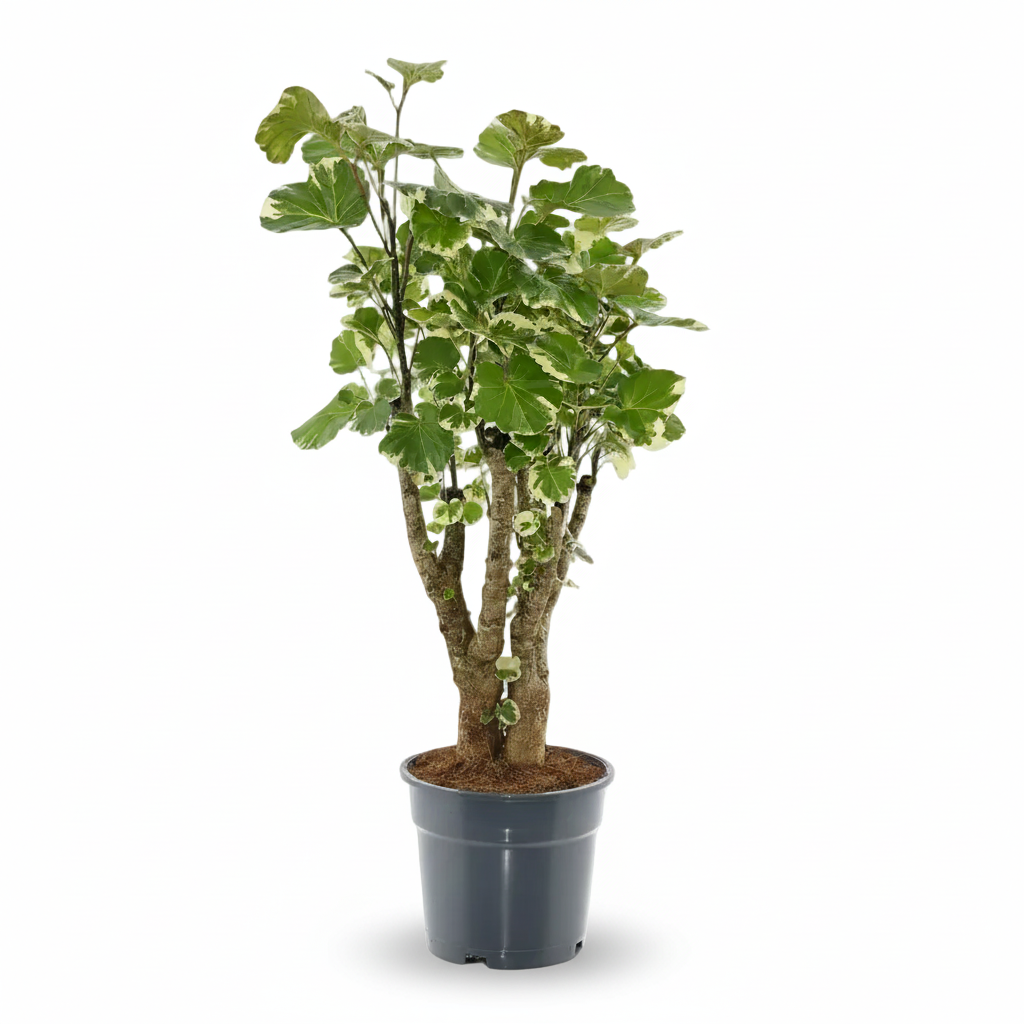
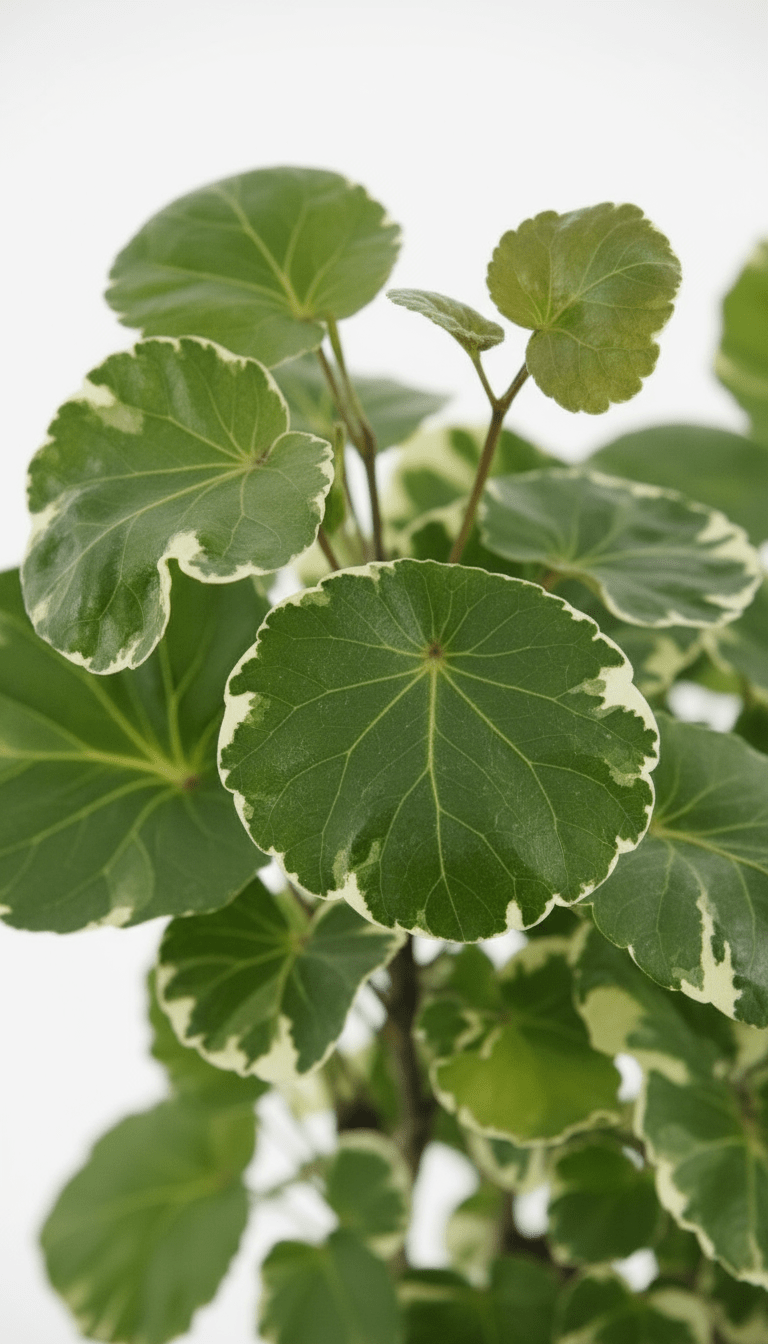
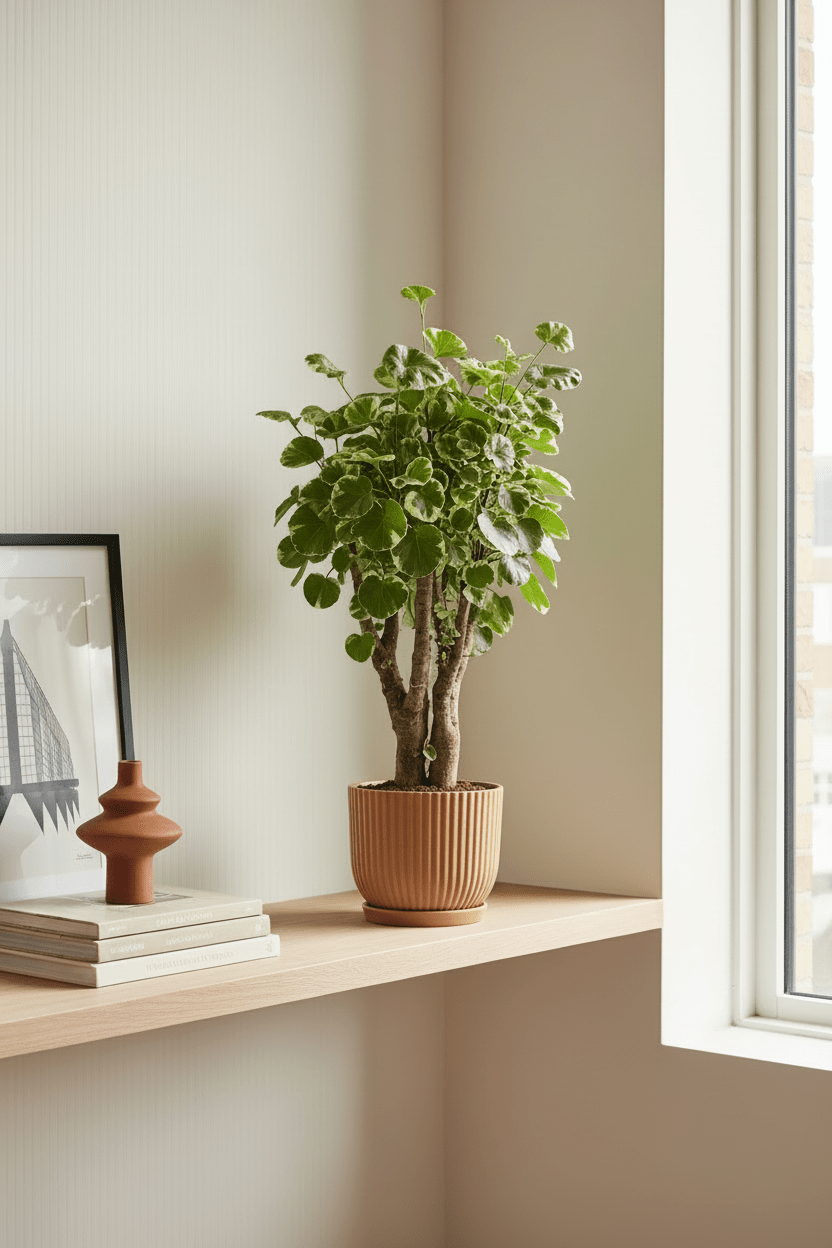
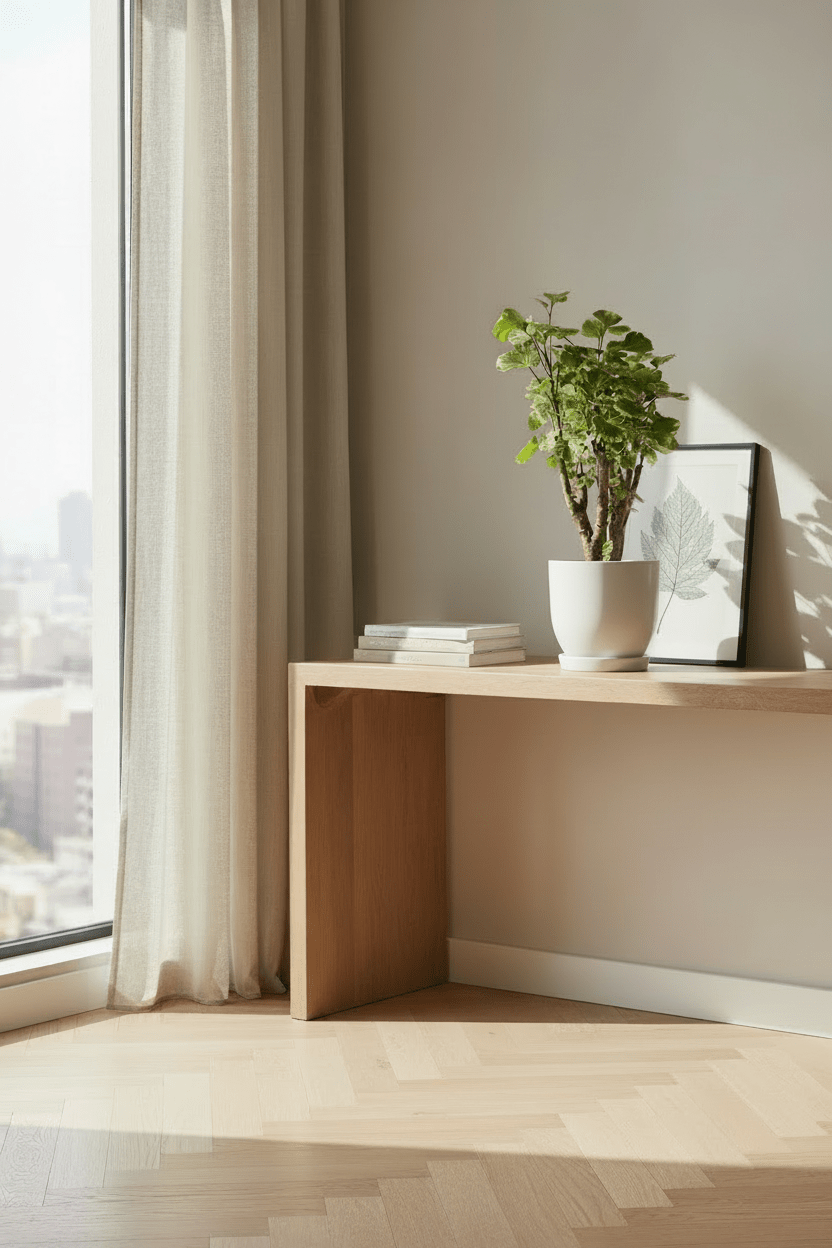
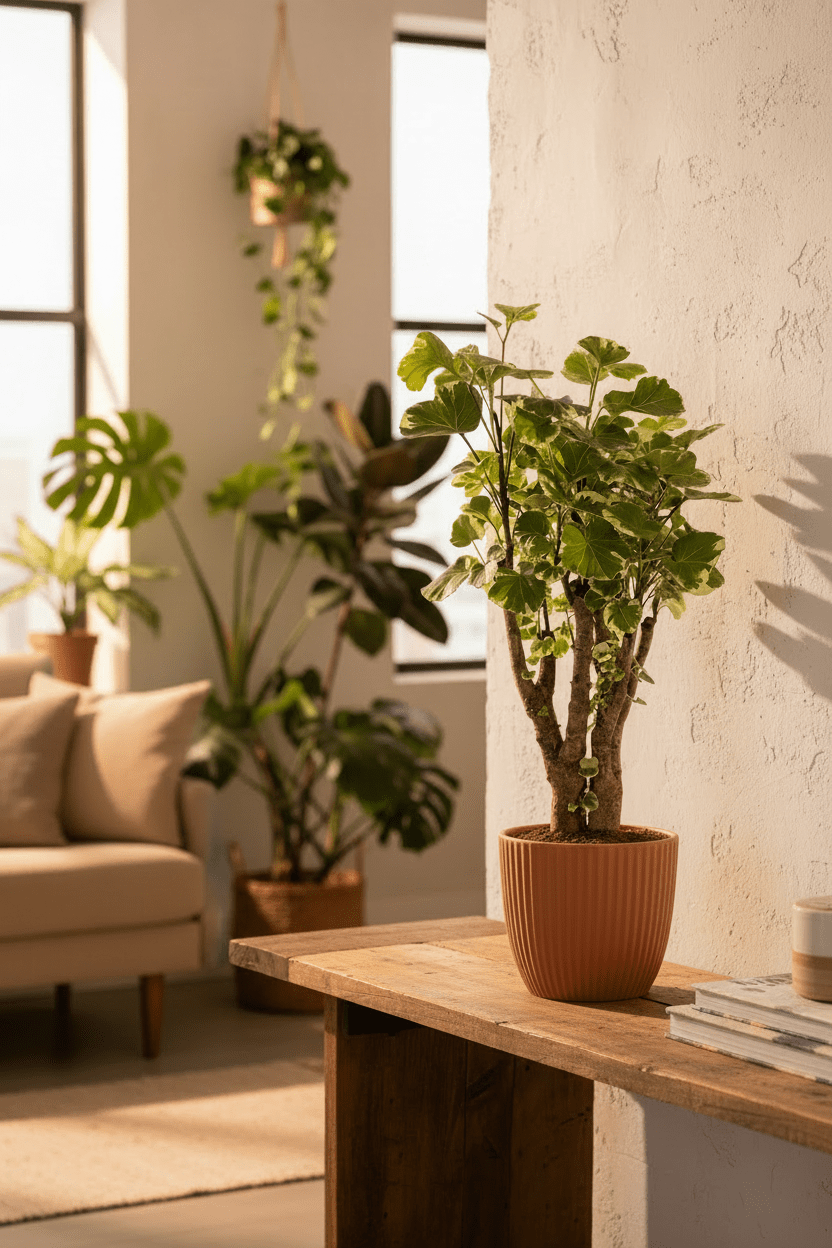

🌿 Round leaves variegated green and cream • ☀️ Indirect light to partial shade • 💧 Moderate watering • ✨ Airy and light habit • 📏 H50 cm | Pot Ø17 cm
The Polyscias balfouriana, also called dinner plate aralia, is an elegant tropical plant native to the Pacific Islands. Its delicately toothed rounded leaves, variegated green and cream, are borne on thin stems that form an airy and bright silhouette — a vertical habit very different from the large flat leaves of Monstera or Philodendron, bringing lightness and sophistication to plant arrangements.
With its miniature tree appearance and light foliage, it is among the brightest Aralias in the Polyscias collection — a still little-known family offering very distinctive shapes for contemporary interiors.
Which Polyscias variety to choose?
The Polyscias genus offers several very distinct shapes and color palettes — here are the most distinctive profiles in the catalog:
- Polyscias balfouriana (this plant) — round leaves variegated green and cream, airy and light habit 50 cm. The brightest and most delicate in the range.
- Polyscias Roble — shiny deep green rounded leaves, compact and dense miniature tree habit. The choice for a zen and minimalist style in an all-green palette.
- Polyscias Fabian — spectacular rounded burgundy-purple leaves, compact and bushy habit. The choice for a bold and highly decorative color.
- Polyscias Ming — very graphic fine and dissected foliage, slender and airy habit. The choice for a very distinctive contemporary graphic effect.
- Polyscias fruticosa — very finely dissected leaves, very slender silhouette, large size. The choice for a very tall, architectural Aralia.
Light & placement
Polyscias balfouriana enjoys bright indirect light to maintain the intensity of the cream variegation — in light that is too low, new leaves gradually turn green. It is one of the versatile tropical plants recommended for city dwellers with variable light conditions.
- Light: bright indirect light to partial shade — away from direct sun, which burns variegated leaves.
- Locations: living room, office, bedroom, entryway — anywhere with stable and diffuse light.
- Avoid: cold drafts and sudden temperature changes — Polyscias is very sensitive to these disturbances and quickly loses leaves.
- Temperature: ideally 18 to 25 °C.
Like Schefflera, Polyscias hates being moved — choose its permanent location at installation and avoid any change of exposure once the plant is acclimated.
Watering & care
Polyscias balfouriana is sensitive to overwatering — it clearly prefers slight underwatering to a soggy substrate. Let the surface dry between waterings and ensure perfect drainage, as with all Aralias and tropical plants with vertical habit.
- Frequency: about every 7 to 10 days in spring-summer, reduced in winter.
- Drainage: essential — pot with drainage holes and clay pebbles at the bottom, never stagnant water.
- Humidity: 50 to 60% — mist the foliage regularly to maintain a tropical atmosphere.
- Fertilizer: a liquid fertilizer for green plants diluted every 4 to 6 weeks in spring and summer.
- Pruning: light pruning in spring above a node encourages branching and keeps a compact, balanced habit.
If leaves yellow and fall, reduce watering immediately — it is almost always overwatering, not underwatering, that triggers this symptom in Polyscias.
Decor ideas & plant pairings
The airy silhouette and cream variegation of Polyscias balfouriana make it an ideal contrast plant — its small, round, bright leaves visually lighten compositions with larger, darker foliage, as in arrangements playing on light-texture balance.
- For a very graphic silhouette contrast, pair Polyscias balfouriana with a Ficus elastica 'Abidjan' — the small, round, airy leaves of Polyscias contrast spectacularly with the large, broad, almost black leaves of Ficus for a very sophisticated texture duo in a contemporary palette.
- For a zen indoor tree composition, pair it with Schefflera Compacta 'Nora' — both plants share a vertical miniature tree habit but express themselves very differently: the light and airy variegation of Polyscias contrasts with the dense, shiny umbels of Schefflera for a very complementary duo.
- To add volume at height, place Polyscias in the foreground in front of a Ficus lyrata — the small, variegated, light leaves of Polyscias in front and the large, upright violin-shaped leaves of Ficus in the background create a very elegant plant perspective.
- In a light concrete or matte white ceramic decorative pot, the neutral and cool tones naturally complement the lightness of the variegated foliage — choose a light matte ceramic decorative pot for a very clean contemporary look that lets the cream variegation be the only bright accent.
Verdeia tips
- Set it in its permanent location upon arrival: Polyscias is extremely sensitive to environmental changes — moving it, drafts, or sudden temperature changes cause immediate leaf drop, as highlighted in our guide to common indoor plant mistakes.
- Pinch young shoots in spring to encourage branching: Polyscias balfouriana naturally tends to grow a single straight stem — pinching terminal shoots above a node in spring stimulates lateral branch growth and gradually creates a denser, more tree-like silhouette.
- Repot every 2 to 3 years in spring in a light, well-draining substrate: Polyscias is a medium-growth plant that roots gradually — the steps for repotting indoor plants fully apply here.
Technical specifications
- Botanical name: Polyscias balfouriana
- Common name: Dinner plate aralia, Polyscias Balfouriana
- Family: Araliaceae
- Origin: Pacific Islands
- Dimensions at delivery: H50 cm | Pot Ø17 cm
- Light: Bright indirect light to partial shade
- Watering: Moderate, let the surface dry between waterings
- Temperature: 18 – 25 °C
- Care: Easy
- Toxicity: Slightly toxic to pets and children
- Decor style: Contemporary / Elegant / Zen
Each plant is unique: photos show a representative example. The density and intensity of the cream variegation naturally vary with light and season.

Your plant, delivered with care
Every plant is hand-packed in a box specially designed for plants — secured, protected, ready to travel. It arrives in perfect condition, roots intact and foliage preserved, ready to take its place in your home.
Our Verdeia commitments
FAQ – Everything to know before adopting your Verdeia plant
How are my plants prepared before shipping?
All our plants are selected from our European partner nurseries. Before shipping, they are watered, cleaned, and protected with breathable, secure packaging. Each package is designed to ensure your plant arrives in perfect health, without any transport-related stress.
Will the plant look exactly like the photo?
The photos accurately represent the variety and the stated size. Since each plant is unique, slight differences in shape, foliage, or color may occur — and that’s part of their charm.
What are the delivery times and conditions?
Orders ship within 48 working hours, with tracked delivery in 2 to 5 working days via DPD. Shipping costs and the free-shipping threshold depend on your country — see our delivery page. You receive a tracking link as soon as your parcel leaves.
What should I do when my plant arrives?
Open your package as soon as you receive it and carefully remove the plant from its packaging. Let it acclimate for 24 hours in its new environment before watering. If it has been slightly stressed during transport, it will recover its shape after one or two days in the light.
What should I do if my plant arrives damaged?
Contact us within 48 hours with a photo of the issue. Our team will assess the situation and offer you the best solution: replacement, partial refund, or recovery advice.
Can I return a plant?
Since plants are living beings, standard returns are not possible. However, we guarantee good health upon delivery: if the plant arrives damaged, it will be replaced free of charge. For any other cases (order error, decorative pot, accessory), returns are possible within 14 days.