



Pyrus communis 'Conference' (Pear tree) — H90 cm | Pot Ø21 cm
- Regular price
-
€49,95 - Regular price
-
- Sale price
-
€49,95
Couldn't load pickup availability
Frequently asked questions
When should Conference pears be harvested? At the end of September, while they are still firm: the pear finishes ripening after picking, unlike most fruit.
Why are my pears hard and gritty? They were picked too early or left on the tree too long, causing the flesh to become mealy.
Shipping & packaging
Shipped within 24/48 hours via DPD
- Delivery in 2 to 5 working days
- Eco-friendly packaging: recyclable boxes and biodegradable materials
- Special protection so your plant arrives in perfect condition
- Tracking link sent by email as soon as your parcel ships
- Shipping costs and the free-shipping threshold depend on your country — see our delivery page
ZEN ARRIVAL GUARANTEE
We guarantee that your plants will arrive in perfect condition. If your plant arrives damaged or in poor condition:
- Contact us promptly at hello@verdeia.eu with photos
- We will find the right solution for your situation
- No return needed — we trust you
The guarantee covers: damage in transit, plants severely weakened on arrival, and order preparation errors.
CARE TIPS ON ARRIVAL
To help your plant settle in for the long term:
- Unpack your plant immediately and inspect it
- Let it acclimatize for 24-48h in a bright spot out of direct sunlight
- Check the soil moisture before watering (dry surface = light watering)
- Wait 2-3 weeks before repotting, if needed
- Keep it away from heat sources and drafts
- Gently wipe the leaves to remove dust
Need help? Contact our team at hello@verdeia.eu or via chat.
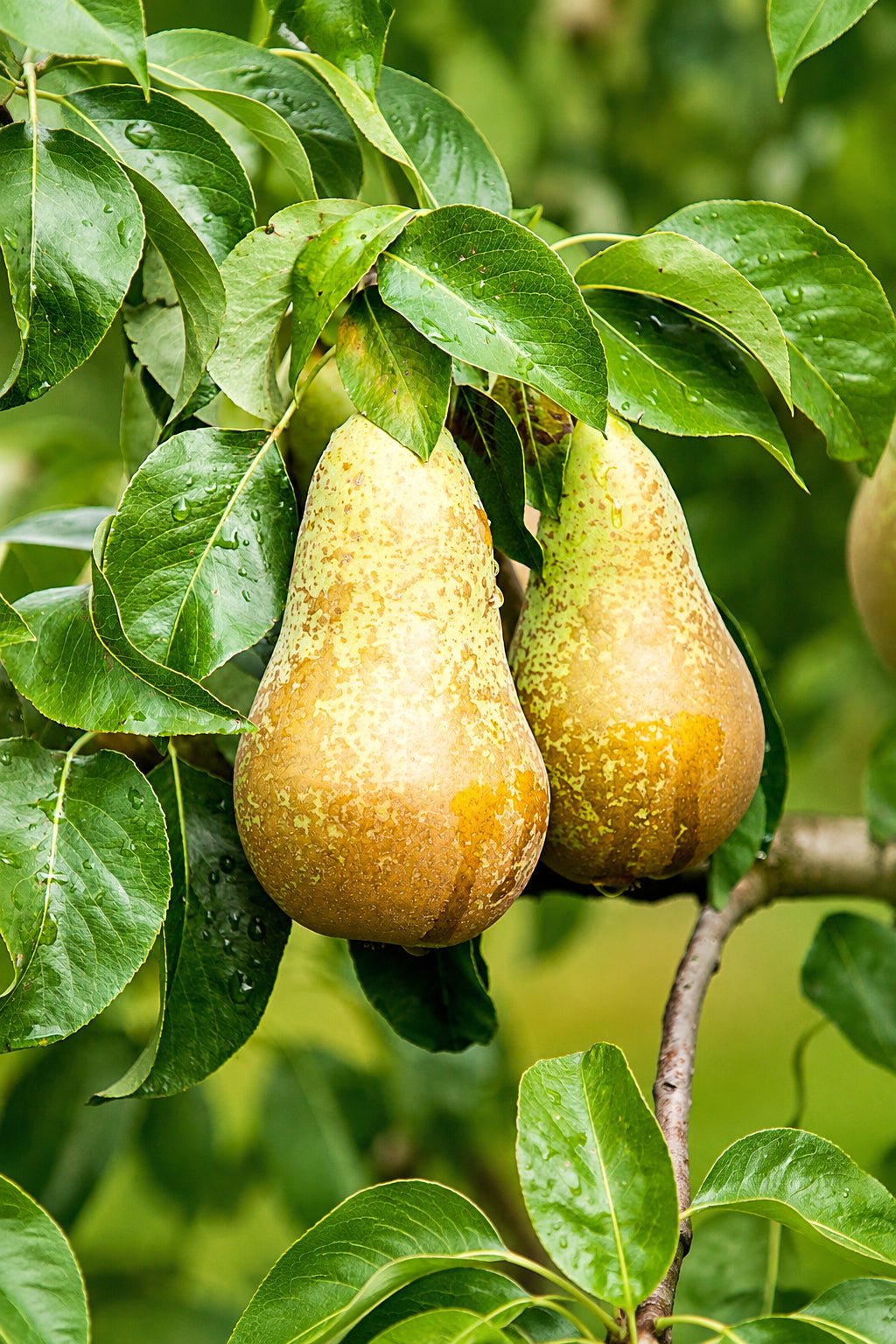
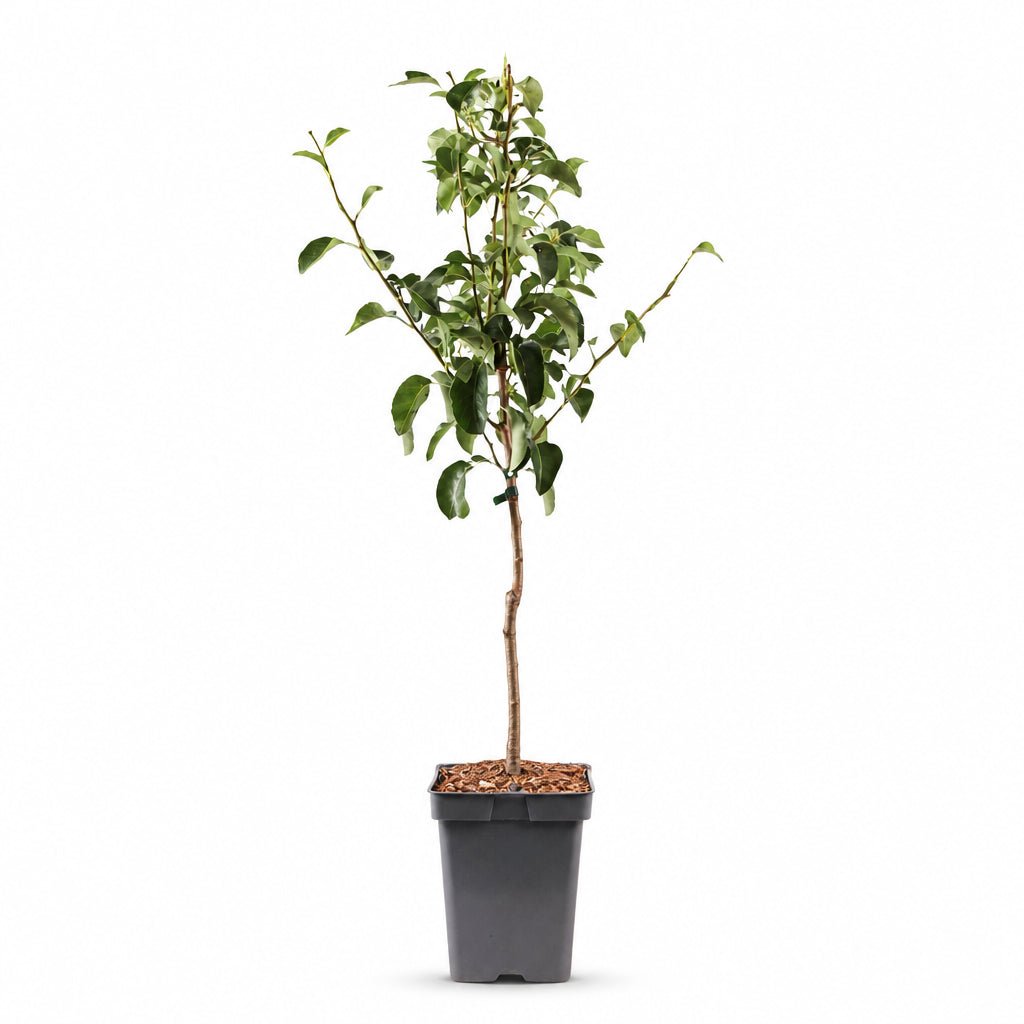

🍐 Elongated green pears with melting flesh • ✅ Self-fertile, one tree is enough • 🌸 White flowering in April • ☀️ Full sun • ❄️ Hardy down to -25 °C • 🍂 Deciduous foliage
Pyrus communis 'Conference' produces elongated pears with bronze-green skin and fine, melting white flesh. Originally from Europe and western Asia, this cultivar bred in England in 1885 has become Europe's best-selling pear and joins the fruit trees in the catalog.
Its particular strength is its reliability: self-fertile, little susceptible to scab, and productive even in years when spring has been cold. This is the pear tree that requires the fewest conditions to produce fruit.
Exposure & placement
The pear tree requires full sun and dislikes wind, which causes the fruit to fall before ripening. It also needs moister soil than the apple tree.
- Exposure: full sun — at least 6 hours of direct sun per day.
- Placement: garden, large terrace, balcony sheltered from the wind — allow for a pot at least 40 cm in diameter at maturity.
- Hardiness in a pot: down to -25 °C — winter cold is essential for fruit production.
- Soil type: deep, moist and well-drained — the pear tree tolerates drought less well than the apple tree.
'Conference' produces fruit on its own, but a second pear tree nearby significantly increases the number of fruit that set.
Watering & care
A potted fruit tree consumes much more water than one planted in the ground, and the pear tree needs even more than the others. A rich, well-drained substrate supports production, while yellowing foliage often indicates a deficiency during the fruiting season.
- Watering: generous from April to September — the pear tree is the most water-demanding fruit tree in the catalog.
- Drainage: essential — never leave standing water in the saucer.
- Pruning: in February, outside periods of frost — open up the center and shorten the previous year's shoots.
- Thinning: in June, keep only one or two pears per cluster.
- Fertilizer: fertilizer for fruit trees, when the buds break and again after flowering.
The pear is picked firm and ripens afterwards at room temperature: it is one of the few fruits that should not be left to ripen on the tree.
Decorating ideas & plant combinations
The pear tree has a naturally upright habit, narrower than that of an apple tree. On a balcony, it takes up less floor space at a similar height.
- To spread out the harvests, pair it with the 'Victoria' plum tree — plums in late August, pears in late September.
- For a complete orchard, add an 'Elstar' apple tree — apples and pears are harvested two weeks apart and can be stored together.
- To add interest in winter, place a BetterBuxus® ball next to it — its evergreen mass fills the space when the pear tree is bare.
- To enhance the pot, a container in terracotta or natural fiber keeps the substrate moist, which the pear tree needs more than other fruit trees.
The white flowering in April is among the earliest in the orchard, often a week before the apple tree's.
Verdeia tips
- Harvest the pears while they are still firm: a Conference left to ripen on the tree becomes floury and grainy at the core. Pick in late September when the fruit comes away with a twisting motion, then let it ripen for eight to ten days at room temperature.
- Water more than you would an apple tree: the pear tree has shallower roots and quickly suffers from drought. In a pot, checking the moisture with your finger every two days in summer helps prevent young fruit from dropping.
- Shelter it from the wind: pears do not hold well on the branch at the end of the season. An exposed position can cause a large part of the harvest to be lost in a single gust.
Technical specifications
- Botanical name: Pyrus communis 'Conference'
- Common name: Conference pear tree
- Family: Rosaceae
- Origin: Europe and western Asia, cultivar bred in England
- Size on delivery: H90 cm | Pot Ø21 cm
- Habit: already formed grafted tree, naturally upright
- Mature height: 3 to 4 meters in a pot
- Exposure: full sun, sheltered from the wind
- Watering: generous, the most water-demanding fruit tree in the catalog
- Soil type: deep, moist and well-drained
- Hardiness: down to -25 °C
- Pollination: self-fertile — one tree is enough
- Flowering: April, white flowers rich in nectar
- Harvest: late September, pick firm and ripen off the tree
- Foliage: deciduous, glossy deep green oval leaves
- Care: February pruning, June thinning
- Toxicity: 🐾 edible fruit, non-toxic plant
- Decorative style: Urban vegetable garden / Natural / Orchard
Every plant is unique: branching, the number of fruit buds and vigor naturally vary from one specimen to another.

Your plant, delivered with care
Every plant is hand-packed in a box specially designed for plants — secured, protected, ready to travel. It arrives in perfect condition, roots intact and foliage preserved, ready to take its place in your home.
Our Verdeia commitments
FAQ – Everything to know before adopting your Verdeia plant
How are my plants prepared before shipping?
All our plants are selected from our European partner nurseries. Before shipping, they are watered, cleaned, and protected with breathable, secure packaging. Each package is designed to ensure your plant arrives in perfect health, without any transport-related stress.
Will the plant look exactly like the photo?
The photos accurately represent the variety and the stated size. Since each plant is unique, slight differences in shape, foliage, or color may occur — and that’s part of their charm.
What are the delivery times and conditions?
Orders ship within 48 working hours, with tracked delivery in 2 to 5 working days via DPD. Shipping costs and the free-shipping threshold depend on your country — see our delivery page. You receive a tracking link as soon as your parcel leaves.
What should I do when my plant arrives?
Open your package as soon as you receive it and carefully remove the plant from its packaging. Let it acclimate for 24 hours in its new environment before watering. If it has been slightly stressed during transport, it will recover its shape after one or two days in the light.
What should I do if my plant arrives damaged?
Contact us within 48 hours with a photo of the issue. Our team will assess the situation and offer you the best solution: replacement, partial refund, or recovery advice.
Can I return a plant?
Since plants are living beings, standard returns are not possible. However, we guarantee good health upon delivery: if the plant arrives damaged, it will be replaced free of charge. For any other cases (order error, decorative pot, accessory), returns are possible within 14 days.