



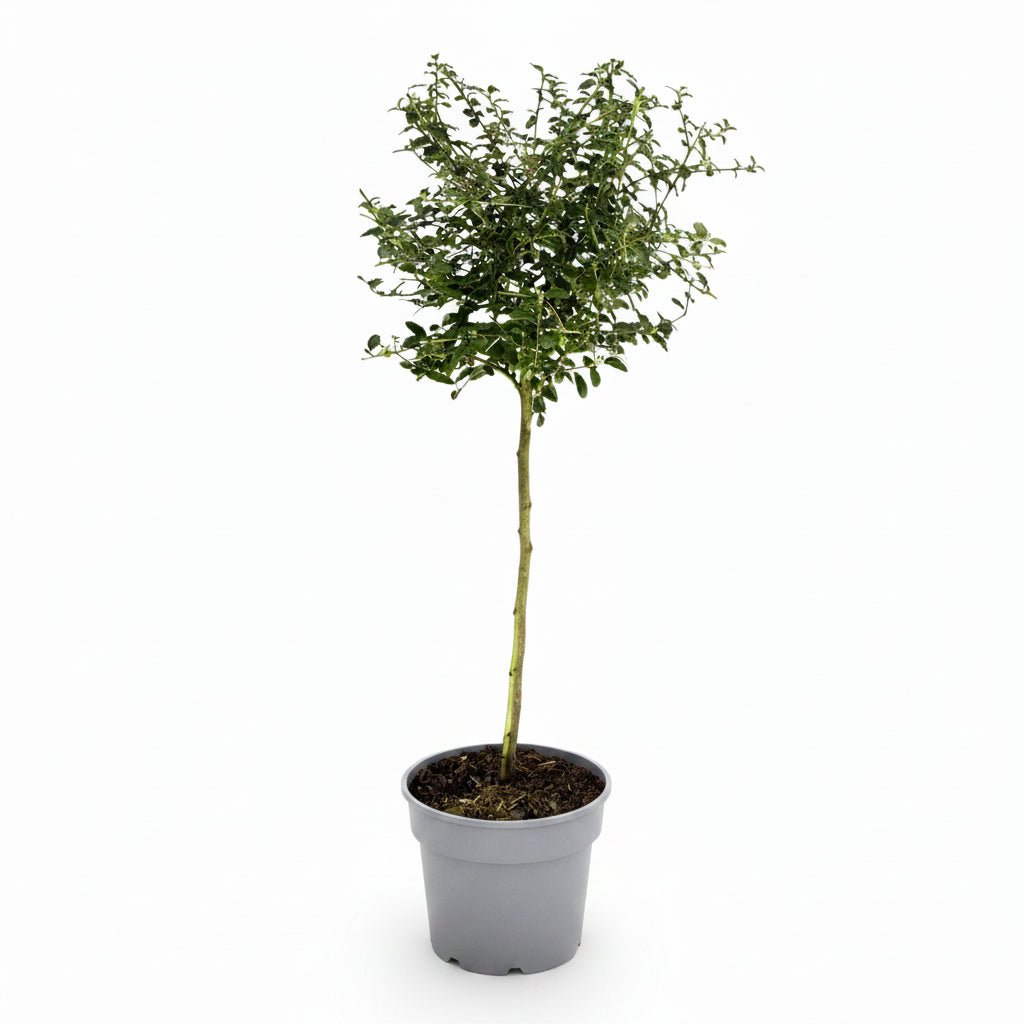
Ceanothus thyrsiflorus 'Repens' on stem (California lilac) — H90 cm | Pot Ø19 cm
- Regular price
-
€53,95 - Regular price
-
- Sale price
-
€53,95
Couldn't load pickup availability
Frequently Asked Questions
Does a Ceanothus need fertilizing? No, its roots fix atmospheric nitrogen, and applying fertilizer reduces flowering in favor of foliage.
Why is my Ceanothus dying back in winter? It is almost always caused by stagnant moisture rather than cold; a well-draining substrate and a pot sheltered from rain are enough to prevent it.
SHIPPING & PACKAGING
Shipping within 24/48 hours via DPD
- Delivery in 2 to 5 business days
- Eco-friendly packaging: recyclable boxes and biodegradable materials
- Special protection to ensure the plant arrives in perfect condition
- Parcel tracking sent by email as soon as shipped
- Free delivery on orders over €50
48H QUALITY GUARANTEE
We guarantee that your plants will arrive in perfect condition. If your plant arrives damaged or in poor condition:
- Contact us within 48 hours at hello@verdeia.eu with photos
- Free replacement or full refund
- No return necessary – we trust you
The guarantee covers: damage related to transport, severely weakened plant upon arrival, preparation errors.
CARE TIPS UPON ARRIVAL
To help your plant settle in for the long term:
- Unpack immediately and inspect your plant
- Let it acclimatize 24-48h in a bright spot without direct sunlight
- Check soil moisture before watering (dry surface = light watering)
- Wait 2-3 weeks before repotting
- Avoid heat sources and drafts
- Gently wipe leaves to remove dust
Need help? Contact our team at hello@verdeia.eu or via chat.
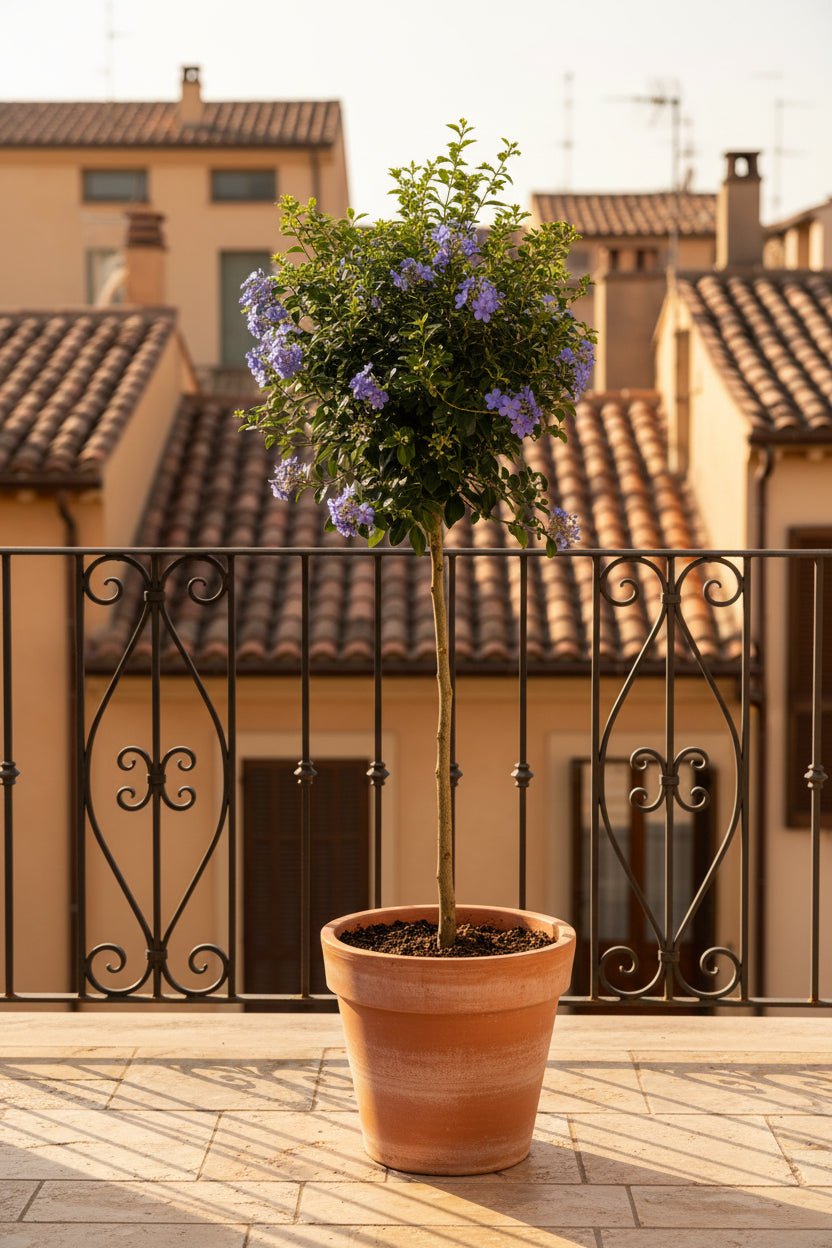

💙 Sky-blue flowers in May–June • 💧 Cascading trailing branches • 🌿 Glossy evergreen foliage • 🐝 Highly attractive to bees • 🌳 Trained on a standard • ☀️ Full sun
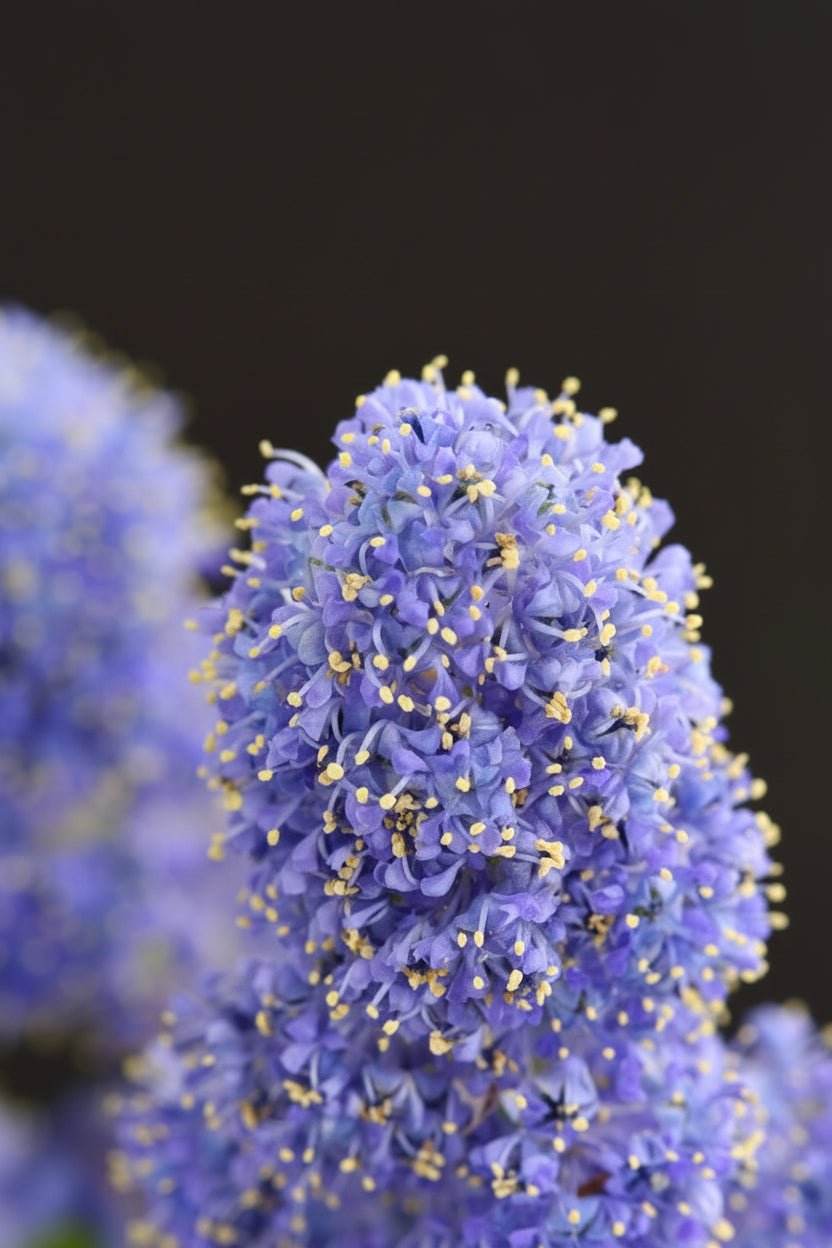
Ceanothus thyrsiflorus 'Repens', or creeping California lilac, is covered in May with such dense sky-blue panicles that they hide the foliage. Native to the west coast of the United States, it brings terrace shrubs a vivid blue that few species produce.
Its distinctive feature lies in the combination of two traits: 'Repens' is naturally creeping, and training it on a standard transforms its spreading habit into a cascading form covered in flowers.
Which standard Ceanothus should you choose?
Two cultivars trained on a standard, with different habits and shades of blue:
- Ceanothus 'Repens' (this plant) — cascading trailing branches, sky-blue flowers. The most spectacular habit.
- Ceanothus impressus 'Victoria' — compact upright habit, deep blue flowers, the hardiest of the genus (H90 cm | Pot Ø19 cm). The most resilient version.
Exposure & position
Ceanothus is a full-sun plant that thrives in dry soil. Winter moisture, much more than cold, causes it to decline: waterlogged substrate in January is fatal.
- Exposure: full sun — at least 6 hours of direct sun per day.
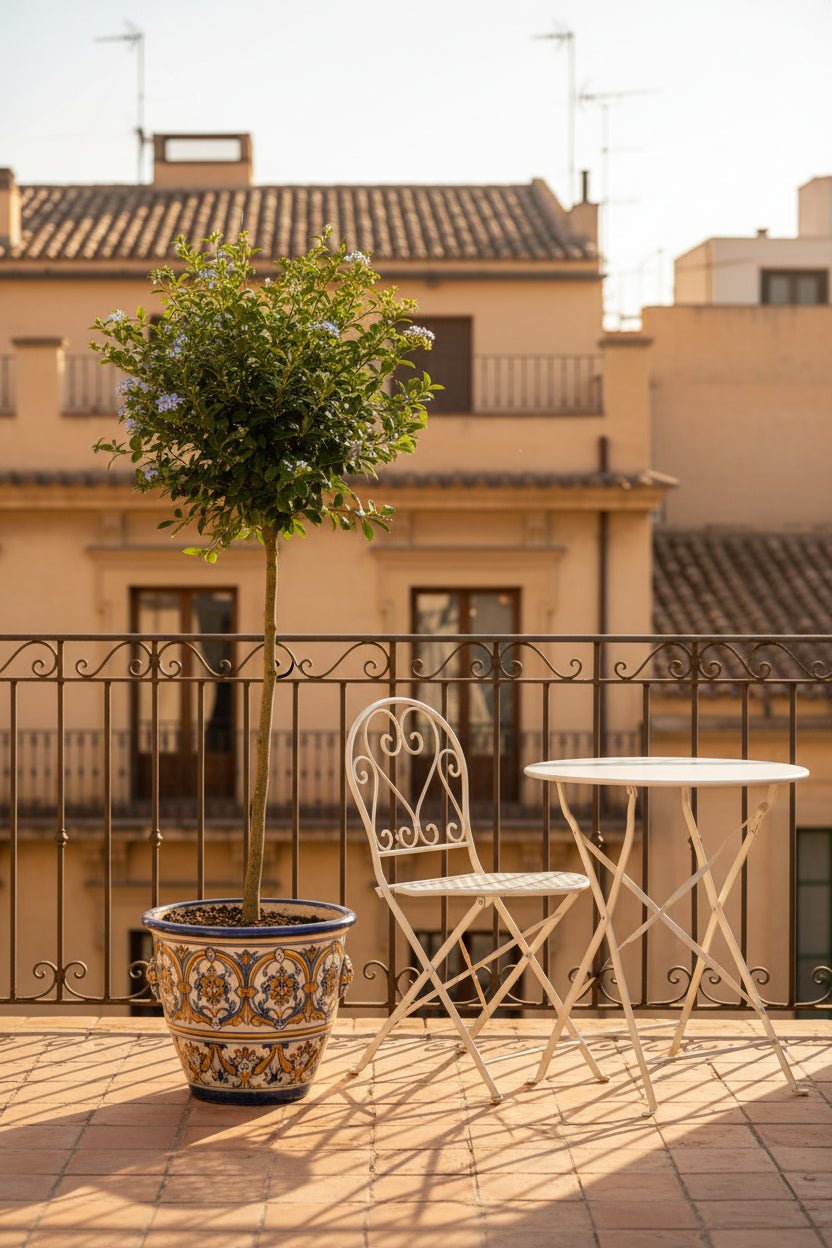
- Position: terrace, low wall, raised planter — choose an elevated position to let the branches trail down.
- Hardiness in a pot: down to -12 °C — protect from prolonged rain in winter.
- Soil type: very well-drained and rather poor — potting soil mixed with coarse sand, without excessive fertilization.
The trailing habit is only visible when the plant is elevated: placed on the ground, the cascade spreads out and loses all its effect.
Watering & care
The Ceanothus fixes atmospheric nitrogen through its roots, allowing it to thrive in poor soil. A very well-draining substrate is essential, and the foliage always signals a problem before it worsens.
- Watering: moderate during the first year, then greatly reduced — once established, the Ceanothus needs almost no watering.
- Drainage: vital — never allow standing water, which is the number one cause of death in this species.
- Pruning: light, just after flowering, in June — never cut into old wood, as the plant will not regrow from it.
- Suckers: remove shoots that appear along the trunk, as they ruin the stem-trained shape.
- Fertilizer: none — the Ceanothus produces its own nitrogen, and soil that is too rich reduces flowering.
It is the only plant in the range grown on a stem that requires no fertilization: its root nodules fix nitrogen from the air.
Decor ideas & plant pairings
True blue is an almost impossible-to-find color among shrubs: on a terrace, it creates an effect that neither pink, white, nor mauve can replace.
- For a Ceanothus duo, pair it with the upright 'Victoria' — two shades of blue and two contrasting forms, one growing upward and the other cascading down.
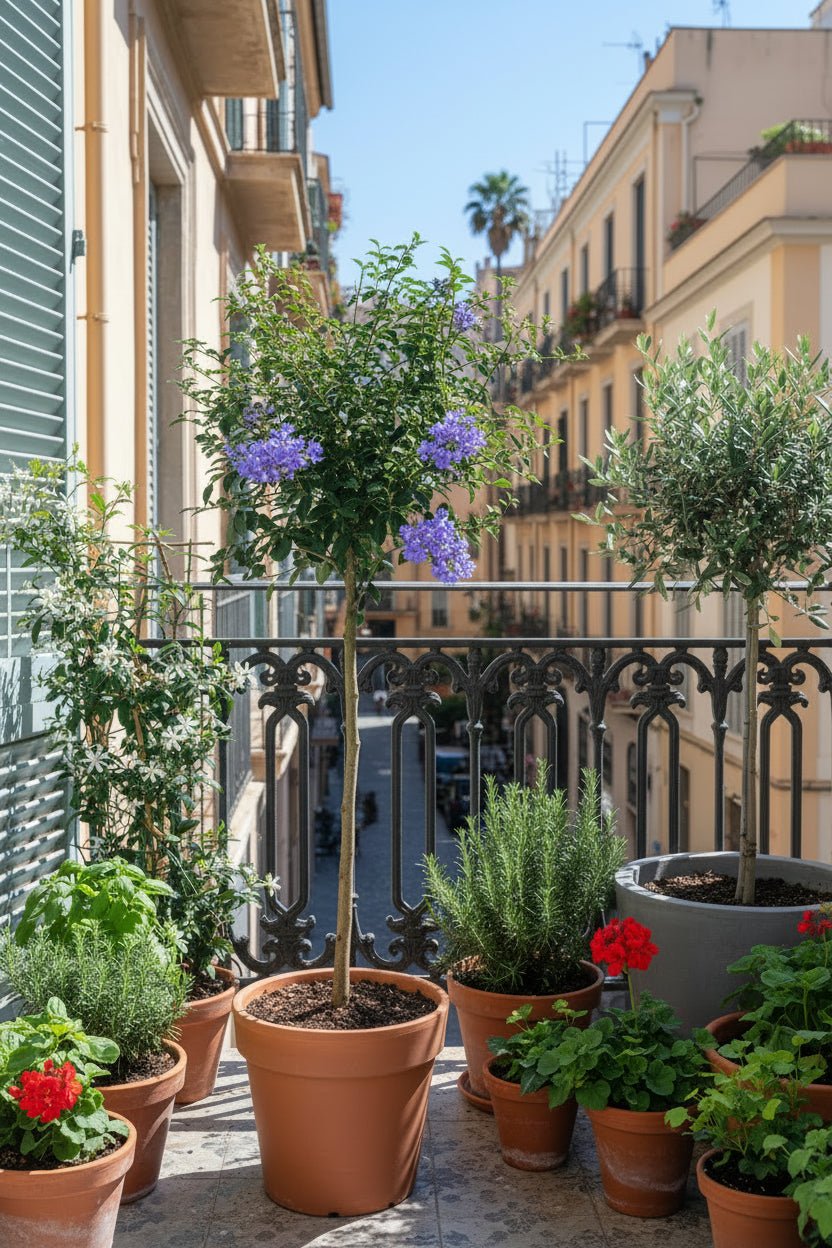
- For a Mediterranean arrangement, place an Olive tree beside it — the same need for sun and drainage, with the blue standing out against the silvery foliage.
- To extend the blue-violet display, add a 'Prostratus' Rosemary — two trailing cascades, two successive blooms rich in nectar.
- To enhance the pot, a terracotta or natural-fiber container wicks away moisture better than a glazed pot, which is exactly what the Ceanothus needs.
In full bloom, the shrub literally buzzes with bees: it is one of the most bee-friendly shrubs there is.
Verdeia tips
- Raise it to reveal the cascade: the whole appeal of 'Repens' trained on a standard lies in the trailing flowering branches. On a low wall or tall planter, the effect is immediate; placed on the ground, it disappears.
- Protect it from winter moisture, not the cold: Ceanothus dies far more often from being waterlogged than from frost. A pot sheltered from prolonged rain and raised on blocks will get through winter without any problems.
- Do not fertilize it: its roots fix atmospheric nitrogen. Fertilizer promotes foliage at the expense of flowers and weakens the plant against the cold.
Technical specifications
- Botanical name: Ceanothus thyrsiflorus 'Repens'
- Common name: Trailing California lilac
- Family: Rhamnaceae
- Origin: west coast of the United States
- Dimensions on delivery: H90 cm | Pot Ø19 cm
- Form: trained on a standard, with trailing branches
- Trailing length: 40 to 60 cm from the crown
- Exposure: full sun, at least 6 hours per day
- Watering: moderate during the first year, then very limited
- Soil type: very well-drained and poor
- Hardiness: down to -12 °C, sensitive to winter moisture
- Growth: fast, light pruning after flowering
- Foliage: evergreen, small glossy, deep green oval leaves
- Flowering: May to June, very dense sky-blue panicles, highly attractive to bees
- Care: easy, no fertilization required
- Toxicity: 🐾 non-toxic to animals and children
- Decorative style: Mediterranean / Natural / Colorful
Each plant is unique: the height of the trunk, the length of the branches, and the density of the flowers naturally vary depending on exposure.

Your plant, delivered with care
Every plant is hand-packed in a box specially designed for plants — secured, protected, ready to travel. It arrives in perfect condition, roots intact and foliage preserved, ready to take its place in your home.
Our Verdeia commitments
FAQ – Everything to know before adopting your Verdeia plant
How are my plants prepared before shipping?
All our plants are selected from our European partner nurseries. Before shipping, they are watered, cleaned, and protected with breathable, secure packaging. Each package is designed to ensure your plant arrives in perfect health, without any transport-related stress.
Will the plant look exactly like the photo?
The photos accurately represent the variety and the stated size. Since each plant is unique, slight differences in shape, foliage, or color may occur — and that’s part of their charm.
What are the delivery times and conditions?
Shipping is done within 48 business hours, with tracked delivery within 2 to 5 business days. Delivery costs €5.60 — free for orders over €50. You will receive a tracking link as soon as the package is shipped.
What to do upon receiving my plant?
Open your package as soon as you receive it and carefully remove the plant from its packaging. Let it acclimate for 24 hours in its new environment before watering. If it has been slightly stressed during transport, it will recover its shape after one or two days in the light.
What to do if my plant arrives damaged?
Contact us within 48 hours with a photo of the issue. Our team will assess the situation and offer you the best solution: replacement, partial refund, or recovery advice.
Can I return a plant?
Since plants are living beings, standard returns are not possible. However, we guarantee good health upon delivery: if the plant arrives damaged, it will be replaced free of charge. For any other cases (order error, decorative pot, accessory), returns are possible within 14 days.