



Viburnum tinus Eve Price (Rose Laurel) - H90 cm | Pot Ø19 cm
- Regular price
-
€53,95 - Regular price
-
- Sale price
-
€53,95
Couldn't load pickup availability
Frequently Asked Questions
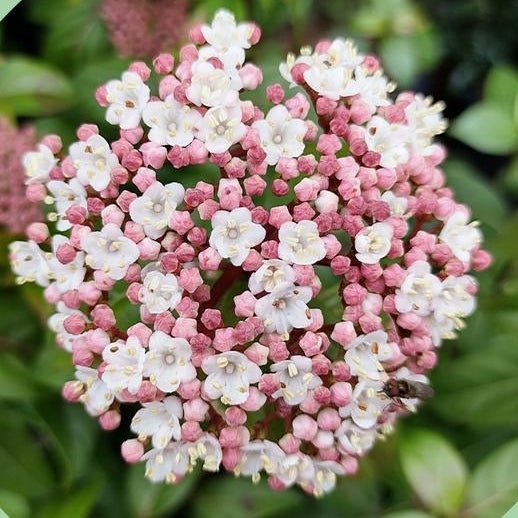
Does Viburnum tinus bloom in winter? Yes, that’s one of its great strengths. Flowering starts in November and continues until April depending on the climate. The bright pink buds of the Eve Price variety are visible well before the flowers open, bringing color to your balcony or terrace as early as autumn.
Is Viburnum tinus Eve Price toxic to animals? No, Viburnum tinus is safe for dogs and cats. This is a significant benefit for an outdoor shrub that is also decorative.
SHIPPING & PACKAGING
Shipping within 24/48 hours via DPD
- Delivery in 2 to 5 business days
- Eco-friendly packaging: recyclable boxes and biodegradable materials
- Special protection to ensure the plant arrives in perfect condition
- Parcel tracking sent by email as soon as shipped
- Free delivery on orders over €50
48H QUALITY GUARANTEE
We guarantee that your plants will arrive in perfect condition. If your plant arrives damaged or in poor condition:
- Contact us within 48 hours at hello@verdeia.eu with photos
- Free replacement or full refund
- No return necessary – we trust you
The guarantee covers: damage related to transport, severely weakened plant upon arrival, preparation errors.
CARE TIPS UPON ARRIVAL
To help your plant settle in for the long term:
- Unpack immediately and inspect your plant
- Let it acclimatize 24-48h in a bright spot without direct sunlight
- Check soil moisture before watering (dry surface = light watering)
- Wait 2-3 weeks before repotting
- Avoid heat sources and drafts
- Gently wipe leaves to remove dust
Need help? Contact our team at hello@verdeia.eu or via chat.
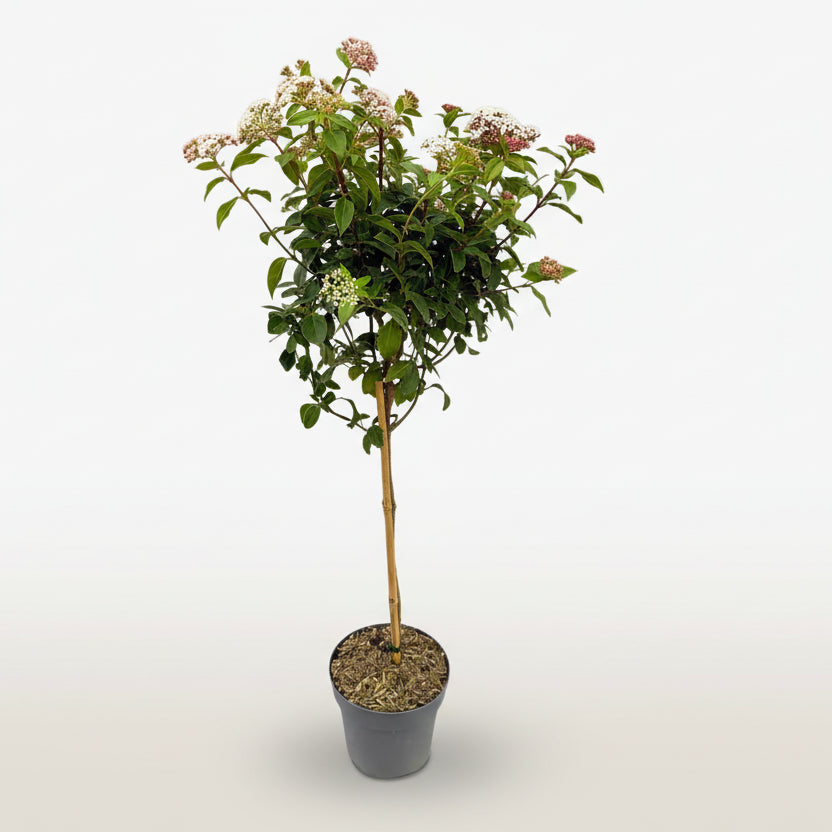

🌸 Winter pale pink-white flowering • 🍃 Glossy evergreen foliage • ❄️ Very hardy to -15°C • ☀️ Sun to partial shade • 💧 Moderate watering • 📏 H90 cm | Pot Ø19 cm • 🐝 Honey plant • 🐾 Non-toxic
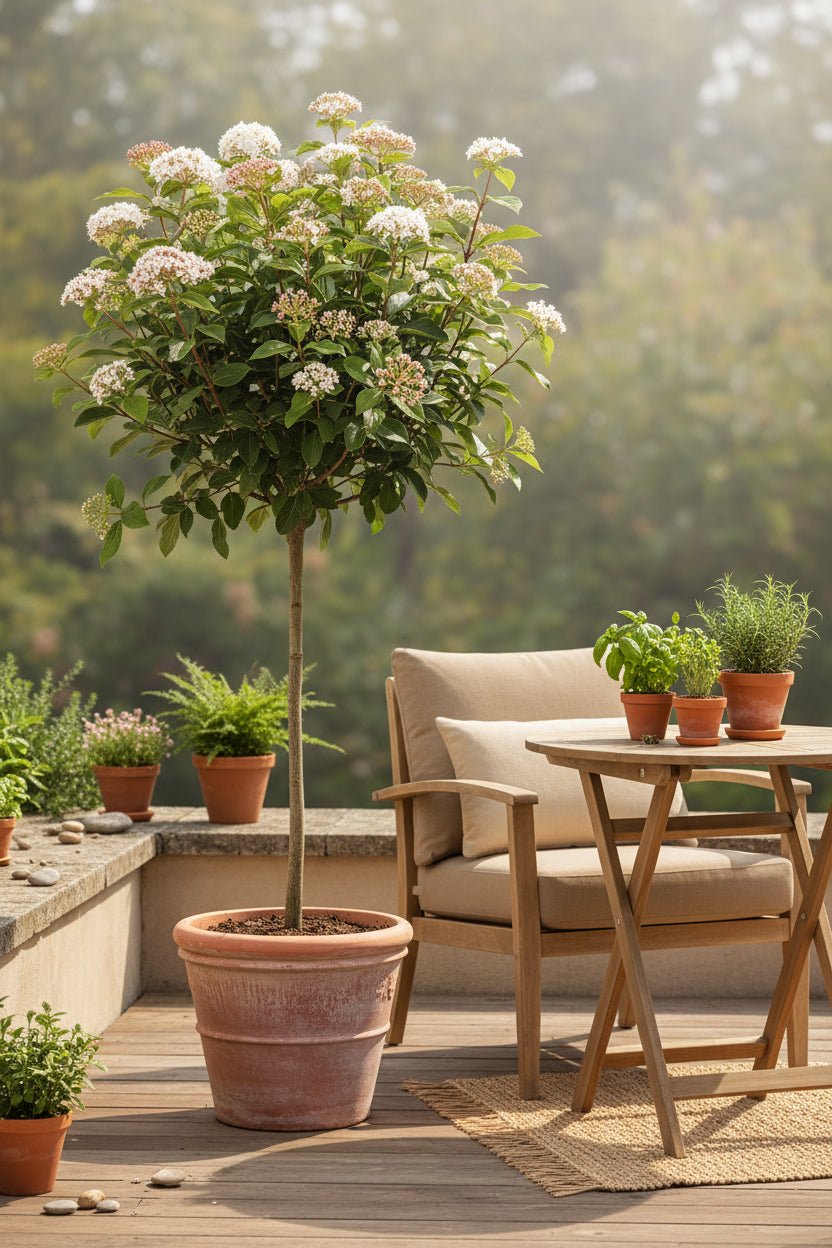
The Viburnum tinus 'Eve Price', or Pink Laurustinus, is an evergreen stemmed shrub native to the Mediterranean basin. Its bright pink flower buds open into slightly scented pale pink-white flowers from November to April — when almost all outdoor plants are dormant. Its glossy dark green foliage remains decorative all year round.
Grown on a stem, it offers a structured and elegant form that makes it a centerpiece plant on a balcony or terrace. Very hardy, pollution-tolerant, and easy to care for, it is one of the most reliable shrubs for an urban garden all year round. Discover it in our Viburnum tinus collection.
Which variety of Viburnum tinus to choose?
Both varieties in our catalog share the same hardiness and stemmed growth habit — it is the flower color that distinguishes them:
- Viburnum tinus 'Eve Price' (this plant) — bright pink flower buds that open into pale pink-white flowers. The most colorful and eye-catching.
- Viburnum tinus — white buds and flowers, classic version. More discreet, just as generous in flowering.
The Eve Price stands out from autumn with its bright pink buds contrasting with dark green foliage — a decorative effect visible several months before the flowers open.
Exposure & location
The Viburnum tinus 'Eve Price' is one of the most adaptable outdoor shrubs — it tolerates a wide range of light conditions and withstands urban environments well.
- Ideal exposure: sun to partial shade — south, east, or west-facing balcony or terrace.
- Tolerates: light shade and urban pollution — a rare advantage for city spaces.
- In a pot: large pot minimum Ø30–40 cm, shrub potting soil with drainage. Terracotta or ceramic pot to prevent root overheating in summer.
- Soil: any well-drained soil type, tolerates limestone.
- Hardiness: Very hardy down to -15 °C — no protection needed once established.
The sunnier the location, the more abundant the flowering. In partial shade, it will still bloom but with less density.
Watering & maintenance
- Watering: regular during the first year to encourage rooting, then moderate once established.
- Frequency: 1 to 2 times per week in summer, reduced in autumn-winter depending on rainfall.
- In a pot: water as soon as the substrate surface dries — pots dry out faster than ground soil.
- Drainage: pot must have drainage holes, empty saucer after watering.
- Fertilizer: once in spring after flowering with a fertilizer for flowering shrubs.
- Pruning: light pruning after spring flowering to maintain the stem shape and encourage new flowering shoots.
Viburnum tinus is drought tolerant once well-rooted — the first year is the most critical. Water regularly until autumn, then gradually reduce.
Decor ideas & plant pairings
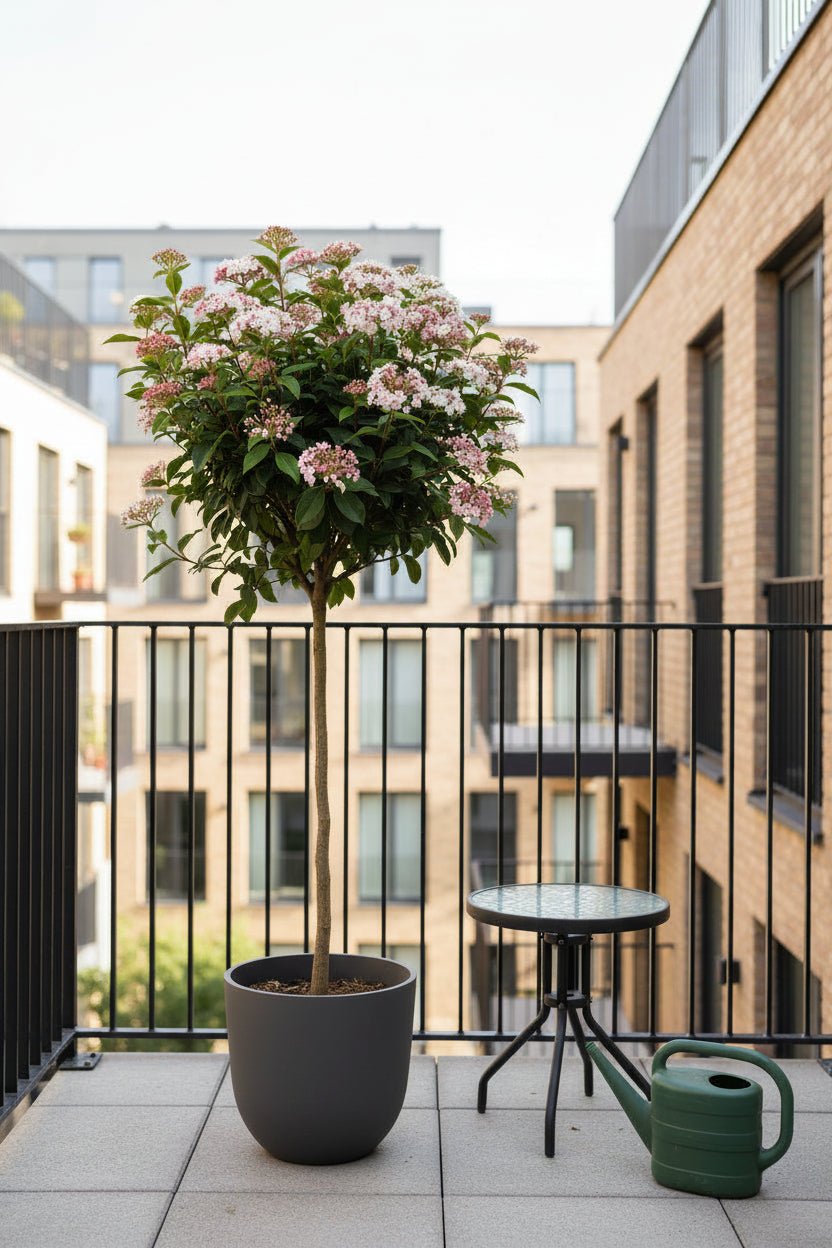
On a stem, the Viburnum tinus 'Eve Price' has the silhouette of a small ornamental tree — it immediately structures a balcony or terrace, even on its own. Its winter flowering makes it a strategic element to ensure continuous color when everything else is dormant.
- Solo on a balcony: in a large terracotta or ceramic pot, its stemmed form creates a miniature tree effect with a very architectural feel. Find our ideas in our balconies and terraces selection.
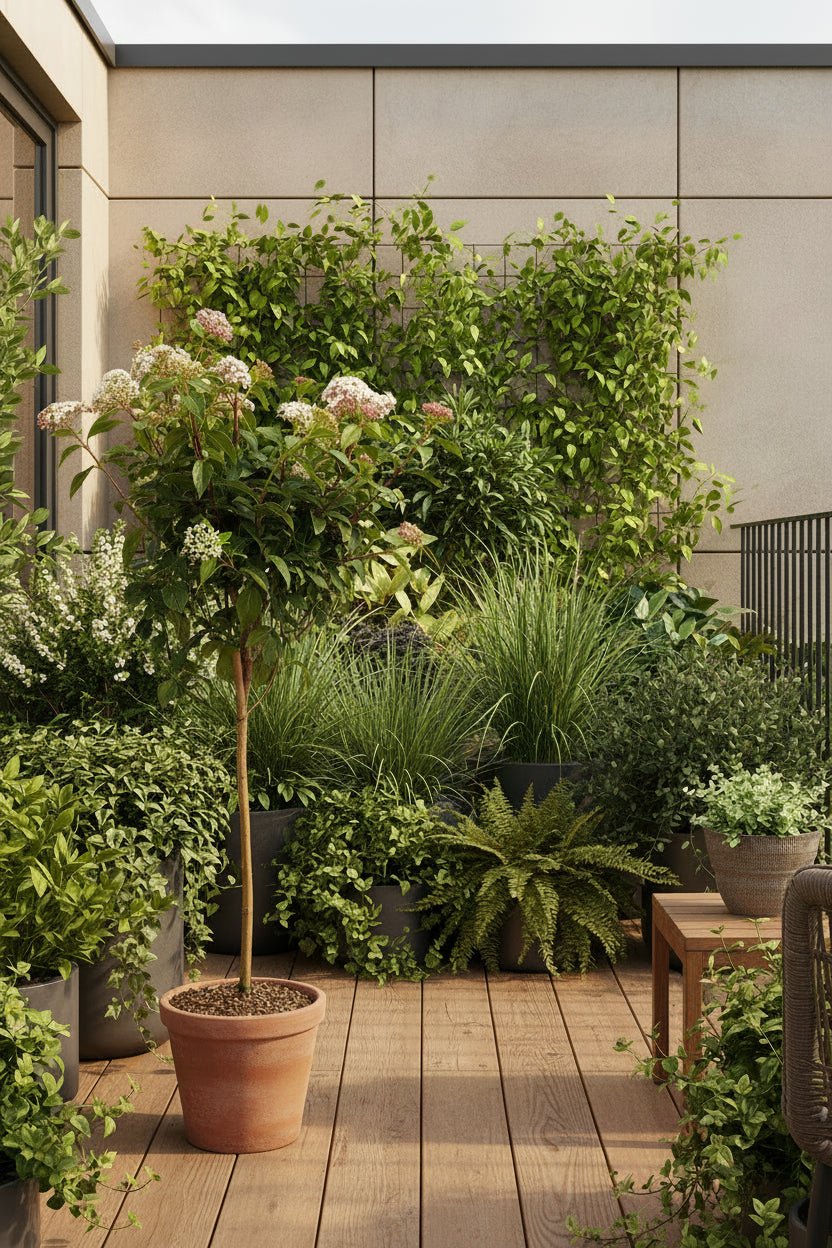
- At the base of the stem: plant spring bulbs (daffodils, grape hyacinths) or lavender at the base — the open stem shape leaves plenty of room for a layered arrangement.
- In pairs: pair it with a white Viburnum tinus for a subtle mirror effect — similar shape, complementary colors.
- Ideal pot: large terracotta, matte ceramic, or natural fiber pot — warm materials enhance its Mediterranean character.
Its flowering from November to April takes over when roses, camellias, and other shrubs start to fade — keep this in mind so your terrace never lacks flowers.
Verdeia Tips
- Weak flowering: check light and pruning — lack of sunlight reduces the number of flower clusters. Pruning that is too severe or too late in autumn removes already formed buds. Always prune just after flowering, in spring.
- Yellow leaves: overwatering or poor drainage — reduce watering, always empty the saucer, and check that the pot’s drainage is working well. In pots, yellowing is almost always due to stagnant moisture.
- Critical first year — Very hardy once established, Viburnum needs regular watering during the first season to develop strong roots. Do not neglect this phase even if the plant seems robust.
- Stem growth requires maintenance pruning — remove suckers (shoots that grow on the stem below the crown) as soon as they appear to maintain the tree-like shape. Once a year in spring is enough.
- Valuable melliferous plant in winter — its flowering from November to April is a rare resource for pollinators active during mild winter weather. A helpful gesture for urban biodiversity.
- 🐾 Non-toxic — Viburnum tinus is safe for dogs and cats.
Technical characteristics
- Botanical name: Viburnum tinus 'Eve Price'
- Common name: Pink laurestine, Laurustinus
- Family: Adoxaceae
- Origin: Mediterranean basin
- Pot diameter: 19 cm
- Approximate height: 90 cm (on stem)
- Adult size: up to 150–200 cm in a pot (pruned)
- Flowering: November to April, slightly scented white-pink
- Foliage: evergreen, glossy dark green
- Exposure: sun to partial shade
- Watering: regular during the first year, moderate afterwards
- Hardiness: Very hardy down to -15 °C
- Care: easy
- Toxicity to pets: non-toxic
- Decorative style: Mediterranean / Urban / Contemporary
- Special feature: winter flowering, structured stem growth, pollution tolerant, melliferous
Each plant is unique: the photos show a representative example. The density of flowering and shape naturally vary depending on exposure and season.

Your plant, delivered with care
Every plant is hand-packed in a box specially designed for plants — secured, protected, ready to travel. It arrives in perfect condition, roots intact and foliage preserved, ready to take its place in your home.
Our Verdeia commitments
FAQ – Everything to know before adopting your Verdeia plant
How are my plants prepared before shipping?
All our plants are selected from our European partner nurseries. Before shipping, they are watered, cleaned, and protected with breathable, secure packaging. Each package is designed to ensure your plant arrives in perfect health, without any transport-related stress.
Will the plant look exactly like the photo?
The photos accurately represent the variety and the stated size. Since each plant is unique, slight differences in shape, foliage, or color may occur — and that’s part of their charm.
What are the delivery times and conditions?
Shipping is done within 48 business hours, with tracked delivery within 2 to 5 business days. Delivery costs €5.60 — free for orders over €50. You will receive a tracking link as soon as the package is shipped.
What to do upon receiving my plant?
Open your package as soon as you receive it and carefully remove the plant from its packaging. Let it acclimate for 24 hours in its new environment before watering. If it has been slightly stressed during transport, it will recover its shape after one or two days in the light.
What to do if my plant arrives damaged?
Contact us within 48 hours with a photo of the issue. Our team will assess the situation and offer you the best solution: replacement, partial refund, or recovery advice.
Can I return a plant?
Since plants are living beings, standard returns are not possible. However, we guarantee good health upon delivery: if the plant arrives damaged, it will be replaced free of charge. For any other cases (order error, decorative pot, accessory), returns are possible within 14 days.