



Buddleja 'Butterfly Candy Little Pink' (Dwarf pink butterfly bush) — H25 cm | Pot Ø12 cm
- Regular price
-
€27,95 - Regular price
-
- Sale price
-
€27,95
Couldn't load pickup availability
Frequently asked questions
What color are the flowers of Buddleja Little Pink? Its conical spikes bear small, lightly fragrant soft pink flowers with orange centers from midsummer.
Can you grow a dwarf buddleja in a pot? Yes, Little Pink grows in a 20 cm pot with drainage holes on a sunny balcony, with well-draining potting soil.
Shipping & packaging
Shipped within 24/48 hours via DPD
- Delivery in 2 to 5 working days
- Eco-friendly packaging: recyclable boxes and biodegradable materials
- Special protection so your plant arrives in perfect condition
- Tracking link sent by email as soon as your parcel ships
- Shipping costs and the free-shipping threshold depend on your country — see our delivery page
ZEN ARRIVAL GUARANTEE
We guarantee that your plants will arrive in perfect condition. If your plant arrives damaged or in poor condition:
- Contact us promptly at hello@verdeia.eu with photos
- We will find the right solution for your situation
- No return needed — we trust you
The guarantee covers: damage in transit, plants severely weakened on arrival, and order preparation errors.
CARE TIPS ON ARRIVAL
To help your plant settle in for the long term:
- Unpack your plant immediately and inspect it
- Let it acclimatize for 24-48h in a bright spot out of direct sunlight
- Check the soil moisture before watering (dry surface = light watering)
- Wait 2-3 weeks before repotting, if needed
- Keep it away from heat sources and drafts
- Gently wipe the leaves to remove dust
Need help? Contact our team at hello@verdeia.eu or via chat.
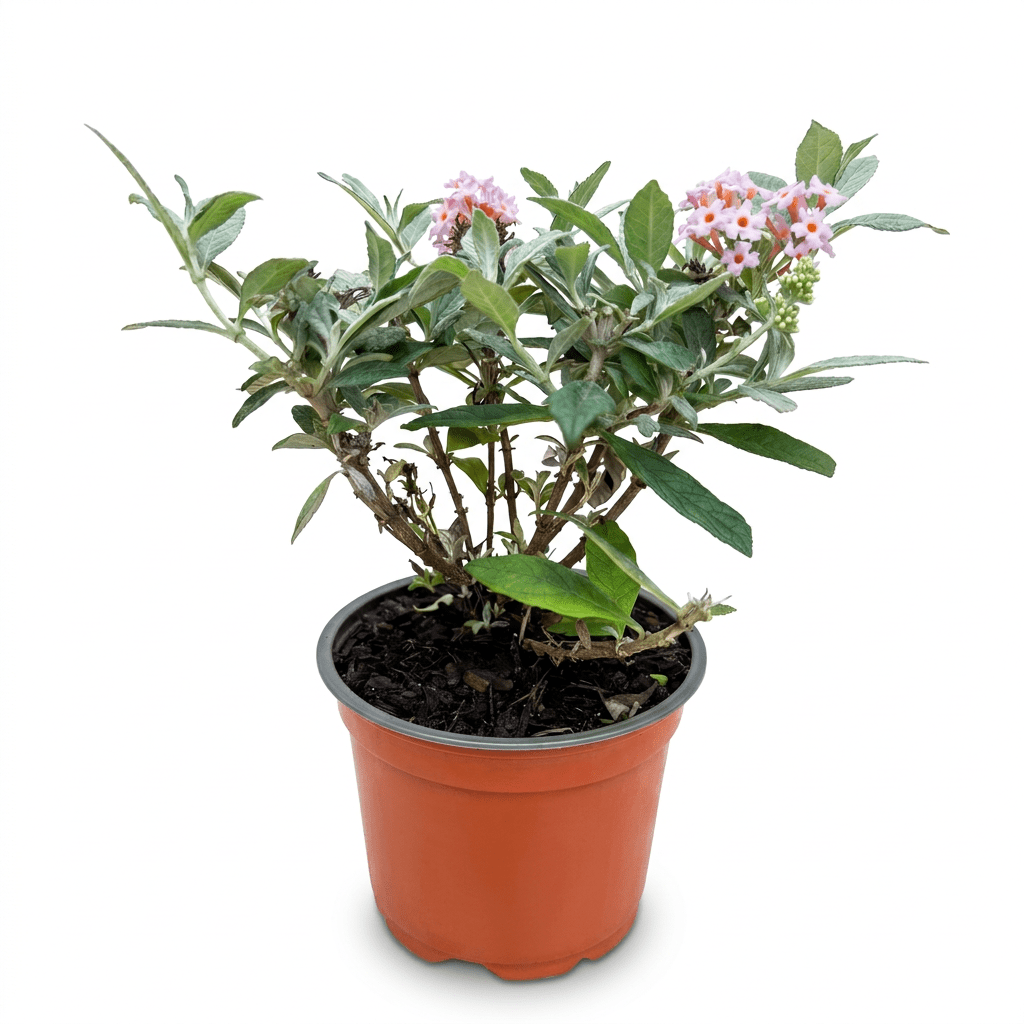
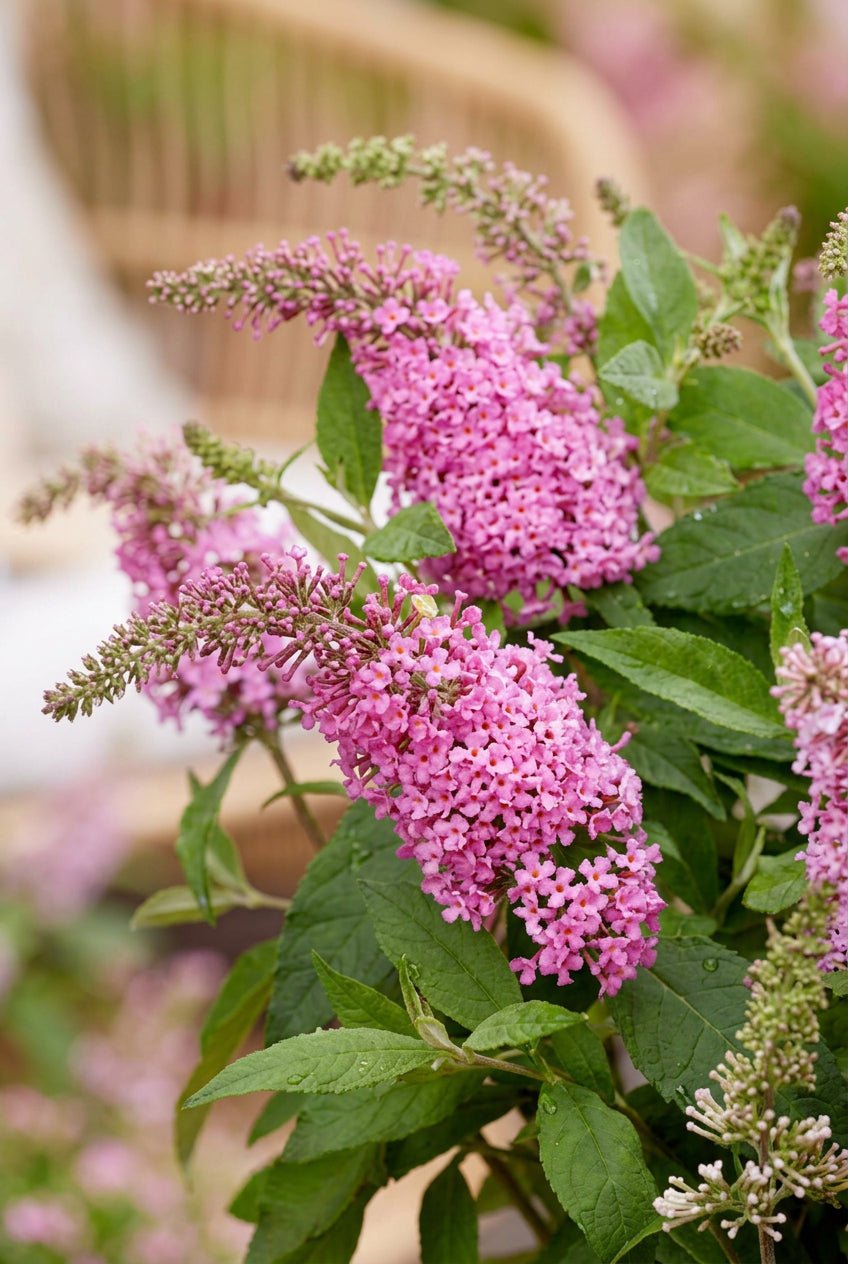
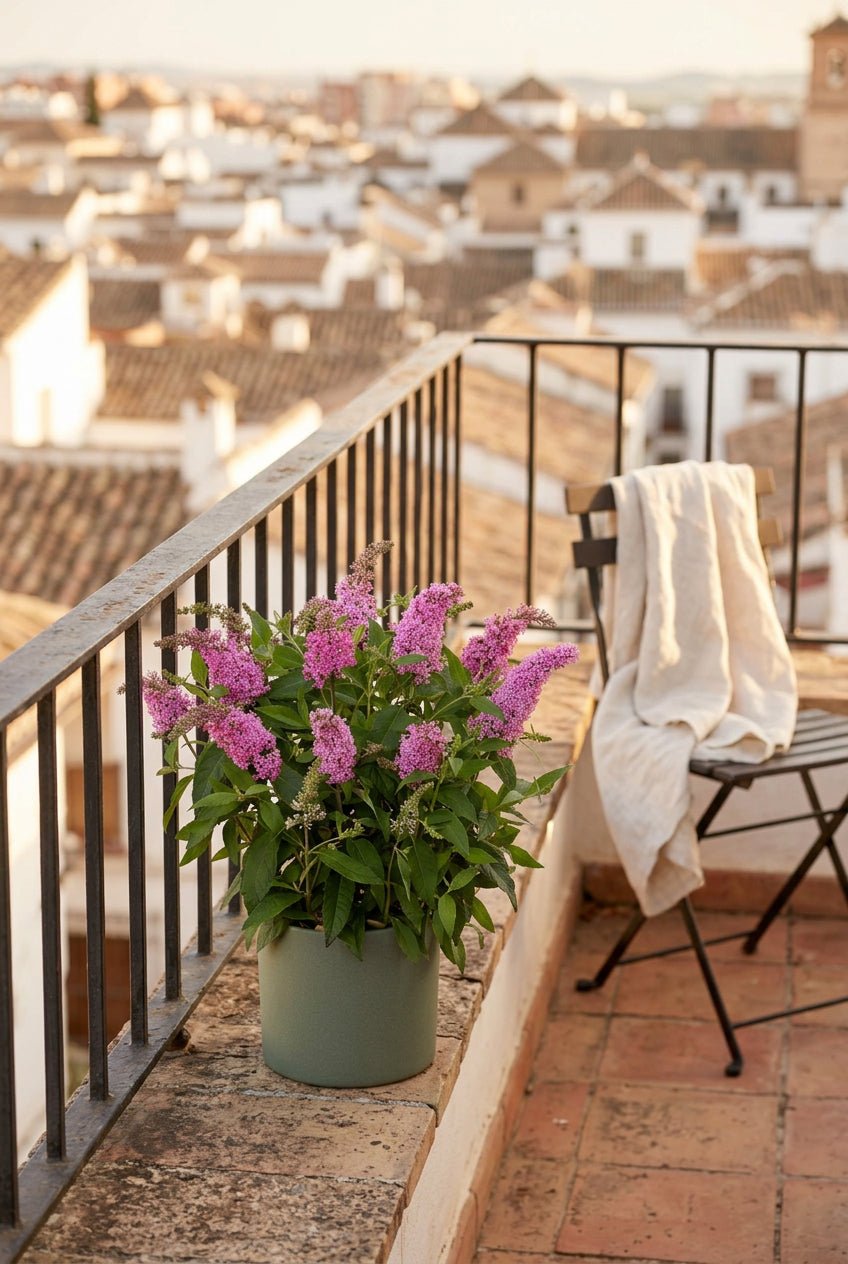
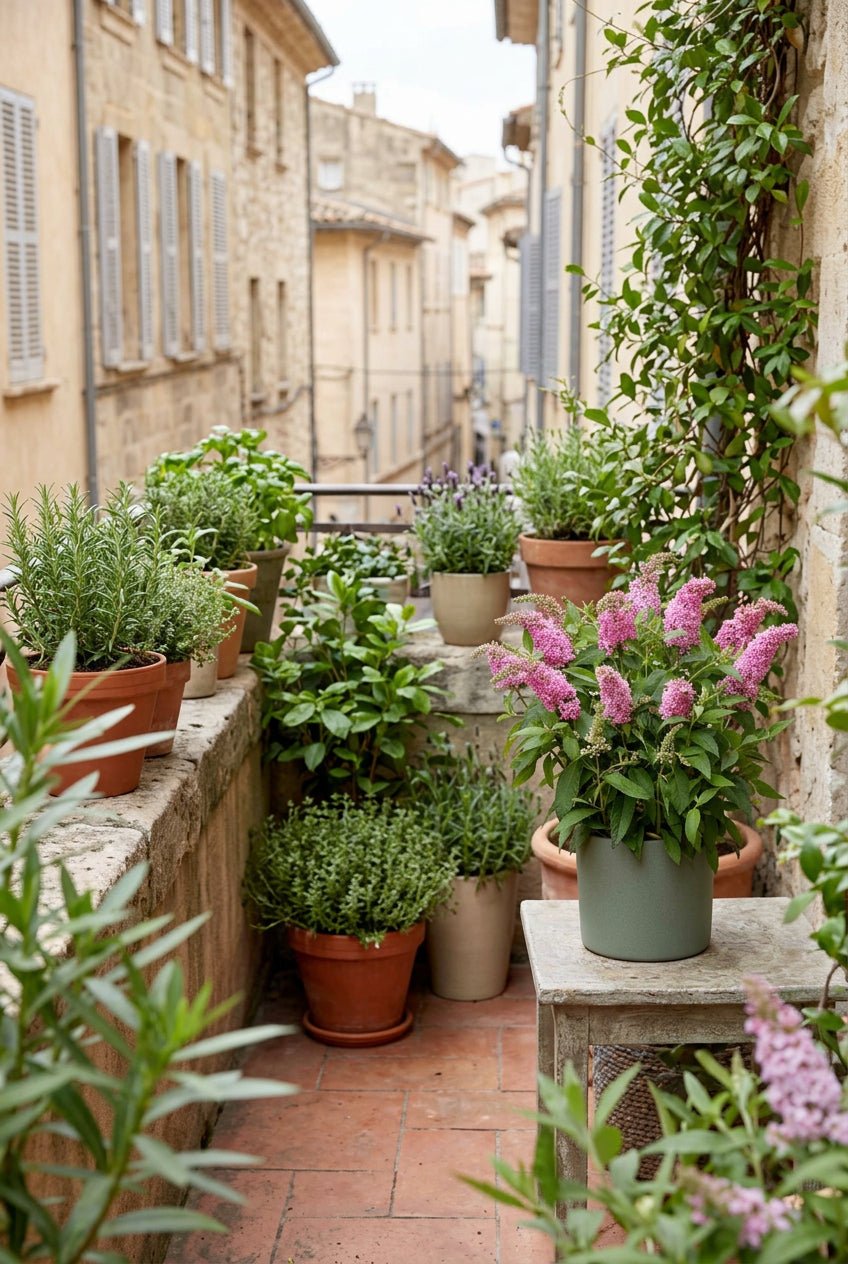
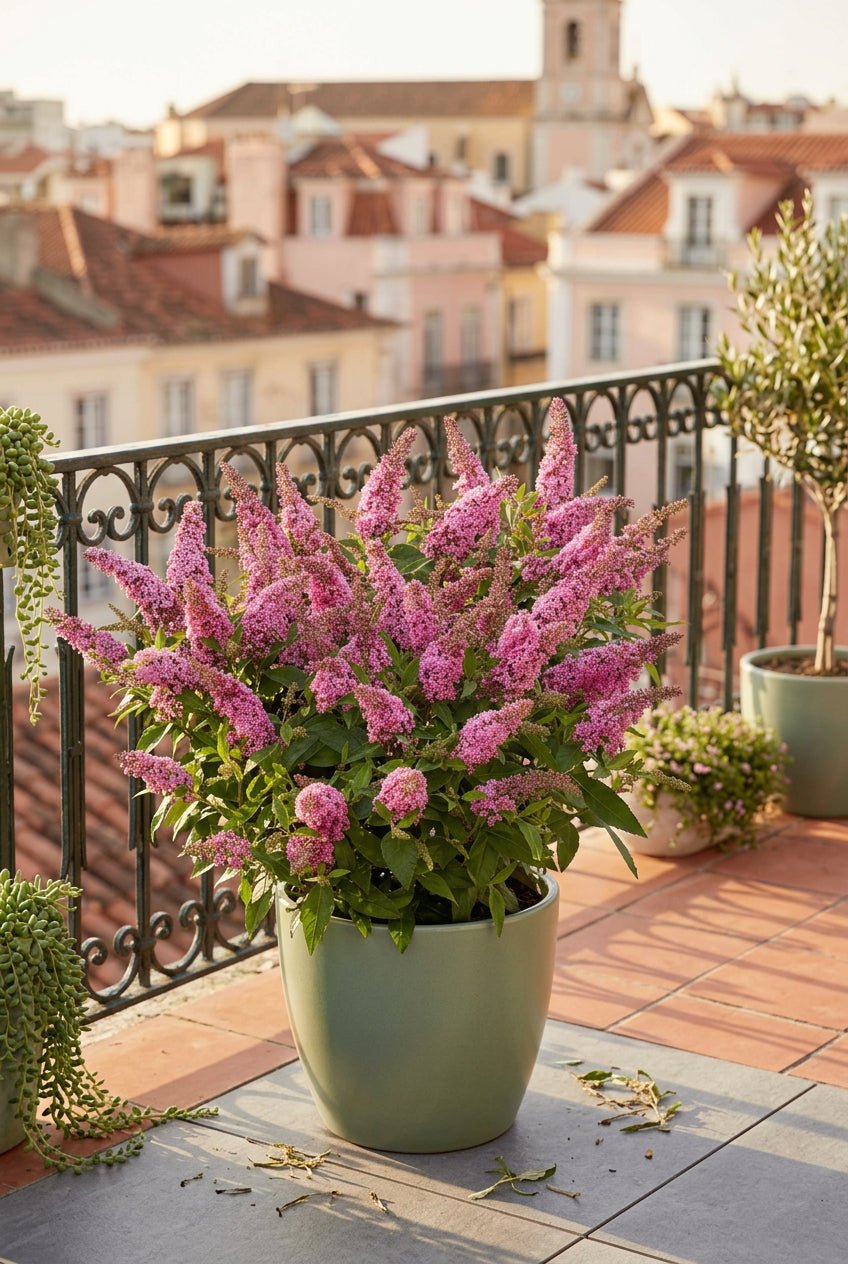
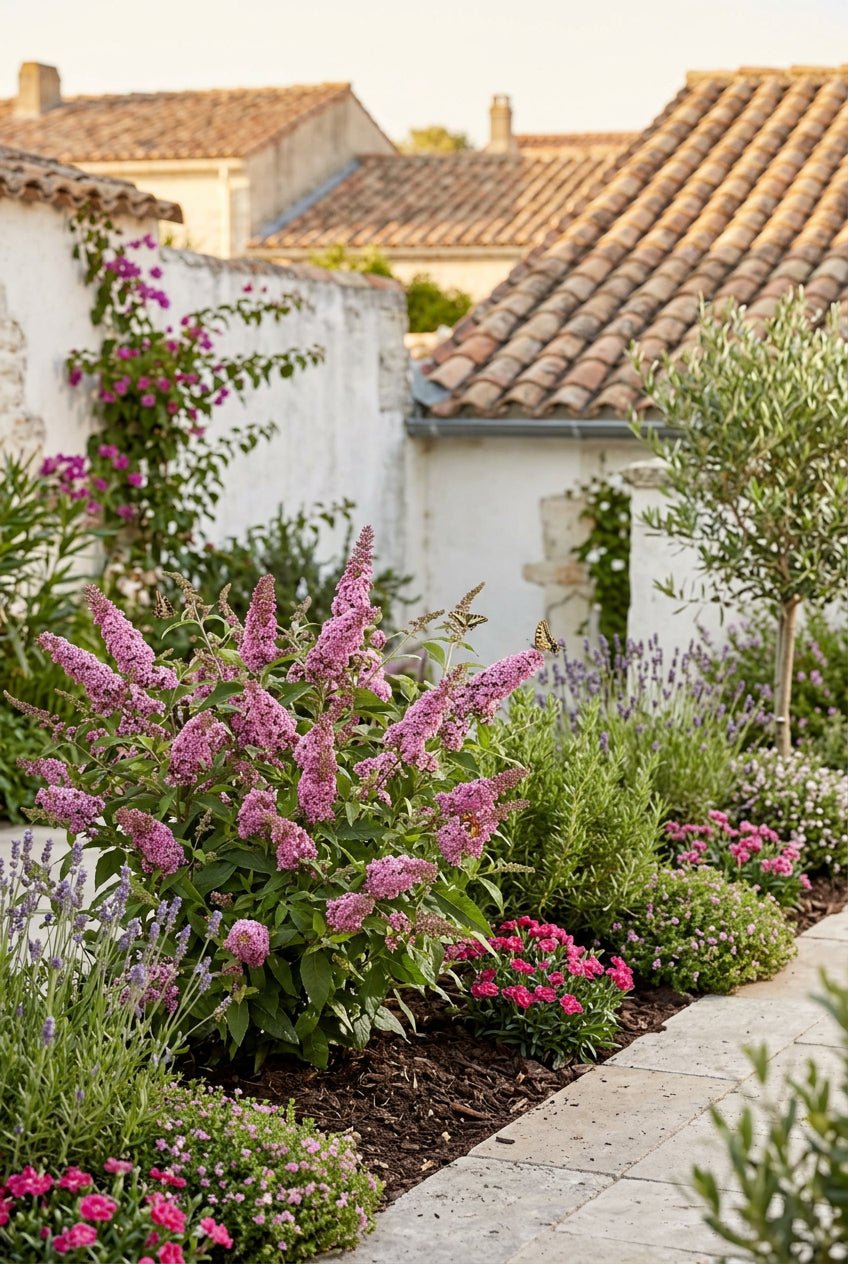

🦋 Lightly fragrant soft pink flower spikes • 🌿 Dwarf and compact, maximum 1 m • 🐝 Highly attractive to pollinators • ☀️ Full sun • ❄️ Hardy down to -20 °C • 🐾 Non-toxic to pets • 📏 H25 cm | Pot Ø12 cm
The Buddleja davidii 'Butterfly Candy Little Pink' is a dwarf butterfly bush: it bears the flower spikes of larger buddlejas, but stays compact, between 50 cm and 1 m tall. Its small, lightly fragrant soft pink flowers with orange centers cluster tightly in conical spikes from midsummer, above narrow gray-green foliage. The species is native to China, and this variety was selected for growing in a pot.
Where a traditional buddleja grows into a 2 to 3-meter shrub, Little Pink keeps the size of a mini shrub for balconies: it fits in a planter or a 20 cm pot, and attracts butterflies, bees, and bumblebees all summer, even in the city.
Which butterfly bush should you choose?
Buddlejas in the catalog, depending on color and the space available:
- Buddleja 'Butterfly Candy Little Pink' (this plant) — soft pink flower spikes, dwarf and compact habit, 50 cm to 1 m at maturity. For a balcony pot or planter.
- Buddleja 'Butterfly Candy Little White' — lightly fragrant white flower spikes, same dwarf habit. The same size, in a white version.
- Buddleja 'Butterfly Candy Little Lila' — fragrant violet-lilac flower spikes, same dwarf habit. The same size, in a lilac version.
- Buddleja davidii 'Royal Red' — long panicles of purplish red flowers, a large shrub growing 2 to 4 meters tall. For the garden or a large pot.
The three Butterfly Candy varieties share the same size and the same flowering: they can be planted together in one planter without one smothering the other.
Exposure & placement
Like all buddlejas, Little Pink flowers more abundantly the more sun it gets. It tolerates heat, wind, and dry locations, and is one of the heat-tolerant plants that spend the summer on a south-facing balcony.
- Exposure: full sun, at least 6 hours a day; in partial shade, flowering is less abundant.
- Placement: balcony pot, planter, terrace edge, rock garden, or at the front of a garden border.
- Hardiness: down to -20 °C in the ground; in a pot, protect the roots in severe cold.
- Soil type: well-drained, even poor or calcareous soil; it is especially sensitive to standing water.
A spot sheltered from the wind, against a south- or west-facing wall, gives it the warmth that encourages abundant flowering.
Watering & care
Once established in the ground, it almost looks after itself. In a pot, the soil dries out quickly in summer: that's the only time it needs attention.
- Watering: moderate — in a pot, when the potting soil is dry 2 to 3 cm deep, or once or twice a week in summer; hardly at all in winter.
- Fertilizer: use fertilizer for flowering plants every three to four weeks, from April to August.
- Spent flowers: cut off faded flower spikes as they appear: the plant will produce new ones until autumn, and you'll prevent self-seeding.
- Pruning: at the end of winter, cut all stems back by half; it blooms on the current year's growth.
- Repotting: the spring after delivery, in a pot with a 20 cm diameter and drainage holes, using well-draining potting soil.
Delivered in autumn or winter, it may have no flowers and lose some of its leaves: this is its natural dormancy; it will grow again in spring and bloom again from summer.
Decorating ideas & plant pairings
Its soft pink hue and gray-green foliage go well with other sun-loving flowering plants, for a colorful balcony that attracts pollinators.
- For a pink and white duo, plant the Platycodon grandiflorus 'White' (White balloon flower) at its base — in the same Pot Ø12 cm size, its swollen, balloon-like buds open into white stars during the summer.
- For a fragrant, bee-friendly balcony, pair it with Lavandula angustifolia 'Hidcote Blue' (Lavender) — its violet-blue spikes, in the same Pot Ø12 cm size, make the pink stand out and attract the same bees.
- For a palette of pinks, place the Hydrangea arborescens 'Pink Annabelle' (Pink ball hydrangea) behind it — its large pink balls echo its spikes, with a completely different texture.
- To repot it, choose the Elho Greenville Round pot in white, Ø20 cm — an outdoor pot with drainage holes, whose white brightens the pink of the flowers.
Planted in a row of three in a long planter, 25 cm apart, dwarf buddlejas form a low flowering hedge that is covered in butterflies in summer.
Verdeia tips
- Cut off faded flower spikes every week in summer: a few snips with pruning shears are all it takes. The plant immediately produces new spikes, and flowering continues until autumn.
- Cut back by half in March: trim all the stems to half their height just before growth begins. It will grow back denser and flower on new shoots.
- Protect the pot in very cold weather: the plant withstands -20 °C, but its roots are exposed in a pot, as with all cold-hardy plants grown in containers. Move it close to a wall and place it on blocks so the water can drain.
Technical characteristics
- Botanical name: Buddleja davidii 'Butterfly Candy Little Pink'
- Common name: Dwarf pink butterfly bush
- Family: Scrophulariaceae
- Origin: species native to China, compact horticultural variety
- Dimensions on delivery: H20-25 cm | Pot Ø12 cm
- Mature height: 50 cm to 1 m, with an equal spread
- Growth habit: bushy and compact, with slightly arching stems
- Exposure: full sun
- Watering: moderate, regular in a pot in summer
- Hardiness: down to -20 °C
- Soil type: well-drained, tolerates poor and chalky soils
- Foliage: deciduous, narrow, gray-green
- Flowering: from midsummer, lightly fragrant soft pink conical flower spikes with orange centers
- Pollinator-friendly: very attractive to butterflies, bees, and bumblebees
- Care: easy, prune once a year
- Toxicity: non-toxic to pets and children
- Decorative style: Flower-filled balcony / Biodiversity garden / Country garden
Each plant is unique: the number of flower spikes and the density of the foliage naturally vary depending on the season and sunlight.

Your plant, delivered with care
Every plant is hand-packed in a box specially designed for plants — secured, protected, ready to travel. It arrives in perfect condition, roots intact and foliage preserved, ready to take its place in your home.
Our Verdeia commitments
FAQ – Everything to know before adopting your Verdeia plant
How are my plants prepared before shipping?
All our plants are selected from our European partner nurseries. Before shipping, they are watered, cleaned, and protected with breathable, secure packaging. Each package is designed to ensure your plant arrives in perfect health, without any transport-related stress.
Will the plant look exactly like the photo?
The photos accurately represent the variety and the stated size. Since each plant is unique, slight differences in shape, foliage, or color may occur — and that’s part of their charm.
What are the delivery times and conditions?
Orders ship within 48 working hours, with tracked delivery in 2 to 5 working days via DPD. Shipping costs and the free-shipping threshold depend on your country — see our delivery page. You receive a tracking link as soon as your parcel leaves.
What should I do when my plant arrives?
Open your package as soon as you receive it and carefully remove the plant from its packaging. Let it acclimate for 24 hours in its new environment before watering. If it has been slightly stressed during transport, it will recover its shape after one or two days in the light.
What should I do if my plant arrives damaged?
Contact us within 48 hours with a photo of the issue. Our team will assess the situation and offer you the best solution: replacement, partial refund, or recovery advice.
Can I return a plant?
Since plants are living beings, standard returns are not possible. However, we guarantee good health upon delivery: if the plant arrives damaged, it will be replaced free of charge. For any other cases (order error, decorative pot, accessory), returns are possible within 14 days.