



Leucothoe fontanesiana 'Makijaz' (Variegated leucothoe) — H45 cm | Pot Ø17 cm
- Regular price
-
€32,95 - Regular price
-
- Sale price
-
€32,95
Couldn't load pickup availability
Shipping & packaging
Shipped within 24/48 hours via DPD
- Delivery in 2 to 5 working days
- Eco-friendly packaging: recyclable boxes and biodegradable materials
- Special protection so your plant arrives in perfect condition
- Tracking link sent by email as soon as your parcel ships
- Shipping costs and the free-shipping threshold depend on your country — see our delivery page
ZEN ARRIVAL GUARANTEE
We guarantee that your plants will arrive in perfect condition. If your plant arrives damaged or in poor condition:
- Contact us promptly at hello@verdeia.eu with photos
- We will find the right solution for your situation
- No return needed — we trust you
The guarantee covers: damage in transit, plants severely weakened on arrival, and order preparation errors.
CARE TIPS ON ARRIVAL
To help your plant settle in for the long term:
- Unpack your plant immediately and inspect it
- Let it acclimatize for 24-48h in a bright spot out of direct sunlight
- Check the soil moisture before watering (dry surface = light watering)
- Wait 2-3 weeks before repotting, if needed
- Keep it away from heat sources and drafts
- Gently wipe the leaves to remove dust
Need help? Contact our team at hello@verdeia.eu or via chat.
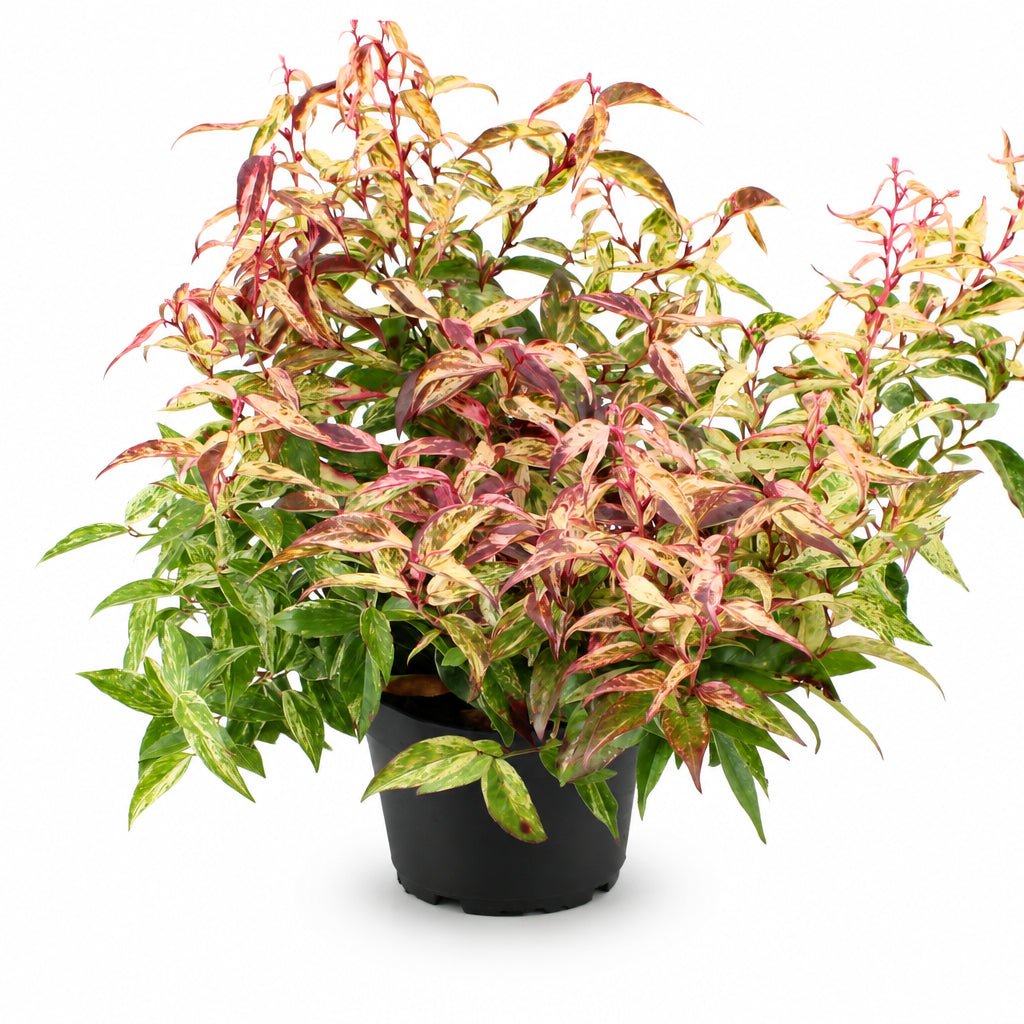
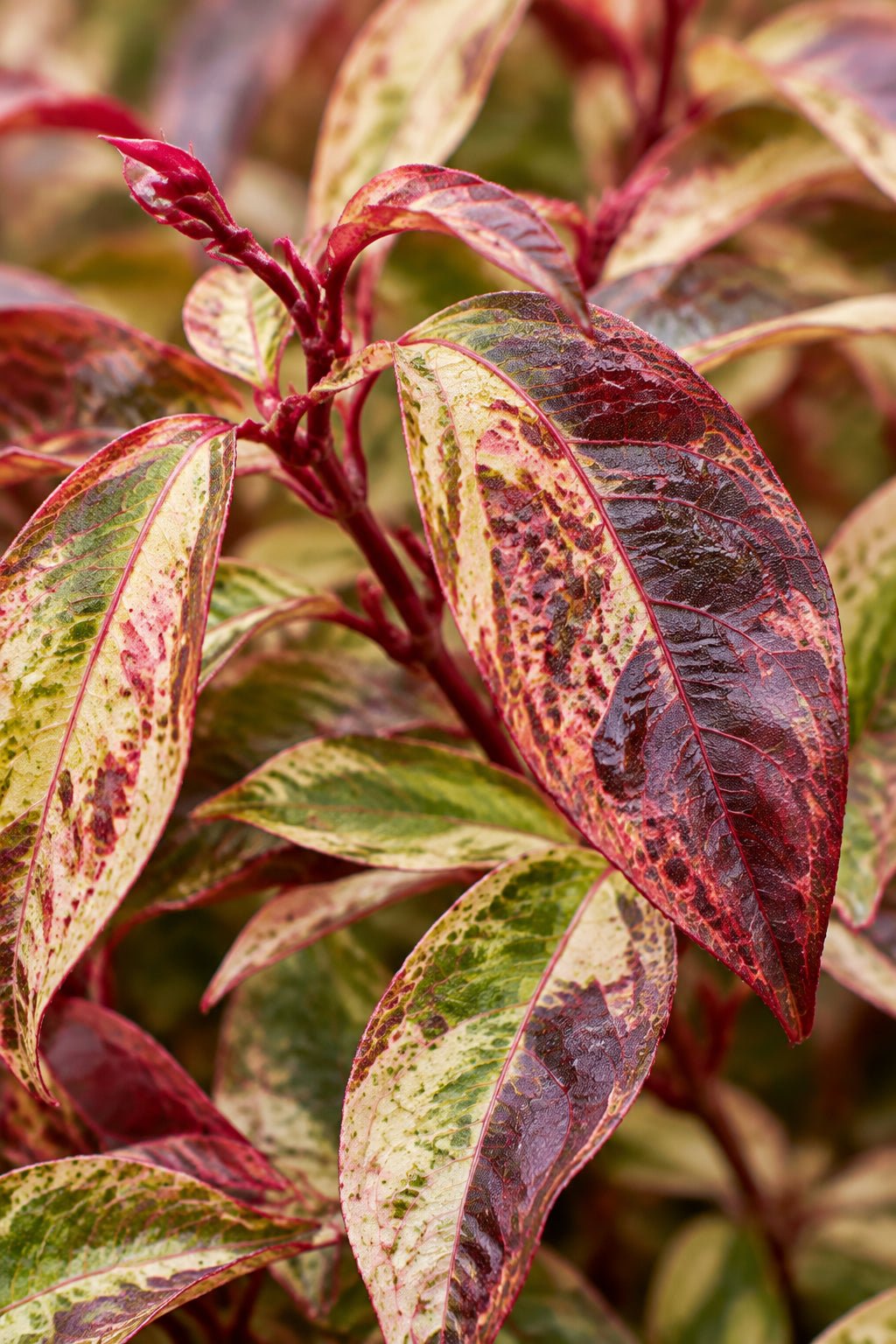



🌸 Pink new growth • 🌿 Green leaves splashed with white • 🍇 Burgundy hues in winter • 🌘 Partial shade to shade • ❄️ Hardy to -23 °C • 🪴 Low, spreading habit
Leucothoe fontanesiana 'Makijaz' is a low, spreading evergreen shrub grown for its variegated foliage, which changes color throughout the seasons. A horticultural selection from Europe (Poland), it dresses shady balconies in bright foliage all year round, where most variegated plants lose their color.
Its long, pointed leaves, 6 to 10 cm long, emerge pink in spring, then turn green, splashed and marbled with white, with a different pattern on each leaf. In autumn and winter, they take on burgundy and purple hues. In April-May, hanging clusters of slightly fragrant white bells appear at the tips of the branches.
Which shrub with colorful foliage should you choose?
Ten evergreen shrubs from the catalog, chosen for their foliage rather than their flowers:
- Leucothoe 'Makijaz' (this plant) — green leaves splashed with white, pink in spring and burgundy in winter. The most spreading.
- Leucothoe Scarletta® 'Zeblid' — dark red leaves in spring, glossy green edged in red, bronze in winter. The largest of the leucothoes, with an arching habit.
- Leucothoe 'Little Flames' — green leaves with flame-red tips in winter and coppery new growth. The best suited to a small hedge.
- Leucothoe 'Burning Love' — smooth, narrow leaves, burgundy-red in spring and purple in winter. The deepest purple, with an arching habit.
- Leucothoe 'Colour Diamond' — coppery new growth followed by green leaves edged in cream, turning red in cold weather. The narrowest, ideal for a small pot.
- Leucothoe 'Curly Red' — curly red leaves in spring, dark green in summer, purple in winter. The most changeable throughout the seasons.
- Leucothoe 'Curly Gold' — curly golden and lime-green leaves, compact. The brightest in full shade.
- Japanese aralia 'Spider Web' — large palmate leaves speckled with white, for partial shade. The most exotic.
- Euonymus 'Emerald 'n' Gold' standard — small green and gold leaves, trained into a ball on a 90 cm stem. The most structured, in sun or partial shade.
- Photinia 'Little Red Robin' standard — bright red young shoots, on a 90 cm stem. The most colorful in spring, for a sunny position.
Leucothoes are the only ones that require acidic soil. Apart from Scarletta, they remain low-growing: place them in front of or at the base of standard shrubs.
Light & location
This species grows in the moist undergrowth of the southeastern United States: it prefers dappled light, while afternoon sun scorches the white parts of its leaves, which are more delicate than the green parts.
- Exposure: partial shade to shade, with filtered light ideal.
- Location: north-facing balcony, shaded courtyard, edge of a planter, base of a tree.
- Hardiness in a pot: down to -23 °C — it can stay outdoors in winter.
- Soil type: ericaceous, moist, humus-rich and well-drained soil — never chalky.
Its branches arch and trail slightly: along the edge of a planter or low wall, they spill over and soften the container's edge.
Watering & care
Its shallow roots must never dry out: testing the growing medium with your finger helps identify the right time, while an acidic, well-draining growing medium prevents stagnant water, which it tolerates poorly in winter.
- Watering: regular — keep the growing medium moist in spring and summer, watering less often in winter without letting it dry out.
- Water: preferably rainwater or lime-free water.
- Fertilizer: fertilizer for ericaceous plants, in spring.
- Pruning: light, after flowering, cutting the oldest branches at the base to maintain an airy shape.
- Repotting: the following spring, in a pot wider than it is deep, using ericaceous compost.
A pine bark mulch on top of the pot keeps the soil cool and slightly acidifies the growing medium.
Decor ideas & plant combinations
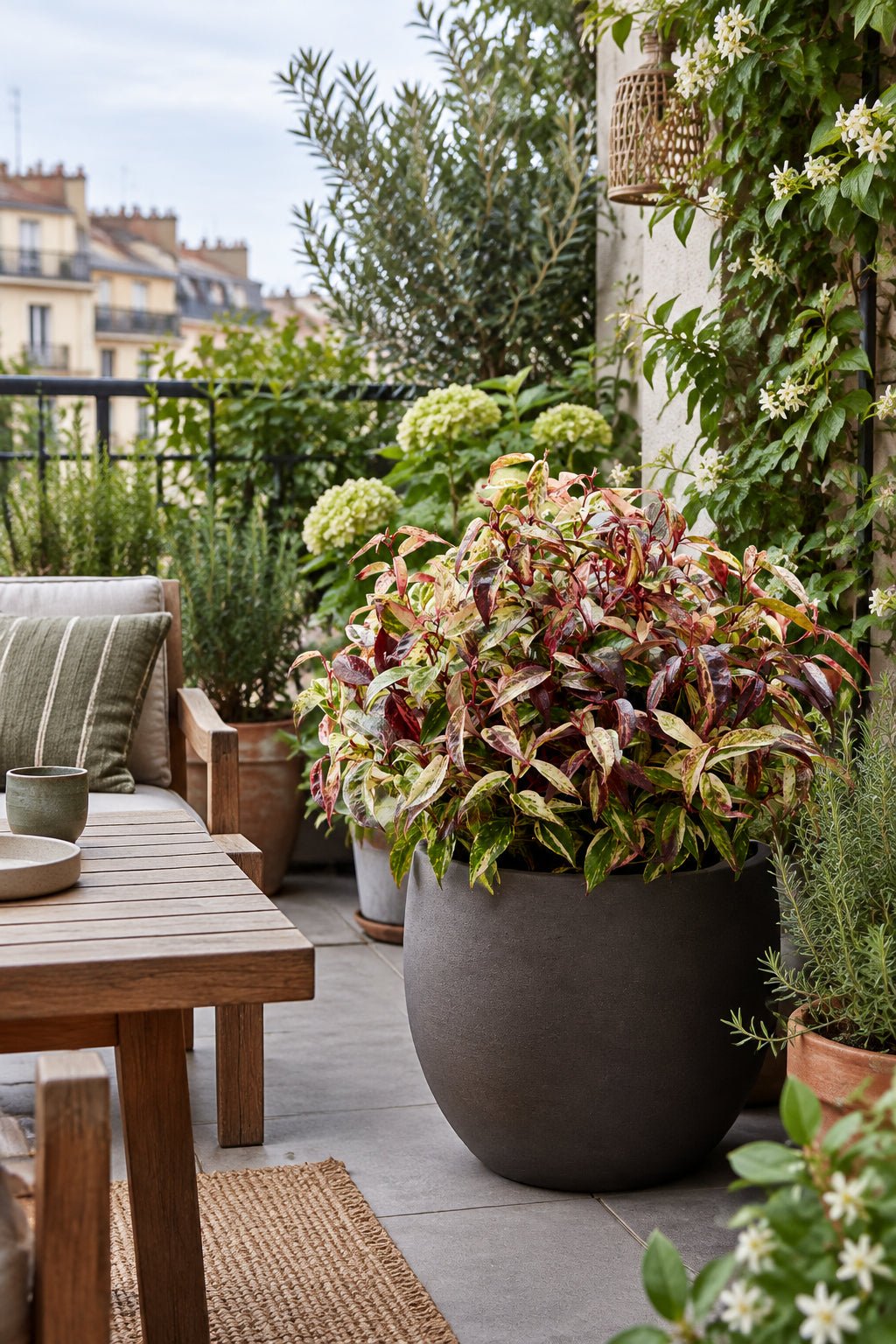
Its variegated foliage brings brightness to dark corners: on a balcony with little sun, it replaces flowers all year round.
- For a touch of pink, plant a 'Double Ellen Pink' Lenten rose nearby — its pale pink flowers from February to April complement the pink young shoots of the leucothoe.
- For an arrangement of acid-loving plants, pair it with Camellia 'Nuccio's Gem' — they have the same acidic soil requirements, and its white flowers echo the white of the variegation.
- For a contrast of textures, pair it with a Korean rock fern — its solid dark green makes the white variegation stand out.
- To enhance the pot, choose the Capi Nature Skin anthracite pot — the dark gray makes the white leaves appear brighter.
A branch cut in winter, with burgundy and white hues, lasts several weeks in a vase as part of a seasonal bouquet.
Verdeia tips
- Prune branches that have turned green again: on a variegated shrub, a completely green branch is more vigorous and eventually takes over. Remove it at the base as soon as it appears.
- Don't confuse variegation with chlorosis: natural white forms distinct splashes, whereas lime-induced chlorosis yellows the leaf between green veins. Yellow leaves do not always have the same cause: their appearance helps tell the difference.
- Give it room to spread: it spreads more than it grows tall. In a shared planter, leave 30 cm between it and its neighbors.
Technical characteristics
- Botanical name: Leucothoe fontanesiana 'Makijaz'
- Common name: Variegated leucothoe, drooping leucothoe
- Family: Ericaceae
- Origin: horticultural selection from Europe (Poland), species native to the southeastern United States
- Dimensions on delivery: H45 cm | Pot Ø17 cm
- Growth habit: low, spreading, with slightly arching branches
- Adult height: 40 to 50 cm tall, 65 to 80 cm wide
- Flowering: hanging clusters of slightly fragrant white bells, in April-May
- Exposure: partial shade to shade
- Watering: regular, keep the substrate consistently moist
- Soil type: ericaceous, acidic, humus-rich and well-drained soil
- Hardiness: down to -23 °C
- Foliage: evergreen, green variegated with white, pink in spring, burgundy in winter
- Care: easy
- Toxicity: toxic if ingested by animals and children
- Decorative style: Graphic / Woodland / Terrace
Each plant is unique: the variegation pattern differs from one leaf to another, and the intensity of the pink and burgundy varies depending on the season and the light it receives.

Your plant, delivered with care
Every plant is hand-packed in a box specially designed for plants — secured, protected, ready to travel. It arrives in perfect condition, roots intact and foliage preserved, ready to take its place in your home.
Our Verdeia commitments
FAQ – Everything to know before adopting your Verdeia plant
How are my plants prepared before shipping?
All our plants are selected from our European partner nurseries. Before shipping, they are watered, cleaned, and protected with breathable, secure packaging. Each package is designed to ensure your plant arrives in perfect health, without any transport-related stress.
Will the plant look exactly like the photo?
The photos accurately represent the variety and the stated size. Since each plant is unique, slight differences in shape, foliage, or color may occur — and that’s part of their charm.
What are the delivery times and conditions?
Orders ship within 48 working hours, with tracked delivery in 2 to 5 working days via DPD. Shipping costs and the free-shipping threshold depend on your country — see our delivery page. You receive a tracking link as soon as your parcel leaves.
What should I do when my plant arrives?
Open your package as soon as you receive it and carefully remove the plant from its packaging. Let it acclimate for 24 hours in its new environment before watering. If it has been slightly stressed during transport, it will recover its shape after one or two days in the light.
What should I do if my plant arrives damaged?
Contact us within 48 hours with a photo of the issue. Our team will assess the situation and offer you the best solution: replacement, partial refund, or recovery advice.
Can I return a plant?
Since plants are living beings, standard returns are not possible. However, we guarantee good health upon delivery: if the plant arrives damaged, it will be replaced free of charge. For any other cases (order error, decorative pot, accessory), returns are possible within 14 days.