



Dieffenbachia Compacta (Dumb cane) - H45 cm | Pot Ø17 cm
- Regular price
-
€37,95 - Regular price
-
- Sale price
-
€37,95
Couldn't load pickup availability
Frequently asked questions
Can Dieffenbachia live in a dark room? It tolerates low light better than most variegated plants, but a room that is too dark affects the variegation — new leaves will grow greener and less decorative. A spot with partial shade and a few hours of indirect light is ideal.
Why are the leaves of my Dieffenbachia turning yellow? Almost always overwatering — this is the number one problem with this plant. Make sure the soil dries well on the surface between waterings and that the saucer does not hold stagnant water under the pot.
Shipping & packaging
Shipped within 24/48 hours via DPD
- Delivery in 2 to 5 working days
- Eco-friendly packaging: recyclable boxes and biodegradable materials
- Special protection so your plant arrives in perfect condition
- Tracking link sent by email as soon as your parcel ships
- Shipping costs and the free-shipping threshold depend on your country — see our delivery page
ZEN ARRIVAL GUARANTEE
We guarantee that your plants will arrive in perfect condition. If your plant arrives damaged or in poor condition:
- Contact us promptly at hello@verdeia.eu with photos
- We will find the right solution for your situation
- No return needed — we trust you
The guarantee covers: damage in transit, plants severely weakened on arrival, and order preparation errors.
CARE TIPS ON ARRIVAL
To help your plant settle in for the long term:
- Unpack your plant immediately and inspect it
- Let it acclimatize for 24-48h in a bright spot out of direct sunlight
- Check the soil moisture before watering (dry surface = light watering)
- Wait 2-3 weeks before repotting, if needed
- Keep it away from heat sources and drafts
- Gently wipe the leaves to remove dust
Need help? Contact our team at hello@verdeia.eu or via chat.
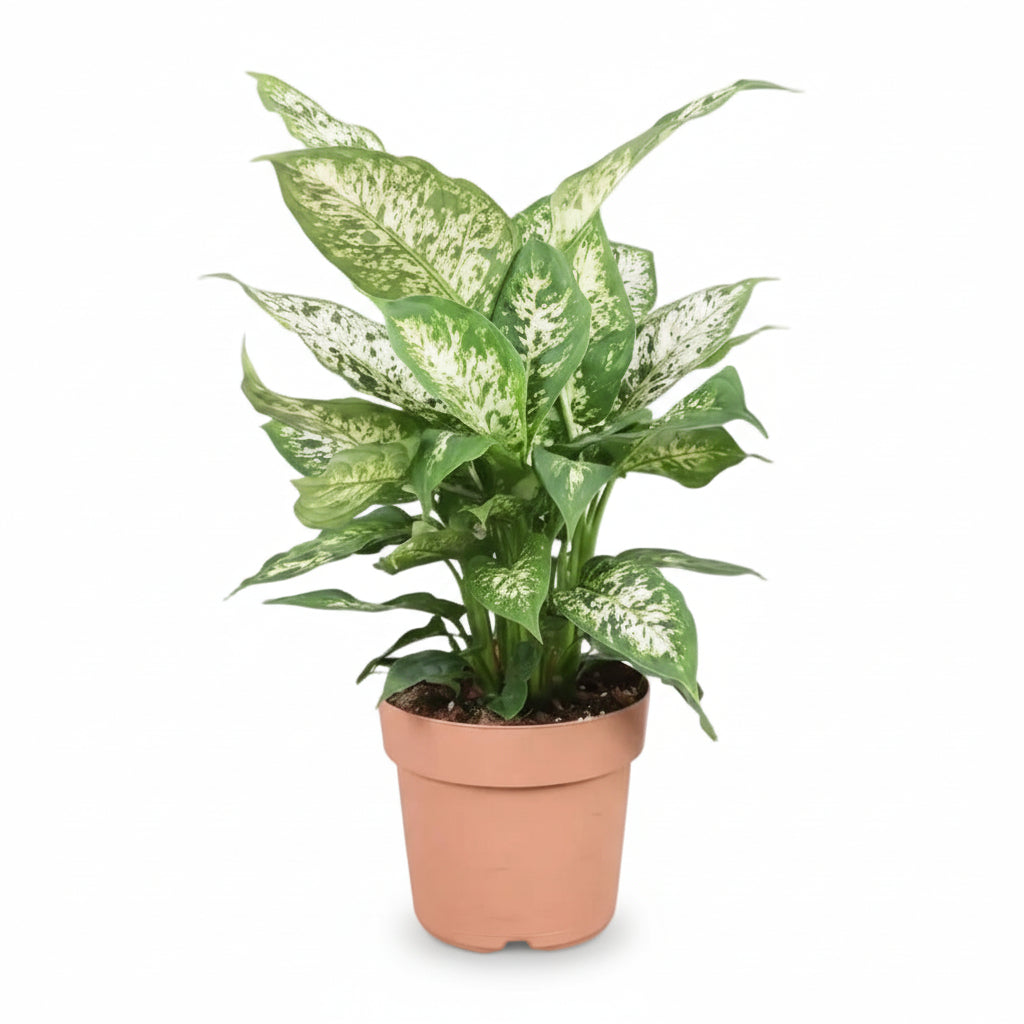
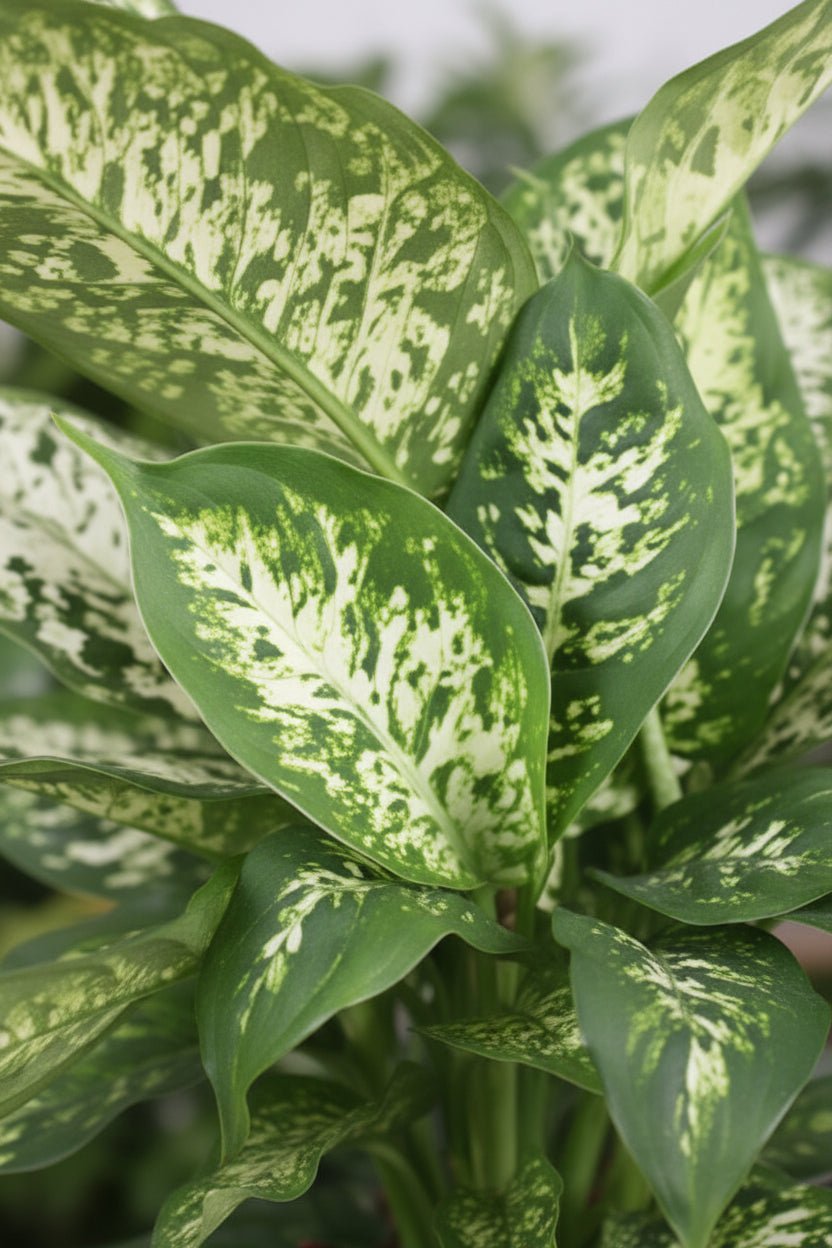


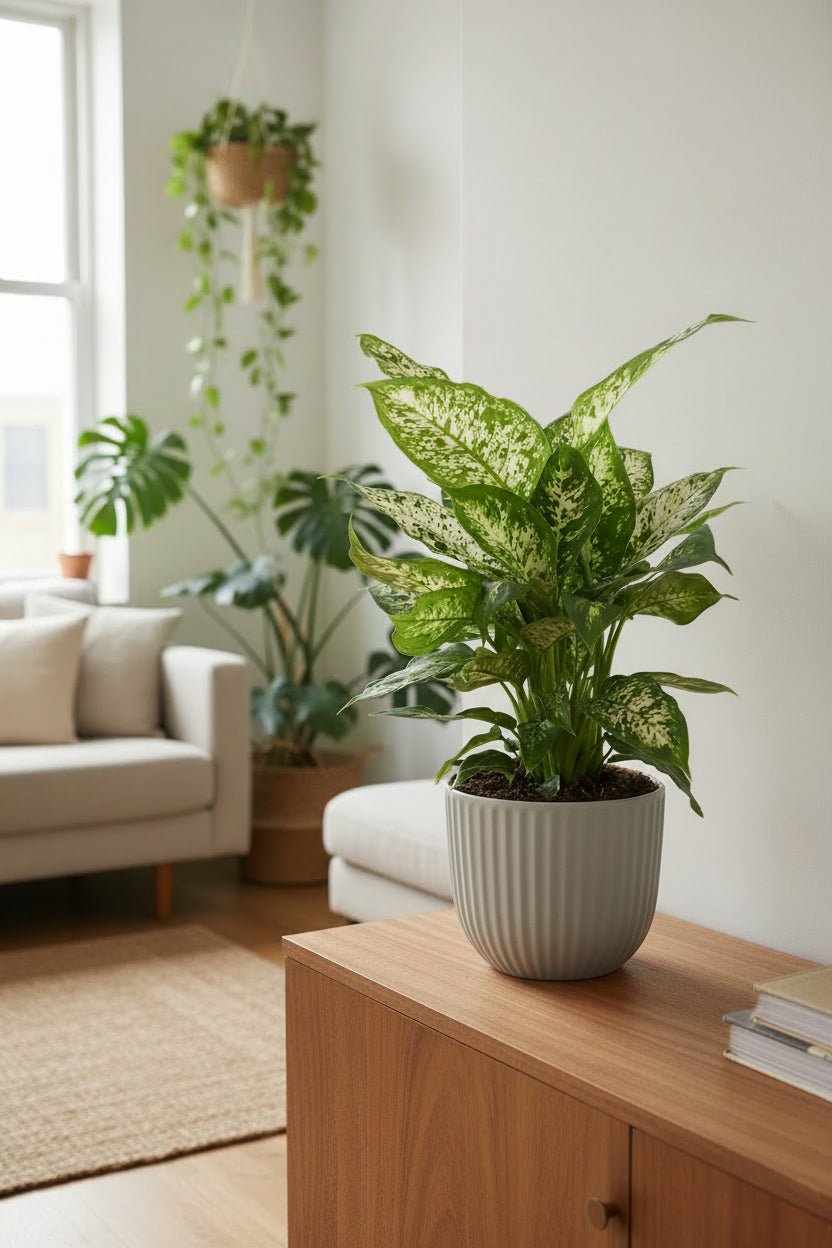

🌿 Green and cream variegated foliage • 🎨 Large decorative leaves • ☀️ Partial shade • 💧 Moderate watering • 📏 H45 cm | Ø17 cm
The Dieffenbachia 'Compacta', also known as dumb cane, is a decorative indoor plant native to the tropical forests of Central and South America, where it naturally grows in the humid understory. Its green and cream variegated foliage, with unique graphic patterns, brightens low-light spaces with natural elegance — each leaf is different, never identical to the previous one.
Easy to care for, tolerant of low light, and ideal for a desk or living room. A reliable choice among easy-care plants and plants for low-light spaces.
Which Dieffenbachia variety should you choose?
The Dieffenbachia genus offers several varieties with distinct variegation patterns and sizes:
- Dieffenbachia 'Compacta' (this plant) - green and cream variegated foliage, compact H45 cm growth habit. The classic compact version, ideal for a desk or shelf.
- Dieffenbachia 'Camilla' - a very creamy, bright leaf center, in the same compact size. The brightest version.
- Dieffenbachia 'Mars' - green and cream variegation, medium H50 cm growth habit. The mid-size version.
- Dieffenbachia seguine 'Tropic Snow' - tropical snow patterns in green and white, an elegant H70 cm growth habit. The elegant tropical version.
- Dieffenbachia 'Vesuvius' - large dark green and cream leaves, an impressive H80 cm growth habit. The majestic XXL version.
Why choose Compacta? Its compact size (H45 cm) makes it versatile - perfect on a desk, shelf, or living room corner without taking over the space. Graphic variegated foliage in a reasonable size.
Light & placement
The Dieffenbachia Compacta is one of the few variegated plants that truly tolerates low light - a valuable quality for dimly lit interiors.
- Exposure: partial shade, soft indirect light — tolerates low light.
- Ideal: desk, living room, bedroom, shelf, or low-light room.
- Temperature: 18 to 25 °C, with no sudden changes or drafts.
- Substrate: light, rich, and well-draining — universal potting soil with perlite.
Turn the plant a quarter turn every week — its leaves follow the light, and uniform foliage requires balanced exposure on all sides.
Watering & care
Dieffenbachia prefers slightly dry substrate to waterlogged substrate — excess water is its main cause of problems. The finger test remains the most reliable method.
- Watering: moderate — let the substrate dry on the surface between waterings.
- Frequency: about once a week in spring and summer, reduced in winter.
- Drainage: essential — use a pot with drainage holes and well-draining substrate.
- Humidity: it thrives with 50 to 60% humidity — mist occasionally or dust the leaves.
- Fertilizer: once a month in spring and summer with a diluted liquid houseplant fertilizer.
- Cleaning: regularly dust the large leaves with a damp cloth.
Leaves that turn yellow almost always indicate overwatering — reduce watering and make sure the substrate dries well between waterings.
Decor ideas & plant pairings
Its cream-variegated foliage naturally brightens dark corners — it brings light to places where few graphic plants thrive.
- Pairing: pair it with an Aglaonema Maria to play with variegation, or with a Calathea or Maranta for a tropical arrangement with varied graphic foliage.
- Ideal pot: a white ceramic embossed decorative pot perfectly highlights the cream variegation without competing with it.
- Atmosphere: perfect on a desk or shelf to create a bright decorative accent in a low-light space.
Each Dieffenbachia leaf has a unique pattern — a living plant in the truest sense, one that is never repeated.
Verdeia tips
- Excess water is its main enemy — always wait until the surface of the substrate is dry before watering and empty the saucer after each watering. Constantly waterlogged substrate causes root rot and yellowing leaves. Changes in the appearance of the leaves can be quickly identified with a good diagnosis.
- Wear gloves when repotting it — Dieffenbachia sap is irritating to the skin and mucous membranes. Handling it is safe as long as you avoid direct contact with the sap. Wash your hands after any work on the plant.
- Variegation intensifies with light — the brighter the location (without direct sun), the more pronounced and luminous the cream areas will be. In a space that is too dark, new leaves will grow back greener.
- Repot every 2 to 3 years in spring — into a slightly larger pot with fresh substrate. Growth is moderate — there is no need to repot too often.
Technical specifications
- Botanical name: Dieffenbachia 'Compacta'
- Common name: Dumb cane
- Family: Araceae
- Origin: tropical forests of Central and South America
- Pot diameter: 17 cm
- Approximate height: 45 cm
- Mature size: up to 60–80 cm indoors
- Exposure: partial shade, soft indirect light — tolerates low light
- Watering: moderate, let the surface of the substrate dry out between waterings
- Care: easy
- Toxicity to animals: toxic if ingested (irritating sap)
- Decorative style: Tropical / Decorative / Urban jungle
- Special feature: graphic green and cream variegated foliage, tolerates low light, compact growth habit, each leaf unique
Each plant is unique: the photos show a representative example. The intensity of the variegation naturally varies depending on the season and exposure.

Your plant, delivered with care
Every plant is hand-packed in a box specially designed for plants — secured, protected, ready to travel. It arrives in perfect condition, roots intact and foliage preserved, ready to take its place in your home.
Our Verdeia commitments
FAQ – Everything to know before adopting your Verdeia plant
How are my plants prepared before shipping?
All our plants are selected from our European partner nurseries. Before shipping, they are watered, cleaned, and protected with breathable, secure packaging. Each package is designed to ensure your plant arrives in perfect health, without any transport-related stress.
Will the plant look exactly like the photo?
The photos accurately represent the variety and the stated size. Since each plant is unique, slight differences in shape, foliage, or color may occur — and that’s part of their charm.
What are the delivery times and conditions?
Orders ship within 48 working hours, with tracked delivery in 2 to 5 working days via DPD. Shipping costs and the free-shipping threshold depend on your country — see our delivery page. You receive a tracking link as soon as your parcel leaves.
What should I do when my plant arrives?
Open your package as soon as you receive it and carefully remove the plant from its packaging. Let it acclimate for 24 hours in its new environment before watering. If it has been slightly stressed during transport, it will recover its shape after one or two days in the light.
What should I do if my plant arrives damaged?
Contact us within 48 hours with a photo of the issue. Our team will assess the situation and offer you the best solution: replacement, partial refund, or recovery advice.
Can I return a plant?
Since plants are living beings, standard returns are not possible. However, we guarantee good health upon delivery: if the plant arrives damaged, it will be replaced free of charge. For any other cases (order error, decorative pot, accessory), returns are possible within 14 days.