



Asplenium Nidus (Bird's nest fern)
- Regular price
-
€28,95 - Regular price
-
- Sale price
-
€28,95
Couldn't load pickup availability
Frequently asked questions
Why are the edges of a fern's fronds turning brown? Dry air, drafts, or irregular watering are the most common causes — increase ambient humidity by regularly misting the foliage.
Is the bird's nest fern suitable for a bathroom? Yes, it’s actually the ideal spot — the natural humidity of a well-lit bathroom replicates the conditions of its original tropical habitat.
Shipping & packaging
Shipped within 24/48 hours via DPD
- Delivery in 2 to 5 working days
- Eco-friendly packaging: recyclable boxes and biodegradable materials
- Special protection so your plant arrives in perfect condition
- Tracking link sent by email as soon as your parcel ships
- Shipping costs and the free-shipping threshold depend on your country — see our delivery page
ZEN ARRIVAL GUARANTEE
We guarantee that your plants will arrive in perfect condition. If your plant arrives damaged or in poor condition:
- Contact us promptly at hello@verdeia.eu with photos
- We will find the right solution for your situation
- No return needed — we trust you
The guarantee covers: damage in transit, plants severely weakened on arrival, and order preparation errors.
CARE TIPS ON ARRIVAL
To help your plant settle in for the long term:
- Unpack your plant immediately and inspect it
- Let it acclimatize for 24-48h in a bright spot out of direct sunlight
- Check the soil moisture before watering (dry surface = light watering)
- Wait 2-3 weeks before repotting, if needed
- Keep it away from heat sources and drafts
- Gently wipe the leaves to remove dust
Need help? Contact our team at hello@verdeia.eu or via chat.
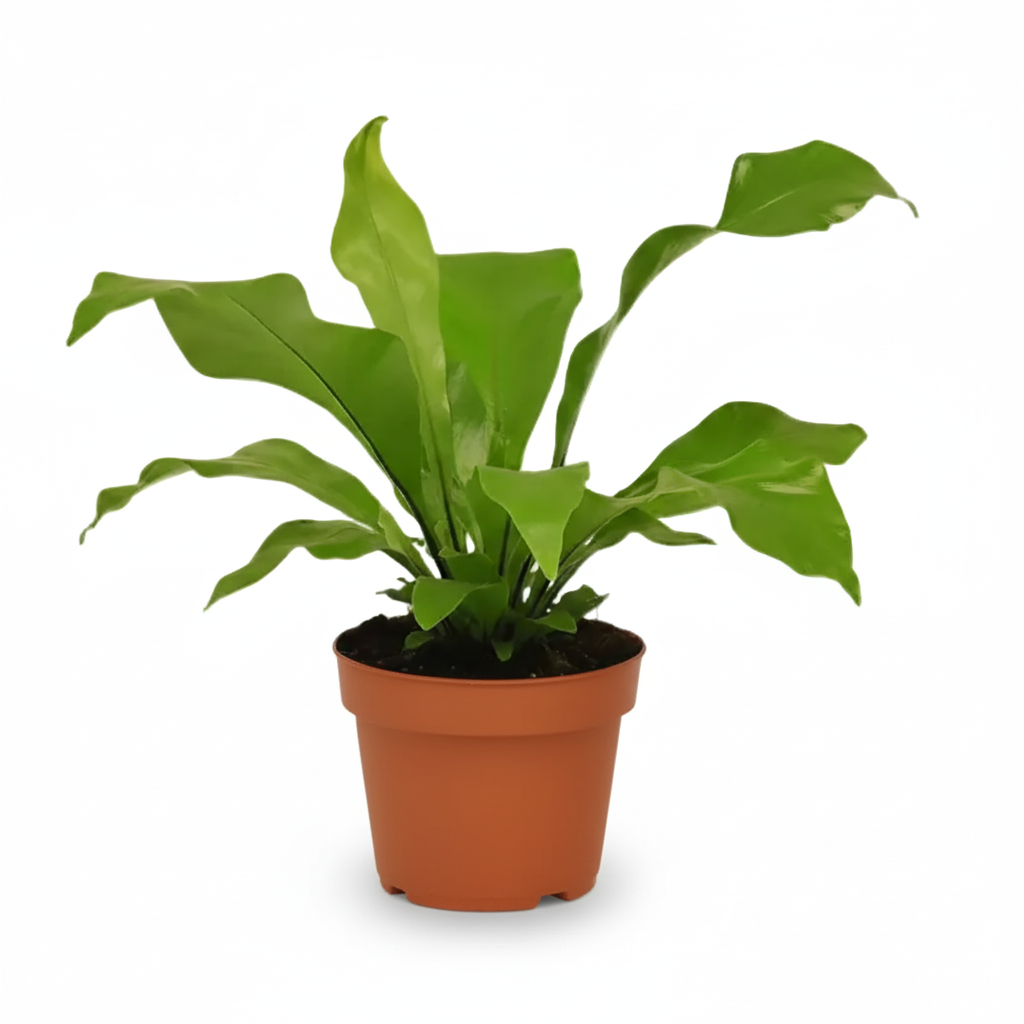


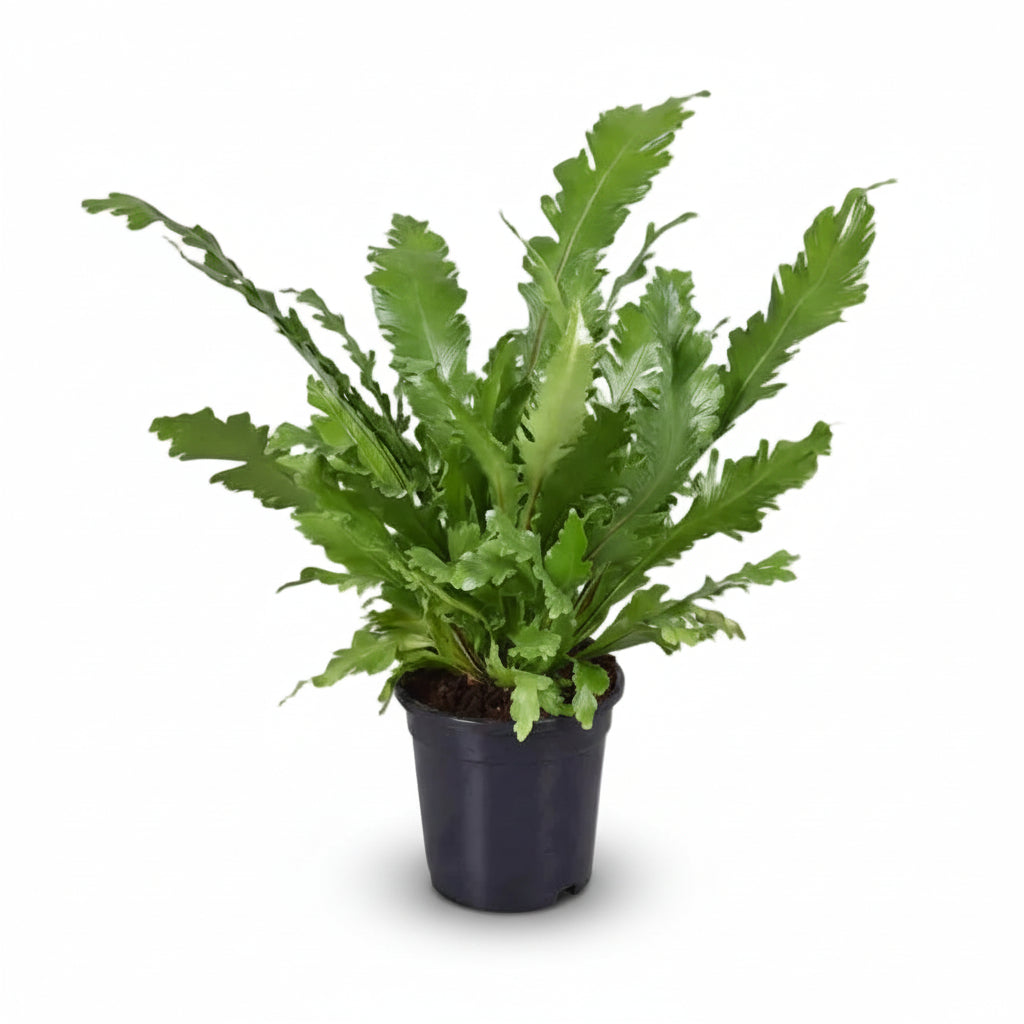


🌿 Glossy apple-green fronds • 🪺 Nest-shaped rosette • ☀️ Partial shade • 💧 Moist substrate • 🐾 Non-toxic • 🏙️ 3 sizes available
Asplenium Nidus, or bird's nest fern, is an epiphytic fern native to the tropical forests of Southeast Asia, where it grows naturally on tree trunks in humid, shady undergrowth. Its large, smooth, glossy apple-green fronds rise from the center to form a spectacular rosette — a sculptural silhouette that fits naturally into any indoor jungle.
Non-toxic to cats and dogs, it's perfect for homes with pets — find it in our selection of pet-friendly indoor plants.
Which Asplenium variety should you choose?
The Asplenium genus offers a great diversity of frond shapes and textures — all varieties are available in the indoor ferns collection. Here's how Asplenium Nidus stands out from the others:
- Asplenium Nidus (this plant) — large, smooth, slightly wavy fronds in glossy apple green, a wide, lush rosette. The classic version.
- Asplenium Crispy Wave — very wavy fronds with pronounced waves, compact and graphic foliage. The most sculpted version.
- Asplenium Nidus Crissie — curled and wavy fronds, more textured than the classic Nidus.
- Asplenium Antiquum — thicker and stiffer fronds, shiny dark green, upright habit. The most robust version.
- Asplenium Osaka — slightly curled fronds, compact habit. The intermediate version.
- Asplenium Campio — broad, generous fronds, spectacular large size.
- Asplenium 'Parvati' — finely cut and lacy fronds, delicate airy foliage. The finest version.
Exposure & location
The Asplenium Nidus enjoys soft to medium indirect light. It tolerates bright shade but is sensitive to direct sunlight, which can burn and discolor its fronds. A well-lit bathroom, a shaded living room, or an office away from the window are perfect spots.
- Exposure: soft indirect light, bright shade — avoid direct sunlight.
- Temperature: 18–24 °C, without sudden changes or drafts.
- Humidity: high (60–70%) — mist the fronds 1 to 2 times per week or place it in a bright bathroom.
- Substrate: light, airy and rich in organic matter — fern potting mix or all-purpose potting soil with perlite.
Avoid dry air flows (air conditioning, fan heater) — Asplenium is especially sensitive to dry air and drafts that quickly brown the edges of the fronds.
Watering & care
Asplenium Nidus likes a substrate that is always slightly moist — neither soggy nor completely dry. Water around the plant, never directly into the center of the rosette, to avoid the heart rotting — overwatering is the main cause of damage to this fern.
- Frequency: 1 to 2 times per week in spring and summer, reduced in winter.
- Drainage: essential — pot with drainage hole and saucer.
- Fertilizer: once a month in spring and summer, with liquid foliage-plant fertilizer diluted to half strength.
- Cleaning: gently wipe the fronds with a soft damp cloth to maintain their shine and prevent dust buildup.
Irregular watering cycles — alternating between dry and soaked — weaken the fronds and cause browning. Consistent moisture is the key to a healthy Asplenium.
Decor ideas & plant pairings
The wide rosette and smooth apple green fronds of the Asplenium Nidus bring a lush, structured presence to natural interiors. Its shiny foliage catches the light and enlivens shaded corners.
- On a low piece of light-wood furniture in a living room, slip it into the burgundy Gabriel ceramic pot — the warmth of the matte burgundy contrasts with the glossy apple green of the fronds and grounds the composition in a natural, cozy style.
- In a bright bathroom, pair it with a Maranta Fascinator — the graphic patterns of the Maranta and the wide rosette of the Asplenium create a tropical duo with varied textures and different heights to energize the space.
- For a jungle composition, pair the Asplenium Nidus with a trailing Epipremnum Golden Pothos — the contrast between the large smooth upright fronds and the long trailing stems of the Pothos creates immediate plant depth.
- On a desk shelf, place it in the round blue Gabriel ceramic pot — the matte blue ceramic matches the fresh green of the fronds and adds a graphic, contemporary touch to a workspace.
Its shiny foliage captures light and enlivens shaded corners — an ideal plant to create a tropical atmosphere in low-light rooms.
Verdeia tips
- Water around the rosette, never in its center: stagnant water in the plant's core causes meristem rot that irreversibly destroys the plant — always direct the water flow to the edge of the pot.
- Mist the foliage rather than increasing watering frequency: Asplenium needs high ambient humidity, not a soggy substrate — gentle misting 2 to 3 times a week is enough to recreate its natural habitat conditions.
- Wipe the fronds regularly with a damp cloth: dust blocks the stomata and dulls the shiny foliage — monthly wiping is enough to maintain the characteristic shine of Asplenium.
Technical characteristics
- Botanical name: Asplenium nidus
- Common name: Bird's nest fern
- Origin: tropical forests of Southeast Asia
- Available size 1: H35 cm | Pot Ø12 cm
- Available size 2: H45 cm | Pot Ø17 cm
- Available size 3: H60 cm | Pot Ø17 cm
- Exposure: soft indirect light, bright shade
- Watering: regular — substrate slightly moist at all times
- Humidity: high (60–70%)
- Temperature: 18–24 °C
- Substrate acidity: slightly acidic (pH 5.5–6.5)
- Care: easy
- Toxicity to pets: non-toxic
- Decorative style: Tropical / Lush / Sculptural
Each plant is unique: the photos show an example of its appearance. The size and density of the fronds naturally vary depending on light and season.

Your plant, delivered with care
Every plant is hand-packed in a box specially designed for plants — secured, protected, ready to travel. It arrives in perfect condition, roots intact and foliage preserved, ready to take its place in your home.
Our Verdeia commitments
FAQ – Everything to know before adopting your Verdeia plant
How are my plants prepared before shipping?
All our plants are selected from our European partner nurseries. Before shipping, they are watered, cleaned, and protected with breathable, secure packaging. Each package is designed to ensure your plant arrives in perfect health, without any transport-related stress.
Will the plant look exactly like the photo?
The photos accurately represent the variety and the stated size. Since each plant is unique, slight differences in shape, foliage, or color may occur — and that’s part of their charm.
What are the delivery times and conditions?
Orders ship within 48 working hours, with tracked delivery in 2 to 5 working days via DPD. Shipping costs and the free-shipping threshold depend on your country — see our delivery page. You receive a tracking link as soon as your parcel leaves.
What should I do when my plant arrives?
Open your package as soon as you receive it and carefully remove the plant from its packaging. Let it acclimate for 24 hours in its new environment before watering. If it has been slightly stressed during transport, it will recover its shape after one or two days in the light.
What should I do if my plant arrives damaged?
Contact us within 48 hours with a photo of the issue. Our team will assess the situation and offer you the best solution: replacement, partial refund, or recovery advice.
Can I return a plant?
Since plants are living beings, standard returns are not possible. However, we guarantee good health upon delivery: if the plant arrives damaged, it will be replaced free of charge. For any other cases (order error, decorative pot, accessory), returns are possible within 14 days.