



Fumewort 'Beth Evans' (Corydalis solida) — Bulbs size 6/+
- Regular price
-
€25,95 - Regular price
-
- Sale price
-
€25,95
Couldn't load pickup availability
Frequently asked questions
Where should fumewort 'Beth Evans' be planted? Plant it in partial shade, ideally at the foot of a deciduous tree, in moist, humus-rich, well-drained soil.
Does fumewort naturalise? Yes, its tubers bulk up and it self-seeds: ants scatter its seeds and the clumps spread from year to year.
Shipping & packaging
Shipped within 24/48 hours via DPD
- Delivery in 2 to 5 working days
- Eco-friendly packaging: recyclable boxes and biodegradable materials
- Special protection so your plant arrives in perfect condition
- Tracking link sent by email as soon as your parcel ships
- Shipping costs and the free-shipping threshold depend on your country — see our delivery page
ZEN ARRIVAL GUARANTEE
We guarantee that your plants will arrive in perfect condition. If your plant arrives damaged or in poor condition:
- Contact us promptly at hello@verdeia.eu with photos
- We will find the right solution for your situation
- No return needed — we trust you
The guarantee covers: damage in transit, plants severely weakened on arrival, and order preparation errors.
CARE TIPS ON ARRIVAL
To help your plant settle in for the long term:
- Unpack your plant immediately and inspect it
- Let it acclimatize for 24-48h in a bright spot out of direct sunlight
- Check the soil moisture before watering (dry surface = light watering)
- Wait 2-3 weeks before repotting, if needed
- Keep it away from heat sources and drafts
- Gently wipe the leaves to remove dust
Need help? Contact our team at hello@verdeia.eu or via chat.


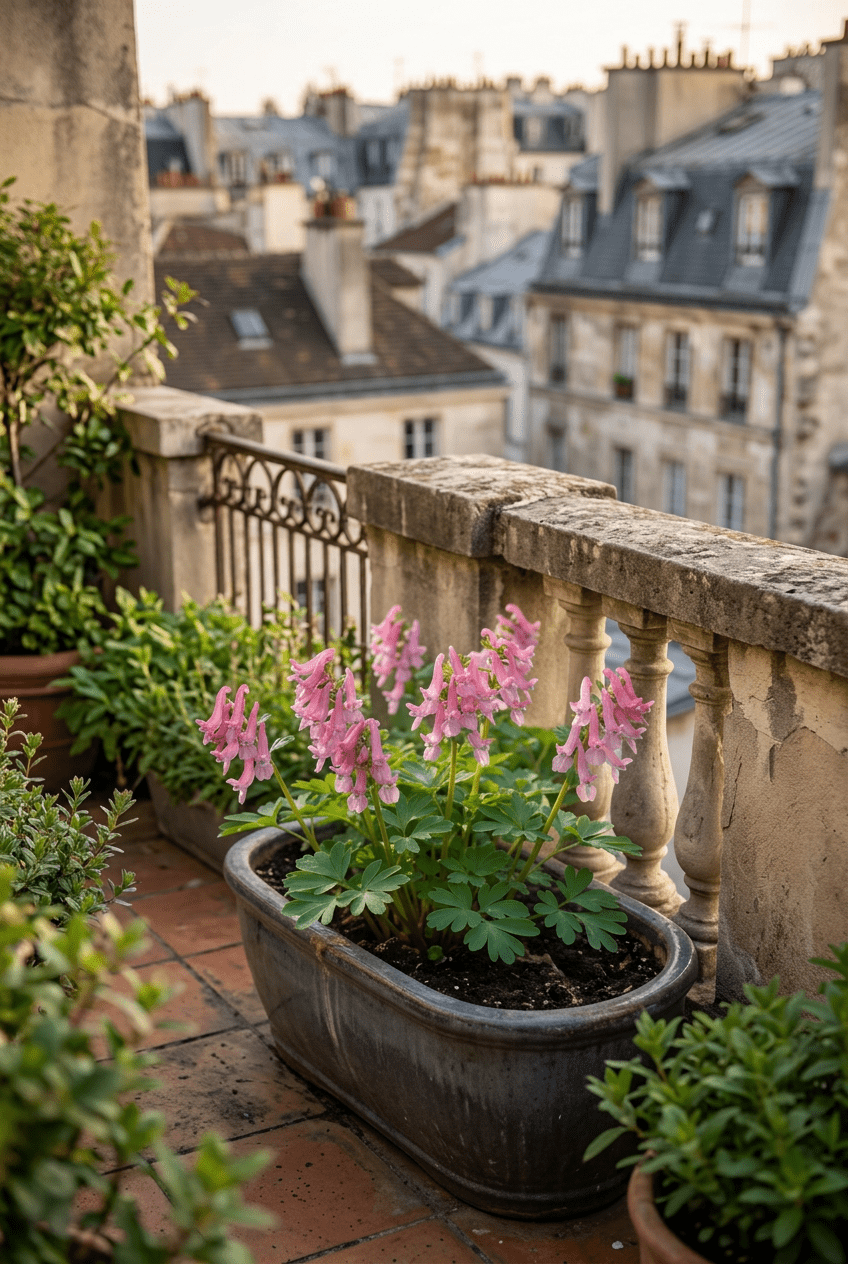


💜 Pale lilac and white flowers • 🌸 Flowers from March to April • 🌱 Small size, 15 to 20 cm • 🐝 Feeds bees and bumblebees • ⛅ Partial shade • 🧊 Very hardy • 🔁 Naturalises year after year • 📏 Bulbs size 6/+
Fumewort 'Beth Evans' opens small clusters of tubular, spurred flowers in spring, pale lilac lit with white, above finely cut grey-green foliage, 15 to 20 cm tall. It is a European horticultural selection of Corydalis solida, a species of Europe's light woodlands.
From March to April, it forms flowering cushions at the foot of trees and along shady paths, then its foliage dies back by late spring. Among our flower bulbs, it is one of the easiest to naturalise in partial shade; to fill a whole shady corner, also discover our shade bulb mix.
How many bulbs should you choose?
Fumewort makes the biggest impact when planted in groups: allow about 50 bulbs per square metre, or 8 to 10 bulbs in a pot 20 cm in diameter.
- 20 bulbs: about 0.4 m² at the foot of a tree, or two 20 cm pots on a shady balcony or terrace.
- 40 bulbs: about 0.8 m², for a touch of lilac along a border or at the foot of a shrub.
- 80 bulbs: about 1.6 m², for a first carpet of flowers under a deciduous tree.
- 160 bulbs: about 3.2 m², to naturalise a light woodland area or the edge of a path.
The bigger the pack, the lower the price per bulb: the 160-bulb pack works out at less than half the price per bulb of the 20-bulb pack.
Planting & location
The tubers are planted from September to November, as soon as they arrive, for flowers from March to April.
- Exposure: partial shade; the ideal spot is the foot of a deciduous tree, sunny in spring and shady in summer.
- Depth: 5 to 8 cm.
- Spacing: 10 cm between bulbs in the ground, 5 cm in pots.
- Soil type: moist, rich in humus and well drained; a woodland soil enriched with fallen leaves suits it perfectly.
- Hardiness: down to about -25 °C, like the species in our selection of cold-hardy plants; no protection is needed.
In the first year, flowering may be modest: fumewort finds its true rhythm from the second spring, once well established.
Watering & care
In the ground, rainfall is enough. In pots, keep the compost slightly moist in spring, never soggy, and move the pot into the shade in summer.
- Watering: low — at planting, then in pots when the surface of the compost is dry during flowering.
- Fertilizer: unnecessary in the ground; a mulch of fallen leaves or compost in autumn is enough to enrich the soil.
- Spent flowers: leave them in place so the seeds can ripen: this is how the clumps spread.
- After flowering: let the foliage die back on its own around May; it recharges the tubers for the following year.
Avoid hoeing around fumeworts in spring: the seedlings are tiny and easily mistaken for small weeds.
Decorating ideas & plant pairings
Its lilac flowers light up cool corners of the garden and pots in partial shade in early spring, as shown in our guide to plants for a shady balcony, and lend themselves to colour and texture combinations with other small spring flowers.
- For a white and lilac duo, plant it with the giant snowdrop — its white bells open the season in February, then the fumewort takes over in March.
- For shades of purple, pair it with Crocus 'Ruby Giant' — its purple flowers bloom at the same height, just before it.
- To bring flowers to the same spot from winter, plant the Christmas rose 'Christmas Carol' nearby — its large white flowers open from December and keep the fumeworts company until spring.
- For a balcony version, plant 8 to 10 bulbs in a 20 cm pot with a few 'Tête-à-Tête' daffodils — their small yellow flowers contrast with the lilac of the fumeworts in March.
At the foot of a deciduous tree, fumewort makes the most of the spring sun before the leaves come out, then rests in the shade all summer.
Verdeia tips
- Plant as soon as they arrive: fumewort tubers dislike drying out; plant them within the next few days.
- Mark the spot: insert a small stake, as the foliage disappears by late spring and the tubers could be damaged when digging.
- Let the ants do the work: they carry off the seeds and spread the fumewort over the years, gradually forming a natural carpet.
Technical specifications
- Botanical name: Corydalis solida 'Beth Evans'
- Common name: fumewort 'Beth Evans', bird-in-a-bush, solid-tubered corydalis
- Family: Papaveraceae
- Origin: European horticultural selection
- Delivery: dry tubers, size 6/+ (circumference in cm), in packs of 20, 40, 80 or 160
- Flowering height: 15 to 20 cm
- Flowering: March to April, clusters of pale lilac and white flowers
- Planting: September to November, 5 to 8 cm deep
- Exposure: partial shade
- Watering: low
- Hardiness: down to about -25 °C
- Soil type: moist, humus-rich, well-drained
- Life cycle: perennial, self-seeds and naturalises
- Pollinator-friendly: flowers visited by bees and bumblebees in early spring
- Care: very easy
- Toxicity: toxic if eaten, for pets and children
- Decorative style: Woodland / Natural garden / Boho
Every bulb is unique: the shade of the flowers and the flowering date vary naturally with soil, position and climate.

Your plant, delivered with care
Every plant is hand-packed in a box specially designed for plants — secured, protected, ready to travel. It arrives in perfect condition, roots intact and foliage preserved, ready to take its place in your home.
Our Verdeia commitments
FAQ – Everything to know before adopting your Verdeia plant
How are my plants prepared before shipping?
All our plants are selected from our European partner nurseries. Before shipping, they are watered, cleaned, and protected with breathable, secure packaging. Each package is designed to ensure your plant arrives in perfect health, without any transport-related stress.
Will the plant look exactly like the photo?
The photos accurately represent the variety and the stated size. Since each plant is unique, slight differences in shape, foliage, or color may occur — and that’s part of their charm.
What are the delivery times and conditions?
Orders ship within 48 working hours, with tracked delivery in 2 to 5 working days via DPD. Shipping costs and the free-shipping threshold depend on your country — see our delivery page. You receive a tracking link as soon as your parcel leaves.
What should I do when my plant arrives?
Open your package as soon as you receive it and carefully remove the plant from its packaging. Let it acclimate for 24 hours in its new environment before watering. If it has been slightly stressed during transport, it will recover its shape after one or two days in the light.
What should I do if my plant arrives damaged?
Contact us within 48 hours with a photo of the issue. Our team will assess the situation and offer you the best solution: replacement, partial refund, or recovery advice.
Can I return a plant?
Since plants are living beings, standard returns are not possible. However, we guarantee good health upon delivery: if the plant arrives damaged, it will be replaced free of charge. For any other cases (order error, decorative pot, accessory), returns are possible within 14 days.