



Pogonatherum paniceum 'Monica' (Indoor bamboo) — H20 cm | Pot Ø12 cm
- Regular price
-
€29,95 - Regular price
-
- Sale price
-
€29,95
Couldn't load pickup availability
Frequently asked questions
Why are the tips of my indoor bamboo turning brown? This is always a sign of insufficient water: this species cannot tolerate its root ball drying out, even for a day or two.
Can water be left in a Pogonatherum's saucer? Yes, it is even recommended from April to September, as this grass grows along waterways in its natural habitat.
Shipping & packaging
Shipped within 24/48 hours via DPD
- Delivery in 2 to 5 working days
- Eco-friendly packaging: recyclable boxes and biodegradable materials
- Special protection so your plant arrives in perfect condition
- Tracking link sent by email as soon as your parcel ships
- Shipping costs and the free-shipping threshold depend on your country — see our delivery page
ZEN ARRIVAL GUARANTEE
We guarantee that your plants will arrive in perfect condition. If your plant arrives damaged or in poor condition:
- Contact us promptly at hello@verdeia.eu with photos
- We will find the right solution for your situation
- No return needed — we trust you
The guarantee covers: damage in transit, plants severely weakened on arrival, and order preparation errors.
CARE TIPS ON ARRIVAL
To help your plant settle in for the long term:
- Unpack your plant immediately and inspect it
- Let it acclimatize for 24-48h in a bright spot out of direct sunlight
- Check the soil moisture before watering (dry surface = light watering)
- Wait 2-3 weeks before repotting, if needed
- Keep it away from heat sources and drafts
- Gently wipe the leaves to remove dust
Need help? Contact our team at hello@verdeia.eu or via chat.
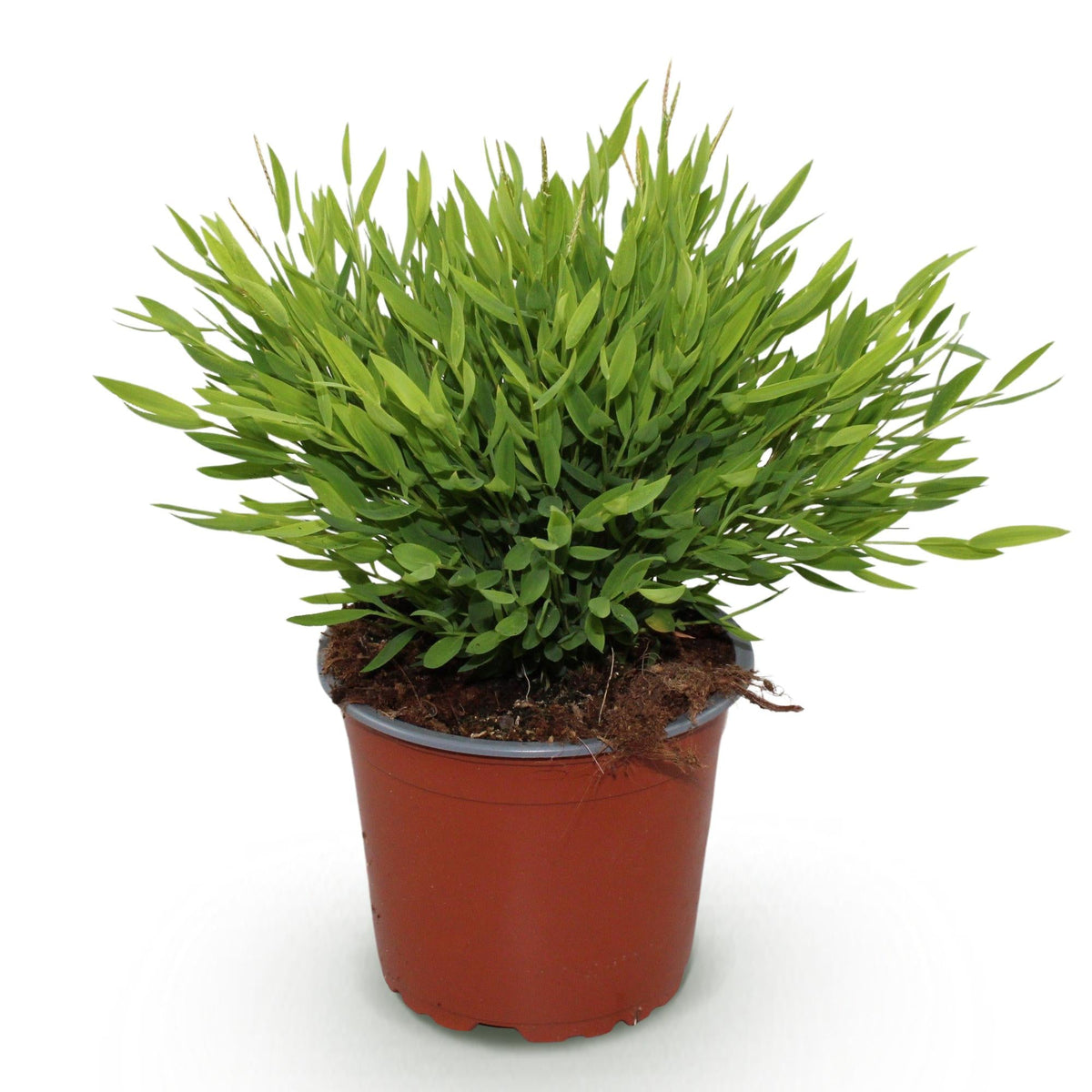
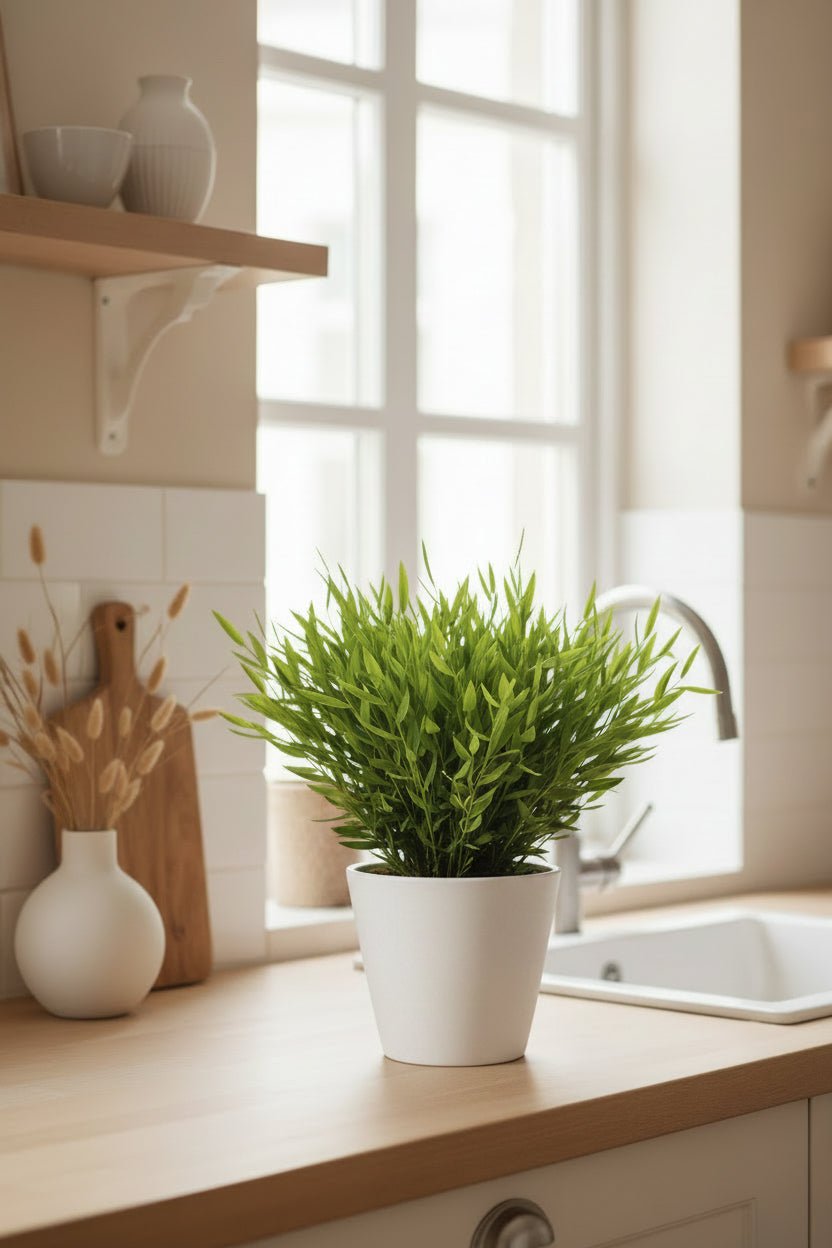

🎋 Miniature bamboo look • 🌿 Fine arched stems in a dense clump • ☀️ Bright light • 💧 Frequent watering • 🐾 Non-toxic
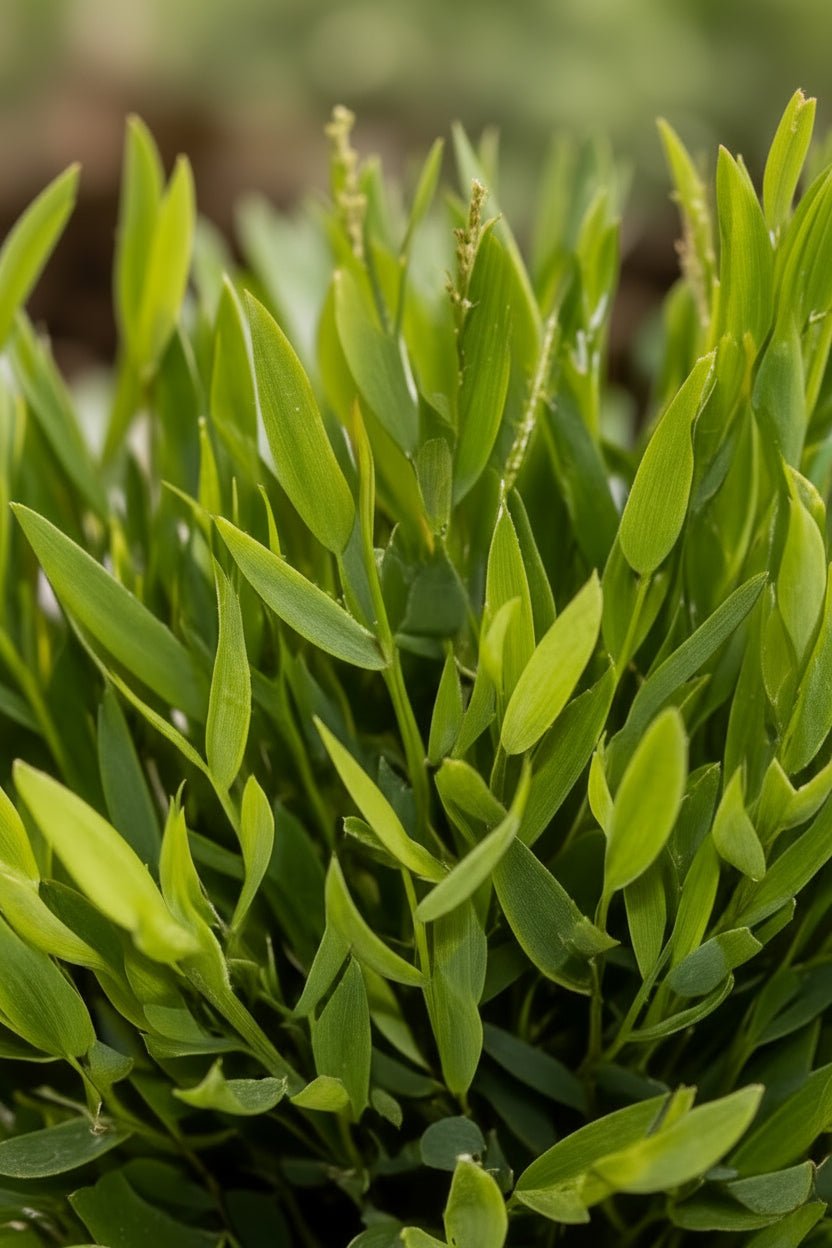
Pogonatherum paniceum 'Monica', known as indoor bamboo or bamboo grass, forms a dense clump of fine, flexible stems bearing long, narrow leaves that arch gracefully. Native to the wetlands of Southeast Asia and Australia, it joins the most graphic small indoor plants in the catalog.
Its distinctive feature lies in a misconception worth clearing up: it is not a bamboo. It is a grass from the same family as meadow grasses, taking on the look of bamboo in miniature without ever reaching its size or becoming invasive. It does, however, inherit a far greater need for water than typical foliage plants.
Light & placement
Unlike most small indoor plants, Pogonatherum requires strong light. In insufficient light, the stems become leggy, the clump thins out, and it loses the density that gives it all its appeal.
- Light: bright light to gentle direct sun — east-, west- or south-facing windowsill with a light curtain.
- Placement: windowsill, bright desk, kitchen, conservatory — also a sheltered balcony from June to September.
- Temperature: 18 to 28 °C — minimum 12 °C; bring it indoors before the first cold spells.
- Soil type: rich universal potting soil that retains moisture well.
It is one of the few indoor plants that enjoys a saucer kept permanently filled with water in summer: in its native habitat, it grows along waterways.
Watering & care
The critical point for this plant is drying out. A root ball left dry for even a day or two will permanently scorch the leaf tips, which requires proper preparation before any time away. A moisture-retentive substrate is preferable here to a very well-draining mix.
- Watering: frequent — the substrate must never dry out: two to three times a week in spring and summer, once a week in winter.
- Saucer: may remain filled with a little water from April to September, unlike almost all indoor plants.
- Humidity: weekly misting helps limit browning at the tips during the heating season.
- Pruning: dry stems should be cut back to the substrate, opening up the clump and stimulating new growth.
- Fertilizer: half-strength liquid houseplant fertilizer, every three weeks from April to September.
- Repotting: every spring — the clump spreads quickly and soon fills a pot of this diameter.
Brown, dry leaf tips are the number one symptom in this species and always indicate a lack of water, never excess water.
Decor ideas & plant combinations
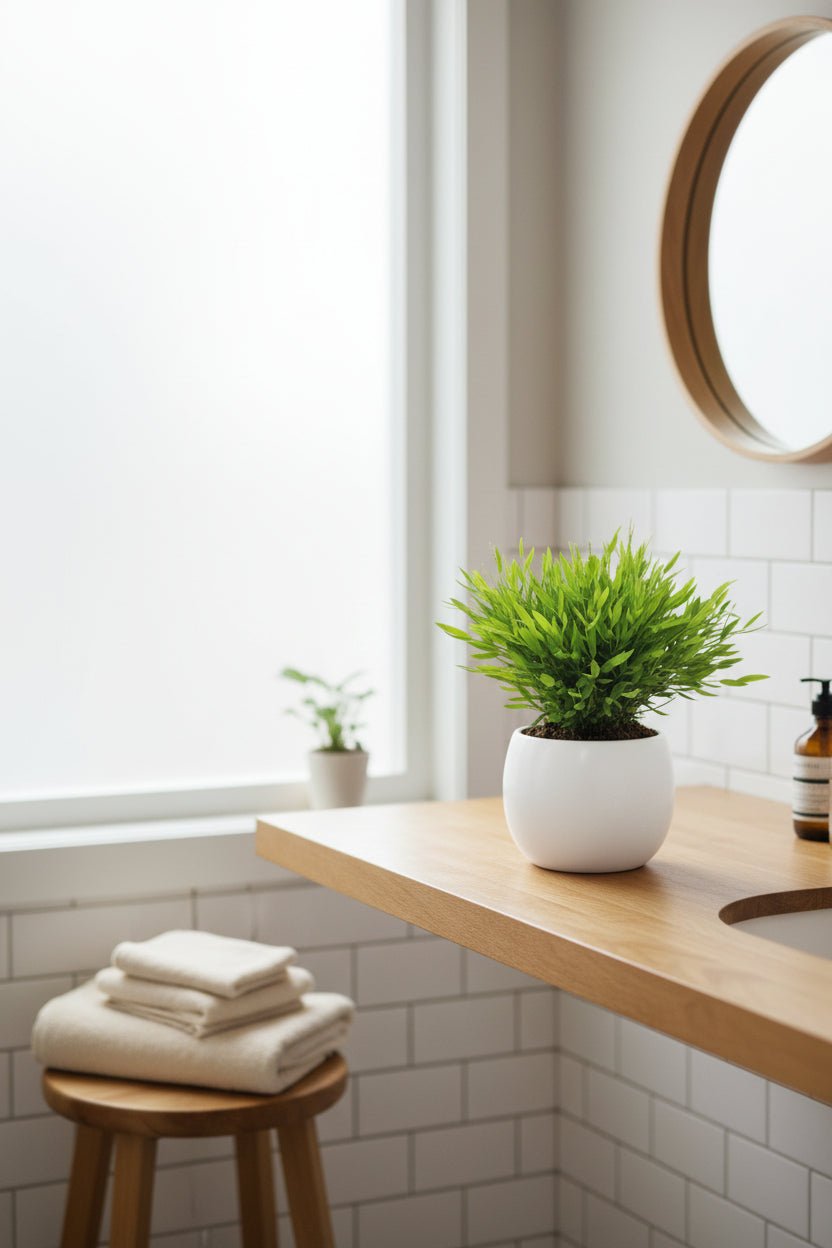
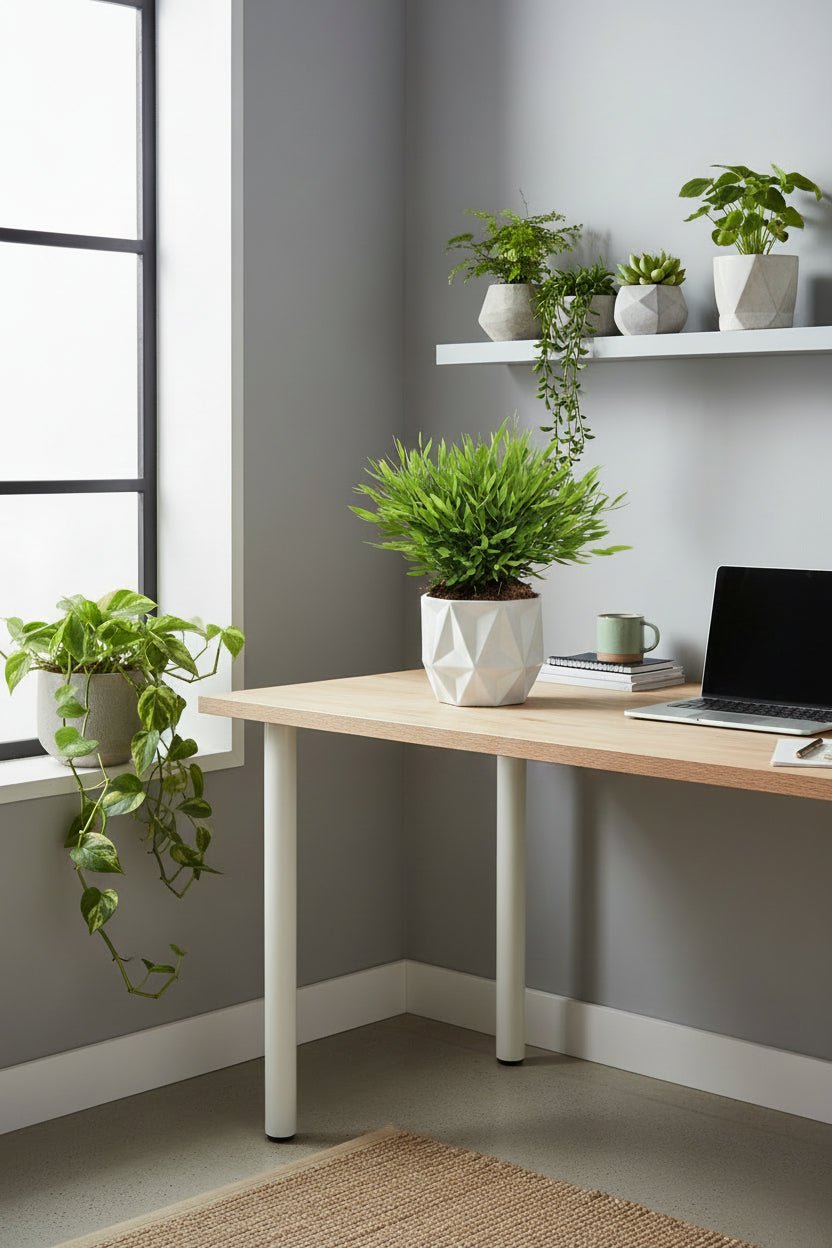
Its fine, airy silhouette brings movement where broad-leaved plants create masses. Its graphic simplicity makes it a natural choice for Japandi interiors, where it evokes bamboo without the bulk.
- For a lively windowsill, line it up with a Chlorophytum 'Bonnie' with curly leaves — two light, non-toxic clumps, one upright and the other tousled.
- For textural contrast, place an Asparagus setaceus with feathery foliage next to it — two different kinds of delicacy, one linear and the other airy.
- For a trailing foreground, add a Callisia repens that spills over the container — the upright grass at the back, with the creeping carpet in front.
- For a zen atmosphere, place the pot inside an anthracite Mayk Lead decorative pot Ø20 cm with a brushed metallic finish — the mineral gray extends the plant's Japanese-inspired aesthetic.
- For a brighter look, the matte white Gabriel decorative pot Ø14 cm with a honeycomb texture holds the Ø12 cm nursery pot and sets off the green stems.
Placed in front of a lateral light source, the clump casts a network of fine shadows on the wall, an effect produced by very few indoor plants.
Verdeia tips
- Leave water in the saucer in summer: this is the exception that proves the rule. This riverbank grass tolerates permanently damp roots during its growing season, whereas the same practice would kill most green plants.
- Cut the clump back entirely if it becomes sparse: cutting it to 5 cm above the substrate in spring may seem drastic, but the plant regrows within a few weeks with a much denser clump than before.
- Divide it when repotting: the rootstock can easily be separated by hand into two or three sections, each of which will grow on independently. This is the simplest way to rejuvenate an ageing plant.
Technical specifications
- Botanical name: Pogonatherum paniceum 'Monica'
- Common name: Indoor bamboo, bamboo grass
- Family: Poaceae
- Origin: wetlands of Southeast Asia and Australia
- Size on delivery: H20 cm | Pot Ø12 cm
- Mature height: up to 40 cm indoors
- Light: bright light to gentle direct sun
- Watering: frequent, with the substrate kept permanently moist
- Humidity: weekly misting appreciated in winter
- Soil type: rich, moisture-retentive potting soil
- Growth: fast, with a dense clump spreading from the rootstock
- Foliage: evergreen, with long, narrow light-green leaves on fine, arched stems
- Care: easy, provided it is watered regularly
- Toxicity: 🐾 non-toxic to animals and children
- Decorative style: Zen / Japandi / Minimalist
Every plant is unique: the density of the clump, the length of the stems and their curvature naturally vary according to growing light levels.

Your plant, delivered with care
Every plant is hand-packed in a box specially designed for plants — secured, protected, ready to travel. It arrives in perfect condition, roots intact and foliage preserved, ready to take its place in your home.
Our Verdeia commitments
FAQ – Everything to know before adopting your Verdeia plant
How are my plants prepared before shipping?
All our plants are selected from our European partner nurseries. Before shipping, they are watered, cleaned, and protected with breathable, secure packaging. Each package is designed to ensure your plant arrives in perfect health, without any transport-related stress.
Will the plant look exactly like the photo?
The photos accurately represent the variety and the stated size. Since each plant is unique, slight differences in shape, foliage, or color may occur — and that’s part of their charm.
What are the delivery times and conditions?
Orders ship within 48 working hours, with tracked delivery in 2 to 5 working days via DPD. Shipping costs and the free-shipping threshold depend on your country — see our delivery page. You receive a tracking link as soon as your parcel leaves.
What should I do when my plant arrives?
Open your package as soon as you receive it and carefully remove the plant from its packaging. Let it acclimate for 24 hours in its new environment before watering. If it has been slightly stressed during transport, it will recover its shape after one or two days in the light.
What should I do if my plant arrives damaged?
Contact us within 48 hours with a photo of the issue. Our team will assess the situation and offer you the best solution: replacement, partial refund, or recovery advice.
Can I return a plant?
Since plants are living beings, standard returns are not possible. However, we guarantee good health upon delivery: if the plant arrives damaged, it will be replaced free of charge. For any other cases (order error, decorative pot, accessory), returns are possible within 14 days.