



Dieffenbachia 'Amy' (Dumb cane) — H15 cm | Pot Ø6 cm
- Regular price
-
€22,95 - Regular price
-
- Sale price
-
€22,95
Couldn't load pickup availability
Frequently asked questions
Why do the lower leaves of a Dieffenbachia Amy fall off? It is its natural rhythm: the oldest leaves gradually drop while new ones form at the top of the stem.
Where should you place a Dieffenbachia Amy? In bright indirect light, out of the midday sun, to keep its cream variegation well defined.
Shipping & packaging
Shipped within 24/48 hours via DPD
- Delivery in 2 to 5 working days
- Eco-friendly packaging: recyclable boxes and biodegradable materials
- Special protection so your plant arrives in perfect condition
- Tracking link sent by email as soon as your parcel ships
- Shipping costs and the free-shipping threshold depend on your country — see our delivery page
ZEN ARRIVAL GUARANTEE
We guarantee that your plants will arrive in perfect condition. If your plant arrives damaged or in poor condition:
- Contact us promptly at hello@verdeia.eu with photos
- We will find the right solution for your situation
- No return needed — we trust you
The guarantee covers: damage in transit, plants severely weakened on arrival, and order preparation errors.
CARE TIPS ON ARRIVAL
To help your plant settle in for the long term:
- Unpack your plant immediately and inspect it
- Let it acclimatize for 24-48h in a bright spot out of direct sunlight
- Check the soil moisture before watering (dry surface = light watering)
- Wait 2-3 weeks before repotting, if needed
- Keep it away from heat sources and drafts
- Gently wipe the leaves to remove dust
Need help? Contact our team at hello@verdeia.eu or via chat.
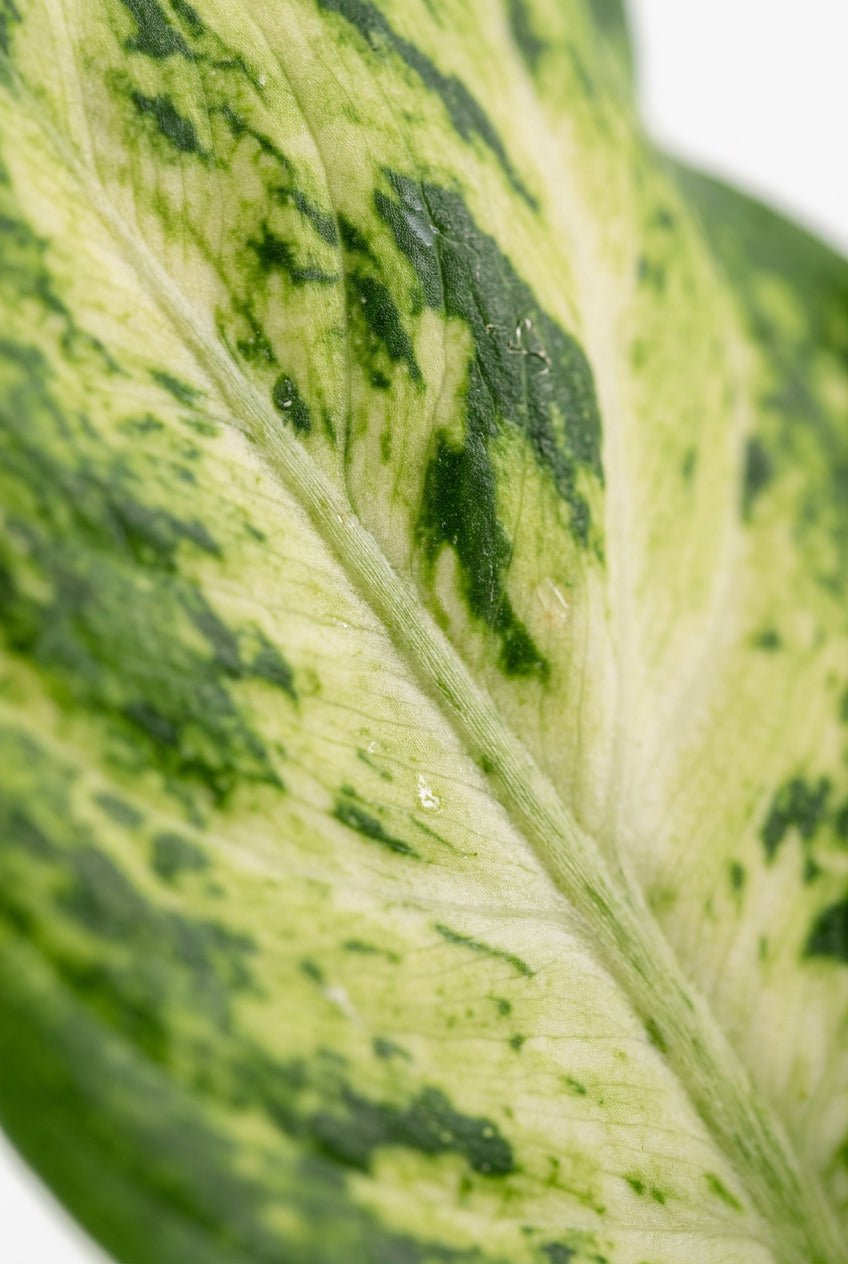
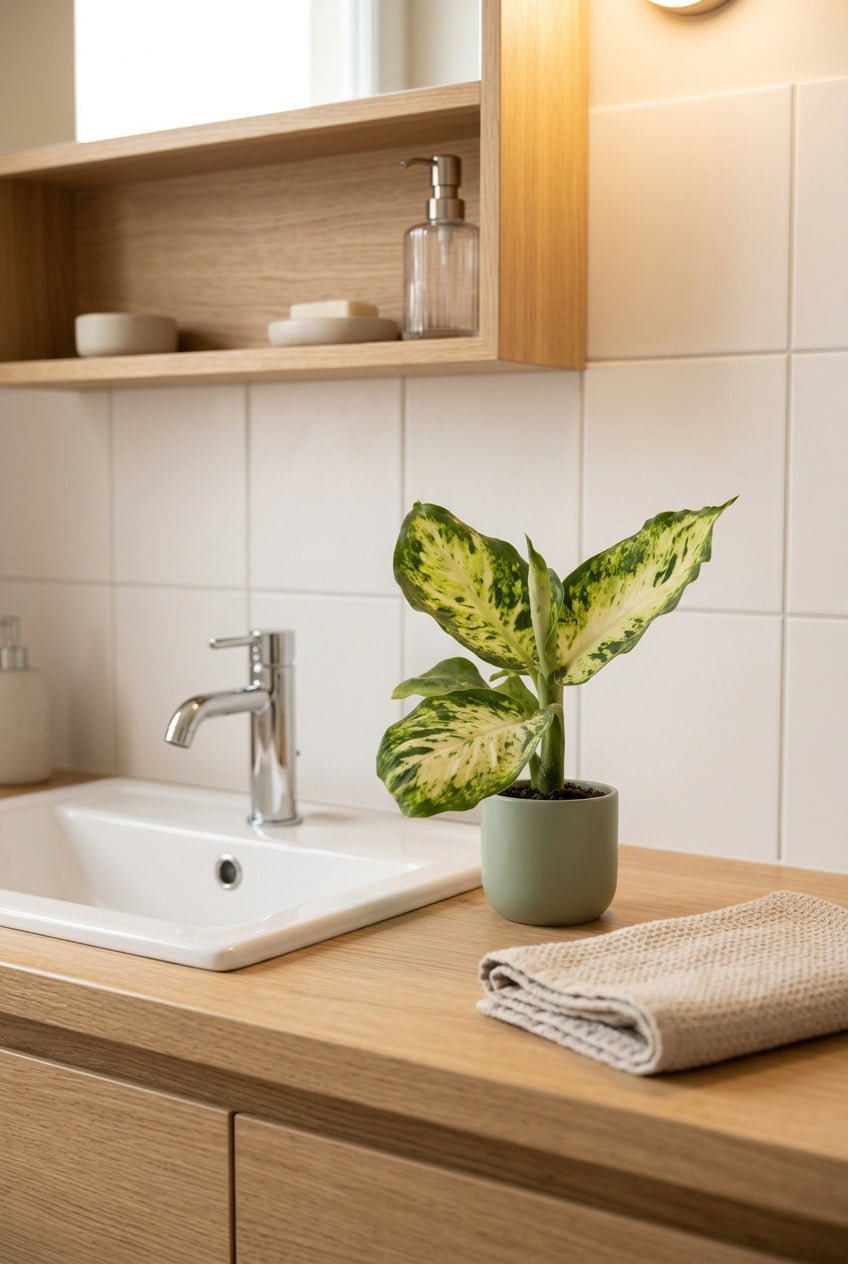
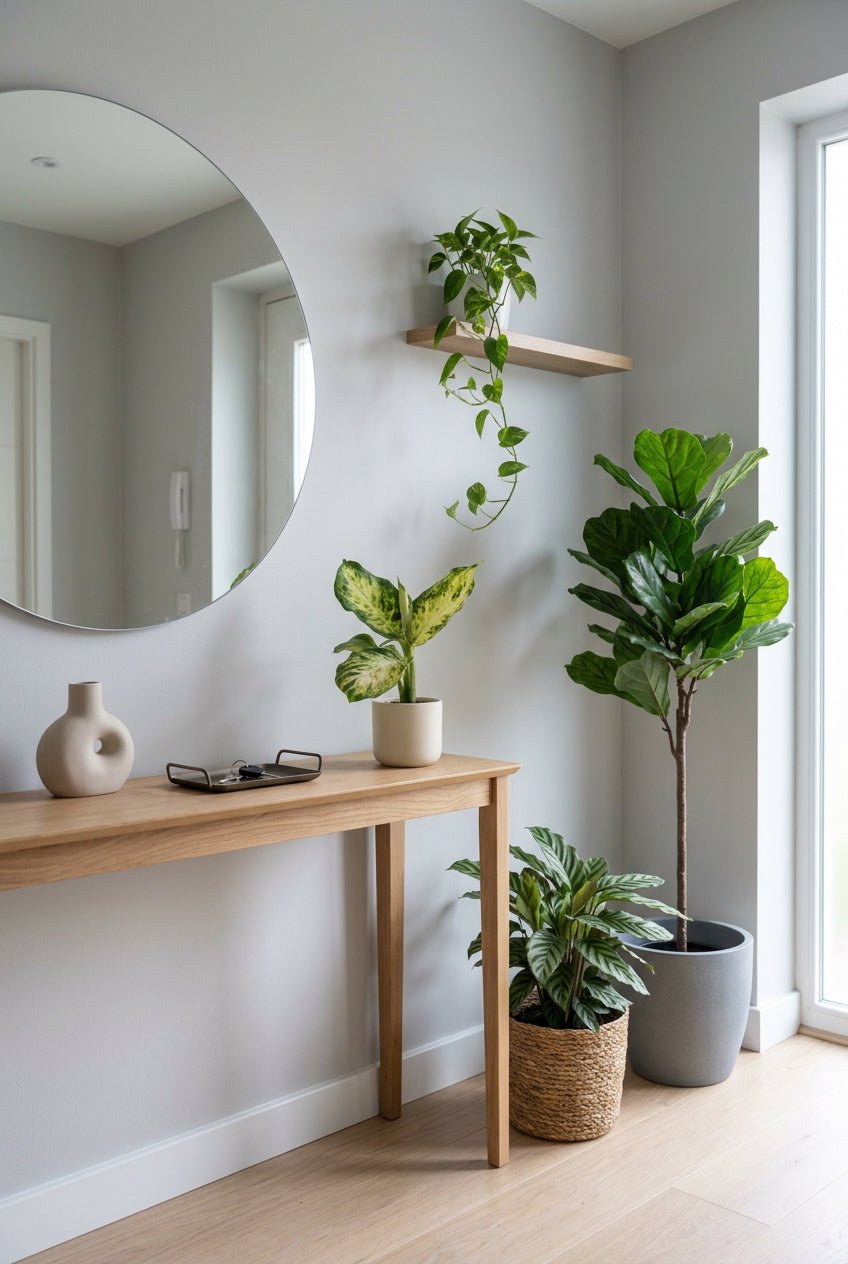
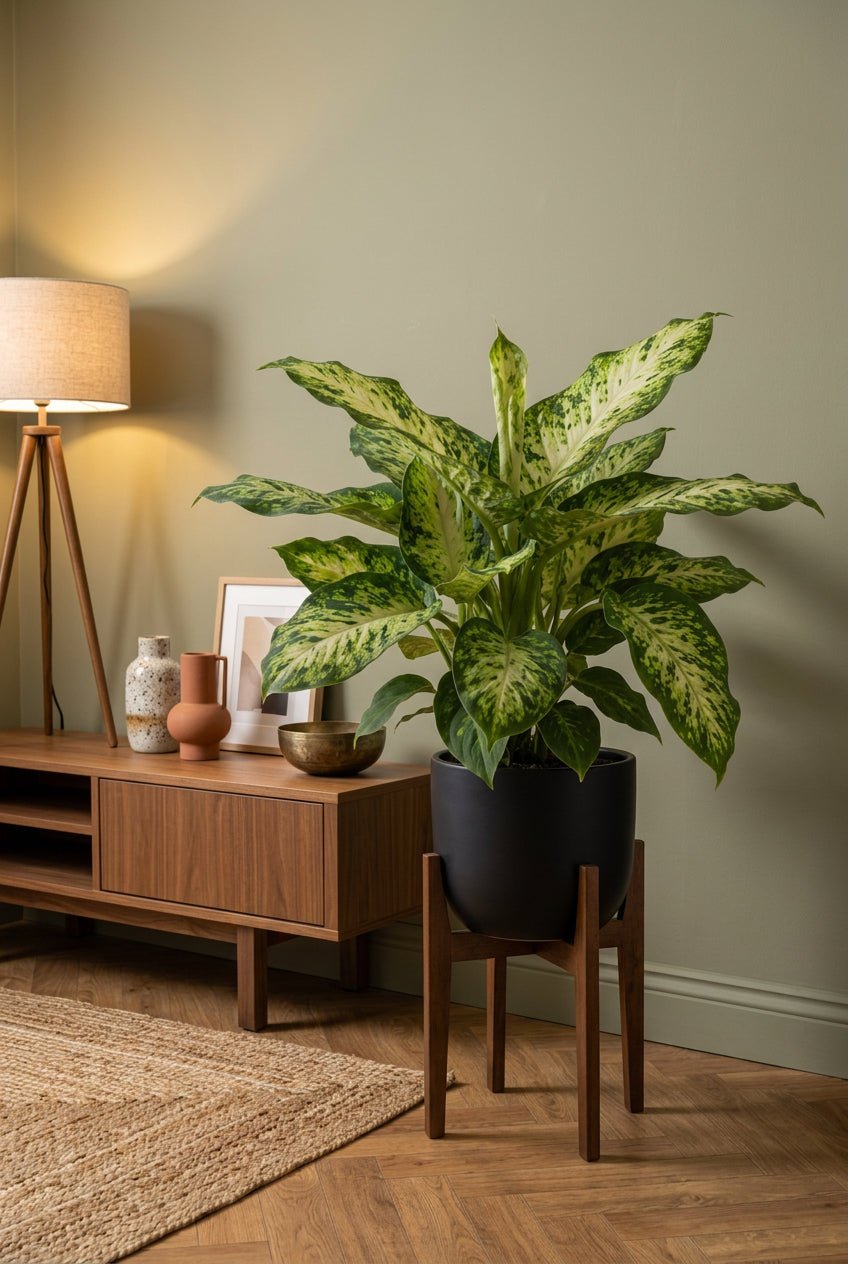

🌿 Broad leaves with a cream and pale yellow heart • 🎨 Dark green spots, a unique pattern on every leaf • 🌱 Upright habit • ☀️ Bright indirect light • 💧 Moderate watering • 📏 H15 cm | Pot Ø6 cm
The Dieffenbachia 'Amy' bears broad, glossy leaves whose heart, cream and pale yellow, is marbled with dark green spots, while the edges stay a deep green. The pale central vein highlights each leaf, and none repeats the pattern of another.
It is a horticultural selection of Dieffenbachia seguine, a species from the forests of Central and South America. Delivered as a young plant in a Ø6 cm pot, over the years it forms an upright stem that can reach about 90 cm, and becomes one of our brightest decorative foliage plants.
Which Dieffenbachia should you choose?
A few Dieffenbachia from the catalog, depending on the size you are looking for:
- Dieffenbachia 'Amy' (this plant) — cream and pale yellow heart spotted with dark green. The young plant, in a Ø6 cm pot.
- Dieffenbachia Camilla (Dumb cane) — creamy white center edged with a thin dark green border. The medium size, in a Ø17 cm pot.
- Dieffenbachia Tropic Snow (Dumb cane) — large dark green leaves marked with cream. The large size, in a Ø21 cm pot.
The genus comes with more or less pale variegation: the paler the heart of the leaf, the more light the plant needs to keep its colors.
Exposure & placement
Light keeps its variegation going: well lit without direct sun, its cream heart stays crisp.
- Exposure: bright indirect light; it tolerates partial shade, with less pronounced variegation.
- Ideal spots: a bright living room, a study, a light bedroom, one meter from a window.
- Temperature: 18 to 27 °C, never below 15 °C, without cold drafts.
- Humidity: 50 to 60 %, the air in an apartment suits it most of the time.
- To avoid: the midday sun, which marks its broad leaves, and proximity to a radiator.
If the new leaves come out greener than the older ones, move it closer to a window: the next ones will regain their cream heart.
Watering & care
It likes a moist substrate, but its roots dislike standing water.
- Watering: moderate — water generously when the top third of the substrate is dry, then let it drain well; empty the saucer.
- Substrate: light, rich and free-draining, a potting mix for green plants lightened with perlite.
- Fertilizer: a diluted liquid fertilizer for green plants, once a month in spring and summer.
- Repotting: in spring, when the roots fill the pot, into a Ø8 to Ø10 cm nursery pot with drainage holes, following the steps for successful repotting.
Yellowing leaves in the middle of the plant almost always signal too much water; only the oldest ones, at the base, drop naturally with age.
Decor ideas & plant pairings
Its cream heart brightens a corner of a room and goes well with spotted foliage as well as dark foliage.
- For a shelf of contrasts, line it up with the Peperomia caperata 'Aruba', almost black, and the Philodendron 'Ring of Fire', speckled with cream and yellow: three small sizes between pale, dark and spotted.
- On a desk, slip it into the Linnea decorative pot — Olive green ceramic for Ø6 cm pot: the olive green picks up the dark edges of its leaves and lets the cream heart stand out.
- For a pairing of textures, place it next to the Hoya 'Rangsang' (Wax plant): its waxy leaves speckled with light green echo the broad, glossy leaves of the Dieffenbachia.
- To highlight its colors, the Linnea decorative pot — Honey ceramic for Ø6 cm pot extends the pale yellow of its heart, and the Copper Reef decorative pot — Turquoise and copper ceramic for Ø6 cm pot brings out the green by contrast. Other designs are gathered in our pots and decorative pots.
Verdeia tips
- Turn the pot a quarter turn every week: its leaves turn toward the light, and this way the stem grows nice and straight.
- Wipe its broad leaves with a damp cloth: once a month, to keep their shine and crisp variegation.
- Remove the lower leaves once they are dry: cut at the base, they leave a clean stem beneath the foliage.
Technical characteristics
- Botanical name: Dieffenbachia seguine 'Amy' (syn. Dieffenbachia maculata)
- Common name: Dumb cane
- Family: Araceae
- Origin: horticultural selection of a species from Central and South America
- Dimensions on delivery: H15 cm | Pot Ø6 cm
- Mature height: about 90 cm tall and 60 cm wide indoors
- Foliage: evergreen, broad glossy leaves with a cream and pale yellow heart spotted with dark green, dark green edges
- Habit: upright, on a stem
- Growth: medium
- Light: bright indirect light, tolerates partial shade
- Watering: moderate, top third of the substrate dry between waterings
- Humidity: 50 to 60 %
- Temperature: 18 to 27 °C, minimum 15 °C
- Care: easy
- Toxicity: toxic to animals and children if ingested (calcium oxalate crystals), irritating sap
- Decorative style: Urban jungle
Each plant is unique: the amount of cream and the pattern of the spots naturally vary with the light and from one leaf to another.

Your plant, delivered with care
Every plant is hand-packed in a box specially designed for plants — secured, protected, ready to travel. It arrives in perfect condition, roots intact and foliage preserved, ready to take its place in your home.
Our Verdeia commitments
FAQ – Everything to know before adopting your Verdeia plant
How are my plants prepared before shipping?
All our plants are selected from our European partner nurseries. Before shipping, they are watered, cleaned, and protected with breathable, secure packaging. Each package is designed to ensure your plant arrives in perfect health, without any transport-related stress.
Will the plant look exactly like the photo?
The photos accurately represent the variety and the stated size. Since each plant is unique, slight differences in shape, foliage, or color may occur — and that’s part of their charm.
What are the delivery times and conditions?
Orders ship within 48 working hours, with tracked delivery in 2 to 5 working days via DPD. Shipping costs and the free-shipping threshold depend on your country — see our delivery page. You receive a tracking link as soon as your parcel leaves.
What should I do when my plant arrives?
Open your package as soon as you receive it and carefully remove the plant from its packaging. Let it acclimate for 24 hours in its new environment before watering. If it has been slightly stressed during transport, it will recover its shape after one or two days in the light.
What should I do if my plant arrives damaged?
Contact us within 48 hours with a photo of the issue. Our team will assess the situation and offer you the best solution: replacement, partial refund, or recovery advice.
Can I return a plant?
Since plants are living beings, standard returns are not possible. However, we guarantee good health upon delivery: if the plant arrives damaged, it will be replaced free of charge. For any other cases (order error, decorative pot, accessory), returns are possible within 14 days.