



Hoya krohniana 'Eskimo' (Wax plant) — H15 cm | Pot Ø6 cm
- Regular price
-
€24,95 - Regular price
-
- Sale price
-
€24,95
Couldn't load pickup availability
Frequently asked questions
When should you repot a Hoya? In spring, when the roots fill the pot, into a pot a few centimeters wider with an airy mix based on orchid bark, potting soil and perlite.
What is the difference between Hoya krohniana and Hoya lacunosa? Long sold under the name Hoya lacunosa, Hoya krohniana, described as a separate species in 2009, can be told apart mainly by the rounded to cordate base of its heart-shaped leaves.
Shipping & packaging
Shipped within 24/48 hours via DPD
- Delivery in 2 to 5 working days
- Eco-friendly packaging: recyclable boxes and biodegradable materials
- Special protection so your plant arrives in perfect condition
- Tracking link sent by email as soon as your parcel ships
- Shipping costs and the free-shipping threshold depend on your country — see our delivery page
ZEN ARRIVAL GUARANTEE
We guarantee that your plants will arrive in perfect condition. If your plant arrives damaged or in poor condition:
- Contact us promptly at hello@verdeia.eu with photos
- We will find the right solution for your situation
- No return needed — we trust you
The guarantee covers: damage in transit, plants severely weakened on arrival, and order preparation errors.
CARE TIPS ON ARRIVAL
To help your plant settle in for the long term:
- Unpack your plant immediately and inspect it
- Let it acclimatize for 24-48h in a bright spot out of direct sunlight
- Check the soil moisture before watering (dry surface = light watering)
- Wait 2-3 weeks before repotting, if needed
- Keep it away from heat sources and drafts
- Gently wipe the leaves to remove dust
Need help? Contact our team at hello@verdeia.eu or via chat.
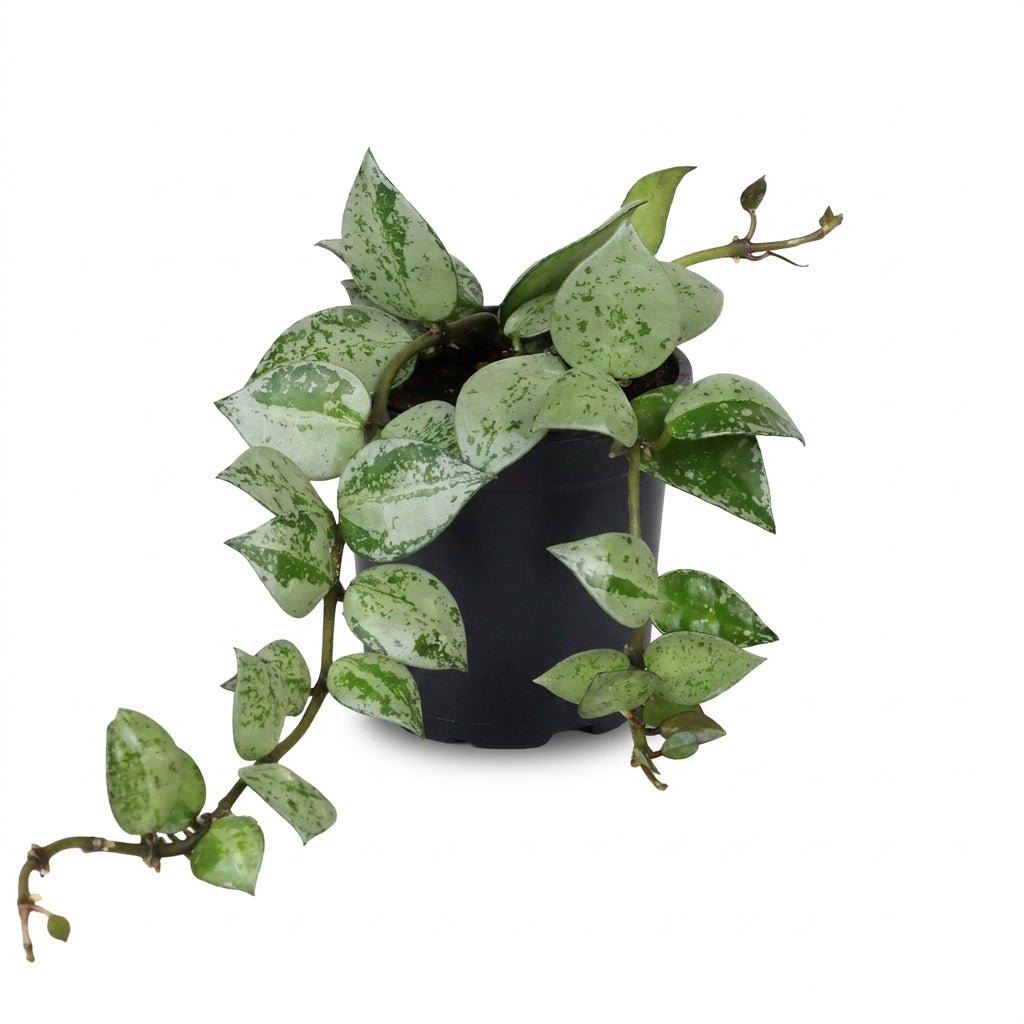
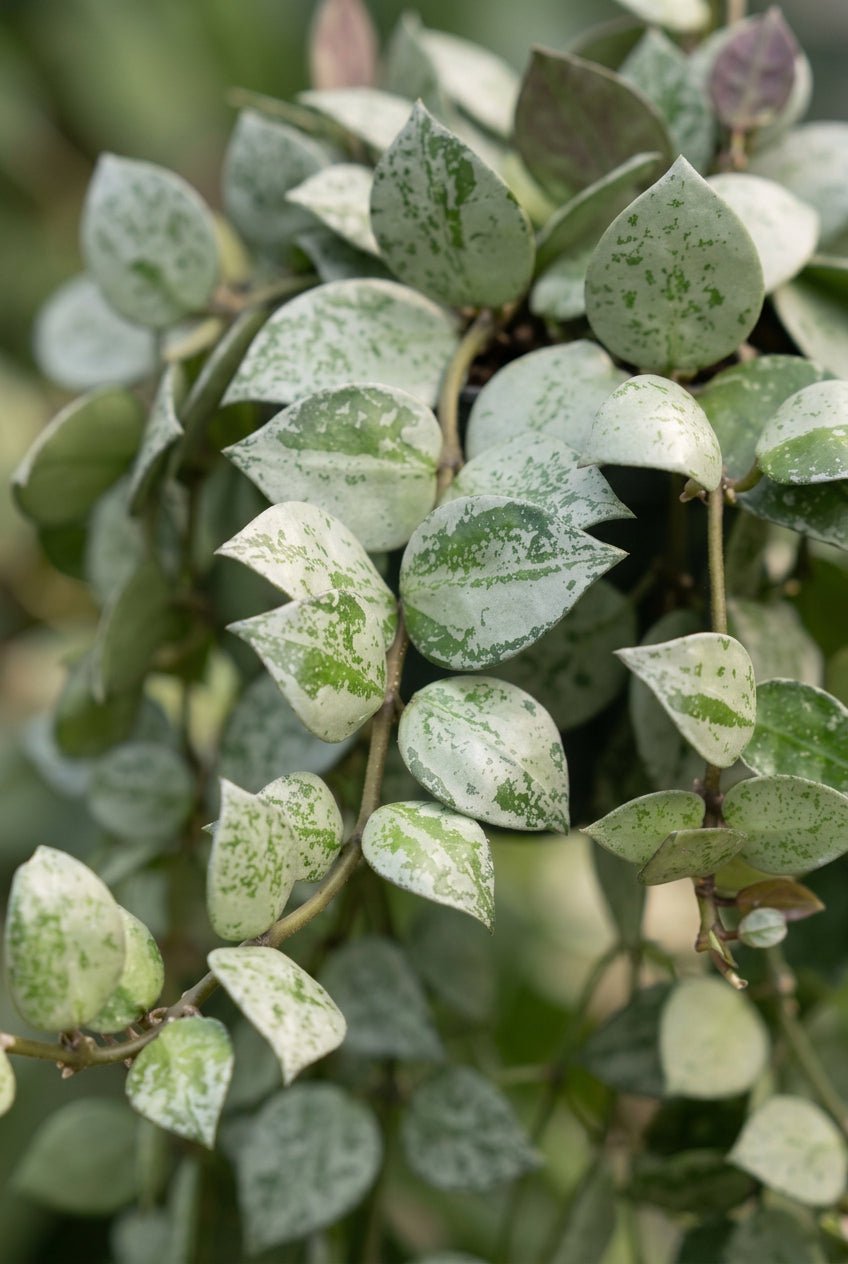
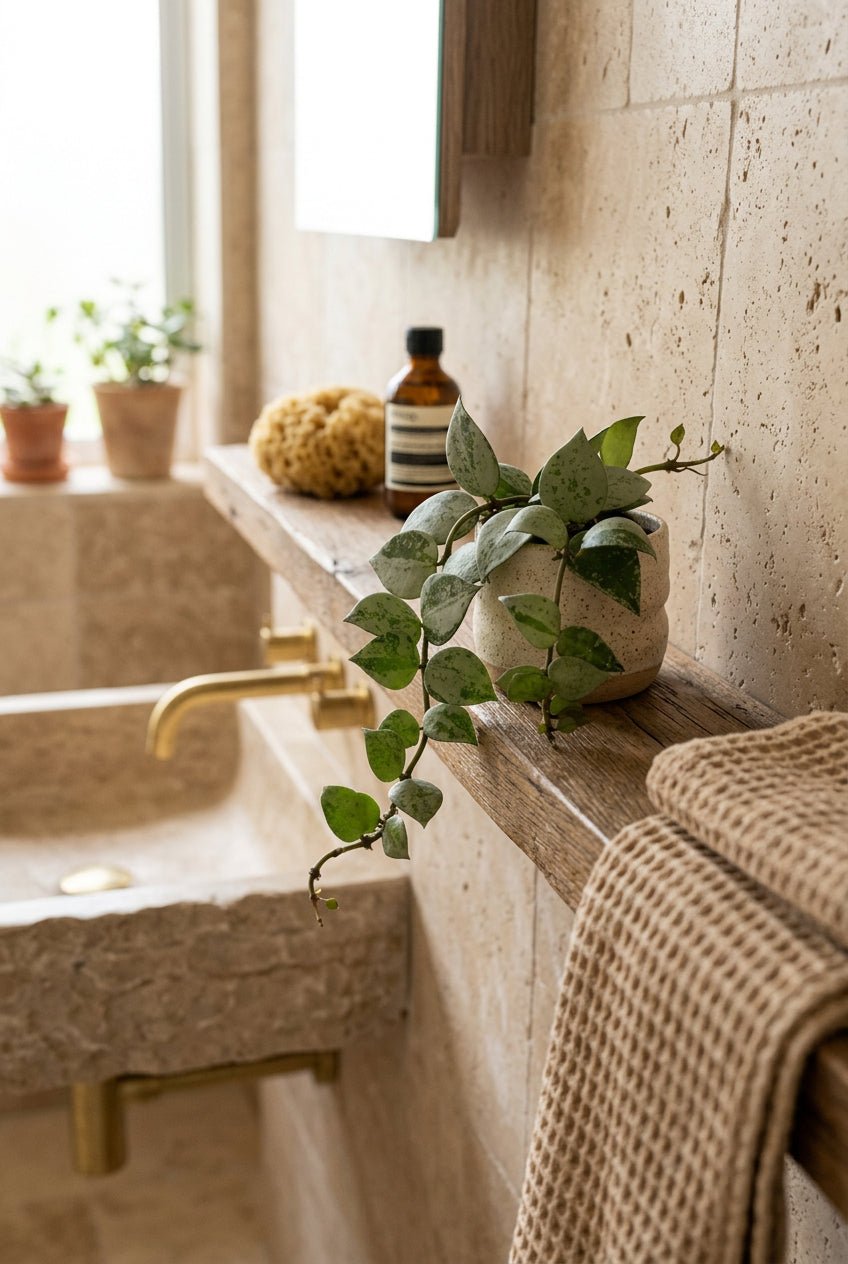
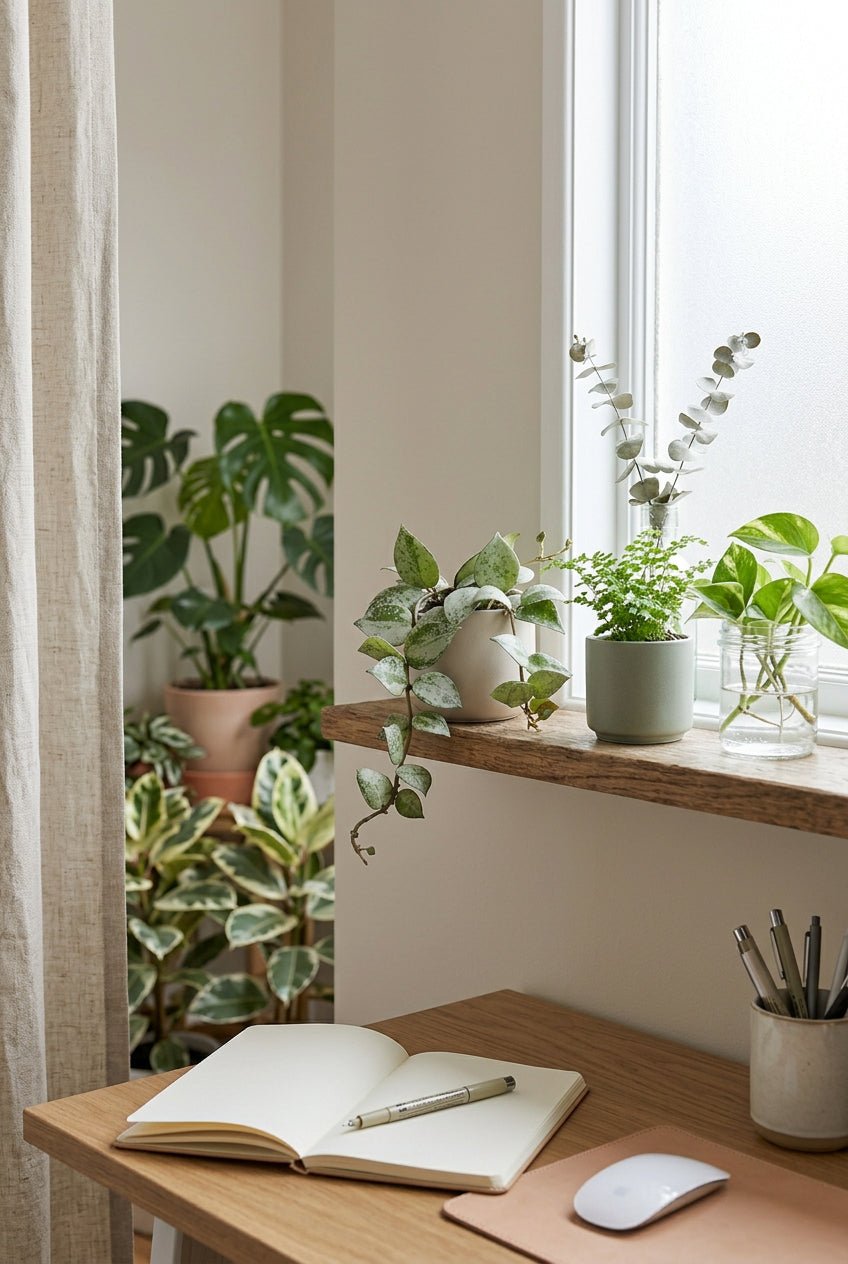
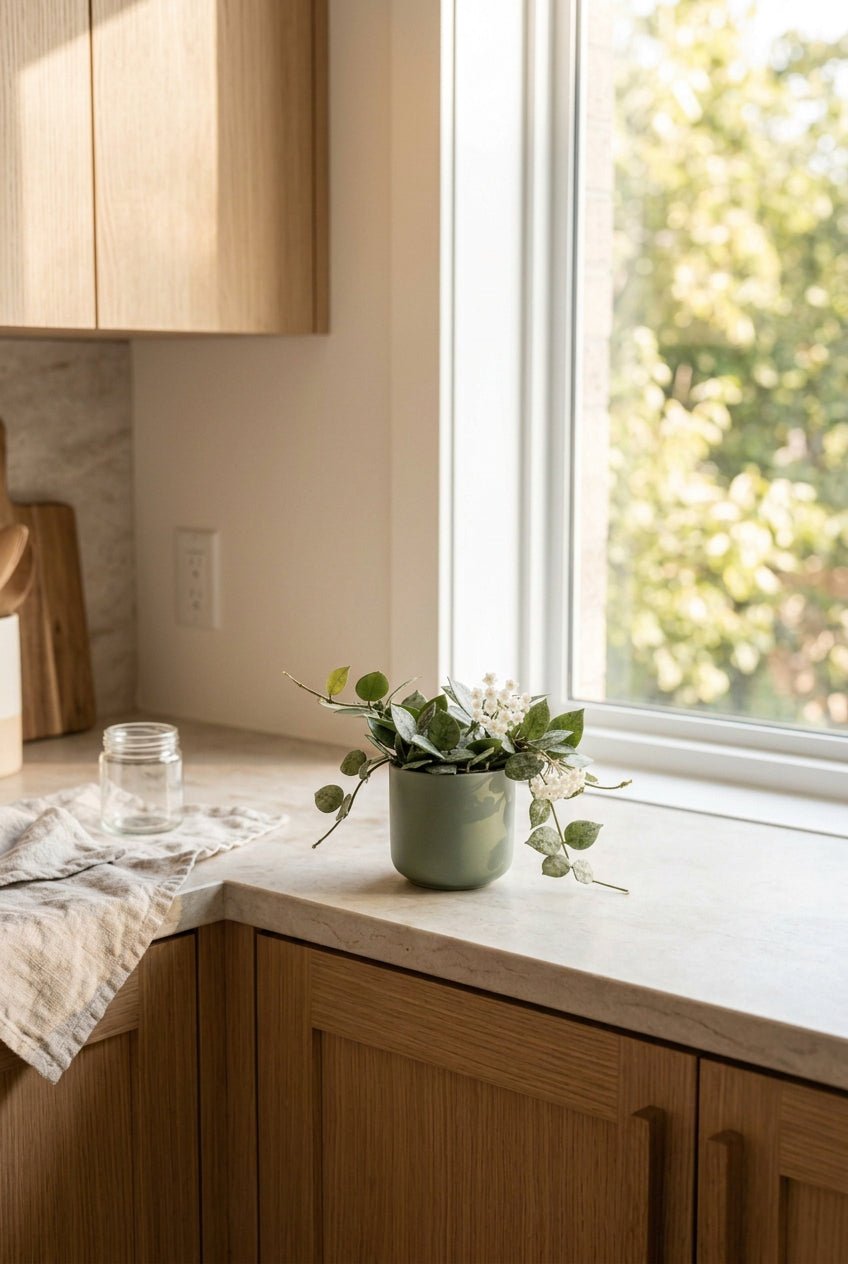

🩶 Small heart-shaped leaves splashed with silver • 🌿 Trailing or climbing habit • 🌤️ Bright indirect light • 🌸 Fragrant flowers on mature plants • 🌱 Young plant to grow on • 📏 H15 cm | Pot Ø6 cm
The Hoya krohniana 'Eskimo' has small, thick leaves, heart-shaped to oval and pointed, dark green splashed with silver: depending on the leaf, the silver is limited to a few specks or covers it almost entirely. Its stems, green to reddish, trail over the rim of the pot or cling to a support. 'Eskimo' is a horticultural selection with heavily speckled foliage; the species, an epiphyte, is native to the Philippines.
It is delivered as a young plant 15 cm tall, in a 6 cm nursery pot, and its stems can reach about 90 cm. Once mature and in good light, it forms umbels of small, star-shaped creamy-white flowers that are fragrant in the evening. Its 6 cm pot places it among the small indoor plants, and its trailing stems make it suited to a hanging pot or the edge of a shelf, like the hanging and trailing plants.
Which Hoya should you choose?
Hoyas differ in the shape and thickness of their leaves. Here is where Eskimo fits:
- Hoya krohniana 'Eskimo' (this plant) — small, thick heart-shaped leaves, dark green splashed with silver, trailing or climbing stems, H15 cm | Pot Ø6 cm. The choice for silvery, fleshy foliage.
- Hoya polyneura — thin, pointed leaves, light green veined with dark green, arching then trailing stems, H10 cm | Pot Ø8 cm. The choice for veined foliage and a room with cool nights.
Light & placement
Bright but indirect light keeps growth steady and is essential for flowering; strong summer sun scorches the leaves. Lack of light is the most common reason a Hoya does not flower.
- Light: bright and indirect, near an east- or west-facing window, or set back a little from a south-facing window; see windowsill plants.
- Placement: hanging pot, top of a shelf or a climbing support, away from radiators and cold drafts.
- Temperature: 18 to 24 °C, never below 15 °C; a slightly cooler winter, within this limit, suits it.
- Humidity: high, ideally 60% or more; a tray of damp clay pebbles under the pot or a bright bathroom helps (see bathroom plants).
The balance between brightness and humid air is explained in light and humidity, and the needs of flowering houseplants in flowering indoor plants.
Watering & care
Its thick leaves store water: water when the surface of the substrate has dried, from spring to fall, then less often in winter, letting the substrate dry out further without letting it dry out completely. The finger test tells you the right moment.
- Water: at room temperature, preferably soft; more pointers in which water to use for your plants.
- Drainage: pot with drainage holes, saucer emptied after each watering, to avoid root rot.
- Substrate: airy, equal parts orchid bark, potting soil and coarse perlite; see substrates.
- Fertilizer: orchid fertilizer every two to three weeks in spring and summer, once a month the rest of the year, following the principles of feeding indoor plants.
- Repotting: in spring, only when the roots fill the pot, into a pot a few centimeters wider: a pot that is too large keeps the substrate wet for too long. The steps are described in our guide to repotting and choosing a container in choosing the right pot.
- Pruning: light, at the end of winter, to remove weak or overcrowded stems.
Mealybugs, scale insects, whiteflies and spider mites are the pests to watch for; treatments are described in indoor plant pests.
Decor ideas & plant combinations
Its silvery foliage is best seen up close: in a hanging pot or on the edge of a shelf, its stems trail freely; trained on a small trellis, they climb. Find more ideas in hanging plants and the collection trailing plants for shelves.
- Hearts and silver: next to a Ceropegia woodii 'Variegata', from the same family, with small variegated heart-shaped leaves on thread-like stems; two pale foliages, two stem thicknesses.
- In miniature: alongside a Peperomia prostrata with small round leaves patterned like a shell, another young trailing plant in a 6 cm pot.
- Play of textures: near a Senecio herreianus with its strings of oval beads; two trailing plants with fleshy leaves that like the substrate to dry between waterings.
The rules of arrangement are explained in combining potted plants, and the style that suits it in bohemian-style plants.
Verdeia tips
- Keep the flower stalks: after flowering, leave the small peduncles that carried the flowers in place; the next flowers often grow again from these same points.
- Choose its direction: let its stems trail from a hanging pot, or wind them around a small trellis for a more compact shape; the methods are explained in supporting climbing plants and in indoor climbing plants.
- Take cuttings for a fuller plant: in spring or early summer, a piece of stem placed in water roots in two to three weeks; several cuttings replanted in the same pot quickly give a bushier clump. The method is explained in propagation by cuttings.
Technical specifications
- Botanical name: Hoya krohniana 'Eskimo'
- Common names: wax plant, porcelain flower (names for the genus Hoya)
- Family: Apocynaceae
- Origin: horticultural selection; species native to the Philippines
- Dimensions at delivery: H15 cm | Pot Ø6 cm (young plant)
- Mature size: trailing or climbing stems about 90 cm long
- Growth habit: trailing or climbing
- Light: bright indirect light, no strong sun
- Watering: when the surface of the substrate has dried; less often in winter
- Humidity: high, ideally 60% or more
- Temperature: 18 – 24 °C, minimum 15 °C
- Foliage: evergreen, small thick leaves, heart-shaped to oval, dark green splashed with silver, some almost entirely silver
- Flowering: on mature plants in good light, umbels of small, star-shaped creamy-white flowers, fragrant in the evening
- Care: easy
- Toxicity to animals: non-toxic
- Decor style: Trailing / Boho / Collector
Each plant is unique: the amount of silver on each leaf, the color of the stems and their length vary naturally with the individual plant, the light and the season.

Your plant, delivered with care
Every plant is hand-packed in a box specially designed for plants — secured, protected, ready to travel. It arrives in perfect condition, roots intact and foliage preserved, ready to take its place in your home.
Our Verdeia commitments
FAQ – Everything to know before adopting your Verdeia plant
How are my plants prepared before shipping?
All our plants are selected from our European partner nurseries. Before shipping, they are watered, cleaned, and protected with breathable, secure packaging. Each package is designed to ensure your plant arrives in perfect health, without any transport-related stress.
Will the plant look exactly like the photo?
The photos accurately represent the variety and the stated size. Since each plant is unique, slight differences in shape, foliage, or color may occur — and that’s part of their charm.
What are the delivery times and conditions?
Orders ship within 48 working hours, with tracked delivery in 2 to 5 working days via DPD. Shipping costs and the free-shipping threshold depend on your country — see our delivery page. You receive a tracking link as soon as your parcel leaves.
What should I do when my plant arrives?
Open your package as soon as you receive it and carefully remove the plant from its packaging. Let it acclimate for 24 hours in its new environment before watering. If it has been slightly stressed during transport, it will recover its shape after one or two days in the light.
What should I do if my plant arrives damaged?
Contact us within 48 hours with a photo of the issue. Our team will assess the situation and offer you the best solution: replacement, partial refund, or recovery advice.
Can I return a plant?
Since plants are living beings, standard returns are not possible. However, we guarantee good health upon delivery: if the plant arrives damaged, it will be replaced free of charge. For any other cases (order error, decorative pot, accessory), returns are possible within 14 days.