



Malus domestica 'Elstar' (Apple tree) — H90 cm | Pot Ø21 cm
- Regular price
-
€49,95 - Regular price
-
- Sale price
-
€49,95
Couldn't load pickup availability
Frequently asked questions
When should Elstar apples be harvested? From mid-September, approximately three weeks before Jonagold, and they can be stored until December.
Why is my apple tree losing young fruit in June? This is the natural physiological fruit drop through which the tree regulates its own fruit load.
Shipping & packaging
Shipped within 24/48 hours via DPD
- Delivery in 2 to 5 working days
- Eco-friendly packaging: recyclable boxes and biodegradable materials
- Special protection so your plant arrives in perfect condition
- Tracking link sent by email as soon as your parcel ships
- Shipping costs and the free-shipping threshold depend on your country — see our delivery page
ZEN ARRIVAL GUARANTEE
We guarantee that your plants will arrive in perfect condition. If your plant arrives damaged or in poor condition:
- Contact us promptly at hello@verdeia.eu with photos
- We will find the right solution for your situation
- No return needed — we trust you
The guarantee covers: damage in transit, plants severely weakened on arrival, and order preparation errors.
CARE TIPS ON ARRIVAL
To help your plant settle in for the long term:
- Unpack your plant immediately and inspect it
- Let it acclimatize for 24-48h in a bright spot out of direct sunlight
- Check the soil moisture before watering (dry surface = light watering)
- Wait 2-3 weeks before repotting, if needed
- Keep it away from heat sources and drafts
- Gently wipe the leaves to remove dust
Need help? Contact our team at hello@verdeia.eu or via chat.
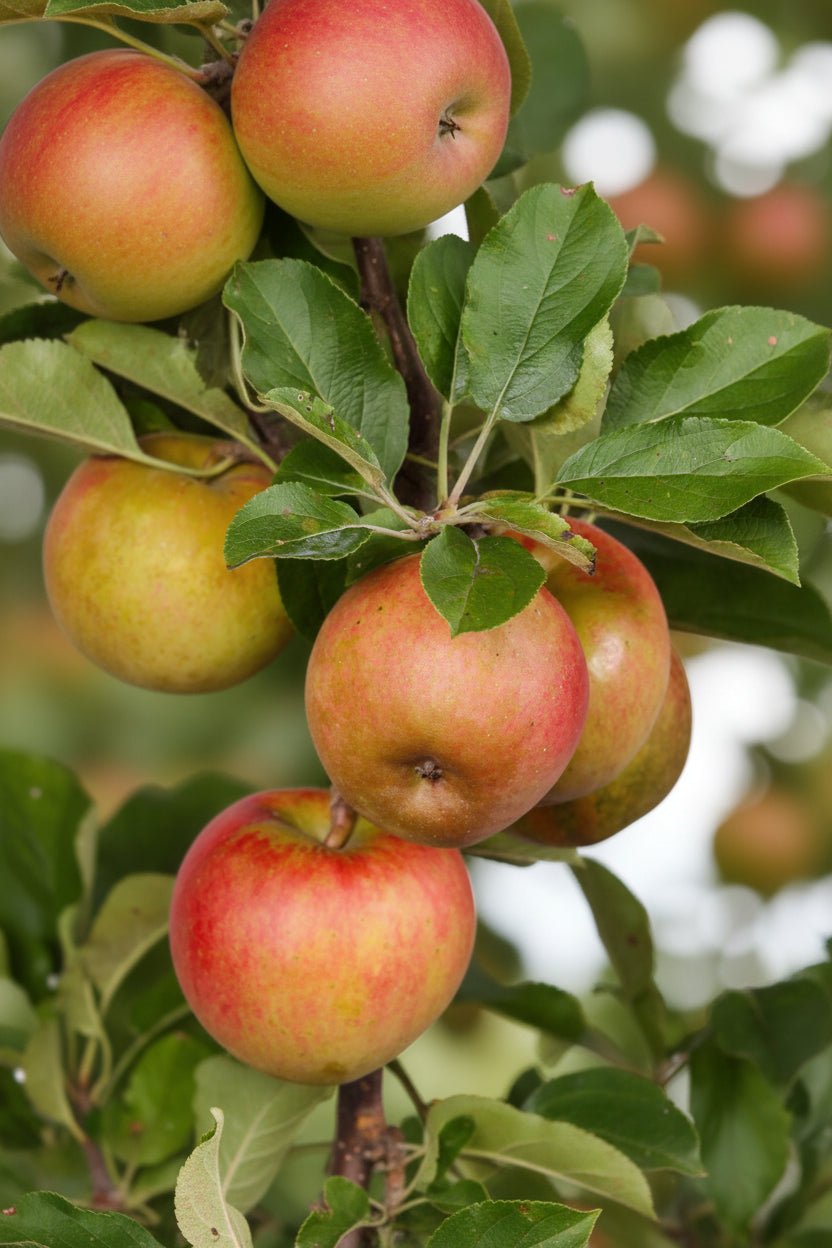
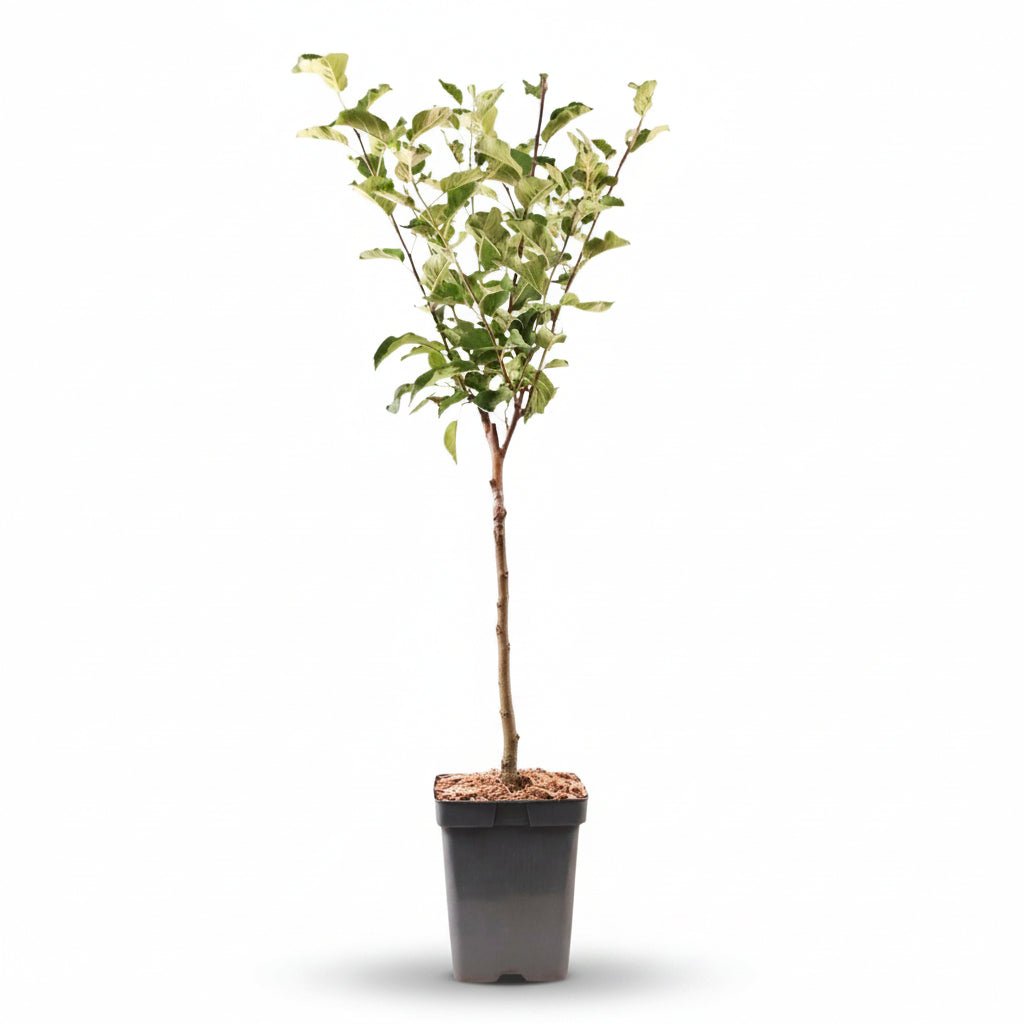


🍎 Very fragrant red and green apples • 🌸 White-pink blossom in April • 🌳 Tree already trained • ☀️ Full sun • ❄️ Hardy down to -25 °C • 🍂 Deciduous foliage
Malus domestica 'Elstar' produces medium-sized apples, orange-red over a green background, with exceptionally crisp flesh and a distinctly more aromatic flavor than average. This species originates in the mountains of Central Asia; this Dutch cultivar, bred by crossing 'Golden Delicious' and 'Ingrid Marie', is one of Europe's most appreciated varieties and a classic among the catalog's fruit trees.
Its distinctive feature is its balance: plenty of acidity beneath the sweetness, giving it a pronounced flavor where modern apples tend towards flat sweetness. Delivered at H90 cm in a Ø21 cm pot, the tree is already grafted and trained.
Which apple tree should you choose?
Two varieties in the catalog, complementary for both harvest and pollination:
- 'Elstar' (this plant) — medium-sized red and green apples, very fragrant and crisp flesh, harvest from mid-September. The most aromatic.
- 'Jonagold' — large yellow-green apples flushed with red, firm flesh, keeps until February (H90 cm | Pot Ø21 cm). The most productive for large fruit.
These two varieties pollinate each other, and their harvests follow one another three weeks apart: Elstar in September, Jonagold in October.
Light & location
An apple tree needs full sun for the fruit to ripen and develop color. In partial shade, the tree grows and flowers, but the apples remain green, small and acidic.
- Exposure: full sun — at least 6 hours of direct sun per day.
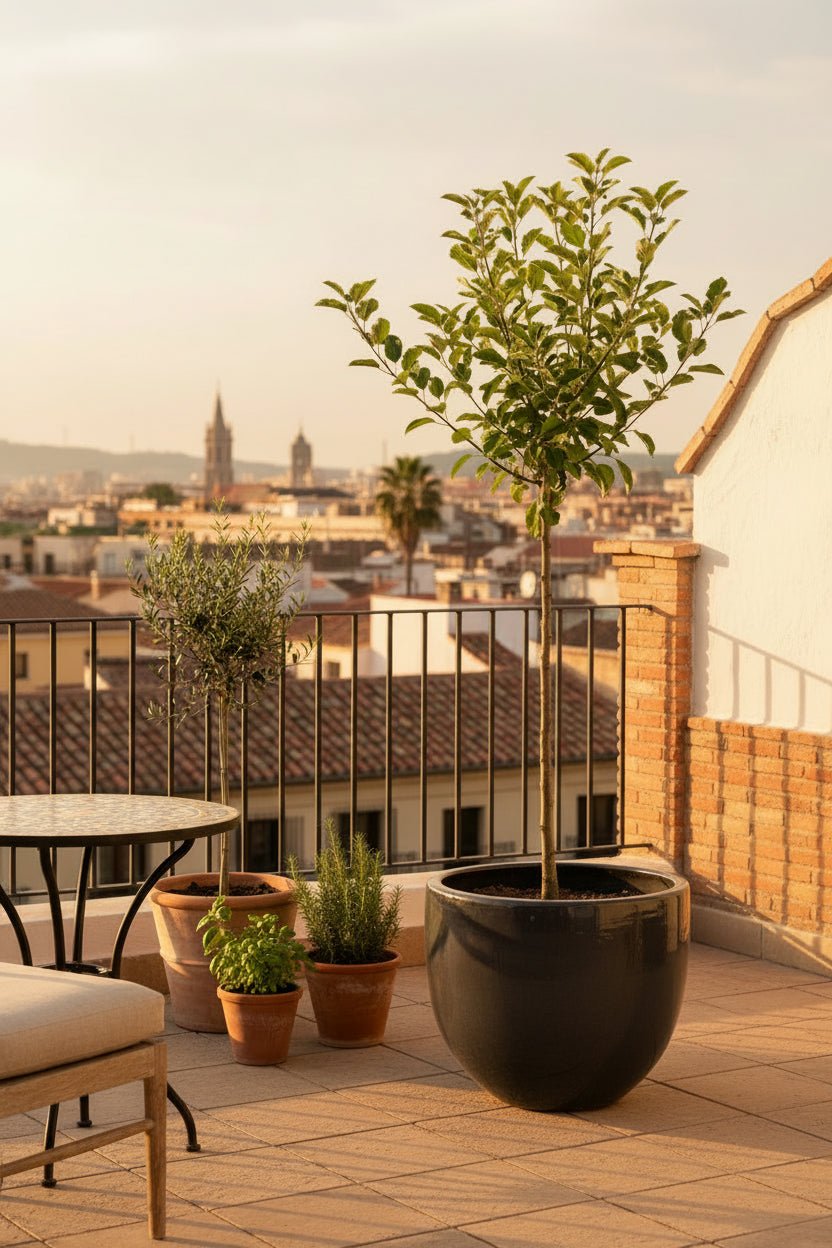
- Location: garden, large terrace, south-facing balcony — plan for a pot at least 40 cm in diameter when mature.
- Hardiness in a pot: down to -25 °C — winter cold is essential for fruiting.
- Soil type: deep, rich and well-drained — planting soil amended with compost.
Elstar is partially self-fertile: it produces fruit on its own, but having a second apple tree significantly increases the number of fruit that set.
Watering & care
A fruit tree in a pot uses much more water than one planted in the ground, where its roots can reach far. A rich, well-draining substrate supports production, and yellowing foliage often indicates a deficiency during the fruiting season.
- Watering: regular from April to September — two to three times a week in summer, especially while the fruit is swelling.
- Drainage: essential — never leave standing water in the saucer.
- Pruning: in February, outside periods of frost — open up the center and shorten the previous year's shoots.
- Thinning: in June, keep only one apple per cluster — Elstar is particularly sensitive to this and is prone to biennial bearing if overloaded.
- Fertilizer: fertilizer for fruit trees, at bud break and after flowering.
A natural drop of young fruit in June is normal: the tree regulates its own fruit load; it is not a symptom.
Decor ideas & plant combinations
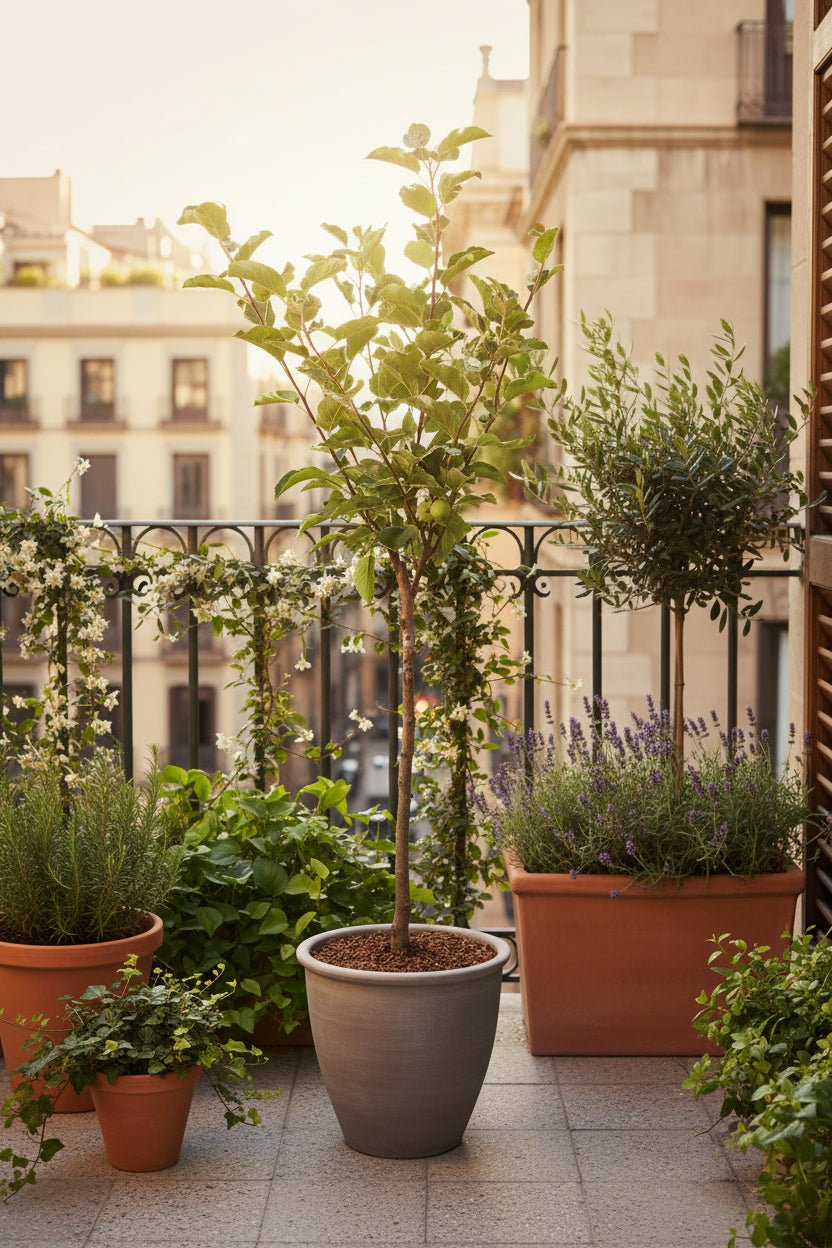
An apple tree offers three highlights throughout the year: its pinkish-white blossoms in April, colorful fruit in September, and bare branches in winter. On a balcony, it is the tree that gives the season the most structure.
- To double the harvest, pair it with a 'Jonagold' apple tree — cross-pollination and two harvests three weeks apart.
- To extend the season, add a 'Regina' cherry tree — cherries in July, apples in September.
- To brighten up winter, place a BetterBuxus® ball-shaped boxwood next to it — its evergreen mass fills the space while the apple tree is bare.
- To enhance the pot, a container made of terracotta or natural fiber keeps the substrate cool during the fruiting period.
The April flowering is highly nectar-rich: an apple tree attracts pollinators across the entire balcony, which also benefits other fruit trees.
Verdeia tips
- Thin without hesitation in June: Elstar is strongly prone to biennial bearing, meaning a very heavy crop one year is followed by a year without a harvest. Keeping only one apple per cluster helps regulate production from one year to the next.
- Harvest from mid-September: an Elstar picked too late becomes mealy and loses its acidity, which is what makes it so appealing. The fruit should come away with a gentle twisting motion.
- Never let the substrate dry out completely in summer: water stress while the fruit is swelling can cause the young fruit to drop all at once. Pushing your finger three centimeters into the potting soil remains the most reliable way to determine the right time to water.
Technical specifications
- Botanical name: Malus domestica 'Elstar'
- Common name: Elstar apple tree
- Family: Rosaceae
- Origin: mountains of Central Asia, cultivar developed in the Netherlands
- Dimensions on delivery: H90 cm | Pot Ø21 cm
- Growth habit: already-formed grafted tree
- Adult height: 2.50 to 3 meters in a pot
- Light exposure: full sun, at least 6 hours per day
- Watering: regular during the season, increased while the fruit is swelling
- Soil type: deep, rich, and well-draining
- Hardiness: down to -25 °C
- Pollination: partially self-fertile, better production with a second apple tree
- Flowering: April, highly nectar-rich pinkish-white flowers
- Harvest: mid-September, keeps until December in a cool place
- Foliage: deciduous, medium-green oval leaves
- Care: pruning in February and thinning in June are essential
- Toxicity: edible fruit, seeds should not be consumed in large quantities
- Decorative style: Urban vegetable garden / Natural / Orchard
Each plant is unique: branching, the number of fruit buds, and vigor naturally vary from one specimen to another.

Your plant, delivered with care
Every plant is hand-packed in a box specially designed for plants — secured, protected, ready to travel. It arrives in perfect condition, roots intact and foliage preserved, ready to take its place in your home.
Our Verdeia commitments
FAQ – Everything to know before adopting your Verdeia plant
How are my plants prepared before shipping?
All our plants are selected from our European partner nurseries. Before shipping, they are watered, cleaned, and protected with breathable, secure packaging. Each package is designed to ensure your plant arrives in perfect health, without any transport-related stress.
Will the plant look exactly like the photo?
The photos accurately represent the variety and the stated size. Since each plant is unique, slight differences in shape, foliage, or color may occur — and that’s part of their charm.
What are the delivery times and conditions?
Orders ship within 48 working hours, with tracked delivery in 2 to 5 working days via DPD. Shipping costs and the free-shipping threshold depend on your country — see our delivery page. You receive a tracking link as soon as your parcel leaves.
What should I do when my plant arrives?
Open your package as soon as you receive it and carefully remove the plant from its packaging. Let it acclimate for 24 hours in its new environment before watering. If it has been slightly stressed during transport, it will recover its shape after one or two days in the light.
What should I do if my plant arrives damaged?
Contact us within 48 hours with a photo of the issue. Our team will assess the situation and offer you the best solution: replacement, partial refund, or recovery advice.
Can I return a plant?
Since plants are living beings, standard returns are not possible. However, we guarantee good health upon delivery: if the plant arrives damaged, it will be replaced free of charge. For any other cases (order error, decorative pot, accessory), returns are possible within 14 days.