



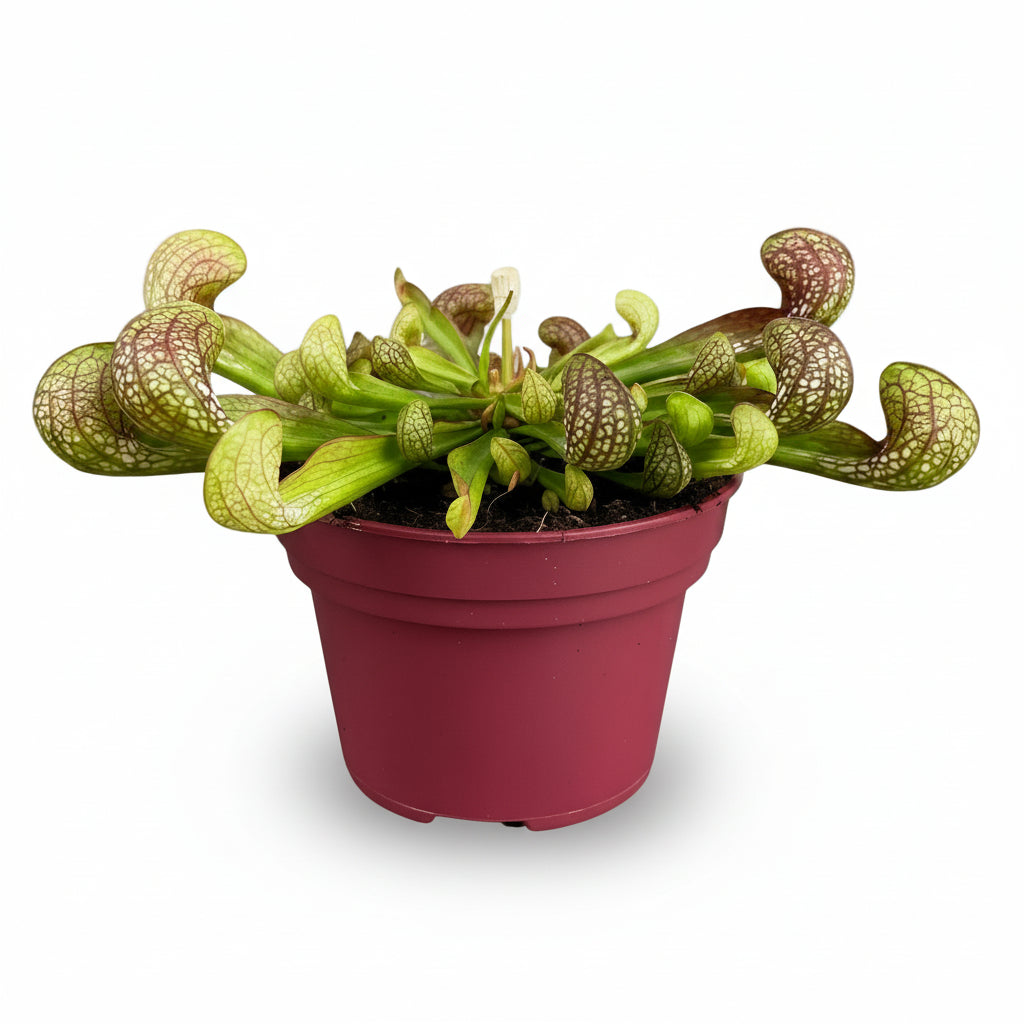
Sarracenia psittacina (Parrot pitcher plant) — H13 cm | Pot Ø12 cm
- Regular price
-
€32,95 - Regular price
-
- Sale price
-
€32,95
Couldn't load pickup availability
Frequently asked questions
Can Sarracenia psittacina survive outdoors in winter? Yes, if temperatures don’t drop below -5 °C — it is hardy but prefers a cool rest period (5 to 10 °C) in a bright, sheltered spot for optimal dormancy.
Do you need to feed a Sarracenia psittacina manually? No — it naturally attracts and captures its prey with its pitchers; placed on a balcony in summer, it finds the insects it needs on its own without any intervention.
Shipping & packaging
Shipped within 24/48 hours via DPD
- Delivery in 2 to 5 working days
- Eco-friendly packaging: recyclable boxes and biodegradable materials
- Special protection so your plant arrives in perfect condition
- Tracking link sent by email as soon as your parcel ships
- Shipping costs and the free-shipping threshold depend on your country — see our delivery page
ZEN ARRIVAL GUARANTEE
We guarantee that your plants will arrive in perfect condition. If your plant arrives damaged or in poor condition:
- Contact us promptly at hello@verdeia.eu with photos
- We will find the right solution for your situation
- No return needed — we trust you
The guarantee covers: damage in transit, plants severely weakened on arrival, and order preparation errors.
CARE TIPS ON ARRIVAL
To help your plant settle in for the long term:
- Unpack your plant immediately and inspect it
- Let it acclimatize for 24-48h in a bright spot out of direct sunlight
- Check the soil moisture before watering (dry surface = light watering)
- Wait 2-3 weeks before repotting, if needed
- Keep it away from heat sources and drafts
- Gently wipe the leaves to remove dust
Need help? Contact our team at hello@verdeia.eu or via chat.
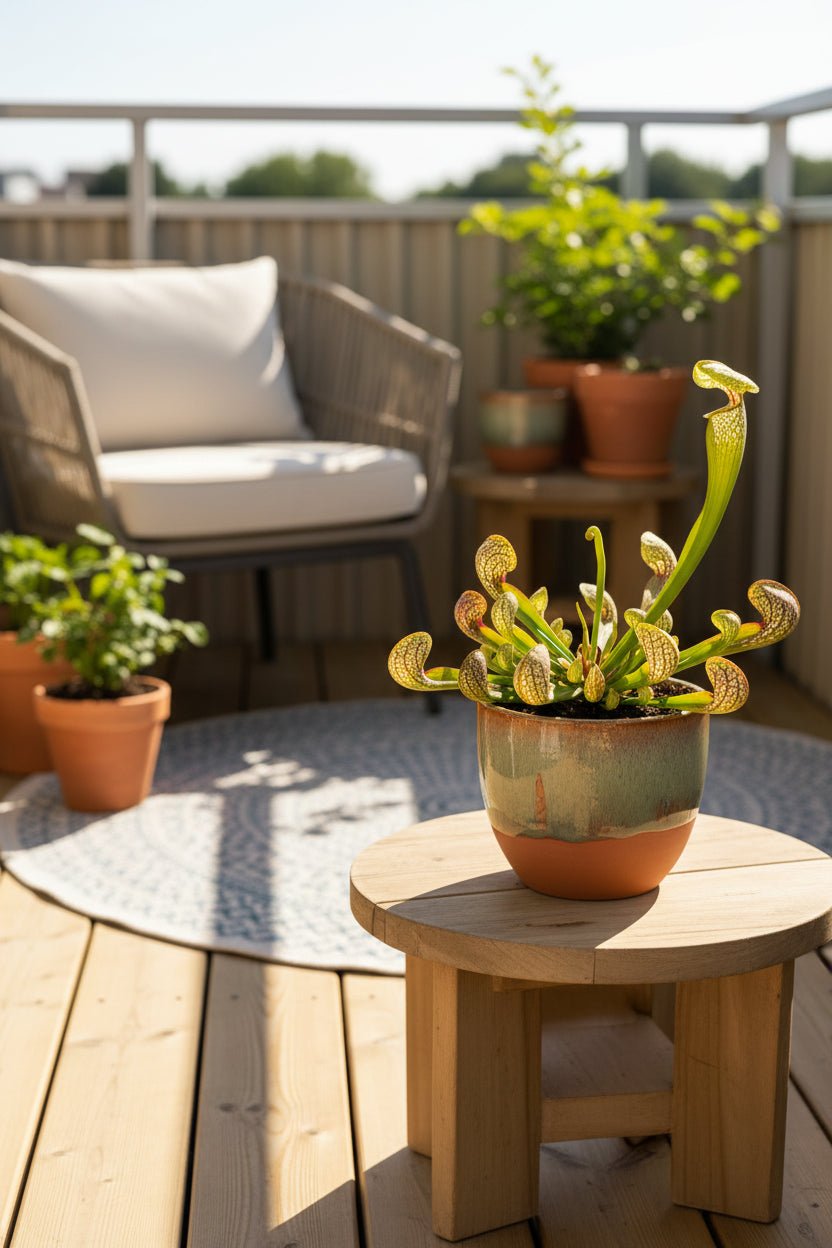

🐾 Non-toxic • 🪴 Graphic red and green parrot pitchers • 🌤️ Bright light / Partial shade • 💧 Always-moist substrate • 📏 H13 cm | Pot Ø12 cm
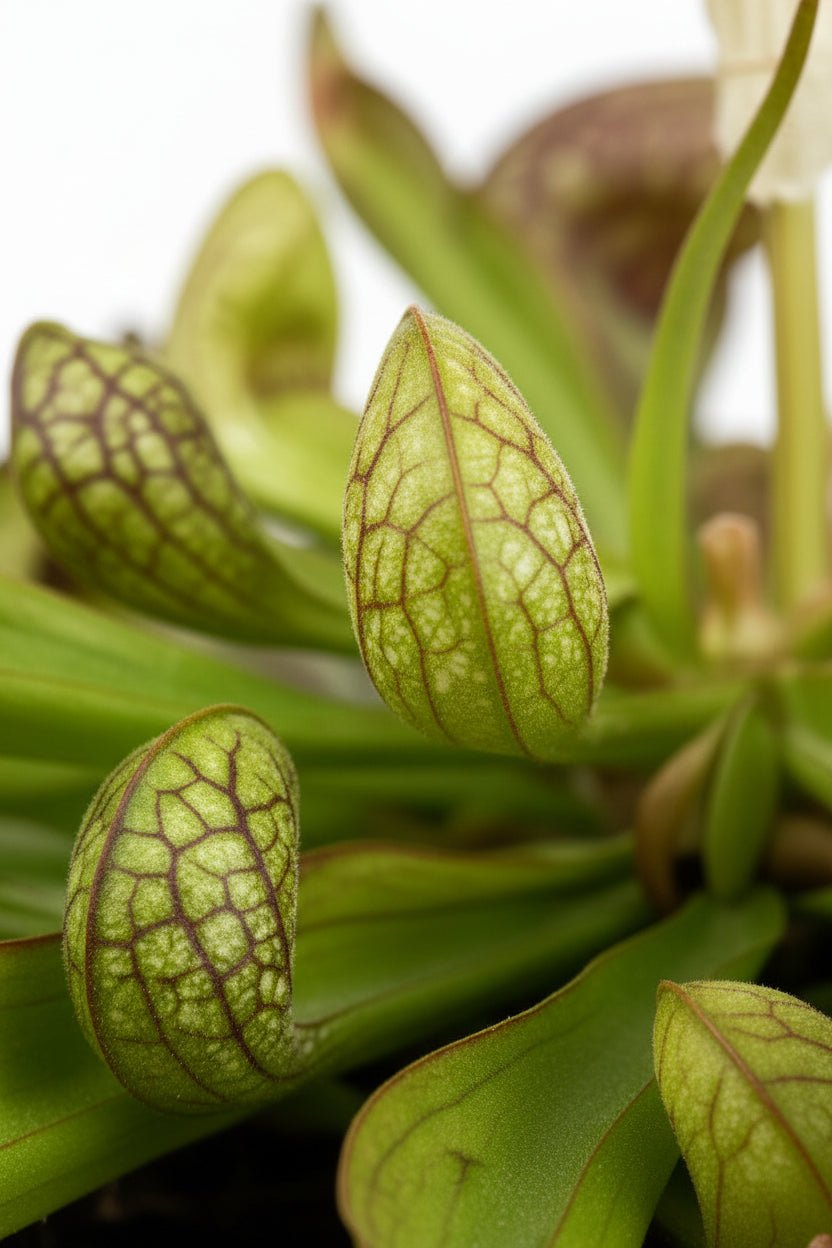
Sarracenia psittacina, nicknamed the parrot pitcher plant, stands apart from Sarracenia venosa with its reclining trumpet-shaped leaves that curl over into a hood — a unique shape resembling a parrot's beak. Native to the wetlands of the southeastern United States, its deep red and bright green tones give it an instantly graphic, exotic character. Combine it with other carnivorous plants to create a carnivorous garden.
Its compact H13 cm size makes it an ideal carnivorous plant for starting a collection or adding to an existing carnivorous display. Each species of carnivorous plant has its own care requirements.
Light & placement
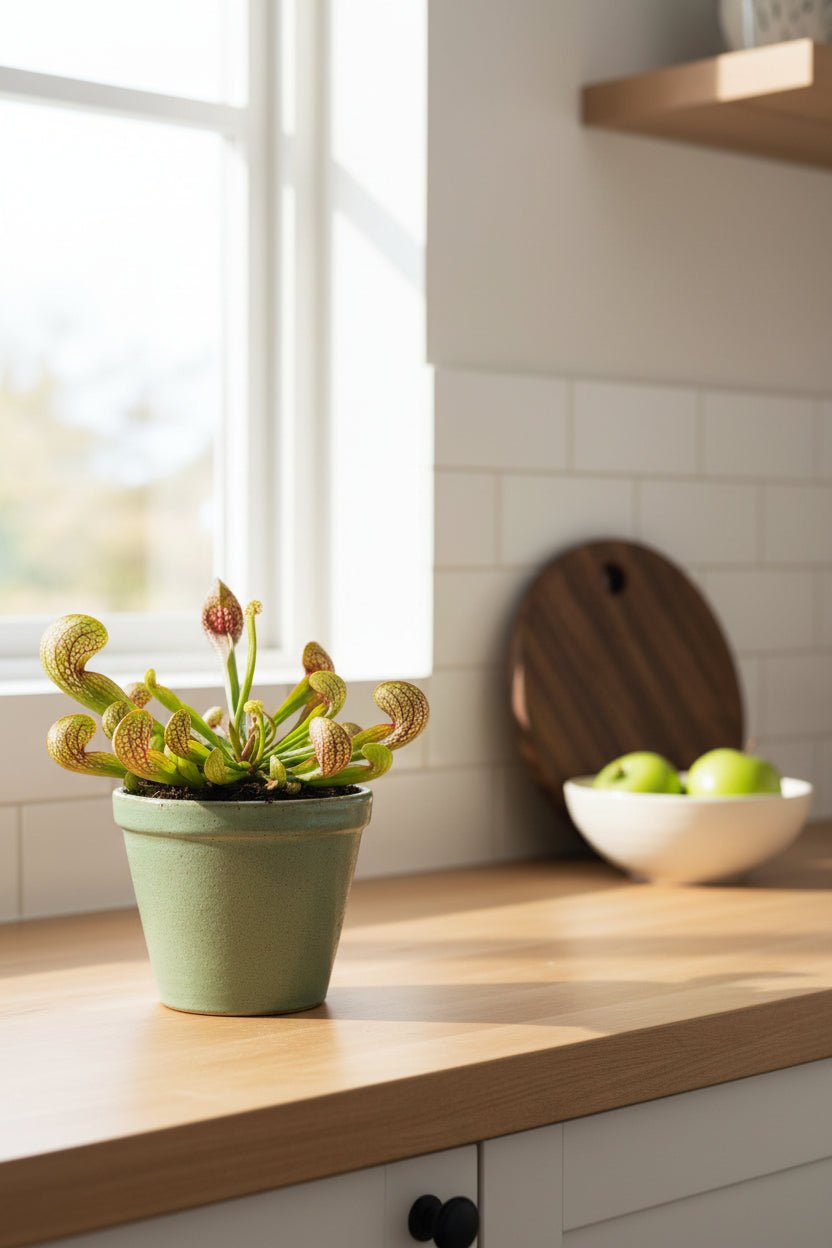
Sarracenia psittacina enjoys bright light without scorching sun behind glass — an east-facing window provides gentle light that intensifies its red and green colors without burning the pitchers. It tolerates partial shade, especially in summer.
- Light: bright light to partial shade — avoid direct afternoon sun.
- Ideal for: bright windowsill, sheltered balcony, unheated greenhouse.
- Temperature: prefers a cool winter rest (5 to 10 °C) in a bright space.
- Substrate: fertilizer-free carnivorous plant mix — sphagnum moss and perlite, never all-purpose potting soil.
Watering & care
- Water type (mandatory): exclusively rainwater, demineralized water, or reverse-osmosis water — limescale weakens the roots and dulls the pitchers. Always keep 1 to 2 cm of lime-free water in the saucer; never let the substrate dry out.
- Fertilizer: none — the plant gets its nutrients from insects captured in its pitchers.
- Foliage: do not mist the pitchers — simply remove dried pitchers at the base.
- Repotting: every 12 to 24 months in spring, using fresh fertilizer-free carnivorous plant mix.
Decor ideas & plant pairings
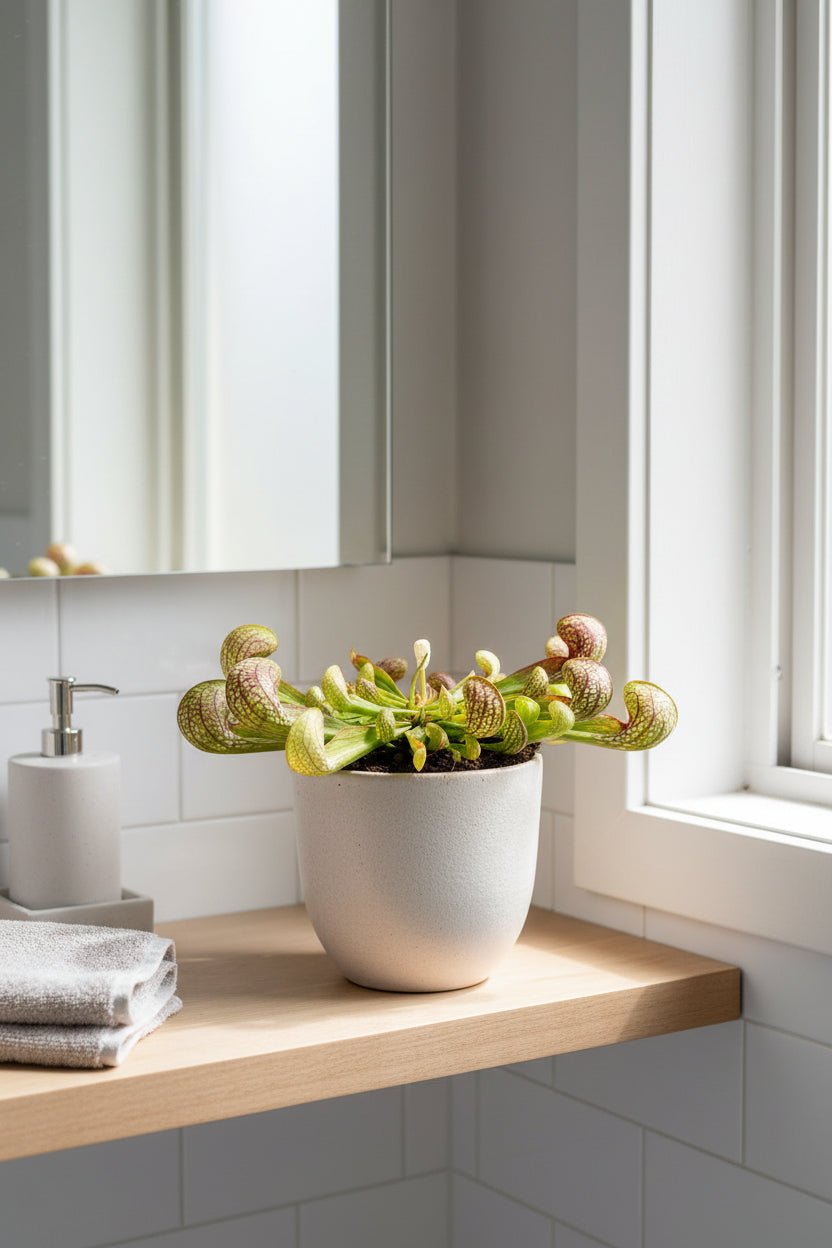
Its low-growing habit and deep red and green colors make it a perfect accent piece on a console or watertight tray — its flattened pitchers create a silhouette that is very different from upright pitcher plants. A reliable choice for a plant corner.
- In a carnivorous plant display: pair it with a Sarracenia venosa with upright pitchers and a Drosera aliciae with sparkling droplets — three different mechanisms, three contrasting silhouettes, the same lime-free watering requirements, for a spectacular carnivorous display.
- In a complete collection: add a Dionaea muscipula and a Nepenthes — five carnivorous plants, five ways to capture insects, and a fascinating collection for fans of unusual botany.
- Decorative pot: matte ceramic or beige/gray stoneware creates an effective contrast with the red and green tones of the pitchers.
Verdeia tips
- Lime-free water is absolutely essential: even a single watering with tap water can be enough to weaken the plant — use only rainwater, demineralized water, or reverse-osmosis water, and always keep 1 to 2 cm of water in the saucer.
- Move it outdoors in summer: placed on a sheltered balcony, it naturally attracts gnats and mosquitoes — contact with its natural prey stimulates its growth and intensifies its colors far better than indoors.
- Respect its winter rest: place it in a cool (5 to 10 °C), bright location between November and February — this dormancy period is essential for encouraging a beautiful flush of colorful pitchers in spring.
Technical specifications
- Botanical name: Sarracenia psittacina
- Common name: parrot pitcher plant
- Origin: Southeastern United States
- Pot diameter: Ø12 cm
- Approximate height: H13 cm
- Mature size: 20 to 25 cm
- Light: bright light / partial shade
- Watering: regular — constantly moist substrate, lime-free water required
- Care: easy
- Non-toxic to animals and children
- Decorative style: Urban jungle / Botanical curiosity / Contemporary
Each plant is unique: the photos show an example of its appearance. The density of the pitchers and the intensity of the red and green tones naturally vary according to light levels and the season.

Your plant, delivered with care
Every plant is hand-packed in a box specially designed for plants — secured, protected, ready to travel. It arrives in perfect condition, roots intact and foliage preserved, ready to take its place in your home.
Our Verdeia commitments
FAQ – Everything to know before adopting your Verdeia plant
How are my plants prepared before shipping?
All our plants are selected from our European partner nurseries. Before shipping, they are watered, cleaned, and protected with breathable, secure packaging. Each package is designed to ensure your plant arrives in perfect health, without any transport-related stress.
Will the plant look exactly like the photo?
The photos accurately represent the variety and the stated size. Since each plant is unique, slight differences in shape, foliage, or color may occur — and that’s part of their charm.
What are the delivery times and conditions?
Orders ship within 48 working hours, with tracked delivery in 2 to 5 working days via DPD. Shipping costs and the free-shipping threshold depend on your country — see our delivery page. You receive a tracking link as soon as your parcel leaves.
What should I do when my plant arrives?
Open your package as soon as you receive it and carefully remove the plant from its packaging. Let it acclimate for 24 hours in its new environment before watering. If it has been slightly stressed during transport, it will recover its shape after one or two days in the light.
What should I do if my plant arrives damaged?
Contact us within 48 hours with a photo of the issue. Our team will assess the situation and offer you the best solution: replacement, partial refund, or recovery advice.
Can I return a plant?
Since plants are living beings, standard returns are not possible. However, we guarantee good health upon delivery: if the plant arrives damaged, it will be replaced free of charge. For any other cases (order error, decorative pot, accessory), returns are possible within 14 days.