



Parthenocissus quinquefolia 'Engelmannii' (Virginia creeper) H65 cm | Pot Ø15 cm
- Regular price
-
€28,95 - Regular price
-
- Sale price
-
€28,95
Couldn't load pickup availability
Frequently asked questions
Why don’t the leaves of my Virginia creeper turn red in autumn? Too much shade produces yellow-orange tones rather than scarlet red — to get a bright fiery red, it needs at least 5 to 6 hours of direct sunlight per day.
When to prune an Engelmannii Virginia creeper? Prune in early winter before bud break to control growth and remove dead wood — the plant will then regrow with maximum vigor in spring.
Shipping & packaging
Shipped within 24/48 hours via DPD
- Delivery in 2 to 5 working days
- Eco-friendly packaging: recyclable boxes and biodegradable materials
- Special protection so your plant arrives in perfect condition
- Tracking link sent by email as soon as your parcel ships
- Shipping costs and the free-shipping threshold depend on your country — see our delivery page
ZEN ARRIVAL GUARANTEE
We guarantee that your plants will arrive in perfect condition. If your plant arrives damaged or in poor condition:
- Contact us promptly at hello@verdeia.eu with photos
- We will find the right solution for your situation
- No return needed — we trust you
The guarantee covers: damage in transit, plants severely weakened on arrival, and order preparation errors.
CARE TIPS ON ARRIVAL
To help your plant settle in for the long term:
- Unpack your plant immediately and inspect it
- Let it acclimatize for 24-48h in a bright spot out of direct sunlight
- Check the soil moisture before watering (dry surface = light watering)
- Wait 2-3 weeks before repotting, if needed
- Keep it away from heat sources and drafts
- Gently wipe the leaves to remove dust
Need help? Contact our team at hello@verdeia.eu or via chat.
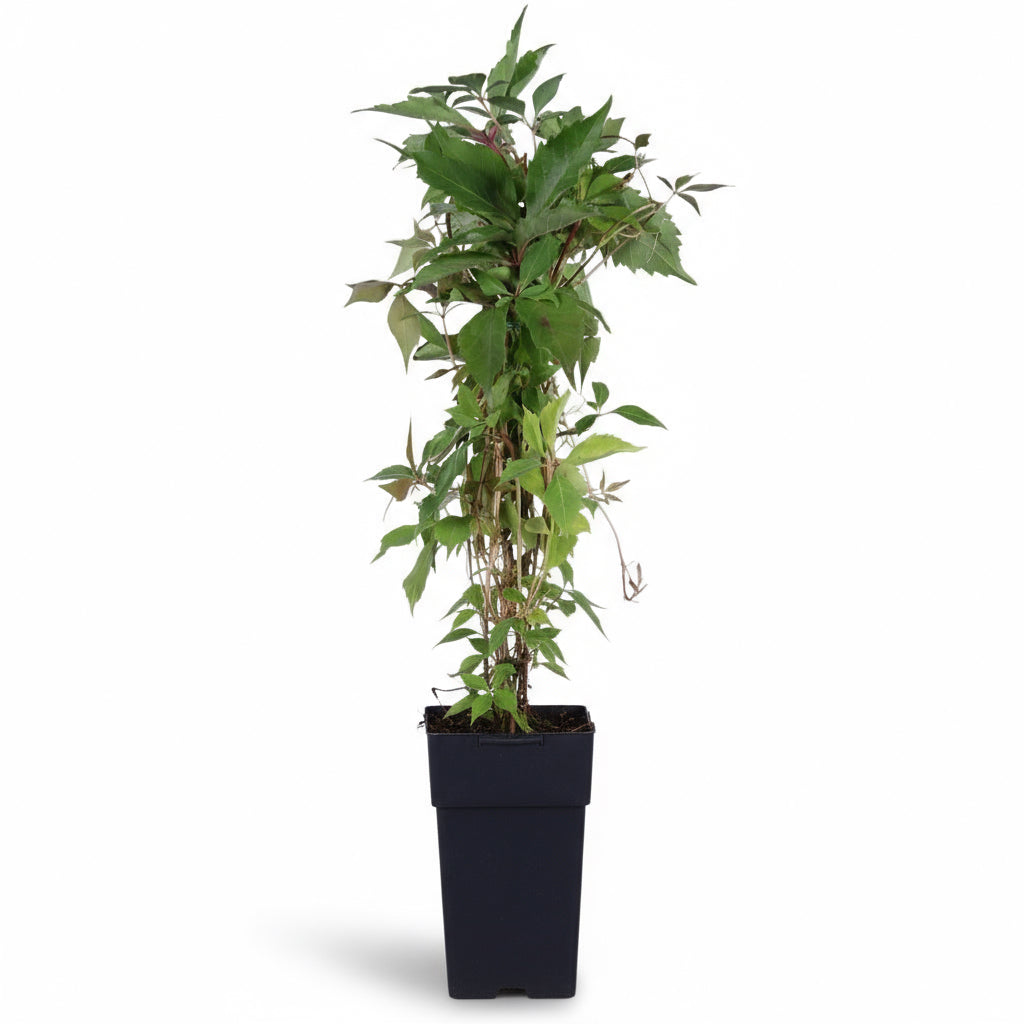
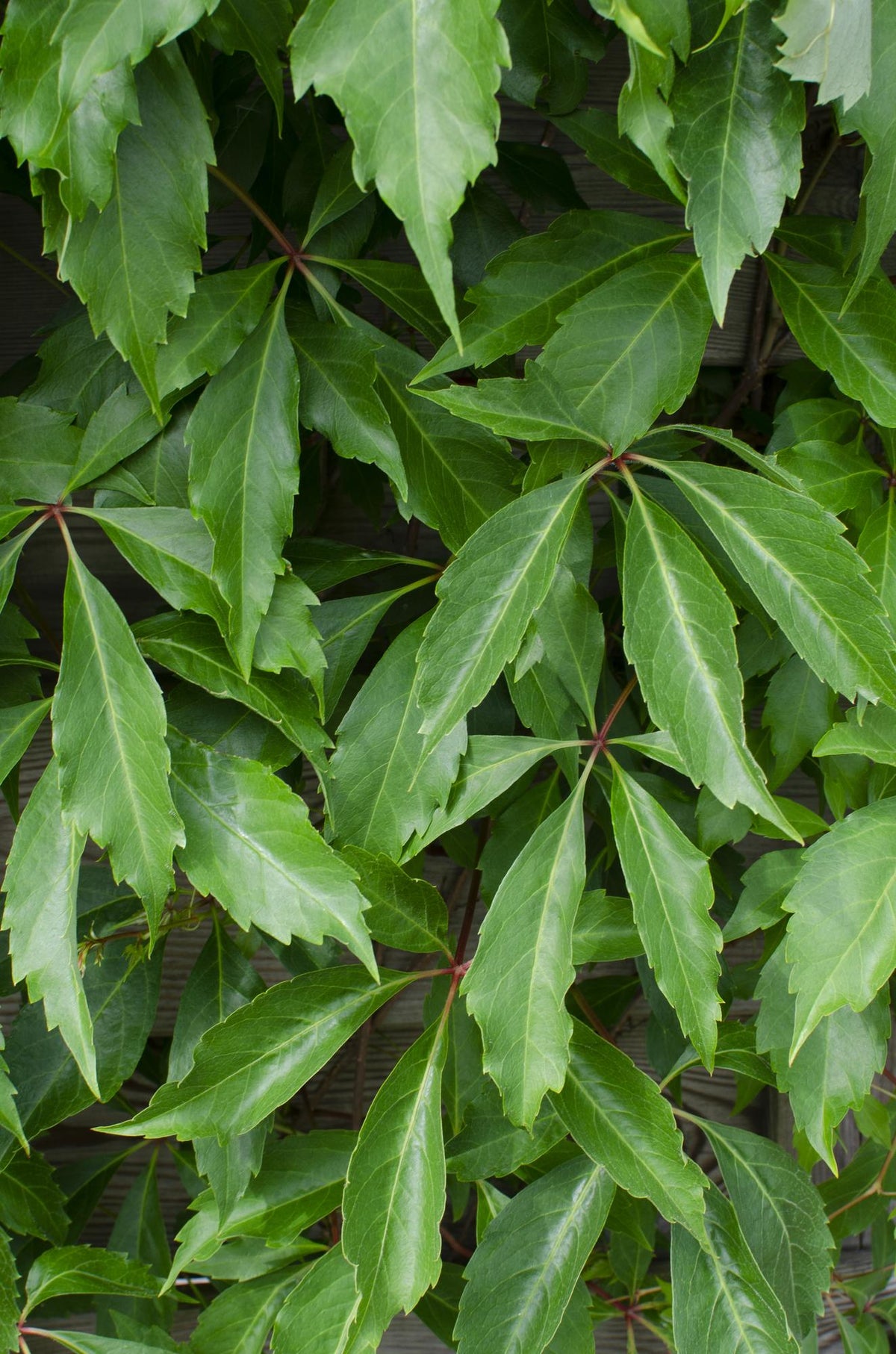

🍂 Spectacular scarlet red foliage in autumn • 🌿 Self-clinging adhesive pads — no training needed • ☀️ All exposures • ❄️ Very hardy • 📏 H65 cm | Pot Ø15 cm
Parthenocissus quinquefolia 'Engelmannii' is a climbing Virginia creeper native to North America, selected for its leaves, which are finer and narrower than those of the species, and for its particularly intense autumn color. Its stems cling to any support on their own thanks to tendrils tipped with small adhesive pads — no training needed. Glossy dark green from spring to summer, the foliage turns a spectacular scarlet to fiery red in autumn before falling. A structural, must-have climber for covering facades, walls and pergolas quickly and without maintenance.
Very vigorous, very hardy and unfussy about exposure, it is one of the most resistant and easy climbers in the catalog — ideal for covering large surfaces without hassle.
Which Virginia creeper to choose?
The Verdeia Parthenocissus collection offers four Virginia creepers with distinct characters. Here's how to place 'Engelmannii' among the catalog varieties:
- Parthenocissus quinquefolia 'Engelmannii' (this plant) — leaves with 5 fine leaflets, self-clinging adhesive pads, scarlet red in autumn. The most self-clinging variety, and the brightest in autumn.
- Parthenocissus tricuspidata 'Veitchii' — large three-lobed leaves, very strong adhesive pads, intense purplish red in autumn. The most vigorous for covering very large facades.
- Parthenocissus henryana — leaves with 5 dark green leaflets veined with silver, bright red in autumn. The most decorative variety in summer thanks to its silver veins.
- Parthenocissus striata — small, compact three-lobed leaves, trailing habit. The ideal variety for hanging pots or for covering a small space.
Light & location
'Engelmannii' tolerates all exposures, from full sun to full shade — this is one of its major qualities. However, autumn colors are much more intense and appear earlier on plants that get at least 5 to 6 hours of sun per day. It clings on its own to any rough surface without damaging it, thanks to its adhesive pads.
- Exposure: all exposures — from full sun to full shade.
- Support: facade, wall, fence, pergola or tree — the adhesive pads cling on their own, no training needed.
- Soil: all soil types, even poor and dry — very adaptable.
- In pots: large deep container for use on terraces or balconies, with regular watering in summer.
For maximum autumn color — intense fiery red from September — choose a location exposed to the sun at least part of the day: shade produces yellow-orange tones rather than scarlet red.
Watering & maintenance
Once well-rooted, the Virginia creeper 'Engelmannii' is practically self-sufficient in open ground — it is one of the least demanding climbers in the catalog. Pruning is the only regular maintenance needed to contain its vigor. If leaves turn yellow outside of autumn, check watering in pots or possible lack of light.
- Watering: in open ground, water only the first year; in pots, regularly in summer.
- Pruning: early winter to contain growth — cut stems that extend beyond the support.
- Renovation pruning: if the plant is too dense, cut back a third of the stems in winter to open it up.
- Fertilizer: none needed in open ground; in pots, slow-release granules in spring.
- Growth: 50 to 80 cm per year — plan for a sufficiently large support from planting.
Young plants need help to get started — the adhesive pads cling on their own as soon as the stems reach the support, but guiding them by hand in the first season speeds up coverage.
Decor ideas & plant combinations
The Virginia creeper 'Engelmannii' is first and foremost a structural climber — it creates a dense, even backdrop that other flowering climbers can scramble through for a multi-level green wall. Its fast growth also makes it one of the best choices among large plants to quickly cover a vertical space.
- For a flowering and fragrant green wall all season, the evergreen Lonicera henryi blends naturally into the Virginia creeper's foliage — its glossy green leaves all year round and small summer flowers fill in the coverage in winter, when the Virginia creeper has lost its leaves.
- For a spectacular red and white effect in autumn, the white-flowered, evergreen Trachelospermum 'Star of Venice' covers the base of the wall all year round — the contrast between its green evergreen foliage and the Virginia creeper's scarlet red in autumn is particularly striking.
- For spring flowering on a green background, the violet-flowered Clematis 'The President' climbs through the Virginia creeper's foliage — its large violet flowers from May to October contrast beautifully with the dark green of summer, then the red of autumn.
- To enhance the autumn color in a pot, the Capi Nature Groove taupe pot provides a neutral and natural background that highlights the scarlet red foliage — the mineral shade of the pot creates a very elegant harmony with the warm autumn colors.
Virginia creeper naturally attracts birds in autumn thanks to its small blue-black berries — place it on a facade visible from inside to enjoy this living spectacle along with the autumn colors.
Verdeia tips
- Guide the first stems by hand from planting: the adhesive pads cling on their own, but only on direct contact with the support — guiding the stems by hand in the first season helps the plant reach its support quickly and get uniform coverage started right away.
- Prune in early winter rather than spring: winter pruning before bud break allows you to clearly see the structure of the stems and remove dead wood without risking cutting young shoots — the plant then regrows with maximum vigor.
- Give it sun for an intense scarlet red in autumn: the quality of autumn coloring directly depends on sunlight — in the shade, leaves turn yellow-orange; in the sun, they take on a spectacular fiery red that transforms an entire facade into a living painting.
Technical characteristics
- Botanical name: Parthenocissus quinquefolia var. 'Engelmannii'
- Common name: Virginia creeper
- Origin: North America
- Delivery dimensions: H65 cm | Pot Ø15 cm
- Adult size: 8 to 15 m with support
- Exposure: all exposures — sun, partial shade, shade
- Watering: low in the ground, regular in pots during summer
- Flowering: July-August (small discreet white flowers)
- Foliage: shiny dark green in summer, scarlet red in autumn, deciduous
- Hardiness: very hardy (down to -20 °C)
- Care: very easy
- Toxicity to animals: slightly toxic (berries)
- Decorative style: Natural / Architectural / Urban jungle
Each plant is unique: the photos show an example of its appearance. The intensity of the autumn red and the speed of coloring naturally vary depending on exposure and seasonal weather conditions.

Your plant, delivered with care
Every plant is hand-packed in a box specially designed for plants — secured, protected, ready to travel. It arrives in perfect condition, roots intact and foliage preserved, ready to take its place in your home.
Our Verdeia commitments
FAQ – Everything to know before adopting your Verdeia plant
How are my plants prepared before shipping?
All our plants are selected from our European partner nurseries. Before shipping, they are watered, cleaned, and protected with breathable, secure packaging. Each package is designed to ensure your plant arrives in perfect health, without any transport-related stress.
Will the plant look exactly like the photo?
The photos accurately represent the variety and the stated size. Since each plant is unique, slight differences in shape, foliage, or color may occur — and that’s part of their charm.
What are the delivery times and conditions?
Orders ship within 48 working hours, with tracked delivery in 2 to 5 working days via DPD. Shipping costs and the free-shipping threshold depend on your country — see our delivery page. You receive a tracking link as soon as your parcel leaves.
What should I do when my plant arrives?
Open your package as soon as you receive it and carefully remove the plant from its packaging. Let it acclimate for 24 hours in its new environment before watering. If it has been slightly stressed during transport, it will recover its shape after one or two days in the light.
What should I do if my plant arrives damaged?
Contact us within 48 hours with a photo of the issue. Our team will assess the situation and offer you the best solution: replacement, partial refund, or recovery advice.
Can I return a plant?
Since plants are living beings, standard returns are not possible. However, we guarantee good health upon delivery: if the plant arrives damaged, it will be replaced free of charge. For any other cases (order error, decorative pot, accessory), returns are possible within 14 days.