



Calathea 'Princess Jessie' — H20 cm | Pot Ø7 cm
- Regular price
-
€25,95 - Regular price
-
- Sale price
-
€25,95
Couldn't load pickup availability
Frequently asked questions
How do you keep the vivid pink of the Calathea Princess Jessie? By placing it in bright indirect light, without direct sun, which fades the pink edges.
What water should you use to water a Calathea? Water low in lime, rainwater, filtered water or tap water left to stand overnight, to avoid brown tips.
Shipping & packaging
Shipped within 24/48 hours via DPD
- Delivery in 2 to 5 working days
- Eco-friendly packaging: recyclable boxes and biodegradable materials
- Special protection so your plant arrives in perfect condition
- Tracking link sent by email as soon as your parcel ships
- Shipping costs and the free-shipping threshold depend on your country — see our delivery page
ZEN ARRIVAL GUARANTEE
We guarantee that your plants will arrive in perfect condition. If your plant arrives damaged or in poor condition:
- Contact us promptly at hello@verdeia.eu with photos
- We will find the right solution for your situation
- No return needed — we trust you
The guarantee covers: damage in transit, plants severely weakened on arrival, and order preparation errors.
CARE TIPS ON ARRIVAL
To help your plant settle in for the long term:
- Unpack your plant immediately and inspect it
- Let it acclimatize for 24-48h in a bright spot out of direct sunlight
- Check the soil moisture before watering (dry surface = light watering)
- Wait 2-3 weeks before repotting, if needed
- Keep it away from heat sources and drafts
- Gently wipe the leaves to remove dust
Need help? Contact our team at hello@verdeia.eu or via chat.

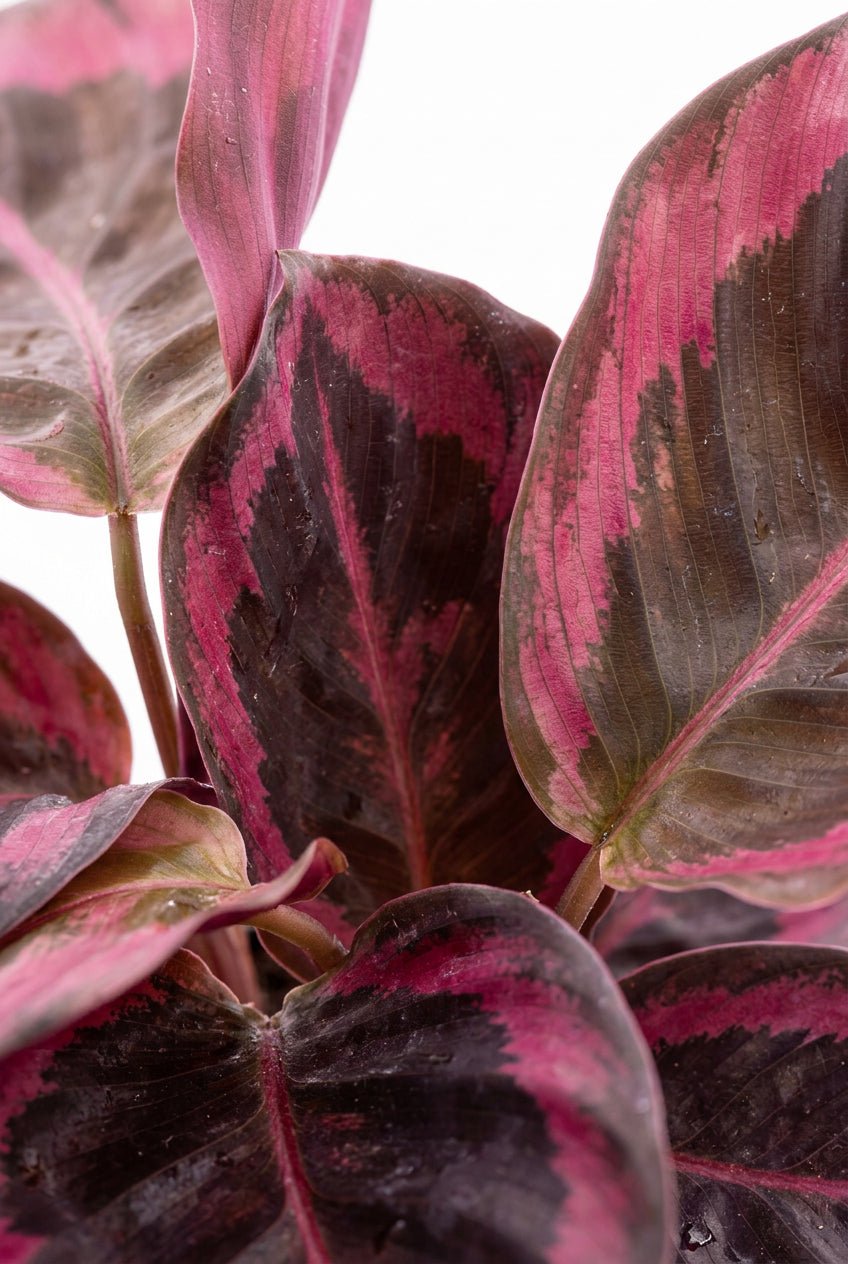

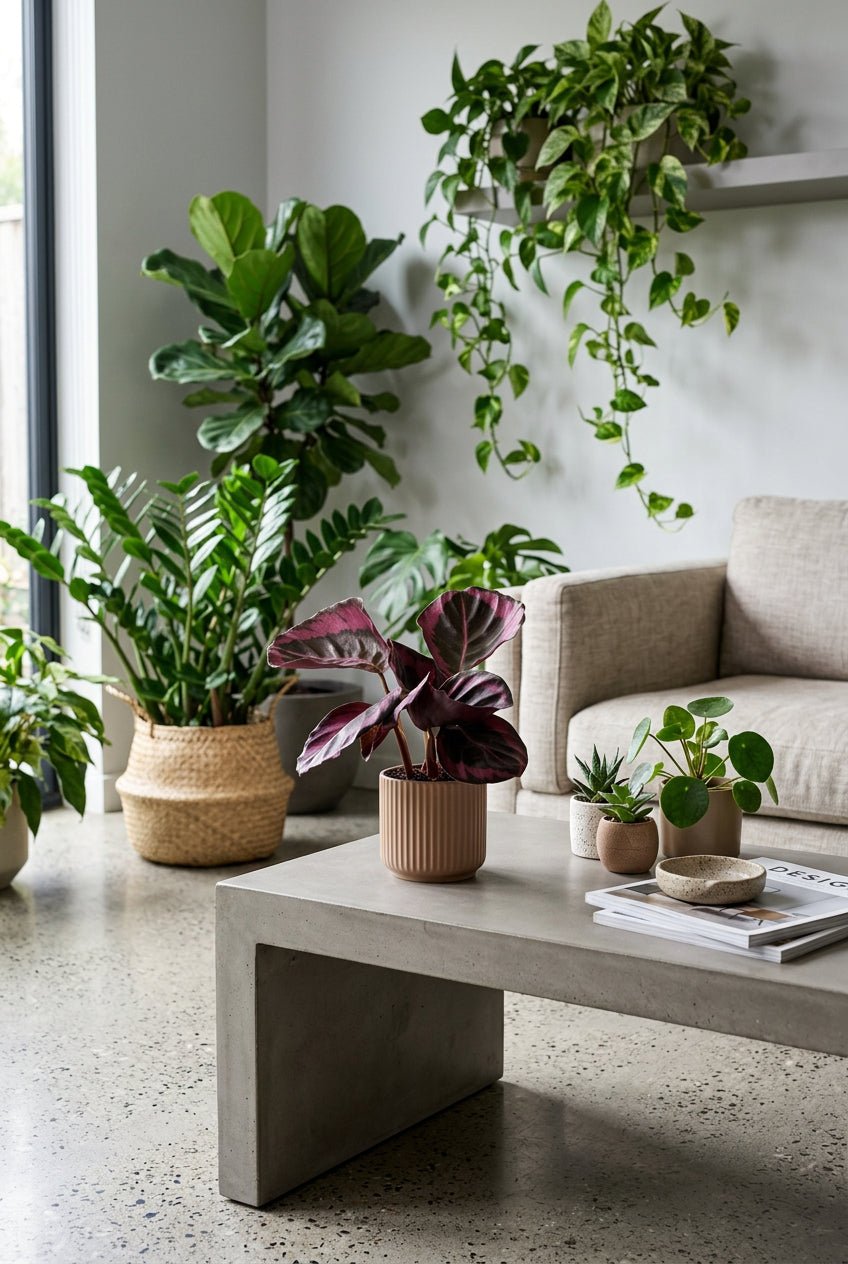
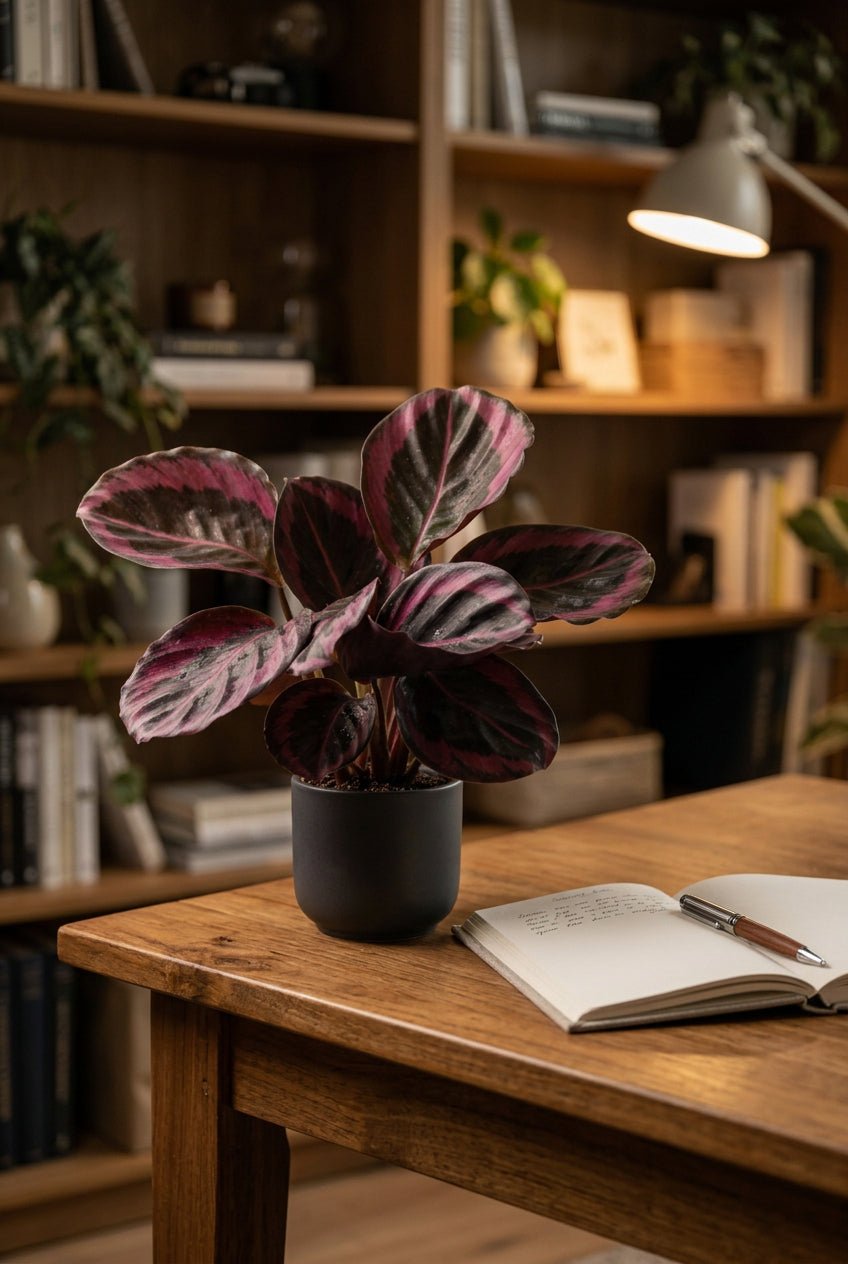

💗 Leaves edged in vivid pink on an almost black background • 🍷 Burgundy undersides • 🌙 Leaves that rise in the evening • ⛅ Bright indirect light or partial shade • 🐾 Non-toxic to animals • 📏 H20 cm | Pot Ø7 cm
The Calathea 'Princess Jessie' (Calathea roseopicta) bears rounded leaves with a very dark center, an almost black green with bronze glints, ringed by a broad vivid pink band that follows the edge of the leaf. A pink central vein ties it all together, and the undersides of the leaves are a deep burgundy, clearly visible when they rise.
It is a European horticultural selection, derived from Calathea roseopicta, a species from the tropical forests of Brazil. Among our Calathea, it is the pinkest, and it stays compact: it keeps the proportions of a shelf plant, around 25 to 30 cm tall.
Which Calathea should you choose?
A few Calathea from the catalog, depending on the foliage you are looking for:
- Calathea 'Princess Jessie' (this plant) — round, almost black leaves edged in vivid pink, burgundy undersides. The pinkest, in a Ø7 cm pot.
- Calathea Triostar — long leaves variegated with green, cream and pink, purple undersides. The same small size, in a tricolor version.
- Calathea Orbifolia (Round-leaf calathea) — large, round light green leaves striped with silver. The large graphic format.
- Calathea crocata (Eternal flame) — dark leaves and bright orange flowers. The flowering Calathea.
Calathea are often confused with their cousins, the Maranta: their differences in foliage and care help you choose between the two.
Exposure & placement
It likes soft light: enough to keep a radiant pink, never sun that burns the leaves.
- Exposure: bright indirect light or partial shade, one meter from a window, or behind a sheer curtain.
- Ideal spots: a shelf, a desk, a bedroom or a bright bathroom, where the air is more humid.
- Temperature: 18 to 25 °C, without cold drafts.
- Humidity: at least 50 to 60 %; air that is too dry turns the leaf edges brown.
- To avoid: direct sun, which fades the pink and burns the leaves, and proximity to a radiator.
In the evening, its leaves rise and then lower again in the morning: this is a natural movement of Calathea, which follows the daylight.
Watering & care
Calathea likes a moist substrate, never soggy, and water low in lime.
- Watering: regular — water as soon as the top centimeter of substrate is dry, without leaving water standing in the saucer.
- Water: rainwater, filtered water or tap water left to stand overnight; lime and chlorine turn the tips brown.
- Humidity: place the pot on a tray of damp clay pebbles, or group it with other plants.
- Fertilizer: a liquid fertilizer for green plants at half strength, once a month in spring and summer.
- Repotting: in spring, when the roots fill the pot, into a Ø10 cm nursery pot, following the steps for successful repotting.
Leaves that curl in on themselves in the middle of the day signal a lack of water or air that is too dry: water and increase the humidity around the plant.
Decor ideas & plant pairings
Its vivid pink and burgundy undersides make it an accent plant, to pair with other dark or pinkish foliage, like that of the other Calathea varieties.
- For a pink and purple shelf, line it up with the Ludisia discolor (Jewel orchid), with dark leaves veined in pink, and the Peperomia caperata 'Rosso', with red undersides: three small plants in the same tones.
- On a desk, after repotting it into a Ø10 cm pot, slip it into the Elho round anthracite decorative pot in Ø12 cm: the dark gray makes the pink of its edges stand out.
- For a contrast of patterns, place it next to the Maranta leuconeura 'Fascinator' (Prayer plant): its green leaves veined in red and the same evening movement respond to the pink edges of the Calathea.
- To soften its pink, the Natural seagrass basket in Ø12 cm brings warm, natural tones, while the bright Elho round white decorative pot in Ø12 cm makes the vivid pink pop.
Verdeia tips
- Use water that has been left to stand: fill the watering can the day before and leave it in the room; the water is at room temperature and contains less chlorine.
- Group your plants: several plants placed close together create more humid air around them, which the Calathea benefits from.
- Trim dry edges with clean scissors: by following the shape of the leaf, without cutting into the green part, the leaf keeps its appearance.
Technical characteristics
- Botanical name: Calathea roseopicta 'Princess Jessie' (syn. Goeppertia roseopicta)
- Common name: Calathea Princess Jessie
- Family: Marantaceae
- Origin: European horticultural selection of a species from Brazil
- Dimensions on delivery: H20 cm | Pot Ø7 cm
- Mature height: approximately 25 to 30 cm
- Foliage: evergreen, rounded almost black leaves edged in vivid pink, pink central vein, burgundy undersides
- Light: bright indirect light or partial shade
- Watering: regular, moist substrate, water low in lime
- Humidity: 50 to 60 % minimum
- Temperature: 18 to 25 °C
- Care: moderate
- Toxicity: non-toxic to animals and children
- Decorative style: Urban jungle / Romantic
Each plant is unique: the width of the pink edges and the intensity of the pink naturally vary depending on the light and the age of the leaves.

Your plant, delivered with care
Every plant is hand-packed in a box specially designed for plants — secured, protected, ready to travel. It arrives in perfect condition, roots intact and foliage preserved, ready to take its place in your home.
Our Verdeia commitments
FAQ – Everything to know before adopting your Verdeia plant
How are my plants prepared before shipping?
All our plants are selected from our European partner nurseries. Before shipping, they are watered, cleaned, and protected with breathable, secure packaging. Each package is designed to ensure your plant arrives in perfect health, without any transport-related stress.
Will the plant look exactly like the photo?
The photos accurately represent the variety and the stated size. Since each plant is unique, slight differences in shape, foliage, or color may occur — and that’s part of their charm.
What are the delivery times and conditions?
Orders ship within 48 working hours, with tracked delivery in 2 to 5 working days via DPD. Shipping costs and the free-shipping threshold depend on your country — see our delivery page. You receive a tracking link as soon as your parcel leaves.
What should I do when my plant arrives?
Open your package as soon as you receive it and carefully remove the plant from its packaging. Let it acclimate for 24 hours in its new environment before watering. If it has been slightly stressed during transport, it will recover its shape after one or two days in the light.
What should I do if my plant arrives damaged?
Contact us within 48 hours with a photo of the issue. Our team will assess the situation and offer you the best solution: replacement, partial refund, or recovery advice.
Can I return a plant?
Since plants are living beings, standard returns are not possible. However, we guarantee good health upon delivery: if the plant arrives damaged, it will be replaced free of charge. For any other cases (order error, decorative pot, accessory), returns are possible within 14 days.