



Epipremnum aureum 'Manjula' (Pothos) — H25 cm | Pot Ø12 cm
- Regular price
-
€35,95 - Regular price
-
- Sale price
-
€35,95
Couldn't load pickup availability
Frequently asked questions
How do you keep the variegation of a Manjula pothos? Place it in bright indirect light, near an east- or west-facing window, away from direct sun. If new leaves come out greener, move it closer to the light: the following shoots regain their cream patches.
Can the Manjula pothos climb? Yes. Compact at first, it then lengthens its stems, which trail from a shelf or climb a damp moss pole with their aerial roots. As it climbs, it develops larger leaves than when trailing.
Shipping & packaging
Shipped within 24/48 hours via DPD
- Delivery in 2 to 5 working days
- Eco-friendly packaging: recyclable boxes and biodegradable materials
- Special protection so your plant arrives in perfect condition
- Tracking link sent by email as soon as your parcel ships
- Shipping costs and the free-shipping threshold depend on your country — see our delivery page
ZEN ARRIVAL GUARANTEE
We guarantee that your plants will arrive in perfect condition. If your plant arrives damaged or in poor condition:
- Contact us promptly at hello@verdeia.eu with photos
- We will find the right solution for your situation
- No return needed — we trust you
The guarantee covers: damage in transit, plants severely weakened on arrival, and order preparation errors.
CARE TIPS ON ARRIVAL
To help your plant settle in for the long term:
- Unpack your plant immediately and inspect it
- Let it acclimatize for 24-48h in a bright spot out of direct sunlight
- Check the soil moisture before watering (dry surface = light watering)
- Wait 2-3 weeks before repotting, if needed
- Keep it away from heat sources and drafts
- Gently wipe the leaves to remove dust
Need help? Contact our team at hello@verdeia.eu or via chat.
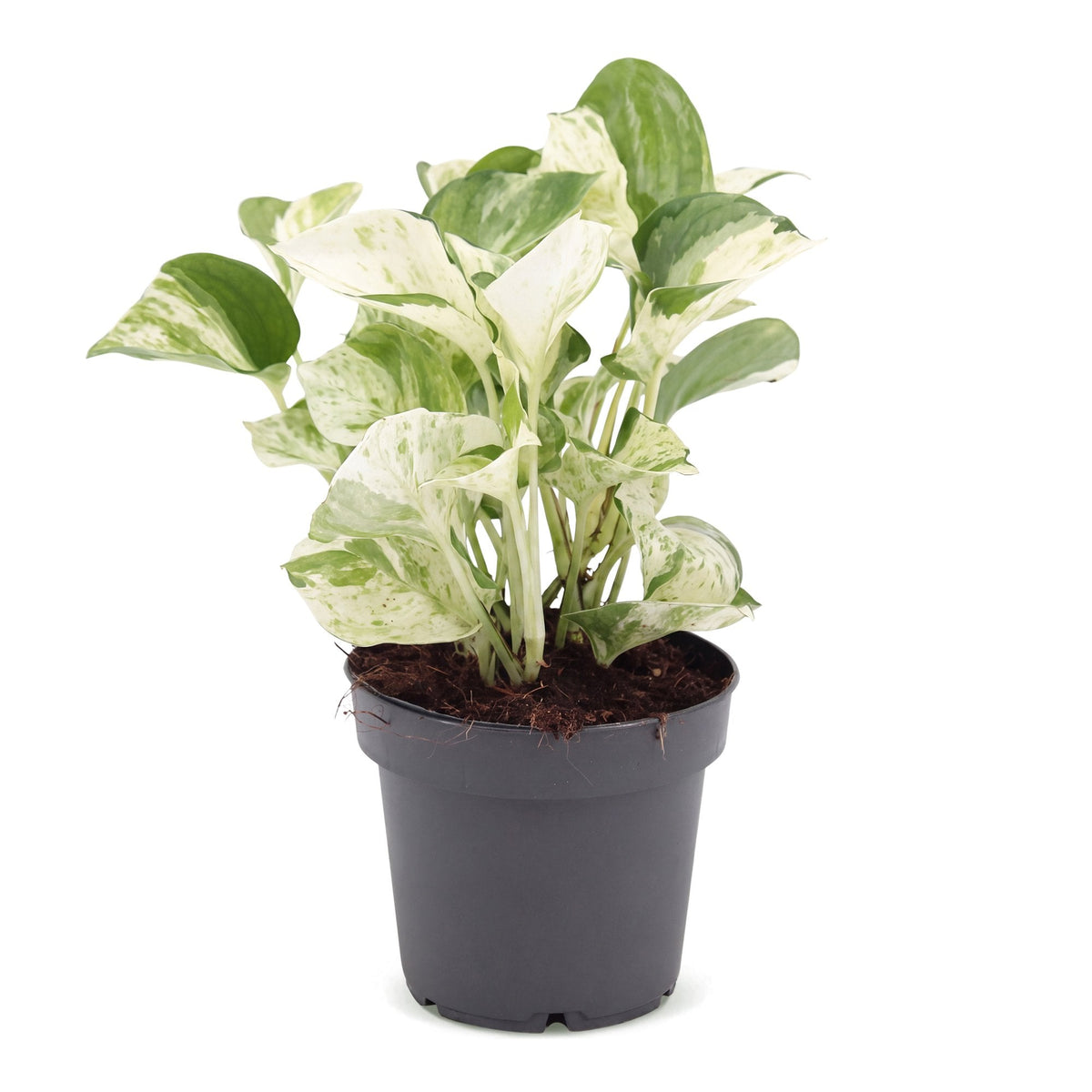
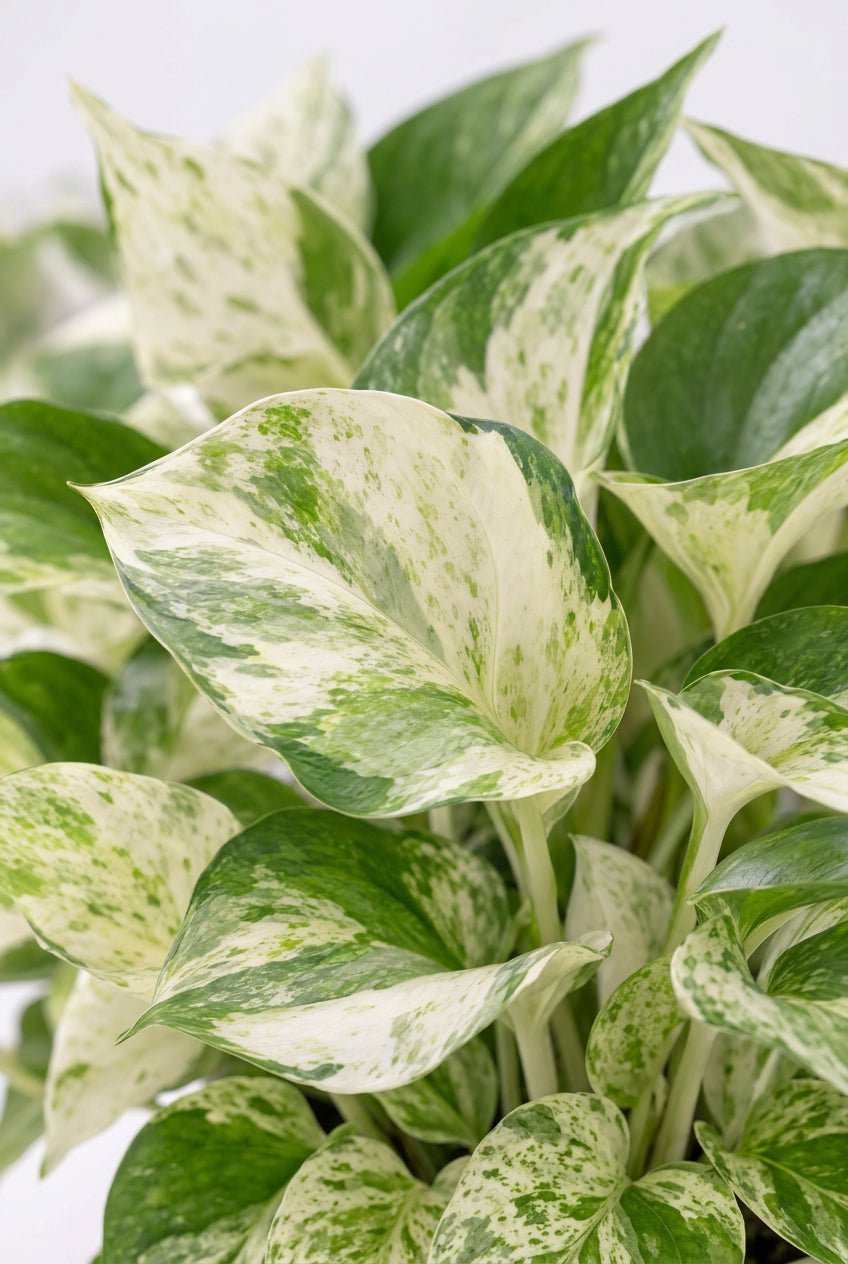
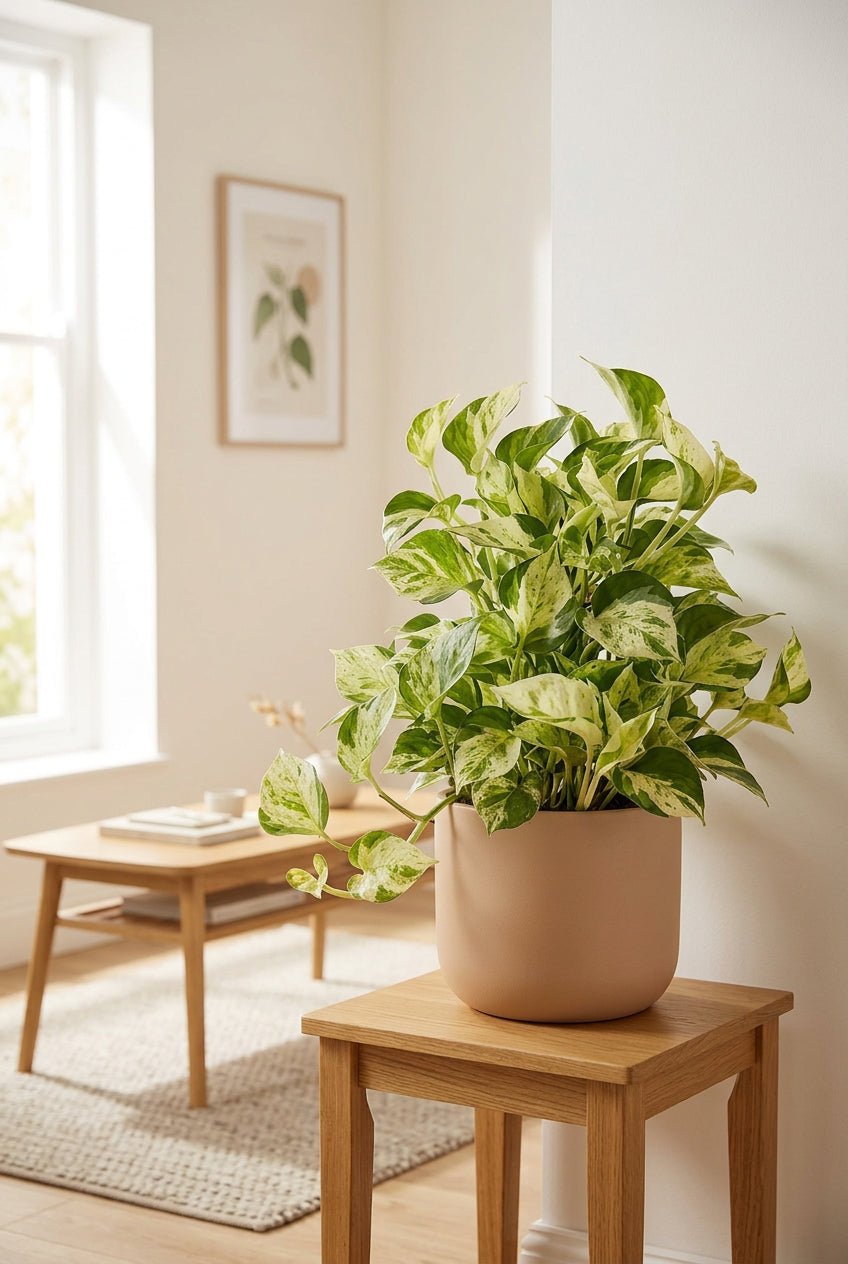

🤍 Wavy leaves variegated in cream and green • 🪴 Compact, then trailing or climbing • ☀️ Bright indirect light • 💧 Moderate watering • 🌱 Slow growth • 📏 H25 cm | Pot Ø12 cm
The Epipremnum aureum 'Manjula' is a pothos with wide heart-shaped leaves and wavy edges: they do not lie flat like those of other pothos. Each leaf combines large creamy white patches with light green splashes and dark green areas; a few stay almost entirely green. Its pale stems with short internodes form a dense clump. This cultivar is a selection by Ashish Hansoti (India), from a natural mutation spotted in 2010 near Mumbai; the species Epipremnum aureum is native to Mo'orea, in the Society Islands of French Polynesia.
Delivered at 25 cm tall in a 12 cm pot, it first forms a compact clump, then its stems lengthen to trail from a shelf or climb a support with their aerial roots. Its slow growth keeps it full for longer than a classic pothos; it needs bright light to keep its cream patches. It belongs among the plants with decorative foliage and easy-care plants.
Which pothos should you choose?
Pothos differ in the shape of their leaves, the pattern of their variegation and their growth rate. Here is how the 'Manjula' compares:
- Epipremnum aureum 'Manjula' (this plant) — wide leaves with wavy edges, large creamy white patches splashed with light green and dark green, H25 cm | Pot Ø12 cm. The choice for textured foliage on a compact plant.
- Epipremnum aureum 'Snow Leopard' — pointed heart-shaped leaves where creamy white covers almost the whole surface, with green limited to fine speckles and streaks, H25 cm | Pot Ø12 cm. The choice for the palest foliage.
- Epipremnum aureum 'Marble Queen' — longer, flat leaves, streaked and marbled with creamy white over the whole surface, H20 cm | Pot Ø12 cm. It grows noticeably faster than the 'Manjula'.
- Epipremnum aureum 'N'Joy' — small leaves where white and green form clearly defined zones, H10 cm | Pot Ø6 cm. The 'Manjula' has larger leaves, variegated in splashes rather than in solid blocks.
- Epipremnum aureum 'Golden Pothos' — bright green foliage variegated with golden yellow. The choice for a warm palette and fast growth.
- Epipremnum pinnatum 'Cebu Blue' — lance-shaped blue-green leaves with a silvery sheen. The choice for metallic foliage without variegation.
- Epipremnum pinnatum 'Albo Variegata' — creamy white and green variegation that differs on every leaf, H125 cm | Pot Ø24 cm on a moss pole. The choice for a large variegated specimen.
- Epipremnum pinnatum on moss pole — deep green foliage trained up a support. The choice for a fast-growing vertical silhouette.
All varieties are gathered in the Pothos collection and among the hanging & trailing plants.
Light & placement
The 'Manjula' needs bright but indirect light to keep its cream patches: in light that is too low, new leaves come out greener and its already slow growth slows down even more.
- Light: bright and indirect, near an east- or west-facing window; direct sun, especially in summer, burns the pale areas of the leaves.
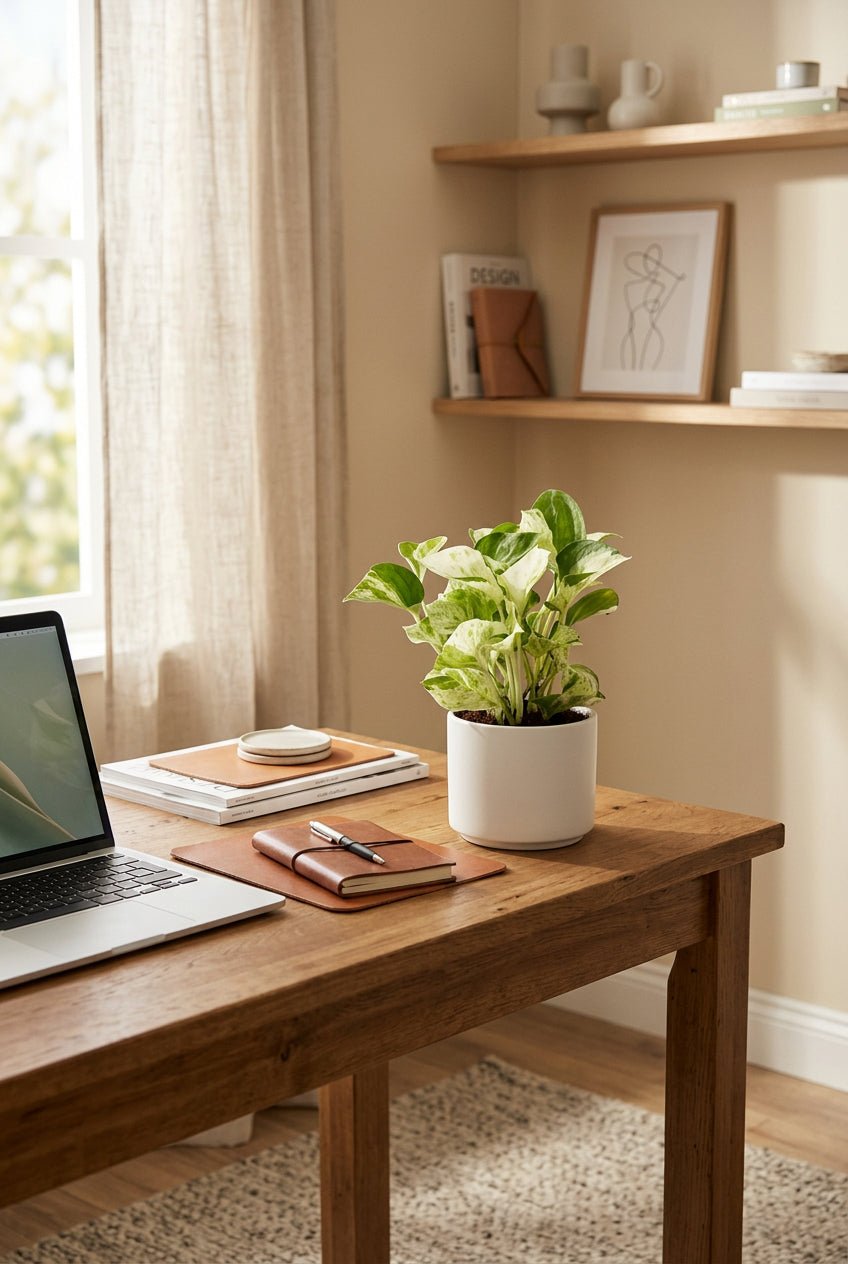
- Location: bright living room, bedroom or office; compact on delivery, it fits on a console table or a desk before trailing from a shelf, among the trailing plants for shelves.
- Temperature: 18 to 30 °C, protected from cold drafts and away from radiators.
- Humidity: the air in an apartment suits it; slightly higher humidity is appreciated but not necessary.
The more white variegation a pothos has, the more sensitive it is to cold: in winter, keep it away from cold windows and open doors (see save a plant that has been exposed to the cold). The balance between brightness and humidity is explained in light and humidity.
Watering & care
Water when the potting soil is almost dry on the surface and let the excess drain away. The finger test tells you when the time is right.
- Frequency: as a guide, once a week in spring and summer, letting the potting soil dry out more in autumn and winter.
- Water: rainwater or filtered water at room temperature; more guidance on which water to use for your plants.
- Drainage: never leave standing water at the bottom of the decorative pot, to avoid root rot.
- Substrate: indoor potting soil lightened with about 20 % perlite.
- Fertilizer: fertilizer for green plants once a month from April to October, following the principles of feeding indoor plants.
- Repotting: every two years in spring; its slow growth lets it stay longer in the same pot. The steps are explained in the guide to repotting.
Brown tips indicate air that is too dry or watering that is too infrequent (see brown leaf tips and edges). Care for the whole family is covered in pothos, scindapsus and epipremnum.
Decor ideas & plant pairings
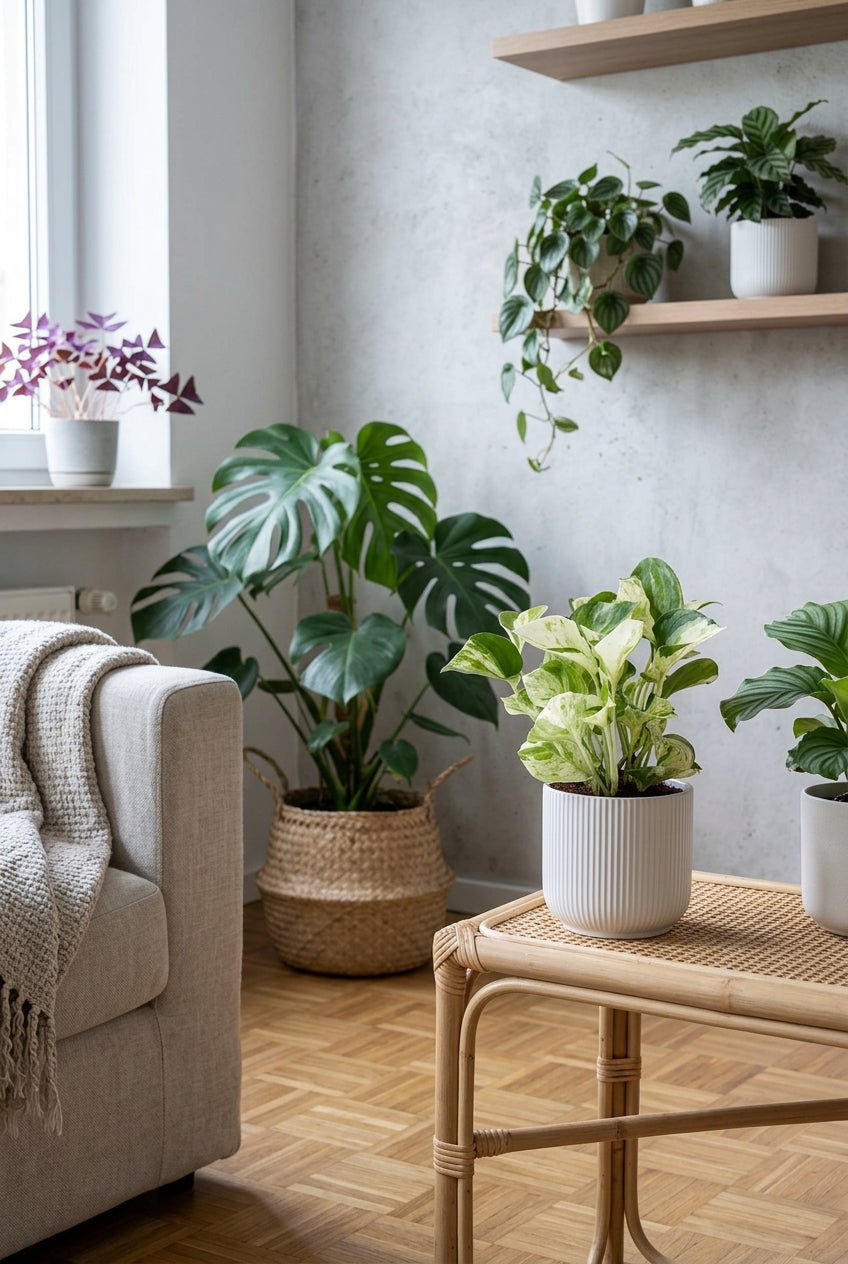
Its wavy leaves add texture next to flat foliage, and its cream patches stand out against a dark background.
- In a trailing trio: pair it with a Philodendron scandens 'Brasil' variegated with golden yellow and a Scindapsus pictus 'Argyraeus' with silver spots, on the same shelf.
- In a hanging planter: next to a Hedera helix 'Pittsburgh', its large cream leaves contrast with the small dark green foliage of the ivy; more ideas among the hanging plants.
- On a support: trained up a moss pole, it joins the indoor climbing plants; the method is explained in supporting climbing plants.
- Ideal pot: the Elho B.for Soft Anthracite decorative pot in Ø14 cm brings out the cream of the foliage; the bleached wood decorative pot Ø14 cm or the Gabriel blue decorative pot Ø14 cm also hold its 12 cm pot.
Other white, cream or colorful foliage is presented in variegated foliage plants.
Verdeia tips
- Watch the color of new leaves: if they come out noticeably greener, move the plant closer to the window, still out of direct sun, to bring the cream patches back on the following shoots.
- Give it a damp moss pole when the stems lengthen: the aerial roots cling to it and, as it climbs, the plant develops larger leaves than when trailing.
- Prune just above a leaf: new shoots grow from the leaf axils and the clump stays dense, even when the stems start to trail.
Technical details
- Botanical name: Epipremnum aureum 'Manjula'
- Common name: 'Manjula' pothos, variegated pothos
- Family: Araceae
- Origin: selection by Ashish Hansoti (India); species native to Mo'orea (Society Islands, French Polynesia)
- Dimensions on delivery: H25 cm | Pot Ø12 cm
- Habit: compact clump, then trailing or climbing depending on support, aerial roots
- Light: bright indirect light, no direct sun
- Watering: moderate, when the potting soil is almost dry on the surface
- Temperature: 18 – 30 °C
- Foliage: evergreen, wide heart-shaped leaves with wavy edges, creamy white patches splashed with light green and dark green
- Growth: slow, short internodes
- Care: easy
- Toxicity: Slightly toxic to animals and children
- Decorative style: Bright / Graphic / Contemporary
Each plant is unique: the size of the cream patches, the proportion of green and the waviness of the leaves vary naturally with light and season.

Your plant, delivered with care
Every plant is hand-packed in a box specially designed for plants — secured, protected, ready to travel. It arrives in perfect condition, roots intact and foliage preserved, ready to take its place in your home.
Our Verdeia commitments
FAQ – Everything to know before adopting your Verdeia plant
How are my plants prepared before shipping?
All our plants are selected from our European partner nurseries. Before shipping, they are watered, cleaned, and protected with breathable, secure packaging. Each package is designed to ensure your plant arrives in perfect health, without any transport-related stress.
Will the plant look exactly like the photo?
The photos accurately represent the variety and the stated size. Since each plant is unique, slight differences in shape, foliage, or color may occur — and that’s part of their charm.
What are the delivery times and conditions?
Orders ship within 48 working hours, with tracked delivery in 2 to 5 working days via DPD. Shipping costs and the free-shipping threshold depend on your country — see our delivery page. You receive a tracking link as soon as your parcel leaves.
What should I do when my plant arrives?
Open your package as soon as you receive it and carefully remove the plant from its packaging. Let it acclimate for 24 hours in its new environment before watering. If it has been slightly stressed during transport, it will recover its shape after one or two days in the light.
What should I do if my plant arrives damaged?
Contact us within 48 hours with a photo of the issue. Our team will assess the situation and offer you the best solution: replacement, partial refund, or recovery advice.
Can I return a plant?
Since plants are living beings, standard returns are not possible. However, we guarantee good health upon delivery: if the plant arrives damaged, it will be replaced free of charge. For any other cases (order error, decorative pot, accessory), returns are possible within 14 days.