



Peperomia prostrata (String of Turtles) — H6 cm | Pot Ø6 cm
- Regular price
-
€21,95 - Regular price
-
- Sale price
-
€21,95
Couldn't load pickup availability
Frequently asked questions
When should you repot a Peperomia prostrata? In spring, when the roots fill the 6 cm pot, into a pot only slightly larger with a light, free-draining substrate. After that, repotting every two to three years is enough: it grows slowly and does well when slightly pot-bound.
Can you grow a Peperomia prostrata in a terrarium? Yes. Small, slow-growing and fond of humid air, it is one of the plants grown in terrariums. Place the terrarium in a bright spot, out of direct sun, on a free-draining substrate, and simply keep the substrate slightly moist.
Shipping & packaging
Shipped within 24/48 hours via DPD
- Delivery in 2 to 5 working days
- Eco-friendly packaging: recyclable boxes and biodegradable materials
- Special protection so your plant arrives in perfect condition
- Tracking link sent by email as soon as your parcel ships
- Shipping costs and the free-shipping threshold depend on your country — see our delivery page
ZEN ARRIVAL GUARANTEE
We guarantee that your plants will arrive in perfect condition. If your plant arrives damaged or in poor condition:
- Contact us promptly at hello@verdeia.eu with photos
- We will find the right solution for your situation
- No return needed — we trust you
The guarantee covers: damage in transit, plants severely weakened on arrival, and order preparation errors.
CARE TIPS ON ARRIVAL
To help your plant settle in for the long term:
- Unpack your plant immediately and inspect it
- Let it acclimatize for 24-48h in a bright spot out of direct sunlight
- Check the soil moisture before watering (dry surface = light watering)
- Wait 2-3 weeks before repotting, if needed
- Keep it away from heat sources and drafts
- Gently wipe the leaves to remove dust
Need help? Contact our team at hello@verdeia.eu or via chat.
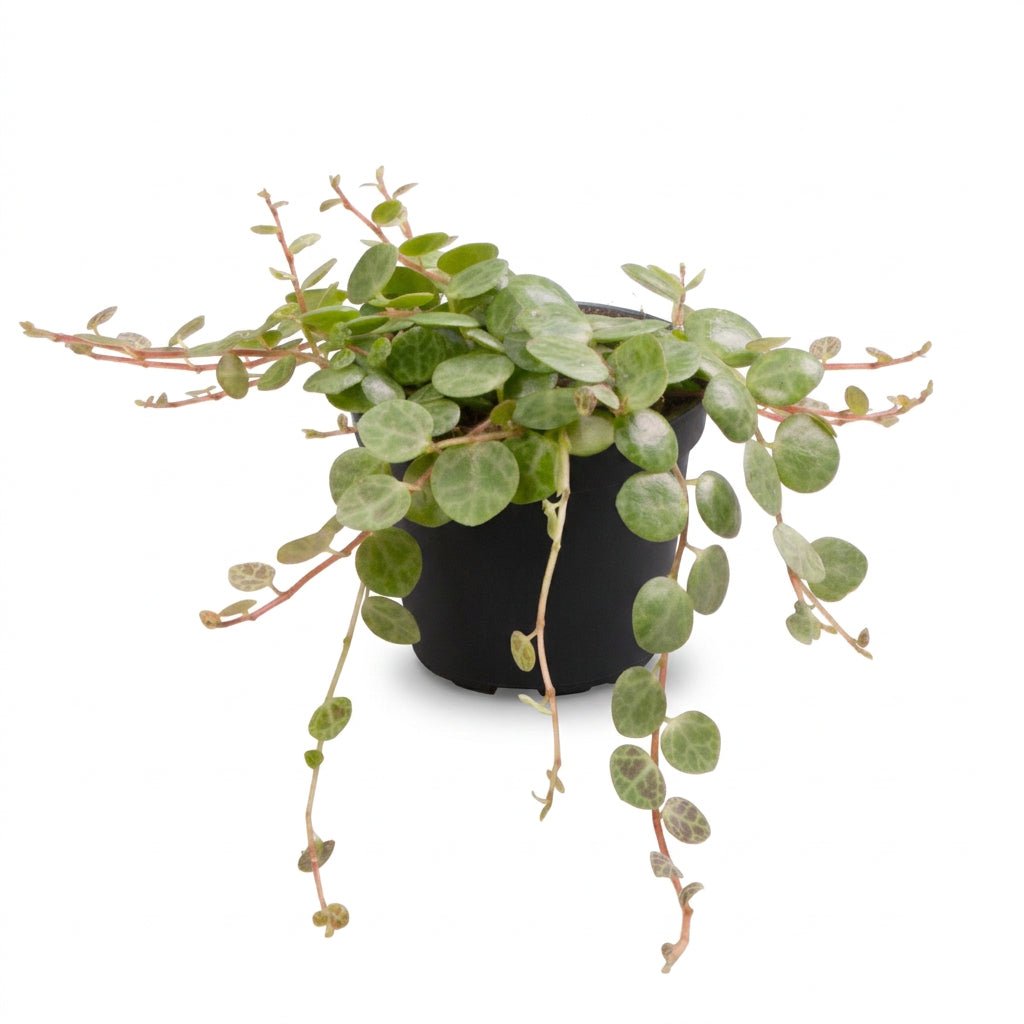
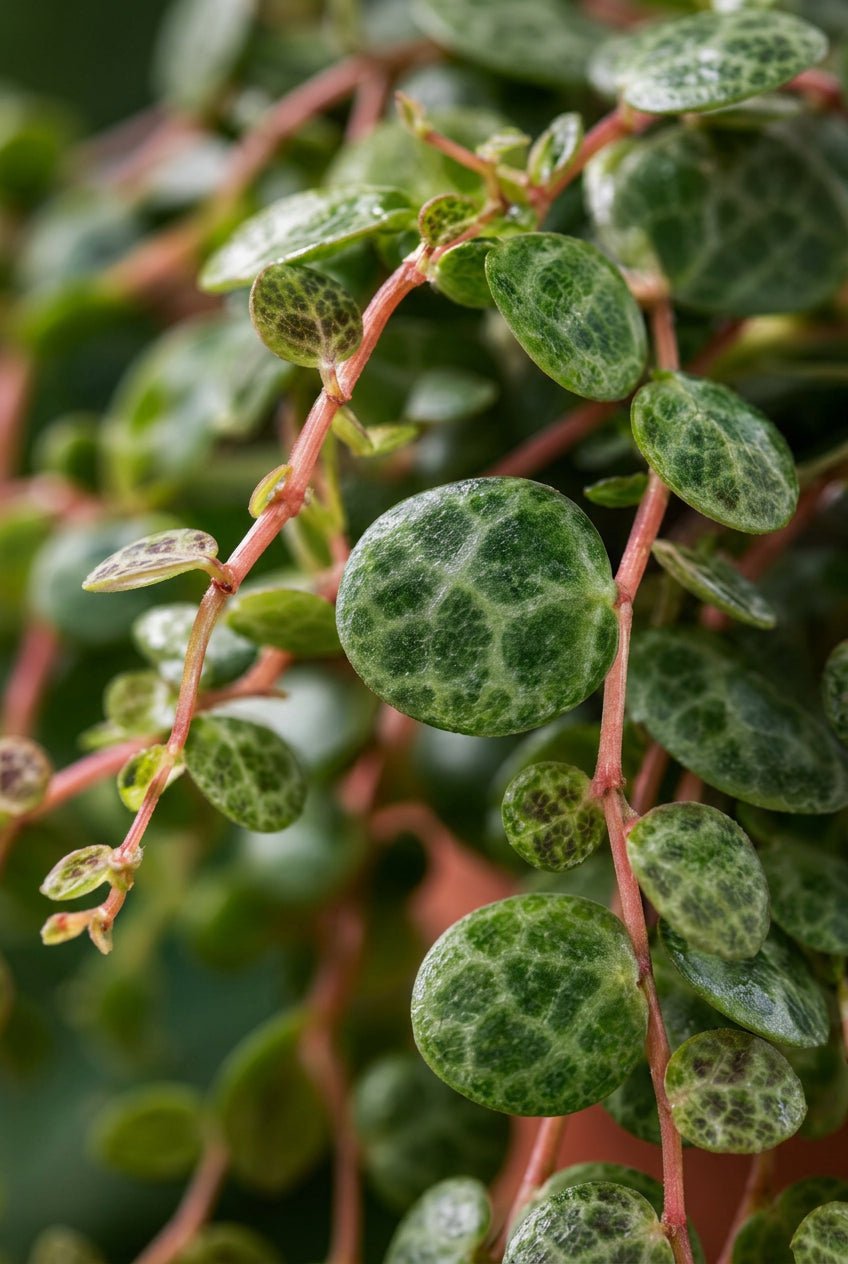
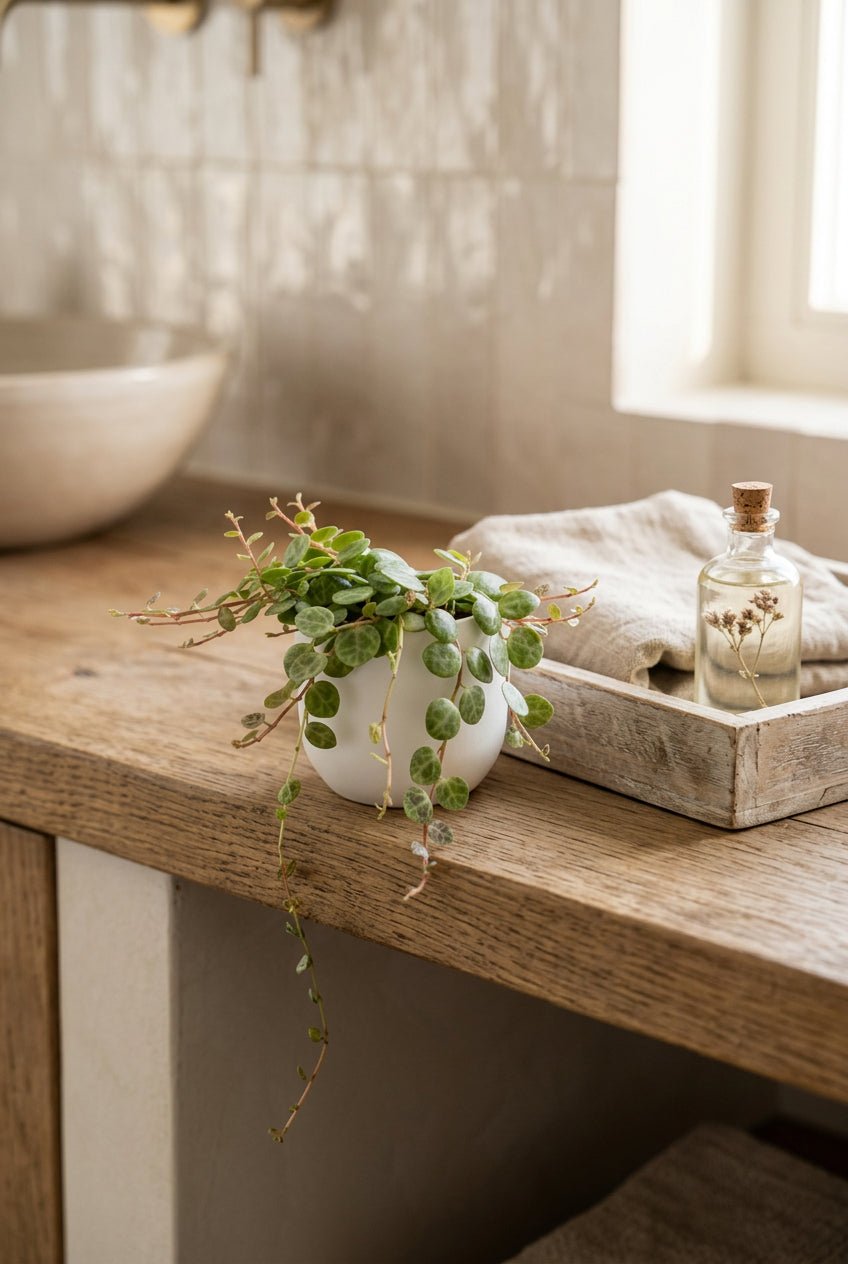
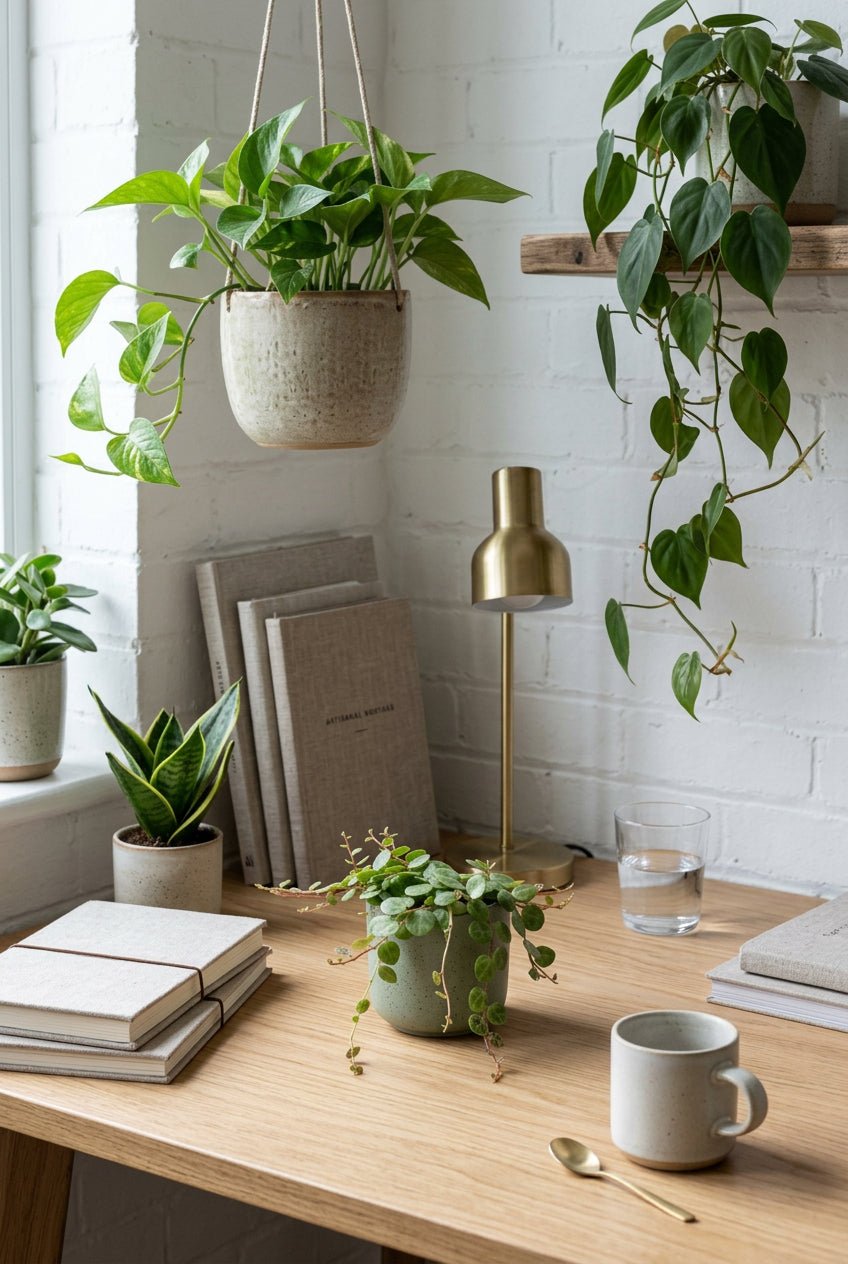
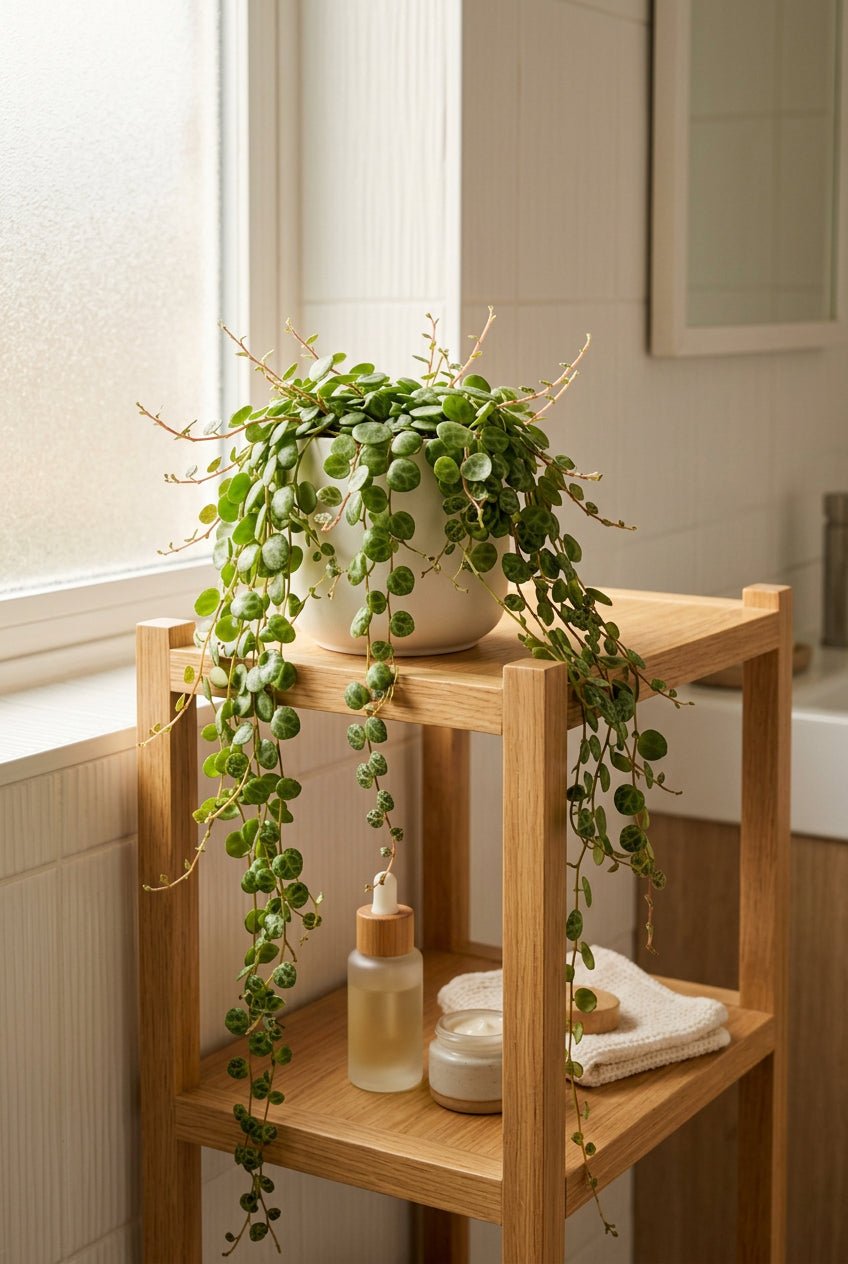

🐢 Small round leaves with a shell pattern • ❤️ Thin pinkish-red stems • 🌿 Trailing habit • 🌤️ Bright indirect light • 🌱 Young plant to grow on • 📏 H6 cm | Pot Ø6 cm
The Peperomia prostrata has small, round, fleshy leaves, 1.5 cm at most, whose light green veins trace a pattern on the green background reminiscent of a turtle shell. On young leaves, this pattern is often mottled with bronze-brown. Its thin, pinkish-red stems trail over the rim of the pot. It is an epiphytic species native to Ecuador.
It is delivered as a young plant 6 cm tall, in a 6 cm nursery pot, to be repotted as it grows. It grows slowly and its stems lengthen to about thirty centimeters. It joins our small indoor plants and hanging and trailing plants.
Which peperomia to choose?
Peperomias differ in the shape of their leaves and in their growth habit. Here is where prostrata fits in:
- Peperomia prostrata (this plant) — small round leaves with light green veins in a shell pattern, pinkish-red stems, trailing habit, H6 cm | Pot Ø6 cm. The choice for patterned foliage in a very small format.
- Peperomia rotundifolia (Trailing jade) — round, fleshy, solid bright green leaves strung like beads along trailing stems, in a hanging pot H25 cm | Pot Ø15 cm. The same trailing habit, with plain foliage and a format already set up for hanging.
- Peperomia 'Raindrop' in black ceramic pot — large, fleshy, glossy green raindrop-shaped leaves, upright and compact habit, black ribbed ceramic pot included, H25 cm | Pot Ø12 cm. The choice for an upright peperomia, ready to display.
- Peperomia obtusifolia 'Obtipan' — thick, glossy bright green leaves, compact habit, H15 cm | Pot Ø11 cm. The choice for plain, dense green foliage.
All peperomias are gathered in our Peperomia collection, and other plants with trailing stems among the trailing plants for shelves; the genus is presented in Peperomia: varieties and care.
Light & placement
In bright but indirect light, the leaf pattern stays well contrasted and the stems stay full. Too little light makes the colors fade and stretches the stems between the leaves, while direct sun scorches the small leaves.
- Light: bright and indirect, near an east- or north-facing window, or set back a little from a sunnier window; see windowsill plants.
- Location: a shelf, a small hanging pot or the edge of a piece of furniture, where the stems can trail freely, away from radiators.
- Temperature: 18 to 24 °C, never below 15 °C, away from cold drafts.
- Humidity: medium to high; it benefits from a bright bathroom or a tray of damp clay pebbles under the pot (see bathroom plants).
Small and slow-growing, it can also be grown in a terrarium, where the humid air suits it; suitable plants are gathered in our Plants for terrariums collection, and the balance between brightness and humidity is explained in light and humidity.
Watering & care
Its fleshy leaves store water: water when the top few centimeters of the substrate have dried, moderately in spring and summer, less often in winter. The finger test tells you the right moment better than a fixed schedule.
- Water: at room temperature, preferably soft (rainwater or filtered); more pointers in which water to use for your plants.
- Drainage: a pot with drainage holes and never any standing water at the bottom of the decorative pot, to avoid root rot.
- Substrate: light and free-draining, indoor potting mix lightened with sand or perlite; see substrates.
- Fertilizer: balanced liquid fertilizer once a month in spring and summer, following the principles of feeding indoor plants.
- Repotting: in spring, when the roots fill the 6 cm pot, into a pot only slightly larger; then every two to three years, as it does well when slightly pot-bound. The steps are described in our guide to repotting and choosing a container in choosing the right pot.
Mealybugs and spider mites are the pests to watch for under the leaves; treatments are described in indoor plant pests.
Decor ideas & plant pairings
Its patterned foliage is best seen up close: it shows to advantage at height, on the edge of a shelf or in a small hanging pot, where its stems trail on their own. Find more ideas in hanging plants.
- On a turtle theme: next to a Callisia repens 'Turtle', whose small olive-green leaves with purple undersides form a domed cushion; one trails in thin stems, the other spills over its pot in a mound.
- In miniature: alongside a Pilea depressa with tiny round bright green leaves, another small trailing plant; its plain green brings out the pattern of the Peperomia.
The rules of arrangement are explained in combining potted plants, and the style that suits it in bohemian-style plants.
Verdeia tips
- Water from below: stand the pot in a saucer of water for a few minutes, until the substrate is moist, then let it drain; the small leaves stay dry.
- Propagate a stem: in summer, lay a section of stem on moist potting mix, lightly burying its leafless part; it roots where it touches the substrate. The method is explained in propagation by cuttings.
- Move it closer to the light if the stems become sparse: long gaps between the leaves and a paler pattern signal a lack of light; a brighter spot, out of direct sun, suits it better.
Technical characteristics
- Botanical name: Peperomia prostrata
- Common name: String of Turtles
- Family: Piperaceae
- Origin: species native to Ecuador
- Dimensions on delivery: H6 cm | Pot Ø6 cm (young plant)
- Mature size: trailing stems about 30 cm long
- Growth habit: trailing
- Light requirements: bright indirect light, no direct sun
- Watering: moderate, when the top few centimeters of the substrate have dried; less often in winter
- Humidity: medium to high
- Temperature: 18 – 24 °C, minimum 15 °C
- Growth: slow
- Foliage: evergreen, small round fleshy leaves (1.5 cm at most), green with light green veins, young leaves often mottled with bronze-brown
- Stems: thin, pinkish red
- Care: easy
- Toxicity: non-toxic
- Decorative style: Trailing / Boho / Miniature
Each plant is unique: the leaf pattern, the amount of bronze-brown on young leaves and the length of the stems vary naturally with the individual plant, the light and the season.

Your plant, delivered with care
Every plant is hand-packed in a box specially designed for plants — secured, protected, ready to travel. It arrives in perfect condition, roots intact and foliage preserved, ready to take its place in your home.
Our Verdeia commitments
FAQ – Everything to know before adopting your Verdeia plant
How are my plants prepared before shipping?
All our plants are selected from our European partner nurseries. Before shipping, they are watered, cleaned, and protected with breathable, secure packaging. Each package is designed to ensure your plant arrives in perfect health, without any transport-related stress.
Will the plant look exactly like the photo?
The photos accurately represent the variety and the stated size. Since each plant is unique, slight differences in shape, foliage, or color may occur — and that’s part of their charm.
What are the delivery times and conditions?
Orders ship within 48 working hours, with tracked delivery in 2 to 5 working days via DPD. Shipping costs and the free-shipping threshold depend on your country — see our delivery page. You receive a tracking link as soon as your parcel leaves.
What should I do when my plant arrives?
Open your package as soon as you receive it and carefully remove the plant from its packaging. Let it acclimate for 24 hours in its new environment before watering. If it has been slightly stressed during transport, it will recover its shape after one or two days in the light.
What should I do if my plant arrives damaged?
Contact us within 48 hours with a photo of the issue. Our team will assess the situation and offer you the best solution: replacement, partial refund, or recovery advice.
Can I return a plant?
Since plants are living beings, standard returns are not possible. However, we guarantee good health upon delivery: if the plant arrives damaged, it will be replaced free of charge. For any other cases (order error, decorative pot, accessory), returns are possible within 14 days.