



Acer palmatum 'Atropurpureum' (purple Japanese maple)
- Regular price
-
€28,95 - Regular price
-
- Sale price
-
€28,95
Couldn't load pickup availability
Frequently Asked Questions
What is the difference between Atropurpureum and Bloodgood? 'Bloodgood' keeps its red color all summer without changing, while Atropurpureum is more vigorous and spreads more widely.
Why are the edges of my Japanese maple leaves turning brown? It is almost always caused by wind or direct afternoon sun, and rarely by insufficient watering.
SHIPPING & PACKAGING
Shipping within 24/48 hours via DPD
- Delivery in 2 to 5 business days
- Eco-friendly packaging: recyclable boxes and biodegradable materials
- Special protection to ensure the plant arrives in perfect condition
- Parcel tracking sent by email as soon as shipped
- Free delivery on orders over €50
48H QUALITY GUARANTEE
We guarantee that your plants will arrive in perfect condition. If your plant arrives damaged or in poor condition:
- Contact us within 48 hours at hello@verdeia.eu with photos
- Free replacement or full refund
- No return necessary – we trust you
The guarantee covers: damage related to transport, severely weakened plant upon arrival, preparation errors.
CARE TIPS UPON ARRIVAL
To help your plant settle in for the long term:
- Unpack immediately and inspect your plant
- Let it acclimatize 24-48h in a bright spot without direct sunlight
- Check soil moisture before watering (dry surface = light watering)
- Wait 2-3 weeks before repotting
- Avoid heat sources and drafts
- Gently wipe leaves to remove dust
Need help? Contact our team at hello@verdeia.eu or via chat.
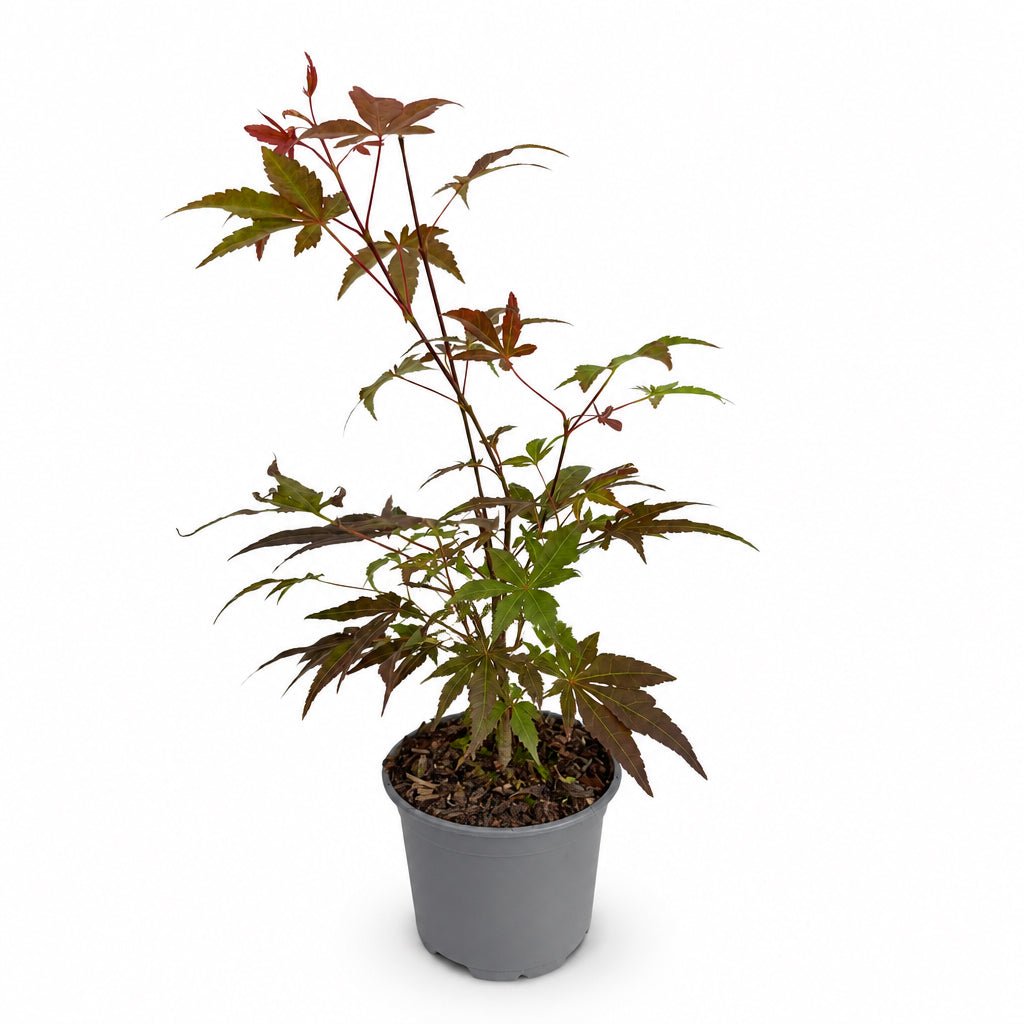
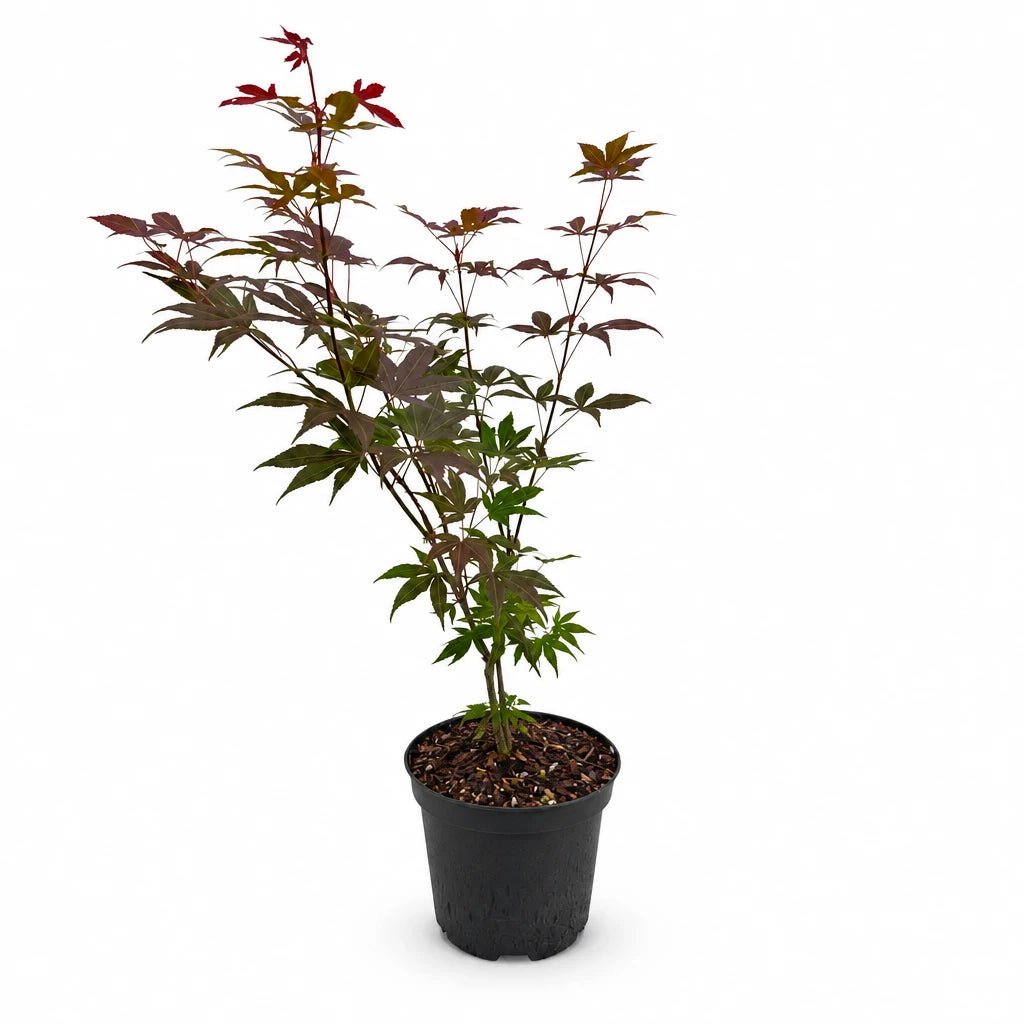
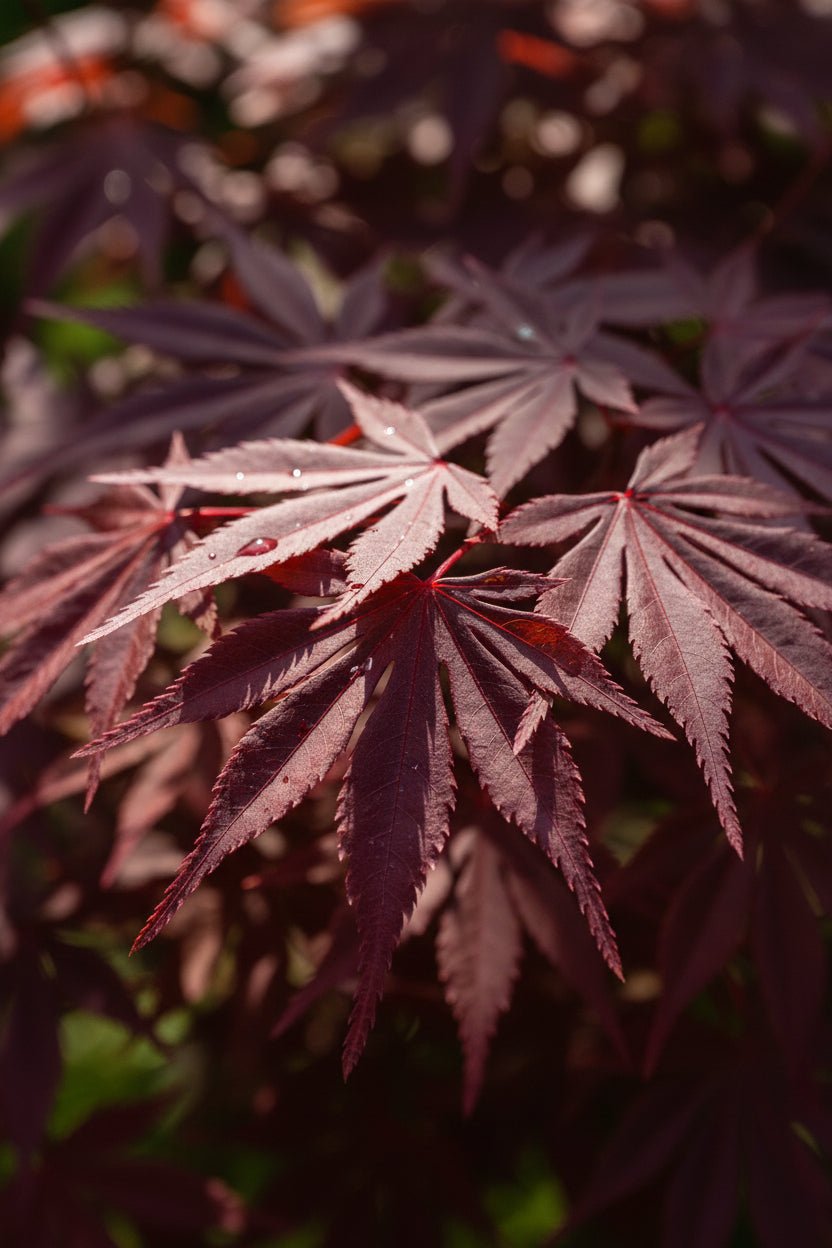
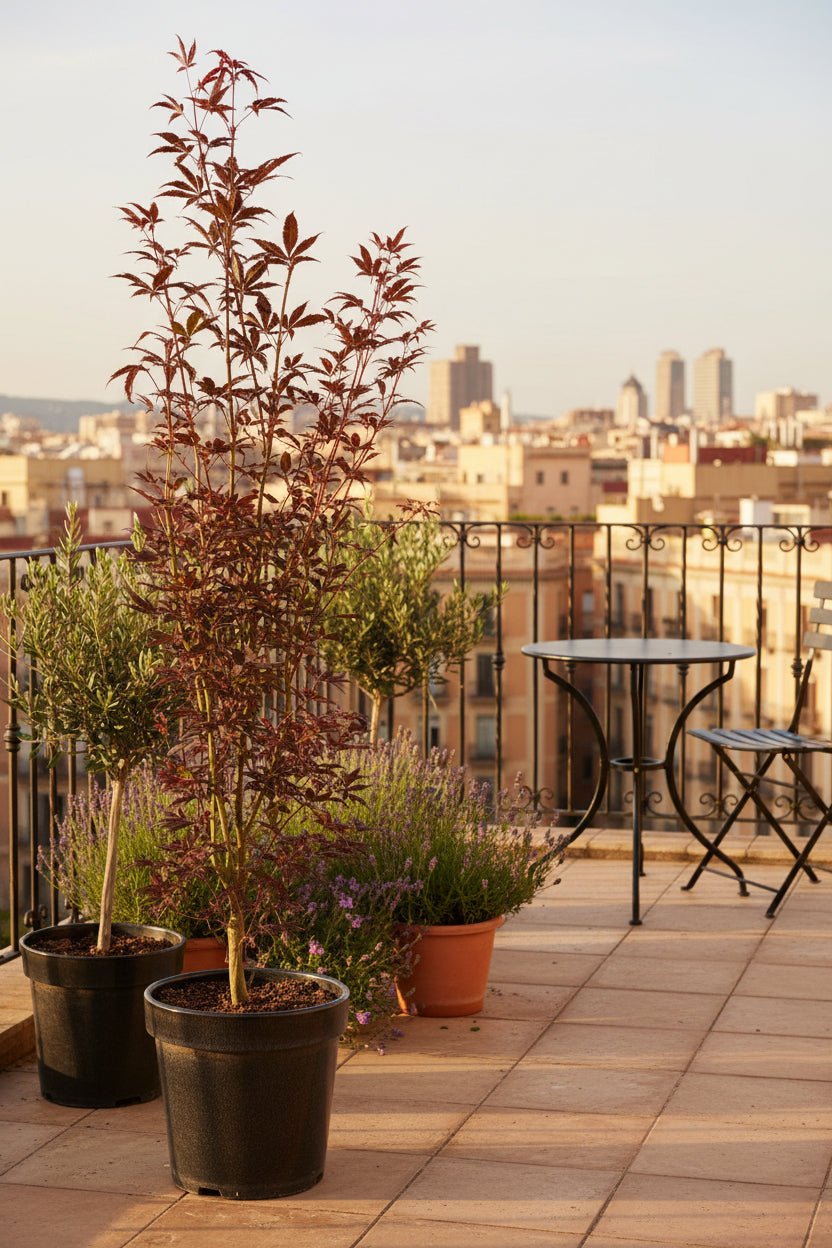
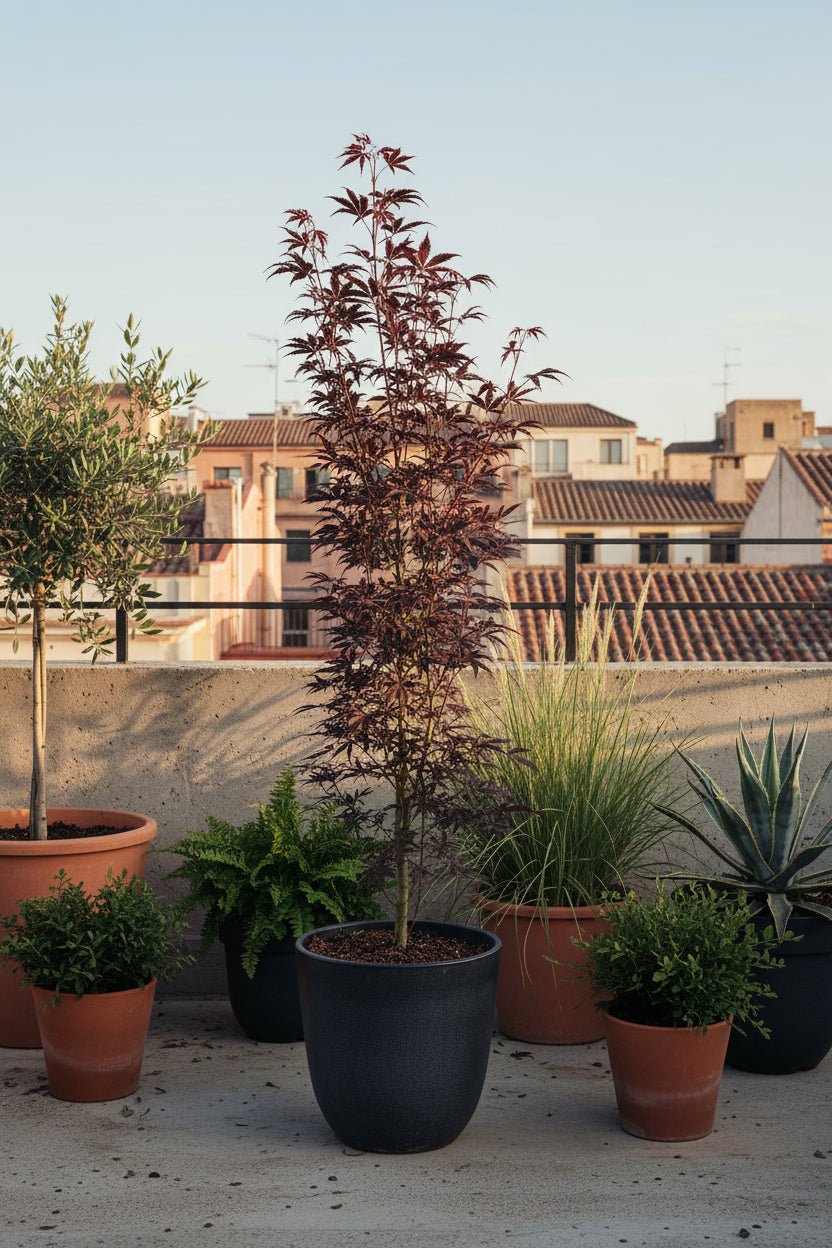
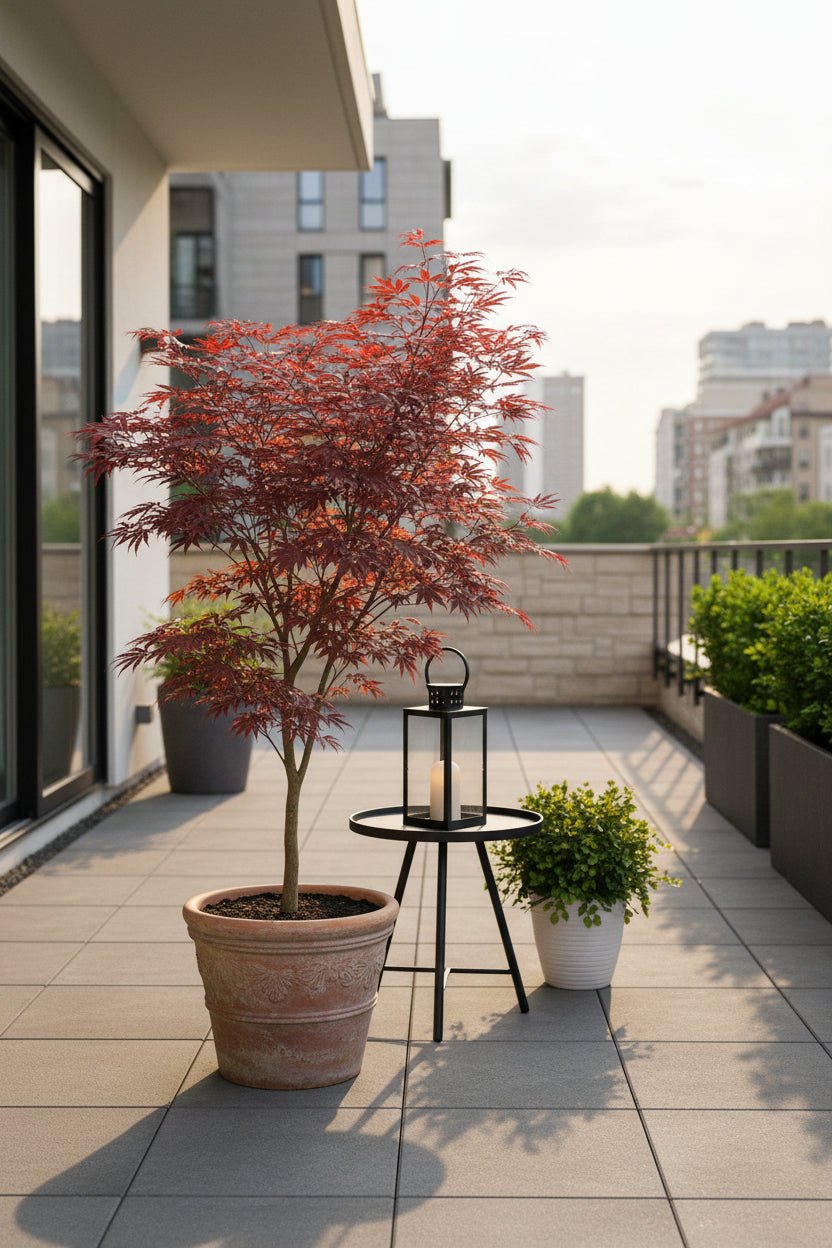
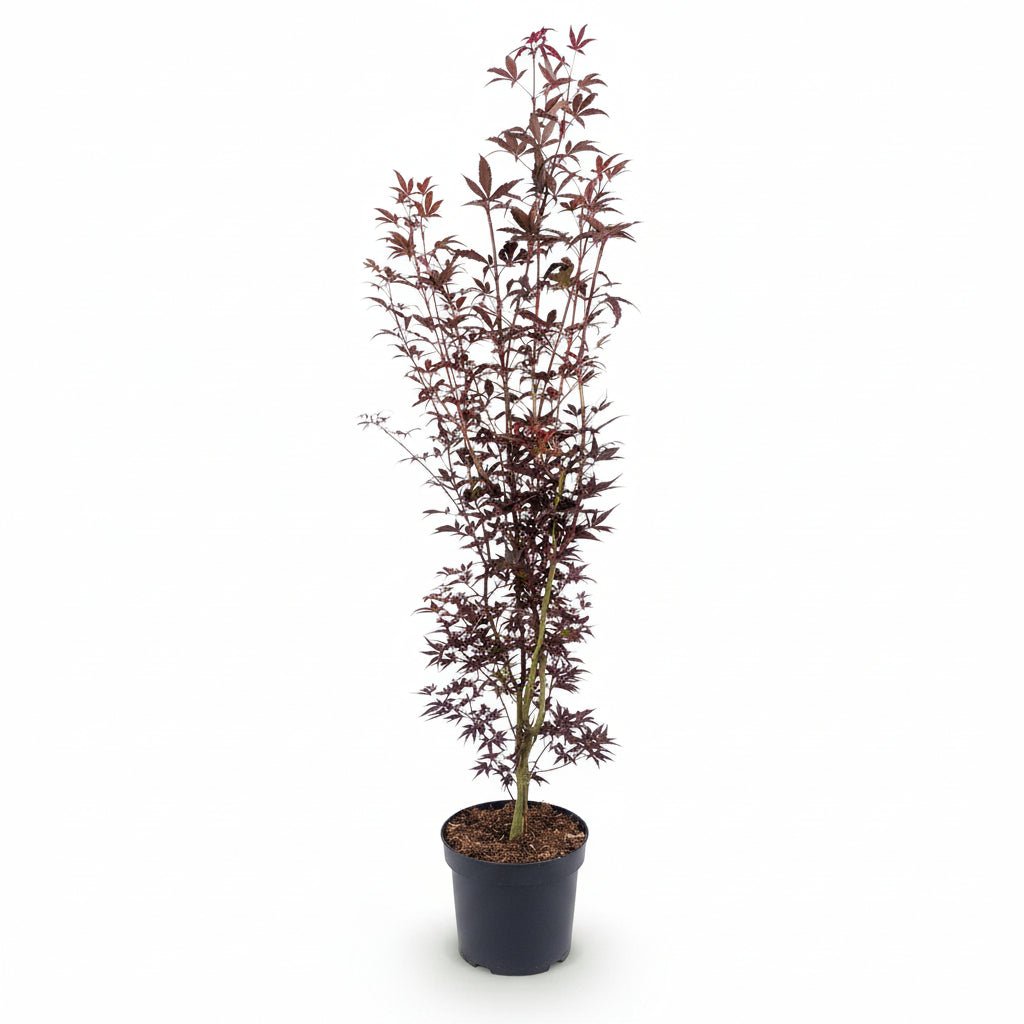

🍁 Deep purple foliage in spring • 🔥 Bright red in autumn • 🌿 Five-lobed palmate leaves • ⛅ Partial shade to gentle sun • ❄️ Hardy down to -20 °C
Acer palmatum 'Atropurpureum' is the historic purple form of the Japanese maple, cultivated in Europe since the 19th century. Its five-lobed palmate leaves emerge deep purple in spring, take on bronze tones in summer, then blaze red in October. A species native to the forests of Japan and Korea, it is the most classic of the Japanese maples in the catalogue.
Its distinctive feature is its vigor: while modern cultivars remain compact, Atropurpureum is a full-growing specimen, taller and more spreading than average. Available in H35 cm in a Ø12 cm pot, H70 cm in a Ø19 cm pot, or H90 cm in a Ø26 cm pot — in this largest size, it already has a tree-like shape.
Which Japanese maple should you choose?
Five cultivars in the catalogue, with different colors and sizes:
- 'Atropurpureum' (this plant) — deep purple turning bronze, the most vigorous (3 sizes).
- 'Bloodgood' — purplish red lasting all summer without turning green (2 sizes). The most stable red.
- 'Garnet' — finely cut garnet-red foliage, weeping habit (H40 cm | Pot Ø19 cm). The finest foliage.
- 'Orange Dream' — orange shoots then soft green, golden in autumn (3 sizes). The most changeable.
- 'Going Green' — bright green turning orange-red in autumn (2 sizes). The most luminous.
Exposure & placement
The Japanese maple is just as sensitive to scorching sun as it is to dry wind. Its delicate leaves dry out at the edges as soon as the exposure becomes too harsh, causing irreversible damage for the season.
- Exposure: partial shade or morning sun — a little more sun than fine-leaved cultivars, but never full afternoon southern sun.
- Placement: terrace, patio, or garden corner — absolutely sheltered from the wind.
- Hardiness in a pot: down to -20 °C — no protection is necessary in most regions.
- Soil type: moist, well-draining, and acidic — ericaceous soil mixed with potting soil, never calcareous.
Its stronger vigor requires a wider pot than average when repotting: allow for an additional 5 cm in diameter every three years.
Watering & care
Japanese maple roots are shallow and are equally sensitive to drought and suffocation. A moist but well-draining substrate is the right combination, and yellowing between the veins always indicates excess lime.
- Watering: regular — the substrate should remain moist from April to September, without ever becoming waterlogged.
- Water: strictly use non-calcareous water — hard water alkalizes the substrate and causes chlorosis within two or three seasons.
- Mulching: essential in a pot — a layer of pine bark retains moisture and gently acidifies the soil.
- Pruning: best avoided — the Japanese maple forms its shape on its own and heals poorly. Remove only dead wood, in winter.
- Fertilizer: fertilizer for ericaceous plants, once at the beginning of spring.
Never prune a Japanese maple while it is in sap: spring and summer cuts bleed heavily and weaken the tree for a long time.
Decor ideas & plant combinations
Its spreading shape makes it a small-scale shade tree: on an east-facing balcony, it creates a shaded area where you can place other plants.
- For a Japanese-inspired garden, place a 'Koujou-no-mai' flowering cherry alongside it — its March flowering precedes the maple's bud break, then its zigzagging branches take over in winter.
- For a colorful spring, add a Magnolia stellata — its white March flowers stand out against the emerging purple of the young leaves.
- To fill the bare period, add a Delavay privet — its evergreen foliage holds the space from November to April.
- To enhance the pot, a terracotta or natural-fibre container keeps the substrate cool and prevents the root overheating caused by a black pot.
Atropurpureum's purple color turns bronze in midsummer: this is normal for this cultivar, and the color returns vividly in September before the autumn red.
Verdeia tips
- Accept the summer bronze change: unlike 'Bloodgood', Atropurpureum turns slightly brown in July-August. This is not a symptom but the normal behavior of this historic cultivar, and the purple color returns as early as September.
- Shelter it from the wind above all: this is the leading cause of disappointment with a Japanese maple. Wind dries out the edges of the delicate leaves within a few hours, and the scorch marks remain visible until the autumn leaf fall.
- Water only with non-calcareous water: the Japanese maple is an acid-soil plant. Hard tap water alkalinizes the substrate and triggers chlorosis, the yellowing between the veins that weakens the tree season after season.
Technical specifications
- Botanical name: Acer palmatum 'Atropurpureum'
- Common name: Purple Japanese maple
- Family: Sapindaceae
- Origin: forests of Japan and Korea
- Dimensions on delivery: 3 sizes — H35 cm | Pot Ø12 cm, H70 cm | Pot Ø19 cm or H90 cm | Pot Ø26 cm
- Form: rounded and spreading, vigorous
- Mature height: 4 to 5 metres in the ground, 2.50 metres in a pot
- Exposure: partial shade or morning sun, sheltered from the wind
- Watering: regular, with the substrate kept moist during the season
- Water: non-calcareous water required
- Soil type: moist, well-draining and acidic, never calcareous
- Hardiness: down to -20 °C
- Growth: moderate to vigorous, pruning not recommended
- Foliage: deciduous, palmate leaves with five deep-purple lobes in spring, bronze in summer, red in October
- Care: easy outside of exposure
- Toxicity: 🐾 non-toxic to animals and children
- Decorative style: Japandi / Natural / Terrace
Each plant is unique: branching, crown spread, and purple intensity naturally vary according to growing exposure.

Your plant, delivered with care
Every plant is hand-packed in a box specially designed for plants — secured, protected, ready to travel. It arrives in perfect condition, roots intact and foliage preserved, ready to take its place in your home.
Our Verdeia commitments
FAQ – Everything to know before adopting your Verdeia plant
How are my plants prepared before shipping?
All our plants are selected from our European partner nurseries. Before shipping, they are watered, cleaned, and protected with breathable, secure packaging. Each package is designed to ensure your plant arrives in perfect health, without any transport-related stress.
Will the plant look exactly like the photo?
The photos accurately represent the variety and the stated size. Since each plant is unique, slight differences in shape, foliage, or color may occur — and that’s part of their charm.
What are the delivery times and conditions?
Shipping is done within 48 business hours, with tracked delivery within 2 to 5 business days. Delivery costs €5.60 — free for orders over €50. You will receive a tracking link as soon as the package is shipped.
What to do upon receiving my plant?
Open your package as soon as you receive it and carefully remove the plant from its packaging. Let it acclimate for 24 hours in its new environment before watering. If it has been slightly stressed during transport, it will recover its shape after one or two days in the light.
What to do if my plant arrives damaged?
Contact us within 48 hours with a photo of the issue. Our team will assess the situation and offer you the best solution: replacement, partial refund, or recovery advice.
Can I return a plant?
Since plants are living beings, standard returns are not possible. However, we guarantee good health upon delivery: if the plant arrives damaged, it will be replaced free of charge. For any other cases (order error, decorative pot, accessory), returns are possible within 14 days.