



Philodendron 'Prince of Orange' (Orange philodendron) — H45 cm | Pot Ø17 cm
- Regular price
-
€51,95 - Regular price
-
- Sale price
-
€51,95
Couldn't load pickup availability
Frequently asked questions
Can the Philodendron Prince of Orange climb? No, it is a compact, upright variety — it does not climb or trail, unlike Philodendron Scandens or Micans.
How can I intensify the orange colors of a Philodendron Prince of Orange? Place it near a well-lit window facing east or west — it is the bright indirect light that determines the intensity of the orange on each new shoot.
Shipping & packaging
Shipped within 24/48 hours via DPD
- Delivery in 2 to 5 working days
- Eco-friendly packaging: recyclable boxes and biodegradable materials
- Special protection so your plant arrives in perfect condition
- Tracking link sent by email as soon as your parcel ships
- Shipping costs and the free-shipping threshold depend on your country — see our delivery page
ZEN ARRIVAL GUARANTEE
We guarantee that your plants will arrive in perfect condition. If your plant arrives damaged or in poor condition:
- Contact us promptly at hello@verdeia.eu with photos
- We will find the right solution for your situation
- No return needed — we trust you
The guarantee covers: damage in transit, plants severely weakened on arrival, and order preparation errors.
CARE TIPS ON ARRIVAL
To help your plant settle in for the long term:
- Unpack your plant immediately and inspect it
- Let it acclimatize for 24-48h in a bright spot out of direct sunlight
- Check the soil moisture before watering (dry surface = light watering)
- Wait 2-3 weeks before repotting, if needed
- Keep it away from heat sources and drafts
- Gently wipe the leaves to remove dust
Need help? Contact our team at hello@verdeia.eu or via chat.
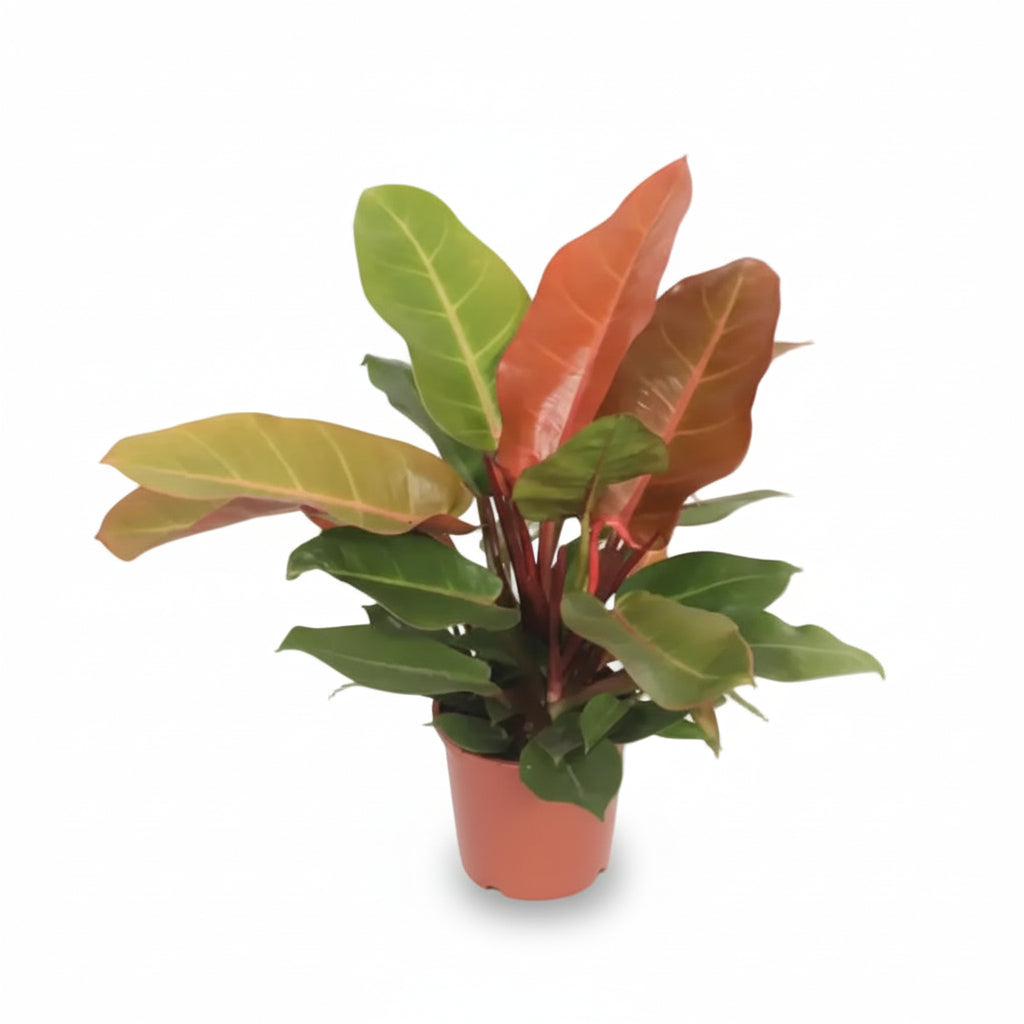
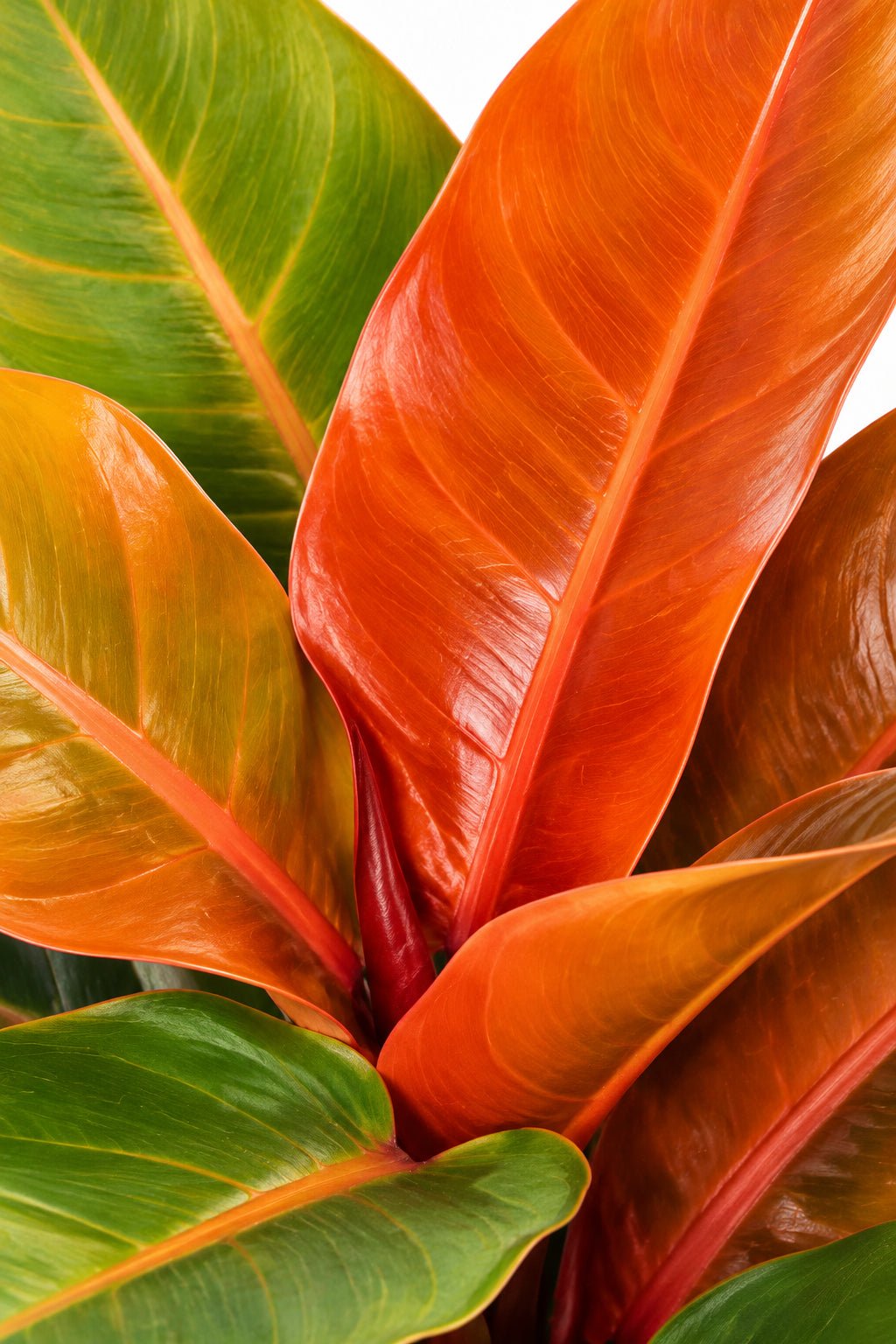
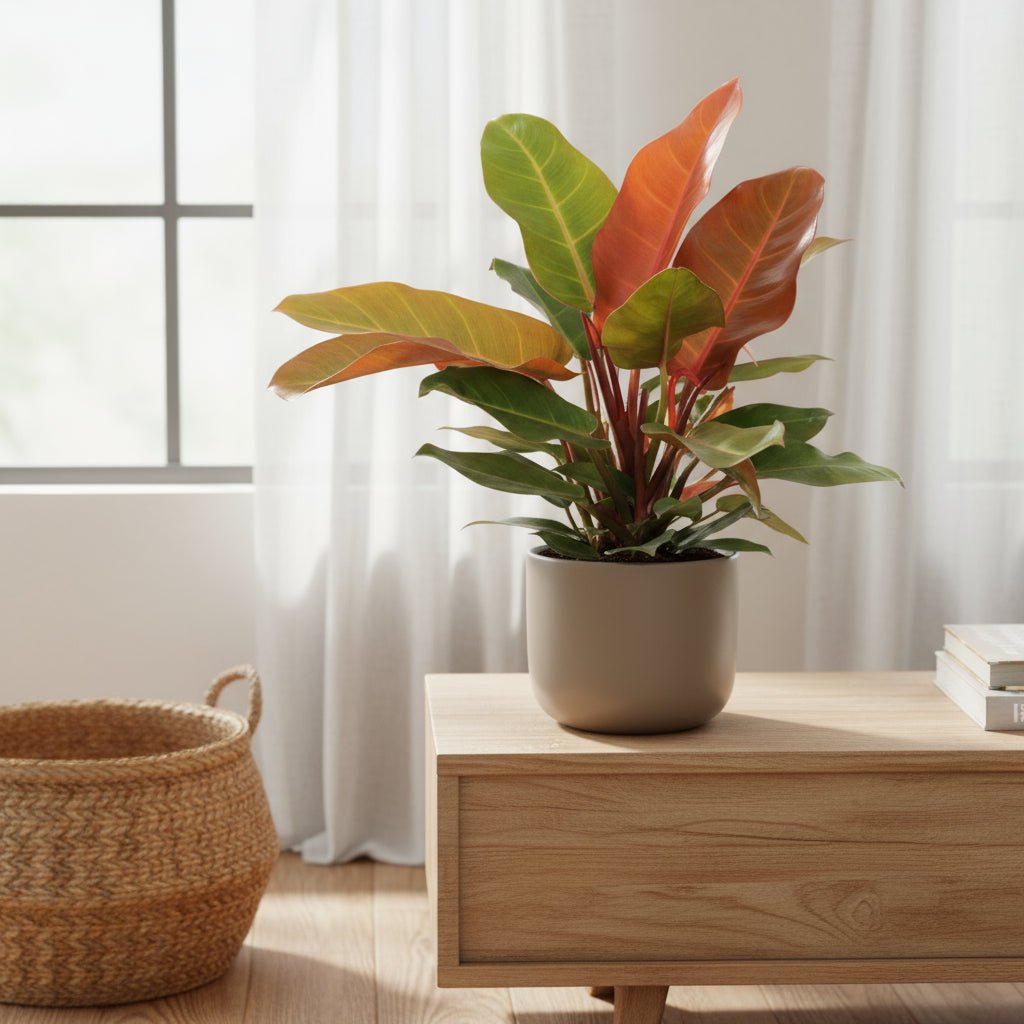

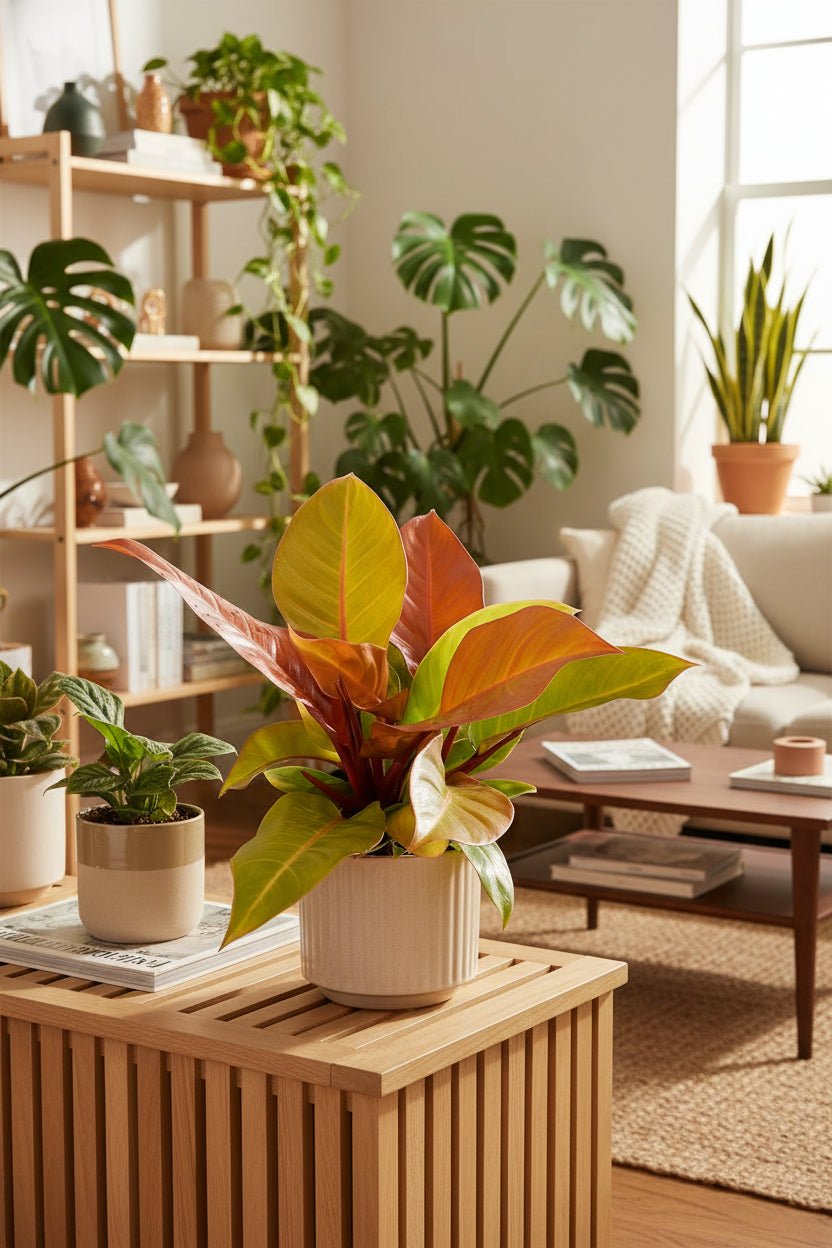

🍊 Young bright orange leaves turning to deep green • 🌿 Compact rosette form • ☀️ Bright indirect light • 💧 Moderate watering • ✨ Graphic and easy plant • 📏 H45 cm | Pot Ø17 cm
The Philodendron 'Prince of Orange', also called orange philodendron, displays spectacular foliage with young leaves emerging in a fiery coppery orange shade, gradually turning lime green, then deep green at maturity. A horticultural hybrid derived from botanical species of tropical South America, this variety with a compact rosette form ranks among the most graphic indoor tropical plants in the catalog.
Its uniqueness compared to other Philodendrons: a self-supporting rosette form that does not climb and requires no staking, and a vibrant gradient of orange, lime, and deep green colors on the same plant — a true chromatic spectacle evolving with each new leaf.
Light & placement
The 'Prince of Orange' requires bright indirect light to maintain the intense orange of its young leaves. Too little light dulls the pigmentation and new leaves emerge directly green. Avoid prolonged direct sun which burns the delicate foliage.
- Exposure: bright indirect light — near a sheer-curtained window or glass door, without direct sun.
- Placement: living room, office, bedroom, bright bathroom — enjoys a slightly humid atmosphere.
- Temperature: 18 to 25 °C — minimum 15 °C in winter, sensitive to cold drafts.
- Soil type: rich, light, and well-draining — mix of potting soil for green plants and orchid bark or perlite.
The more generous the light (without direct sun), the more vibrant the orange of the young leaves — move the plant a few steps closer to a light source if shoots appear dull.
Watering & care
The Philodendron 'Prince of Orange' prefers a slightly moist substrate but never waterlogged. Excess water is among the most common mistakes with this plant and causes yellowing and root rot.
- Watering: moderate — let the top 2 cm of substrate dry out between waterings, about once a week in spring and summer.
- Drainage: essential — pot with drainage holes, clay pebbles at the bottom, always empty the saucer.
- Humidity: prefers high ambient humidity — mist leaves two to three times a week or place the plant on a bed of moist clay pebbles.
- Fertilizer: liquid fertilizer for green plants diluted by half, once a month from March to September.
- Maintenance: gently remove yellowed basal leaves by cutting at the base of the petiole to keep a clean and airy rosette.
- Repotting: every 2 to 3 years in spring into a slightly larger pot.
Dust large leaves with a soft damp cloth once a month — dusty foliage captures less light and the orange pigmentation suffers.
Decor ideas & plant pairings
With its vibrant gradient of orange, lime, and deep green, the 'Prince of Orange' adds a warm and sunny note to any arrangement. To create a green relaxation corner, it pairs beautifully with other tropicals with contrasting foliage.
- For a flamboyant Philodendron duo, pair it with a Philodendron 'Imperial Red' with deep red foliage — the orange young shoots of the Prince respond to the burgundy red of the Imperial Red in a warm and theatrical composition.
- For a contrast of tropical textures, surround it with a Calathea Makoyana with light and dark green stained-glass patterns — the graphic leaves of the Calathea highlight the Philodendron’s chromatic gradient without competing with it.
- To structure the scene vertically, add a Ficus elastica 'Robusta' with shiny dark green foliage — its upright silhouette and large solid leaves create a backdrop that showcases the bright colors of the Prince of Orange in the foreground.
The H45 cm | Pot Ø17 cm size fits well on a console, bookshelf, or desk corner.
Verdeia tips
- Maximize indirect light: place the plant 1 to 2 meters from an east- or west-facing window, with a sheer curtain if it gets direct sun. This is the number one condition for young leaves to emerge in their characteristic fiery orange shade.
- Stabilize ambient humidity: group the Philodendron with other tropicals to create a natural humid microclimate, or place it on a tray of clay pebbles filled with water (without the pot sitting directly in water).
- Rotate the pot regularly: turn the rosette a quarter turn every two weeks so all sides receive equal light and the rosette maintains a balanced and symmetrical form.
Technical specifications
- Botanical name: Philodendron 'Prince of Orange'
- Common name: Orange philodendron, Prince of Orange
- Family: Araceae
- Origin: horticultural hybrid, parent species from tropical South America
- Dimensions on delivery: H45 cm | Pot Ø17 cm
- Mature height: up to 90 cm indoors
- Exposure: bright indirect light, tolerates bright partial shade
- Watering: moderate, allow surface to dry between waterings
- Humidity: high, appreciates misting
- Soil type: rich, light, and well-draining
- Growth: moderate, self-supporting rosette form
- Foliage: evergreen, lance-shaped, gradient from coppery orange to lime green then deep green at maturity
- Care: easy
- Toxicity: toxic if ingested, irritating sap (calcium oxalates)
- Decor style: Tropical / Urban jungle / Contemporary design
Each plant is unique: photos show an example of its appearance. The intensity and proportion of orange, lime, and green shades naturally vary from one specimen to another and according to the season.

Your plant, delivered with care
Every plant is hand-packed in a box specially designed for plants — secured, protected, ready to travel. It arrives in perfect condition, roots intact and foliage preserved, ready to take its place in your home.
Our Verdeia commitments
FAQ – Everything to know before adopting your Verdeia plant
How are my plants prepared before shipping?
All our plants are selected from our European partner nurseries. Before shipping, they are watered, cleaned, and protected with breathable, secure packaging. Each package is designed to ensure your plant arrives in perfect health, without any transport-related stress.
Will the plant look exactly like the photo?
The photos accurately represent the variety and the stated size. Since each plant is unique, slight differences in shape, foliage, or color may occur — and that’s part of their charm.
What are the delivery times and conditions?
Orders ship within 48 working hours, with tracked delivery in 2 to 5 working days via DPD. Shipping costs and the free-shipping threshold depend on your country — see our delivery page. You receive a tracking link as soon as your parcel leaves.
What should I do when my plant arrives?
Open your package as soon as you receive it and carefully remove the plant from its packaging. Let it acclimate for 24 hours in its new environment before watering. If it has been slightly stressed during transport, it will recover its shape after one or two days in the light.
What should I do if my plant arrives damaged?
Contact us within 48 hours with a photo of the issue. Our team will assess the situation and offer you the best solution: replacement, partial refund, or recovery advice.
Can I return a plant?
Since plants are living beings, standard returns are not possible. However, we guarantee good health upon delivery: if the plant arrives damaged, it will be replaced free of charge. For any other cases (order error, decorative pot, accessory), returns are possible within 14 days.