



Picea glauca 'Conica' (Dwarf Spruce Christmas Tree)
- Regular price
-
€30,95 - Regular price
-
- Sale price
-
€30,95
Couldn't load pickup availability
Frequently asked questions
How big does a Picea glauca Conica get? Growing about 10 cm a year, it rarely exceeds 1.30 m after ten years and stays a compact cone for a long time.
Why is Picea Conica called the Alberta spruce? It descends from a dwarf plant found growing wild in 1904 near Lake Laggan, in the Canadian province of Alberta.
Shipping & packaging
Shipped within 24/48 hours via DPD
- Delivery in 2 to 5 working days
- Eco-friendly packaging: recyclable boxes and biodegradable materials
- Special protection so your plant arrives in perfect condition
- Tracking link sent by email as soon as your parcel ships
- Shipping costs and the free-shipping threshold depend on your country — see our delivery page
ZEN ARRIVAL GUARANTEE
We guarantee that your plants will arrive in perfect condition. If your plant arrives damaged or in poor condition:
- Contact us promptly at hello@verdeia.eu with photos
- We will find the right solution for your situation
- No return needed — we trust you
The guarantee covers: damage in transit, plants severely weakened on arrival, and order preparation errors.
CARE TIPS ON ARRIVAL
To help your plant settle in for the long term:
- Unpack your plant immediately and inspect it
- Let it acclimatize for 24-48h in a bright spot out of direct sunlight
- Check the soil moisture before watering (dry surface = light watering)
- Wait 2-3 weeks before repotting, if needed
- Keep it away from heat sources and drafts
- Gently wipe the leaves to remove dust
Need help? Contact our team at hello@verdeia.eu or via chat.




🎄 Living Christmas tree, roots and all • ❄️ Hardy down to -30 °C • 🐾 Non-toxic • 📏 From H45 cm to H110 cm
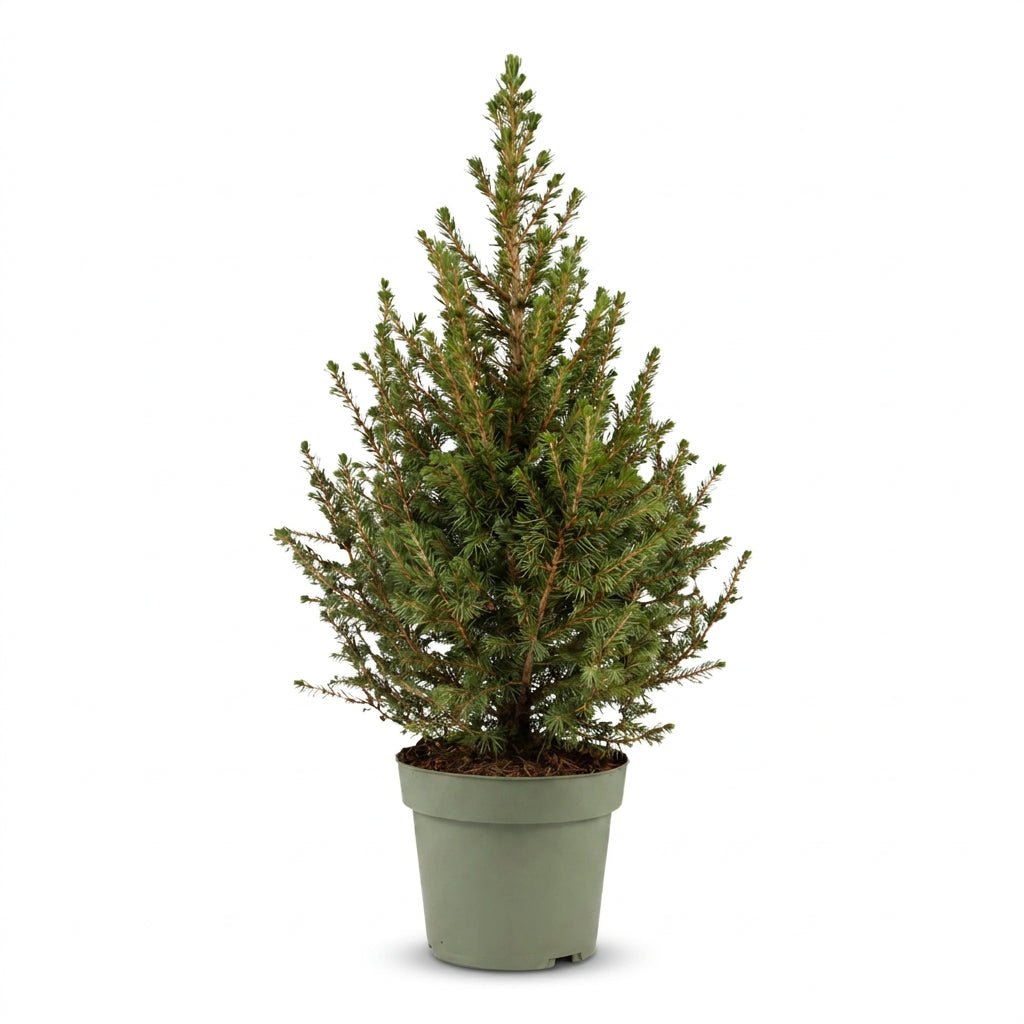
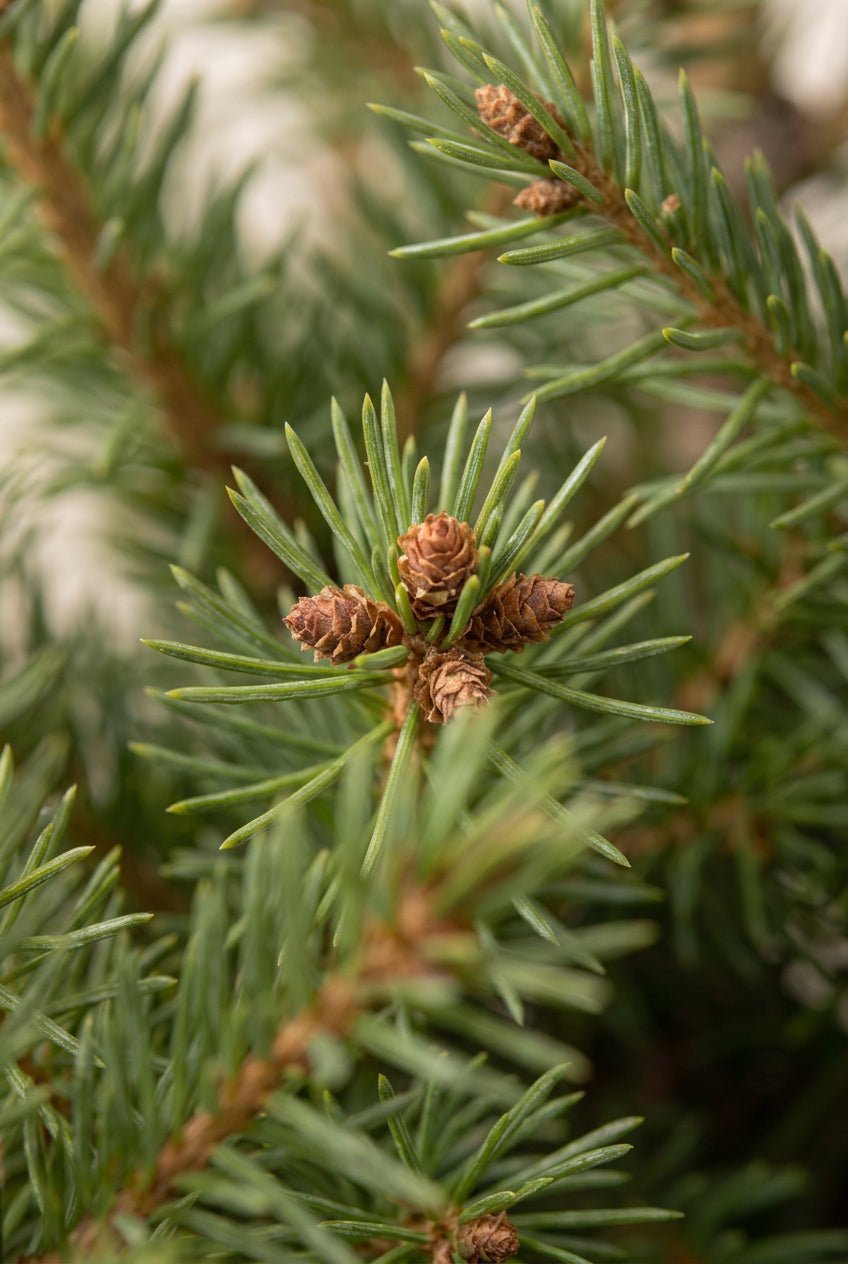
Picea glauca 'Conica', or dwarf Alberta spruce, is the quintessential potted Christmas tree. This conifer comes from a dwarf seedling discovered in the wild in 1904 near Lake Laggan, in Canada (Alberta). It naturally forms a dense, perfectly regular cone, covered from base to tip in short, fine, soft green needles, with no pruning at all.
It is a living tree: it decorates the house over the holidays, then goes back outside to a balcony, a terrace or the garden. Growing only about 10 cm a year, it stays compact for years, which makes it the easiest of all potted Christmas trees to keep and decorate again the following winter.
Which size should you choose?
- H45 cm | Pot Ø13 cm — the mini tabletop tree, for a sideboard, a windowsill or a festive table.
- H65 cm | Pot Ø17 cm — the console or chest-of-drawers size, tall enough to carry a real garland.
- H65 cm | Pot Ø19 cm — the same height with a larger root ball: more water reserve over the holidays and easier establishment in the garden.
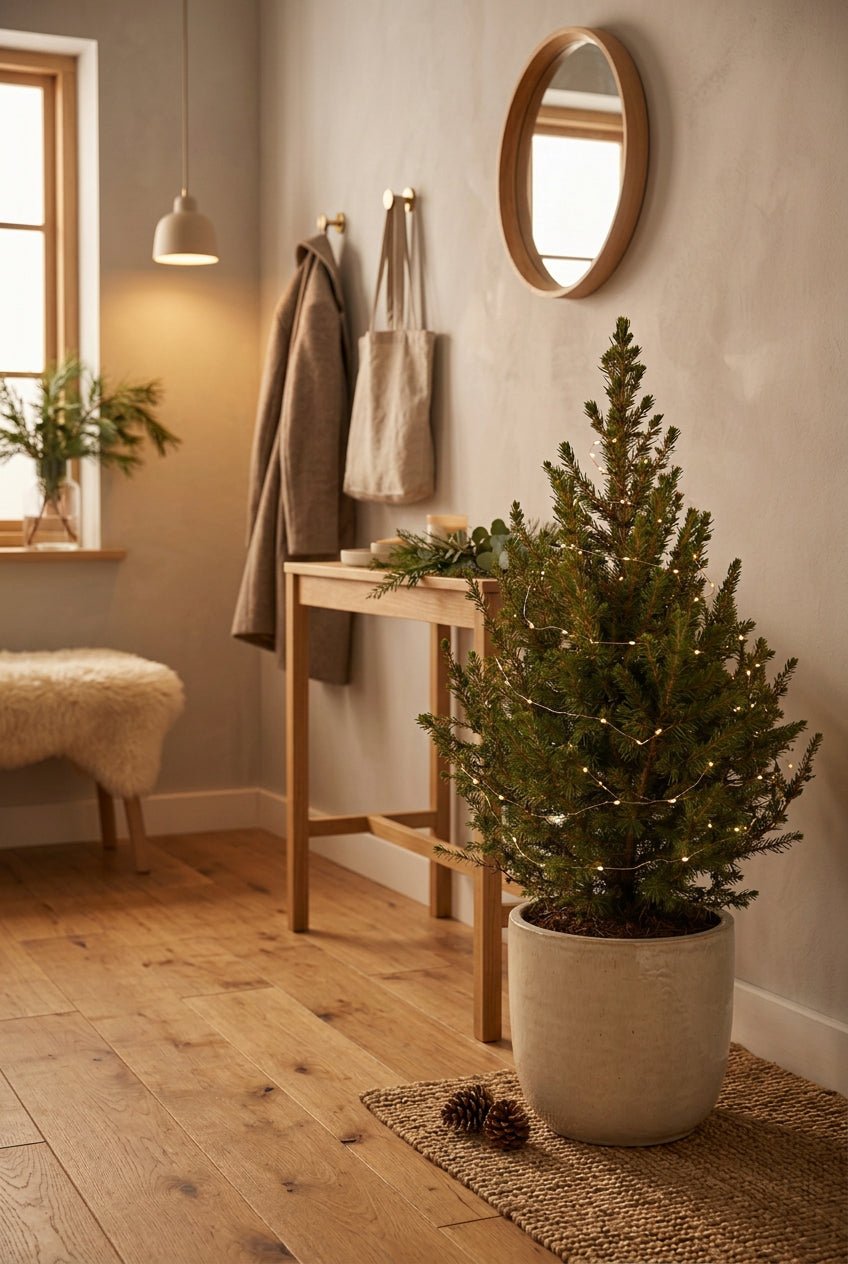
- H80 cm | Pot Ø23 cm — standing on the floor, it becomes the Christmas tree for a small living room or an entrance hall.
- H110 cm | Pot Ø26 cm — the large size, a true living-room Christmas tree with presents at its feet.
Light & placement
The dwarf Alberta spruce lives outdoors all year round and only spends a short stay indoors for Christmas. That is where its health is decided: the heat and dry air of a heated living room are what it tolerates least.
- During the holidays: 10 to 15 days indoors, in the coolest and brightest room, away from radiators, the fireplace and any heat source.
- The rest of the year: outdoors, in sun or partial shade, on a balcony, a terrace or in the garden.
- Hardiness: down to -30 °C — the cold does it no harm, it needs it for its winter rest.
- Avoid: harsh late-winter sun on foliage that is still frozen, and windy, dry spots.
After the holidays, don't move it straight from the living room into the frost: leave it for a few days in a sheltered, unheated place (conservatory, bright garage, entrance hall) before putting it outside.
Watering & care
Like all potted conifers, Picea 'Conica' does not forgive a dried-out root ball: a shoot that has dried out never turns green again. The finger test remains the best way to know when to water.
- Indoors: check the root ball every 2 to 3 days and keep it slightly moist at all times, with no standing water in the saucer.
- Outdoors in a pot: water as soon as the top few centimetres of soil are dry, more often in summer, and even in winter during dry, mild spells.
- Fertiliser: one feed of conifer fertiliser in spring is enough for the whole year.
- Pruning: unnecessary, its conical shape is natural.
- Repotting: every 2 to 3 years in spring, into a slightly larger pot with a free-draining potting mix.
LED lights give off very little heat and do not dry out the needles: they are the only ones to use on a living tree.
Decorating ideas & plant combinations
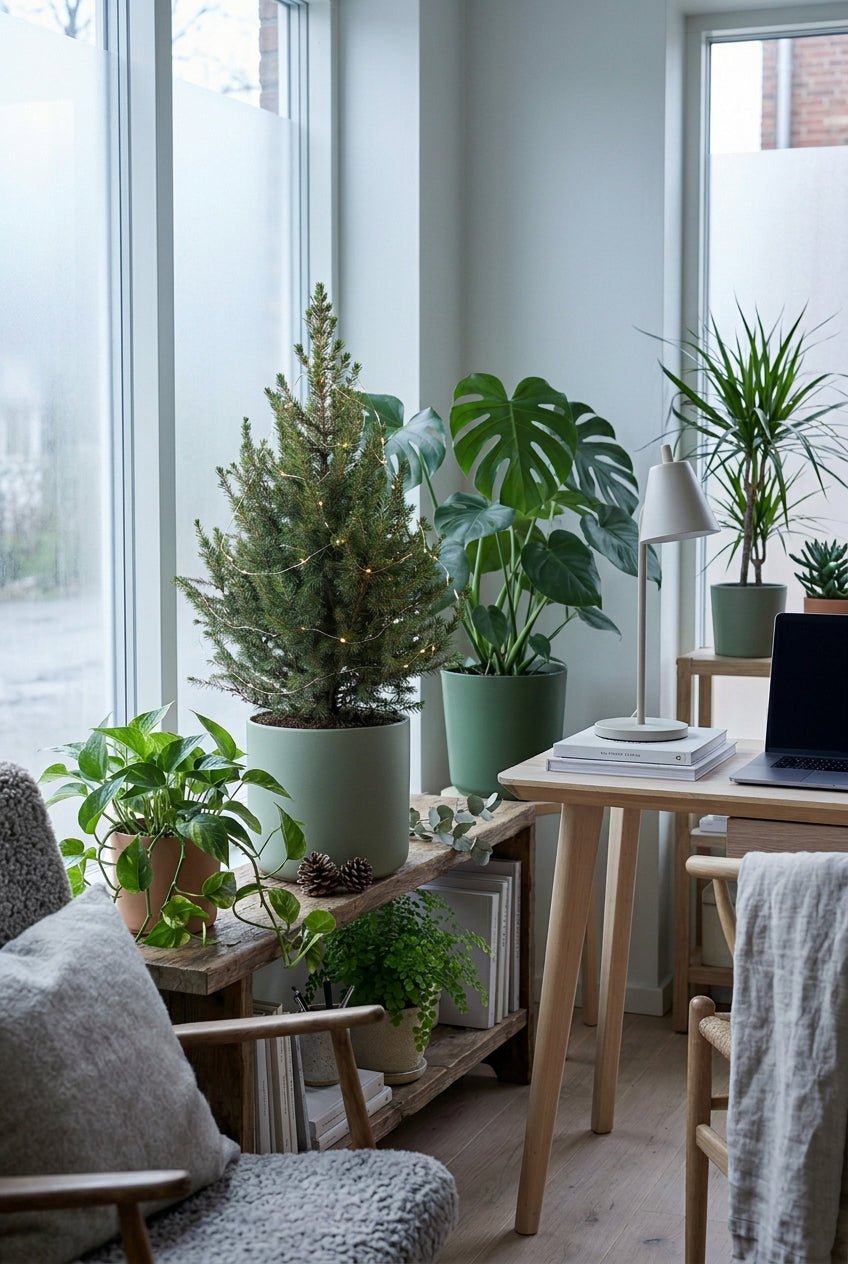
Its perfect Christmas-tree silhouette makes it the basis of any living Christmas decoration, indoors over the holidays as well as outside by the front door for the rest of the winter.
- For a living Christmas trio, pair Picea 'Conica' with a Helleborus niger 'Christmas Carol' and a Skimmia japonica 'Rubella' — the soft green cone, the white flowers of the Christmas rose and the red buds of the Skimmia echo the three colours of Christmas, and all three then spend the winter outdoors.
- On a festive table or a windowsill, the H45 cm size slipped into a woven jute pot cover makes a living centrepiece, to dress with a few light baubles and a battery-powered LED string.
- In a winter pot by the door after the holidays, combine it with a Skimmia japonica 'Finchy': the fine, dense needles of the cone contrast with the broad glossy leaves and white buds of the Skimmia, two evergreens that stay attractive all winter — an arrangement that also makes one of the most meaningful plant gifts in December.
- In a natural-fibre basket, the warm, golden tones of the wicker bring out the soft green of the needles and give a very cosy chalet feel: a natural Selin basket takes the Ø17 to Ø23 cm sizes.
Verdeia tips
- Mist the foliage during its stay indoors: warm, dry air encourages red spider mite, a tiny mite that turns the needles grey and makes them drop — misting every other day and a cool room are enough to keep it away.
- Protect it from late-winter sun: in February and March, sun on frozen foliage can scorch the south-facing side — turn the pot or move it into partial shade until spring, like other cold-hardy plants.
- Keep it in its pot to bring it out every Christmas: it grows so slowly that it can stay in the same container for several years — simply repot in spring when the roots come out of the bottom.
Technical specifications
- Botanical name: Picea glauca 'Conica'
- Common name: Dwarf Alberta spruce, dwarf Christmas tree
- Family: Pinaceae
- Origin: Canada (Alberta)
- Size on delivery: depending on the size chosen, from H45 cm | Pot Ø13 cm to H110 cm | Pot Ø26 cm
- Light: Sun to partial shade, outdoors; 10 to 15 days indoors for the holidays
- Watering: Regular, root ball always slightly moist
- Hardiness: Down to -30 °C
- Growth: Very slow, about 10 cm a year
- Care: Easy
- Toxicity: Non-toxic — prickly needles
- Decorative style: Christmas / Chalet / Natural
Every plant is unique: the photos show a representative example. Foliage density and shade of green vary naturally with the size and the season.

Your plant, delivered with care
Every plant is hand-packed in a box specially designed for plants — secured, protected, ready to travel. It arrives in perfect condition, roots intact and foliage preserved, ready to take its place in your home.
Our Verdeia commitments
FAQ – Everything to know before adopting your Verdeia plant
How are my plants prepared before shipping?
All our plants are selected from our European partner nurseries. Before shipping, they are watered, cleaned, and protected with breathable, secure packaging. Each package is designed to ensure your plant arrives in perfect health, without any transport-related stress.
Will the plant look exactly like the photo?
The photos accurately represent the variety and the stated size. Since each plant is unique, slight differences in shape, foliage, or color may occur — and that’s part of their charm.
What are the delivery times and conditions?
Orders ship within 48 working hours, with tracked delivery in 2 to 5 working days via DPD. Shipping costs and the free-shipping threshold depend on your country — see our delivery page. You receive a tracking link as soon as your parcel leaves.
What should I do when my plant arrives?
Open your package as soon as you receive it and carefully remove the plant from its packaging. Let it acclimate for 24 hours in its new environment before watering. If it has been slightly stressed during transport, it will recover its shape after one or two days in the light.
What should I do if my plant arrives damaged?
Contact us within 48 hours with a photo of the issue. Our team will assess the situation and offer you the best solution: replacement, partial refund, or recovery advice.
Can I return a plant?
Since plants are living beings, standard returns are not possible. However, we guarantee good health upon delivery: if the plant arrives damaged, it will be replaced free of charge. For any other cases (order error, decorative pot, accessory), returns are possible within 14 days.