



Picea glauca 'Sander's Blue' (Dwarf Blue Spruce Christmas Tree) — H60 cm | Pot Ø23 cm
- Regular price
-
€62,95 - Regular price
-
- Sale price
-
€62,95
Couldn't load pickup availability
Frequently asked questions
What is the difference between Picea Sander's Blue and Conica? They share the same compact conical silhouette, but Sander's Blue has bluish foliage where Conica is soft green.
How big does a Picea glauca Sander's Blue get? It grows slowly and reaches about 1 m tall and 60 cm wide after around ten years.
Shipping & packaging
Shipped within 24/48 hours via DPD
- Delivery in 2 to 5 working days
- Eco-friendly packaging: recyclable boxes and biodegradable materials
- Special protection so your plant arrives in perfect condition
- Tracking link sent by email as soon as your parcel ships
- Shipping costs and the free-shipping threshold depend on your country — see our delivery page
ZEN ARRIVAL GUARANTEE
We guarantee that your plants will arrive in perfect condition. If your plant arrives damaged or in poor condition:
- Contact us promptly at hello@verdeia.eu with photos
- We will find the right solution for your situation
- No return needed — we trust you
The guarantee covers: damage in transit, plants severely weakened on arrival, and order preparation errors.
CARE TIPS ON ARRIVAL
To help your plant settle in for the long term:
- Unpack your plant immediately and inspect it
- Let it acclimatize for 24-48h in a bright spot out of direct sunlight
- Check the soil moisture before watering (dry surface = light watering)
- Wait 2-3 weeks before repotting, if needed
- Keep it away from heat sources and drafts
- Gently wipe the leaves to remove dust
Need help? Contact our team at hello@verdeia.eu or via chat.
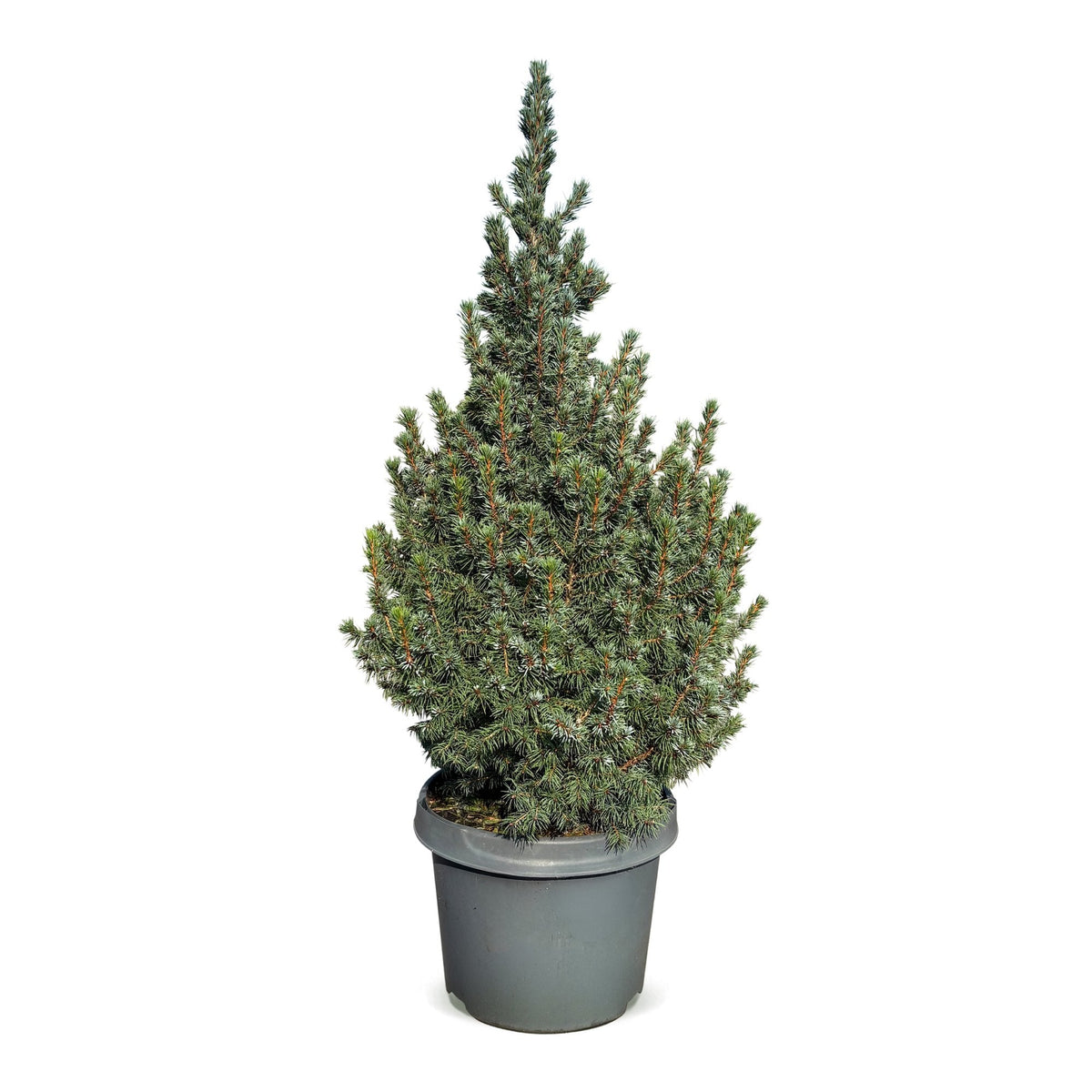


🎄 Living Christmas tree, roots and all • 💙 Bluish needles • ❄️ Hardy down to -30 °C • 🐾 Non-toxic • 📏 H60 cm | Pot Ø23 cm
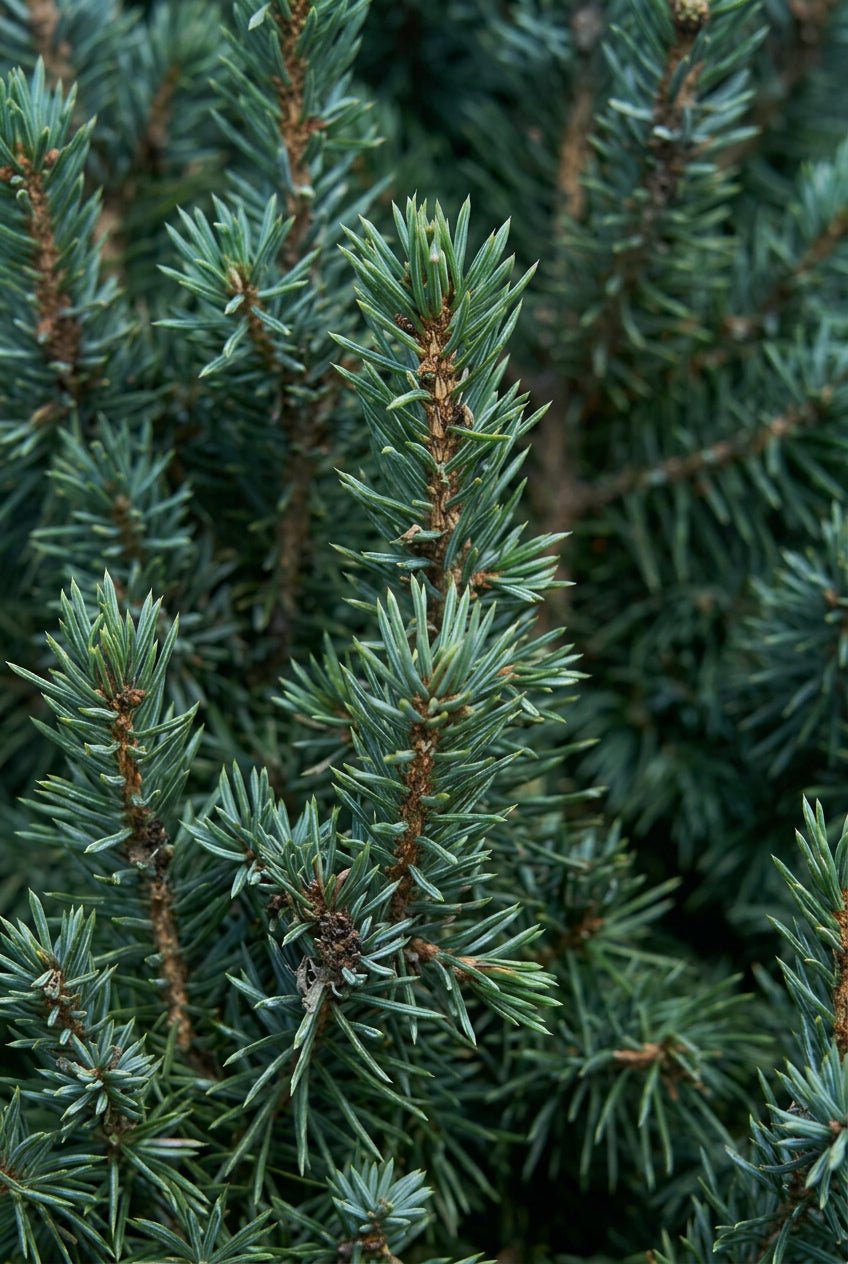
Picea glauca 'Sander's Blue', or dwarf blue Alberta spruce, is the blue version of the famous dwarf Christmas tree. It is a colour mutation of 'Conica', spotted by a man named Sanders and introduced in the late 1970s by Iseli Nursery, in the United States (Oregon). It keeps the dense, regular conical silhouette of its parent, but its young shoots take on a silvery blue that gradually turns blue-green.
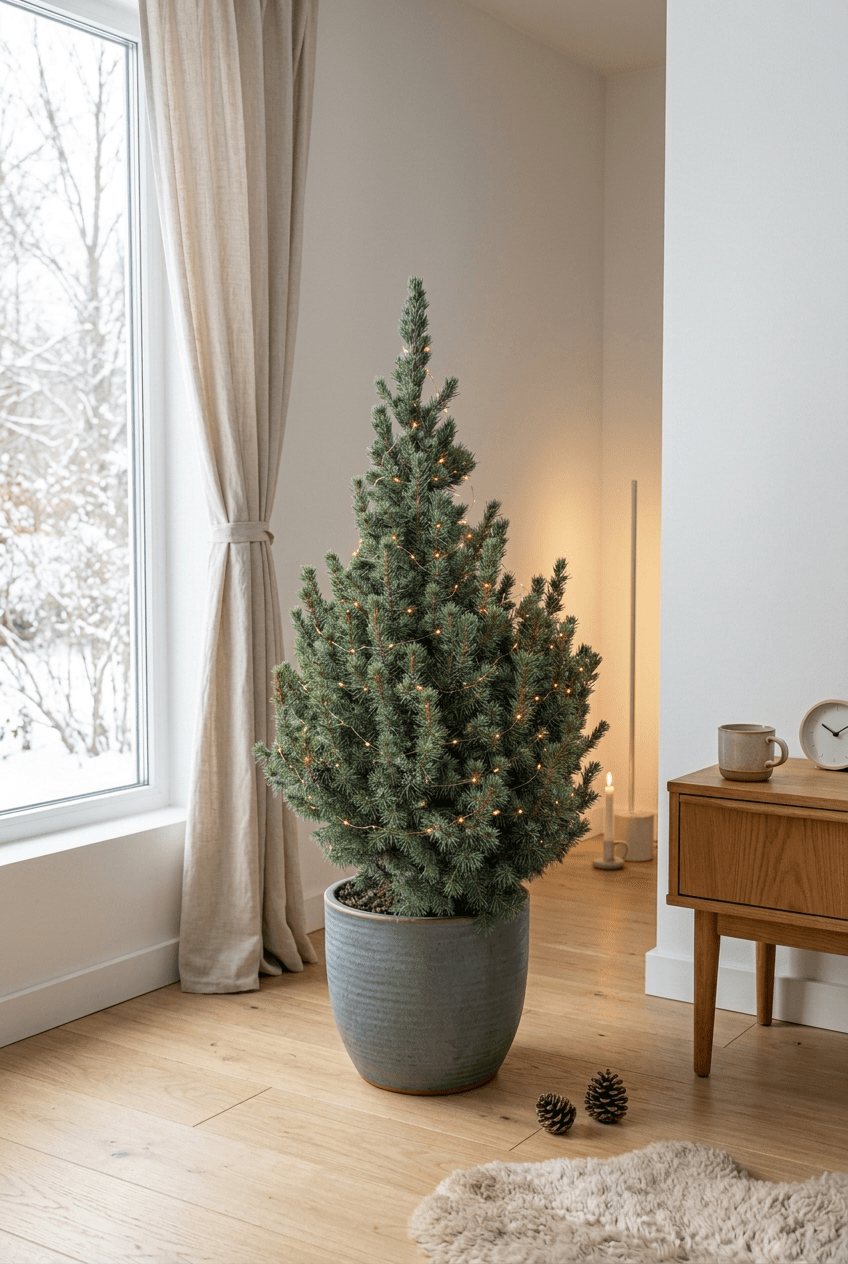
With this mix of blue and green on the same tree, it brings a natural frosted touch, without any artificial snow. Delivered at 60 cm tall in a Ø23 cm pot, it stands directly on the floor and is one of the most original of our potted Christmas trees.
Sander's Blue or Conica?
- Picea glauca 'Sander's Blue' (this plant) — bluish needles turning blue-green, natural frosted effect, H60 cm. The choice for an original tree with cool tones.
- Picea glauca 'Conica' — the same conical silhouette, soft green needles, from H45 cm to H110 cm. The choice for a classic Christmas tree, from the mini tabletop tree to the large size.
Light & placement
Like 'Conica', Sander's Blue is an outdoor tree that only spends a short stay indoors for Christmas. Its colour is at its best in full light: in the shade, the blue tones fade.
- During the holidays: 10 to 15 days indoors, in a cool, very bright room, away from radiators and any heat source.
- The rest of the year: outdoors, in sun or light partial shade, on a balcony, a terrace or in the garden.
- Hardiness: down to -30 °C — it needs the winter cold.
- Avoid: deep shade, which dulls the blue, and dry spots exposed to cold winds.
The blue tones are most intense in spring, on the new shoots: the more light it gets, the more striking the contrast between the blue of the young needles and the green of the older ones.
Watering & care
Its root ball in the Ø23 cm pot holds moisture well, but it must never dry out completely: on a conifer, a dried-out shoot never grows back. Conversely, a free-draining potting mix, like those described in our guide to substrates and potting soils, prevents excess water.
- Indoors: check the root ball every 2 to 3 days and keep it slightly moist, with no standing water in the pot cover.
- Outdoors in a pot: water as soon as the surface of the soil is dry, regularly in summer, and occasionally in winter during dry, frost-free spells.
- Fertiliser: one feed of conifer fertiliser in spring.
- Pruning: unnecessary, it naturally keeps its conical shape.
- Repotting: every 2 to 3 years in spring, into a slightly larger pot.
Decorating ideas & plant combinations
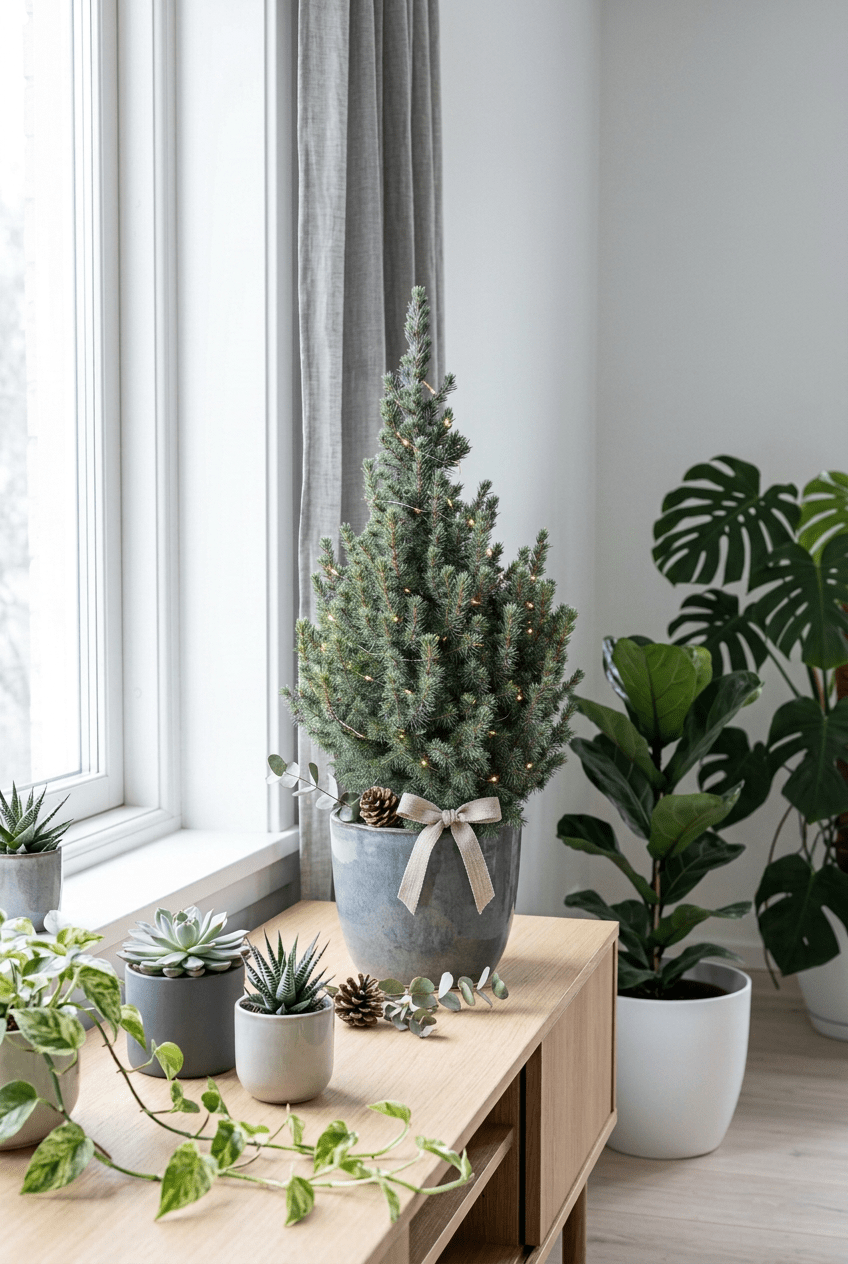
Its bluish foliage naturally suits silver, white and midnight-blue decorations, for a frostier Christmas than the traditional red and gold.
- For a white and silver Christmas, pair Sander's Blue with a Helleborus 'Viv Victoria' — the bluish tones of the cone and the pale flowers of the Christmas rose make a luminous duo, which then spends the winter outdoors.
- At the foot of the tree, in the living room, a pot of Skimmia japonica Festival adds a red and white touch that contrasts with the blue-green of the needles, on the same scale as the presents.
- On a balcony after the holidays, its cool colour goes well with dark green evergreen foliage and silvery grasses — find combination ideas by aspect in our guide which plants for my balcony.
- In a sage green or black basket, the blue of the needles stands out through soft or graphic contrast: a green Jorck basket for a harmony of greens, or a black Jorck basket to make the silvery tones pop — both take its Ø23 cm pot.
Verdeia tips
- Put it somewhere cool as soon as it arrives: after several days in transit, let it settle in a cool, bright spot before decorating it, as with any new plant you welcome home.
- Choose light decorations: its fine, dense branches do not cope well with heavy baubles — opt for thin glass, wooden or felt ornaments and LED lights that do not heat up.
- Give it sun to keep its blue: if it turns greener over the years, that is normal — the older needles turn green, and each spring in full light brings the blue back on the new shoots.
Technical specifications
- Botanical name: Picea glauca 'Sander's Blue'
- Common name: Dwarf blue Alberta spruce, blue Christmas tree
- Family: Pinaceae
- Origin: Horticultural selection, United States (Oregon)
- Size on delivery: H60 cm | Pot Ø23 cm
- Light: Sun to light partial shade, outdoors; 10 to 15 days indoors for the holidays
- Watering: Regular, root ball always slightly moist
- Hardiness: Down to -30 °C
- Growth: Slow, about 1 m tall after ten years
- Care: Easy
- Toxicity: Non-toxic — prickly needles
- Decorative style: Christmas / Frosted / Natural
Every plant is unique: the photos show a representative example. The proportion of blue and green in the foliage varies naturally with the light and the season.

Your plant, delivered with care
Every plant is hand-packed in a box specially designed for plants — secured, protected, ready to travel. It arrives in perfect condition, roots intact and foliage preserved, ready to take its place in your home.
Our Verdeia commitments
FAQ – Everything to know before adopting your Verdeia plant
How are my plants prepared before shipping?
All our plants are selected from our European partner nurseries. Before shipping, they are watered, cleaned, and protected with breathable, secure packaging. Each package is designed to ensure your plant arrives in perfect health, without any transport-related stress.
Will the plant look exactly like the photo?
The photos accurately represent the variety and the stated size. Since each plant is unique, slight differences in shape, foliage, or color may occur — and that’s part of their charm.
What are the delivery times and conditions?
Orders ship within 48 working hours, with tracked delivery in 2 to 5 working days via DPD. Shipping costs and the free-shipping threshold depend on your country — see our delivery page. You receive a tracking link as soon as your parcel leaves.
What should I do when my plant arrives?
Open your package as soon as you receive it and carefully remove the plant from its packaging. Let it acclimate for 24 hours in its new environment before watering. If it has been slightly stressed during transport, it will recover its shape after one or two days in the light.
What should I do if my plant arrives damaged?
Contact us within 48 hours with a photo of the issue. Our team will assess the situation and offer you the best solution: replacement, partial refund, or recovery advice.
Can I return a plant?
Since plants are living beings, standard returns are not possible. However, we guarantee good health upon delivery: if the plant arrives damaged, it will be replaced free of charge. For any other cases (order error, decorative pot, accessory), returns are possible within 14 days.