



Acer palmatum 'Beni-maiko' (Japanese maple with red young shoots) — H35 cm | Pot Ø12 cm
- Regular price
-
€28,95 - Regular price
-
- Sale price
-
€28,95
Couldn't load pickup availability
Frequently asked questions
How tall does the Beni-maiko Japanese maple grow? A slow-growing cultivar, 'Beni-maiko' reaches approximately 1.50 to 2 meters in height at maturity, making it suitable for growing in a pot.
What color is the Beni-maiko maple in summer? In summer, its foliage turns green tinged with red, while the new shoots remain pinkish-red before turning red and orange in autumn.
Shipping & packaging
Shipped within 24/48 hours via DPD
- Delivery in 2 to 5 working days
- Eco-friendly packaging: recyclable boxes and biodegradable materials
- Special protection so your plant arrives in perfect condition
- Tracking link sent by email as soon as your parcel ships
- Shipping costs and the free-shipping threshold depend on your country — see our delivery page
ZEN ARRIVAL GUARANTEE
We guarantee that your plants will arrive in perfect condition. If your plant arrives damaged or in poor condition:
- Contact us promptly at hello@verdeia.eu with photos
- We will find the right solution for your situation
- No return needed — we trust you
The guarantee covers: damage in transit, plants severely weakened on arrival, and order preparation errors.
CARE TIPS ON ARRIVAL
To help your plant settle in for the long term:
- Unpack your plant immediately and inspect it
- Let it acclimatize for 24-48h in a bright spot out of direct sunlight
- Check the soil moisture before watering (dry surface = light watering)
- Wait 2-3 weeks before repotting, if needed
- Keep it away from heat sources and drafts
- Gently wipe the leaves to remove dust
Need help? Contact our team at hello@verdeia.eu or via chat.
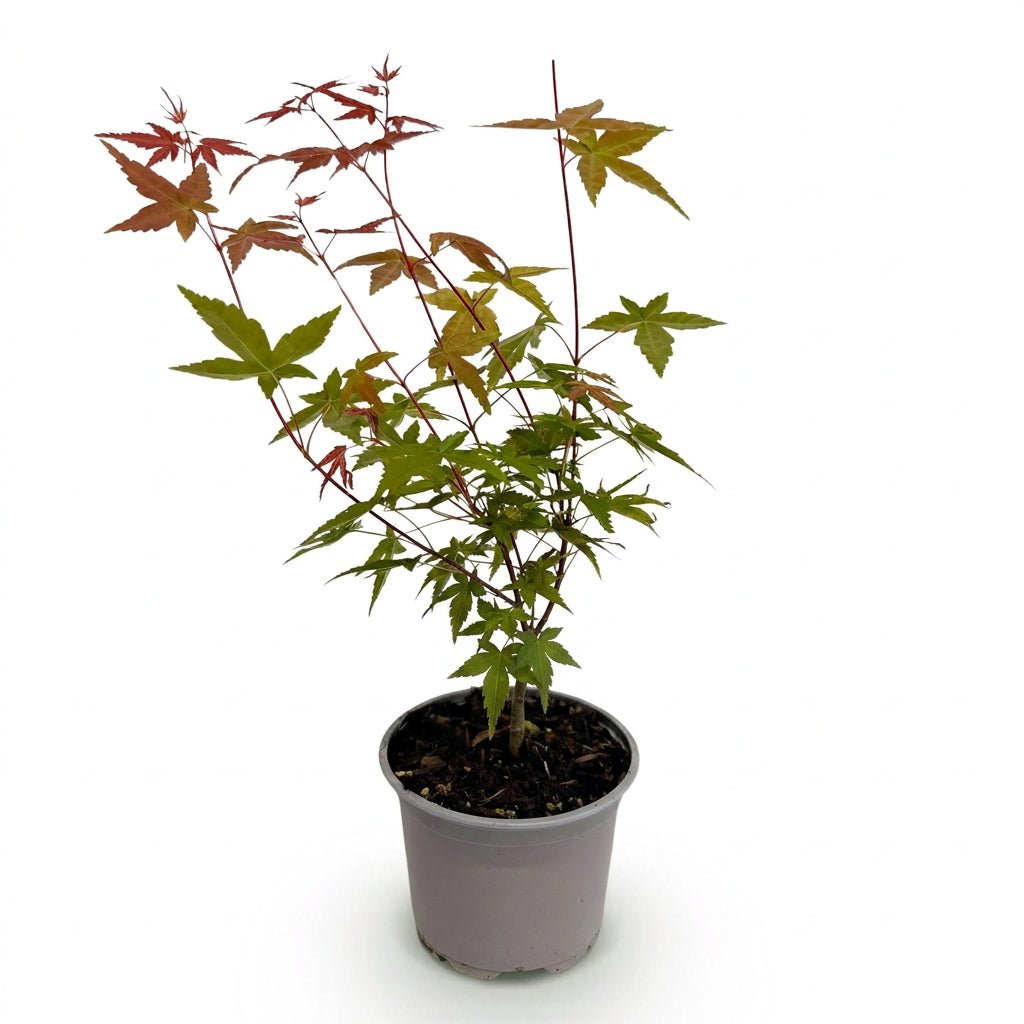
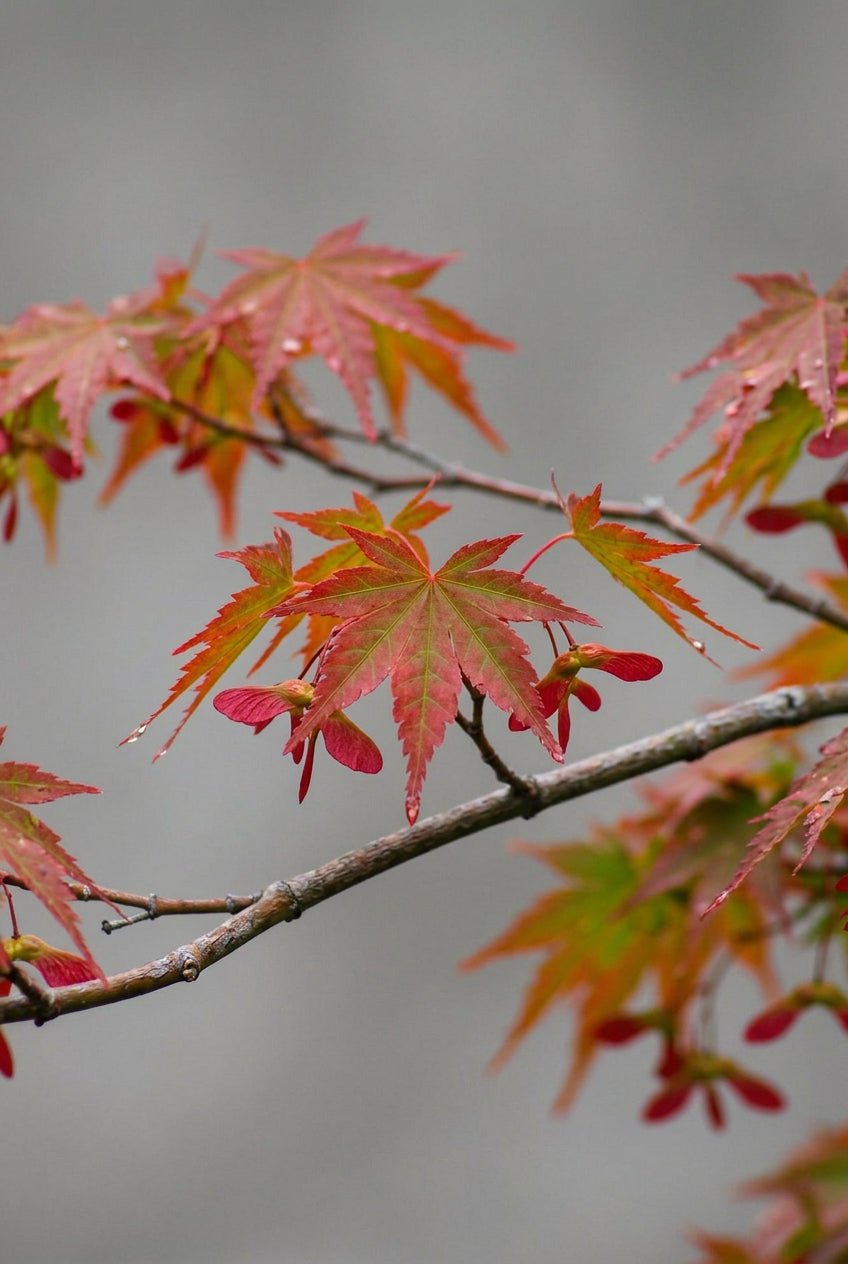



🍁 Pinkish-red young shoots • 🌿 Green foliage tinged with red in summer • ❤️ Red stems • ⛅ Partial shade to gentle sun • ❄️ Hardy down to -20 °C • 🐾 Non-toxic • 📏 H35 cm | Pot Ø12 cm
Acer palmatum 'Beni-maiko' is a slow-growing cultivar whose young leaves emerge pinkish red on slender red stems, before turning green tinged with red. Native to the forests of Japan and Korea, it is the only one of the catalog's Japanese maples to play on this contrast between red shoots and green foliage.
Its Japanese name means “red dancer”, referring to the colorful young shoots that renew themselves throughout the season. Delivered young, at 35 cm tall, it develops over the years into a small, bushy tree measuring 1.50 to 2 meters, suitable for growing in a pot.
Which Japanese maple should you choose?
The Japanese maples in the catalog, with their different colors, shapes and sizes:
- 'Beni-maiko' (this plant) — pinkish-red shoots on green foliage, red stems (H35 cm | Pot Ø12 cm). The most contrasting.
- Set of 3 — orange, dissected green and red, 3 pots Ø12 cm. The most economical way to get started.
- 'Orange Dream' — orange shoots then soft green leaves (3 sizes). The most changeable.
- 'Emerald Lace' — dissected emerald green leaves, weeping habit (3 sizes). The airiest.
- 'Bloodgood' — purplish red that stays red all summer without turning green (2 sizes). The most stable red.
- 'Atropurpureum' — deep purple turning bronze (3 sizes). The most vigorous.
- 'Sangokaku' — coral-red bark in winter (2 sizes). The only one that is decorative without its leaves.
- 'Garnet' — dissected garnet red leaves, weeping habit (H40 cm | Pot Ø19 cm). The red dissectum.
- 'Shaina' — brick red in a dense, rounded shape, dwarf (2 sizes). The most compact.
- 'Going Green' — bright green with solid leaves (2 sizes). The most understated.
Light & placement
Japanese maple grows in the understory in its native habitat: it enjoys filtered light and is sensitive both to scorching afternoon sun and dry wind. Soft morning light brightens the red of the young shoots.
- Exposure: partial shade or morning sun — in full shade, the shoots remain greener.
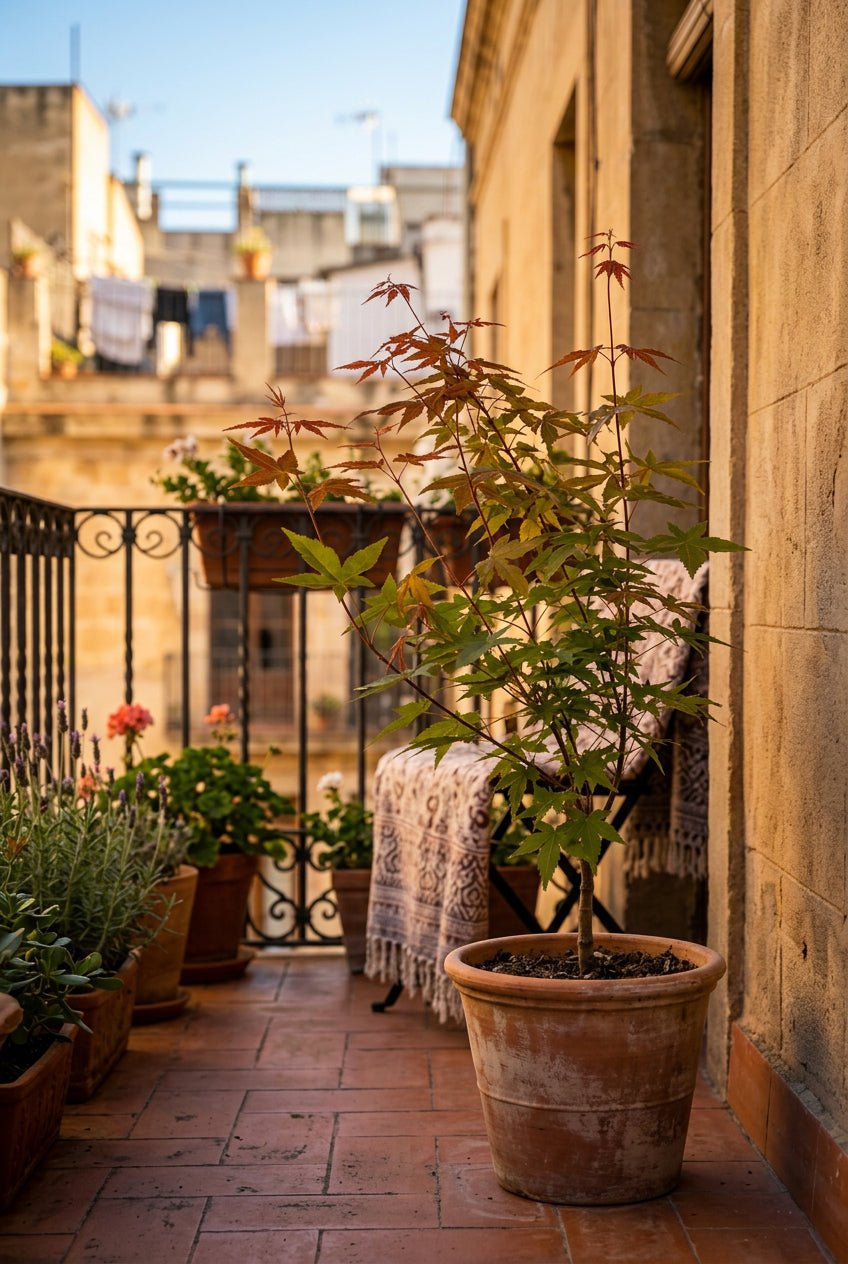
- Location: east-facing balcony, sheltered terrace, patio, entrance — protected from the wind.
- Hardiness in a pot: down to -20 °C — it stays outdoors year-round and loses its leaves in winter.
- Soil type: moist, well-draining and acidic — ericaceous soil mixed with potting soil, never alkaline.
Placed at eye level, on a table or low wall, it reveals the red of its slender stems, which is less visible when the pot is placed on the ground.
Watering & care
Its shallow roots are just as sensitive to drought as to stagnant water: the foliage always signals a lack of water before it worsens, and browning leaf edges most often indicate a bout of heat or air that is too dry.
- Watering: regular — the substrate should remain moist from April to September, without ever becoming waterlogged; greatly reduced in winter.
- Water: preferably limescale-free — hard water alkalizes the substrate and causes the foliage to yellow over the seasons.
- Mulching: a layer of pine bark helps retain moisture and gently acidifies the substrate.
- Pruning: unnecessary — its slow growth naturally maintains a balanced shape. Remove only dead wood in winter.
- Fertilizer: fertilizer for ericaceous plants, once at the beginning of spring.
In a 12 cm pot, the water reserve is limited: in hot weather, check the substrate every day.
Decor ideas & plant pairings
Its two-tone foliage pairs well with acid-loving plants with the same needs, chosen from the balcony plants suited to the same exposure.
- For a color echo, pair it with a Rhododendron Bloombux® Light Pink — its pale pink flowers complement the rosy red young shoots in the same ericaceous soil.
- To dress up the base of the pot, add a Korean rock fern — its evergreen dark green fronds enjoy the same partial shade and highlight the red stems.
- For winter interest, place a Skimmia 'Rubella' — its red buds and evergreen foliage take over when the maple is bare.
- To enhance the pot, choose the Capi Nature Skin anthracite pot — its dark tone highlights the red of the stems and young leaves.
In autumn, the foliage turns red and orange: placed in front of a light-colored wall, the tree becomes the most colorful feature of the balcony.
Verdeia tips
- Repot it upon receipt: a 12 cm pot quickly limits growth. Place it in a 20 to 25 cm pot filled with ericaceous soil and potting mix, keeping the root ball at the same level as on delivery.
- Watch for late frosts: the young red shoots emerge early in spring and turn black in an April frost. A frost fleece put over it in the evening is enough, and a few clean cuts can help save a frost-damaged plant once the frost has passed.
- Protect the roots in winter: the tree withstands -20 °C, but in a pot, the roots freeze first. Group the pot against a wall and wrap it in fleece, as with all cold-hardy plants grown in containers.
Technical characteristics
- Botanical name: Acer palmatum 'Beni-maiko'
- Common name: Japanese maple with young red shoots
- Family: Sapindaceae
- Origin: forests of Japan and Korea
- Size on delivery: H35 cm | Pot Ø12 cm
- Habit: bushy and compact, with slender red stems
- Mature height: 1.50 to 2 meters
- Exposure: partial shade or morning sun, sheltered from the wind
- Watering: regular, with the substrate kept moist during the season
- Soil type: moist, well-drained and acidic, never calcareous
- Hardiness: down to -20 °C
- Growth: slow, no pruning required
- Foliage: deciduous, young pinkish-red shoots, green tinged with red in summer, red and orange in autumn
- Care: easy, preferably lime-free water
- Toxicity: 🐾 non-toxic to animals and children
- Decorative style: Japandi / Natural / Shaded balcony
Each plant is unique: the proportion of red shoots, branching, and color intensity naturally vary according to the light it receives.

Your plant, delivered with care
Every plant is hand-packed in a box specially designed for plants — secured, protected, ready to travel. It arrives in perfect condition, roots intact and foliage preserved, ready to take its place in your home.
Our Verdeia commitments
FAQ – Everything to know before adopting your Verdeia plant
How are my plants prepared before shipping?
All our plants are selected from our European partner nurseries. Before shipping, they are watered, cleaned, and protected with breathable, secure packaging. Each package is designed to ensure your plant arrives in perfect health, without any transport-related stress.
Will the plant look exactly like the photo?
The photos accurately represent the variety and the stated size. Since each plant is unique, slight differences in shape, foliage, or color may occur — and that’s part of their charm.
What are the delivery times and conditions?
Orders ship within 48 working hours, with tracked delivery in 2 to 5 working days via DPD. Shipping costs and the free-shipping threshold depend on your country — see our delivery page. You receive a tracking link as soon as your parcel leaves.
What should I do when my plant arrives?
Open your package as soon as you receive it and carefully remove the plant from its packaging. Let it acclimate for 24 hours in its new environment before watering. If it has been slightly stressed during transport, it will recover its shape after one or two days in the light.
What should I do if my plant arrives damaged?
Contact us within 48 hours with a photo of the issue. Our team will assess the situation and offer you the best solution: replacement, partial refund, or recovery advice.
Can I return a plant?
Since plants are living beings, standard returns are not possible. However, we guarantee good health upon delivery: if the plant arrives damaged, it will be replaced free of charge. For any other cases (order error, decorative pot, accessory), returns are possible within 14 days.